Bird Flu Kills 20 Big Cats At US Sanctuary And Prompts Pet Food Recall

Cats of all kinds are at risk of avian flu infection if they hunt birds outdoors, consume raw meat or drink unpasteurized milk.

In a tragedy that underscores how vulnerable cats of all types are to bird flu, more than half the big cats residing at a sanctuary in Washington were killed by the virus in less than a month.

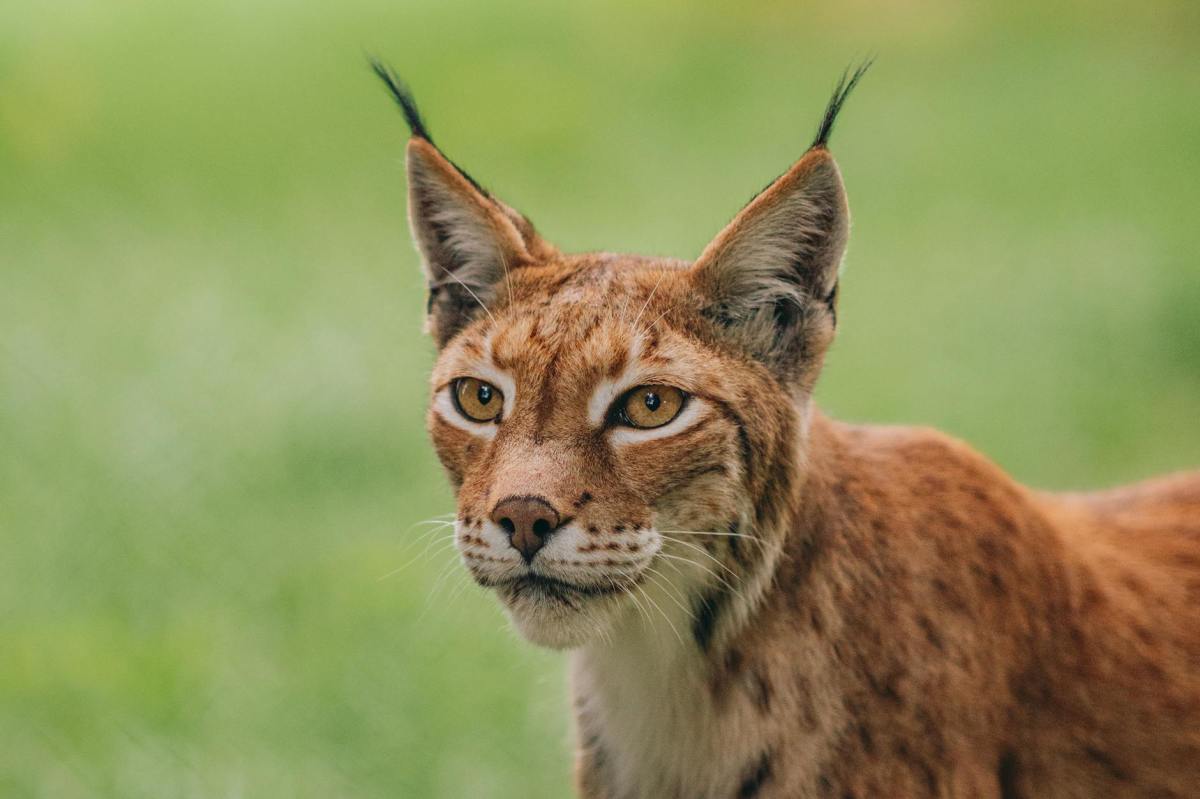
Twenty cats in total died at the Wild Felid Advocacy Center, including five servals, four bobcats, two Canada lynx and a Bengal tiger.

Only 17 cats are left at the sanctuary, according to its operators.

Mark Matthews, the sanctuary director, called the H5N1 avian influenza a “wicked virus” that killed the cats in his organization’s care within 24 hours of each animal contracting it.

“We’ve never had anything like this,” Matthews said, adding that he and his staff are accustomed to cats in their care dying of old age after living long, happy lives.

In California, Gov. Gavin Newsom declared a state of emergency on Dec. 18 after infected birds were found at more than two thirds of the state’s dairy producers.

cows in barn
California’s dairy industry has been hit hard by the spread of bird flu, with more than half the state’s dairy producers impacted. Credit: Ralf R/Pexels

As of Dec. 26, bird flu had infected 65 Americans, the majority in California.

And the virus has now resulted in its first pet food recall, with Northwest Naturals pulling its turkey recipe “raw diet” food. A cat in Oregon died after consuming the food, according to the Oregon Agriculture Department.

As we noted in our earlier post about the variant of avian influenza, there’s no reason to panic. Even if you live on the west coast, the chances of your cats being infected are small.

But it’s probably a good idea to make sure your cats remain indoors, as health authorities warn cats can contract the virus directly by catching and eating birds. In one case, health officials believe three indoor cats may have caught the virus after killing mice in their home.

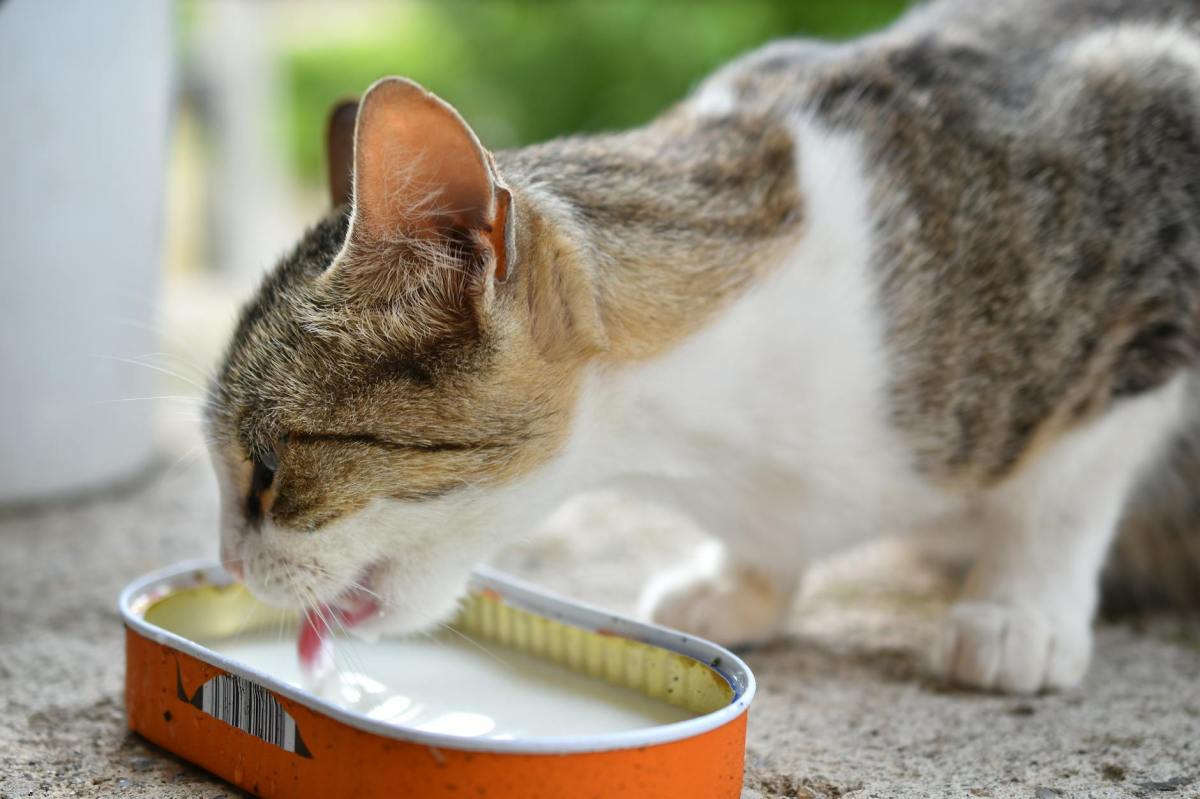
In addition, the American Veterinary Medical Association advises caretakers to avoid giving their cats milk, which they should not be drinking anyway, and raw meat. Domestic cats are generally lactose intolerant, and while cats can be infected with bird flu by eating raw poultry, they can also contract the virus by eating raw meat from other animals.
With Bird Flu Spreading, It’s Probably A Good Idea To Keep Your Cats Inside

So far there are no cases of cats infecting humans, but a new study published Tuesday warns the virus easily mutates in infected felines.

Health officials have identified at least five cases of domestic cats infected with H5 bird flu in California, and they’re warning of multiple vectors of transmission now that both outdoor and indoor cats have been infected.

Two cats were infected after drinking raw milk from a dairy farm in Fresno, California, according to the Los Angeles Department of Public Health. That’s also how a dozen barn cats died in April after drinking raw milk from infected cows on a Texas dairy farm, the CDC said.

But three other cats who tested positive for bird flu were indoor-only, lived in the same home, and did not consume raw milk, authorities said. They’re looking into the possibility that the felines were infected through raw meat or by hunting mice.

So now it’s not only confirmed that cats are vulnerable to highly pathogenic avian influenza, or HPAI H5N1, but that they can be infected in different ways.

To be clear, it’s not a cause for panic and it doesn’t mean people should isolate from their cats, but it does mean we should be smart and considerate when it comes to protecting our pets and reducing the possibility that they can be infected.

Because millions of felines live with humans, the fear is that they can pass the virus onto us. So far there have been no confirmed cases, but a study published on Tuesday confirmed that the virus can easily mutate in cats. That means the more domestic cats are infected, the greater chance the virus mutates in a way that allows it to “bridge” to humans.

At least two people — one in Wisconsin and one in Louisiana — have tested positive for the virus and were hospitalized this week. One worked on a farm and the other may have consumed raw milk. In the meantime, health officials are monitoring the people whose three cats were infected, and they’re urging people to take precautions.

“To avoid the spread of disease, including H5 bird flu, we strongly encourage residents and their pets to avoid raw dairy and undercooked meat products, limit contact with sick or dead animals, report sick or dead birds, and keep pets or poultry away from wild animals and birds,” said Dr. Barbara Ferrer, director of the Los Angeles County Department of Public Health.

Cat Brains Age Like Ours, Research Shows

Lifelong changes in the brains of felines more closely resemble aging in human brains. Studying cognition and cognitive decline in cats could help us better understand brain aging in general, scientists say.

For almost the entire history of modern science, rodents have served as a stand-in for humans in research into everything from metabolism to autoimmune responses.

They’ve even been the go-to for studies examining cognitive decline, diseases and neural mechanisms.

But now research shows there’s a better model closer to home. It turns out cat brains more closely resemble human brains in many respects, particularly in terms of aging and its effect on our mental faculties.

From Nature:

“As cats age, their brains show signs of atrophy and cognitive decline that more closely resemble the deterioration seen in ageing humans than do the changes in the brains of ageing mice, according to findings presented last month at the Lake Conference on Comparative and Evolutionary Neurobiology near Seattle, Washington.

The results are part of a large project, called Translating Time, that compares brain development across more than 150 mammal species, and is now expanding to include data on ageing. The hope is that the data will aid researchers trying to crack the causes of age-related diseases, particularly conditions that affect the brain, such as Alzheimer’s disease.”

One drawback to using mice is they simply don’t live long enough for their brains to deteriorate in ways many human and non-human animals do, scientists told Nature. They also have species-specific mechanisms that ward off certain degenerative diseases, including Alzheimer’s.

Not only do cats live longer, but their brain development and decline mirrors our own on a shorter time scale, scientists say. Tracking brain changes in cats is also more helpful than doing the same with dogs, who have been radically changed by breeding. Felines are mostly left to mate as they please, meaning they’re closer to their natural form, allowing for more useful data.

a cute cat lying on the couch
Credit: Pranjall Kuma/Pexels

Looking to our furry friends makes sense anecdotally as well. Every cat lover has seen the unfortunate confusion and forgetfulness that can afflict senior cats. Older cats tend to sleep a lot more, which is significant for a species notorious for its extravagant snoozing habits.

Thankfully, efforts like the Catage Project do not result in more cats being used in laboratory experiments. Researchers draw their data from veterinary records, brain scans and blood samples.

When asked about how his species could help humans better understand things like cognitive diseases and decline because of their similarity to humans, Buddy the Cat declared the research “fake news.”

“Where’s my bumblebee toy?” Buddy asked. “Did you hide my bumblebee toy? I’ve been looking everywhere for it!”

When told the toy was right were it’s supposed to be, in his toy basket, the 10-year-old tabby grew irritated.

“Fake news!” he meowed. “You put it back there just to mess with me. I’m onto your games! Now where did I put my favorite milk bottle cap?”

Crumbs The Corpulent Cat Is Already Enduring Treadmill Sessions

Crumbs was rescued from a bad situation where people fed him without regard for his health. Now he’s got a lot of work ahead of him as his new caretakers help him lose weight so he can walk on his own again.

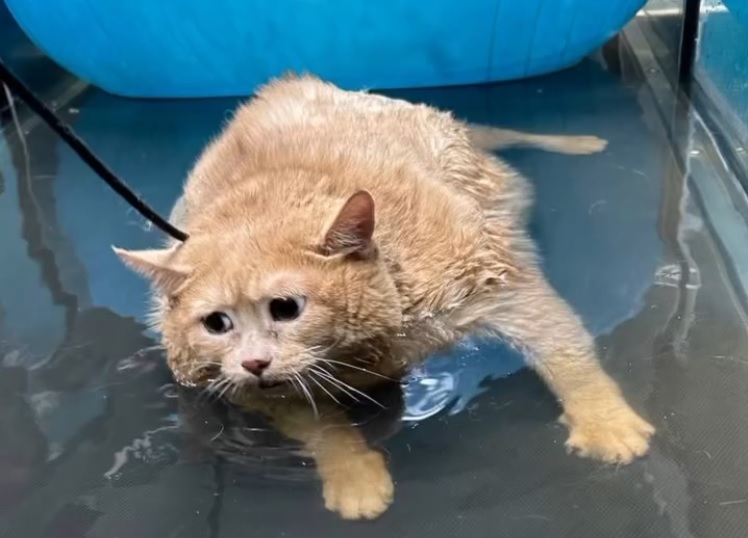
Crumbs, the morbidly obese tabby who was rescued from the basement of a Russian hospital last week, is already putting in the work to melt pounds.

That means he’s enduring two things most cats hate — exercise and water. You’ll recall from our earlier post that Crumbs weighs 38 pounds and cannot walk under his own power, so his new caretakers at Matroskin animal rescue in Perm, Russia, have him on a special waterproof treadmill where he gets the benefit of buoyancy while he gets his steps in.

The big guy is not a happy camper in the video, but he’s doing his best.

I’ve heard horror stories about the hospitals in Russia and Ukraine, so if it sounds strange that the staff at a hospital would feed cookies, soup and other inappropriate food to a cat, well, let’s just say it’s not the kind of environment most of us picture when we think “hospital.” (Which is another reason to be grateful for living in the west, where we have it much better than most of us generally realize.)

Hindustan Times article
Non-native English speaking staff at the Hindustan Times may have confused Whiskas the cat food brand with whiskey, the alcoholic beverage, or there may have been a translation error.

Interestingly, a Hindustan Times story about Crumbs claims the hospital employees served whiskey to the obese cat in addition to the junk food, a claim repeated in the headline and article.

That would add another wrinkle to an already ridiculous story, but thankfully it’s not true. Your intrepid friends here at PITB checked the original text and with the help of translation software, determined it used the Russian word for “Whiskas,” as in the cat food, not whiskey. (It probably goes without saying, but never give alcohol to your cat. As little as a teaspoon of whiskey could be fatal.)

So if there’s some small comfort here, it’s that the people who fed Crumbs for so long weren’t completely ignorant to his needs, and it appears he got at least some species-appropriate food.

Crumbs the Cat
Crumbs shortly after he was rescued. Credit: Matroskin animal shelter

Rescued Cat Gorged On Cookies Till He Was ‘Too Fat To Walk,’ Now He’s On A Diet

The abandoned cat found his way to the basement of a hospital in Russia, where staff members provided him with inappropriate food — and way too much of it.

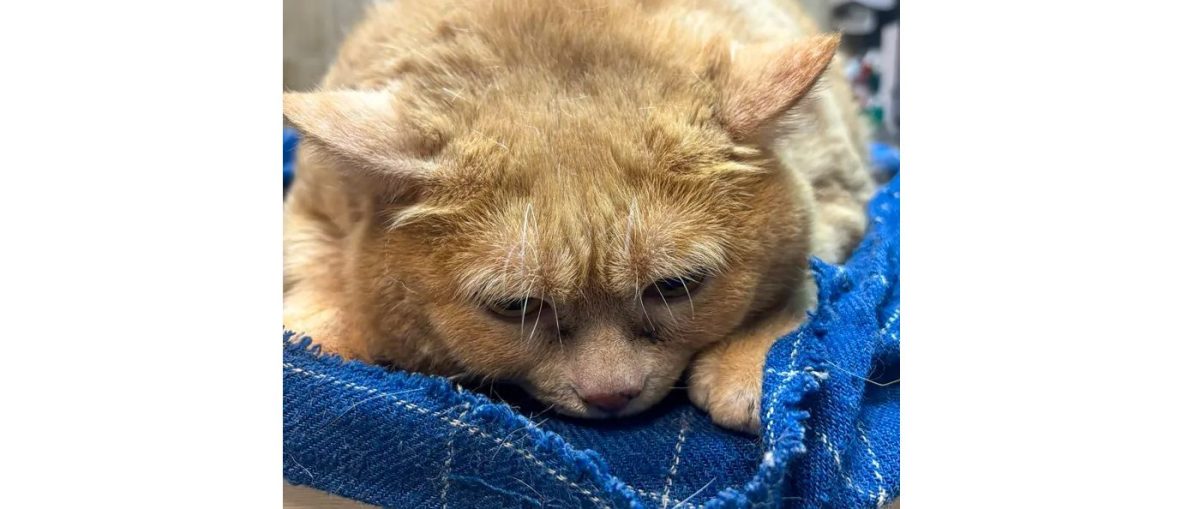
Animal rescuers in Russia have their work cut out for them after taking in a mega-chonky cat weighing 38 pounds.

The orange tabby, named Crumbs by his rescuers because he leaves none in his wake, is so overweight he can’t walk and has been placed on a strict diet to meet his first goal of becoming ambulatory.

After that, his rescuers said, the real work begins as they try to get Crumbs down to about 10 pounds, which they believe is a healthy weight for a cat of his original size.

Crumbs the Cat
Crumbs with one of his rescuers who is helping the morbidly obese feline shed pounds.

Staff at Matroskin Shelter in Perm told Russian media that Crumbs was abandoned by his owners and was living in the basement of a hospital in the city.

It wasn’t clear if Crumbs was already obese when he was surrendered, but hospital staff were not providing him with the kind of protein-rich meat cats need to stay healthy. Instead, they plied him with cookies and calorie-dense soups, apparently putting no limits on his food consumption.

“Kroshik’s story is an extremely rare case when someone loved a cat so much that they fed him to such a state,” shelter volunteers said.

Crumbs is in for a shock as he adjusts to his new diet, but the more difficult challenge may be the treadmill sessions that await once he’s able to move under his own power.

Screenshot_2020-11-15 barsik-cat-2020-1-1 jpg (WEBP Image, 915 × 610 pixels)
Barsik suffered the indignity of being labeled “The Fattest Cat In New York” and even made the front cover of the New York Post, but the former chonkster and his new human had the last laugh:

The problem of overweight cats has received more attention in recent years, with veterinarians warning people not to intentionally overfeed their cats. Unfortunately, some people have taken to fattening up their felines for the sake of social media success, looking to copy others whose extraordinarily “chonky” cats have earned equally massive online followings.

In Poland, Gacek the cat was removed from his street-side tiny house and taken indoors because visitors to the city of Szczecin would not stop feeding the overweight celebrity chonkster, despite signs pleading with them to stop. (It also didn’t help that people tried to steal Gacek after he became internationally famous.)

Gacek

Above: After Gacek went viral for being the top-rated attraction in his home city of Szczecin, Poland, a steady stream of admirers made the pilgrimage to see him in person, offering tribute in the form of snacks.

Here at Casa de Buddy, I had to put His Grace on a diet because he was pushing about 12 1/2 to 13 pounds, up from his natural weight of about 10 or 11 pounds. That might not seem like much, but Bud isn’t a very large cat despite his belief that he’s a hulking tiger. Two pounds is as much as 20 percent of his ideal body weight.

As you might imagine, the little guy was not happy about his significantly reduced snack allotment and made sure to communicate that to me loudly and often.

chubbybuddy
“I am NOT chubby, I am meowscular!”

There have also been success stories. Barsik, once dubbed “The Fattest Cat In New York” after tipping the scales at an astonishing 41 pounds, made a second round of headlines after he shed a significant portion of his weight. Nowadays he’s looking happy and healthy as he’s able to run and jump like a cat should.