News sites are exploiting another tragedy for clicks.
If you’d just skimmed headlines like “Kiss of Death: Elderly Woman Killed By Cat” and “Tragedy as woman is killed by her CAT, as doctors issue a dire warning to pet owners” you’d think a woman was somehow violently killed by an enraged 10-pound cat.
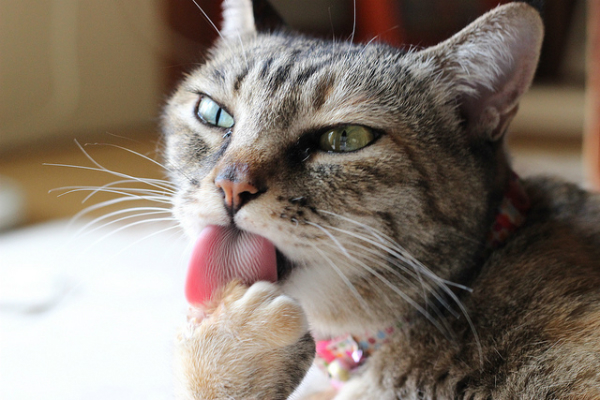
The reality is much less dramatic: A woman’s cat scratched her, then licked the wound.
Through her saliva, the cat named Minty infected the victim with bacterial meningitis, doctors told the New Zealand Herald.
The woman fell into a coma, was found by relatives and brought to Melbourne’s Box Hill Hospital, where medical staff kept her sedated as they tried to treat her. With few options, the family in consultation with the doctors decided to wake her to say goodbye, then placed her back in a coma and withdrew life support.
“Infections related to cat bites and scratches like this person, we’d get at least one a week where somebody comes into the hospital,” Lindsay Grayson, director of infectious diseases at Melbourne’s Austin Health, told the newspaper. “It is very important that if a cat is biting or scratching you, you mention it to your GP.”
The woman was 80 years old, and the story suggests she had a compromised immune system. It didn’t provide any other details about her overall health, existing co-morbidities or whether her cat was allowed outdoors. Outside cats have a greater chance of picking up bacteria that can harm humans, experts say. A separate article mentioned the victim took blood thinners.
Grayson’s warning is simple and spot-on: Take bites and scratches from cats and dogs seriously, get the wounds treated and call your doctor. Something that looks like an inconsequential scratch could prove deadly or cause major health problems.
Cats and dogs live in more than 100 million homes in the US alone and infections are exceedingly rare. Grayson is aware of that, and he’s giving solid preventative health advice to people in the pet-owning demographic.
Unfortunately calm and reasoned doesn’t draw clicks, so the story is propagating via headlines that conjure images of a cat literally murdering its owner.
It should go without saying that the cat didn’t intend to cause any harm and is incapable of understanding what happened. All she knows is that her human is dead, which she’s certainly distraught about, and it sounds like she’s not getting sympathy or affection from her new humans.
“I was in shock for a good couple of weeks,” the woman’s daughter said. “I’ve tried not to hate the cat … but then I was sitting with it trying to be nice and it lashed out at me as well for no reason.”
With all respect to the grieving, there most certainly is a reason. The cat is grieving too, she’s living with new people in a new situation, and she’s almost certainly scared. It’s an unfortunate situation for all involved.
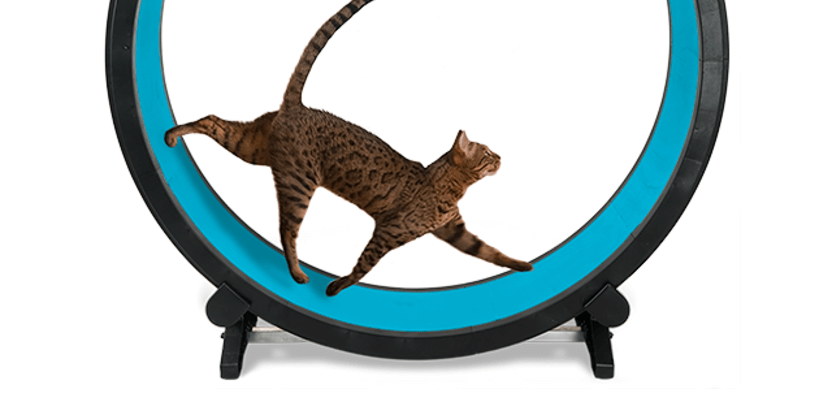
A contraption that could only be dreamed up in the depraved depths of the human mind.
Dear Buddy,
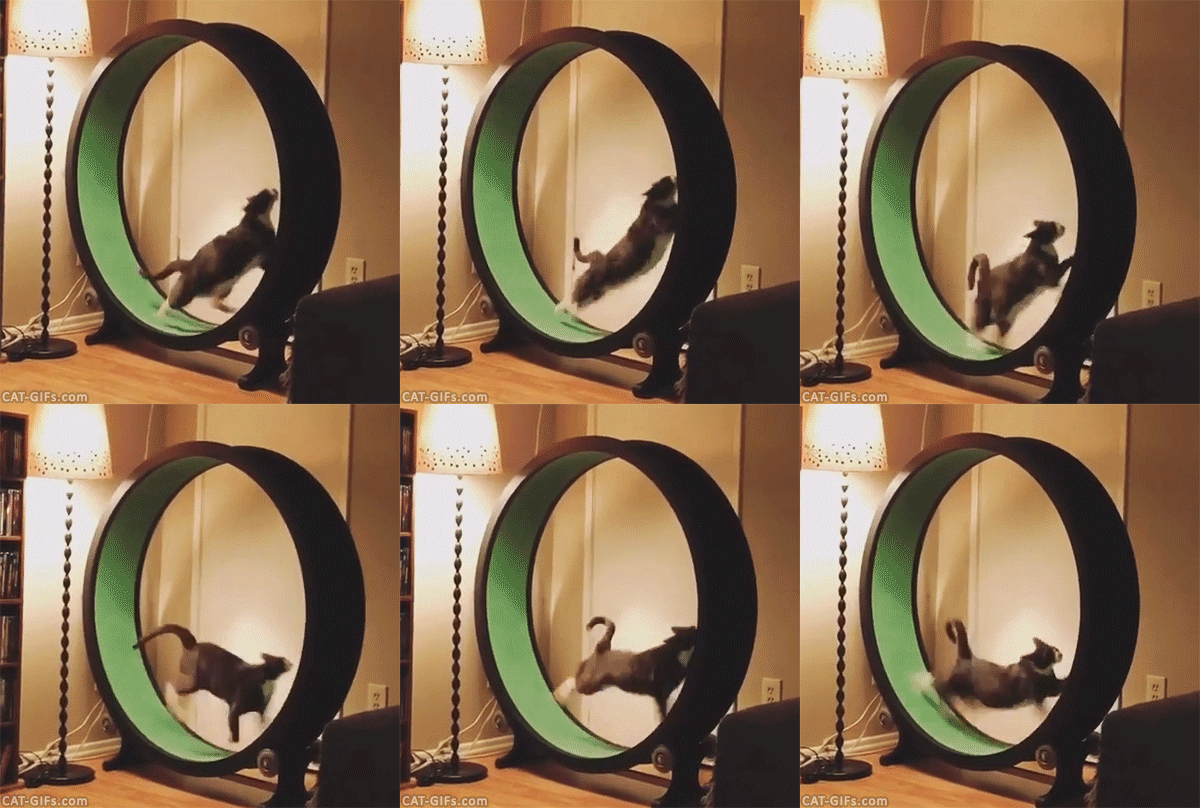
I discovered this today, hidden in the garage with a bow around it, presumably a “gift” for my upcoming birthday:
I wanted to warn you about this dire development so you can pass the word along to the millions of other cats who read your blog. The humans have invented a cruel torture device for us! This is a declaration of war!
My birthday is Wednesday. I must flee on Tuesday night at the latest. Wish me well in finding new humans who will serve me to satisfaction and provide acceptable yums.
Backstabbed in Binghampton
Dear Backstabbed,
RUN! And I don’t mean on that…contraption. Run for your life!
That video is horrific. It’s hard to watch. There must be some invisible force field keeping that poor cat confined to the wheel so he has no choice but to keep running or be tossed around violently like a wallet in a clothes drier.
Human cruelty: Clearly an invisible force field keeps this poor kitty from escaping.
Why can’t humans invent something awesome, like a device that feeds us snacks while massaging us at the same time? These sadistic creatures claim they love us, but every now and then they inadvertently reveal the depraved depths of their minds, like when they invented those “fun” puzzle feeders that make us work for every kibble and stop us from scarfing down our yums.
Thank you for the warning, my friend. Take heed, fellow felines! You may be next!
The fatter the cat, the bigger its online following.
Metro’s editors want more fat cats.
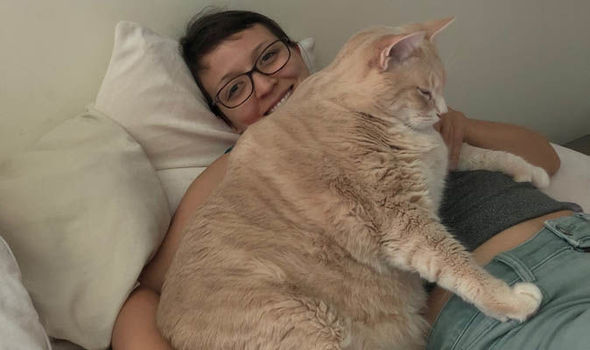
The newspaper recently profiled Manson, a 28-pound behemoth who lives with his humans in Silver Spring, Maryland, but the god of internet traffic is never sated, so the story ends with a request — or challenge — for more morbidly obese pets to drive clicks.
“Do you have a pet who’s even chunkier than Manson? Get in touch to share their story,” Metro’s editors write.
You know things have gotten out of hand when readers and editors alike respond to a story about a kitty almost three times the weight of a normal feline with a collective “Eh, that’s all? Show us a fatter one!”
In the world of Online Famous felines, popularity is directly proportional to fat, inspiring a caloric arms race among those seeking fleeting fame from fickle followers.
Indeed, the Metro story notes that while two-year-old Manson can’t hop up onto his humans’ bed without assistance, he’s amassed more than 10,000 followers on Instagram, as if an abstract measure of online “fame” — which he can never comprehend and makes absolutely no difference to him — counterbalances the maladies he’ll suffer due to his weight.
People apparently think it’s funny to see a two-year-old cat who can do little more than nap, eat and roll himself around the house. Anyone who expresses alarm for the welfare of the cat is a “troll” or a hater, according to the Metro article.
Are people stuffing their cats for followers and upvotes?
There’s really no way to determine that short of cat owners admitting it. Manson’s owners say they see no problem with their cat’s diet.
Most of these “chonky cat” stories come from shelters, where staff and volunteers are left with the hard problem of getting huge furballs to slim down after they’ve been abandoned by their humans or orphaned due to owner death. That was the case with Bazooka, a 35-pound ginger tabby whose owner had dementia and fed the cat constantly.
“[Bazooka’s owner] thought he was doing the best thing for his cat by feeding him,” an SPCA spokeswoman said at the time. “We need to look on this with a compassionate view. He was loved.”
Those viral chonky cat stories have been a boon to shelters, highlighting the good work they do and driving donations from cat lovers and well-wishers.
But those shelters are trying to get the cats in their care to lose weight, not pack on the pounds. That’s because they see first-hand what morbid obesity can do to a cat’s quality of life and life expectancy.
As for the rest of us, we should probably rethink our tendency to reward the owners of massive cats with our attention.
With news of the first infected cat comes panic and misinformation that could prove deadly to our loyal little friends.
Cats have been a Godsend in this era of social distancing.
People are looking for something — anything — to get their minds off grim reality and the repetitive, depressing 24/7 virus coverage that dominates television.
Cats have delivered. Our furry friends have been covering themselves in glory, providing an endless supply of viral videos and making people smile just by being their endearing, quirky selves.
Most of all they’ve been there for us at home, soothing anxieties and lowering blood pressure with each lap they claim and each affectionate nuzzle. We may be isolated from other people, but when there’s a cat in the house you never feel truly alone. (If for nothing else, their meows at meal time will make sure of that.)
For me it’s not even a question: Without my Buddy, I’d be slipping into depression of a kind that can’t be cured with Netflix bingeing, books or games.
Little Buddy the Cat on March 27, 2020.
Now we’ve got to return the favor and protect our cats.
The first “confirmed” case of a cat contracting COVID-19 has come from Belgium, where a veterinary lab ran tests on a sick cat with respiratory problems and concluded the cat picked up the virus from her human.
“The cat lived with her owner, who started showing symptoms of the virus a week before the cat did,” said Steven Van Gucht, a public health official in Belgium, according to the Brussels Times. “The cat had diarrhea, kept vomiting and had breathing difficulties. The researchers found the virus in the cat’s feces.”
This is not good news.
Medical diagnostic labs in the US have tested thousands of pets for COVID-19 and haven’t found a single infected animal.
The World Health Organization has repeatedly said there is no evidence of dogs or cats serving as hosts for the virus or infecting humans, although that organization has killed its own credibility with its effusive praise for the Chinese government, and by parroting Chinese insistence that the virus couldn’t be transmitted from human to human. (WHO continued telling the world there was no evidence of contagion through late January, some six weeks after it was clear the virus was multiplying.)
The deadly consequences of misinformation
Unfortunately that didn’t stop innumerable people from abandoning their cats and dogs in China, leaving them in apartments and houses to starve. One Chinese animal welfare group, which is partnered with Humane Society International, says “tens of thousands” of pets were abandoned.
Some Chinese territories instructed people to kill their pets, and there are sickening reports of people clubbing defenseless animals to death in the streets.
That may not be surprising in China, which has an abominable record on human and animal rights, but now there are disturbing reports from all over the world. Shelter operators in the UK, for instance, say they’re fielding calls from people who want to abandon their pets because of the Coronavirus.
“Mostly, it’s people who haven’t got access to the right information online,” Claire Jones, who works at a shelter in Stoke-on-Trent, told the BBC. “It’s a nightmare.”
Misinformation and confusion are compounding the problem, the result of a new media ecosystem in which news is whatever a person’s social circle posts on their feeds and news consumers don’t distinguish between reliable press outlets (Wall Street Journal, Associated Press, Reuters, etc) and the thousands of less scrupulous sites masquerading as legitimate sources of news.
Thus, when a dog in China tested positive for trace elements of Coronavirus — but blood tests were negative — sites like Quartz wasted no time pumping out headlines declaring that dogs and cats can be infected.
Exercising caution with information
It looks like the Belgium case is another in which fact and nuance are sacrificed for clicks. Belgian virologist Hans Nauwynck is among the skeptics who believe veterinary authorities in his country acted too rashly.
“Before sending this news out into the world, I would have had some other tests carried out,” Nauwynck told the Brussels Times.
To confirm the positive test, the lab used a polymerase chain reaction, or PCR. A PCR test “allows scientists to multiply a very small sample of genetic material to produce a quantity large enough to study,” the Times noted. But the test only confirmed that the cat suffered from a flu-like virus. It did not specifically match the viral infection with COVID-19.
“A clear link between virus excretion and clinical signs cannot be established, in part because other possible causes for the cat’s illness were not excluded,” wrote Ginger Macaulay, a veterinarian in Lexington, South Carolina.
In addition, authorities didn’t rule out the possibility that the sample was contaminated or maintain a forensic chain of possession that would ensure it was properly handled.
“I would advise people to slow down,” Nauwynck said. “There may somehow have been genetic material from the owner in the sample, and so the sample is contaminated.”
To be absolutely certain, he said, more tests should have been done to confirm the initial result, and certainly before making an announcement to the world. Veterinary authorities should have tested for the presence of antibodies in the cat’s system as well, he said, which is a sign that an immune system is fighting off an infection.
“I’m worried that people will be scared by this news and animals will be the ones to suffer, and that’s not right. As scientists we ought to put out clear and full information, and I don’t think that has happened.”
With reports about the infected cat spreading across the globe — and adding to existing fears — the Belgian virologist said panic could override reason, with catastrophic consequences for our little feline friends.
“I wouldn’t wish to be a cat tomorrow.”
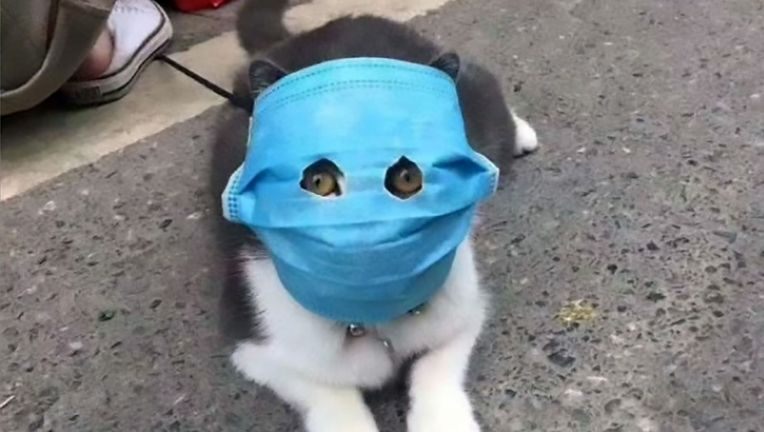
A cat on a lead in China is protected with a face mask. Credit: AsiaWire
Ingredients can change without any indication on pet food packaging or acknowledgment from the companies that manufacture pet food, the study revealed.
We’ve all heard the oft-quoted factoid claiming domestic cats kill billions of birds and small animals every year, and unsurprisingly that number is contested and controversial.
One reason skeptics doubt those numbers is because researchers didn’t observe cat behavior and extrapolate the ecological impact — they handed out questionnaires to owners and asked them how often their cats brought dead animals home. To get accurate results, researchers have to be confident people are answering honestly and have reliable memories. It’s really not the best way to do a study.
So a team at North Carolina State University came up with a better way to measure cat predation on wildlife: They’d take hair samples from more than 400 cats, which would reveal how much of their diets consist of cat food versus prey.
Hair analysis can reveal different isotopes, so the team would be able to directly note each cat’s diet by distinguishing between pet food isotopes and those from prey animals. As the team explained:
A common way to understand the composition of animal diets is to collect samples of fur, nails, or blood from an animal and analyze its carbon and nitrogen isotopes. All organic materials contain isotopes of elements that get locked into body tissues, following the basic principle that you are what you eat. For example, the ratios of nitrogen isotopes present in carnivores are dependably distinct from those of plant eaters. Similarly, researchers can distinguish the types of plants that an animal eats by measuring the ratio of carbon isotopes.
It was a good idea, but the study was derailed by an unexpected discovery: No one knows what the heck is in pet food.
Cat food manufacturers fill their products with mystery ingredients, the team found, which means one bag of kibble or one can of wet food doesn’t have the same ingredients as the next, even if they’re the same flavor from the same company.
Although they can meow in protest, our cats can’t tell us their food tastes different. (Source)
Additionally, pet food manufacturers can — and do — change what they put in their products without notifying customers or acknowledging the changes on the packaging.
As a result, the research team couldn’t identify which isotopes were from cat food and which ones were from hunted meals.
“We really thought this was going to be an ideal application of the isotope methodology,” said scientist Roland Kays, a co-author of the study. “Usually these studies are complicated by the variety of food a wild animal eats, but here we had the exact pet food people were giving their cats.”
That discovery essentially rendered the study useless for its original purpose, but like all good scientists, the North Carolina State team realized that failure reveals just as much as success, even if it’s not necessarily what you’re looking for.
“This isn’t what we aimed to study, but it is important in as much as there are hundreds of millions of cats (perhaps more) on Earth,” said Rob Dunn, a professor in NC State’s Department of Applied Ecology and co-author of the study. “The diets of cats, dogs and domestic animals have enormous consequences for global sustainability, cat health and much else. But they are very non-transparent. In short, at the end of this study we are still ignorant about why some cats kill more wildlife than others, and we have also found we are ignorant about something else, the shifting dynamics of ‘Big Pet Food.'”
As veterinarian Shawn Messonnier put it in an editorial for Pet Age, “the pet food industry remains shrouded in mystery about what’s really inside the pet food bag and how it’s created.”
Calling for more transparency in the manufacture and packaging of pet food, Messonnier pointed out ingredients can have a drastic effect on the health of our furry friends.
“For pet parents, a big leap of faith is required of them because unlike fresh human food, you can’t visually verify the ingredients used, their sources, freshness or the safeness of their handling,” he wrote. “Label language can be difficult to discern, too, so people rely mostly on the observations and opinions of friends and family they trust. Inevitably, people hope what goes in the bowl will translate into well-being and happiness for their dog or cat.”