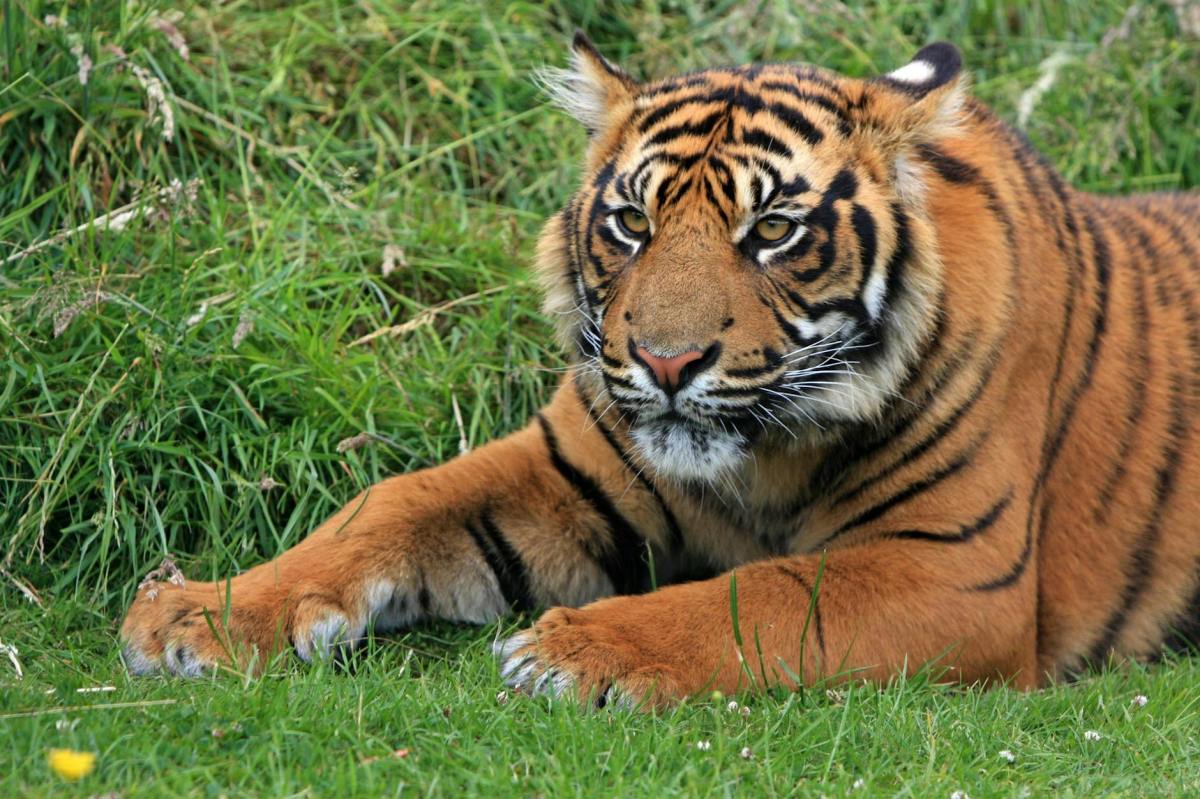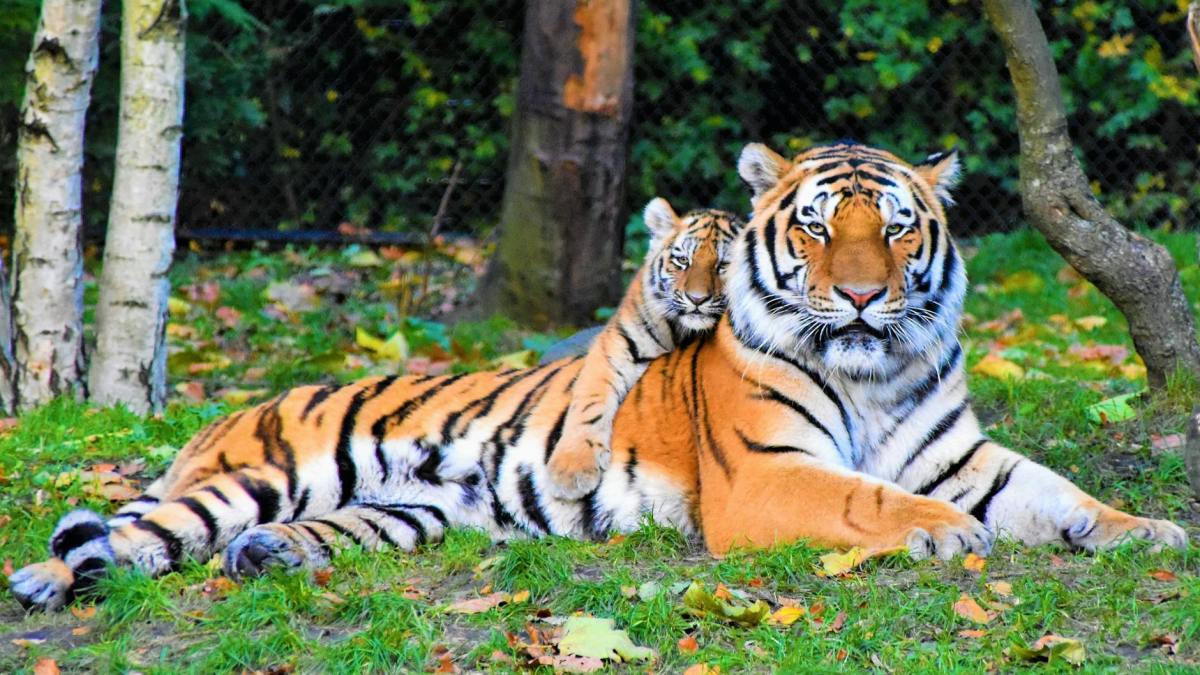
The Amur tiger, panthera tigris altaica, is the largest subspecies of the largest cat in the world.
Click an image in the gallery to view a higher resolution version:


All images in the gallery above via Wikimedia Commons. Header image via Pexels.
Today we’re admiring photos of the majestic Amur (Siberian) tiger, a species that has been pulled back from the brink of extinction thanks to the hard work of conservationists.
The Amur tiger, panthera tigris altaica, is the largest subspecies of the largest cat in the world.
Click an image in the gallery to view a higher resolution version:
All images in the gallery above via Wikimedia Commons. Header image via Pexels.
The purveyors of the deceptive posts want you to click, share and argue with other users about the veracity of the photos.
Not only is he the rarest puma in existence, he’s more well-traveled than most humans.
The mountain lion in question has a black coat, unprecedented for his species, and has been popping up all over Facebook. He’s photographed from the passenger seat of a truck cab, his tail in an unbothered curl, crouched amid the brush near a rural road.
Some posters claim they spotted the formidable feline in Mississippi. Others attribute the image to a sister-in-law who lives near Houston or a daughter in Charleston. A user in Louisiana claimed they took the photograph near the bayou, while another places the cat in Wyoming and claims he’s the first-ever documented “shadow cougar.” (Our friend Leah of Catwoods drew our attention to the images last week after seeing posts placing the cat in the south.)


In case it isn’t obvious, all the claims are full of it.
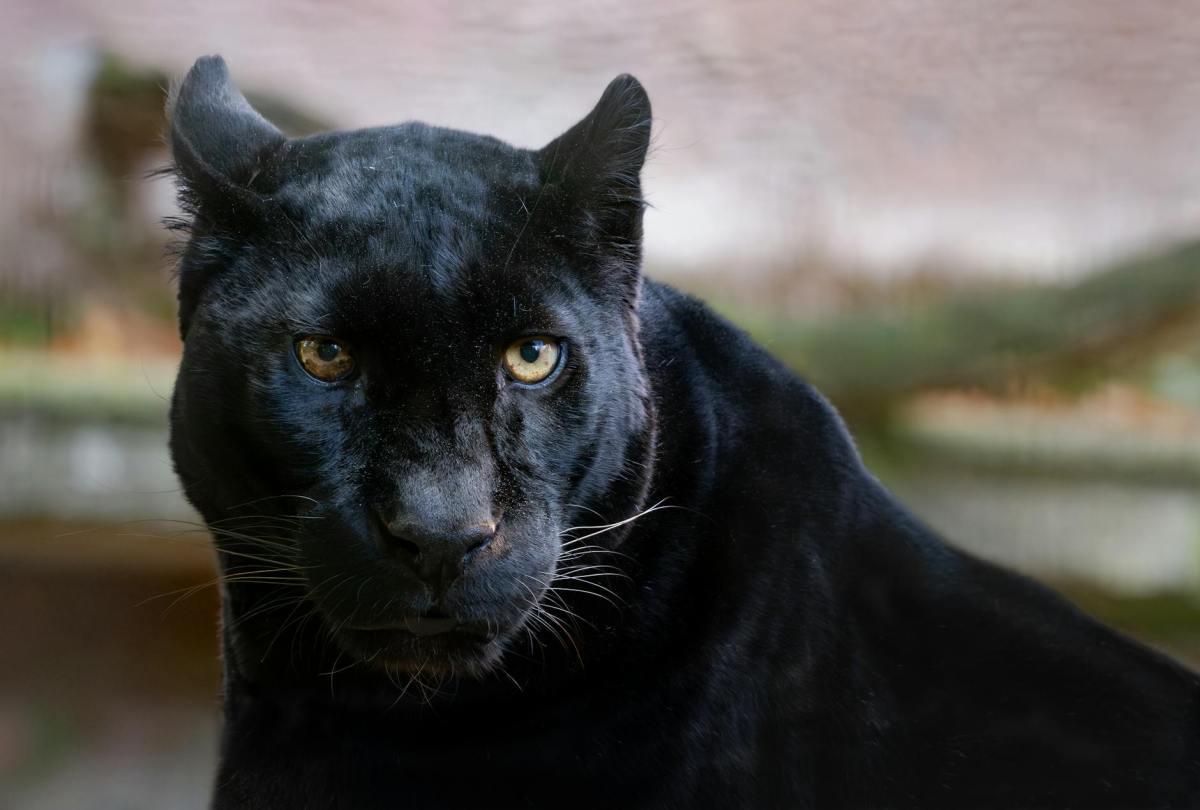
There is no such thing as a melanistic (black) mountain lion, and the big cat in the photo has the physical characteristics of a leopard, an animal that is not native to this hemisphere, let alone this continent.
The real story here is that Facebook remains a fountain of misinformation and Meta (its parent company) doesn’t care. Unscrupulous users will do anything to get attention and the clicks that come with it, and the average Facebook user is happy to indulge them, driving clicks by resharing the hoax content and juicing its algorithmic value by engaging in endless arguments with fellow users about the veracity and provenance of the photos.
Alleged big cat sightings are perfect for this sort of thing because they pique people’s natural curiosity, there’s a whiff of danger — especially when the poster claims the animal was spotted locally — and most people aren’t aware of telltale differences between cat species.
In many ways, the blurrier and more indeterminate the photo, the better: like Bigfoot and the Loch Ness monster, the idea of phantom cats is most fertile in the imagination.
These days you don’t even need a photo to get in on the click-baiting action. I asked Gemini to create an image of a jaguar-like big cat walking along a rural road at night, and this is what the LLM gave me:

In the image prompt, I asked it to make it look like an amateur photo taken with a midrange smartphone camera, but if we really wanted to get artistic, it’s simple enough to add noise, maybe some motion blur and digital artefacts to the image to make it look more like an authentically crappy, rushed shot of an unexpected animal.
Here’s the result of some simple efforts to en-crapify the “photo” further:

To give the image urgency and encourage people to engage with it, I can make it local and claim it was recent. Errors of grammar, spelling and punctuation add a nice seasoning of authenticity, along for feigned concern for others as the reason for sharing:
“Folks – just wanted to tell ya’ll to mind your pets an make sure of you’re surroundings bc theres a big cat on the lose!! my cousins GF took thus friday nite on Route 9 a few mile’s south of Dennies. a real honest to goodness black panther! BE SAFE!!!”
There’s a dangerous animal on the loose in your area! You know what you have to do: share it so others can bring their pets safely inside and stop their kids from playing outdoors, at least until it looks like the predator has moved on.
It’s your duty as a good American!
Since it doesn’t seem to matter if a quick reverse image search can settle the question of where an image came from, it’ll be interesting to see if anyone lifts the above image and text.
At the very least, maybe a few people who do think to run a search will find their way here, read about the hoax, and save themselves from getting drawn into online debates about the existence of cryptid cats.
Ryan Easley “wanted to be the one with the most tigers in the ring at one time,” Joe “Exotic” Maldonado said of the Oklahoma man.
A circus big cat trainer and associate of so-called “Tiger King” Joe Maldonado was mauled to death by a tiger at a roadside zoo on Saturday.
Authorities say 37-year-old Ryan Easley was conducting a “show” at the Growler Pines Tiger Preserve when a tiger he “owned” turned on him. The captive predator mauled Easley, attacking his neck and shoulders “in full view of a group of visitors, including children,” PETA wrote in a statement calling on federal authorities to cancel the facility’s licenses.

While Easley called the facility a preserve, others described it as a roadside zoo, and genuine animal sanctuaries do not put animals on public display. The roadside zoo description aligns with the Oklahoma man’s past as a circus trainer of big cats, and Maldonado — who was the subject of the popular 2020 Netflix documentary, Tiger King — seemed to confirm that description when he issued a statement on his friend’s death.
“He wanted to be the one with the most tigers in the ring at one time,” Maldonado wrote in a statement from prison. “Some of his cats were crazy in the head, but it was about having the most performing at one time at all costs.”
Easley acquired some of his tigers from Maldonado, who was convicted of conspiracy to commit murder for hire and 17 counts of violating federal conservation laws in 2019. Maldonado, who remains incarcerated in a federal prison in Fort Worth, Texas, tried in 2017 to hire two men to kill Big Cat Rescue’s Carole Baskin, an activist with whom he had a years-long feud. One of the men Maldonado tried to hire was an FBI informant.

PETA has accused Easley of mistreating, neglecting and abusing the tigers at his facility. Tigers are apex predators and hyper-carnivores who do not recognize social hierarchy or have any innate compulsion to follow orders from humans, so “taming” them and getting them to “perform” involves coercion, including physical punishment, withholding food and torture. The brutal mistreatment required to force elephants, lions, tigers and other animals to perform is one reason why traditional animal circuses no longer exist in the west.
Maldonado admitted as much in his statement, noting “you don’t get a tiger to jump through a hoop of fire because they love you.”
“It’s never safe for humans to interact directly with apex predators, and it’s never a surprise when a human is attacked by a stressed big cat who has been caged, whipped, and denied everything natural and important to them,” PETA’s Debbie Metzler wrote in a statement.
Former big cat handler and caretaker Katherine Lee Guard, who is now an activist against keeping big cats as pets and using them in the entertainment industry, spoke to PITB about her experiences in 2023. She noted tigers can turn on their handlers at any time, even if the latter hand-reared the felids since infancy. Once their predatory instincts are triggered, the apex predators feel a powerful compulsion to attack.
Even in accredited zoos where tigers are provided with large enclosures designed for their well-being, given plenty of enrichment and stimulation, and fed well, Guard said people should never enter an area without barriers between themselves and the big cats.
“The cost is too great if something goes wrong,” she said. “And something always goes wrong given enough time.”
Header image of a Sumatran tiger via Pexels. Do you enjoy reading PITB? Please consider whitelisting us on your ad blocker so we can keep the lights on. Thanks!
The costumed man has growled, hissed and meowed at passersby in the coastal area, reigniting old rumors of actual big cats prowling the area and freaking out people walking their dogs at night.
Ah, the things you can get away with in a country without guns.
A man in an all-black outfit has been prowling Wallasey beach in Wirral, a peninsula in northwest England, according to people who live in the area.
One witness said the man was “waving his hands in the air and making panther noises,” while others said they saw him approaching cars stopped at lights on roads near the coast.
“Anyone know who the freak in the cat mask and morph suit is at the coastal park near the harvester?” another local wrote online.
One thing was clear from witness accounts, photos and several short smartphone-shot videos: the costumed man wasn’t trying to imitate a friendly house cat.
“Was walking my dog tonight and heard a man making cat noises, shone a torch he was waving his arms at me before crawling up the hill. Never been so scared,” one witness posted to Facebook, per the BBC.
Sad as it may be, the first thing that came to mind when we read the witness accounts was that this doesn’t happen in the US, simply because odds are the costumed prankster would be shot.

It’s possible whoever is behind the strange sightings is making light of decades-long rumors that mysterious and elusive big cats have been prowling the UK countryside.
Similar to persistent rumors of Bigfoot in the US, the phantom cats of the UK have their own believers who argue that there’s an extant population of leopards or pumas who are exceptionally adept at staying hidden from cameras but are occasionally spotted by farmers and motorists in the British countryside.
There’s a podcast dedicated to the topic, and proponents of the idea say it could explain a handful of cases in which livestock have gone missing.
The podcast, Big Cat Conversations, even dedicated a 2021 episode to “Wirral’s liminal leopards,” with its host interviewing several people who say they’ve encountered large melanistic felids on the peninsula over the decades.

But as big cat experts have pointed out, it’s difficult to miss the signs when such apex predators really do claim an area as home. From unmistakable pug marks, to trees scratched and scent-marked with urine, to calls that can echo for miles in right conditions, big cats have many ways of making their presence known— and it’s often advantageous for them to do so, since they’re highly territorial animals.
One man who was out walking his dog told the BBC he thinks the whole thing is a prank.
“I don’t know his name, I think it’s just a wind up. He’s definitely not out to frighten people, he does it for fun,” he said. “He just likes being a giant cat. He doesn’t frighten our dog.”
Local police say they’re aware of the sightings. Merseyside Police and Crime Commissioner Emily Spurrell told local media that anyone who feels threatened by the suited figure should call law enforcement and report his whereabouts.
Arabian leopards are among the most rare of all cats, with only about 120 left living in the wild. Trump was taken with them on a recent visit to Saudi Arabia.
I can practically hear Donald Trump bragging about the new pair of extremely rare Arabian leopards the Saudis will send stateside as a deal-sweetener between the countries.
“They’re tremendous cats, just terrific,” he’ll say. “The most ferocious cats you’ve ever seen, believe me. It’s incredible. A lot of people are saying — and by the way, did you know leopards eat up to 40 pounds of meat a day? They’re tremendously powerful animals, very powerful.”
As the New York Times notes, Trump is just as beguiled by dangerous apex predators as he is with dangerous “strong men” tyrants:
Mr. Trump does not own pets and, unlike his sons, he does not hunt big game. But he has shown a particular fascination for animals at the top of the food chain. Last year, he talked constantly on the campaign trail about shark attacks. While campaigning in 2015, he was nearly mauled by a bald eagle he posed with in Trump Tower for a Time magazine photo shoot. (“This bird is seriously dangerous but beautiful!” he chirped after the raptor lunged at his head.)
During his first term, Mr. Trump asked aides about dropping snakes and alligators into a hypothetical moat he wanted built on America’s southern border. He also reportedly became fixated on the viciousness of badgers, badgering his former chief of staff Reince Priebus, who is from the Badger State, as Wisconsin is known, about whether badgers were mean or friendly, according to “Sinking in the Swamp,” a book about the first Trump administration. (Mr. Priebus did not respond to multiple requests for comment.)
Trump viewed the leopards and spoke to a zookeeper while he was in Saudi Arabia to complete a recent arms deal. (The U.S. will sell $142 billion in high tech weapons to Saudi Arabia so the kingdom can more effectively slaughter Yemeni civilians in its ongoing proxy war with Iran.) The American president wanted to know all about the big cats, including how big they are and what they eat. The zookeeper, who routinely handles those sorts of questions from visiting classes of elementary school children, happily indulged his interest.
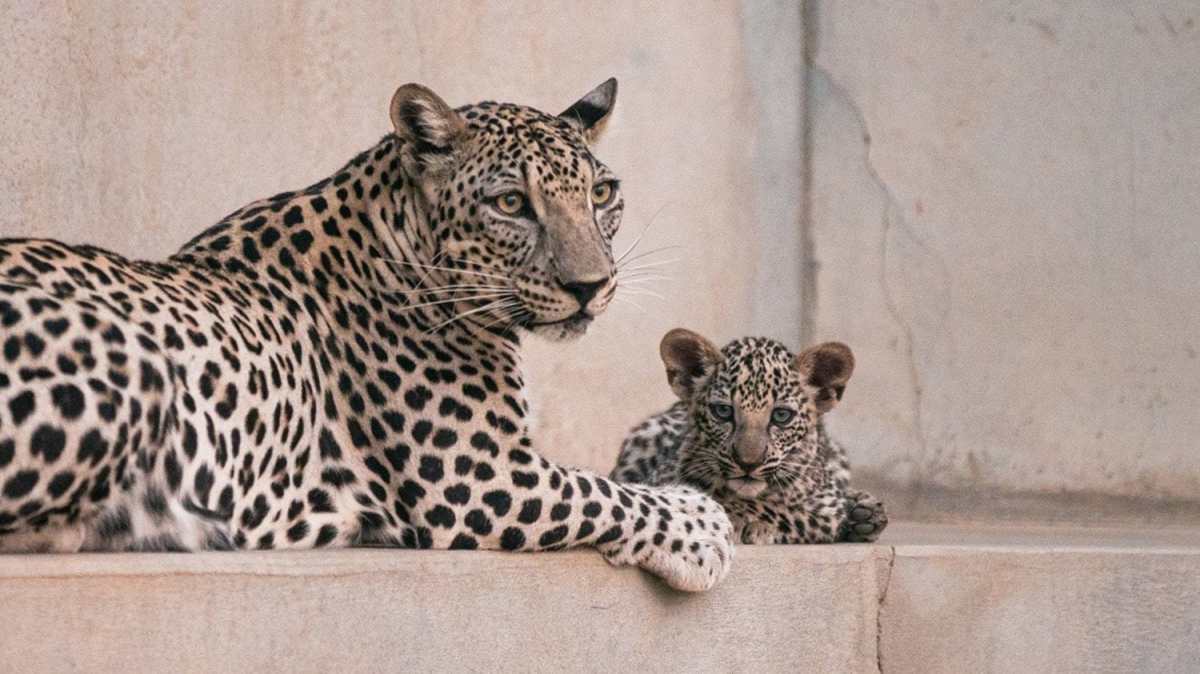
Arabian leopards are fierce, but they’re somewhat smaller than their Asian counterparts. Panthera pardus nimr, as the species is known, generally has a lighter, tan-colored coat that provides more camouflage in desert and arid environments.

The Times also quotes Joe Maldonado, aka Joe Exotic, who spoke to a reporter from prison, where he’s serving a 21-year sentence for trying to have Big Cat Rescue’s Carole Baskin murdered. Maldonado is keenly aware of Trump’s recent streak of handing out pardons to reality TV grifters, like Todd and Julie Chrisley, who stole almost $40 million, as well as less famous scammers like convicted crypto bros. (The Chrisleys, who were convicted of bank fraud and tax evasion, declared bankruptcy to avoid paying back their victims, and will now launch a new reality TV show detailing their post-prison lives. ‘Merica!)
Now Maldonado sees an opportunity.
The former “Tiger King” says Trump should have leopards and other big cats prowling the grounds of the White House, which is the kind of thing dictators like Vladimir Putin and Saddam Hussein have been known for.
“I think it would be absolutely amazing if he would put some endangered cats like that around the White House,” Maldonado said. “I’ve never been there. I don’t know how big the Rose Garden is, but I would imagine you could build a pretty nice size complex.”
Perhaps Trump can threaten to feed congressmen and senators to his new leopards if they defy him and don’t vote for legislation like the “big, beautiful bill” he’s been pushing.
Maldonado admitted that even he’s never seen an Arabian leopard, an animal so rare that only an estimated 120 of them remain in the wild. Still, he thinks he can handle them for Trump.
“Let me out,” Maldonado said, “and I’ll come take care of ’em!”