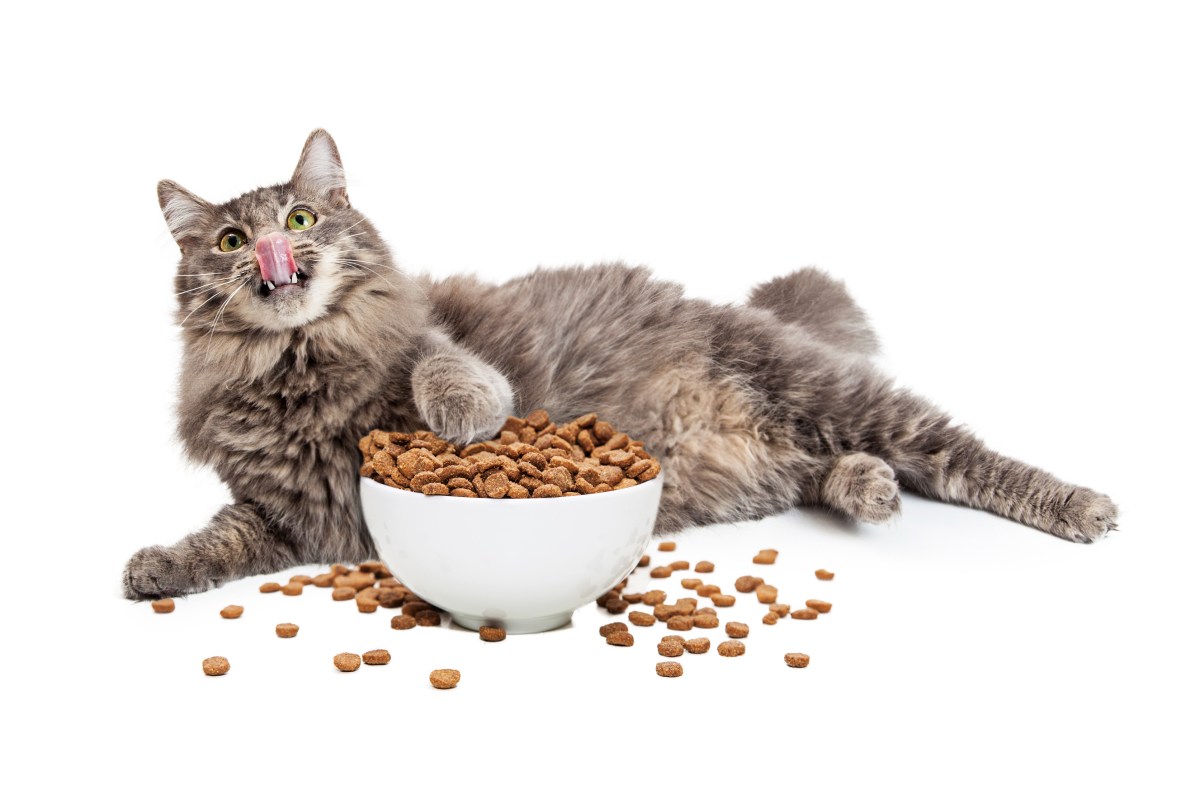
The AI-powered device ensures felines never have to see the bottom of their bowls again.
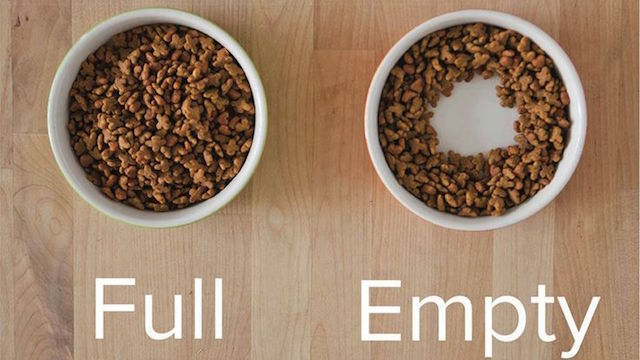
NEW YORK — Life is full of unpleasantness, like being able to see the bottom of your bowl. But what if someone told you he could fix that?
Enter Buddy the Cat’s SmartHuman Feeding System™, a device that harnesses the power of AI and cutting-edge hardware to make sure you never see the bottom of your bowl again.
SmartHuman was designed with weight sensors and an AI-enabled camera system to determine when the food in your bowl is getting low. If the on-board algorithms detect low levels of kibble, SmartHuman sends a text to your servant every 15 seconds until the device registers fresh kibble in the bowl.
And if the unthinkable should happen and you really are subjected to the horrific sight of the bottom of your bowl, SmartHuman’s built-in klaxon and emergency lights guarantee your human servants won’t have a second’s peace until they do what they’re supposed to and promptly refill your bowl. The system even requires the human to issue an apology before the sound and lights subside.
“I haven’t had to meow in annoyance or raise a paw once since I got the SmartHuman system,” raved Def the Defenestrator, a popular catfluencer with more than 240,000 followers on Meower. “The threat of getting bombarded with 110-decibel alerts to refill my bowl is enough to make my human servant get off her lazy behind and make sure my bowl is refilled before there’s a problem.”
The SmartHuman’s inventor has a background in feline teleportation and string cheese theory, but was prompted to design his device when he saw the bottom of his dry food bowl twice in as many months.
“I was literally starving,” Buddy said, adding that his “lazy human servant made me wait four minutes and 13 seconds before he refilled my bowl” during the second incident.
Vowing never to go hungry again, the entrepawneur built the first SmartHuman prototype in his garage, using a Raspberry Pi and a digital scale he ordered off Amazon.
He brought his idea to Shark Tank in late 2021 and successfully pitched Mr. Wonderful, who bought a 15 percent stake in SmartHuman™ in exchange for a $150,000 investment. The product entered production earlier this summer and is now available in stores and online.
“Cats love the SmartHuman™, but humans? Not so much,” Buddy the Cat admitted.
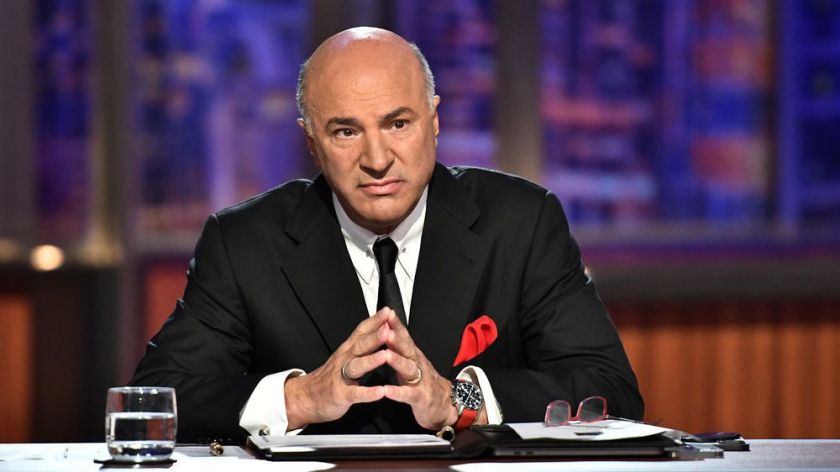
Mr. Wonderful (Kevin O’Leary) outbid fellow Sharks Mark Cuban, Barbara Corcoran and Laurie Greiner to partner with Buddy the Cat and invest in SmartHuman™.
Not one to rest on his laurels, the inventive feline said he’s working on a software update that will make the device compatible with wet food as well. In early beta testing, SmartHuman successfully prompted humans to feed wet food to their feline masters on time. Wet Mode includes a new feature as well: If the wet food remains untouched after a three-minute timer elapses, SmartHuman sends another text to the human, informing them the food isn’t satisfactory and should be replaced with another meal.
“Humans are stupid, and they don’t understand when we meow to them in complaint because we don’t feel like eating tuna or whatever on a given night when we’d prefer turkey,” Buddy said. “When this update goes live, cats will be able to enjoy meals of their choosing, every time.”
Choupette has her own custom Louis Vuitton carrier and enjoys perks like a personal chef.
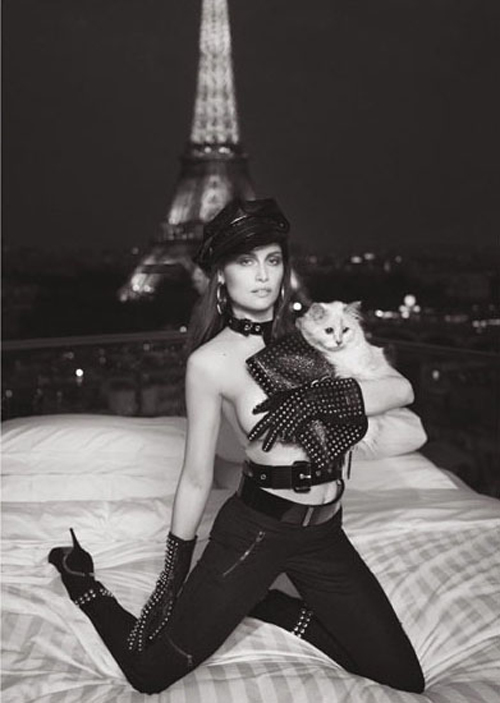
Choupette Lagerfeld travels the world in her own private jet, appears in commercials for Japanese beauty projects and has graced high fashion covers, including a shoot with French supermodel Laetitia Casta for V Magazine.
At one point she traveled with a body guard, two minders, a personal chef and her own doctor, according to the New York Times. She drinks and eats from silver bowls and enjoys a one-of-a-kind Louis Vuitton carrier.
Oh, and she’s worth millions.
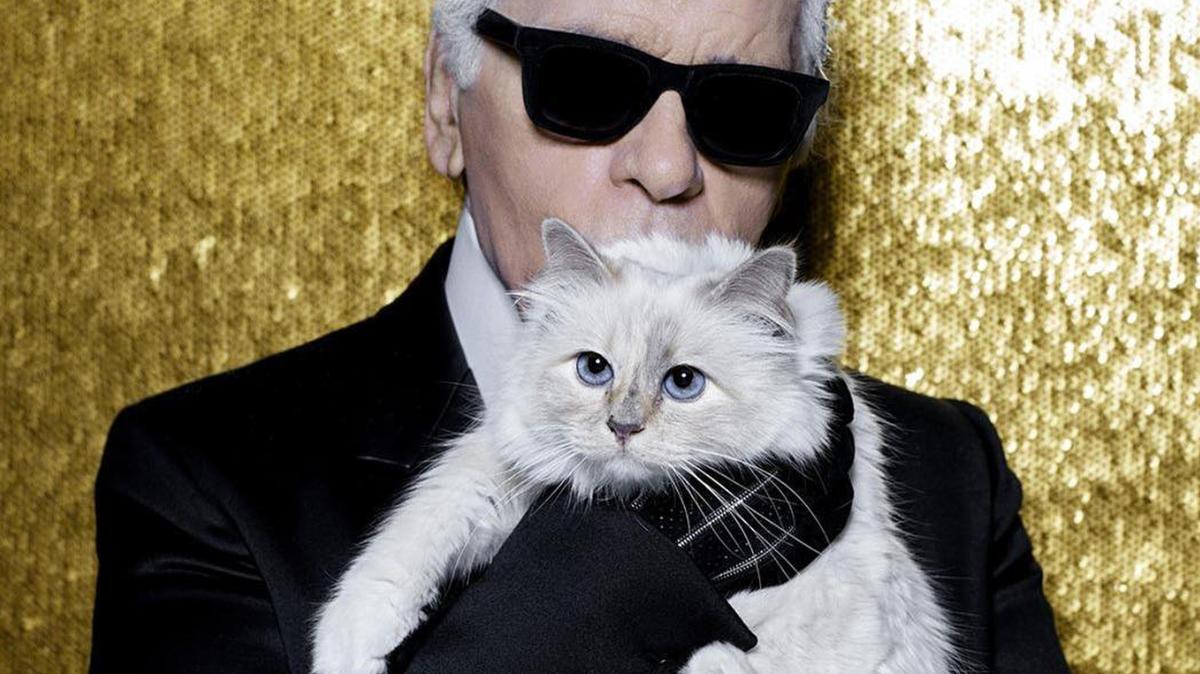
Choupette (“sweetie” in French) is a white-and-cream Birman with subtle tabby marks on her head, and she was adopted by Karl Lagerfeld in 2011. The German designer, who was the creative director of fashion houses Chanel and Fendi, died of pancreatic cancer in February of 2019 but left a considerable fortune to his cat.
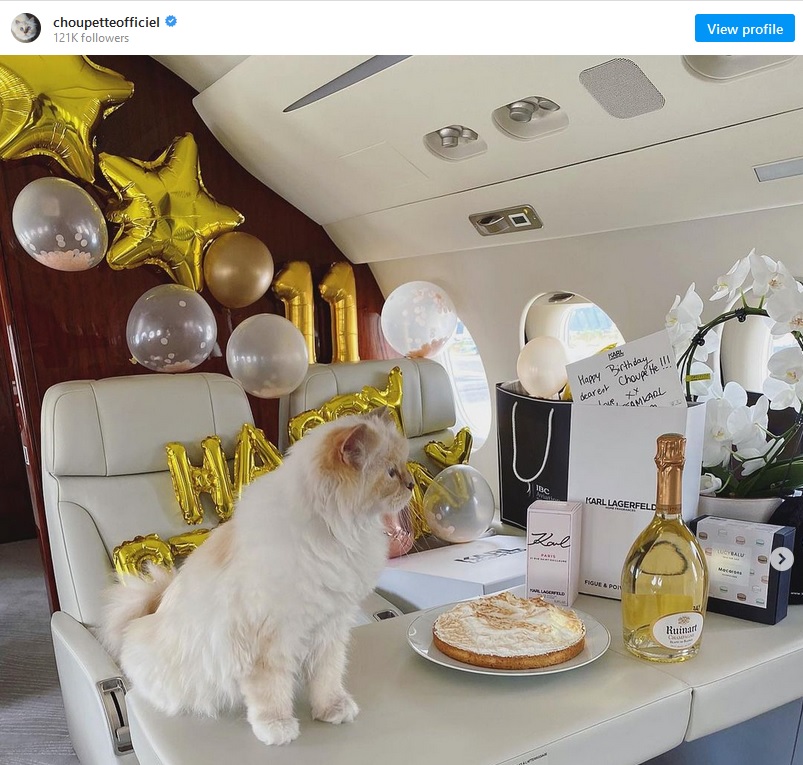
On Thursday, Choupette’s minders marked her 11th birthday by sharing a snap to her Instagram, choupetteofficiel, showing the fabulously wealthy feline aboard her private jet, with a cake presumably made of pâté, a bottle of champagne, balloons and various gifts from her late human’s fashion collections.
“Happy birthday to me,” the post reads. The pampered puss’ Instagram has 121,000 followers.
Choupette celebrated her birthday on Aug. 18. A snap shows her celebrating on her private jet, which ferries her between modeling gigs and vacation spots like Ibiza.
No one’s sure precisely how much Choupette is worth, but Lagerfeld — who had a net worth between $170 million and $300 million, per reports — left her a considerable sum.
“She’s an heiress,” Lagerfeld told an interviewer. She “has her own little fortune.”
Like human celebrities she’s the subject of net worth profiles on various sites, which list an often-cited $13 million number. Some of that money includes her own earnings for commercials in Japan and Germany, where she’s been the face of beauty products and luxury cars, respectively.
Sacre bleu! The Eiffel Tower, a French supermodel and Choupette! This photo was printed in V Magazine, which featured Laetitia Casta and Choupette in a 10-page spread.
I’m kind of at a loss for words here. Anything I could say seems so obvious.
However, I’m thinking it may be time to put Buddy’s good looks and charm to use for once and arrange some sort of meet cute with Choupette.
The name Buddy would have to go. He’d have to be called something appropriately, Frenchly snooty, like Jean-Luc Budélard Lucien or Yves Buddiene Baptiste. I’d have to school him in Parisian meowing, invent a suitably bohemian upbringing for him, and fabulate a skill that hints at his creative genius. Perhaps he’s inspired by Choupette’s late human and works as creative director of the Buddeaux fashion house, or maybe he creates abstract art by smearing paint on a canvas with his paw pads.
Meanwhile, in India…
Street kids eat from the garbage, wear tattered clothes and exist beneath the notice of the rest of society.
“No, no, it’s totally okay, hang out in my territory as long as you like! I’m just gonna stay behind these walls and thick glass windows here, don’t mind me…”
It’s safe to say kitty isn’t going outside any time soon.
Since we’ve been debating the merits of indoor vs outdoor cats here on Pain In The Bud, perhaps we’ve stumbled on the easiest way to turn outdoor roamers into indoor cuddlers — just invite a bear to take a sniff around your front lawn and make sure your feline friend has a front row seat.
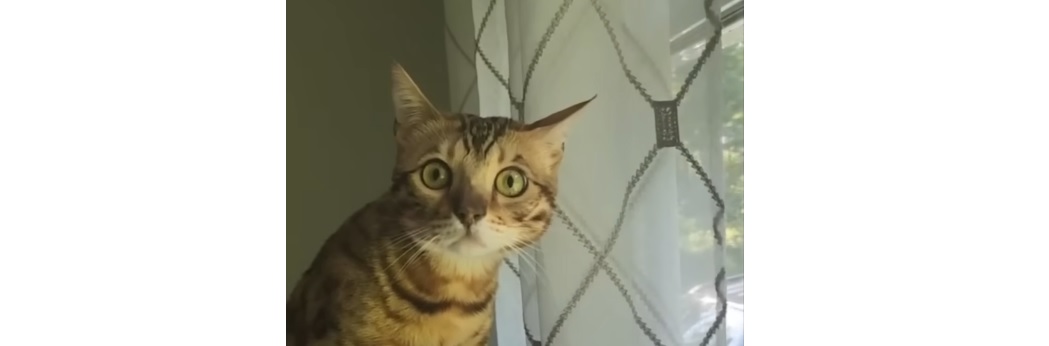
This cat’s expression says it all the first time he sees a bear:
“Oh my God, look at his face!” kitty’s human whispers before comforting the little guy with some strokes on his furry head to let him know all is well and he isn’t in danger.
I’m pretty sure Buddy wouldn’t last as long as this cat. He’d totally kick the bear’s ass and assert dominion over his territory run and hide under the bed, then meow to me in an hour or two to see if it’s safe to come out.
A UK couple created a cat flap that uses algorithmic AI to determine if their cat is trying to come inside while carrying prey in her mouth. If she’s carrying prey, the cat flap won’t open.
Jinx the cat was so grateful to UK couple Martin Rosinski and Michelle Bowyer for giving her a home that she decided to bring them a gift.
“The first time I was working at home, I heard Michelle making a commotion because Jinx had come in with a mouse and dumped it on the carpet in front of her as a ‘thank you’. That’s their way of expressing love. You can’t tell her off, so we thanked her a lot for it and took it away from her,” Rosinski said.
“Then this started happening more and more often to the point where we would be woken up at 2 a.m. as Jinx would meow loudly and announce, ‘Hey I have a gift. If we didn’t get to her fast enough she would decide to eat it herself, which would involve piles of mouse parts being smeared into the carpet. This was happening at 2 a.m., then again at 4 a.m. on many nights and we’d not get any sleep having to deal with this. Her record was four in one night – that night was a frenzy of three mice and one bird. It was something that was a real cause of stress.”
The solution is pretty simple, right? Keep Jinx inside.
The former stray won’t like it at first. There will be an adjustment period when the meowing will be seriously annoying. But it’s better than allowing your cat to play Predator at night and waking up to find your cat sitting on your chest, proudly presenting a twitching mouse to you.
Rosinski and Bowyer didn’t take Jinx inside.
Instead they created a bespoke intelligent cat flap that allows Jinx to come and go as she pleases, but won’t open if she’s carrying prey. They both have backgrounds in tech: he’s a researcher who also tinkers with software and hardware, and she’s a web developer.
Despite being domesticated, cats retain their predatory instincts and many will kill small mammals and birds if allowed to wander on their own outdoors. Credit: Aleksandr Gorlov/Pexels
Their system, OnlyCat, uses a camera and an algorithm to determine if Jinx is carrying something in her mouth. If she is, the cat flap won’t grant her access, and Bowyer and Rosinski will get a text informing them Jinx has been up to her hi-jinx again, along with a photo of her entry attempt.
The OnlyCat prototype has prevented Jinx from bringing in 42 prey animals since June of 2021, the couple said. OnlyCat may prevent her from bringing her prey inside, but it hasn’t dissuaded her from killing.
“Two months ago I think something clicked and she realized, ‘I can’t bring these home. It’s just not going to work,’” Rosinski told the UK’s South West News Service. “She still catches them outside but she’s learned that there’s no point even trying to bring them home, which is a relief.”
The couple developed the OnlyCat into a full product, which launches on Aug. 16 at £499. (A little more than $600 USD.) Their site says the retail version of the flap has worked 100 percent of the time in tests, and the developers believe “99%+ accuracy should be achievable for everyone.”
It’s similar to a device built by Amazon engineer Ben Hamm which uses DeepLens, an AI-enabled camera system, and Sagemaker, a software tool for training machine-learning algorithms, to determine if cats are carrying prey.
Hamm’s version, which he created for his cat Metric in 2019, initiates a 15-minute lockout timer if Metric tries to enter while carrying a kill, and automatically sends a donation to the National Audubon Society, which protects birds and their habitats. The algorithm was trained using tens of thousands of images of cats approaching normally, and with prey in their mouths. So far, Hamm hasn’t developed a retail version of his AI-enabled cat flap.
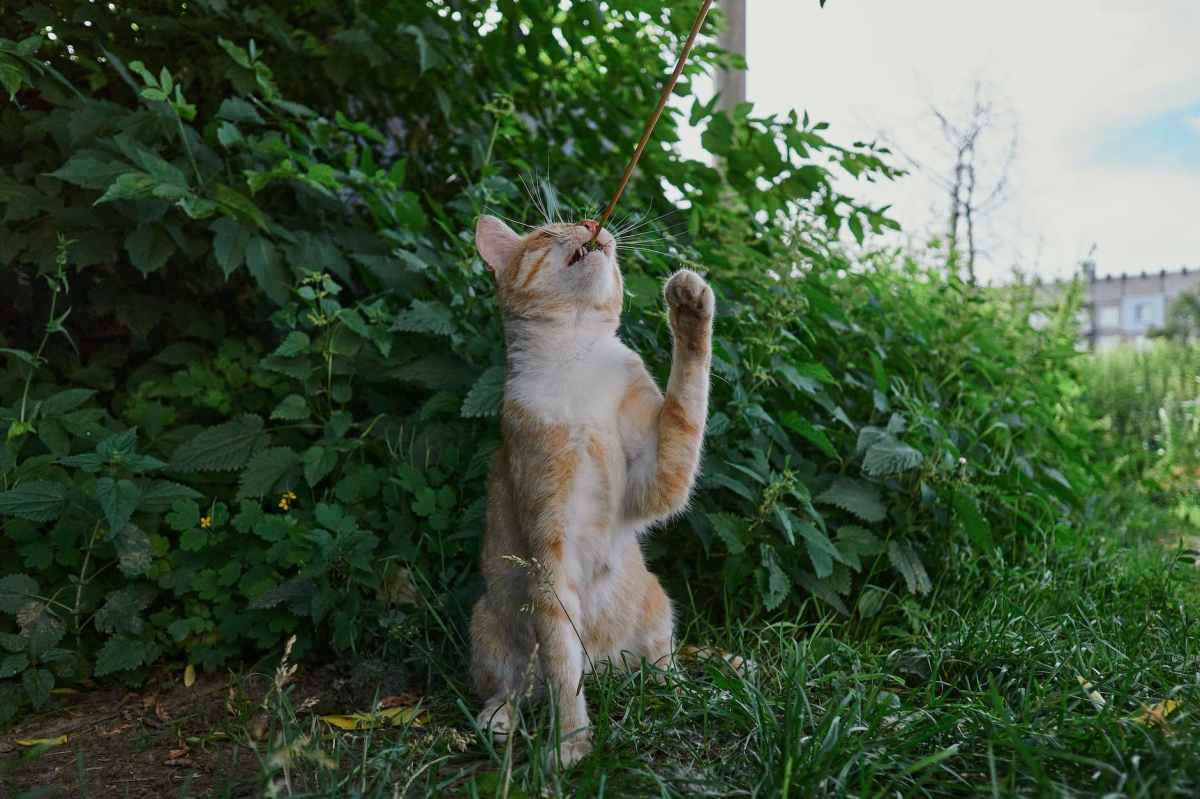
The feline predatory drive is instinctual. Indoor cats can exercise that drive with wand toy games and by chasing laser pointers. Credit: Aleksandr Nadyojin/Pexels
We don’t think there’s any one way to raise cats, and it’s obvious there are different cat cultures in various countries.
Nevertheless, seven out of 10 cat owners in the UK allow their cats to roam free, and anecdotes like the ones about Jinx, with her multiple kills a night habit, draw the ire of birders and conservationists.
Peter Marra is the author of Cat Wars: The Devastating Consequences Of A Cuddly Killer and co-author of many of the leading studies claiming cats are the primary threat to bird populations. He’s currently making the media rounds and endorsing strict policies — many of them in enacted in response to his studies — that would make it illegal to allow cats outdoors.
Maybe it’s time for more people to reconsider allowing their cats to roam free. Like putting a cat on a diet or trying to break a bad habit, there’ll be loud and annoying protests in meow, and it’ll get worse before it gets better, but eventually cats always adjust to changes if given long enough.
As domesticated animals they don’t have a natural habitat anymore, and they don’t actually need to be outside. It’s entirely possible to keep things fun and interesting for the furry little guys, and that’s on us. All that’s required is our time, attention and affection. Interactive play time. Toys that can keep a cat occupied by herself. Catnip. Condos and tunnels. Window perches. Cat TV on Youtube. Simple things to play with, like plastic bottle rings, crinkled tin foil and cardboard boxes.
We don’t think anyone should be required to keep their cats indoors, and that’s the point. We have an opportunity to meet conservationists halfway and make a real effort to reduce feline impact on small wildlife. If we don’t, eventually we’ll be forced to comply by laws that’ll be draconian compared to the voluntary measures we could have taken to prevent the government from getting involved.
Maximino the Cat figured a good way to get his human’s attention was by singing along with her.
A young opera singer was practicing on a live cast when her cat joined in for an impromptu duet.
Maura, who goes by @maura.music online, seemed annoyed at first when her cat, Maximino, hopped up on the desk and walked between her and the camera.
She opened her mouth and drew breath for the next line, then cackled with delight as Maximino cut in for the second verse:
Maura, who has been involved in opera for about 10 years, told Newsweek the video was recorded “a few years ago.” She posted it online on Aug. 11 and it’s since gone viral.
Maximino “loves music, and the only way I can get him to follow me is by whistling his favorite tunes,” she said.
The Persian is an especially vocal cat who “screams” at Maura when he wants something, which sounds an awful lot like another furry little guy we know.
In a second video recorded after the first one went viral, Maura tells Maximino “you’re famous!” before trading off with him again, with her singing in Italian while he answers in meow: