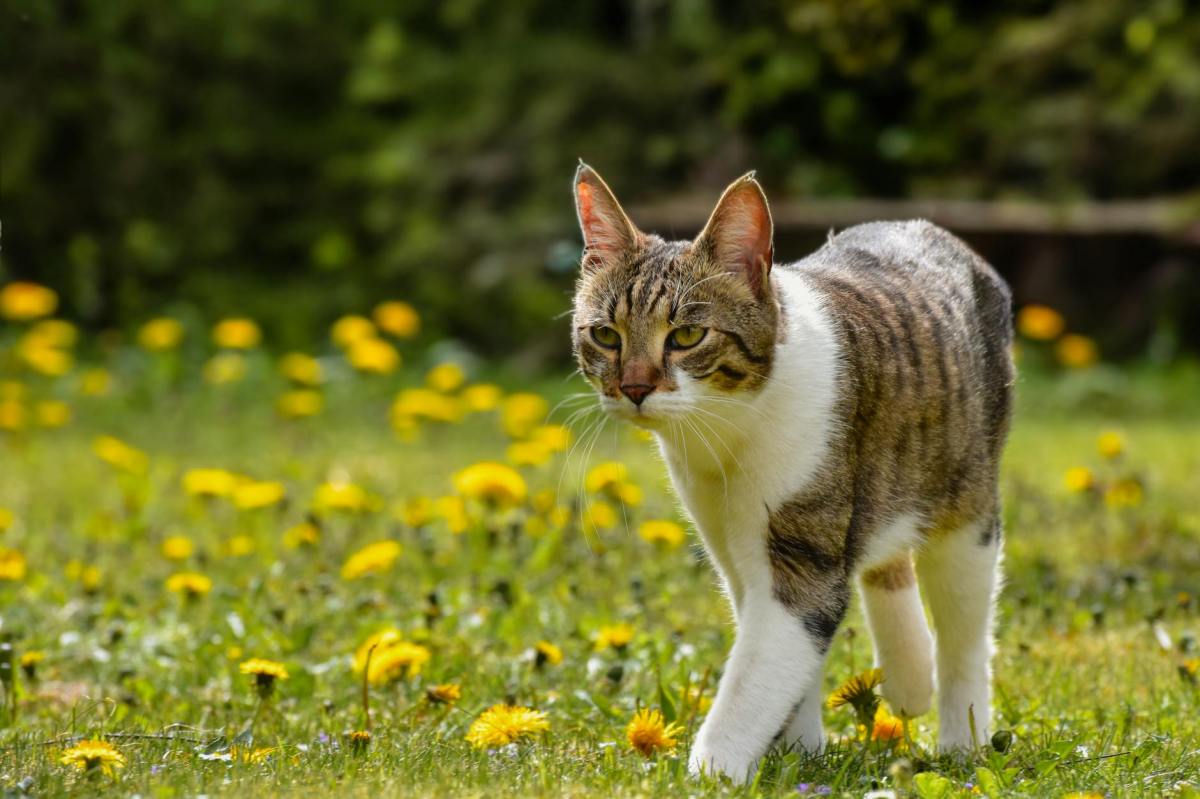
The suspect had been spotted by several people who live in the neighborhood, who said they saw him luring cats with food and injecting at least one feline with a needle.
For the past two years, people in Santa Ana, California, have sworn there was a serial cat killer in their midst.
The allegations picked up steam this week after a local TV station aired a segment from angry and confused neighbors whose pets disappeared, as well as others who saw the suspect injecting at least one cat and scooping up others. The neighbors shared information on a hyper local platform, zeroing in on one particular neighbor.
On Wednesday, the Santa Ana Police Department arrested 45-year-old Alejandro Oliveros Acosta and charged him with felony animal cruelty in connection with the case. Investigators were able to put together enough information to obtain a warrant, and a search of Acosta’s home turned up the corpses of “dozens” of cats, according to Officer Natalie Garcia, public information officer at the Santa Ana Police Department.
Heartbreakingly, Garcia said there were too many bodies in Acosta’s home for police to put an exact number on how many cats he’s allegedly killed. Police are still putting together the details, and more charges are likely.
A press release from Santa Ana police says the department is working with animal control and a neighboring police department. In addition to the evidence they collected in Acosta’s home, several neighbors positively identified Acosta as the man they saw luring neighborhood cats with food, scooping up a breed cat, and injecting another. One cat was left hanging from a tree, while others simply disappeared, preventing their people from finding closure.
“Isaw this same man grab [a] neighbor’s cat, inject it with a needle and some sort of substance,” one local told KTTV, a Fox affiliate in Los Angeles. “And [the neighbor] saw him and she yelled, ‘Hey!’ at him to get his attention. He got up and ran, jumped in his truck and left. And from what we know that cat died, and the owner went and put in a police report.”
Santa Ana is about 10 miles southeast of Anaheim, not far from Long Beach. Acosta was charged and sent to county jail. It wasn’t immediately clear if he’d retained an attorney.
The Easter Buddy isn’t eating eggs this year because they’re $10 a dozen, but he’s chowing down on turkey.
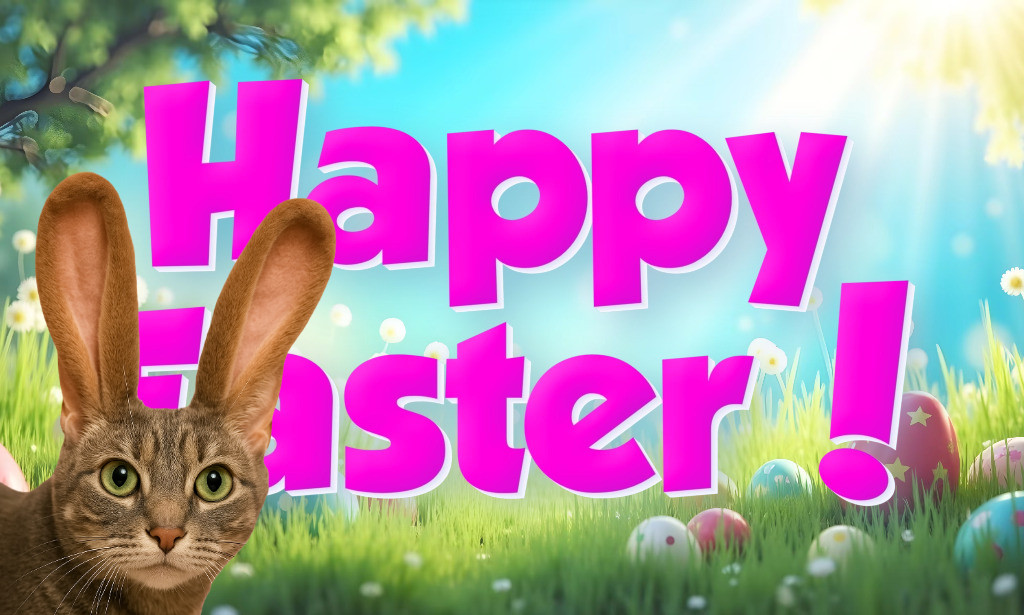
The Easter Buddy wishes you all a happy Easter and a good time if you’re celebrating with family and/or friends.
Just like everything else in the world, Easter is better with cats, so don’t forget to bring something home for your little pal, or if you’re celebrating at home, shower your feline overlord with love and treats!
Eleven?! That can’t be possible! He doesn’t look a day over three…
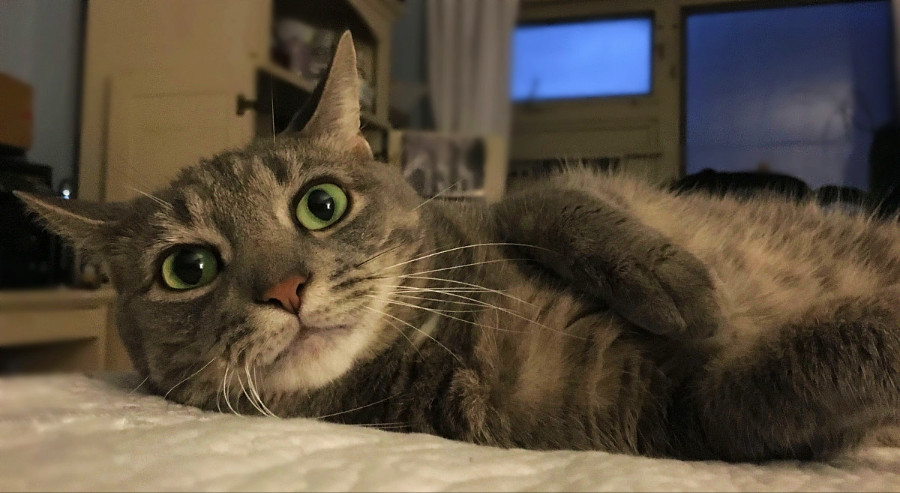
Happy birthday to my best little pal!
Since I don’t know exactly when he was born, we celebrate his birthday as his adoptaversary, the weekend following my own birthday, which was the Saturday I brought him home in 2014.
As regular PITB readers know, Buddy — then nameless — came striding out of his carrier and starting conquering everything in sight, claiming the entire apartment as his own and declaring that my bed was now his bed, although he would permit me to continue using it. He was a bold kitten, and I did my best to nurture that boldness and friendliness.
Apologies for the lack of posts this past week, as I headed down to Washington to hang out with my brother, his wife and my nieces, and to attend the Sakura Festival. My bro and I also attended an event at the Kennedy Center featuring the physicist Brian Greene, who gave a presentation called Starry Night: A Voyage Across Space and Time. I’m looking forward to posting about it soon.
In the meantime, we’re going to have a Buddy weekend here. The little guy will get all his favorite treats, catnip in abundance, lots of play time and a new toy.
Oh, and some rascal changed my favorite Buddy photos into photos of Buddy as a tiger…hmmm. Who would do something like that?
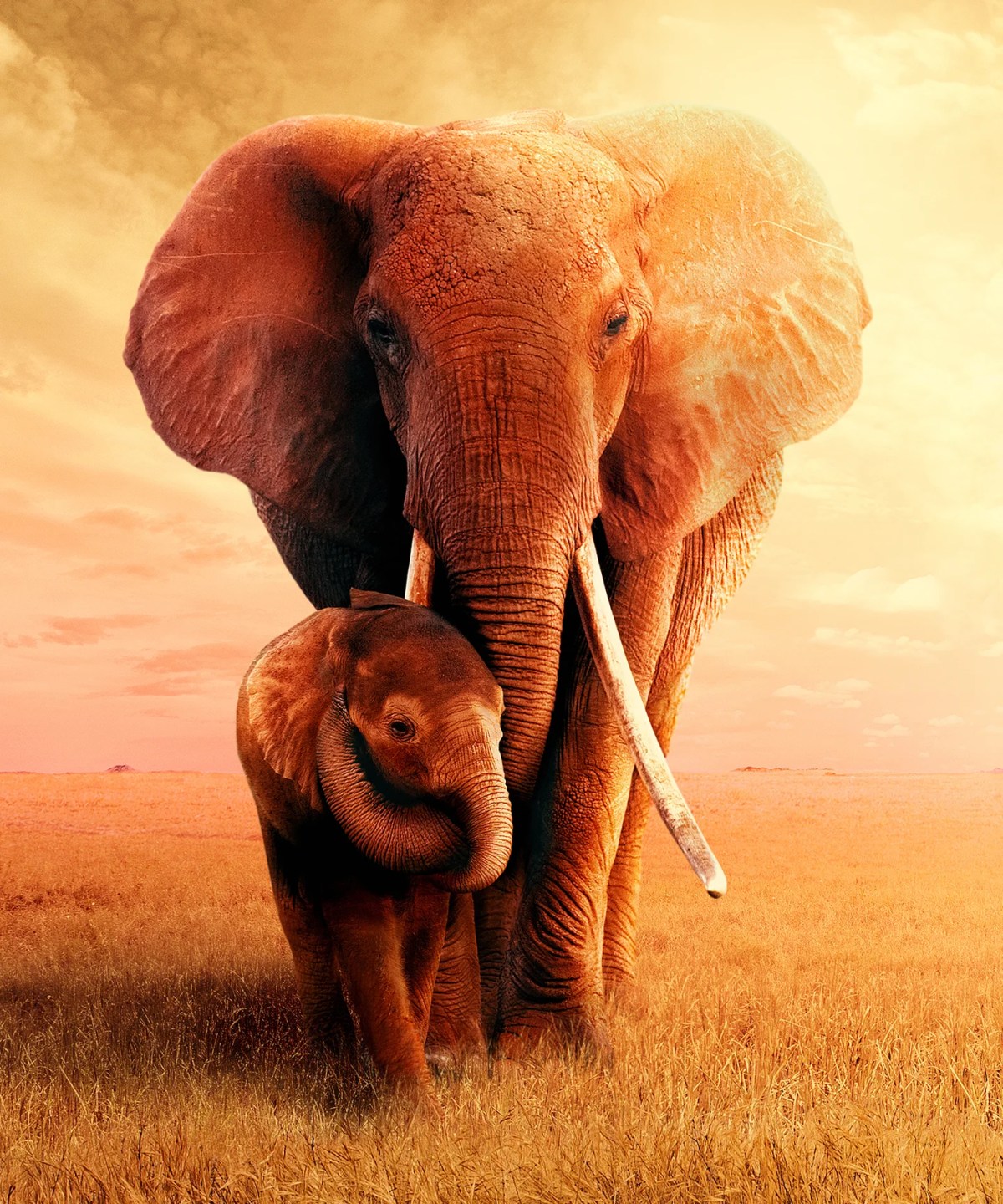
The filmmakers spent four years with matriarch Athena and her herd.
Athena learned the seasonal migratory path from sanctuary to sanctuary from her mother, who in turn learned from her mother, in an unbroken chain that goes back as long as elephants have walked the savanna we call the Maasai Mara.
Every bend, every life-sustaining water hole, every spot where the most nutritious plants grow — and especially the final resting places of her relatives, those who didn’t survive the long journeys to water and shade during drought seasons.
The 50-year-old matriarch, one of the Earth’s last “super tuskers,” has seen her family through so many difficult times that the members of the herd don’t question her even when her decisions could mean life and death for them.
She is their matriarch, and their trust in her is absolute.
During times of drought, all animals converge on the same watering holes. Credit: Apple TV
Athena is also the herd’s protector, which means being wary of humans is her default. It has to be, since humans have poached her kind to the brink of extinction to feed the insatiable Chinese ivory trade.
Filmmakers Victoria Stone and Mark Deeble spent four years with Athena and her herd while filming The Elephant Queen, and earning Athena’s trust was a laborious process.
At first, the wise matriarch wouldn’t let the documentary team anywhere near her family. That slowly began to change as they showed her they meant her no harm.
“But we could see that with her herd, with her family, she was a really calm, beautiful, temperate matriarch,” Deeble explained after a film festival screening of the documentary “And we would just spend time with her.”
‘Over the course of several weeks, Athena had allowed the small crew closer and closer, until they were about 40 meters from her. One day, Athena walked away to let her calf stand between her and the crew. That’s a rare occurrence for a mother.
“At that stage two things can happen,” Deeble said. “Either she can realize that it was a mistake, and if we’re in the middle of them we’re going to get trampled, or, and what I like to think happened, she was just testing us. Because after a while, she made a very low rumble and the calf looked up, and she wandered very calmly around the front of the calf. And from that day on, she allowed us amazing access.”’
The Elephant Queen first finds Athena’s herd during a time of plenty, when water and food are abundant, and the herd’s babies — curious Wewe, a boy, and little Mimi, a female and the youngest member of the herd — get to splash around and explore their new world.
Satao, a male “super-tusker,” arrives at the watering hole for hydration and to find a mate. Credit: Apple TV
But every year there comes a time when the water hole starts to dry out and the herd must begin a long march spanning more than 100 miles to reach a more reliable source of water.
The year Stone and Deeble began following the herd, the drought was so severe that Athena made the difficult decision to march for a far-off sanctuary, the closest known permanent water hole fed by an underground spring.
It’s a long, exhausting journey, and newborns can’t make it, so Athena is forced to delay their departure for as long as she can to give Mimi and Wewe enough time to feed and grow stronger.
Elephant calves are dependant on their mothers’ milk for two years. Credit: Wikimedia Commons
The gestation period for African elephants is about two years, and the entire herd is protective of the babies. The adults cooperate to shield them from predators and the sun, using their bodies to do both. They’re also extremely cautious around hazards like rapidly drying mud holes, which can trap young elephants.
The Elephant Queen’s stars are its titular species, but the documentary does an outstanding job not only showing us the other animals who inhabit the elephant kingdom, but also making clear the many ways those animals depend on elephants for their survival.
From geese, frogs and terrapins who rely on elephants to dig water holes, to dung beetles for whom elephant waste is a bounty, to kilifish whose eggs hitch a ride on the massive animals toward the next water source, the entire ecosystem is balanced on the broad backs of the gentle giants.
As narrator Chiwetel Ejiofor (Doctor Strange, The Martian, 12 Years ASlave) notes, elephants are tactile creatures, and when they nudge a terrapin or knock a frog off a tree branch, it’s curiosity, not malice, that motivates them. They’re herbivores, despite their enormous size, and gain nothing from harming other creatures.
Credit: Wikimedia Commons
It’s impossible to watch a documentary like this without looking into the eyes of elephants like Athena and wondering about the intellect behind them, the thoughts and emotions that motivate their actions.
In one scene, as Athena leads her herd through a parched landscape with nothing but dust and dead trees in every direction, she stops. There’s no water or food. There’s only an elephant skull, the remains of a family member who died on one of the treacherous journeys toward refuge during drought season.
The elephants crowd around the skull, gently running their trunks along its tusks the way they do every day to greet one another. Even with the body long since decomposed, with nothing but a skull remaining, they recognize one of their own.
Some will dismiss the idea that the elephants are mourning, claiming that ascribing emotions to animals is anthropomorphizing them. But if they’re not mourning, what are they doing? If they’re not remembering an individual they loved, why would they stop when it’s crucial to find water and food?
Indeed, the only other time Athena calls a halt is when one of her pregnant sisters goes into labor.
Credit: Wikimedia Commons
Documentaries like The Elephant Queen don’t exist solely for entertainment value. Despite intense efforts to protect elephants, poachers still kill an estimated 20,000 each year.
Just 100 years ago, 10 million elephants inhabited almost every corner of Africa. A 2016 study put their number at 415,000, and while there have been successes in conservation efforts, it’s difficult to ascertain whether they balance out the relentless poaching and habitat loss.
The Elephant Queen acknowledges threats to the continued existence of elephants, but doesn’t dwell on them. There’s good and bad to that: in some ways it’s a missed opportunity to galvanize viewers, but it also ensures the film is family friendly, without gore or violence. The film doesn’t sugar coat the fact that nature is unforgiving, but you’re not going to see a poacher raid on a herd.
The Elephant Queen is an Apple TV documentary and premiered on the streaming service after a limited theatrical run. I stumbled upon it as a subscriber after it appeared prominently in the app.
And while it was released in 2019, its message is still as relevant today. Whether you’re fascinated by elephants or appreciate wildlife in general, The Elephant Queen is a great example of how powerful documentaries can be, especially in transporting us to real places that exist in our world, but remain out of reach for the majority of us.








 Pain In The Bud