Local Politicians Have No Clue How To Manage Cats

Feeding strays is now punishable by a $150 fine in an Ohio town, the latest municipality whose elected leaders chose to ignore expert guidelines on managing feline populations.

Every time the stray cat issue comes up, local town boards and city councils act as if they need to reinvent the wheel.

Imagining that they are the first to deal with this extremely common problem, they make decisions from positions of ignorance, dismissing the concerns of people who actually work with cats. Or they “do the research” and come up with their own ineffective policies instead of simply looking at what other towns and cities have tried in the past.

At least that way, you know what works and what doesn’t, and how much your decision’s going to cost taxpayers.

But that would be the smart thing to do, which is why our local elected leaders don’t do it. Instead they pull stunts like the village board of Mogadore, Ohio, a town of 3,700 about 10 miles east of Akron.

The Mogadore board just passed a law that makes feeding strays and ferals punishable by a fine of up to $150, as if that will stop cats from finding food and breeding.

Tellingly,  Mogadore’s elected leaders say their ordinance applies to “wild, stray, or un-owned” cats, which means they don’t understand they’re all the same species.

Apparently neither do the reporters at WOIO, a local news station in Cleveland. A story from the station is confidently incorrect in telling readers “[d]omestic cats that have become wild, meaning live outdoors, roam free, and rarely interact with humans, are also considered feral.”

Stray cat and kitten
Credit: Sami Aksu/Pexels

Felis catus is a domestic animal. By definition a domestic cat is not wild and cannot become wild. Evolution cannot happen to a single animal.

While evolution is a constant process, speciation — wolves becoming dogs, wildcats becoming house cats, wild boar becoming docile farm pigs — is a species-wide shift that takes at least a few hundred years but often much longer, “from human-observable timescales to tens of millions of years” depending on the species.

The whole process results in changes at the genetic level. The transition from wildcats to domestic cats, for example, involved changing only 13 genes.

This is not rocket science, it’s basic stuff we all learned in high school science classes.

But that’s almost beside the point.

Fining people for feeding stray cats, including caretakers who voluntarily manage cat colonies, will not solve the problem. It doesn’t work. It has never worked in any town anywhere in the world.

It also creates a needlessly adversarial relationship with the passionate people doing the hard work of managing the feline population, often thanklessly and at their own expense. Why make enemies of them when they’re doing a public service?

Mogadore’s village board had a representative from Alley Cat Allies and people from local rescues on hand to inform them that fines don’t work, and to offer the humane and effective option of trap, neuter, return. TNR may not be perfect, but it’s better than anything else people have tried.

Mogadore’s board and mayor ignored the experts and went ahead with their plan to fine people instead.

They’re not alone. This happens thousands of times across the US, Europe, Australia and most other places where domestic cats live. Japan and Turkey take a more humane approach, and they’re better for it. But here in the US, we often deal with issues by ignoring precedent and engaging in wishful thinking.

If the residents of Mogadore are lucky, their elected officials will realize their mistake sooner rather than later.

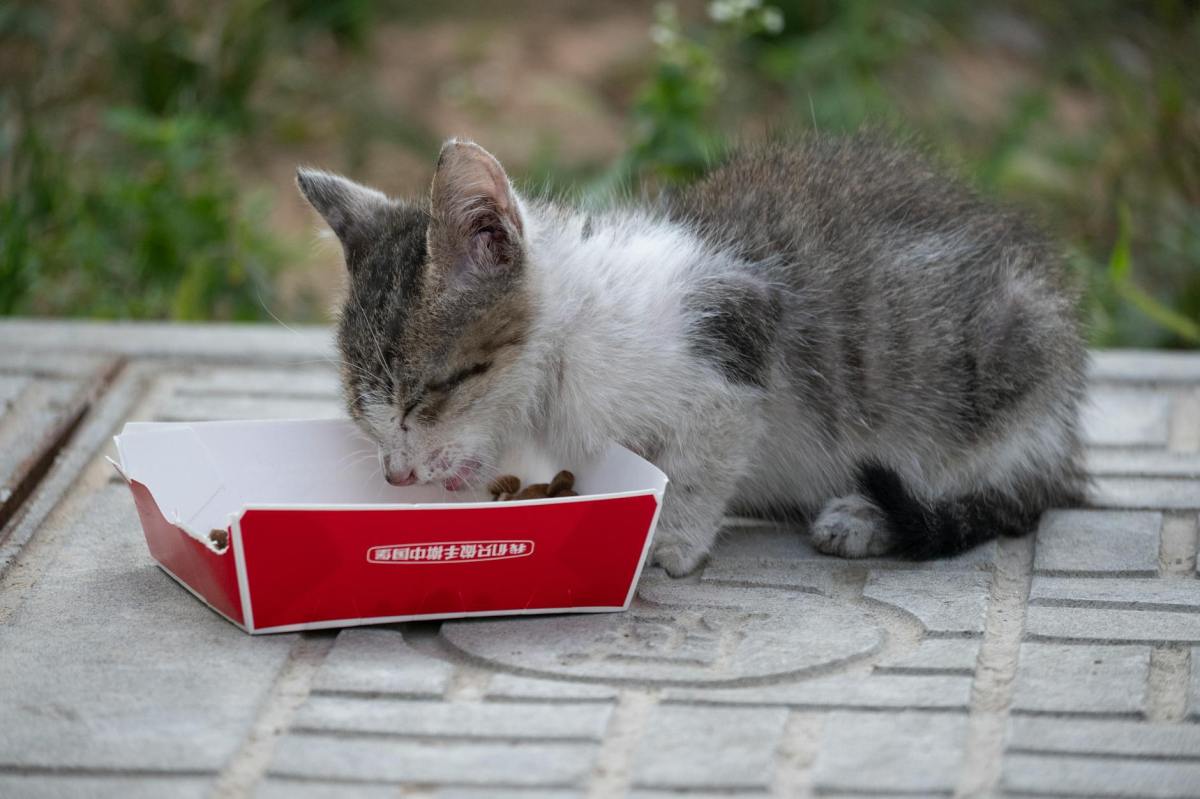
Stray cat eating
Stray and feral cats already have a difficult existence without ill-advised laws making it illegal to care for them. Credit: Mehmet Fatih Bayram/Pexels

Like, OMG! This Kitty And Puma Are Totes Besties!

Plus: The awesome and terrifying cats and proto-cats of prehistory!

OMG, you guys! No cap, you gotta totally check out this adorbz video of a sweet widdle kitty witty becoming best fwiends with this mountain lion!

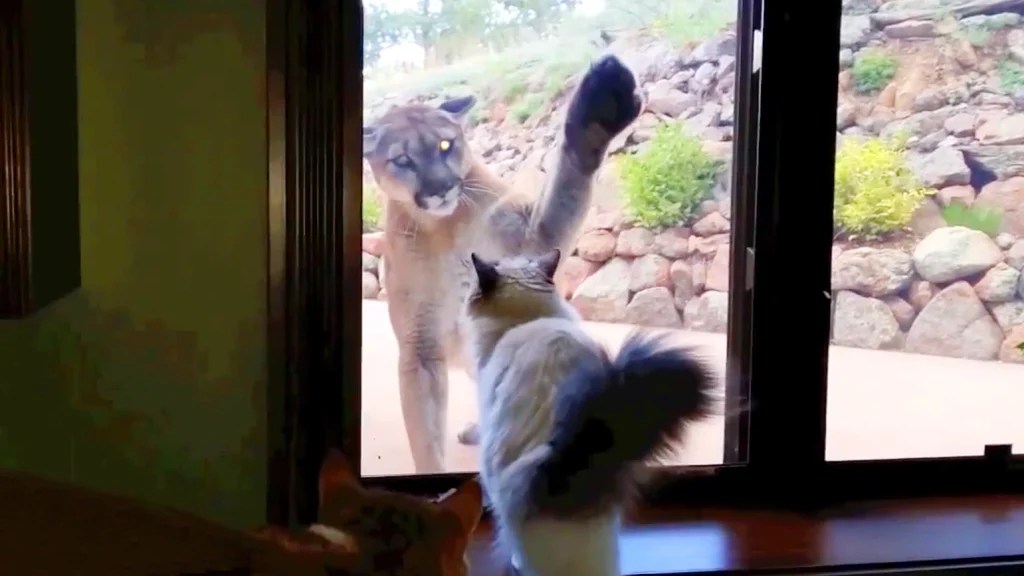
Phoebe the cat sees this cute AF puma near the back door of her home, curiously looking inside. It’s love at first sight as kitty and kitty see each other! Per Parade Pets:

“[T]he kitty in this TikTok video is completely fascinated by the big kitty outside her window. There’s no getting her away from her new friend! 

On Sunday, August 25, @cricketandstrawfl shared this footage of her Tuxedo Cat posted up at the back door in their house, where a cougar was hanging out. It goes without saying that the cougar in question was many times bigger than Phoebe, but that didn’t seem to scare her at all. 

It seemed like the cougar was pretty curious, too. He didn’t appear to be aggressive; instead, he was staring at Phoebe and gently pawing at the glass, trying to figure out who the tiny cat in the window was.”

OMG-hee! Look at the big kitty gently pawing at the door! He wants to give the little kitty a huggy-wuggy!

SO ADORBZ! The puma pawing at the door wasn’t testing its strength to see if he could snag a quick meal, those were totes signals of love! Teehee!

Felid predators of pre-history: They will eat you

If you’re in need of a palate cleanser after all that sugar, the BBC’s Discover Wildlife has a rundown of prehistoric cats and their particularly fascinating proto-cat ancestors, some of whom looked more classically cat-like than several species of true cats. Isn’t convergent evolution cool?

There’s the famous smilodon, the saber-toothed cat, xenosmilus, the so-called shark-toothed cat, and homotherium, the scimitar-toothed cat. Outdoing each other with increasingly sword-like teeth was apparently a big thing in the felid world back then.

There’s also the cave lion, the last of the UK’s big cats, and miracinonyx, the American cheetah, but did you know that simbakubwa, the “great lion” of Africa, topped out at almost 3,000 pounds?

Simbakubwa
Simbakubwa was massive, making modern lions look almost like house cats in comparison.
Dinictus
Dinictis looked like a cat, behaved like a cat and hunted like a cat, but was not part of the felidae family. Credit: Wikimedia Commons

Simbakubwa and dinictis were examples of “false cats.” That is to say, they were not part of the felid lineage, but closely resembled cats in body plan and behavior through convergent evolution. Nature found a niche, and several different species filled it for a time.

Dinictis in particular looks strikingly like modern big cats, which makes it even more surprising to learn it’s not part of the genetic lineage of the felid line.

Finally — or firstly — there’s proailurus, the first cat or “dawn cat,” from which all true felidae species can trace their lineage. Appearing almost 31 million years ago proailurus enjoyed napping, climbing trees and eating Temptations. Okay, we made that last part up. But still. If proailurus were around today, it would probably go just as crazy for the kitty crack as our house panthers do.

Top image via Youtube.

DNA From Dead Sheep In UK Matches Big Cats, But Is That Proof Of Their Presence?

Rumors of big cats in the UK countryside have persisted for years, with witness claims from all over the country. The latest reported sighting was in northern England.

People who really want to believe big cats are running around the British countryside are ecstatic with the news that a DNA sample from a dead sheep reportedly tested positive for panthera DNA.

The DNA sample was swabbed from a freshly-killed sheep carcass “at an undisclosed upland location” in Cumbria, northwest England, a witness told BBC Wildlife. It’s exactly the kind of countryside where people have been reporting big cat sightings for years, although the sightings aren’t confined to that area, with other witnesses claiming they’ve seen large felids as far as the UK’s southern coast.

Sharon Larkin-Snowden, who lives nearby, told a big cat enthusiast podcaster that she disturbed the “big cat” while it was feeding. The startled felid took off and jumped a stone wall, leaving the partially-eaten sheep, Larkin-Snowden said.

“I assumed at first it was a sheepdog, but then I did a double take and realised it was a black cat,” she said. “It was big – the size of a German shepherd dog.”

Jaguar in a pub
“I could really go for a Chinese! Anyone else wanna go for a Chinese?”

A swab was collected — the details are sketchy on who did the collecting and when exactly they submitted the sample — and sent to the University of Warwick’s Robin Allaby, a professor of life sciences.

Allaby, whose specialty is studying the genetics and evolution of domesticated plants, began offering a DNA testing service for the public some 12 years ago in response to the persistent rumors of big cats in the countryside. In the past samples have yielded DNA from foxes and other animals, but Allaby says this one matched the genetic profile of a big cat, although he cannot say which species.

It’s not unusual for a DNA sample to match to a genus, in this case panthera, but not to a specific species if the sample was degraded or only partial.

Rick Minter, who has made a career of tracking alleged big cat sightings across the UK, says he believes the mystery cat is a leopard. Leopards and jaguars are the only two big cats who have true melanistic color morphs — meaning some of them have virtually all-black coats — and Minter says he believes it’s more likely the former.

Neither are native to the UK or Europe: Leopards range from Africa to Asia, while jaguars range from south to Central America, with some populations edging slightly into the US.

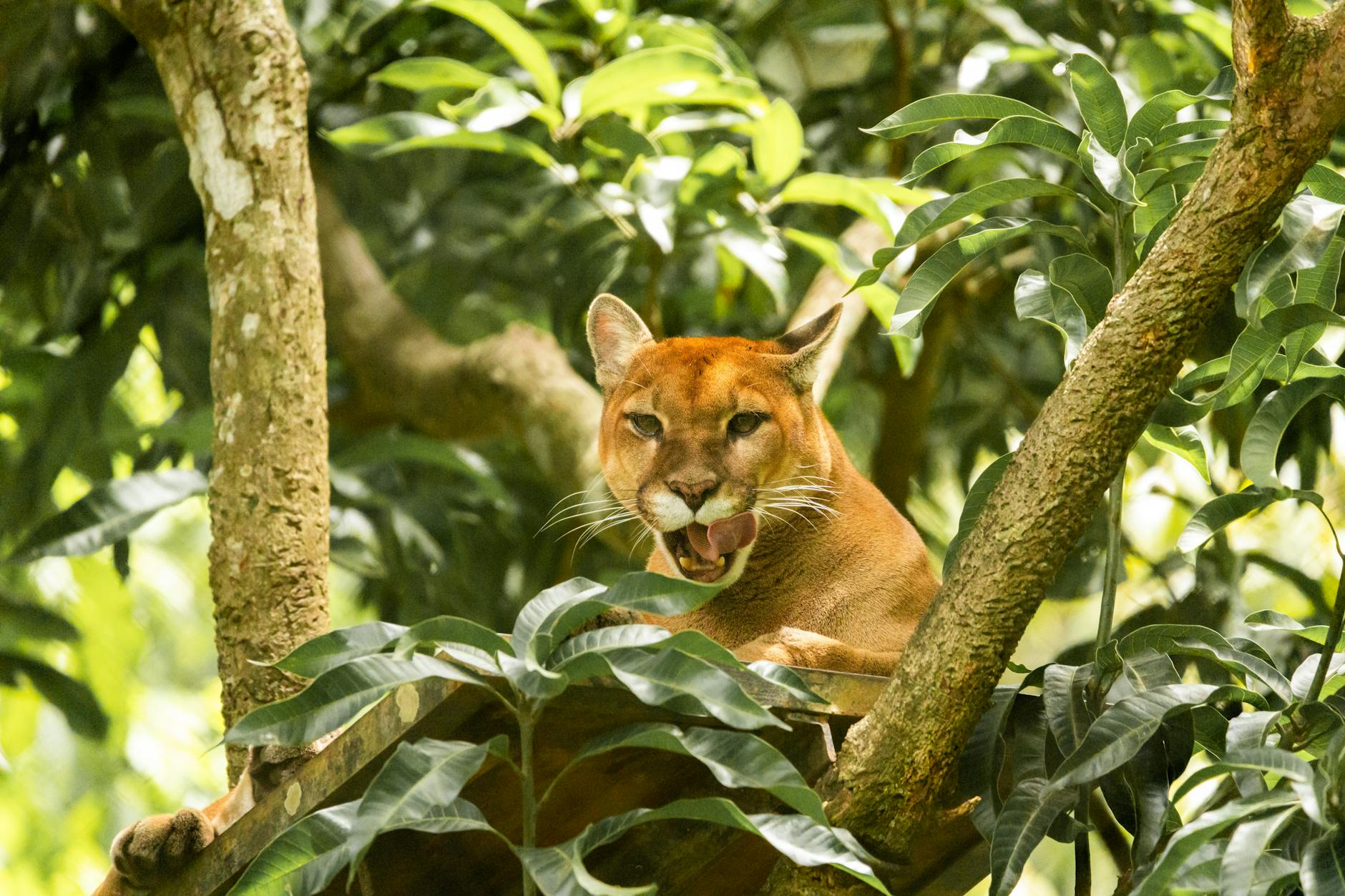
puma sits on tree
Britain’s big cat enthusiasts say they believe pumas are among the wild cats living in Credit: Jean Paul Montanaro/Pexels

Why isn’t a DNA match evidence of big cats in the UK?

If the lab results say the sample came from a big cat and that result is consistent with the witness account, what’s the problem?

Chain of custody, for one. We don’t know anything about who took the sample, where it was taken, the time elapsed between the kill and the sample swab, or who may have handled it before it reached Allaby.

In fact, we don’t know if there was a dead sheep to begin with.

If I were a prankster living in the UK, for example, and was friendly with a keeper at a local zoo, I could have the keeper swab an animal, bag it and hand it over to me. There are dozens of conceivable ways a person could obtain a sample even if they don’t know someone who works in a zoo.

Leopard in a pub
“So we left the sheep there at the edge of the field and made sure the lady saw us before we buggered off over the fence. Next day, we was in all the papers! A right laugh that was, mate.”

The problem is the provenance of the sample and what happens to it between the time it’s collected and ends up in the hands of a scientist like Allaby.

This is why chain of custody is paramount in criminal trials, and why there must be a complete record of who handled samples from collection in the field to the lab. Even in the absence of foul play, an improperly handled sample can be contaminated and render test results meaningless.

It’s not a matter of trust, it’s the simple fact that extraordinary claims require extraordary evidence, as Carl Sagan was fond of saying. Short of capturing one of these animals or getting clear, indisputable footage, any other claimed proof has to be ironclad.

Speaking of footage, that’s another issue. It’s extremely difficult to believe that a breeding population of big cats can exist in the UK countryside for years or even decades without a single definitive photo or video. The UK’s rural areas may not be blanketed by CCTV cameras like London, but they’re not the Amazon either. People live, work and farm in those regions, cameras are more ubiquitous than ever, and farmers take steps to protect their livestock, including installing cameras.

Big cats don’t just feed and vanish into the mist. They mark trees with their claws and urine, they leave distinct pug marks, they leave distinctive bite marks on their prey, and they make noise. To paraphrase one naturalist, when big cats are living nearby, you know it. Even if you don’t see them, signs of their presence are ubiquitous.

To accept the claims of tigers, leopards and pumas gallavanting in the fields around small towns and villages, we’d have to suspend disbelief or conclude that these are some sort of previously unknown ghost cats who can fade in and out of the physical plane.

I’m not a skeptic to be a killjoy. If big cats really were running around the UK, that would be a hell of a story. But we’d still need convincing evidence, and this isn’t it.

Happy Mother’s Day To All Moms Human And Feline!

Moms are the best.

Moms are the best. They tell us we’re good at things even when we’re not, they put up with all our nonsense, and they never stop worrying about us even when we’re adults.

They make us feel better when we’re down and they don’t hesitate to tell us when we’re being stupid. They make the special meals that we love, and use love as a special ingredient. I can still taste the bologna sandwiches my mom used to make for me in my school lunches. Somehow they were always more delicious than any sandwich I could make. Now that I’m an adult and have been a vegetarian for years, she makes pastitsio for me on special occasions. Thanks, mom!

Animal moms love their kiddos too, as we can see in these photos. Happy Mother’s Day to all moms!

Ban On Big Cat Pets Heads To Biden’s Desk

The Big Cat Safety Act will put an end to the era of cub petting mills at roadside zoos and private “ownership” in states like Texas and Florida.

All that awaits is a stroke of President Joe Biden’s pen.

The Big Cat Safety Act was passed by the US Senate this week, clearing its last legislative hurdle. The law would ban the “ownership” of big cats as pets and would end their exploitation by roadside zoo operators, while also outlawing big cat breeding by private parties.

It’s a bipartisan effort that gained steam after years of efforts by animal rights organizations and documentaries like Netflix’s infamous Tiger King, which showed millions of viewers how the majestic felids are kept in cruel conditions and chained to an endless breeding treadmill to provide a constant supply of cubs. Those cubs are taken away from their mothers shortly after birth and used as props in lucrative “selfie with a tiger” offerings at unaccredited roadside zoos.

Private “ownership” of big cats has been a contentious issue and an embarrassment for American animal rights activists, particularly because almost all big cat species are critically endangered. There are more tigers living in backyards in Texas and Florida, for example, than there are living in the wild in the entire world.

Breeding for conservation is a process that involves careful planning by experts at accredited zoos and sanctuaries. Because there are so few big cats left, with some subspecies down to just a few hundred living animals, mates must be carefully chosen to avoid genetic bottlenecks and to ensure healthy and viable breeding populations in the future. As private breeders and roadside zoos breed the animals without regard to subspecies or genetic diversity, they do not contribute to species conservation in any meaningful way and can do harm with indiscriminate matches, conservationists say.

leopard on brown log
Credit: Pexels

While the bill outlaws private ownership, it still allows sanctuaries, zoos and universities to keep big cats in regulated facilities that meet their physical and psychological needs. It also permits programs like the statewide puma project in California, which has been tracking the elusive felines for more than two decades and involves occasional sedation and temporary custody so the team can provide veterinary care.

“An extraordinarily cruel era for big cats in the U.S. finally comes to an end with the passage of the Big Cat Public Safety Act,” said Kitty Block, president of the Humane Society of the United States. “We’ve been fighting for this moment for years because so many so-called ‘Tiger Kings’ have been breeding tigers and other big cats to use them for profit. And once the cubs grow too large for cub-petting or selfies, these poor animals get dumped at roadside zoos or passed into the pet trade, which is not only a terrible wrong for the animals, but also a threat to public safety. Now that the Big Cat Public Safety Act will become law, it’s the beginning of the end of the big cat crisis in the U.S.”

The Big Cat Safety Act cleared congress in mid summer, and its passage in the senate means it will get to Biden’s desk with several weeks to go in the current legislative session. Biden is expected to sign it without delay.

“For me, this fight for the big cats was never personal,” said Carole Baskin of Florida sanctuary Big Cat Rescue. “This was always about developing a national policy to shut down the trade in these animals as props in commercial cub handling operations and as pets in people’s backyards and basements.”

The new law does nothing for big cats currently in captivity, unfortunately. Current “owners” will be grandfathered in, although they won’t be able to replace their “pets” legally, as breeding and purchasing the animals will be illegal. The last “pet” members of the panthera genus in the US will die out within the next two or three decades, assuming no major outliers in lifespan.

Puma
As felines who can purr but not roar, mountain lions are not technically “big cats,” but they’ll also be protected under the new law. Credit: Pixabay/Pexels