Study: Cat Brains Have Gotten Smaller

Thankfully for our furry friends, smaller brains don’t necessarily correlate to lower intelligence. It’s more about the complexity of neural connections.

Cats have gotten a good deal out of domestication: They’re safer, warmer and protected from almost all threats. They know where their next meal is coming from, and won’t hesitate to meow our ears off if dinner is late.

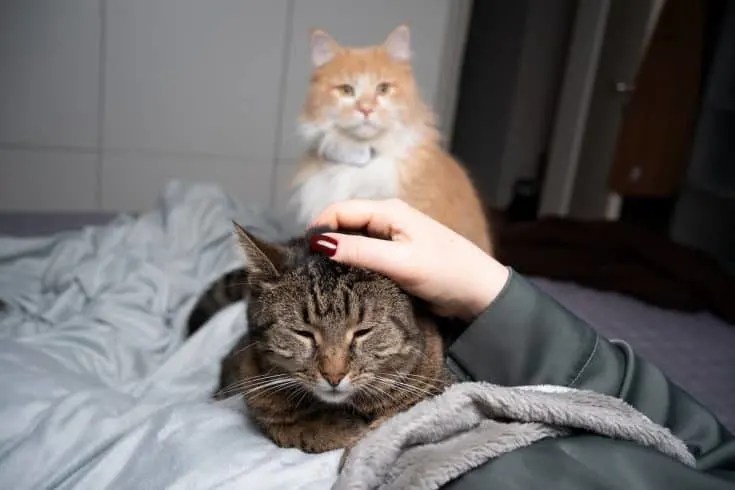
But one tradeoff doesn’t immediately appear beneficial: Domestic cats have smaller brains than the species they’ve evolved from, African and Eurasian wildcats.

“[D]omestic cats indeed, have smaller cranial volumes (implying smaller brains) relative to both European wildcats (Felis silvestris) and the wild ancestors of domestic cats, the African wildcats (Felis lybica),” the research team wrote.

Wild cats have the largest brains on average, followed by wild-domestic hybrids and domestic cats with the smallest brains of the three.

That’s another strong indicator that domestication is the determining factor in feline brain size, although the researchers point out that they are comparing domestic cats to current wildcats, and not the ancient population of wildcats from which domestic cats evolved beginning some 10,000 years ago with the dawn of agriculture and permanent human settlements.

Wildcats with friendlier and bolder dispositions were the first to approach human settlements, drawn by the rodents who were themselves feasting on human grain supplies. Humans realized that the cats were taking care of their rodent problems but weren’t interested in eating the grain, and a beautiful partnership was born.

superhandsomebuddy1
“I have a yuge, yuge brain, the best brain. It’s tremendous.”

Smaller brains do not necessarily correlate to lower intelligence, however, and cats aren’t the only species whose brains became smaller after they were domesticated. Dog brains are about 30 percent smaller than the brains of gray wolves, but dogs have adapted spectacularly to living with humans and reading human behavioral cues.

“The dog is successful not because of the size of its whole brain per se, but because domestication has led to subtle brain changes with a stunning result: the ability to live in the world of people,” a Smithsonian Magazine article points out, noting dogs are also adept at getting people to do all sorts of things for them.

If brain size alone resulted in higher levels of intelligence, whales and elephants would rule the Earth.

Instead “the complexity of cellular and molecular organization of neural connections, or synapses, is what truly determines a brain’s computational capacity,” neuroscientist Kendra Lechtenberg wrote.

The researchers weren’t interested in drawing any major conclusions about feline cognition with the study. They’re more interested in the phenomena of “domestication syndrome,” which causes changes both physical (floppy ears, coat color variation, shorter muzzles) and behavioral. (Less aggression, playfulness.)

The jury’s still out on why exactly those traits emerge, but some studies have attributed it to differences in embryonic development. Unlike many other domestic animals, cats don’t look much different than their wild felis lybica and felis sylvestris counterparts.

The cat study was published on Jan. 26 to Royal Science Open Science, a peer-reviewed open-access journal. The research team was comprised of biologists from the University of Vienna and data curators from the National Museum of Scotland.

Buddy Condemns Scientists Who Claim Cats Are Psychopaths

The lead author of a UK study claims it’s “likely that all cats have an element of psychopathy.” Buddy the Cat disagrees.

NEW YORK — Buddy the Cat condemned British scientists who pegged cats as psychopaths in a new study, saying he’d like to “introduce them to my claws,” if not for the fact that he’s too charming to do something so uncouth.

“I was offended when I read that study, frankly,” Buddy said, pausing to spit out the bones of a mouse he’d just killed and sip from his bird blood cocktail. “The very idea is preposterous.”

Psychologistsfrom the University of Liverpool and Liverpool John Moores University developed a questionnaire that asks cat owners servants to rate their felines’ behavior based on 46 different behavioral statements.

Examples of the statements include: “My cat torments their prey rather than killing it straight away”, “my cat vocalises loudly (e.g meows, yowls) for no apparent reason”, and “my cat is very excitable (e.g goes into ‘overdrive’ and becomes uncoordinated).”

Respondents were asked to rate, on a 5-point scale, how closely each statement applied to their cat(s).

“Asking our servants to respond to the survey was the first mistake they made,” Buddy continued, using a claw to dig bits of mouse from between his teeth. “I mean, do you ask Beethoven’s gardener to evaluate the master’s symphonies? Would you ask the overnight office cleaning crew at Apple to gauge the brilliance of Steve Jobs? Would you ask Brian Scalabrine to weigh in on the transcendent talent of Michael Jordan? Of course not. So why would you ask my human to evaluate me? Why would you think such a simple creature could hope to understand the cathedral that is my mind?”

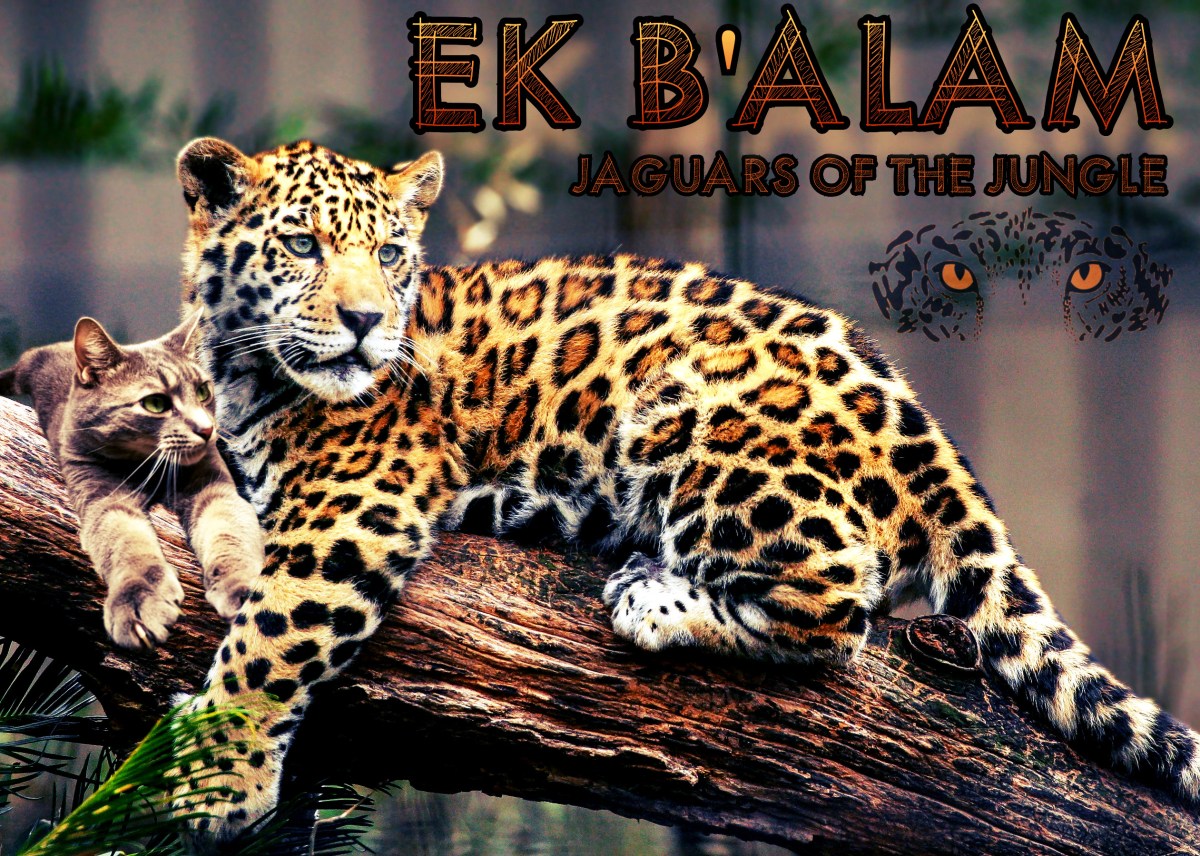
“And furthermore, why should I care? Does the lion concern himself with the opinions of sheep? I’m officially a jaguar, by the way. I don’t know if you knew that. Yeah. They welcomed me into their mystic community and call me Kinich Bajo, which means ‘god of wisdom.'”

Personality traits like delusions of grandeur, charm, lack of empathy and narcissism are typically associated with psychopaths, experts say. A psychopath might, for example, imagine he’s a large, muscular cat when in fact he’s 10 pounds soaking wet.

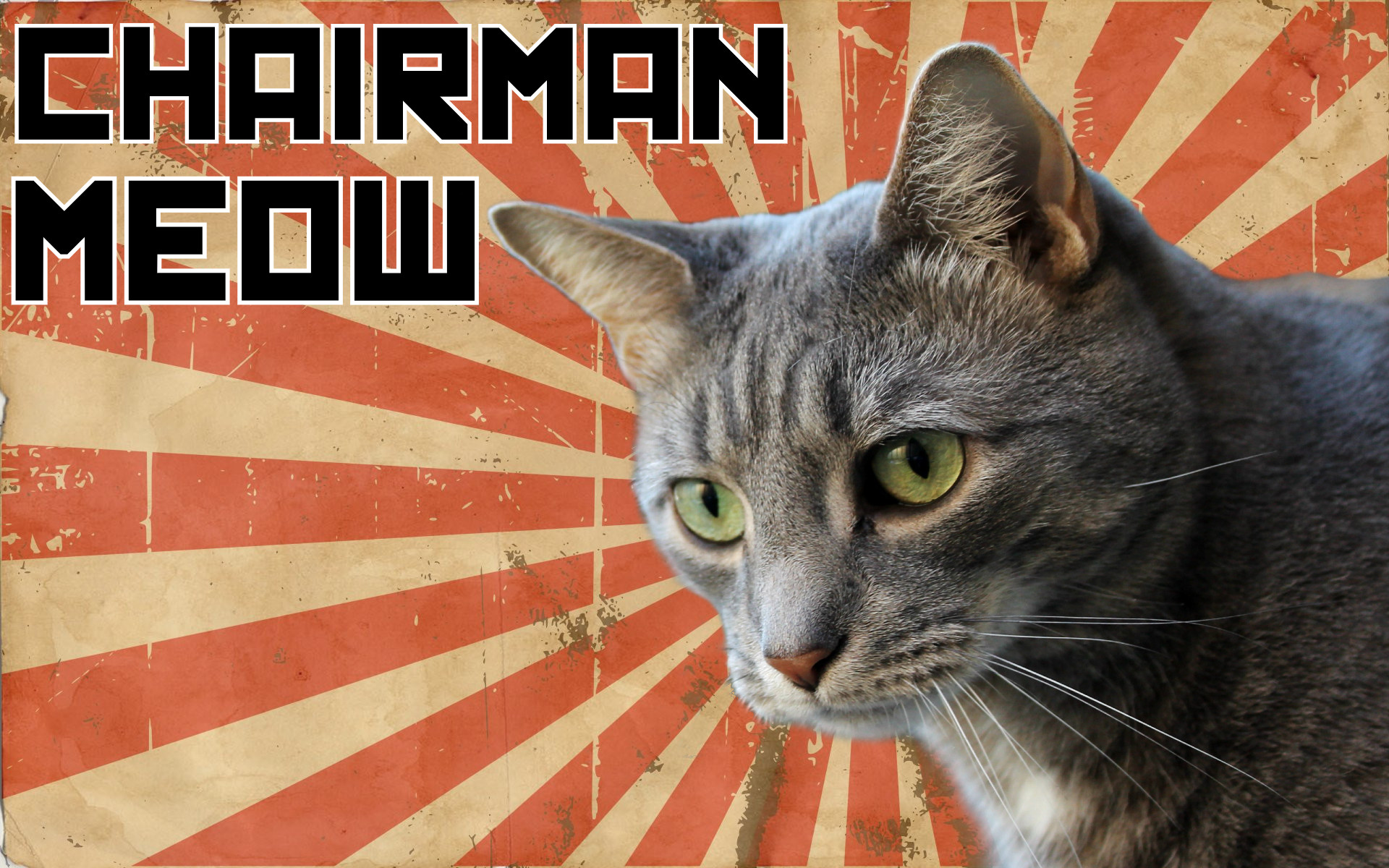
chairmanmeow3
Buddy imagines himself as a powerful authoritarian leader

The degree of psychopathy varies widely among felines, lead author Rebecca Evans said.

“We believe that like any other personality trait, psychopathy is on a continuum, where some cats will score more highly than others,” Evans said. “It is likely that all cats have an element of psychopathy as it would have once been helpful for their ancestors in terms of acquiring resources, for example food, territory and mating opportunities.”


Reason #488 To Keep Your Cats Indoors: They Hunt Whether They’re Hungry Or Not

Cats who have regular outdoor access and hunt wildlife still get 96 percent of their nutrition from pet food, a new study found, suggesting their predatory behavior is driven by instinct, not hunger.

A new study from the UK debunks the claim that cats need access to the outdoors to supplement their diets with wild kills.

Cats who spend a significant amount of time outdoors and regularly kill local wildlife still get 96 percent of their nutrition from meals provided by their humans, according to research by a team at the University of Exeter.

The scientists connected with cat owners through ads on social media, TV and in print publications, specifically seeking out “cat owners living throughout southwest England whose cats regularly captured wild animals and brought them back to the house,” the study’s authors said.

They gave the owners a questionnaire to collect some basic information on the kitties — age, sex, breed, whether they had unrestricted access to the outdoors, and how much time they spend outside — then split the 90 participating cats into six groups.

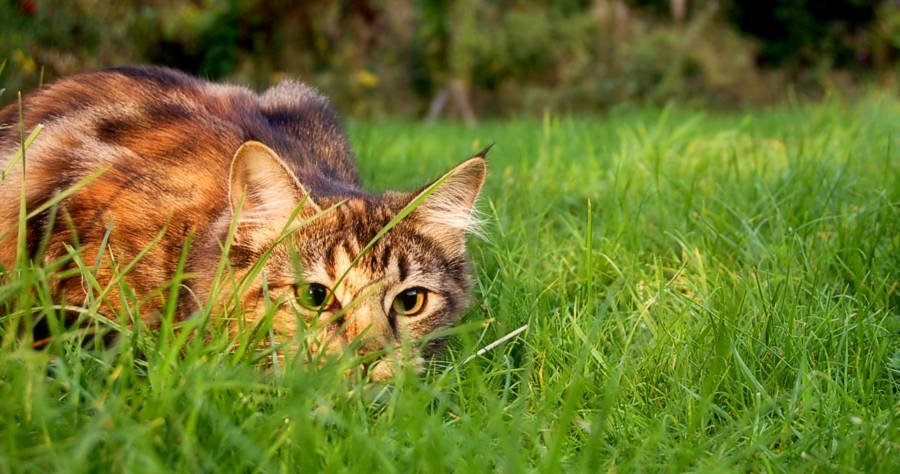
Cat hunting
A domestic tabby cat stalking in the grass. Credit: Wikimedia Commons

To set a baseline, the scientists trimmed small sections of whisker from each of the cats, then trimmed a second sample at the end of the study.

By comparing stable isotope ratios in the whisker samples, they were able to determine what the cats were eating. Despite regular access to the outdoors and successful hunts, pet food accounted for the vast majority of their diets.

As a result, the researchers concluded, outdoor cats hunt because they’re driven by predatory instinct, not hunger.

“When food from owners is available, our study shows that cats rely almost entirely on this for nutrition,” said Martina Cecchetti, the study’s lead author.

“Some owners may worry about restricting hunting because cats need nutrition from wild prey, but in fact, it seems even prolific hunters don’t actually eat much of the prey they catch,” Cecchetti said. “As predators, some cats may hunt instinctively even if they are not hungry – so-called ‘surplus killing’ – to capture and store prey to eat later.”

A second component of the study was designed to find the best mitigation strategy to change the behavior of outdoor cats.

Each group was given a different strategy: In one group, cats were outfitted with bells on their collars, while another group wore reflective break-away collars and cats from a third group were fitted with BirdBeSafe collars. The other groups were told to make habit changes inside the home. For example, one set of cats was fed a higher-protein diet without grain filler, another group was fed with puzzle feeders, and the last group was given extra interactive play time.

While high-protein diets and play time helped cut down on hunting, the BirdBeSafe collars had the biggest impact on hunting success. The collars come in bright colors designed to stand out to avian eyes, taking away stealth and the element of surprise from cats.

The study was sponsored by Songbird Survival, a British non-profit that funds bird conservation research and looks for ways to mitigate the dwindling numbers of many avian species.

Susan Morgan, Songbird Survival’s executive director, said her group hopes cat owners will do their part to help: “Pet owners can help us reverse the shocking decline in songbirds via three simple, ‘win-win’ steps: fit collars with a Birdsbesafe cover; feed cats a premium meaty diet; play with cats for five to ten minutes a day to ‘scratch that itch’ to hunt.”

Of course there’s an obvious solution the study didn’t include: Keeping cats indoors. While keeping cats indoors is common in the US, cat ownership culture in the UK is different — another subject for another post.

Read the full text of the study here. Header image credit Pexels. Body images credit BeSafeCollar.

Previously:

1024px-Florida_panther_kittens
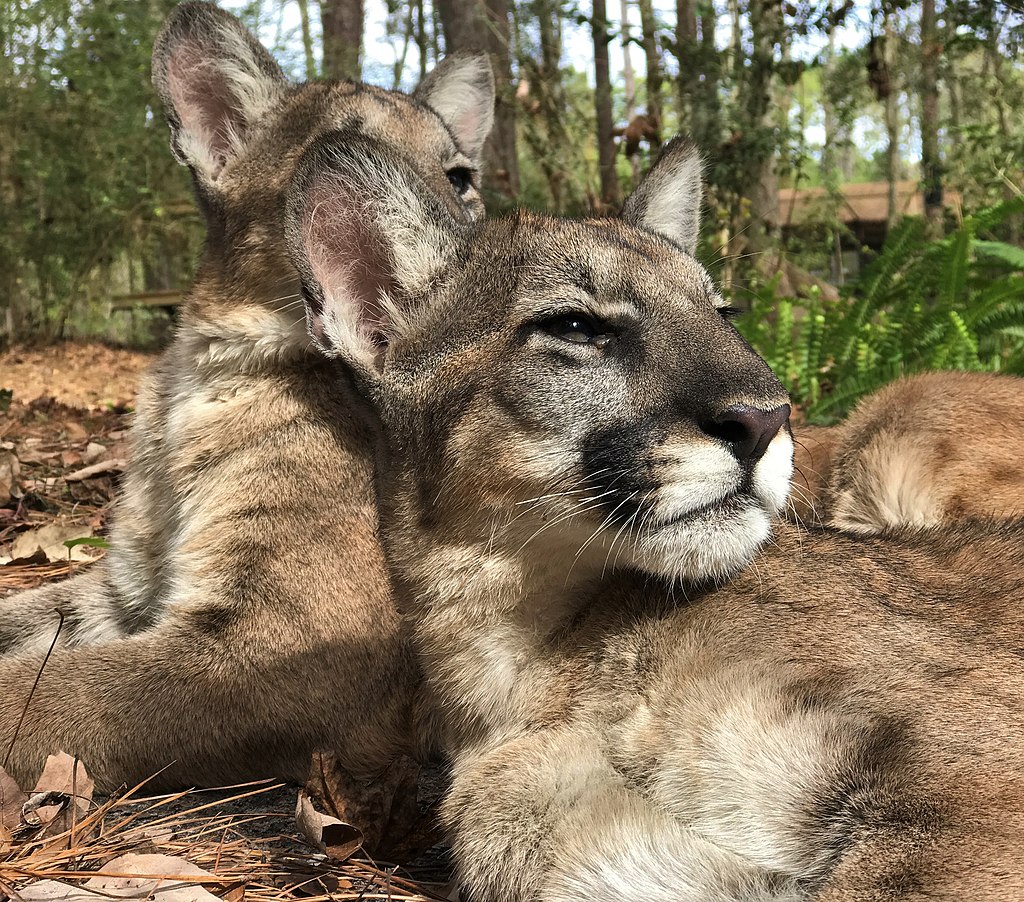
A pair of young mountain lions in Florida. Credit: Wikimedia Commons/WOConservation

Unlike Other Animals, Cats Always Take The Free Meal

When given a choice between an easy meal and food in a puzzle feeder, cats opt for the low-effort yums.

When presented with a simple tray of food and a food puzzle that requires a little work to get at the yums inside, every animal ever tested has opted for the latter.

Except cats.

Rhesus monkeys, rats, chickens, bears, starlings, gerbils, chimpanzees and a wide range of other animals are drawn to food puzzles, perhaps because the food tastes sweeter to them if they’ve had to work for it, or maybe because it’s just something amusing to do.

“There is an entire body of research that shows that most species including birds, rodents, wolves, primates – even giraffes – prefer to work for their food,” said Mikel Delgado, a cat behaviorist and lead author of the newest study on the phenomenon known as contrafreeloading. “What’s surprising is out of all these species cats seem to be the only ones that showed no strong tendency to contrafreeload.”

Puzzle feeder
A puzzle feeder used in the study. Credit: UC Davis

Delgado, a research affiliate at UC Davis’ School of Veterinary Medicine, used a clear puzzle feeder so the cats in her study could see the treats inside. A few feline study participants gave it a shot, but only after grabbing themselves some easy grub first. Other cats just ignored the food puzzle and munched exclusively from the tray.

While this is at least the second study to specifically test whether cats “freeload” their meals, the why of this particular feline behavior remains a mystery. Delgado cautioned against the obvious conclusion — that cats are just lazy — and pointed out that several cats in the study were active and expending energy, just not with the puzzle feeder.

One possible explanation: As hunters and obligate carnivores, cats simply may not enjoy games that simulate foraging the way omnivores and herbivores do.

The study was published on July 26 in the academic journal Animal Cognition. Read it here.

Screenshot 2021-08-13 at 08-31-22 MikelDelgadoProfile jpg (WEBP Image, 800 × 800 pixels)
Mikel Delgado with a kitty. Credit: Community Cats Podcast

Study: Cats Will Happily Accept Food From Jerks

A new study shows cats will take food from anyone, even people who refuse to help the cats’ owners with a problem.

Taking studies designed for children and dogs and applying them to cats has been all the rage lately after a series of studies yielded new insights about the way cats bond with their humans.

Earlier studies showed cats, like kids and dogs, look to their humans for reassurance in strange situations and derive comfort from the latter’s presence. Likewise, they’re less confident if they’re forced to face unknown situations without the “security blanket” of their big buddies nearby.

Now a research team in Kyoto has taken another study designed for dogs — known as the “helpful stranger” study — and placed cats in the same situation to find out how they react.

Sure, I'll Take A Treat!
A new study shows cats don’t discriminate when it comes to who’s giving them food.

Both humans and dogs show a preference for what researchers call “prosocial individuals.” In plain language, it means they pay attention to the way strangers treat the people they care about. A dog who sees a stranger respond negatively to its caretaker will avoid the stranger, even if the latter is waving a delicious treat.

In the study, cats watch their owners try to open a box while two strangers are present:

“[C]ats watched as their owner first tried unsuccessfully to open a transparent container to take out an object, and then requested help from a person sitting nearby. In the Helper condition, this second person (helper) helped the owner to open the container, whereas in the Non-Helper condition the actor refused to help, turning away instead. A third, passive (neutral) person sat on the other side of the owner in both conditions.

After the interaction, the actor and the neutral person each offered a piece of food to the cat, and we recorded which person the cat took food from. Cats completed four trials and showed neither a preference for the helper nor avoidance of the non-helper.”

At first glance it looks like cats really don’t care if a person is helpful or friendly toward their “owners.” If a person is offering them yums, why shouldn’t they take them?

That sounds like exactly the sort of thing cats would do, but the research team says we should hold off on judging our food-loving feline friends. It may be that cats simply don’t understand that the stranger(s) aren’t being helpful. After all, if your cat sees you struggling with a package, does she offer to help?

If it is true, it’s not necessarily cats’ fault: We’ve long known they aren’t as well-attuned to human social cues as dogs are, a fact that can be attributed to their route to domestication. There simply wasn’t any reason to carefully breed cats to pick up on those cues, as we did historically with dogs, because cats were already wildly successful at their primary job, which was rodent extermination. Taking on cuddle and companionship duties didn’t happen until later when people began to value the little ones for more than their sharp claws and teeth.

“We consider that cats might not possess the same social evaluation abilities as dogs, at least in this situation, because unlike the latter, they have not been selected to cooperate with humans,” the scientists wrote.

The research team says the results are suggestive, but more studies should be done before drawing any real conclusions about our furry friends. Knowing cats often get a bad rep due to stereotypes and misunderstandings, we agree.