Note To Self: Acting Like A Lunatic While Watching Sports Isn’t Good For My Cat

Cats are highly attuned to our emotions, especially when we share a strong bond with our little buddies.

I realized I needed to calm down when Bud turned and gave me a wide-eyed, uncertain stare.

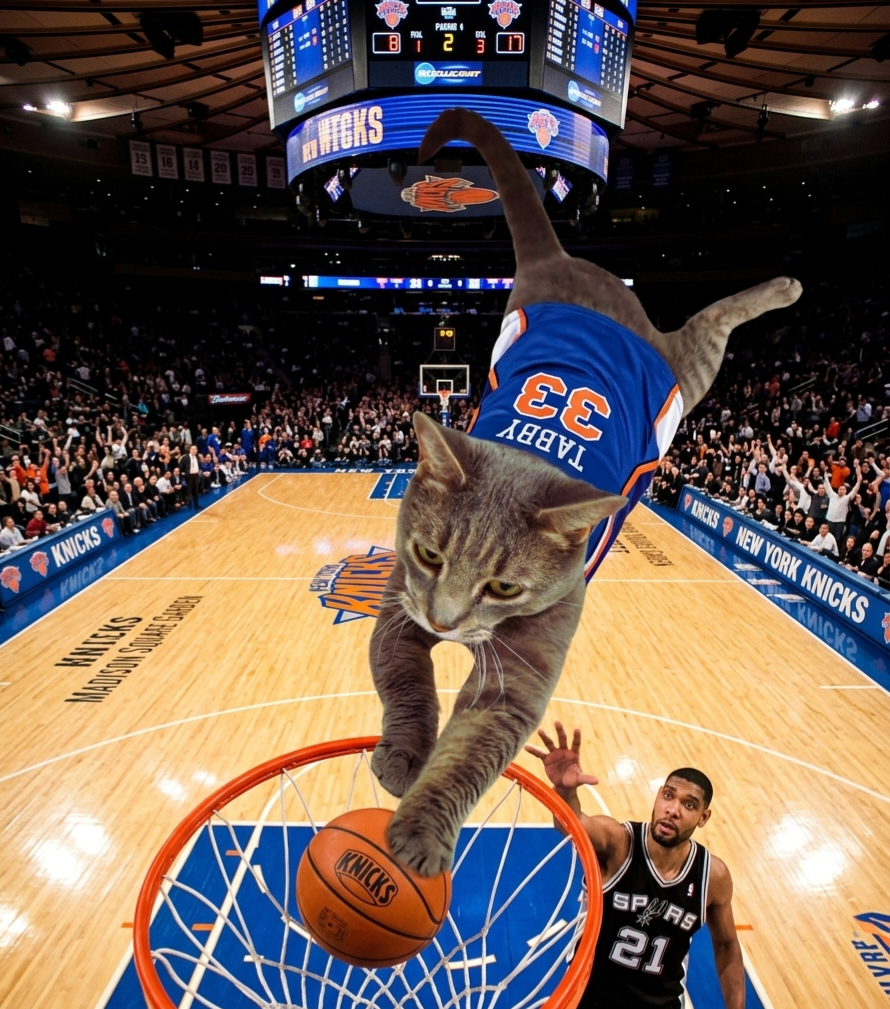
It was the fourth quarter of the NBA Finals’ second game, and the San Antonio Spurs were chipping away at the New York Knicks’ lead with ample help from the referees.

The Spurs collapsed in as the Knicks’ Karl Anthony Towns (KAT, or Big Kat as he’s fondly known) drove the lane, pummeling him and grabbing at his shooting hand while the refs just watched.

It had been happening all night. Spurs star Victor Wembanyama even grabbed a much smaller Knicks player by the neck and tossed him at one point without so much as a peep from the refs.

(Above: 7’4″ Spurs center Victor Wembanyama grabs 6-foot Knicks points guard Jose Alvarado by the neck and tosses him. The refs did nothing.)

I shouted something not nice as the refs ignored the bludgeoning and the Spurs barreled down the other end for another bucket.

Then I saw Bud’s alarmed face and his uncertain crouch.

“Aw, sh–,” I said, softening my tone and doing my best to sound reassuring. “Not you, Bud. I love you, little guy.”

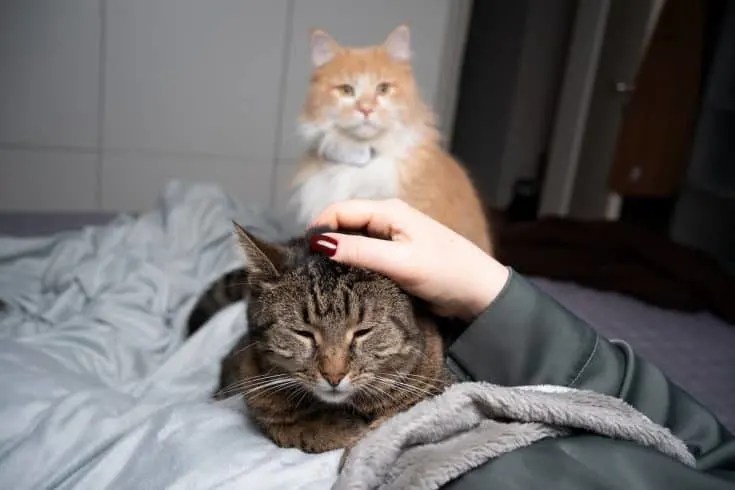
I held out my fingers, Bud rubbed his cheek against them happily, and we returned to watching the game as I scratched his head.

Still, it was a much-needed reminder that our little pals look to us for emotional cues, and our bad moods have a profound impact on them.
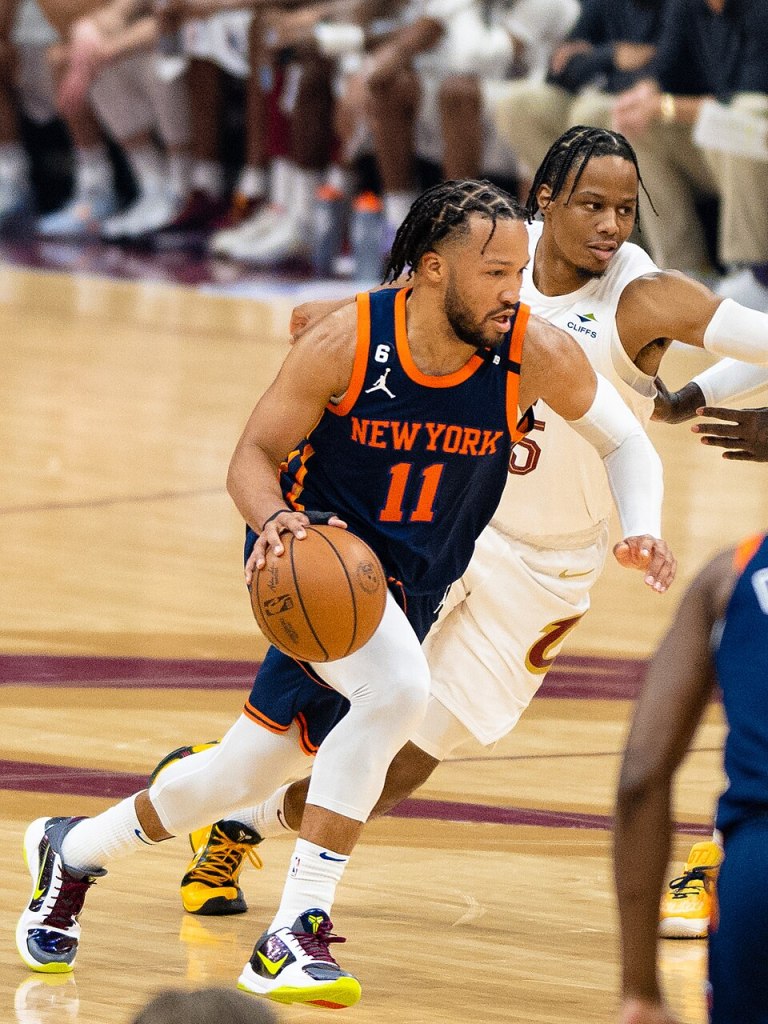
Jalen Brunson is the Knicks’ captain and point guard. Josh Hart (header image) is the team’s “Hart and soul.” Credit: Wikimedia Commons

I will never forget what my brother observed one day when Buddy was still a kitten: “You’re his whole world.”

Bud likes to pretend otherwise, of course, but the point stands. He picks up on everything, and it is deeply unfair for me to allow any outside emotions to impact him. Making sure he’s happy means everything to me.

The comedian Bill Burr has a bit about this, putting it in more crude — but much more hilarious — terms:

Happily, despite the abominable officiating, the Knicks won the game. They have now won 13 games in a row in the playoffs (!), they haven’t lost a game in six weeks, and after defeating the Spurs twice on their home court, the Knicks return to New York two wins away from being NBA champions…for the first time in 53 years.

It’s not only a big deal to me and millions of New Yorkers, it’s something I’ve wanted so badly since I was a kid watching the Knicks reach the Finals in 1994 and 1999, falling agonizingly short both times.
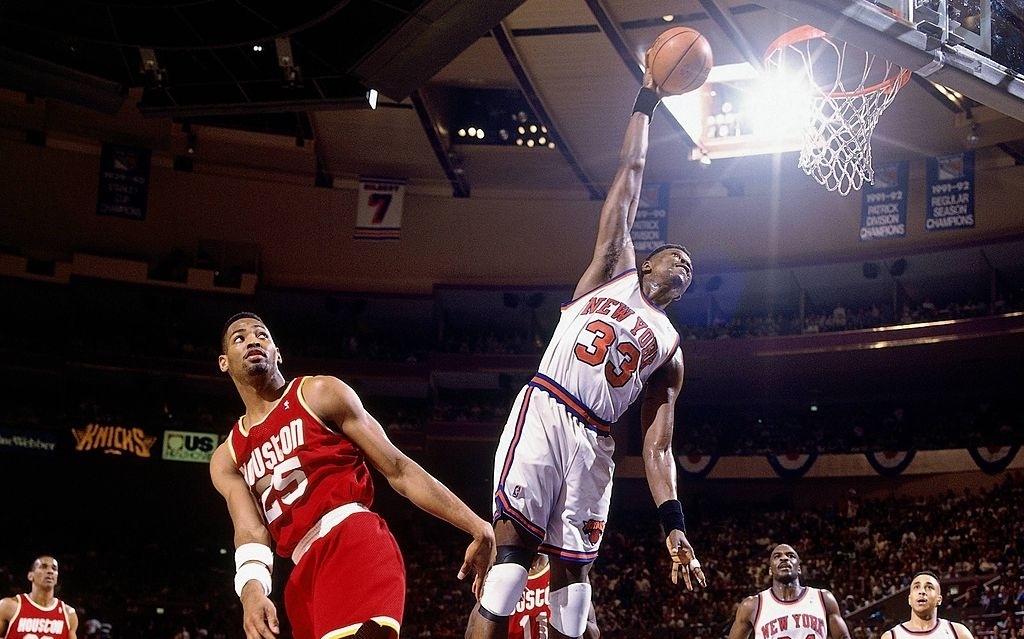
The Knicks came within a game of winning it all in the 1994 NBA Finals when Patrick Ewing (pictured) was the team’s leader.

Wembanyama, San Antonio’s best player, is a towering 7’4″ and doesn’t even have to jump to dunk the basketball, while the Knicks’ best player is Jalen Brunson, who at six feet tall is diminutive by NBA standards.

Wembanyama was the number one pick in his draft, already hailed as the future of the sport before he set foot on the hardwood. Brunson was the 33rd pick in the second round in his draft class, an afterthought who wasn’t predicted to be anything more than a bench player at best.

OG Anunoby, who hails from the UK, is a lockdown defender and explosive scorer. Credit: Wikimedia Commons

When the Knicks signed Brunson four years ago, the entire sports world laughed. One ESPN “expert” insisted the idiot Knicks had pinned their hopes on a “role player,” while another compared Brunson to one of the team’s all time great busts. A third declared the Knicks would never win anything with Brunson leading the team.

And yet here we are on the cusp of history. The Knicks aren’t just two games from a championship, and they haven’t merely punched their ticket to the Finals. They have absolutely obliterated every team they’ve faced, sweeping the last two series and winning by a margin of almost 24 points per game.

But it ain’t over until they win it, so I’m heartened by what the Knicks’ KAT and Mikal Bridges both said after the last two games: they’re treating each game as if they have no lead, as if they must fight tooth and nail to save their season. They are not resting on their laurels, they’re not taking anything for granted, and they refuse to underestimate their opponents.

So let’s hope they win two more and finally bring a championship home, at which time Bud and I will partay!
Can Cats Feel Jealousy?

While the answer is obvious to cat servants, proving feline jealousy in a study is a different ballgame entirely.

Bud isn’t fond of my smartphone.

Like many other humans I spend too much time looking at the damn thing, and that’s not good even though I have the excuse that I use my phone as a reader and my presence on social media ranges from extremely limited to nonexistent.

When His Grace has decided I’ve looked at the screen long enough and it’s Buddy Time, he’ll pad up and slap the phone out of my hands, or if I’m laying down he’ll climb on top of me, nudge the phone out of the way and sit on my chest so he has my full attention.

“No glowing rectangle!” he’s saying. “It’s Buddy Time! Now scratch my chin and rub the top of my head as I purr!”

Naturally I comply, and before long Buddy is leaning in, pressing the top of his head against my forehead, which is his way of saying: “I love you, slow dumb human! You have many flaws and you don’t give me enough snacks, but you’re my Big Buddy!”

Of course, intuitively knowing Buddy is jealous of — or annoyed by — my phone is different than proving it in a well-designed, repeatable experiment.

Psychology Today’s Jessica Wu writes about just such an effort by a team of researchers out of Japan.

Before I offer my criticism of the study, let me first say I have respect for the team at Kyoto University. They’re one of a handful of research teams around the world that routinely produce studies into cat behavior and cognition, and it’s clear that they view it as an important and crucial area of research. That’s significant, because even though we’ve seen something of a renaissance in cat-related studies over the past half-decade or so, many scientists still think cats are nearly impossible to work with.

The team at Kyoto also understands the territorial nature of cats makes it difficult to study them in a lab environment, so they go the extra mile and enlist people who are willing to let them into their homes to study their little tigers.

That’s what the Kyoto team did for their 2020 study on jealousy, splitting their research between typical homes and cat cafes. (Fifty two cats in total participated.) All the cats observed in the study had been living in their homes or cafes for at least six months.

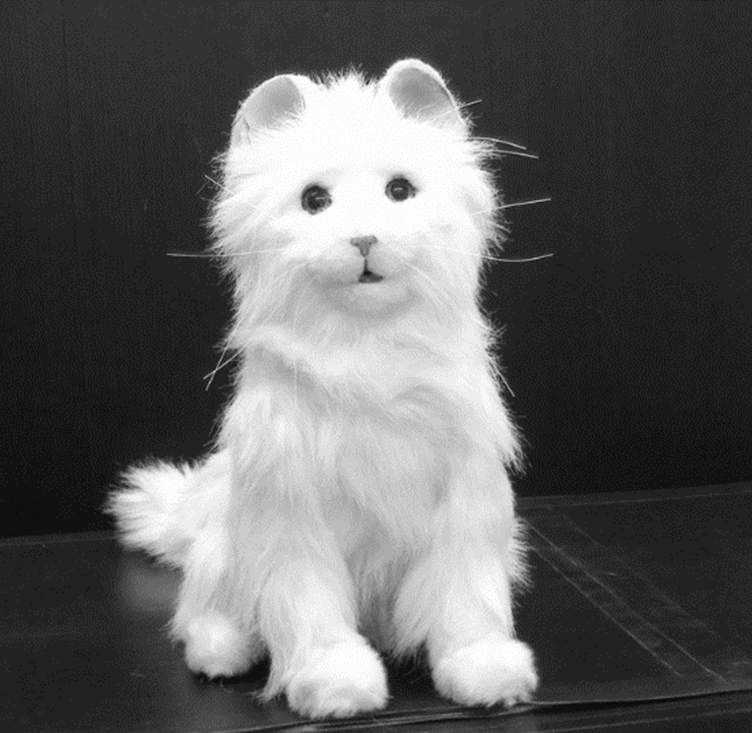
Researchers took a method that’s been used to study human babies and dogs, and adapted it for felines. They brought in a plush cat and a pillow with a corresponding color and texture.

Then they asked the participants to spend time petting the plush cat and the pillow in front of their furry overlords while team members carefully watched the kitties for their reaction. Each experiment was then repeated with a stranger petting the plush and the pillow to gauge whether cats behaved differently when observing someone they aren’t emotionally attached to.

The team found the cats “reacted more intensely” to the plush cats than the pillows, but there wasn’t any marked difference in how they reacted when they watched their humans versus strangers.

Crucially, the cats didn’t show signs that they were upset, like human babies have in such experiments, and they didn’t try to physically separate their humans from the plushies, as many dogs did in their version of the experiment.

jealous-cat
“How dare you hand out yums and not include me!” Credit: icanhazcheezburger

The results indicate cats didn’t express jealousy in the experiment, but the Kyoto team are pros, noting that it’s just one study with one approach.

“We consider the existence of some cognitive bases for jealousy to emerge in cats, and the potential effect of cats’ living environment on the nature of their attachment to their owner,” they wrote. “More ecologically valid procedures are required for further study of these issues.”

It’s my non-expert, non-scientific opinion that researchers would get better results using actual cats instead of proxies. That introduces a new set of problems and an experiment involving rival cats won’t be easy, but science isn’t supposed to be easy, and if we really want to understand how cats think, we have to get as close as possible to mimicking real circumstances.

Plush Cat in Kyoto study
The plush cat used in the Kyoto study. Perhaps the cats involved in the research felt the humans were insulting their intelligence. Credit: Kyoto University

It would also help to expand the scope of the experiment. How much can researchers really glean from a fleeting interaction? Jealousy isn’t something that just bubbles up and disappears. It happens within an emotional context. It’s a secondary emotion that sprouts from elements of primary emotions like fear, anger and confusion.

Scientists are very careful about anthropomorphizing animals, for obvious reasons, but sometimes they’re guilty of over-correcting as well and denying the obvious, which is why the prevailing scientific opinion for almost half a century, until 1959, was that animals don’t have emotions or cognition.

In the meantime, Buddy will continue to make sure Buddy Time is equal to, or greater than, glowing rectangle time.