Wordless Wednesday: The Retrofuturistic Rocket Cars Of Rural New York

They appear out of nowhere on a scenic route in New York’s Catskill mountains, beckoning drivers to stop and check out the rest of the wonders inside the nearby shop.

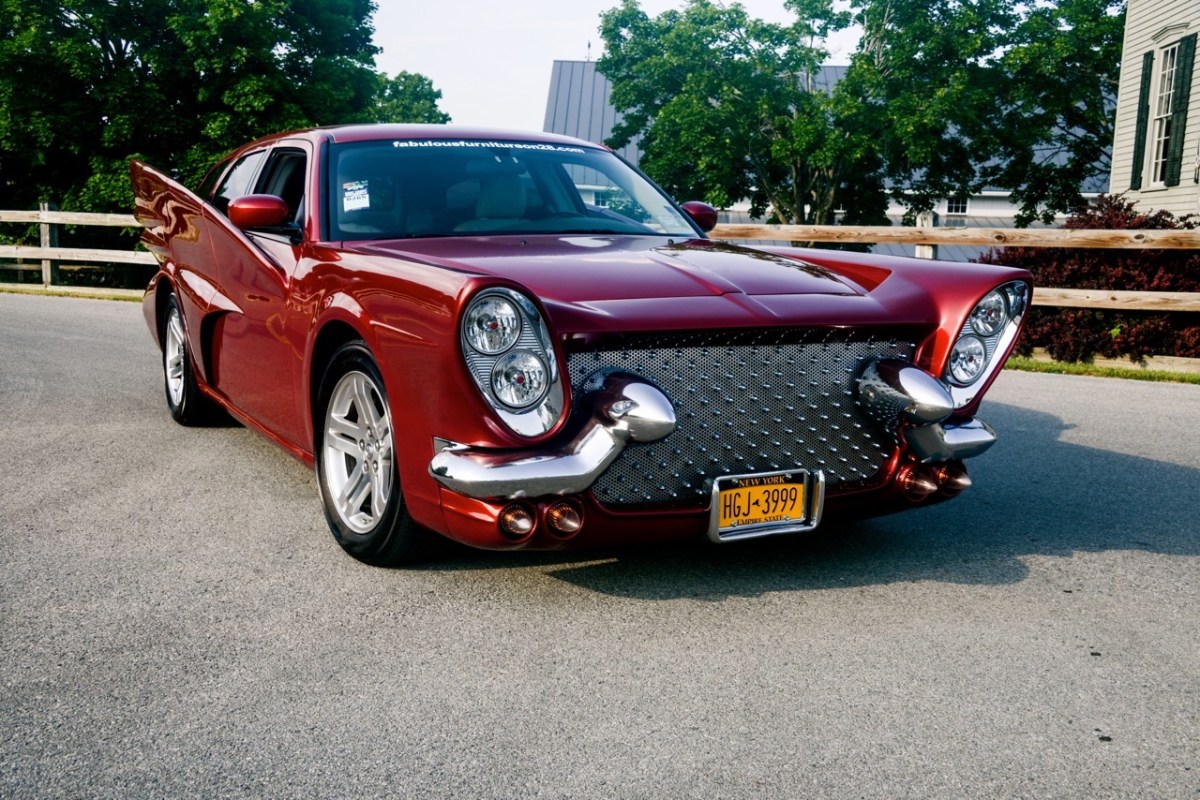
A few years ago on the way back from the Catskills, a scenic mountain belt in low-central New York, I spotted this beauty from the road and had to stop:

It’s a heavily modified, custom Dodge Magnum crafted by artist Steve Heller. The parcel of land I’d almost passed houses his shop, Fabulous Furniture On 28, one of the most unique spots you can find in the state, if not the country.

Here are a few other photos of the Cro Magnum I took that day:

Heller’s property is adorned with all sorts of retrofuturistic metallic sculptures that evoke the science fiction films and comic books of yesteryear:

The classic cars are my favorite, but unfortunately I did not get to see them all that day.

The header image and the images below are from Heller’s site, while I took the other photos on the day I stopped to look around.

The header image is another Dodge Magnum, while the beast below is The Marquis de Soto, a customized Mercury Grand Marquis:

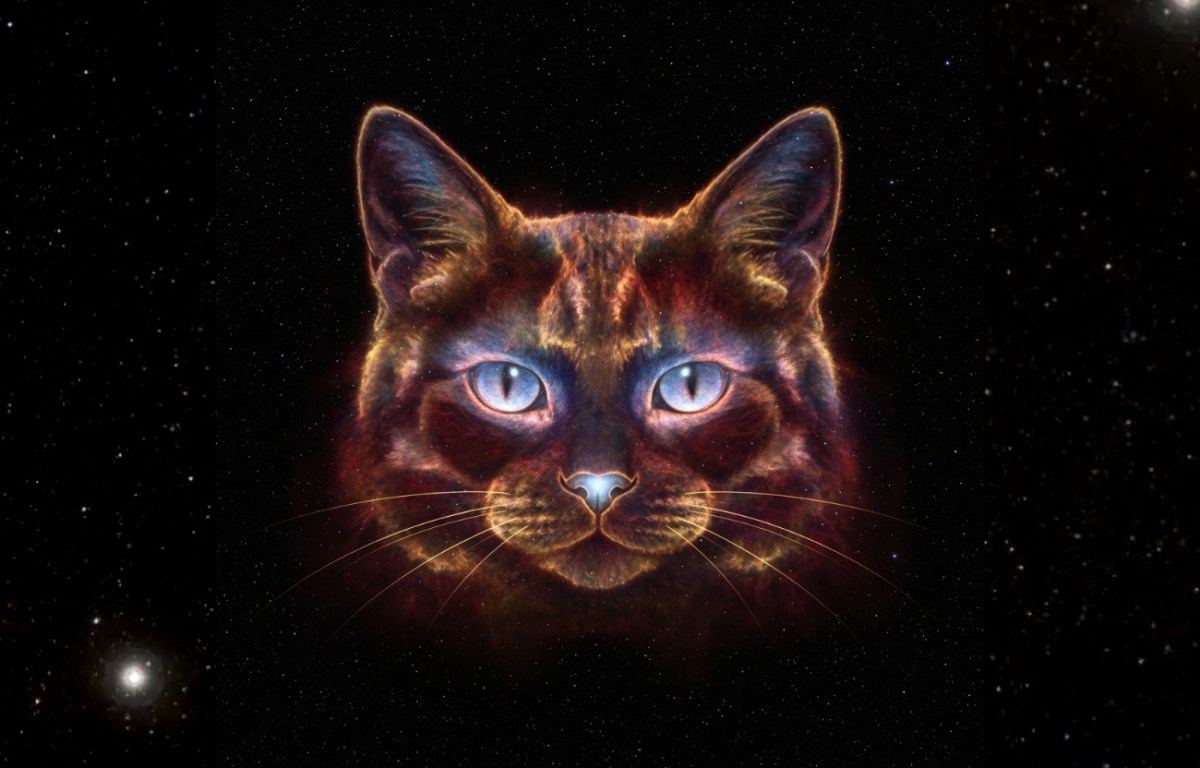
People Think This Nebula Resembles A Smiling Cat, PLUS: What Kind Of Music Soothes Felines?

Your cat’s taste in music may or may not align with your own.

Before we get into today’s cat news, I received an email asking why there hasn’t been much Buddy on the site lately.

Fear not, friends of Buddy! The little guy is down in the Amazon visiting his jaguar pals, but he’ll be home in time for the most important holiday of the year, Turkey day. He wouldn’t miss it for the world!

Buddy with a jaguar buddy in the Amazon, where there’s a special felid conference on new napping techniques.

A smiling cat?!

A story on Space.com says people see a “smiling cat” in images of a nebula, although we’re not so sure.

The nebula in question is Sh2-284, or Sharpless 284. It spans about 150 light years and sits about 15,000 light years from our star system near the edge of the Milky Way, in an outer spiral arm.

From a certain orientation, there may be suggestions of cat-like ears and eyes, although if there is a smile, it’s crooked and deranged-looking. Maybe the cat’s on pain pills from the vet?

There’s an opportunity here, since the nebula doesn’t have a nickname. The Buddy Nebula has a nice ring to it!

Here’s an image from NASA:

This spectacular picture of the Sh2-284 nebula has been captured in great detail by the VLT Survey Telescope at ESO’s Paranal Observatory. Sh2-284 is a star formation region, and at its centre there is a cluster of young stars, dubbed Dolidze 25. The radiation from this cluster is powerful enough to ionise the hydrogen gas in the nebula’s cloud. It is this ionisation that produces its bright orange and red colours. This image is part of the VST Photometric Hα Survey of the Southern Galactic Plane and Bulge, led by Janet Drew at the University of Hertfordshire in the UK.

And here’s an annotated image from astrophotographer Jim Thommes that shows us what we’re looking at and the immediate galactic neighborhood:

In Star Trek there’s always a convenient nebula nearby when the Enterprise — or Voyager, Titan or Discovery — needs to “hide” from some well-armed belligerent, and science fiction in general creates the impression that they’re like space swamps.

In reality nebulas are regions where the interstellar medium — the space between stars — is filled with gas, cosmic dust and inert matter. Some are stellar nurseries — places where stars are “born” — and some are the remnants of dead stars and the planets that orbited them.

They can seem to glow red, orange, green or blue depending on the elements present. Some of them reflect starlight while others are like filters, with the gases and dust lending their color to the nebulae structure.

Cats are pretty well-represented in the cosmos, from a human perspective. From the cat’s paw nebula to the Cheshire Cat galaxies, to the Lynx, Leo and Leo Minor constellations, astronomers have seen cats in the sky for millennia.

Does music help cats relax?

Although the research is limited, some studies have indicated certain genres of music can help our little buddies chill out. And if research into the canine response to music is any indication, we should expect to see more evidence for cats enjoying tunes.

When it comes to what kind of music is most effective, studies point to classical music with a slow tempo, as well as reggae and soft rock “with simple rhythms, slower tempos and no heavy percussion,” according to a new story from the BBC.

Just listening to some meowsic!

A 2016 study looked at the effect of music on 12 female cats who were recovering from spay surgery. The research team played “three different genres of music: classical music (CM), ‘Adagio For Strings (Opus 11)’ by Samuel Barber; pop music (PM), ‘Torn’ by Natalie Imbruglia; and heavy metal (HM), ‘Thunderstruck’ by AC/DC.”

The team measured heart rate, breathing rate and pupil dilation, concluding that classical music was most effective, followed by the Imbruglia song and AC/DC last. (Maybe next time they can slide The Tony Danza Tapdance Extravaganza in there for some extra fun.)

Anecdotally, Bud did not respond well to composer David Teie’s Music for Cats, but he hangs out and nods along to funk, classic 90s New York hip hop, retrowave, nu-disco, reggae and certain kinds of rock, which is almost certainly because he grew up hearing that stuff with me.

So maybe there’s a nature vs nurture element to feline musical preferences, although I wouldn’t hold out hope for cats who enjoy the Tony Danza Tapdance Extravaganza. Some things are best left alone.

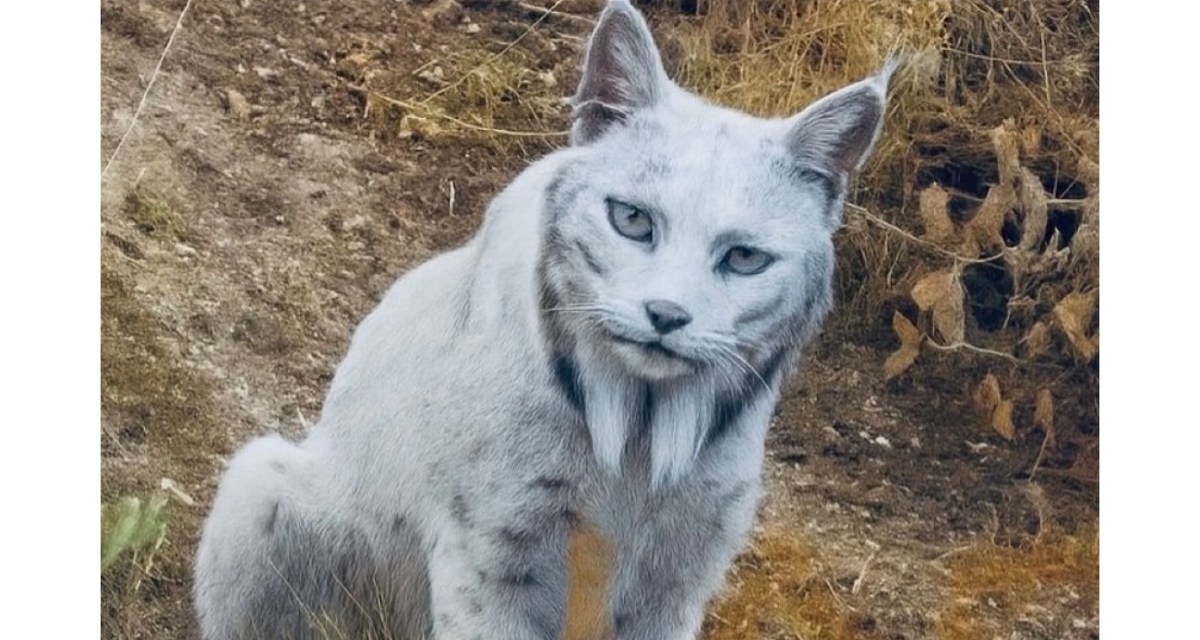
‘White Ghost’: Amateur Photog Gets First-Ever Shots Of White Iberian Lynx

Photographer Angel Hidalgo thought the color was a trail camera malfunction until he saw the incredible feline for himself.

For the first time in history, a white Iberian lynx has been photographed.

A Spanish man who works in a factory by day and photographs wildlife as a hobby was behind the camera for the unprecedented shots.

It wasn’t easy.

Angel Hidalgo told National Geographic that first spotted fleeting images of the extraordinarily rare feline on one of his camera traps, but he was skeptical.

“I couldn’t believe it,” the 29-year-old said. “I thought it was a camera effect, and from then on, I dedicated myself to the search for the lynx. I’m still in shock.”

While hiking in late October, Hidalgo saw the “ghost cat” with his own eyes and quickly took a handful of shots and a short video before the cat vanished.

Credit: Angel Hidalgo

The Iberian lynx, as its name indicates, is native to Spain and a small range in Portugal. The cats call mountain ranges like Sierra Morena and Montes de Toledo home.

The white color morph is due to leucism, not albinism: the difference is the former causes only partial loss of pigmentation, and the eyes are unaffected.

In the video footage, the cat sits calmly and regards Hidalgo for about 15 seconds before blinking and turning its head. It’s a fleeting but fascinating look at an animal that most of us will never have the opportunity to see in the flesh.

Hidalgo won’t say where he encountered the white lynx, which is a smart move in an age when bored rich kids in places like Dubai can throw money at wildlife poachers and help themselves to the rarest and most vulnerable wildlife.

Because they know the authorities in their countries won’t bother them, the sons of oil oligarchs and emirs openly flaunt their wild “pet” collections: Instagram and TikTok host thousands of photos and videos of young men and women posing with cheetahs, lions and tigers, with the cats often riding shotgun in hypercars from Lamborghini, Ferrari and McLaren.

We hope the location remains a secret for the sake of the wild cat and because the Iberian lynx is a conservation success story. The species was on the brink of extinction in the 1990s and now has a healthy breeding population that numbers in the thousands.

Wordless Wednesday: The Glorious Amur Tiger

Today we’re admiring photos of the majestic Amur (Siberian) tiger, a species that has been pulled back from the brink of extinction thanks to the hard work of conservationists.

The Amur tiger, panthera tigris altaica, is the largest subspecies of the largest cat in the world.

Click an image in the gallery to view a higher resolution version:

All images in the gallery above via Wikimedia Commons. Header image via Pexels.

Happy National Black Cat Day!

House cats, jaguars, leopards, Servals and jaguarundi are just some of the species that have melanistic (black) color morphs.

Everyone knows house cats, jaguars and leopards can be voids, but did you know other cats have black color morphs too?

The Asian golden cat, the Serval, jaguarundi, Margay, kodkod, Geoffrey’s cat, oncilla, Pampas cat, and bobcat all have melanistic variants.

Unfortunately when it comes to house cats, research supports the longstanding claim that black cats are adopted at lower rates, and are euthanized in greater numbers, than other felines. Part of that can be chalked up to superstition. It’s also due in part to the fact that black cats are more difficult to photograph.

But as these photos prove, all you need is some decent ambient light, smart framing and maybe a bit of shadow/highlight correction to help bring out a black cat’s natural features.

Melanistic kodkod.
Melanistic oncilla. Credit: Ignacio Yufera

Image credits: Top two rows via Pexels, with photographers listed in the captions. All other photos via Wikimedia Commons. Last image (melanistic oncilla) credit Ignacio Yufera