Another Delivery Driver Steals A Cat, Proving We Need Better Laws

Under South Carolina law pets are considered property, and the maximum penalty for stealing someone’s beloved animal amounts to a slap on the wrist.

Another day, another story about a delivery driver stealing a cat.

This time it happened in Charleston, South Carolina, and while local police worked quickly to identify the woman behind the wheel and arrest her, the feline is still missing.

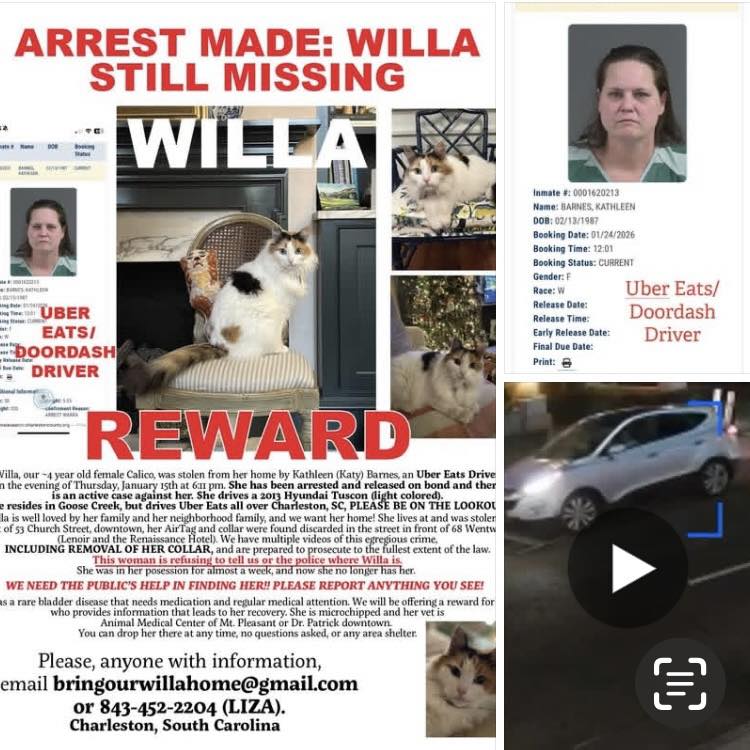
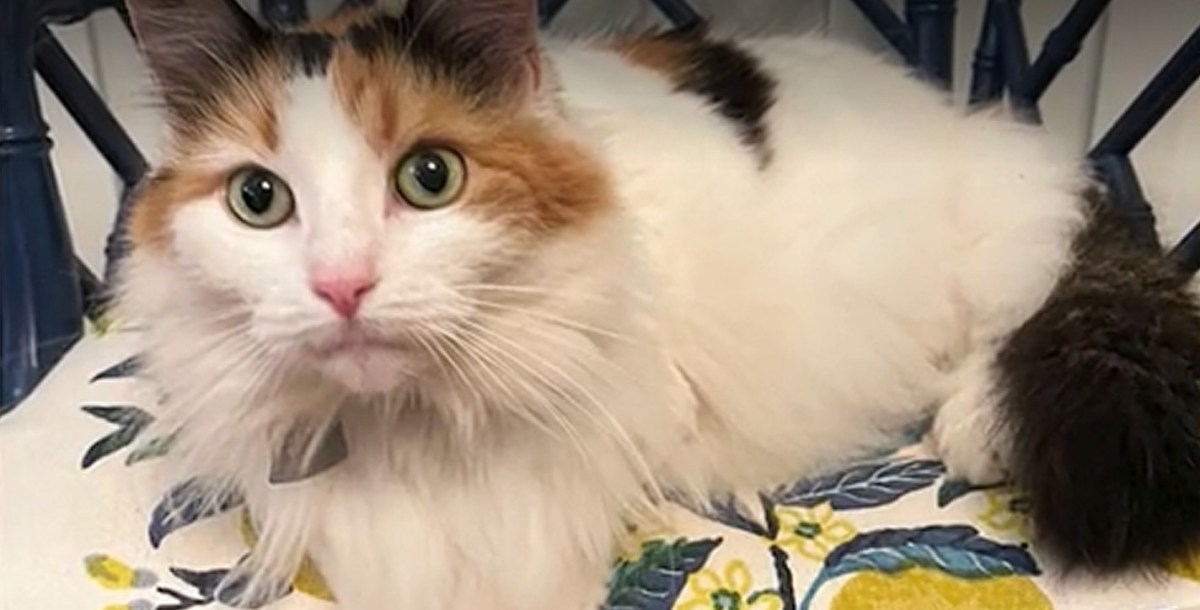
Daniel and Liza Layfield said they knew something was wrong on Jan. 15 when an AirTag attached to their cat’s collar showed she was several blocks away. After checking their own security camera footage and video captured by other cameras on the street, they saw a local food delivery driver stop her car, scoop up four-year-old Willa, then drive off with her.

The woman tossed Willa’s collar and AirTag nearby. Thankfully, police took the matter seriously and the local community helped spread the word, leading to a quick arrest.

The family is relying on help from the community to find Willa.

But there are two problems that are common to these thefts of opportunity: Willa is still missing, and the most severe charge police could lodge against the suspect is petty larceny. That’s a misdemeanor that carries light penalties (a fine and up to 30 days in county jail) on conviction. That’s not a deterrent.

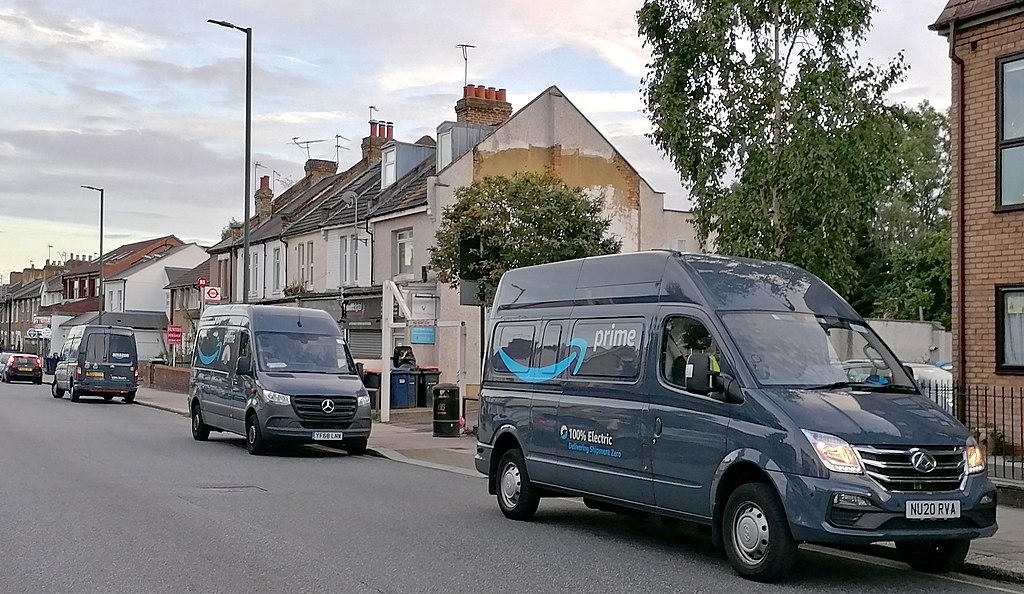
We wrote about this problem just last week, when the quick recovery of a cat stolen by an Amazon delivery driver in the UK illustrated the difference a stronger law makes.

Stealing a pet in the UK can land the thief in prison for up to five years in addition to fines. Police are more likely to devote resources when the law gives them appropriate charges to file, and five years in prison would make most people think twice about impulsively stealing a family’s well-loved pet.

By contrast, most US states treat pets as property, meaning courts do not take into account their sentimental value, bond with their people, or trauma to animal and human when someone steals a pet. South Carolina is among those states: in that state’s penal code, petty larceny is a charge that applies when someone steals property worth less than $2,000.

The suspect, a DoorDash/Uber Eats driver, has not been helpful in the Layfield family’s efforts to find their feline family member. In the meantime, the family hopes a $1,000 reward will prompt someone to come forward, or that Willa turns up at a local shelter and has her microchip scanned.

“We want to find Willa, we want to know where she is. It’s going to be 20 degrees for the next several days,” Liza Layfield told the local NBC affiliate. “The idea of her being loose and on the run is horrific.”

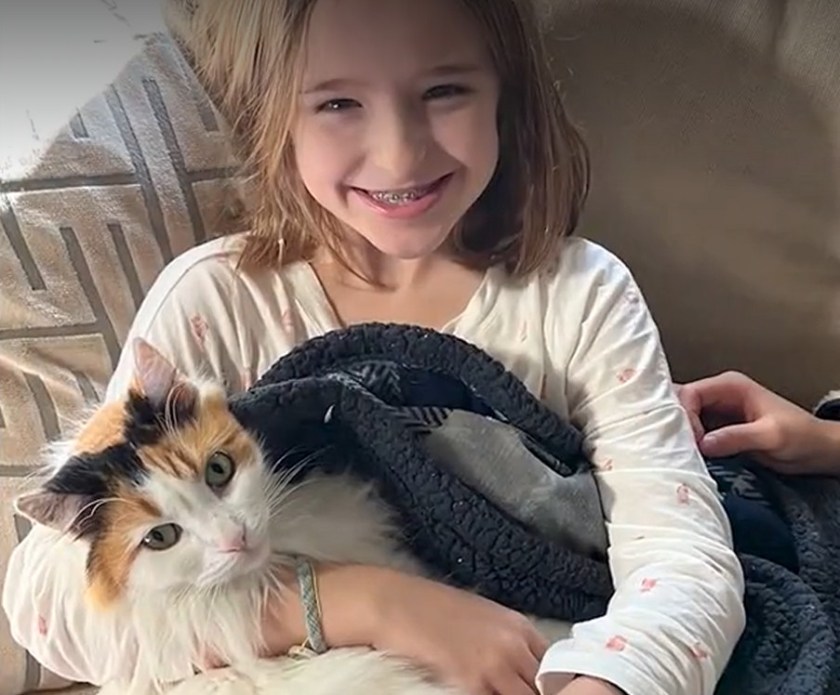
The Layfields’ daughter holding Willa, who has been missing since she was stolen on Jan. 15 by an Uber Eats/DoorDash driver.

A Week After An Amazon Driver Stole A Woman’s Cat, Neither The Company Nor Police Have Any Answers

Amazon says it has identified the driver who stole a California woman’s cat and is working with local police, but they still haven’t recovered the beloved pet.

You’d think it would be relatively trivial to reunite a woman with her cat after an Amazon delivery driver stole the kitty on Dec. 11.

After all, the victim’s own Amazon Ring camera system captured video of the driver walking away with Piper the cat after dropping off a package. Amazon knows precisely who the driver is, where he lives and how to contact him, because he’s a contractor for the company.

And it’s difficult to imagine how it would stretch the resources of the Lakewood (California) Sheriff’s Department to send a deputy out to arrest the guy and retrieve the cat.

The driver picks Piper up by the scruff of her neck, which could cause serious injury in an adult cat.

This wasn’t a high stakes heist by pros with a plan to disappear.

It was a local delivery driver who made an impulsive decision to steal a cat from a customer.

Do the police really think the man is hiding out in a local motel with the shades down and the cat tied to a chair, cutting out letters from a magazine for a ransome note?

Getting Piper back matters very much to Diane Huff Medina and her children, who miss the chatty Siamese mix.

It doesn’t matter at all to the police or to Amazon, which finally issued a statement calling the theft a “horrible act” and saying it was cooperating with police.

“The Amazon Flex delivery partner in question is no longer eligible to deliver to our customers,” an Amazon spokesman said.

That doesn’t help Diane Huff-Medina get Piper back, nor does it help her reassure her children that the feline, who has been with the family for six years, will be returned unharmed.

“Every day they ask, ‘Is she back yet?’ It’s hard to tell them,”Huff-Medina told local media this week.

In our last post, we noted that in cases where people were reunited with their pets, they did not wait for Amazon or the police to act. Neither has the same sense of urgency as an animal’s own family, and unfortunately police are often reluctant to devote time or manpower to these cases because pets are considered property. When the most severe potential charge is petty larceny — which takes into account a cat or dog’s monetary value, but not its emotional value — stolen pets are considered minor crimes.

Huff-Medina has done well to shame Amazon and local police by going to the media and getting Piper’s story out there. We hope she gets good news soon.

Header image via Wikimedia Commons

Bangkok Police ‘Arrest’ Cute But Aggressive Feline, Plus: Accused Serial Cat Killer A No-Show In Court

Police used the kitty’s mugshot to reunite her with her family. Meanwhile, a judge in California has issued a warrant for a man accused of murdering dozens of cats in his neighborhood.

When a kind passerby scooped up a lost cat and brought her to a nearby police station in Bangkok last week, police were happy to help reunite her with her family.

But the cat, whom they later learned is named Nub Tang (“Counting Money”) wasn’t particularly happy about being rescued, and she tried to chomp down on several officers who were trying to help her.

So a lieutenant who goes by the name Inspector Da online devised a novel way of making the best of the situation and reuniting Nub Tang with her family.

The Inspector “arrested” and “booked” Nub Tang on charges of assaulting an officer. He took a mugshot of the grumpy shorthair and took her paw prints, then posted them online.

Nub Tang even looked grumpy in her “mugshot.” Clearly, she’s a criminal.

The amusing images and story helped draw attention to the post, and the next day, after Inspector Da had taken Nub Tang home with him overnight to make sure she was comfortable and felt safe, Nub Tang’s humans saw the posts and contacted the precinct.

Inspector Da — real name Parinda Yukol Pakeesuk — happily handed the feisty feline back to her people, but not before posing for some photos with them and saying goodbye to his temporary pal.

Nub Tang has a lot of personality for such a tiny cat. Credit: Da Parinda/Facebook

Warrant issued for alleged cat killer who didn’t show for court

A California man accused of killing dozens of cats skipped out on his initial court appearance.

Police in Santa Ana arrested 45-year-old Alejandro Oliveros Acosta in April after media pressure prompted them to finally take reports of a cat killer seriously.

Neighbors had been lodging complaints and asking police to act for more than a year after pets and strays went missing. Acosta and his white pickup truck were captured on several doorbell cameras and home security cams, including one that caught a clear view of him allegedly luring and abducting a neighbor’s pet cat.

After their complaints failed to prompt action from police, people in the neighborhood turned to local media, sharing footage and information.

A local TV news report finally cranked up pressure on the cops, who arrested Acosta in late April. A search of Acosta’s home turned up the bodies of deceased neighborhood cats and evidence that Acosta had allegedly killed “dozens” of felines, a Santa Ana police spokeswoman said.

Acosta didn’t show up for a May 21 preliminary hearing. Now police are looking for him and the court has issued a warrant for his arrest.

The Santa Ana man previously posted $40,000 bail, money he will forfeit if he remains a scofflaw.

A Cruel, Emotionally Manipulative New Scam Targets Cat Owners

“I had to leave work because I was a wreck, fully believing my cat was on the verge of life and death. It’s cruel that people do this,” one victim said.

Two weeks after his beloved cat vanished, Justin Hills received a phone call that simultaneously gave him hope and filled him with dread.

The man on the line spoke with practiced professionalism and told him that his cat, Little Wayne Shorter, had been found badly injured after he was hit by a car.

Little Wayne urgently needed surgery, said the man who identified himself as a staffer with Seattle Animal Shelter. Veterinarians were ready to begin surgery if Hills gave them the go-ahead and sent $2,800 via Venmo.

“The back of my head is screaming, ‘This is a scam. This is a scam.’ But at the same time, because it’s such an emotional pull, I’m thinking, even if there’s only a 10% chance that this is real, you know, I want to go ahead with it,” Hills told Seattle’s WKIRO.

Little Wayne Shorter

“The guy was rehearsed, was smooth. He sounded like, you know, an experienced person,” Hills said. “They had done some research on me before they called. You know, they knew my name. They knew my cat’s name, you know, the address and all this.”

When Hills called his bank, they warned him it was a scam. Hills said he’s glad he didn’t send the money but also devastated his cat is still missing — and that he was given false hope by someone trying to manipulate him in his desperation to be reunited with Little Wayne.

He’s not alone. In a post to Facebook group for missing pets in King County this week, Seattleite Harris Alex described a call from a person who claimed to work for Seattle Animal Shelter.

“They said someone found my cat, Binx, and that he had been hit by a car. They told me if I didn’t pay for surgery, he would die or be paralyzed within the next hour,” Alex wrote.

A caller said Binx, above, was seriously injured and needed urgent — and expensive — veterinary care.

Alex grew suspicious when the caller asked for a payment via Venmo, Paypal or Chime.

“I called the shelter to confirm they do not have him,” Alex wrote. “I had to leave work because I was a wreck, fully believing my cat was on the verge of life and death. It’s cruel that people do this. Be careful out there.”

Staff at Seattle Animal Shelter, which is run by the city, are aware of the scam and have gotten several calls from people asking if the shelter has their cats after being in contact with the impersonators.

“We would never ask somebody over the phone to make a payment,” said Don Baxter, manager of field services at the hospital. “We’re going to get that pet to a veterinarian and get it care and treatment, and then we’ll work out how to get the pet back to the owner after that.”

The lost/injured pet scam isn’t limited to Seattle, and the perpetrators will often switch to targets in another city if too many people become aware of their efforts, only to pop back up again later. The scam’s combination of social engineering and emotional urgency encourages victims to act quickly without giving the situation too much thought.

Experts advise people to keep their cool despite their hopes or fears, and demand proof that the person has the animal:

“This is one of the more difficult scams to deal with emotionally. If someone really has your pet, they should be able to at the very least send photos. Most people should be able to do a video call.

In general, scammers will pressure you to send money in advance. They will often make lots of excuses for not being able to provide proof they have your pet or meet in person.”

This general category of scam isn’t new, but social media has enabled scammers to believably pose as shelter staff using information pulled from the victim’s own lost pet posts and profiles, the FBI notes. The bureau also warns of several variations on the scheme.

Binx

The people running the con find their victims by scanning local missing pet groups on sites like Facebook and Reddit. They gather names and descriptive details, spin a narrative that shocks their intended victims, and create a sense of urgency by saying the cat will die if there’s any delay in performing surgery.

That’s what happened to Susan Burgess, who’d posted about her 15-year-old tabby cat, Linus, going missing. The caller said Linus was hurt and he needed to confirm her name, but Burgess realized he would have known it if he’d scanned Linus’ microchip.

She gave the scammer a piece of her mind before hanging up on him.

“On the off chance that you do have my cat, I hope that you are able to show some compassion and do the right thing,” she told the caller. “But I’m pretty sure that you don’t, and what you’re doing is very cruel.”


PSA: Speaking of scammy behavior, I can’t control the ads that are shown on PITB, but if you’re seeing ads for an amazing-looking, ultra-realistic toy rabbit presented as a great Easter gift, don’t fall for it. Here’s a video revealing what you’ll actually get from the deceptive seller:

Man Takes Beloved Bodega Cat: ‘He Stole A Precious Thing In This Community’

The store’s owner says he’s not interested in having anyone prosecuted and he just wants his cat back.

Another day, another person who decided to steal a cat instead of adopting one of the estimated 3.2 million languishing in shelters and waiting for homes.

This time, a man made off with Antonio, a well-loved bodega cat who was the unofficial mascot of K’Glen Deli and Sari Sari Store in Woodside, Queens. When store owner Glen Alagasi couldn’t find Antonio and the tabby failed to show up for meal time, Alagasi panicked.

Sure enough, footage from security cameras showed a man picking Antonio up right in front of the store’s entrance and walking away earlier that day, on the afternoon of Aug. 2. As the man walked off, Antonio managed to squirm out of his hands and was trying to get back to the bodega. The man scooped him up again and Antonio was last seen in his arms as they headed toward Woodside Avenue.

Antonio the cat
Credit: Glen Alagasi

Like others who have had their feline friends taken from them, Alagasi said he’s much more interested in getting his cat back than any form of retribution or punishment.

“We’re not asking for any criminal prosecution,” Alagasi told CBS New York. “Just, we need the cat back. [The thief] stole a precious thing here in this community.”

For people unfamiliar with city living, especially in New York, bodegas are a daily part of life and often the only places to buy food in neighborhoods that are otherwise “grocery deserts.” When you live in Manhattan or a borough, the concept of big-time grocery shopping just doesn’t exist, because chances are you’re hauling your purchases back on foot and ascending stairs or an elevator to your apartment.

Technically, the Department of Health forbids the keeping of cats in bodegas and delis, which almost always have hot food and sandwiches prepared on-site. But the fine for a rat infestation is the same as it is for having a cat, and inspectors can’t be everywhere, so most bodega owners figure it’s better to have a little pal who keeps the rats away than cede territory to rodents, especially in a city that struggles with a perpetual rat problem.

The laws are so openly flouted that there are entire social media accounts dedicated to bodega cats, and the operators don’t bother to hide their cats from customers or the press. If the inspectors are going to come, they’ll come.

Alagasi says he’s lost a friend, and customers like Pia Tracy are used to seeing the little guy every day.

Antonio, who often plays with Tracy’s cat, is “part of our everyday life.”

Tracy says she’s “devastated and heartbroken because I don’t know if he’s okay. We just hope he’s okay.”