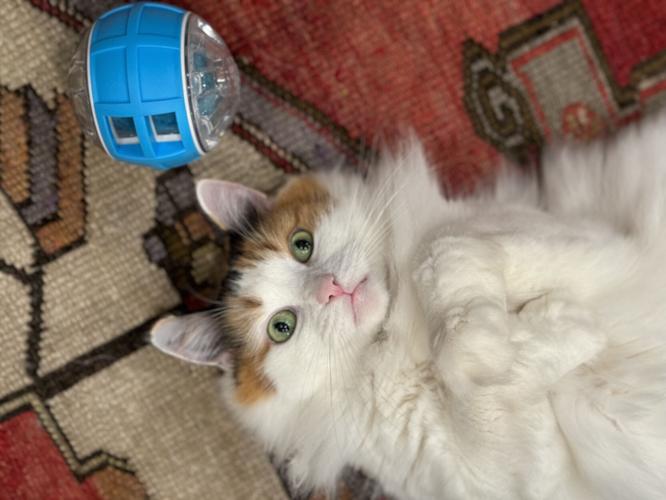
The proposed program would offer free spay/neuter and vaccinations for bodega-dwelling felines, who would be considered working animals.
Walk into a New York bodega and chances are you’ll see a cat snoozing on the cash register, chillin’ on the counter or sitting on a windowsill while watching the busy streets.
New York City’s bodega cats are beloved, viral sensations who are celebrated in Instagram feeds and coffee table books, but they exist in a legal gray area.
The law technically forbids them, but the fine for having a cat is the same as the fine for a rodent infestation. The latter increases for every violation while the former does not.
So it’s a no-brainer: adopt a cat, keep your place rat-free, maybe pay a fine. Or suffer a rodent infestation, which is not only awful, it can be stubborn and rack up thousands in fines if there’s even a whiff of a rat when inspectors make subsequent drop-ins.
No one bothers to hide bodega cats. In fact they’re more likely to use them as mascots for their shops, uploading photos of the little ones taking well-deserved breaks from rodent-hunting and encouraging regular customers to interact with them.
Since local activists pushed for legalizing the mascots/hunters, they’ve found support in the city council, a councilman willing to put a bill for vote, and a plan.
“Bodega cats embody the New York spirit: friendly, welcoming, and anti-rat,” councilman Keith Powers said. “I’m proud that my legislation will codify them into city law and provide resources to keep them healthy. It’s time to remove the legal limbo that our furry friends have been living under for far too long and legalize them once and for all.”
The city would officially recognize and register bodega cats. In return, the bodega owners get free spay/neuter and vaccinations for their cats. And instead of looking for the existence of felines in a store and issuing a fine, inspectors would check on the welfare of the furry exterminators in addition to their usual inspections.
It’s win-win, it’s already got some early support, and it would improve life for thousands of animals across the city.
“Keith Powers’ bill would allow them to come out of the shadows,” perennial mayoral candidate and local fixture Curtis Sliwa told amNY. “No longer would there be the constant fear that the NYC Department of Health would visit and issue fines and sometimes threaten bodega owners that they might remand the bodega cat to a shelter.”
New York’s city council discussed the proposed law last week. There isn’t a date set for a vote yet, but we’ll happily follow up when we learn more.
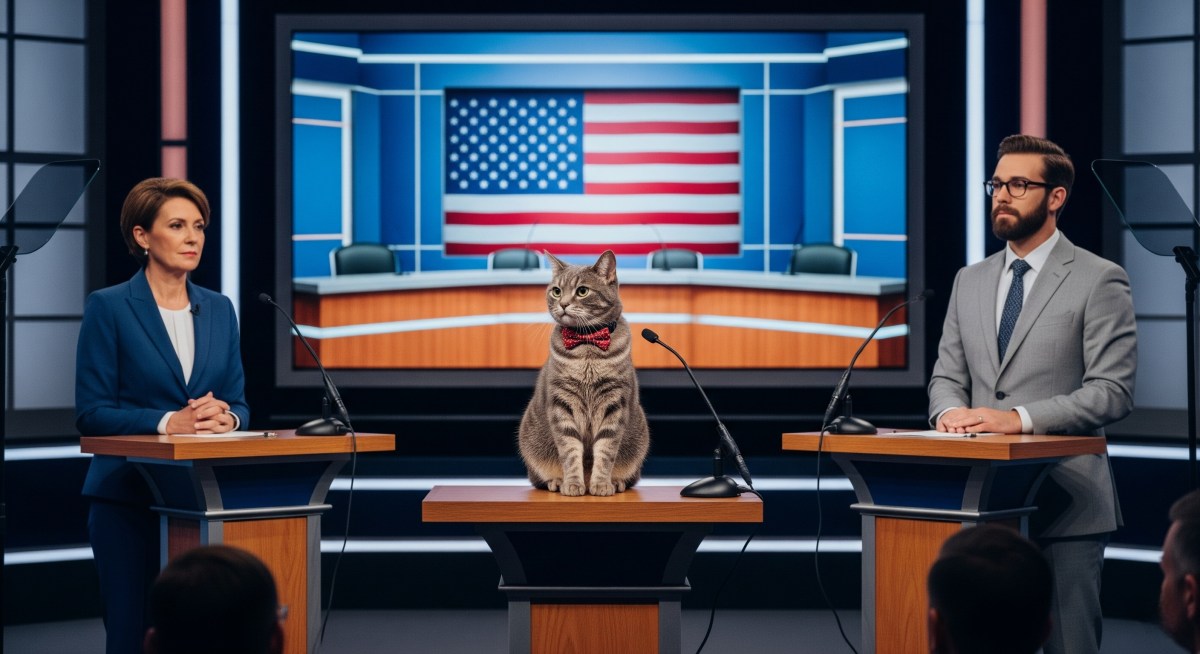
A Queens woman is urging voters to support her cat as a write-in candidate for city council District 30 in an attempt to spoil a term-limited councilman’s “cronies” from sailing into office without opposition.
It’s an interesting time for politics in New York, and not just because of a mayoral race in which voters have apparently rejected Republicans and mainstream Democrats.
Over the last several weeks, stickers urging voters to cast their ballots for a house cat for a city council seat have been appearing in a Queens district.
In a story about the write-in campaign, the New York Post devotes most of the ink to political disagreements between Leo the cat’s human and the district’s councilman, Robert Holden. (He’s a moderate Democrat, she doesn’t think he’s progressive enough, but the things they’re arguing over are above the paygrade and influence of a city councilman.)
But the more interesting issue, for us at least, is what happens if Leo rides a wave of populist support and actually wins as a write-in candidate.
When asked what would happen if the nine-year-old feline earns an improbable victory at the polls, a humorless Board of Elections official asked a Post reporter if he was drunk, then told him “we can certainly say that only a human being — specifically a US citizen — can hold elected office in NYC.”
Oh well. It would be amusing if some clever attorney found a loophole to pave the way for a feline councilman, and there isn’t much chance Leo would be less productive than the rest of the council. He might even provide some fresh perspective on how to deal with the city’s eternal rat problem.
The Massachusetts law is a significant victory in the quest for a national ban on the cruel procedure, which involves amputating cat toes at the first knuckle
There’s good news today from Massachusetts, which just joined New York and Maryland in banning cat declawing.
The bill, signed Friday by Massachusetts Gov. Maura Healey, prohibits all declawing surgery except for rare circumstances when it’s medically necessary, like cancer in the nail bed.
Veterinarians who violate the law face fines up to $2,500 and professional discipline if they continue the practice.
Despite its name, declawing is the partial amputation of cat toes, equivalent to cutting off human fingertips at the last knuckle.
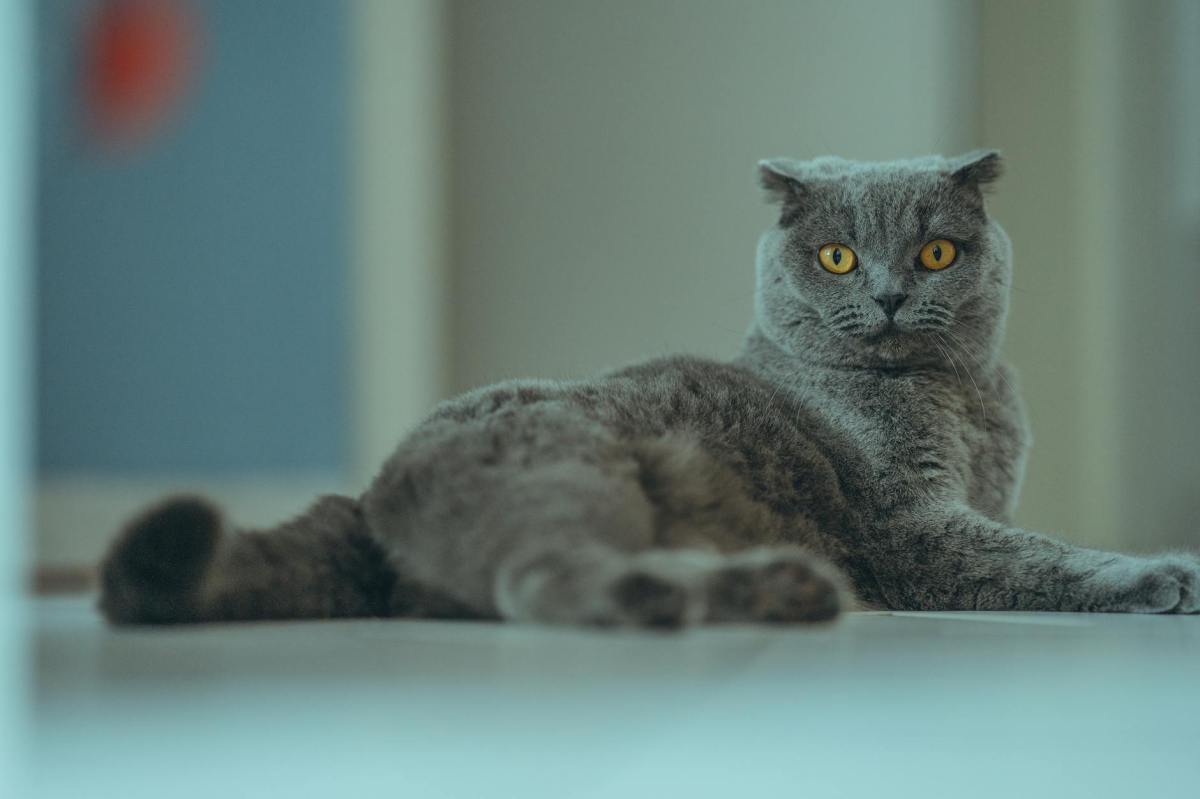
Photo credit: Alex Ozerov-Meyer/Pexels
Declawing changes a cat’s gait, causing the animal pain when it walks, and usually leads to early arthritis. It causes cats to stop using their litter boxes, because the act of standing on and shoveling litter becomes painful for them.
Last but not least, it has a profound psychological impact on felines, making them vulnerable by taking away their primary form of defense. Consequently, cats who are declawed are much more likely to bite than those with intact claws.
Most of all, declawing is cruel and inflicts a lifetime of pain on innocent animals, punishing them for doing what cats naturally do.
Aside from New York, Maryland and Massachusetts, a few dozen cities and counties have banned the procedure, ranging from places like St. Louis, Missouri, to Austin, Texas, and eight cities in California, including Los Angeles and San Francisco.
After a judge barred them from caring for a cat colony, Mary Alston and Beverly Roberts say they’re worried about the strays, who have been left to fend for themselves as winter sets in.
They’d been treated like hardened criminals and insulted by the same police officers who were supposed to protect them, but Beverly Roberts and Mary Alston didn’t think they’d be convicted.
Not for taking care of cats.
“I felt it was very unlikely that we would be found guilty,” Alston told PITB, “with all of the evidence that we had on our side with the body camera footage, and we never broke any laws.”
Roberts and Alston were arrested on June 25, when a trio of police cars pulled up and officers from the Wetumpka, Alabama, police department confronted them. Police body camera footage shows the women, who had been caring for a colony of stray cats, were surprised by the tone and impatience of the officers.
What they didn’t know was that Wetumpka Mayor Jerry Willis was the one who’d in effect dispatched the officers to the small wooded lot owned by Elmore County, grounds that are open to the public. They didn’t know that the officers — who warned the confrontation was “going to get ugly,” told the women they’re “too old to be acting this way” and later joked that they were “a bunch of cops beatin’ up on some old ladies” — were told by the assistant chief of police to arrest them after Willis spotted Alston’s parked car and called the assistant chief directly.
On Tuesday, despite the fact that Willis’ role was revealed during a trial, and despite the fact that Wetumpka has no laws against managing cat colonies or conducting “trap, neuter, return” activities, Alston and Roberts were convicted of a pair of misdemeanors each. Lacking laws to charge them directly, the authorities instead accused the women of trespassing on public land and being uncooperative with the officers.
“That’s what I kept going back to – that feeding and trapping cats is not illegal,” Roberts told PITB. “I was not in the location I was [accused of trespassing], and I was sitting in my car talking to my friend. I was not feeding cats.”
During the trial, Willis and the police argued that they’d already told Alston and Roberts to stop interacting with the cats, and said the pair chose to ignore earlier warnings to stay away from the stray colony. They reiterated their view that the colony is a nuisance.
Roberts said she’s had her disagreements with Willis in the past about the way the town handles animal-related issues, but says Wetumpka’s animal control officer gave her and Alston his blessing to manage the cat colony at their own expense. The animal control officer confirmed that during the Tuesday trial. Public-private partnerships to care for stray cats are common in towns and cities across the US, with many elected leaders welcoming the opportunity to work with local rescues and volunteers.
Roberts and Alston say they plan to appeal their conviction, hoping a county judge will see the charges as “politically motivated” accusations. They pointed out that Wetumpka municipal Judge Jeff Courtney is employed directly by the town, not elected to the post by voters, and they believe they’re more likely to get a fair shake when the people deciding their fate aren’t serving at the pleasure of the people making the accusations.
In the meantime, the cat colony remains in Wetumpka, and the cats haven’t been cared for since late June.
“We are very worried about them,” Roberts told PITB. “A few animal lovers have said they would help, but we are not sure this will happen. I’m not sure there is enough food available to hunt. The weather is getting colder, and they need protein.”
Since the terms of the sentencing include two years’ probation, Alston and Roberts are prohibited from caring for the strays. Alston noted the irony of local authorities claiming TNR was exacerbating a “nuisance” while, in the absence of care and neutering, the free felines “are left to go hungry and continue to multiply and branch out searching for food.”
Roberts says she still finds it hard to believe Wetumpka officials refused to compromise or find a way to establish cooperative care for a community problem.
“I thought that they surely had more pressing issues to attend to,” she said. “I really thought the judge would dismiss it and tell the city to work it out.”
Despite the obvious threat posed by the retirees who were defying the law to feed dangerous beasts, the valorous cops administered justice.
Whatcha want, whatcha wanna do? Whatcha gonna do when they come for you?
Two vicious criminals were caught by the long hand of the law and face justice for the community-destroying act of…trapping and feeding cats. The heroic police officers responsible for meting out justice were from the Wetumpka Police Department in Wetumpka, Alabama, about 20 miles north of Montgomery.
Fearless cops arrived at a public park on June 25 and immediately took up tactical positions after receiving intelligence that two seasoned criminals were trespassing on public land and defying the law by feeding the dangerous beasts. Even worse, the alleged lawbreakers were conducting their brazen activity in broad daylight!
After they were satisfied that 84-year-old Beverly Roberts and 60-year-old Mary Alston were not hiding weapons in the bags of cat food they’d brought with them, and could not repurpose their cat traps to harm officers, the intrepid lawmen courageously confronted the pair of malefactors, telling them to cease their illicit activity and vacate the premises.
The officers approached Alston first, warning her that she was breaking the law by feeding stray cats who were “becoming a nuisance.”
A flabbergasted Alston said she was trying to help the situation by trapping the cats and bringing them to shelters, pointing out she had a trap already deployed and had other trapping equipment in her car.
But the officers noted such specialized work is the domain of trained professionals — in this case the town’s absent animal control officer — and told her to leave.
“I’m teetering on going to jail for feeding cats?” the hardened alleged criminal asked, bristling with obvious disdain for authority.
“Bad girls, bad girls, watcha gonna do? Whatcha gonna do when they come for you?”
The clearly dangerous woman thought she could retrieve her traps and pack up her belongings, but the resolute police were having none of her defiant attitude.
“She’s still sittin’ here after we done told ’em to leave already,” an officer complained to a dispatcher during an aside filmed in his patrol car.
When Alston expressed surprise that police were cuffing her, the officers explained they had already emptied their vast reservoir of patience after telling her to leave the park.
“You aren’t doin’ it fast enough and now you’re going to jail!” an officer said after literally yanking Alston out of her driver’s seat with both hands. (An act completely justified, we’re sure. You don’t last long as a lawman in a depraved town like Wetumpka if you can’t quickly spot possible danger.)
Meanwhile, Roberts demonstrated clear contempt for authority when she questioned why an entire shift’s worth of cops were present, and went to hand her car keys to Alston before the officers arrested her. She explained she was handing off her car keys because she didn’t want the vehicle sitting in a public park unattended, not yet realizing the police would do her a favor by impounding her car.
“It’s gonna get ugly if you don’t stop!” one officer said, warning the incredibly dangerous woman, who further insulted the valorous public servants by questioning their use of time and resources on a cat-feeding complaint.
Roberts apologizes as, with her hands cuffed behind her back, she’s unable to hop up onto the back seat of a police SUV.
Knowing the 84-year-old could be deceptively strong, the officers cuffed her with her hands behind her back, then expressed skepticism when she couldn’t physically get into the back seat of a police SUV while restrained.
After both women were restrained and under control in the back of a patrol cruiser, the cops reflected on a tense situation that could have gone wrong at any moment.
“I’m glad nobody recorded, because [it’s] a bunch of police officers beatin’ up on a couple old ladies,” an officer said while another laughed off camera.
A police officer searches the pocketbook of an 84-year-old woman for drugs and contraband, presumably including catnip.
We here at Pain In The Bud commend the Wetumpka Police Department for showing no mercy to their town’s seasoned criminal element.
Recent examples of cowardice in high-profile policing situations (Uvalde, Texas, and Marjorie Stoneman Douglas High School in Florida) may have shaken the public’s confidence in our normally intrepid police, but the officers of Wetumpka valorously charged into this situation despite great risk to themselves, clearly understanding the immediate danger Alston and Roberts posed to the community with their allegedly law-breaking acts.
After righteously fighting attorneys for both women and refusing to release body and dash cam footage of the tense encounter, Wetumpka police could no longer drag their feet after three months of stalling and were finally forced to hand the video over due to clearly anti-American laws supposedly meant to guarantee “freedom of information.” Obviously, such laws were created to benefit cat-feeding terrorists and other dangerous criminals.
The attorneys believe the footage will vindicate their clients, but any reasonable person who views tape of the encounter will certainly come away with nothing but admiration for the police officers, who wisely prioritized using their resources on such a brazen and community-destroying crime.
The town of Watumpka, and all of America, owes a debt to these fine men.
Alston and Roberts were feeding vicious beasts like the ones pictured above Credit: Pixabay/Pexels