Amazing Cats: The ‘Fire Tiger’ Is The Stuff Of Legend

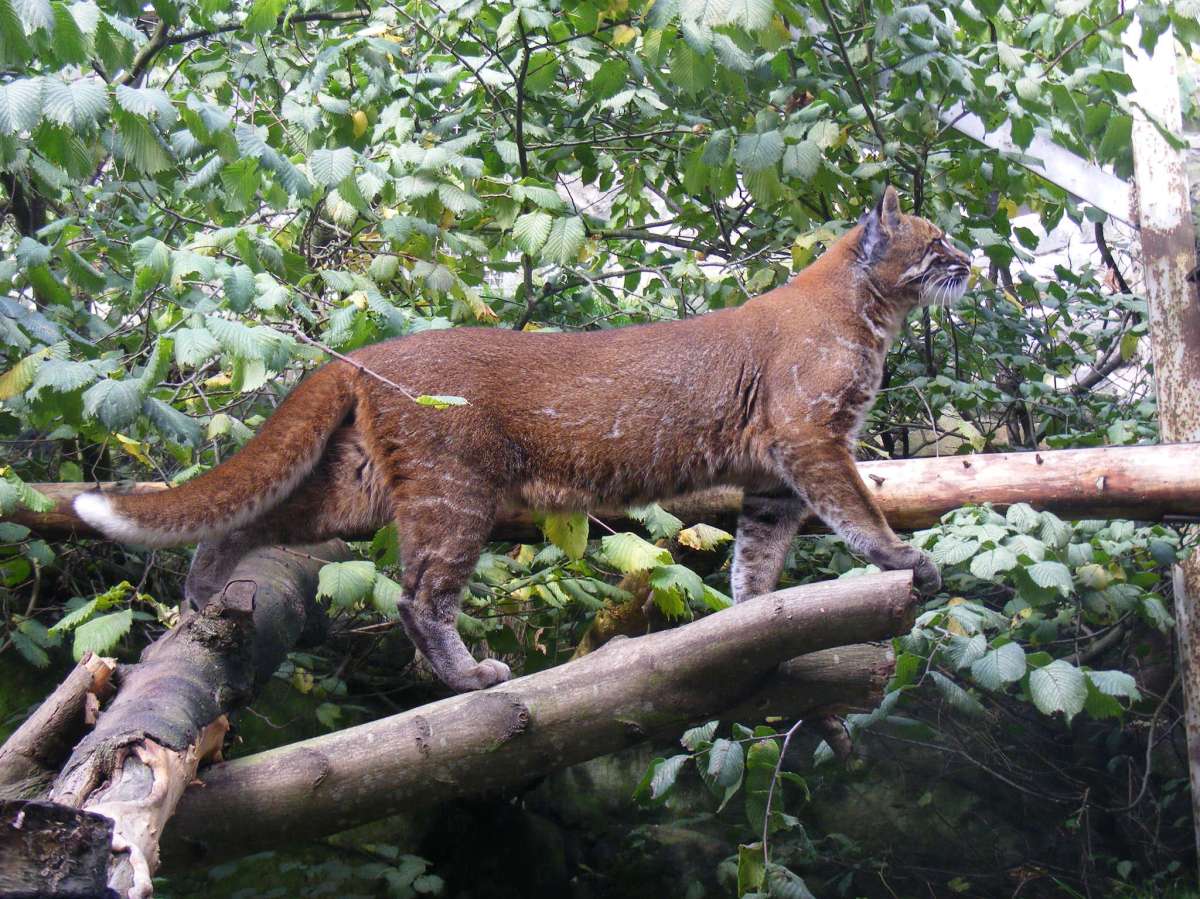
The Asian golden cat, also known as catopuma, is an elusive medium-size wildcat with striking features and exceptional hunting abilities.

It’s extraordinarily elusive, moves with a grace superlative even among fellow felids, and enjoys mythical status in many of Asia’s cultures.

It is the Asian golden cat, a medium-size feline that calls a diverse range of places home, from the mountains of rural China to the jungles of Sumatra.

Known officially as Catopuma temminckii, the species is about three times the size of domestic cats but extremely adept at taking down much larger prey, including young water buffalo and other ungulates several times the cat’s body weight.

An Asian golden cat. Credit: Wikimedia Commons

Asian golden cats inspire legends in many Asian cultures in part because of how difficult they are to find. Even the appearance of one on a trail camera in Thailand’s Khao Luang National Park this summer spawned news headlines, so rarely are they seen.

Often, as was the case with the recent sighting, they’re fleeting, just glimpses before the animals melt back into the jungle. The fire tiger seen in the June 20 trail camera footage pads across a clearing, clearly unhurried, before disappearing back into the ground cover.

In some places it’s good luck to catch a glimpse, while in other locales — like parts of Thailand — people believe a single strand of Catopuma fur is enough to protect the bearer from their larger cousins, panthera tigris. (I wouldn’t rely on that personally, but it does show how large tigers loom in the imagination in areas where they still roam the wild, even as low as their numbers are these days.)

While the Asian golden cat is known as the fire tiger in some places, it’s not a close relative of true tigers, at least not in terms of the cat family.

Credit: Wikimedia Commons

Catopuma is a feline, meaning it can meow and purr, but cannot roar. That puts the species closer genetically to domestic cats, pumas, ocelots, servals and other members of the feline subfamily. True big cats — tigers, lions, jaguars and leopards — are part of the pantherinae subfamily. Aside from their size, they are distinguished by their ability to roar, but they cannot purr or meow.

The Asian golden cat is a feline, but shares some physiological features with big cats

Even though catopuma is genetically closer to small- and medium-size felines, its gait, substantial tail and head shape are reminiscent of big cat features.

The ferocious medium-size cats also have a melanistic color morph that makes them look like smaller versions of jaguars and leopards.

A melanistic catopuma seen on a trail camera. Credit: Panthera

The fire tiger is classified as threatened as its habitats are destroyed to make way for more palm oil plantations, among other agricultural and industrial facilities.

Header image via Wikimedia Commons

Wordy Wednesday: Critically Endangered Orangutan Babies

The palm oil and logging industries have killed so many orangutan mothers, there are now more than a dozen major orangutan orphanages in Borneo and Sumatra. The pressure on orangutans, with whom we share 97% of our DNA, shows no signs of abating.

Orangutans are critically endangered, and the biggest threat to their continued existence comes from the agricultural sector, which has razed 55 percent of the species’ habitat in recent decades.

Jarang, a baby orangutan born in 2023. Credit: Blackpool Zoo

Logging companies clearing irreplaceable, old-growth jungle to claim more land for palm oil plantations have no compunction when it comes to flattening jungles despite the presence of orangutans hiding in the trees. The loggers often shoot the large apes on sight, leaving terrified, traumatized babies still clinging to their dead mothers, or taking them to sell as pets.

Of those left to die, the lucky babies are rescued before they starve and are brought to one of the many orangutan orphanages in Borneo and Sumatra, where they attend “school” to learn how to do everything from climb to forage. It takes at least eight years to teach them how to survive on their own, which is about the time it takes orangutan mothers to do the same job in the wild.

The unlucky babies end up as local pets, sold off to entertainment troupes or shipped off to places like Dubai, where wealthy clients will pay a premium for them.

Caretakers must start by teaching rescued orphans the most basic things, like how to climb and move through the jungle Credit: Borneo Orangutan Survival Foundation
Logos, an orphaned baby orangutan who was rescued in 2023 by the Jakarta Animal Aid Network (JAAN) Credit: International Animal Welfare Fund (IAWF)
Baby Galaksi (Indonesian for galaxy), was found wandering the jungle without his mother in 2021 by a villager in Borneo. He’s now in a “school” that teaches orphaned orangutans how to do everything from evading predators to discerning edible fruit from harmful and poisonous varieties. Credit: Samboja Lestari Orangutan Rehabilitation Centre

So what is palm oil, and why are countries in Asia bulldozing ancient jungles and forests to clear room and make more plantations?

Per the WWF:

“Palm oil has been and continues to be a major driver of deforestation of some of the world’s most biodiverse forests, destroying the habitat of already endangered species like the Orangutan, pygmy elephant and Sumatran rhino. This forest loss coupled with conversion of carbon rich peat soils are throwing out millions of tonnes of greenhouse gases into the atmosphere and contributing to climate change. There also remains some exploitation of workers and child labour. These are serious issues that the whole palm oil sector needs to step up to address because it doesn’t have to be this way.

Palm oil is in nearly everything – it’s in close to 50% of the packaged products we find in supermarkets, everything from pizza, doughnuts and chocolate, to deodorant, shampoo, toothpaste and lipstick.”

Palm oil is in constant demand, and it’s an easy to grow, incredibly efficient crop. Indonesia and Malaysia, the only two countries in the world where orangutans exist, produce 85 percent of the world’s palm oil.

Images of orangutan babies in wheelbarrows are common on social media, but usually stripped of context. Orphanages use the wheelbarrows to bring infants and toddlers to and from “school” every day. Credit: International Animal Rescue
Asoka was found crying in the jungle by a fisherman in Borneo. He was brought to an orphanage in Borneo. Credit: International Animal Rescue’s rehabilitation Centre in Ketapang, West Kalimantan

We share 97 percent of our DNA with orangutans, making the species our second-closest cousins from a genetic standpoint. Some studies claim orangutans are our closest relatives based on our phenotypical similarities.

Orphaned orangutans attending “school” to learn how to survive in the wild. Credit: Borneo Orangutan Survival Foundation
A baby at an orangutan orphanage is fed by a caretaker. Credit: Borneo Orangutan Survival Foundation

Want to read more and learn how to help?

Here are some links to get you started. PITB is a big fan of the Jakarta Animal Aid Network, which successfully pushed Jakarta’s municipal government to ban the incredibly cruel “topeng monyet” monkey street shows:

World Wildlife Fund: Orangutans
Jakarta Animal Aid Network
Borneo Orangutan Survival Foundation
The Orangutan Project
Rainforest Trust

When Animal Abuse Is Presented As ‘Cute’: The Brutal Existence Of Monkey Pets

Youtube is home to thousands of videos depicting the torture of baby monkeys, many of them presented as “cute” examples of pet ownership.

Look at what Youtube’s algorithm has served up for me: an “adorable” video of a baby monkey who loves to carry his equally small backpack!

Look at him. He loves it!

“That’s the cutest thing I’ve ever seen,” gushed one Youtuber.

“WHY IS THIS SO CUTE HELP ME,” another asks.

Others dub the video “so adorable,” “so cute” and call baby monkey Pika “the most adorable little baby I’ve ever seen.”

The video has five million views in four weeks. A handful of viewers might instinctively know something’s wrong while the vast majority of those people never give a second thought to what they’ve just watched.

Let me tell you what you’re looking at.

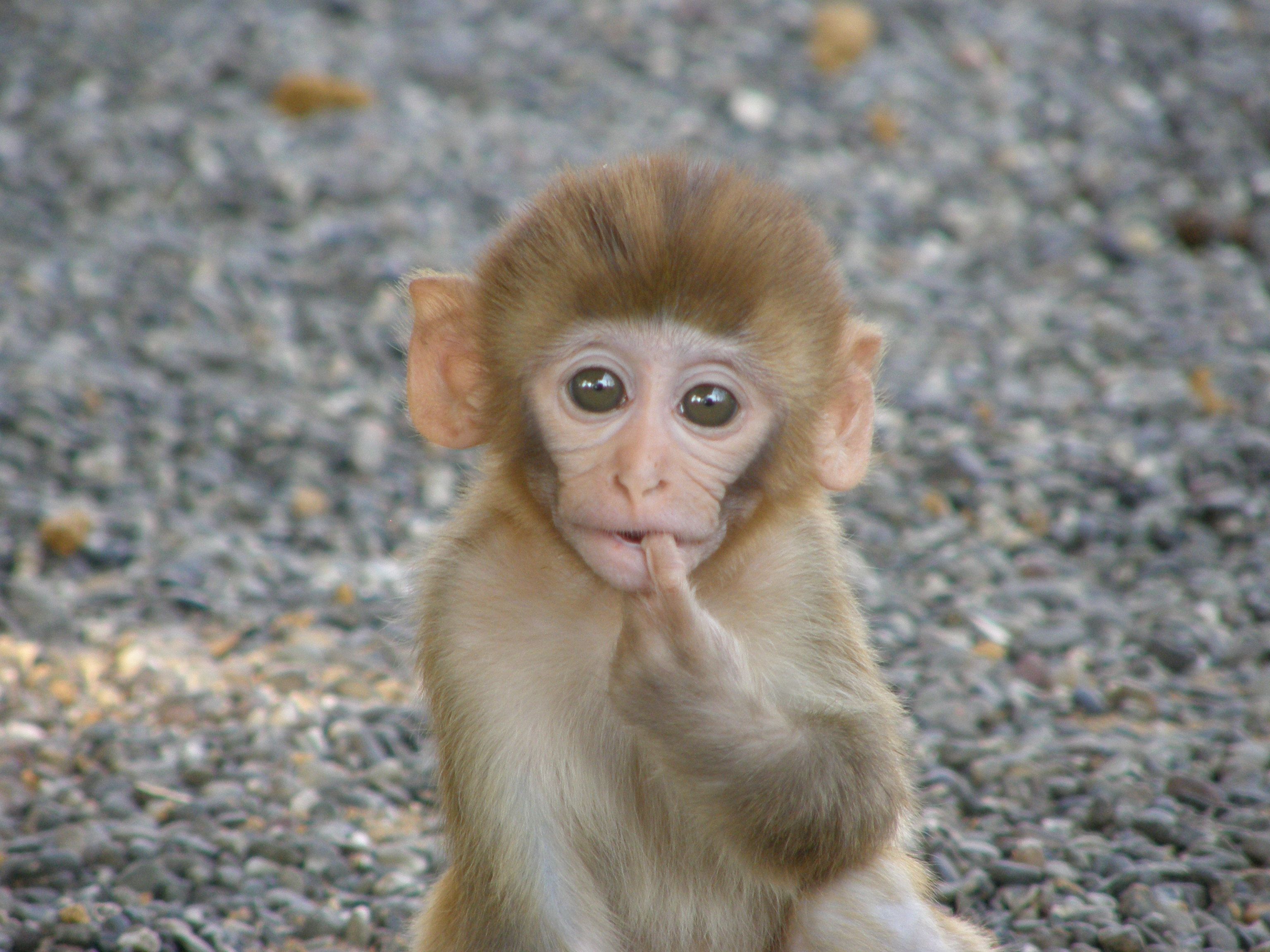
“Pika” is an infant rhesus macaque, about four weeks old by the look of him.

He is the “pet” of a woman in China, and to become her pet he was ripped out of his screaming mother’s arms as she fought tooth and nail to keep her grip on her baby. It’s at least a two-person job and the people who steal baby monkeys, either directly from the wild or from enclosures they own on breeding farms, up-armor themselves before going into the cage to protect from vicious bites and scratches.

Such is the fury of a mother whose baby is being taken from her.

(Above: An “adorable” video of an infant rhesus macaque who has been stolen from his mother and sold as a pet and has spent the first few weeks of his life being tortured to force him to walk on two feet. Right: A still from a video from a man who hunts monkeys titled “Baby Monkey Headshot”)

Pika was taken within a few hours to a few days after birth. No one wants adult monkeys so it’s imperative that the babies are swiftly “pulled” from their mothers, photographed and matched with buyers online. In the US an infant macaque will set you back about $5,000, but in China it’s considerably cheaper because the monkeys are native to Asia and certain parts of China, as well as neighboring countries and the territory of Hong Kong.

Being torn from his mother is just the first of many traumas Pika will endure in his guaranteed-to-be-miserable life.

Baby monkeys are a big thing in China, especially among the Mandarin-speaking nouveau riche of the mainland who have considerable disposable income and look for ways to signal their economic status to their peers. Expensive clothes, designer handbags, rare trinkets, you name it. If you’re a young upper class man perhaps you buy a sportscar. If you’re a young woman, you get a baby monkey, create a social media page and show everyone what a fantastic mother you’re going to be by clothing, feeding, training and disciplining the baby.

“Don’t monkeys walk on four legs?” you might be thinking. “They’re not bipedal, are they?”

No, they are not.

To walk upright, Pika has already endured the second major trauma of his young life: The human “mothers” take the little babies, tie their hands behind their backs, then tie a small rope or string around their necks. The other end is tied to an immovable object and the baby is given just enough slack that he can continue breathing if he remains upright.

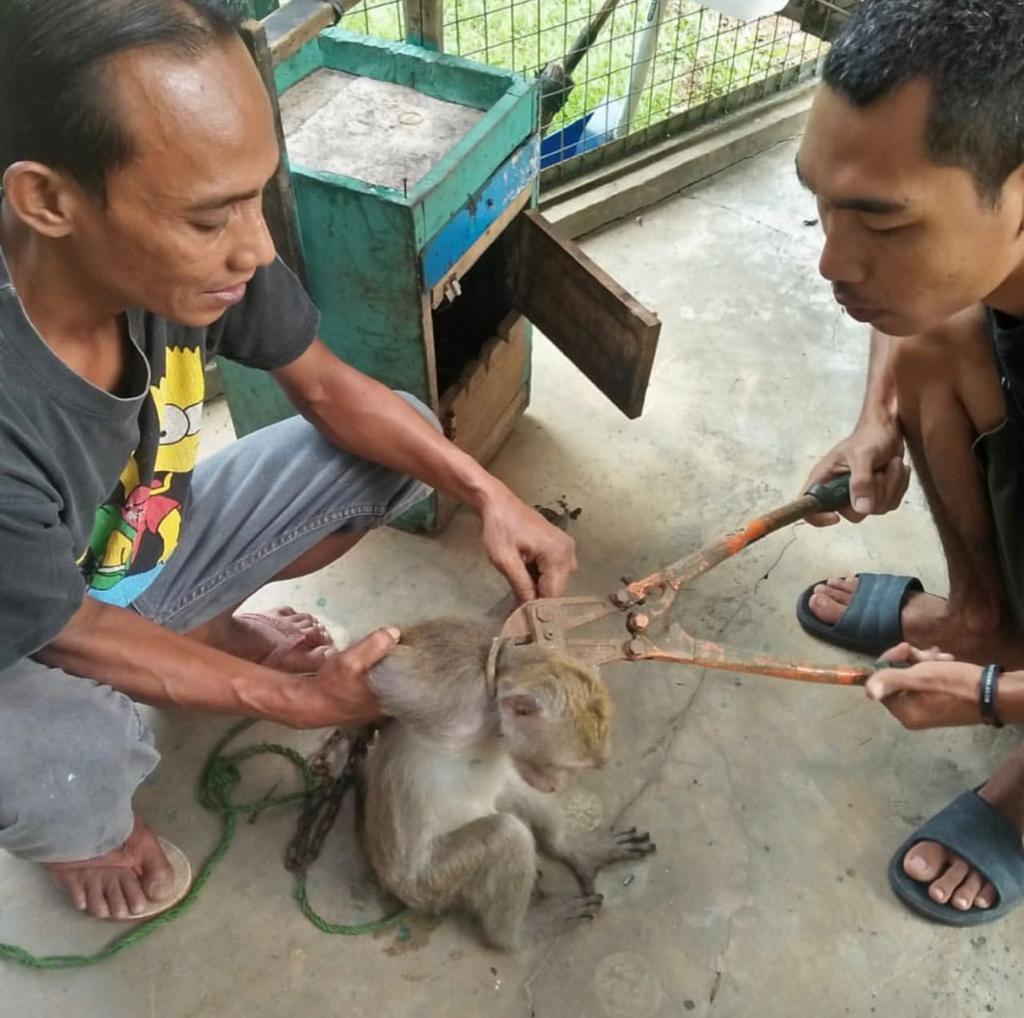
Topeng Monyet training
This baby monkey has his hands bound and is just beginning his brutal topeng monyet (dancing monkey) training in Indonesia.

This technique, borrowed from the topeng monyet (literally “dancing monkey”) trainers in Jakarta, forces the young monkey’s leg muscles to develop and forces his spine to become accustomed to rigidity.

For the first session, baby Pika would have been left like that for two, maybe three hours, likely screaming for his mother the entire time if his “owner” doesn’t put a stop to it with violence.

The intervals would increase steadily until he’s left like that overnight. Each time the rope is given less slack so Pika is forced to stand rigid.

Topeng monyet training
Topeng monyet training in Indonesia: This is the next phase of training after baby monkeys endure several weeks of being strung up by their necks. Here, a “trainer” is forcing a baby long-tailed macaque to hold an object, which will be part of the “monkey show for kids” the baby will be forced to star in for the next few years of his life. Credit: Jakarta Animal Aid Network

Because they must have the strength and fine motor control to hold onto their mothers’ fur in the wild, macaque infants are ambulatory almost instantly, unlike the helpless infants of their primate cousins like orangutans and, well, humans.

The rope technique allows infants like Pika to quickly become accustomed to walking upright, but they will immediately revert to walking on all fours because that’s how they naturally move and that’s what their muscular-skeletal system is designed for.

That’s why Pika has a “cute backpack.” The backpack is filled with a counterweight so Pika must walk upright or fall over, giving his “owner” what she wants: A “cute” video to share on social media.

Of course Pika could simply refuse to walk, but then he’ll go hungry. Note the reason why he’s laboring, at just a few weeks old, with a counterweight on his back, with an unnatural gait to reach the other side of the room: the demon who purchased him is holding his bottle. No walk, no bottle. Walks, plural, because undoubtedly there were several takes.

(Pika may or may not have a tail. The “owners” often amputate them — without anesthetic — because they’re impediments for preemie diapers, and cutting tail holes in the diapers increases the chances of “accidents” spreading.)

Macaques are hyper-social creatures and they’re so similar to humans socially that psychologist Harry Harlow conducted his infamous maternal deprivation studies on infant rhesus monkeys like Pika.

babyrhesusmonkey
A rhesus macaque baby of about four months old. Rhesus macaques, who are extremely social and nurse from their mothers for up to two years, were used in psychologist Harry Harlow’s infamous maternal deprivation experiments. Credit: Wikimedia Commons

In the wild babies like Pika will spend the first year of life clinging to mom and rarely straying more than a few feet from her. The mother-baby bond is so strong that daughters stay with their mothers for life, and sons stay until they’re five or six years old, at which time they’re booted from their home troops to avoid inbreeding.

The mothers do everything for their babies. They nurse them, groom them, protect them, soothe them when they scrape a knee and scoop them up when an older monkey is bullying them. Macaque babies nurse until up to two years old and they can frequently be seen hugging their mothers.

Through cruel experimentation Harlow found that the tactile feeling of being held in a mother’s arms is absolutely crucial to normal psychological development in primates, humans included. Harlow took infant rhesus monkeys from their mothers within hours and placed them in total isolation. Some babies were given inanimate “surrogate mothers” made of wire, while the others were given surrogates made of cloth. Both groups had major developmental and psychological problems, but the babies with wire “mothers” were far worse off.

That means Pika, who has already been stolen from his mother and forced to endure physical cruelties just weeks after his birth, has also been deprived of something intangible, something so important that it will have an indelible impact on his life.

That is why when you see pet monkeys, you always see them clinging desperately to stuffed animals. The stuffed animals and blankets aren’t their “lovies” like a child would have. It’s much sadder than that. Those inanimate objects are their surrogate mothers which they turn to for comfort and a crude approximation of what it feels like to hold onto their moms.

Some “owners” don’t like that, so they place babies like Pika in barren cages. No matter how horrifically they abuse the babies, when the “owners” let them out in the morning the first thing the baby does is cling to his abuser. That is his nature.

So what happens to Pika?

There’s a timer on cuteness. Pika will be an adorable baby for about a year, which will fly by. By that time he’ll already be showing signs of extreme discontent. He’s got no mother, no friends to play with, no troop, no one to groom or to groom him. He won’t be allowed to climb and explore like he would in the wild, nor can he forage. Food is something placed before him, not something he finds and picks from trees.

Pika, hardwired by hundreds of thousands of years of genetic heritage, will know something’s missing, but he won’t know why. He’ll start to “act out,” only he won’t think of it as acting out because he does not, and cannot, understand human social etiquette, nor what it means to keep things clean by human standards.

As he acts out, he’ll be punished, often severely. He’ll become more of a problem until at about 18 months his “owner” will get rid of him. Some people will take their pet monkeys to sanctuaries, but those are few and far between in China, spots are very hard to get, and the owner will be on the hook for monthly payments for as long as Pika lives, which could be up to 25 years.

So it’s more likely that Pika will be poisoned or simply dropped off somewhere in the woods far from home where he’ll starve or be killed, because he doesn’t have the skills to survive and his kind live in troops. If he’s dropped off where there are other monkeys his chances will be even more slim, since macaques will not accept troop outsiders and can get violent if they perceive an interloper in their territory.

As for Pika’s owner, if she’s not tired of the whole business she’ll buy a new baby. Some women are one and done, but others see it as practicing for parenthood and/or they enjoy the dopamine rush of online attention and praise. I’ve seen some Chinese women go through half a dozen babies, often buying two or three at a time so they can stage spectacularly cruel contests, like dropping a single bottle into a cage and filming the babies fight over it.

What I’ve written here doesn’t even scratch the surface of the cruelty involved with the baby monkey “pet” fad, but don’t make the mistake of believing this is a thing that only happens in China, Thailand or Cambodia. Some 15,000 baby monkeys are purchased every year by Americans, who fare no better when it comes to reaching that 18-to-24-month point when formerly cute, docile babies grow into resentful, frustrated juveniles and become destructive.

While sanctuaries like Jungle Friends exist, they are overcrowded and the same challenges apply to American monkey “owners” as they do to their Chinese counterparts.

We’ll revisit this whole nasty business in a future post, but in the meantime, I ask you to question “cute” animal videos, especially where wild animals and humans are involved.

A note about Youtube and Google: Youtube is owned by Google, whose founders often bragged about their motto: “Don’t be evil.” Youtube and its content moderation teams are well aware their platform hosts tens of thousands of animal abuse videos, including innumerable videos of monkeys — often babies — being abused in horrific ways. There are entire channels, monetized and in good standing with Youtube, that cater exclusively to a depraved audience of self-described monkey haters who call infant macaques and other monkeys “tree rats” and not only provide steady advertising income to the channel operators — which can be life-changing money in countries like Vietnam and Cambodia — but send money via PayPal and Venmo to them with requests for specific kinds of torture

Youtube has been aware of this for almost a decade at least. Going back to 2014, I was one of a group of dozens who mass reported channels to Youtube, tagging blatant and horrific animal abuse. Every report was ignored. The only thing that prompted Youtube to action was when I contacted a friend who worked for PETA at the time and got them to pressure Youtube directly to take down a handful of notorious monkey abuse channels. Youtube took action, but those channels were quickly replaced by new ones, creating a game of wack-a-mole. 

To this day, and despite steady pressure and negative coverage in the press, Youtube takes little more than symbolic action on animal abuse videos, particularly those involving monkeys.

Amazing Cats: The Mysterious Marbled Cat

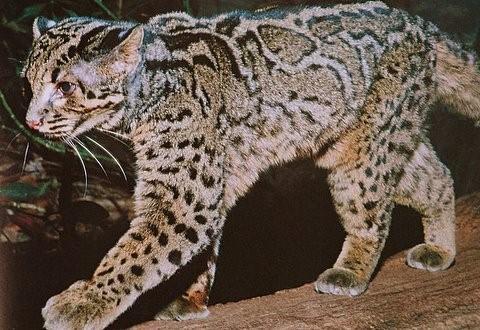
The semi-arboreal marbled cat is arguably the most elusive feline on the planet.

Dear readers, before you think this is a joke entry about Bud, let me emphasize we’re talking about the marbled cat, not the well-marbled cat.

chubbybuddy
“I am NOT chubby, I am meowscular!”

“I’ve never heard of a marbled cat,” you might be thinking, and there’s a good reason for that.

These little guys are incredibly elusive, live far from most humans and are found only in Asia. They’re extremely difficult to track and locate in the wild and haven’t been the subject of any comprehensive field study, granting them an air of mystery in an era when you can find almost anything you want to know about almost any animal with a few clicks.

There’s a whole lot we don’t know about marbled cats, including their behavior in the wild, how long they gestate, what they eat and how they’ve successfully adapted to so many varied habitats.

marbledcat2
Credit: Wildcats Magazine

The singular species is semi-arboreal. Almost all cats can climb trees. The problem is getting down afterward, which is why so many domestic cats get stuck in trees. They can’t descend head-first and they’re wary of descending tail-first, which makes them vulnerable. Marbled cats have unusually flexible claws that enable them to descend head-first with ease, so they don’t balk at climbing. Their large paws keep them sure-footed on tree limbs and they’re confident off the ground.

In 2011, a trail camera in Indonesia was tripped by a marbled cat, finally giving us a close-up view:

The striking felines are sometimes called “miniature clouded leopards,” and you can clearly see why.

The species is native to the eastern Himalayas, mostly in Nepal, Bhutan, Myanmar and tiny corners of China and India, as well as countries like Thailand, Cambodia and Indonesia. They’re extremely adaptable and live in a variety of habitats, from the forests of high-elevation mountain slopes to the humid jungles of Indonesia’s Borneo and Sumatra.

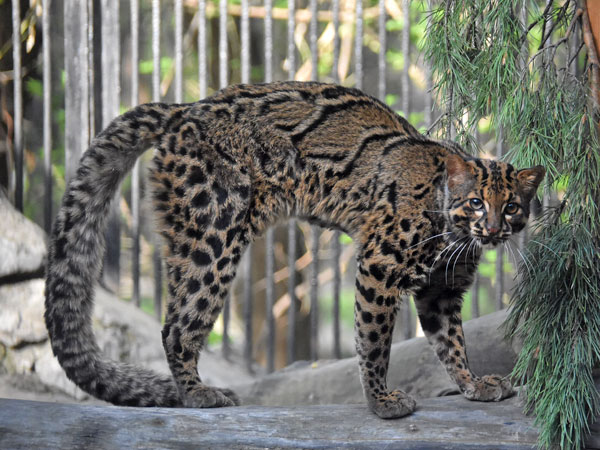
Marbled cats are about the same size as domestic cats, but they’ve got incredibly big, fluffy tails that are longer than their own bodies, which serve as formidable counter-weights for their tree-hopping. Their ears are a bit more round than the ears of their domestic cousins. They tend to have larger paws, and they have unique clouded coat patterns that are unlike any breed of domestic feline or close wildcat relatives.

Despite their relatively large natural habitat and the difficulty in pinning down population numbers, conservationists estimate there are fewer than 10,000 marbled cats. They’re threatened by the same deforestation by the palm oil industry that has devastated orangutan and clouded leopard habitats, although their strongholds in steep, high-elevation forests are safe for now. Marbled cats are listed as endangered by some authorities and as near-threatened by others, though like all wildlife their numbers are in decline.

Top image credit Joel Sartore/National Geographic Photo Ark

marbledcatrussia
A marbled cat at Novosibirsk Zoo in Russia. Credit: Zoo Institutes

Humans Are An Alien Invasive Species, New Study By Feline Science Institute Finds

Humans are an invasive species who are spectacularly adept at destroying life, a new study has found.

Homo sapiens are an invasive species who do irreparable harm to the environment and other animals on an unprecedented scale, a new study by the Feline Science Institute has found.

The results prompted feline scientists to add homo sapiens, commonly known as humans, to a database of destructive and invasive animals maintained by the Academy of Scientific Studies.

Cat scientists have only just glimpsed the breadth of human-initiated impact on other animals, Dr. Oreo P. Yums, lead author of the newest research paper, told reporters.

“We found humans are astonishingly, almost indescribably destructive,” Yums said. “For instance, although they fret about birds, humans kill more than a billion of them a year just with their skyscrapers, which birds are prone to fly into due to their mirrored surfaces. Add in wind turbines, cell towers, power lines, habitat loss and slow die-offs due to chemicals, and by conservative estimates we’re talking about billions of birds killed by humans every year without even tallying active measures like hunting.”

Humans have killed off an estimated 70 percent of the world’s wildlife in the last 50 years alone and show no sign of stopping. Oceans are overfished, animals like pangolins and big cats are ruthlessly hunted to extinction to feed demand within the Chinese traditional medicine market, and human addiction to palm oil means the “two-legged demon monsters don’t even have sympathy for their fellow primates,” mewologist Charles Clawin said.

“In Borneo and Sumatra there are entire schools, filled to capacity, for critically endangered orangutan babies who were orphaned by human contractors clearing ancient jungles to make room for more palm oil plantations,” he said. “Often, the humans use industrial equipment to tear down trees while the orangutans are still in them. Other times, they dispatch the mothers with pistols, not realizing there are babies clinging to them.”

In Africa, where the elephant population has plummeted in the last century, more than 110,000 elephants have been slaughtered in the past 10 years alone for their tusks. The elongated incisors are used to make jewelry and piano keys, and items made from ivory have become a status symbol in China, where growing middle and upper classes seek to show off their wealth with luxuries.

In 2019, Chinese businesswoman Yang Felan, dubbed the “Ivory Queen,” was arrested and charged with smuggling $2.5 million worth of tusks from Tanzania to her home country. Yang, “a key link between poachers in East Africa and buyers in China for more than a decade,” was a respected businesswoman, investor, restaurateur and vice chairwoman of the China-Africa Business Council.

“Poachers continue to slaughter elephants and our big cat brothers and sisters,” said Luna Meowson, who tracks the illegal wildlife market for the University of Nappington. “Having extirpated tigers from virtually their entire range, poachers are turning to South America, where jaguar poaching increased 200 fold between 2015 and 2020. It never stops.”

Big Bruce the Lion Slayer
A human hunter poses victoriously after heroically slaying a lion (panthera leo) from atop his trusty steed, a mobility scooter, after a team of guides drove him around the bush in an air-conditioned SUV, then lured the animal directly into his line of sight. A female of the species, presumably his mate, looks on proudly.

Although the earliest details remain murky, fossil records show Homo sapiens first emerged in Africa about 200,000 years ago. The invasive species, which has a gestation period of about nine months, began rapidly breeding and immediately went to war with fellow members of the genus Homo.

After wiping out two-legged rivals including Homo neanderthalensis, Homo altaiensis, Homo denisova and Homo bodoensis, the victorious Homo sapiens set their eyes on other species. Throughout their history they’ve also proven remarkably adept at murdering themselves and continue to hone their skills.

“Those OG humans, they had to really work at slaughtering other species and extirpating wildlife,” said Chonkmatic the Magnificent, King of North American cats. “They didn’t have attack helicopters, stealth bombers, tanks, carrier battle groups, daisy cutters, artillery, mortars, phosphorous, napalm, biological weapons, or even small arms like rifles. In those days a pimply kid from Oklahoma sitting in an air-conditioned base in Virginia couldn’t wipe out an entire city 5,000 miles away by pressing a button ordering a drone to drop a nuke. They had to put some sweat into violence, you know?”

522616
Breakthroughs in recent centuries have led to innovative and more convenient ways for Homo sapiens to author mass destruction and render entire sections of the Earth lifeless.

The species, known for its aptitude for tool-making in addition to eating ultra-processed foods and staring at screens, began with simple tools of destruction like the Mark I Spear, early bows and even torches. Over the centuries they innovated, coming up with clever and inventive new ways to inflict pain and end life until the advent of electricity, the industrial era and the brutally destructive war machines of modern times.

Human scientists have tried to obscure their species’ impact on wildlife and the planet by declaring species like felis catus “invasive” and “alien,” but even if cats are “guilty of grabbing a forbidden snack every now and then,” they don’t have the coordination, technology or will to carve up habitats, render entire swaths of the Earth uninhabitable with nuclear fallout, create Everest-size mountains of garbage, or effortlessly drive millions of species to extinction, Clawin said.

“They’re so good at it, they don’t even have to try,” he noted, pointing out human accidents or incidents of negligence like oil spills and chemical run-off into rivers. “We tend to think of humans out there with shotguns and rifles, cackling maniacally as they shoot anything that moves. And, sure, they do that, especially in places like Texas where the sight of any animal always prompts the question ‘Should we shoot it?’ But our research shows they can wipe out entire categories of fauna in their sleep. It’s remarkable.”

Additional reading: Polish institute classifies cats as alien invasive species