When Animal Abuse Is Presented As ‘Cute’: The Brutal Existence Of Monkey Pets

Youtube is home to thousands of videos depicting the torture of baby monkeys, many of them presented as “cute” examples of pet ownership.

Look at what Youtube’s algorithm has served up for me: an “adorable” video of a baby monkey who loves to carry his equally small backpack!

Look at him. He loves it!

“That’s the cutest thing I’ve ever seen,” gushed one Youtuber.

“WHY IS THIS SO CUTE HELP ME,” another asks.

Others dub the video “so adorable,” “so cute” and call baby monkey Pika “the most adorable little baby I’ve ever seen.”

The video has five million views in four weeks. A handful of viewers might instinctively know something’s wrong while the vast majority of those people never give a second thought to what they’ve just watched.

Let me tell you what you’re looking at.

“Pika” is an infant rhesus macaque, about four weeks old by the look of him.

He is the “pet” of a woman in China, and to become her pet he was ripped out of his screaming mother’s arms as she fought tooth and nail to keep her grip on her baby. It’s at least a two-person job and the people who steal baby monkeys, either directly from the wild or from enclosures they own on breeding farms, up-armor themselves before going into the cage to protect from vicious bites and scratches.

Such is the fury of a mother whose baby is being taken from her.

(Above: An “adorable” video of an infant rhesus macaque who has been stolen from his mother and sold as a pet and has spent the first few weeks of his life being tortured to force him to walk on two feet. Right: A still from a video from a man who hunts monkeys titled “Baby Monkey Headshot”)

Pika was taken within a few hours to a few days after birth. No one wants adult monkeys so it’s imperative that the babies are swiftly “pulled” from their mothers, photographed and matched with buyers online. In the US an infant macaque will set you back about $5,000, but in China it’s considerably cheaper because the monkeys are native to Asia and certain parts of China, as well as neighboring countries and the territory of Hong Kong.

Being torn from his mother is just the first of many traumas Pika will endure in his guaranteed-to-be-miserable life.

Baby monkeys are a big thing in China, especially among the Mandarin-speaking nouveau riche of the mainland who have considerable disposable income and look for ways to signal their economic status to their peers. Expensive clothes, designer handbags, rare trinkets, you name it. If you’re a young upper class man perhaps you buy a sportscar. If you’re a young woman, you get a baby monkey, create a social media page and show everyone what a fantastic mother you’re going to be by clothing, feeding, training and disciplining the baby.

“Don’t monkeys walk on four legs?” you might be thinking. “They’re not bipedal, are they?”

No, they are not.

To walk upright, Pika has already endured the second major trauma of his young life: The human “mothers” take the little babies, tie their hands behind their backs, then tie a small rope or string around their necks. The other end is tied to an immovable object and the baby is given just enough slack that he can continue breathing if he remains upright.
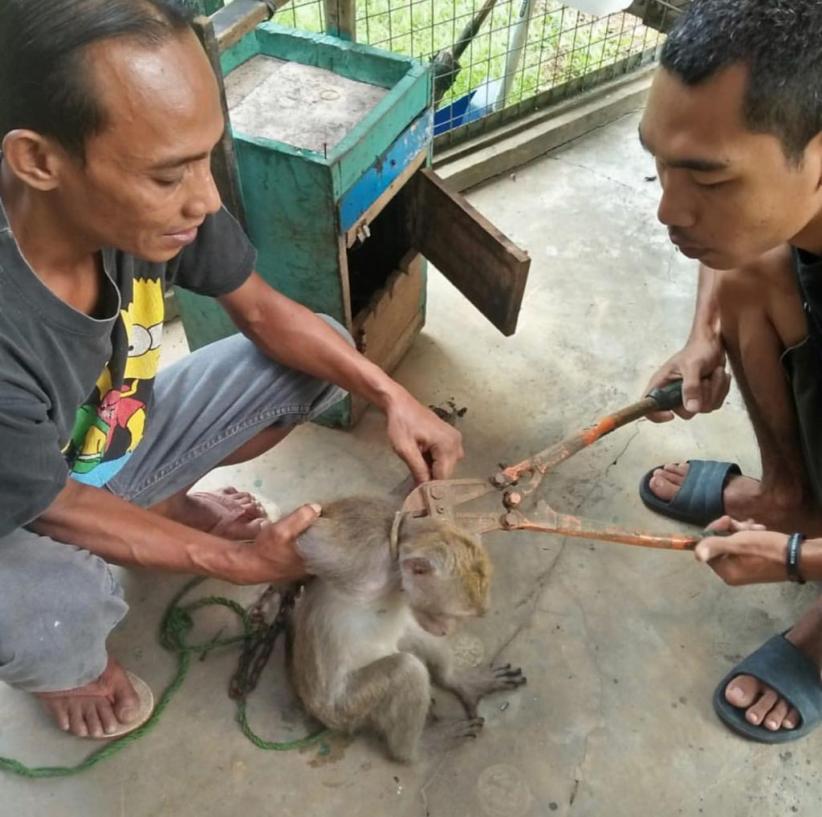
Topeng Monyet training
This baby monkey has his hands bound and is just beginning his brutal topeng monyet (dancing monkey) training in Indonesia.

This technique, borrowed from the topeng monyet (literally “dancing monkey”) trainers in Jakarta, forces the young monkey’s leg muscles to develop and forces his spine to become accustomed to rigidity.

For the first session, baby Pika would have been left like that for two, maybe three hours, likely screaming for his mother the entire time if his “owner” doesn’t put a stop to it with violence.

The intervals would increase steadily until he’s left like that overnight. Each time the rope is given less slack so Pika is forced to stand rigid.

Topeng monyet training
Topeng monyet training in Indonesia: This is the next phase of training after baby monkeys endure several weeks of being strung up by their necks. Here, a “trainer” is forcing a baby long-tailed macaque to hold an object, which will be part of the “monkey show for kids” the baby will be forced to star in for the next few years of his life. Credit: Jakarta Animal Aid Network

Because they must have the strength and fine motor control to hold onto their mothers’ fur in the wild, macaque infants are ambulatory almost instantly, unlike the helpless infants of their primate cousins like orangutans and, well, humans.

The rope technique allows infants like Pika to quickly become accustomed to walking upright, but they will immediately revert to walking on all fours because that’s how they naturally move and that’s what their muscular-skeletal system is designed for.

That’s why Pika has a “cute backpack.” The backpack is filled with a counterweight so Pika must walk upright or fall over, giving his “owner” what she wants: A “cute” video to share on social media.

Of course Pika could simply refuse to walk, but then he’ll go hungry. Note the reason why he’s laboring, at just a few weeks old, with a counterweight on his back, with an unnatural gait to reach the other side of the room: the demon who purchased him is holding his bottle. No walk, no bottle. Walks, plural, because undoubtedly there were several takes.

(Pika may or may not have a tail. The “owners” often amputate them — without anesthetic — because they’re impediments for preemie diapers, and cutting tail holes in the diapers increases the chances of “accidents” spreading.)

Macaques are hyper-social creatures and they’re so similar to humans socially that psychologist Harry Harlow conducted his infamous maternal deprivation studies on infant rhesus monkeys like Pika.
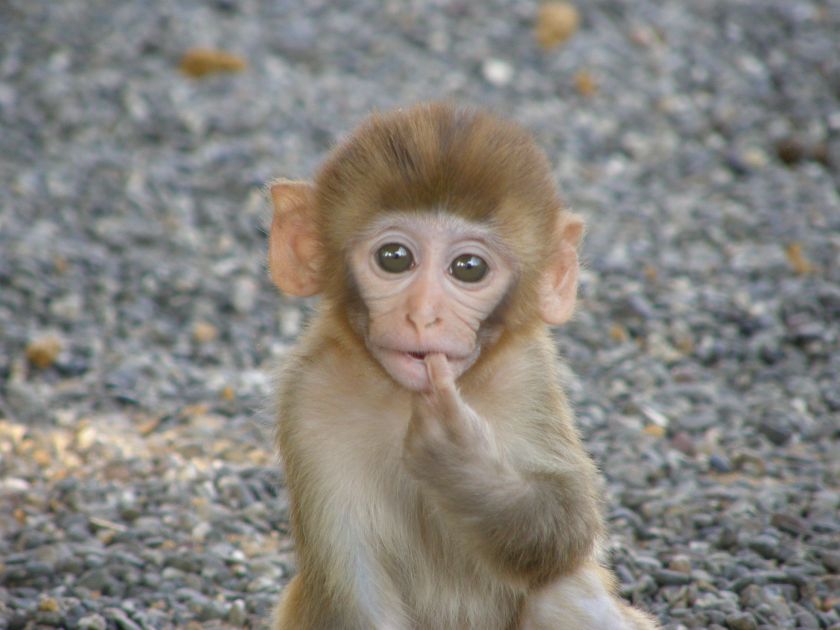
babyrhesusmonkey
A rhesus macaque baby of about four months old. Rhesus macaques, who are extremely social and nurse from their mothers for up to two years, were used in psychologist Harry Harlow’s infamous maternal deprivation experiments. Credit: Wikimedia Commons

In the wild babies like Pika will spend the first year of life clinging to mom and rarely straying more than a few feet from her. The mother-baby bond is so strong that daughters stay with their mothers for life, and sons stay until they’re five or six years old, at which time they’re booted from their home troops to avoid inbreeding.

The mothers do everything for their babies. They nurse them, groom them, protect them, soothe them when they scrape a knee and scoop them up when an older monkey is bullying them. Macaque babies nurse until up to two years old and they can frequently be seen hugging their mothers.

Through cruel experimentation Harlow found that the tactile feeling of being held in a mother’s arms is absolutely crucial to normal psychological development in primates, humans included. Harlow took infant rhesus monkeys from their mothers within hours and placed them in total isolation. Some babies were given inanimate “surrogate mothers” made of wire, while the others were given surrogates made of cloth. Both groups had major developmental and psychological problems, but the babies with wire “mothers” were far worse off.

That means Pika, who has already been stolen from his mother and forced to endure physical cruelties just weeks after his birth, has also been deprived of something intangible, something so important that it will have an indelible impact on his life.

That is why when you see pet monkeys, you always see them clinging desperately to stuffed animals. The stuffed animals and blankets aren’t their “lovies” like a child would have. It’s much sadder than that. Those inanimate objects are their surrogate mothers which they turn to for comfort and a crude approximation of what it feels like to hold onto their moms.

Some “owners” don’t like that, so they place babies like Pika in barren cages. No matter how horrifically they abuse the babies, when the “owners” let them out in the morning the first thing the baby does is cling to his abuser. That is his nature.

So what happens to Pika?

There’s a timer on cuteness. Pika will be an adorable baby for about a year, which will fly by. By that time he’ll already be showing signs of extreme discontent. He’s got no mother, no friends to play with, no troop, no one to groom or to groom him. He won’t be allowed to climb and explore like he would in the wild, nor can he forage. Food is something placed before him, not something he finds and picks from trees.

Pika, hardwired by hundreds of thousands of years of genetic heritage, will know something’s missing, but he won’t know why. He’ll start to “act out,” only he won’t think of it as acting out because he does not, and cannot, understand human social etiquette, nor what it means to keep things clean by human standards.

As he acts out, he’ll be punished, often severely. He’ll become more of a problem until at about 18 months his “owner” will get rid of him. Some people will take their pet monkeys to sanctuaries, but those are few and far between in China, spots are very hard to get, and the owner will be on the hook for monthly payments for as long as Pika lives, which could be up to 25 years.

So it’s more likely that Pika will be poisoned or simply dropped off somewhere in the woods far from home where he’ll starve or be killed, because he doesn’t have the skills to survive and his kind live in troops. If he’s dropped off where there are other monkeys his chances will be even more slim, since macaques will not accept troop outsiders and can get violent if they perceive an interloper in their territory.

As for Pika’s owner, if she’s not tired of the whole business she’ll buy a new baby. Some women are one and done, but others see it as practicing for parenthood and/or they enjoy the dopamine rush of online attention and praise. I’ve seen some Chinese women go through half a dozen babies, often buying two or three at a time so they can stage spectacularly cruel contests, like dropping a single bottle into a cage and filming the babies fight over it.

What I’ve written here doesn’t even scratch the surface of the cruelty involved with the baby monkey “pet” fad, but don’t make the mistake of believing this is a thing that only happens in China, Thailand or Cambodia. Some 15,000 baby monkeys are purchased every year by Americans, who fare no better when it comes to reaching that 18-to-24-month point when formerly cute, docile babies grow into resentful, frustrated juveniles and become destructive.

While sanctuaries like Jungle Friends exist, they are overcrowded and the same challenges apply to American monkey “owners” as they do to their Chinese counterparts.

We’ll revisit this whole nasty business in a future post, but in the meantime, I ask you to question “cute” animal videos, especially where wild animals and humans are involved.

A note about Youtube and Google: Youtube is owned by Google, whose founders often bragged about their motto: “Don’t be evil.” Youtube and its content moderation teams are well aware their platform hosts tens of thousands of animal abuse videos, including innumerable videos of monkeys — often babies — being abused in horrific ways. There are entire channels, monetized and in good standing with Youtube, that cater exclusively to a depraved audience of self-described monkey haters who call infant macaques and other monkeys “tree rats” and not only provide steady advertising income to the channel operators — which can be life-changing money in countries like Vietnam and Cambodia — but send money via PayPal and Venmo to them with requests for specific kinds of torture

Youtube has been aware of this for almost a decade at least. Going back to 2014, I was one of a group of dozens who mass reported channels to Youtube, tagging blatant and horrific animal abuse. Every report was ignored. The only thing that prompted Youtube to action was when I contacted a friend who worked for PETA at the time and got them to pressure Youtube directly to take down a handful of notorious monkey abuse channels. Youtube took action, but those channels were quickly replaced by new ones, creating a game of wack-a-mole. 

To this day, and despite steady pressure and negative coverage in the press, Youtube takes little more than symbolic action on animal abuse videos, particularly those involving monkeys.
‘Every Time We Needed To Refill, They Charged Us More’: FDA Says 2 US Women Made Millions Off Desperate People Whose Cats Had FIPV

The importers are accused of jacking up prices almost 16 fold on FIPV drugs they illegally imported from China, the FDA says.

FIPV is pretty much a guaranteed death sentence for cats, and the only way to cure it is with an experimental drug that doesn’t have FDA approval.

Oregon’s Nancy Ross and Nicole Randall of Texas knew that, and as importers selling the cure via the popular Facebook group FIP Warriors, the FDA says they banked on the desperation of people who would do almost anything to save their cats — including forking over vast sums of money.

Ross and Randall are now accused by the FDA of smuggling GS-441524 from China, where it’s manufactured illegally, and hiking the price by almost 16 times what they paid for it as they served as the middle women between desperate cat owners and the suppliers in Hong Kong.

Feline infectious peritonitis kills some 95 percent of cats it infects, and veterinarians often tell their clients with FIPV cats that while they can’t prescribe GS-441524, they will help administer it, track their cats’ progress through bloodwork and hopefully save feline lives — if the clients obtain the drug themselves.

FIP Warriors — now in its fifth incarnation as FIP Warriors 5.0 on Facebook — is where people with FIPV cats go to find suppliers. The group has more than 43,000 members, and the FDA says Randall made millions off of them, charging as much as $385 for vials of GS-441524 she obtained for between $25 and $45 from manufacturers in Hong Kong and mainland China.

Randall sold $9.6 million worth of GS-441524 to clients in the US, according to the FDA. Per The Oregonian:

“A spreadsheet found in Randall’s Google email showed customer orders of at least 58,460 vials and 236,836 pills of GS-441524 from July 2020 through June 6, 2022, the affidavit said.”

PITB spoke to several people who paid thousands of dollars for GS-441524 after their cats were diagnosed with FIPV. All of them said they were surprised by the news of the FDA’s investigation, and said they were given various reasons for why the drug was so expensive to acquire.

One customer from Texas, whose cat Seth began his regimen in July of 2020, told PITB she doesn’t regret spending the money to cure Seth, but she “can see how the people saw our desperate situation and took advantage of us.” She was told prices were at a premium because of scarcity.

“It was a very stressful time for us, and every time we needed to refill, they charged us more,” she said. “They knew we couldn’t say no.”

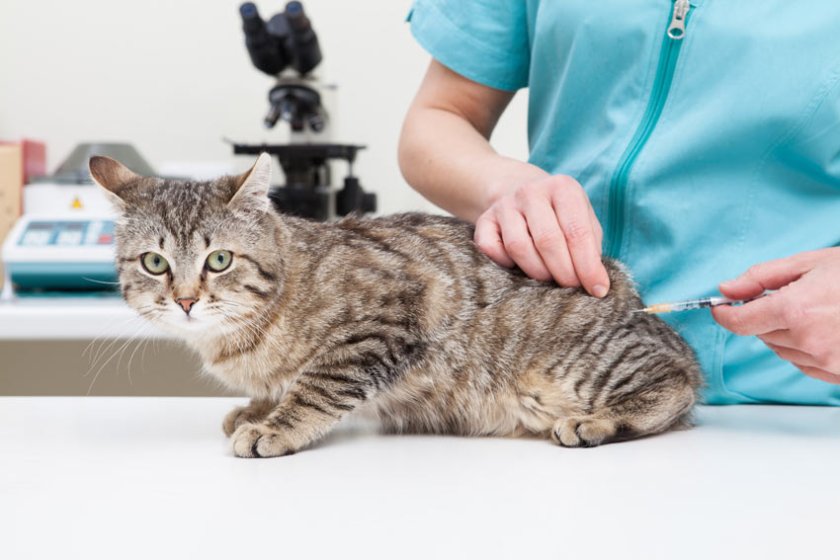
Cat-Cat_Guide-A_grey_tabby_cat_having_its_first_vaccination_injection

Another woman, whose kitten was diagnosed with FIPV in 2021, “was told that the prices were set because they ensure the medication was purchased from a trusted source.”

As a college student at the time, she used her savings and crowdfunded the other half, paying more than $5,000 for her kitten’s treatment. She said she doesn’t think the administrators of the group were ripping her off, since they had FIP cats of their own, and likely didn’t know the importers were making huge profits. She trusted the seller — who was not Ross or Randall — because the group vouched for that person, assuring her they supplied real pills.

“Of course, I don’t think this is a valid justification for hiking up prices up to 16x the amount,” she told PITB, “but I’m sincerely hoping the individual [accused by the FDA] had a valid reason for setting the prices that she did.”

Others paid even more exorbitant prices: a British woman we interviewed for a story about FIPV in 2022 said she paid about £7,000, or $9,400 at the time.

FDA investigators said they intercepted shipments from China and Hong Kong disguised as COVID masks, cat shampoo and chewable medicine for pets, and the Oregonian report says the shipments were listed as “essential oils” and “beauty products” in import documents.

Randall and Ross have not been charged criminally, but they are now targets of a civil asset forfeiture case:

“The government seized five of Randall’s bank and brokerage accounts and her 2022 Tesla Model Y car last year based on a warrant signed by a federal magistrate judge in Oregon.

The warrant identified the bank accounts and car as proceeds from the “crime of smuggling” and subject to forfeiture, according to the affidavit. It also alleged Randall, now 35, used the proceeds to buy several properties, including a ranch in Leander, Texas, in July 2021.”

While the FDA’s affidavit went into detail regarding Randall’s earnings, it describes shipments sent to Ross but does not specify how much she may have made in profit. An attorney for Randall told The Oregonian that the Texas woman will fight the civil asset forfeiture.

The illegal market for GS-441524 exists because the drug’s creator, Gilead Sciences of California, declined to submit it to the FDA for approval. That’s because it’s chemically similar to another drug the company makes, remdesivir, which was floated as a possible treatment for COVID-19. The company was worried any snags in a potential approval process for GS-441524 would also ensnare remdesivir, according to reports, putting the latter drug in limbo during the pandemic.

Now that the pandemic has retreated to much lower levels of infection and death, it’s not clear if Gilead Sciences will reconsider its FIPV medication, but there may be hope in the form of alternate treatments. A report from the American Animal Hospital Association (AAHA) says scientists at the University of California-Davis and UC San Diego are working on several promising therapies, including a potential treatment using CRISPR gene-editing technology.

But until another cure or treatment passes trials and earns FDA approval — a process that could take years — people with FIPV-diagnosed cats remain at the mercy of strangers on the internet, spending thousands of dollars per regimen and hoping the drugs they buy are the real deal.

You Can Now Play Stray As Your Own Cat And As Garfield Thanks To Mods

Who wants to play as Buddy?

More news in the world of Stray, the play-as-a-cat video game that’s taken the world by storm with rave reviews, plenty of memes and hilarious videos of real cats reacting to their humans playing the game.

Thanks to players who create custom game mods, short for modifications, Stray players can now replace the game’s ginger tabby protagonist with cats of their choosing. Currently there are mods that make the title cat a Siamese, a black cat with yellow eyes, a white cat with heterochromia (different color eyes), a tuxedo and a Calico, among others.

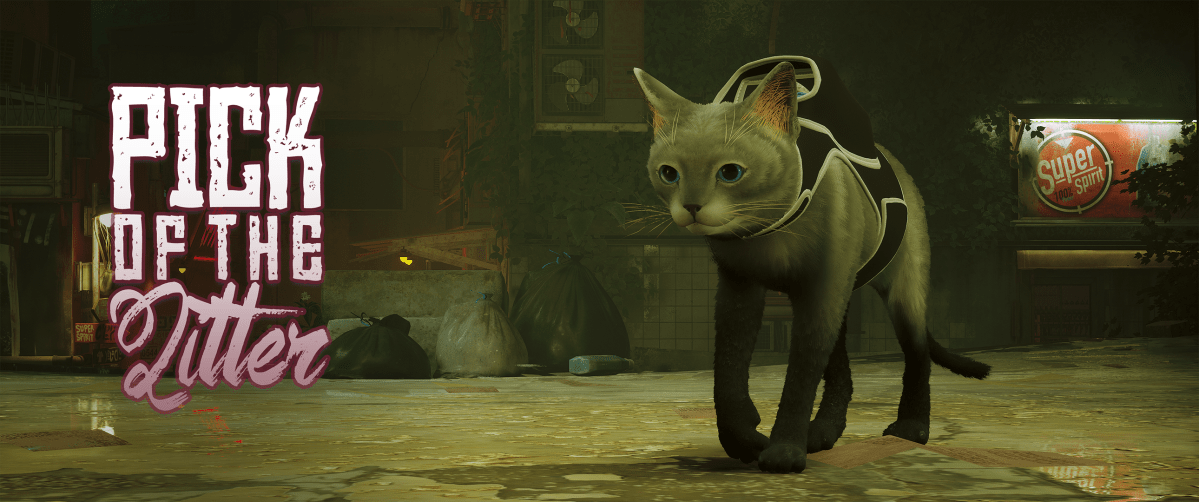
The most popular mod, dubbed Pick of the Litter, features many different coat colors and patterns that users can select and switch between.

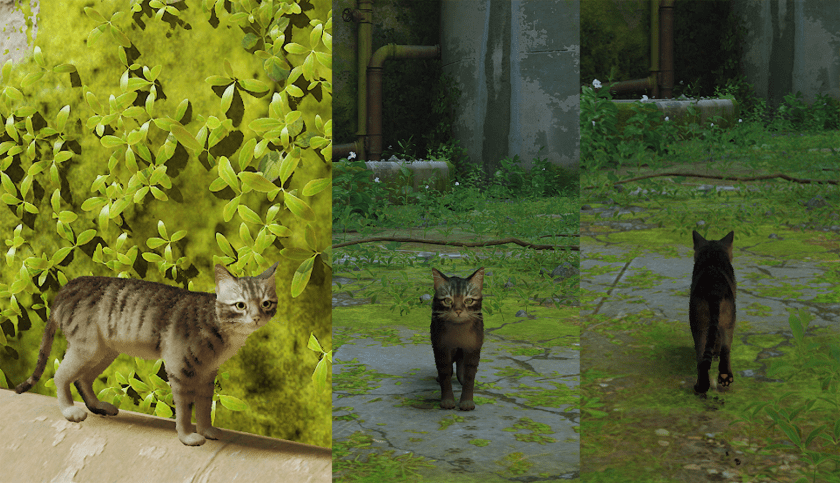
There are currently at least two gray tabby mods, but neither of them match Buddy’s chubby incredibly muscular physique.

One modder is taking commissions from gamers and creating custom cat avatars based on photographs, so if a player’s cat has a unique color or pattern — or you just want something more accurate — they have that option. Perhaps we’ll inquire if it’s possible to add huge meowscles as well as edit coat patterns and colors.

graytabbystray
Gray tabby mod: Clearly not meowscular enough to be Buddy.

Other mods allow players to substitute a dog as the protagonist (come on, now…), add snazzy spectacles to the kitty, and tweak graphics settings for greater photorealism.

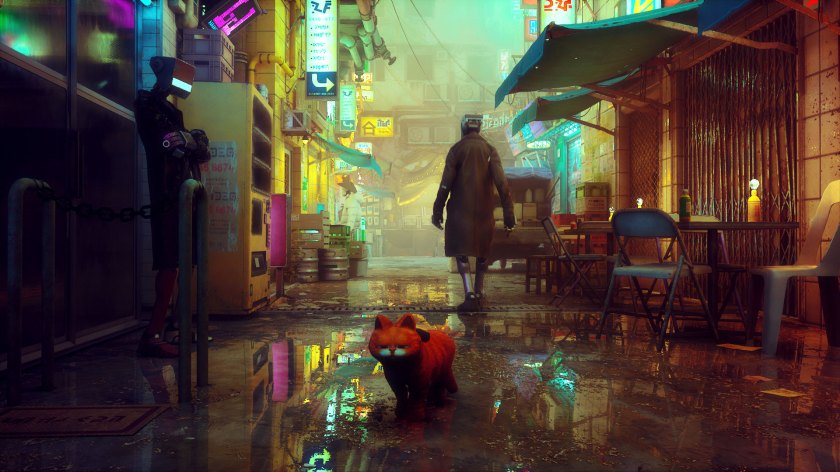
Finally, if you’re a fan of a certain lasagna-loving cartoon cat, you’re in luck: He’s now in the game thanks to the efforts of one dedicated fan, and he’s as lazy and heavy-lidded as he’s always been.

It should be noted that mods are unique to the PC, which is an open platform. If you’re playing the game on a Playstation 4 or 5, you’re out of luck.

58-1658692188-909899575
Garfield in Stray: Maybe you can feed him lasagna to restore his health?

Stray: A Lost, Lonely Cat Gets A Buddy

We continue our journey in Stray, the new game centered around a feline protagonist.

There’s been so much buzz about Stray, so many news stories, memes and people talking about it, that I’m probably not alone in feeling like I’m watching a TV series an episode at a time while most people binged it in a day or two.

But that’s not how I play, and it’s not how most game developers want players to experience their stories. Modern games, especially games like Stray with their bespoke environments and unique encounters, are built to immerse players in their worlds. The entire point of video games is the interactivity, the choices and agency of the players. They’re designed so when you choose to wander off the beaten path or take a few moments to linger over something visually impressive, the experience is rewarding.

Maybe you’ll find a rare item, a compelling vista, a secret passage or a funny sign. The point is, there’s incentive to look deeper. It gives games a feeling of possibility and the thrill of the undiscovered.

20220723074255_1
Standing on a keyboard, just like the good old days!

These stories are not meant to be passive experiences, nor are they meant to be devoured. I won’t be speed running through this mysterious alternate future version of Hong Kong. The journey is the entire point.

Picking up where we left off, the Good Boy (that’s what I’m calling him, for now at least) must learn to navigate this new and potentially dangerous urban environment, and he must do so with a feline’s skill set.

There are no opposable thumbs here. If our hero needs to move an object, he’s got to carry it in his mouth like a mom cat does with her kittens. If he needs to move a barrel, he’s got to get inside and run like a hamster in a wheel to propel it forward. If he needs to stop a fan’s blades from spinning so he can get through a window, he’s got to drop or swipe something into the blades to jam them up.

Appropriately, one of the main mechanisms for making new routes is knocking things over. Knock over a piece of plywood and Good Boy has a bridge. Knock over a can or a box at just the right angle to flip a switch and so on.

20220723075459_1
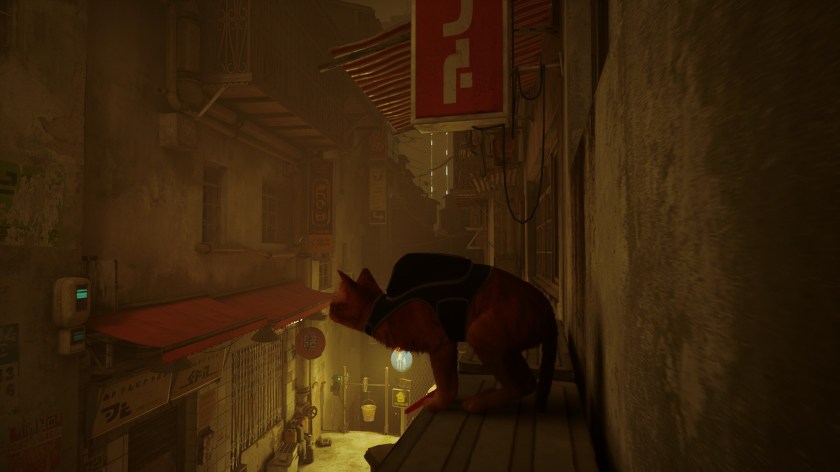
Protagonist cat can navigate the city in different ways and at different heights. Moving above street level means he’s less vulnerable and gives him a nice ambush angle should he encounter anyone who needs a good startling.

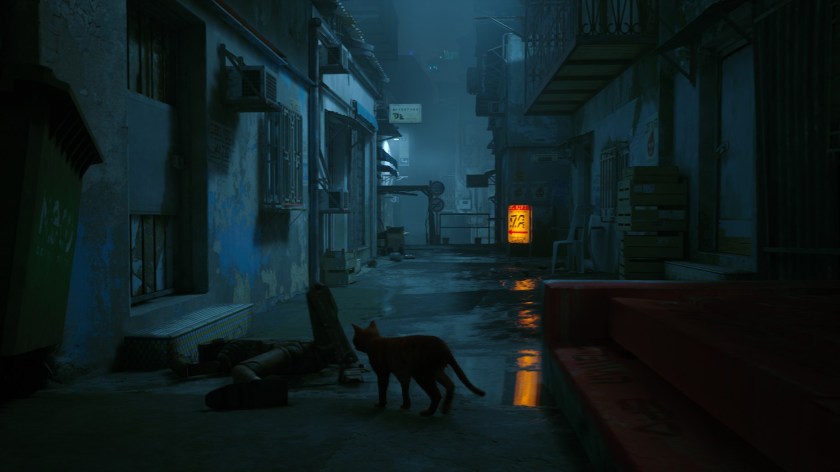
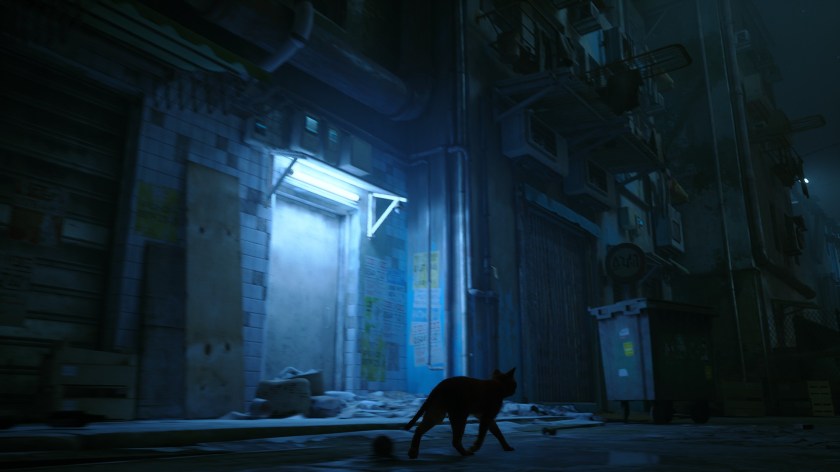
Good Boy meanders through a seemingly abandoned Kowloon City, padding through quiet streets and taking shortcuts through empty flats. There’s power, the city is illuminated by incandescent lights, neon and the glow of TV sets indoors, so someone must be around.

Our feline hero soon learns new tenants have moved in, and they’re not friendly. I’m not sure what they’re called, and the game doesn’t name them, but Kowloon is now home to swarming, artificial tribble-like creatures that attack Good Boy on sight and can take him down if he doesn’t run and shake off any enemies who manage to latch onto him. (Side note: I do not like dying in this game. What did Good Boy ever do to deserve being attacked?)

The first encounter with these enemies turns into a twisting chase through dimly-lit alleys, crumbling staircases and tight streets. Good Boy manages to evade the evil robot tribbles and finds sanctuary in a secure flat.

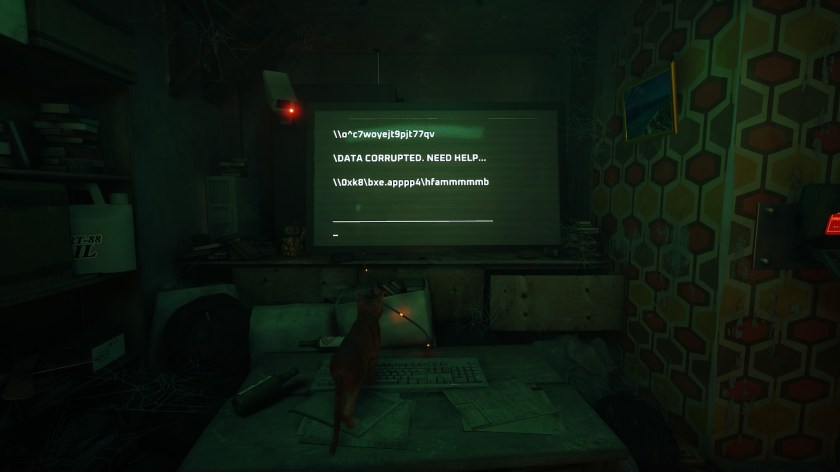
Once he attends to his needs, which include some carpet scratching and rehydrating, he’s contacted by a machine who uses TVs, computer monitors and other electronics in the apartment to communicate with the tabby.

The machine directs the cat through a few simple tasks necessary to free him, then meets Good Boy in the flesh.

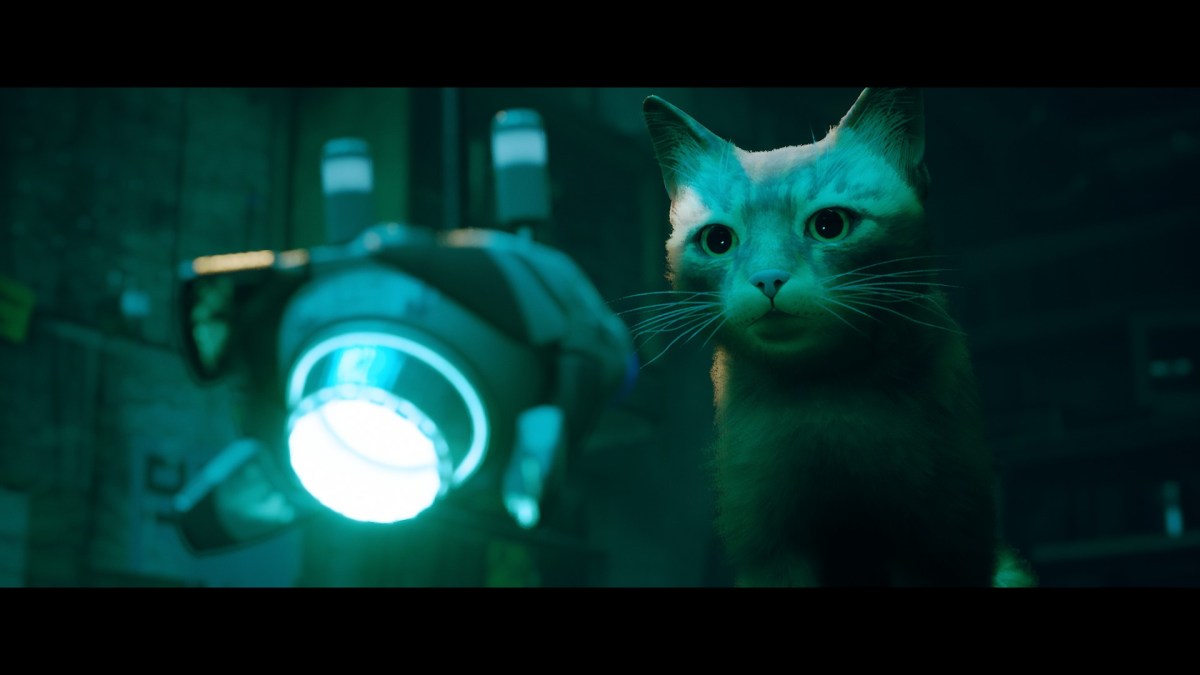
The bot, a palm-size drone named B-12, is damaged and his memory is corrupted. He’s as lost and confused as Good Boy is, and he proposes a partnership. Good Boy, who sees the value in a drone who can open locks, translate signs and communicate with others, agrees. B-12 outfits his new feline friend with a harness that allows him to dock on the kitty’s back, then he saddles up and the new teammates venture forth.

For the first time, the protagonist is able to glean real information about his environment and has a sense of direction. He also gets to travel by makeshift ziplines, hopping into buckets hanging from the city’s ubiquitous wires.

Next episode: Our duo fights back! Same cat time, same cat channel.

Stray: Early Impressions, Plus Real World Cats Benefit From The Game’s Launch!

Stray gets everything right about the way cats move and behave, while rescue groups and shelters are using the game to raise money.

Stray is the real deal. The game is beautifully atmospheric and slipping into its world feels effortless.

The adventure begins amid beautiful urban decay, with the titular feline and his family of three other moggies waking from a nap on the ledge of a concrete reservoir in the process of being reclaimed by Mother Nature. Tangles of branches and leaves push through the crumbling man-made structure everywhere, creating canopies, waterfalls and pools, and our hero and his buddies navigate their idyllic home in perfectly cat-like manner, leaping up, dropping down and pausing to lap water from reservoirs of running water.

The game gets you started with a few classics from the feline repertoire. You can walk, run, leap, hop up and, perhaps most importantly, meow by pressing the Alt key. A general interactive key allows you to sidle up to your feline friends for some head bunting and allogrooming, and the furry family members purr at each other in appreciation.

But things don’t remain idyllic, of course, because this is an adventure.

Our cat, an adorable ginger tabby, is separated from his tribe when he follows them across a chasm via a rusty pipe and the metal gives way.

It’s an enormous credit to the animators that they’re able to convincingly convey the panic and fear on kitty’s face as he tries to stop his fall, clawing at the edge futilely until he takes a nasty tumble onto hard concrete a few hundred feet below. Conveying authentic emotion on the faces of human characters is challenging, but doing it with a non-anthropomorphized animal is another thing entirely.

When you land, you can hear the distressed cries of your fur friends far above but can no longer see them, and your cat is injured: He limps along on three legs through a dimly lit sewer before passing out from his injuries.

An indeterminate time later he awakes, sniffs out a cat-size path of egress from the sewer and finds himself in the neon-tinted Walled City of Kowloon in an alternate future. (The real Kowloon Walled City, infamous for its urban density and its status as a hub for Hong Kong’s triad gangs, was demolished in 1994. It’s now a park.)

There’s so much that could go wrong with a game like this. It features a radical shift in perspective, putting players closer to the ground than they’re accustomed to and in the paws of an animal who isn’t particularly well-represented among game protagonists. Animating a feline is an enormous challenge, and cats have their own version of the uncanny valley: The slightest mistake in the rhythm of a moggie’s gait, for example, can throw the whole thing off, rendering the character unnatural. (See the wacky gallops of Assassin’s Creed’s horses, for example, or pretty much any third-person game in which a human character can run. More than two decades into making modern third-person games, developers still have trouble animating human running sequences that don’t look broken or comical.)

The care that went into animating kitty is evident, as is the work that went into controlling him feel effortless and instinctive. There’s no adjustment period here. From the first moment moving like a cat feels like second nature.

20220720100603_1

20220720100526_1

We’ll have more on the gameplay and story as we spend more time in Stray’s world. So far, the game gets an enthusiastic thumbs up from Buddy the Cat and me, his humble human servant.

In the meantime, as Stray sets sales records for an indie game and continues to generate incredible buzz on social media, publisher Annapurna Interactive is using the opportunity to help real life kitties, including a game code giveaway with the Nebraska Humane Society that netted more than $7,000 in donations.

Stray is blowing up online as well, with users publishing more than half a million tweets about the game within a day of its release, per CBS Marketwatch.

buddyinstrayweb