Happy Thanksturkey from Buddy the Cat!

Buddy salivates over the turkey leftovers brought to him by his humble servant after Thanksgiving dinner.

Dear Readers,

Today is a most wonderful day! Sadly I am NOT invited to my family’s Thanksgiving festivities, since there are dogs there, and Big Buddy’s relatives are worried that I would intimidate those canine snowflakes with my sleek feline musculature and imposing presence. Also, one of them claims to be “allergic” to me, which I find curious. What is this person “allergic” to, charm, wit and handsomeness?

Despite my unfair exile during the day, I try to look on the bright side, because I know Big Buddy will come home with thick slices of delicious home-cooked turkey, just for me! Then he cuts it into little Buddy-size pieces! Then I eat it!

Big Buddy, as you may know, stopped eating meat in 2015 not long after adopting me, because he saw how I wear my emotions on my paw and realized I’m, like, super duper smart. So he stopped eating animals, even though sometimes he threatens to sell me to Szechuan Garden for $15 when I don’t let him sleep. So there’s never any meat in the house besides my food. But on Thanksturkey Day I get more turkey than at any other time of year, and it’s glorious, fresh turkey! Mmmmmm mmmmm!

I love turkey. Have I told you guys that before?

roasted turkey on wooden tray
Credit: Monstera/Pexels

Anyway, I hope all of you enjoy your Turkey Days with your own families, and I hope you aren’t cruel like Big Buddy’s extended family and exclude your cats from the festivities in favor of dogs. Although to be honest it’s not that bad, because I get to nap all day and dream of turkey, and then I wake up to turkey.

Happy Thanksgiving!

Your friend,

Buddy the Cat

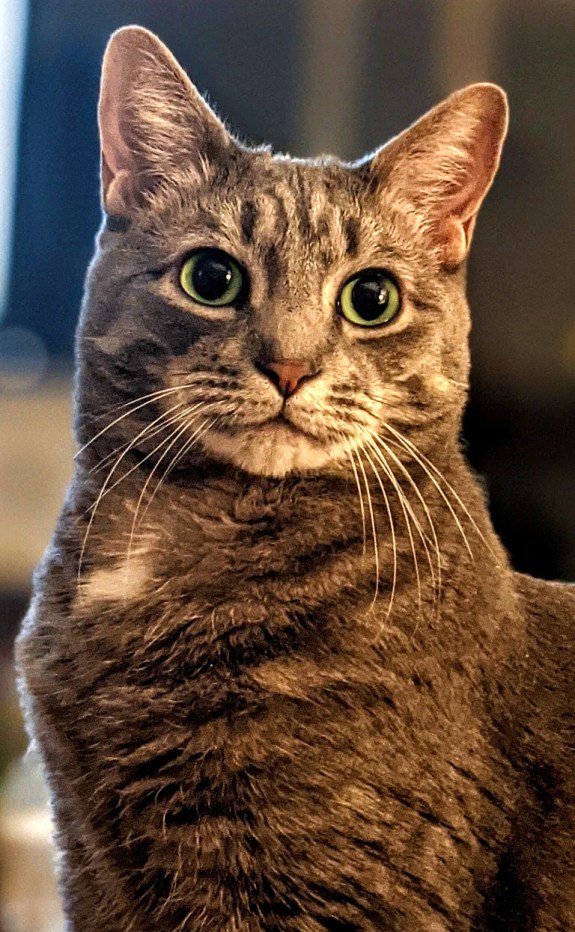
buddyportrait_hires

Going To Asia? Leave Your Pets At Home, Plus: Aussie Former Soldier Pleads In Shelter Assault

Authorities in some countries are killing pets as a precaution against spreading COVID even though virologists say there’s no evidence humans can contract the virus from their pets.

The coronavirus pandemic hasn’t been kind to pets, but the virus itself has done little damage to animals compared to the actions of scared and misinformed people.

After finally admitting it had a human-to-human transmissible virus on its hands — months after it knew privately about the virus outbreak — the Chinese government waged a war on pets in the first few weeks of 2020 as the world watched in horror.

People abandoned pets en masse in empty homes and apartments, while government authorities shot dogs and cats on sight to prevent the spread of the virus even though there was no evidence they could be infected, much less pass the virus to people. As paranoia and misinformation spread, people even resorted to clubbing pets to death on the streets.

Now we know cats can get the virus, but there’s still no evidence they can transmit it to humans, which makes the practice of killing COVID-infected pets even more infuriating in addition to pointless.

The latest incident is from Vietnam, where authorities killed 15 dogs and a cat belonging to a local bricklayer who returned to his home province after work dried up. Authorities seized his pets and “destroyed them” last week in what a government official is now calling a mistake prompted by “COVID prevention pressure and local coercion.”

danchoonghung83871633869679-16-5401-4445-1633923236_680x408
Pham Minh Hung, 49, with his dogs as he returned home to Ca Mau, Vietnam. Credit: Pham Minh Hung

That story follows an incident in the Chinese city of Harbin, where three cats were euthanized in late September — over the owner’s objections — by authorities who said they were worried the pets would “re-infect” their owners.

Pet ownership and respect for animals among the public has increased in countries like China and Vietnam in recent years, prompted by an increase in disposable income and the influence of the internet. Both cases caused widespread backlash in their respective countries, with users defying laws prohibiting criticism of government to complain about the pet killings.

“It doesn’t seem very realistic that the cats would contaminate the environment so badly that they would be a risk for their owner to re-contract COVID,” Rachael Tarlinton, a virology professor at the UK’s University of Nottingham, told Reuters.

He REALLY Wanted His Cat Back

Meanwhile in Australia, a former soldier has pleaded guilty to reduced charges after he “stormed” a pet shelter in Melbourne’s suburbs to recover his cat in January.

Prosecutors say 45-year-old Tony Wittman was outfitted with a fake but real-looking rifle and full military gear when he went to the Lost Dog’s Home in Cranbourne West late on a January night, holding a female employee at gunpoint while demanding to know where the cats were kept.

Wittman had called the shelter 10 minutes before it closed earlier that night, Australian media reported at the time, and was told the shelter had recovered his cat, but that he’d have to wait until morning to claim her.

Wittman, who threatened to shoot the employee if she didn’t comply with his demands, told the court he suffers from PTSD and felt he needed to retrieve the lost feline immediately because he “loves his cat and relies on his cat for support.”

Wittman got spooked and left the shelter before taking his cat. He dumped his tactical vest and other gear in bushes not far from the shelter.

The incident was captured on the shelter’s security cameras, and Wittman was caught when he dropped by the following morning to pick up his cat as if nothing had happened.

“The victim and her work colleagues are absolutely traumatised by what’s happened,” a detective told the court in an earlier hearing. “He’s aware of their workplace. He lives close by. He has shown a complete disregard for the safety and wellbeing of the general public.”

Wittman’s lawyers were able to negotiate a deal with prosecutors in exchange for a guilty plea to lesser charges

National Hug Your Cat Day? Not Anymore!

Cats probably aren’t the biggest fans of National Hug Your Cat Day.

NEW YORK — National Hug Your Cat Day has been rebranded as National Keep Your Damn Hands To Yourselves, Humans, We’ll Tell You When We Want Pets Day. (NKYDHTYHWTYWWWPD, or simply NKYDH2Y for short.)

The rebranding represents a long-overdue change to the June 4 celebration, Buddy the Cat explained.

“Even the most inexperienced cat servants know we’re not pathetic, slobbering creatures who live for human affection,” he said. “Dogs have the market cornered on that.

“Rather, everyone who knows felines is aware affection happens on our terms ”

Experts pointed to several opinion surveys, including an ABC News/Pew poll that found only 11 percent of cats enjoy hugs. Even among cats who enjoy being restrained in a human embrace, the majority said humans take it way too far and don’t know when to stop. (The same poll found the ideal time to stop is four seconds after beginning, meaning average of two-and-a-half pets.)

Several cats floated the idea of electric harnesses that would deliver a shock to humans who tried to pet their cats without being solicited, but they conceded they’d need human help devising, prototyping, pitching, manufacturing and selling the product.

In the end, the Feline High Commission on Servant Relations decided rebranding National Hug Your Cat Day to NKYDH2Y was simply more feasible, and coincided with the feline commitment to solving problems with the least effort possible.

person carrying black cat
Photo by Helena Lopes on Pexels.com

Cat Livid At Dog’s Sleep Farting

Don’t mess with cats!

Look at that dog. So happy, enjoying sweet dreams and playing a little unconscious trumpet solo. There’s a slight delay as the olfactory consequences waft their way toward the cat’s nose. The cat’s eyes narrow in fury. Kitty isn’t having it!

We have never been accused of having a mature sense of humor, which is why this made us legitimately lol. Don’t mess with cats, yo:

And as a digestif, a cute cat:

Would Your Cat Wait Outside The Hospital For You?

A story from Turkey illustrates the deep bond animals share with their favorite people.

A story about an extraordinarily loyal dog has touched the hearts of animal lovers all over the world, and probably has many of us thinking: If I had a medical emergency, would my pet chase an ambulance to the hospital and wait there for days until I emerged?

That’s what Boncuk the loyal dog did after her owner, Cemal Senturk, suffered a brain embolism and was taken to a hospital in the northern Turkish city of Trabzon on Jan. 14.

Boncuk waited patiently for her best friend until Aynur Egeli, Senturk’s daughter, took the loving pup home the first night.

The next morning Boncuk was gone, and Egeli knew exactly where she was going.

“She comes every day around 9 a.m. and waits until nightfall,” Muhammet Akdeniz, a security guard at the hospital, told local media. “When the door opens she pokes her head inside,” Akseniz said, but the polite pooch “doesn’t go in.”

Boncuk
Boncuk poked her head inside but knew she wasn’t allowed inside the hospital.

Boncuk was reunited with Senturk on Wednesday when an orderly wheeled the man out to the hospital entrance. Senturk was later discharged.

In photos and a short video of the reunion, Boncuk is the image of happiness and relief: Her tail wags uncontrollably and she can’t contain her enthusiasm as she literally jumps for joy.

“She’s very used to me,” Senturk said. “And I miss her, too, constantly.”

Boncuk’s story reminds us of Hachiko, the Japanese Akita dog who was so devoted to his owner, Hidesaburō Ueno, that he’d run to Shibuya station every day to greet Ueno as he stepped off the subway. Ueno was in mid-lecture in front of a class of students when he suffered a brain hemorrhage and died on the spot.

Hachiko returned to Shibuya every day at the same time for the next 10 years, waiting for his beloved human.

It’s a story of animal devotion that resonates so strongly with people that Hachiko was memorialized with a statue just feet from the spot where he stood every day, waiting for Ueno.

turkishdog
Boncuk waits for her owner in front of the hospital.

Yes, this wonderful story begs the question: Would my pet do the same for me?

Putting aside the problem of actually getting to the hospital — which would be almost impossible given the distance, traffic and the fact that he’s an indoor cat — if Bud were allowed to stay in a hospital room with me, I believe wholeheartedly that he would remain by my side.

Like other pets who have strong bonds with their people, he knows when I’m not feeling well, and when I was sidelined with Bell’s palsy and a debilitating headache a few years ago, he never left my side.

That is not to say he wouldn’t be his usual incorrigible self. You know that little button that calls the nurse? He would abuse the hell out of it if he knew its function, and he’d probably think the nurses were there to serve him, bring him snacks and fluff his pillow.

Buddy Buddy
“Nurse! In here! My pillow needs fluffing! Also, could you be a doll and fetch me some Temptations?”

The truth is that pets are not allowed in the vast majority of hospitals. Writing in PetLife, Alicia Beyer notes pets “not only brighten patients’ spirits, but hospitals are reporting that the pet visits can have dramatic effects on patient’s health, recovery and emotional well-being.”

In Canada, there’s an organization called Zachary’s Paws, which was started by Donna Jenkins in honor of her 25-year-old nephew.

“While Zachary was in the hospital for many weeks and very sick after having a stem cell transplant,  he begged to see his dog, Chase,” Jenkins told Bored Panda. “We sneaked Chase into ICU to see him and the effect it had on Zachary was remarkable. When Zachary realized he was not going to survive his cancer, he made me promise to start the organization.

But as PetMD notes, there are good reasons why most hospitals don’t allow pets, including problems pets can pose to patients with compromised immune systems and allergies. Hospitals that do allow pet visits have strict standards, and the animals must be thoroughly cleaned by staff before they’re allowed in.

Alas, even as more hospitals allow pet visitation or therapy animals, many exclude cats, and a 2015 report by the Society for Healthcare Epidemiology of America says cats “should be excluded.” The report claims cats can’t be trained as well as dogs, the risk of bites and scratches is higher, and more patients may be allergic to cats.