Gori is a cat game for people with a sense of humor and a love for high-octane, chaotic fun.
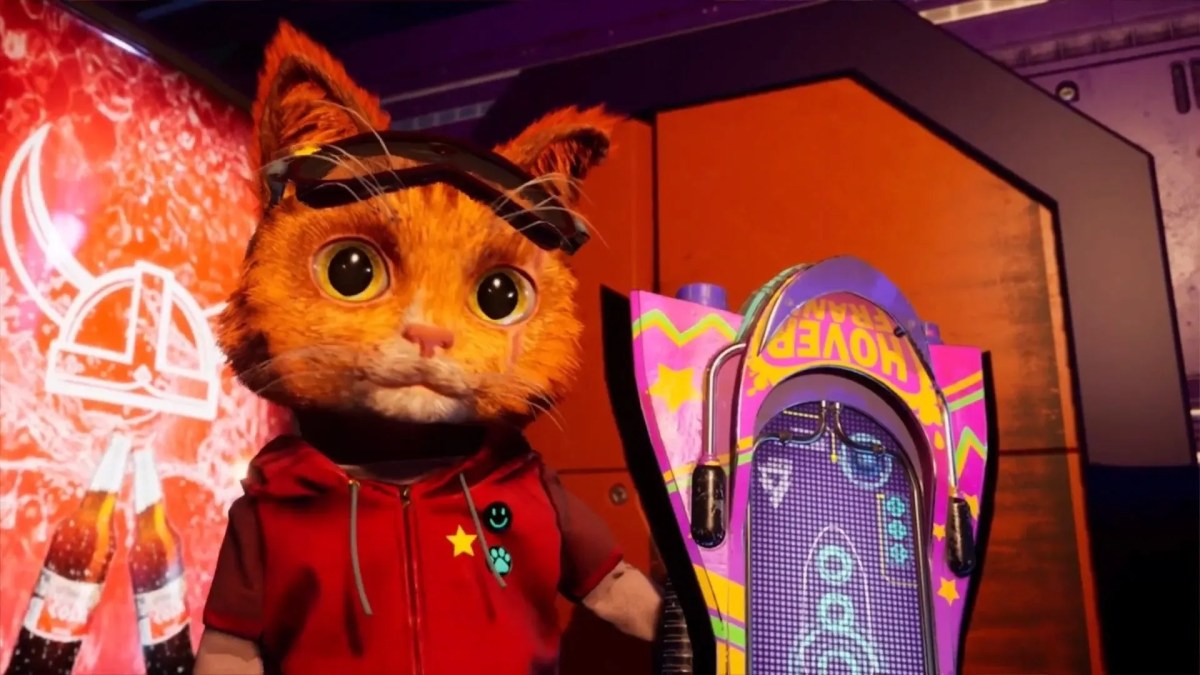
There’s a moment in the very first stage of Gori: Cuddly Carnage when you get your first weapon upgrade, and your talking hoverboard, Frank, chimes in: “Yeah! A new weapon! Let’s try it on those little shits!”
The “little shits” Frank is referring to are undead unicorns, cute little bad guys who squeak and hop but will murder feline protagonist Gori if he doesn’t kill them first.
And that’s what Gori: Cuddly Carnage is about: killing enemies, and doing it in the most stylish way possible, with satisfyingly-animated moves that involve spinning, smashing and slashing the bad guys with your hoverboard as you zoom through neon-lit levels at a frenetic pace. All of this is set to a grinding metal soundtrack, with high-sustain solos and singers extolling the awesomeness of Gori.
Gori himself is a cute orange tabby cat who happily meows as he executes rail slides and jumps, but this is not a game for children. Developers Wired Productions and CouchPlay have aimed this at cat lovers with a dark sense of humor and gamers who enjoy the nonstop war dance of games like Ghostrunner and the modern Doom franchise, which reward you for an improvisational and fast-paced approach to challenges.
The more quickly you complete levels, the more acrobatic your approach, the higher your score.
Cuddly Carnage’s gameplay feels more like Jet Grind Radio and Ghostrunner than Tony Hawk, despite our hero getting around on a board. Credit: Angry Demon Studio
The game gives you four difficulty choices, from Indoor Cat (“Easily slay enemies left and right in between naps!”) to Cuddly Carnage, the most difficult setting that promises aggressive enemies who hit hard. I’m terrible at games that involve heavy wall-running and constant speed, so I chose the second-easiest difficulty, although the difficulty level seems to have less to do with pace than it does the challenge posed by enemies. Next time I’ll kick it up a notch.
If there’s a story here, it’s almost incidental and serves only to introduce the comically absurd setting. Gori’s spaceship is destroyed, and he’s landed on the ruin of a planet abandoned by its human settlers to find a new ship. Why does he need a ship? To find yums and toys, of course.
The early game looks a bit like the third installment of Borderlands and plays like a faster version of Jet Grind Radio with the aforementioned elements of balletic violence. Hilariously, the first level is littered with what look like abandoned Tesla Cybertrucks, which you can slash in half with your hoverboard to collect resources.
Gori hovers and battles his way through bright, neon-lit streets filled with bizarre and hilarious enemies. Credit: Angry Demon Studio
Cuddly Carnage eases you in, showing you how to execute moves and how to navigate the levels by rail grinding. The idea is to stay airborne as long as possible, using your feline agility and Frank’s boost abilities, descending only to unleash whoopass on your enemies.
While Gori: Cuddly Carnage represents another welcome “play as a cat” game, it’s a completely different beast than 2022’s slow-paced, thoughtful Stray or this year’s playful Little Kitty, Big City.
We played the PC version via Steam, but the game is also available on current versions of XBox, Nintendo Switch, and PS4/5. Steam reviews are extremely positive so far, with 97 percent of reviewers recommending taking a spin with the manic meowster.
Gori is designed as a cute orange tabby, but he’s also a slob: his ship is littered with toys and empty cat food cans, and he loos like he could use a good grooming.
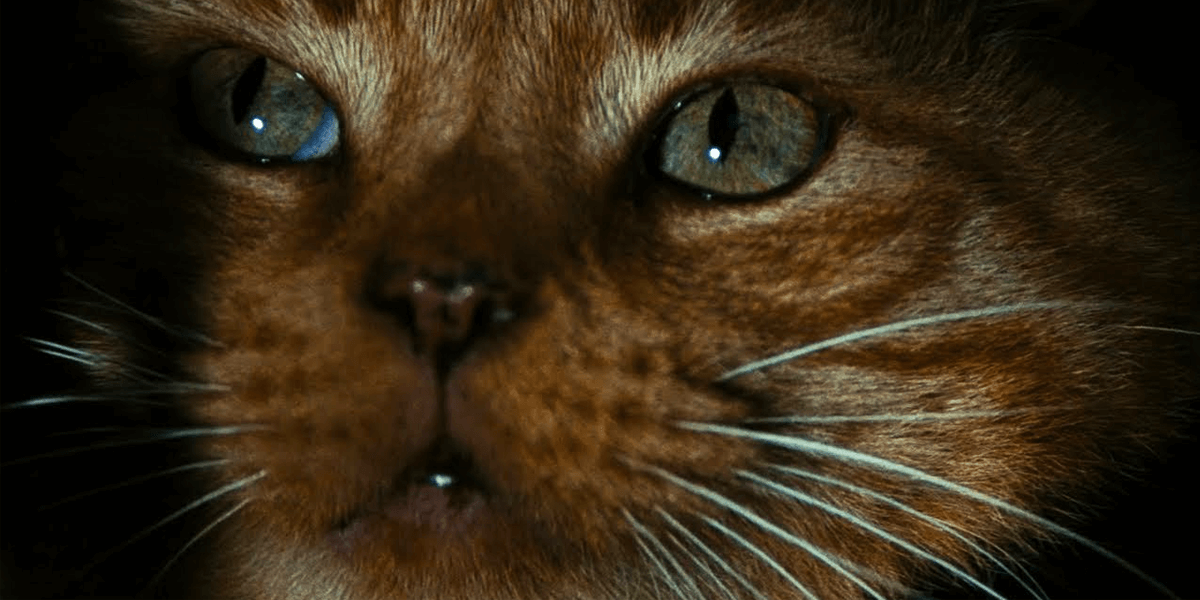
Making his debut in 1979’s Alien, Jonesy is one of the most famous felines in cinema history.
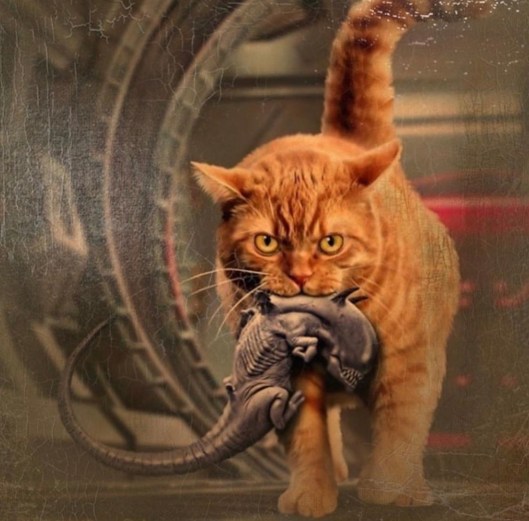
There’s a popular meme among Alien fans that depicts Jonesy the Cat walking nonchalantly down one of the starship Nostromo’s corridors with his tail up, carrying the corpse of the recently-spawned alien in his mouth like he’s about to present a dead mouse as a gift to his humans.
The joke is self-evident: if the crew of the Nostromo had allowed Jonesy to take care of business from the get-go, the alien would have been disposed of before it had the chance to grow into the monstrosity that haunted the decks of the Nostromo and the nightmares of viewers.
“Who’s a good boy? Who just saved his crew from certain violent death at the claws of a ruthless alien predator? That’s right, you did!”
Of course then there’d be no movie. No ripples of shock in theaters across the US as audiences were confronted by something more nightmarish and utterly alien than popular culture had ever seen before. No indelible mark left on science fiction.
Despite the film’s retrofuturistic aesthetic, it’s difficult to believe Alien first hit theaters almost half a century ago.
That’s testament to director Ridley Scott working at the height of his powers, the carpenters, artists and set dressers who created the starship Nostromo’s claustrophobic interior, the design of the derelict starship where the alien was found, and the bizarre creature itself.
The alien ship and creature designs were the work of Swiss surrealist H.R. Giger, who was little-known at the time but floored Scott and writer Dan O’Bannon with his hyper-detailed paintings of grotesque biomechanical scenes.
Signourney Weaver and one of the cats who played Jonesy in the first film.
Kane explores the infamous egg chamber in the derelict alien ship.
Fan art of Jonesy
A close-up shot of the retrofuturistic tech used in the series, a design decision that departed from the gleaming visions of the future common at the time.
A set photo showing the first film’s crew on the iconic space jockey set.
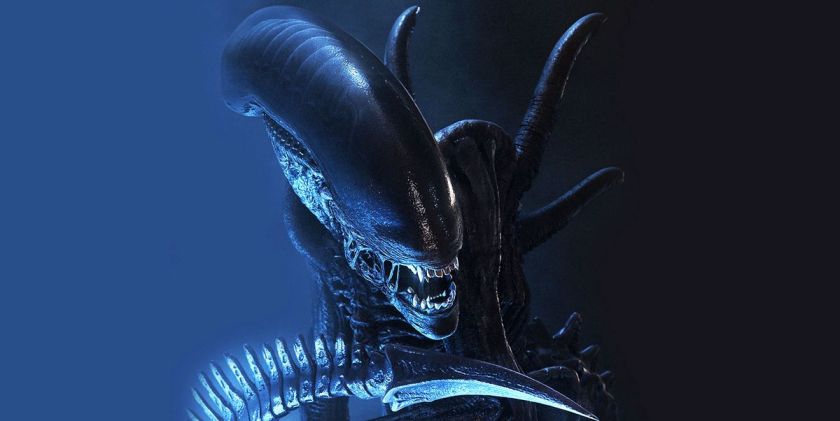
Giger’s work, specifically his 1976 painting Necronom IV, was the basis for the titular alien’s appearance. The alien, called a xenomorph in the film series, is vaguely androform while also animalistic. It is bipedal but with digitgrade feet and can crawl or run on all fours when the situation calls for it. It hides in vents, shafts and other dark spaces, coiling a prehensile tail that ends in a blade-like tip.
But it’s the creature’s head that is most nightmarish. It’s vaguely comma-shaped, eyeless and covered in a hard, armored carapace that ends just above a mouth full of sinister teeth like obsidian arrowheads. There’s perpetually slime-covered flesh that squelches when the creature moves but there are also veins or tendons or something fully exposed without skin, apparently made of metal and bone. Maybe those ducts feed nutrients and circulate blood to the brain. Maybe they help drain excess heat from the creature’s brain cavity.
Regardless, it’s a biomechanical nightmare that the Nostromo’s science officer, Ash, admiringly calls “the perfect organism” whose “structural perfection is matched only by its hostility.”
The alien, Ash declares, is “a survivor, unclouded by conscience, remorse, or delusions of morality.”
The alien, also referred to as a xenomorph, “that thing,” a “dragon,” “the perfect organism” and various other names by characters in the series. Credit: 20th Century Studios
Part of what makes Jonesey so beloved is the fact that, together with the xenomorph and Ripley, he completes the triumvirate of survivors. We see Jonesy scurry into the protection of tiny confined spaces to escape the alien, hissing at it in the dark. We see him dart into the bowels of the ship after sensing the stalking creature, adding another blip to the crew’s trackers. Finally we see him settling into a cryosleep pod with Ripley, like so many other cats with their humans, when the threat has passed.
Jonesy — affectionately referred to as “you little shithead” by Ripley in the second film — appears in the franchise’s two most famous films, his own comic book series titled Jonesy: Nine Lives on the Nostromo, a 2014 novel (Alien: Out of the Shadows), and in hundreds of references in pop culture over the last half century, from appearances in video games (Halo, World of Warcraft, Fortnite) to references and homages in movies and television shows.
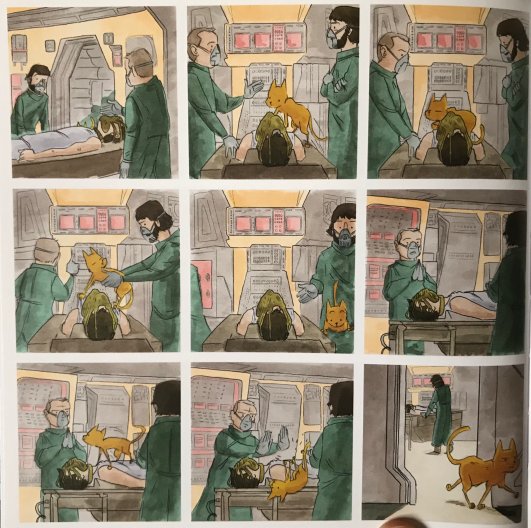
A page from Jonesy: Nine Lives On The Nostromo, which tells the story of Alien from the cat’s perspective. These panels depict Jonesy watching Ash and Dallas examining Kane in the ship’s medical lab.
He’s like the anti-xenomorph. Cats are predators, after all, and Jonesy might be the xenomorph to the ship’s rodents just like every ship’s cat in thousands of years of human naval endeavors. But to the crew members Jonesy’s a source of comfort, a warm, furry friend to cuddle with. Unlike the xenomorph he’s got no biological programming urging him to impregnate other species with copies of himself in one of the most horrific gestation processes imaginable.
Xenos are like predators on steroids, gorging themselves on their victims to fuel unnaturally swift cell reproduction and growth. As a result, over the decades some have speculated that the alien simply ignored the cat, deeming its paltry caloric value unworthy of the effort to kill.
The idea that Jonesy was too small to interest the alien is proved a fallacy in later franchise canon when we see the aftermath of a xenomorph consuming a dog. It’s indiscriminate in its quest for energy, feasting on adult humans and animals alike until two or three days pass and it’s a 12-foot-tall, serpentine nightmare the color of the void of interstellar space.
Just imagine sitting in a theater in 1979. Your idea of science fiction is sleek jet-age spacecraft, Star Trek and Stanley Kubrick’s clinical orbital habitats from 2001: A Space Odyssey. You’re expecting astronauts, heroes, maybe a metal robot or an alien who looks human except for some funky eyebrows, green skin or distinct forehead ridges.
Instead you get a crew of seven weary deep space ore haulers inhabiting a worn, scuffed corporate transport ship, complaining about their bonuses and aching for home, family and the familiar tug of gravity.
But home will have to wait. The ship has logged an unusual signal of artificial origin broadcasting from a small planet in an unexplored star system. The crew has no choice but to investigate. It’s written into their contracts, which stipulate the crew will forfeit their wages if they disregard the signal.
So they land, suit up, move out and find a derelict starship. An incomprehensibly massive vessel so strange in detail and proportion that it could only have been built by an alien mind, with unknowable motivations and psychology.
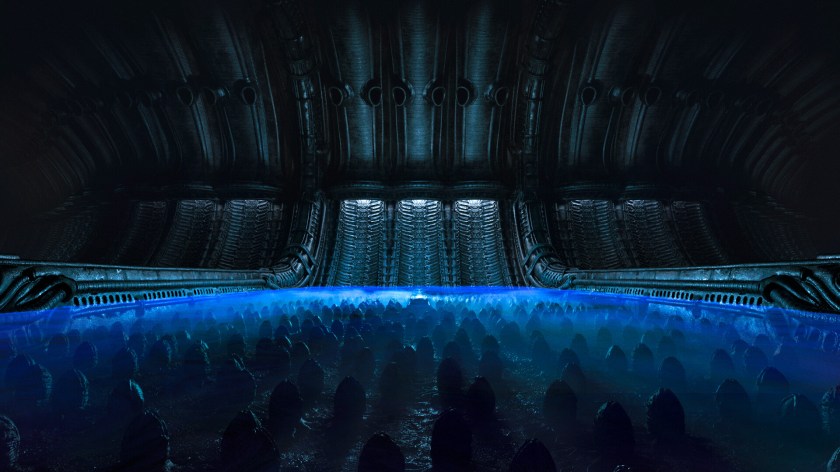
The egg chamber of the derelict alien ship, designed by Giger.
Inside, hallways that look like ribcages lead to vast chambers with utterly bizarre, inscrutable machinery that seems to consist of biological material — skin, bone, joints, organs — fused with metal. In one of them the corpse of an alien, presumably a pilot, is integrated into a complex array. It’s at least twice the size of a large human man. Its elephantine head is thrown back in the agony of its last moment, when something exploded outward from its body, leaving a mangled ribcage, torn papery skin and desiccated organs.
And beneath that, a shaft leading to another horror — a chamber that seems to stretch for kilometers in either direction, where leathery eggs are cradled in biomachinery and bathed in a bioluminescent cerulean mist.
The decision to enter that chamber sets off one of the most shocking scenes in cinema history, leads to the birth of pop culture’s most terrifying monster, and sent millions of theater-goers home with nightmares in the spring and summer of 1979.
It’s almost too much to handle. But take heart! The unlikely female protagonist makes it to the end, and so does the cat. What more can you ask for?
Jonesy grooming himself on the flight deck of the starship Nostromo. Credit: 20th Century Studios
As we noted on Sunday, Larry the Cat just celebrated his 12th anniversary as chief mouser at No. 10 Downing St., the UK prime minister’s residence and office. The Atlantic has a new gallery featuring photos of Larry’s adventures over the years, and it’s fantastic.
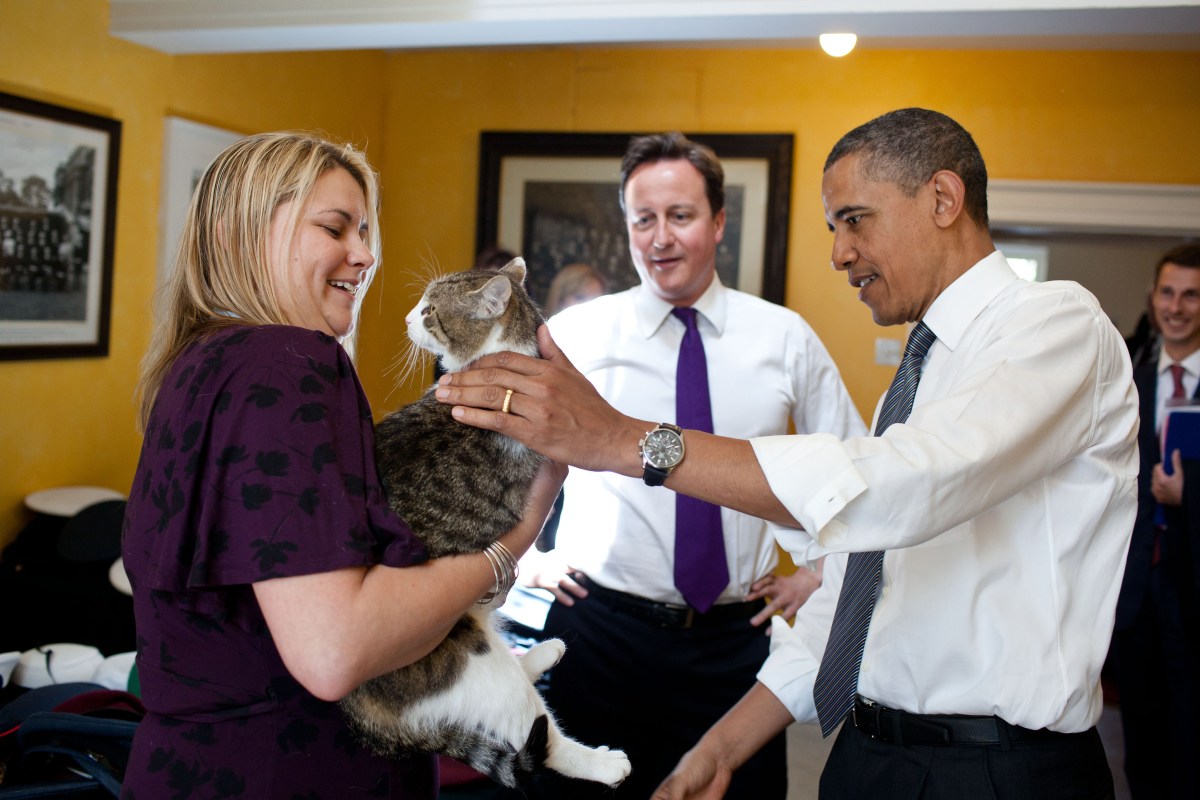
See Larry chase a pigeon, tolerate former President Barack Obama, pose for the press, bolt from a Mitsubishi bigwig, cautiously supervise a police dog working on his turf, hang out with photographers and steal the show during meetings of world leaders.
The gallery also includes rare photos of Larry inside No. 10 (during which he’s mostly gazing longingly at his turf outside) and other amusing moments from his long tenure as de facto head of government in the UK.
(Top image credit: Pete Souza/White House photo)
Cuddly carnage!
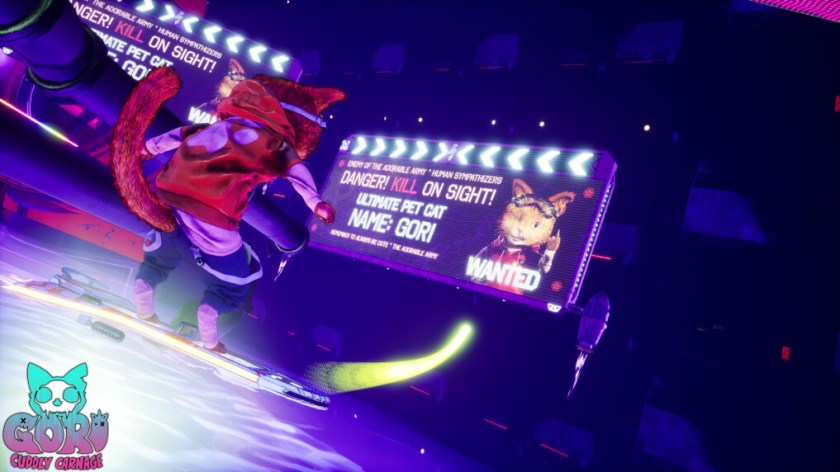
The camera pans from a wet, neon-lit street to the jagged remains of a wall spray painted with “Death to Humans” when a tiny head pops up, with the unmistakable shape of cat ears and the markings of a ginger tabby.
Zoom in: An orange tail speeds by, its owner just out of the frame, then the guitars kick in and Gori the cat stylishly disembowels some freak monster from atop his trusty Back To The Future-style hoverboard.
The game is called Gori: Cuddly Carnage, and it looks completely ridiculous, absolutely glorious and a hell of a lot of fun.
Gori stylishly puts down a monster. Credit: Angry Demon Studio and Wired Productions
It’s from Angry Demon Studios and Wired Productions, the same people behind the well-received 80s/90s nostalgia trip Arcade Paradise, so the production values look great and Gori shares some elements of the retrowave aesthetic prevalent in Paradise.
It probably won’t get the kind of hype that the feline-centricStray received, nor will people laud it for educating players about cat behavior, but that’s okay. It’s not that kind of game. Gori: Cuddly Carnage is still in development with no announced release date, but we’ll be keeping an eye on it.
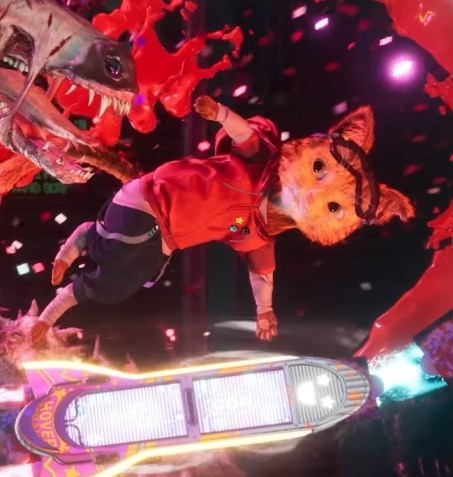
Gori the “ultimate pet cat” on his hoverboard. Credit: Angry Demon Studio/Wired Productions
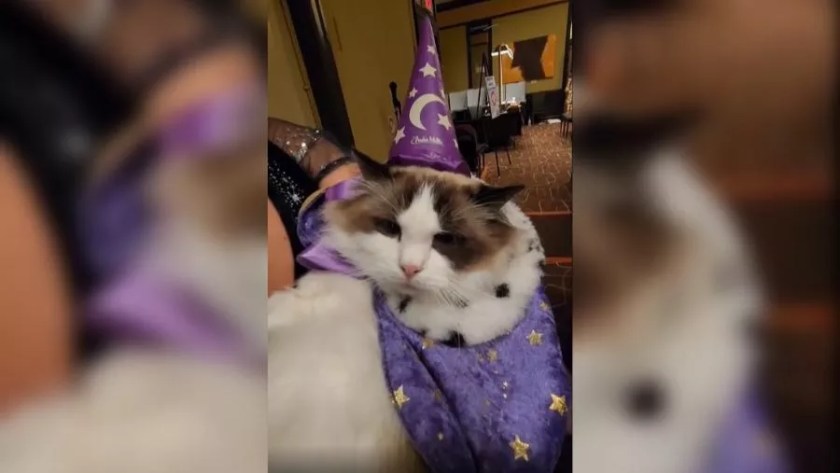
Plus: The Cat Fancier’s Association holds a cat-and-owner costume contest.
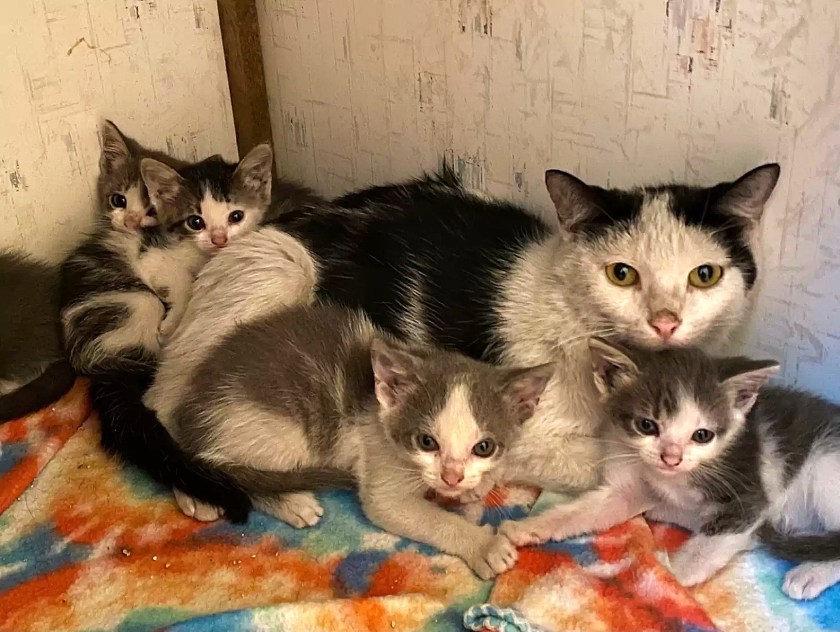
When volunteers in Elkhart, Indiana, went to trap a mom and her kittens near an industrial site, one of the babies panicked and ran straight into a hole, taking a tumble into a drainage pipe beneath.
The rescuers from a non-profit TNR group called Catsnip didn’t give up on the four-week-old baby even after finding her proved to be much more difficult than they imagined. They called off the search in Elkhart — about 160 miles north of Indianapolis — the first night when it was too dark to keep working. They dropped food for the scared fluffball, whom they could hear but still could not locate in the dark, tight subterranean space.
The next morning they were back at it, trying to literally flush the kitten out before a volunteer named Ashley descended via a manhole 75 feet from the spot where the kitten had fallen in.
The entire saga took about 48 hours and hinged on Ashley who, because of her small size, was able to squeeze into a pipe and crawl 30 feet to the terrified baby cat — then had to crawl out backwards the way she came while cradling the little one.
Piper was reunited with her mom and littermates after the rescue. Credit: Catsnip
It was worth it for the volunteers, who named the kitten Piper in honor of her adventure, gave her fluids and formula from a dropper, then reunited her with her mom. Read about the whole encounter at The Dodo. (And serious props to Ashley! Just thinking about what she had to do makes me shudder. Cats may love tight spaces, but most humans do not.)
Hey! That’s Buddy’s MO!
As gamers who generally prefer more depth, the Buddies never got on the Fortnite bandwagon, so we weren’t aware that Fortnite has a character named Meowscles until encountering this article from Cracked.
Meowscles has a Buddesian physique. Credit: Epic Games
As you can see, Meowscles was clearly inspired by Bud, who is known for his incredibly ripped physique and totally isn’t a bit chubby. (“That’s all muscle, not fat!” Buddy insists.)
Fortnite is a battle royale-style game in which up to 100 players compete against each other in live matches. The game is free-to-play, with developer Epic Games making its money by selling cosmetic items as microtransactions. Meowscles is one of about 1,400 different “outfits” players can purchase to customize their characters.
The game has been a monumental success for Epic, earning billions and leading the company to launch the Epic Games Store, the first serious competitor to Steam, which has been the dominant platform for PC gamers for years. Epic has been so flush with cash that’s it’s been giving away free games every week to lure customers away from Steam, even upping the freebies to a new game every day during the holidays.
Cat and Owner Costume Contest?!?
In Massachusetts, the Cat Fancier’s Association held its ninth annual cat and owner costume contest on Sunday. Unfortunately, the only story we can find about the event comes from the local public radio affiliate, so there’s not much in terms of photos.
If you were going to enter such a contest with your cat, what costumes would you and your fluffy overlord wear?
I’m thinking maybe I’d be a Targaryen with Bud as a baby dragon perched on my shoulder in honor of Game of Thrones/House of the Dragon. But that might offend little dude, who tends to think of himself as a hulking tiger. Perhaps the easier and more realistic “costume” would be Bud dressed as a king, snug in his own little carrier designed to look like a royal palanquin, with me carrying the palanquin as his dutiful servant. Thus, art imitates life.
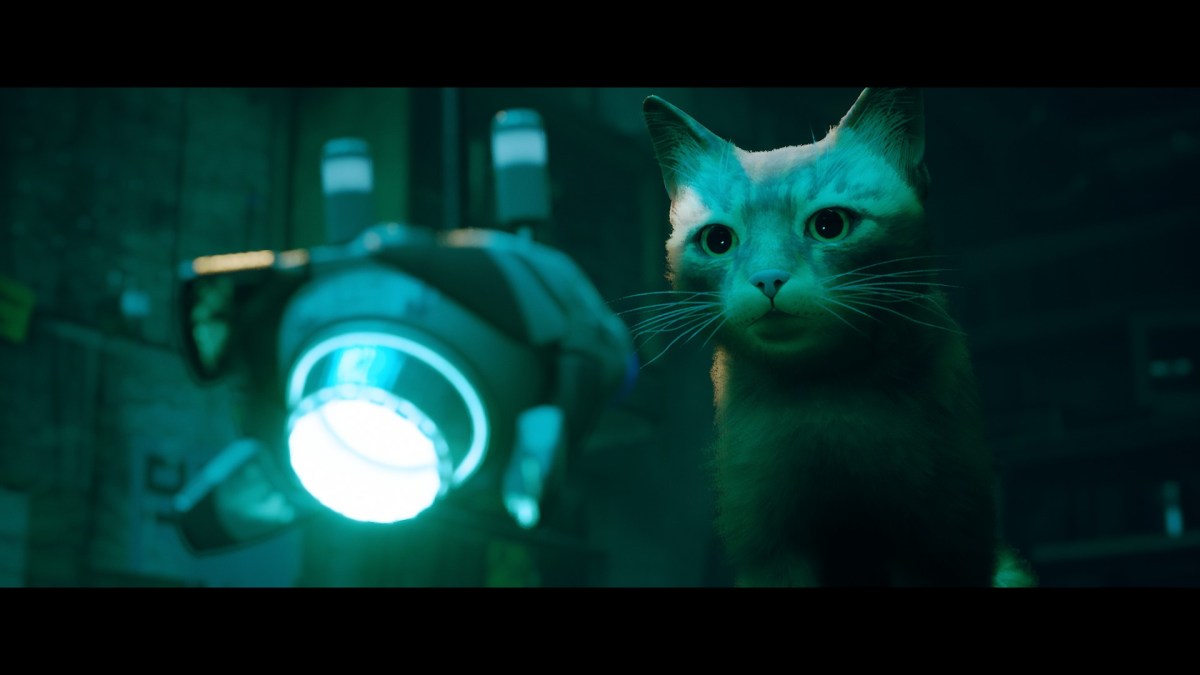
We continue our journey in Stray, the new game centered around a feline protagonist.
There’s been so much buzz about Stray, so many news stories, memes and people talking about it, that I’m probably not alone in feeling like I’m watching a TV series an episode at a time while most people binged it in a day or two.
But that’s not how I play, and it’s not how most game developers want players to experience their stories. Modern games, especially games like Stray with their bespoke environments and unique encounters, are built to immerse players in their worlds. The entire point of video games is the interactivity, the choices and agency of the players. They’re designed so when you choose to wander off the beaten path or take a few moments to linger over something visually impressive, the experience is rewarding.
Maybe you’ll find a rare item, a compelling vista, a secret passage or a funny sign. The point is, there’s incentive to look deeper. It gives games a feeling of possibility and the thrill of the undiscovered.
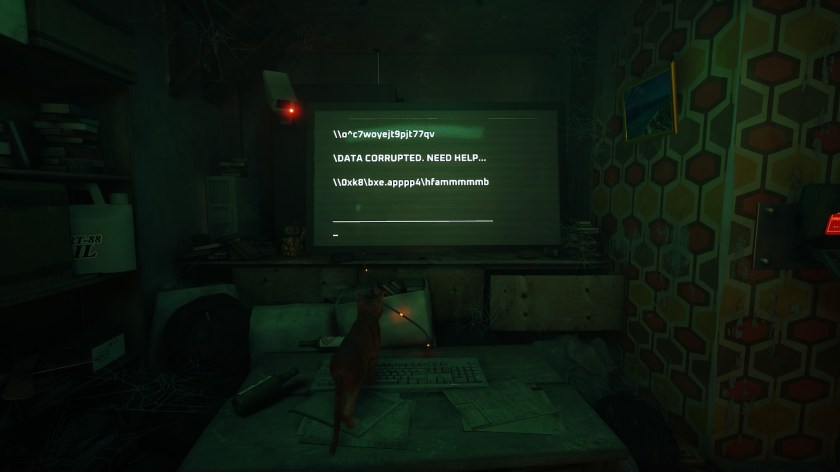
Standing on a keyboard, just like the good old days!
These stories are not meant to be passive experiences, nor are they meant to be devoured. I won’t be speed running through this mysterious alternate future version of Hong Kong. The journey is the entire point.
Picking up where we left off, the Good Boy (that’s what I’m calling him, for now at least) must learn to navigate this new and potentially dangerous urban environment, and he must do so with a feline’s skill set.
There are no opposable thumbs here. If our hero needs to move an object, he’s got to carry it in his mouth like a mom cat does with her kittens. If he needs to move a barrel, he’s got to get inside and run like a hamster in a wheel to propel it forward. If he needs to stop a fan’s blades from spinning so he can get through a window, he’s got to drop or swipe something into the blades to jam them up.
Appropriately, one of the main mechanisms for making new routes is knocking things over. Knock over a piece of plywood and Good Boy has a bridge. Knock over a can or a box at just the right angle to flip a switch and so on.
Protagonist cat can navigate the city in different ways and at different heights. Moving above street level means he’s less vulnerable and gives him a nice ambush angle should he encounter anyone who needs a good startling.
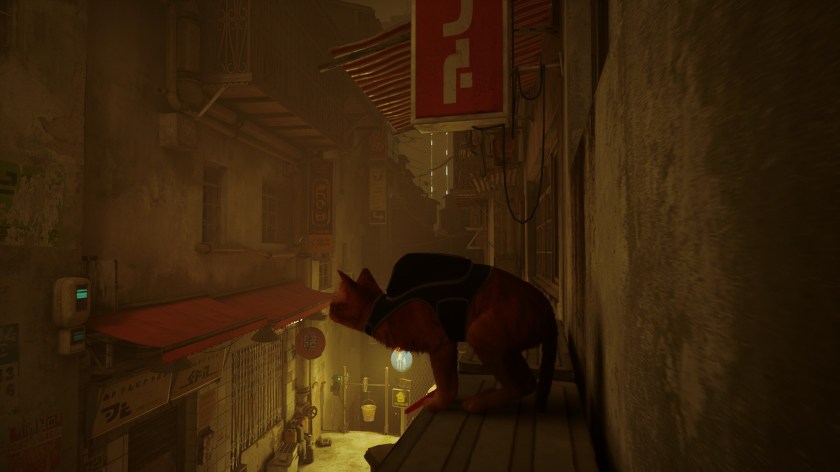
Good Boy meanders through a seemingly abandoned Kowloon City, padding through quiet streets and taking shortcuts through empty flats. There’s power, the city is illuminated by incandescent lights, neon and the glow of TV sets indoors, so someone must be around.
Our feline hero soon learns new tenants have moved in, and they’re not friendly. I’m not sure what they’re called, and the game doesn’t name them, but Kowloon is now home to swarming, artificial tribble-like creatures that attack Good Boy on sight and can take him down if he doesn’t run and shake off any enemies who manage to latch onto him. (Side note: I do not like dying in this game. What did Good Boy ever do to deserve being attacked?)
The first encounter with these enemies turns into a twisting chase through dimly-lit alleys, crumbling staircases and tight streets. Good Boy manages to evade the evil robot tribbles and finds sanctuary in a secure flat.
Once he attends to his needs, which include some carpet scratching and rehydrating, he’s contacted by a machine who uses TVs, computer monitors and other electronics in the apartment to communicate with the tabby.
The machine directs the cat through a few simple tasks necessary to free him, then meets Good Boy in the flesh.
The bot, a palm-size drone named B-12, is damaged and his memory is corrupted. He’s as lost and confused as Good Boy is, and he proposes a partnership. Good Boy, who sees the value in a drone who can open locks, translate signs and communicate with others, agrees. B-12 outfits his new feline friend with a harness that allows him to dock on the kitty’s back, then he saddles up and the new teammates venture forth.
For the first time, the protagonist is able to glean real information about his environment and has a sense of direction. He also gets to travel by makeshift ziplines, hopping into buckets hanging from the city’s ubiquitous wires.
Next episode: Our duo fights back! Same cat time, same cat channel.










 Pain In The Bud