While New Zealand’s Vigilantes Slaughter Cats, The Country Has Pledged To Eradicate Free-Roaming Felines By 2050

Convinced that culling cats will prevent local wildlife from going extinct, despite no evidence supporting that idea, New Zealand’s authorities have pledged to wipe out ferals and strays.

A recent RNZ story about efforts to exterminate cats in New Zealand starts with an anecdote about a man named Victor Tinndale, describing the way he bludgeons a cat to death as casually as if he’s sipping a cup of coffee.

Tinndale has taken it upon himself to kill cats even though the country’s wildlife management authorities told him not to. Why? Because he thinks cats are responsible for driving native species toward extinction.

He doesn’t know that, of course. No one does. No one’s bothered to do the research, and the driving force behind the claim that cats are responsible is a series of meta-analyses by birders who literally invented numbers to align with their predetermined conclusions about predatory impact.

To date there is not a single study that accurately measures feline predatory impact, nor is there a shred of evidence that slaughtering cats — whether beating them to death, shooting them with shotguns or poisoning them — has any beneficial impact on endangered bird species.

Yet there are vigilantes aplenty slaughtering cats across New Zealand, youth hunting contests encouraging kids to shoot cats and kittens, and government-sponsored extermination programs, like a particularly ghastly effort on a small island off New Zealand’s coast, where members of a team tell themselves they’re doing good work by sniping animals who are doing what they were born to do.
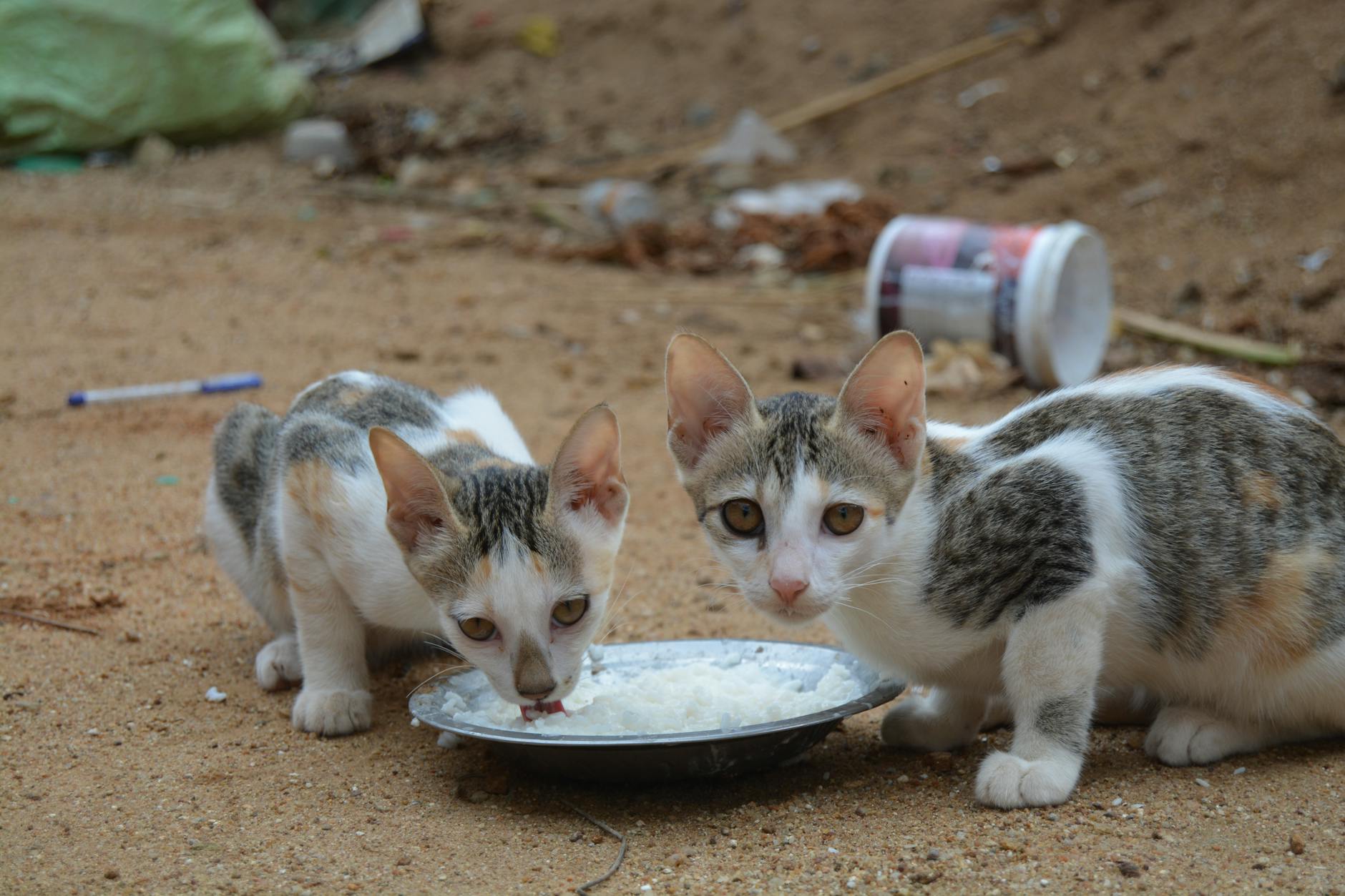
Ferals and strays already have tough lives without being hunted for sport or at the behest of government officials who aren’t in full possession of the facts. Credit: Mohan Rai/Pexels

The RNZ story describes Tinndale merrily skipping through the Aotearoan wilderness, singing songs and cracking jokes like a perverse Tom Bombadil as he murders cats unfortunate enough to get caught in his traps.

RNZ cameras follow Tinndale as he finds a terrified feline in one of the his traps. Tinndale describes the cat’s impending death at his hands as some sort of inevitable cosmic justice. He didn’t sentence the cat to die, he argues. He’s just the man who carries out the sentence.

“This cat is just an utter killing machine,” Tinndale says, addressing a camera as he repeats rhetoric from birder Peter Marra — who has advocated for the destruction of the entire species — almost word for word. “I’d hate to think what this cat has slayed to survive. So this guy has got to go, you know?”

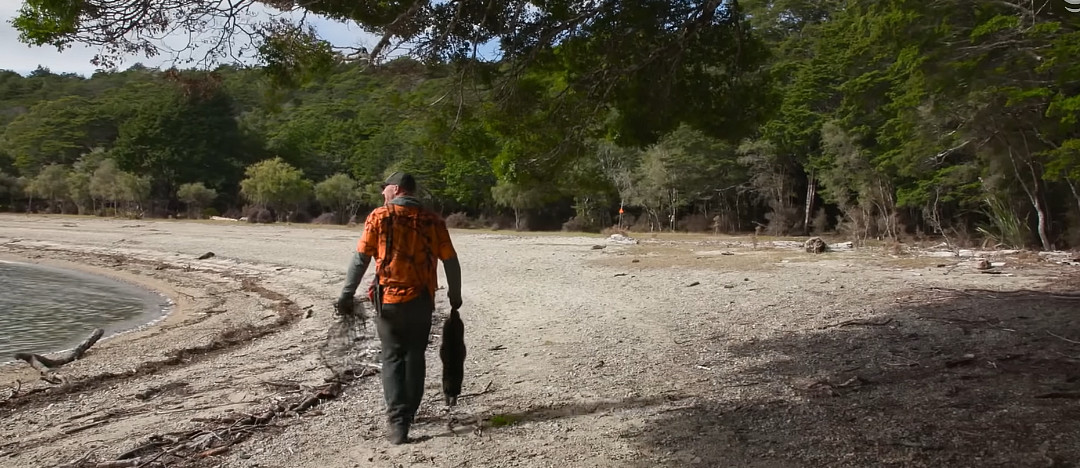
The next scene shows Tinndale walking along the shore, the cat now hanging dead in his hands. He is judge, jury and executioner.

Tinndale buries his victims in a “graveyard” he made near a hut, admitting the graveyard is a “little bit of a laugh.” Tinndale was shocked, the story says, when New Zealand’s Department of Conservation didn’t pat him on the head for his vigilante efforts.

“I thought they’d have a chuckle, you know, and be pleased, but it was nothing of the sort,” he told RNZ.

Thought they’d have a chuckle?

This man thinks bludgeoning animals to death is hilarious. He is a psychotic vigilante who has taken it upon himself to violently end life. Why is he allowed to own weapons? Why is he not in prison or on a court-mandated mental illness management program?

Brad Windust with a trophy hunter’s expression as he shows off a Maine Coon mix he killed with the help of his hunting dog. Credit: Supplied to NRZ

The story goes on to quote Jessi Morgan of the Predator Free New Zealand Trust, who flat-out admits she can’t say how many cats there are in the country, let alone measure their predatory impact.

“I’ve seen estimates from two-and-a-half million to 14 million, which basically tells us we’ve got no idea what those numbers are,” Morgan said before immediately relaying anecdotes from hunters and farmers who say they’re “seeing more.”

This is not how we make decisions between life and death! This is not science, not by any definition of the word. This is not public policy. This is vigilantism and a mob mentality, amplified by the fact that it’s easier to blame a defenseless species for our own conservation failures and humanity’s impact on wildlife.

It is gross, utter disrespect for life under the guise of conservation, by people who not only can’t articulate what sort of damage they think felines are doing to their country, but have not a scrap of evidence that vigilantes running around bludgeoning cats to death are doing anything other than causing needless suffering.

Worse, it’s clear at least some of these self-appointed nature guardians are enjoying the task of murdering cats. It’s evident in their smiles as they show off their prizes and in the way they talk about their “work” — not as a solemn duty after all other options have been exhausted, but as something to “have a chuckle” over.
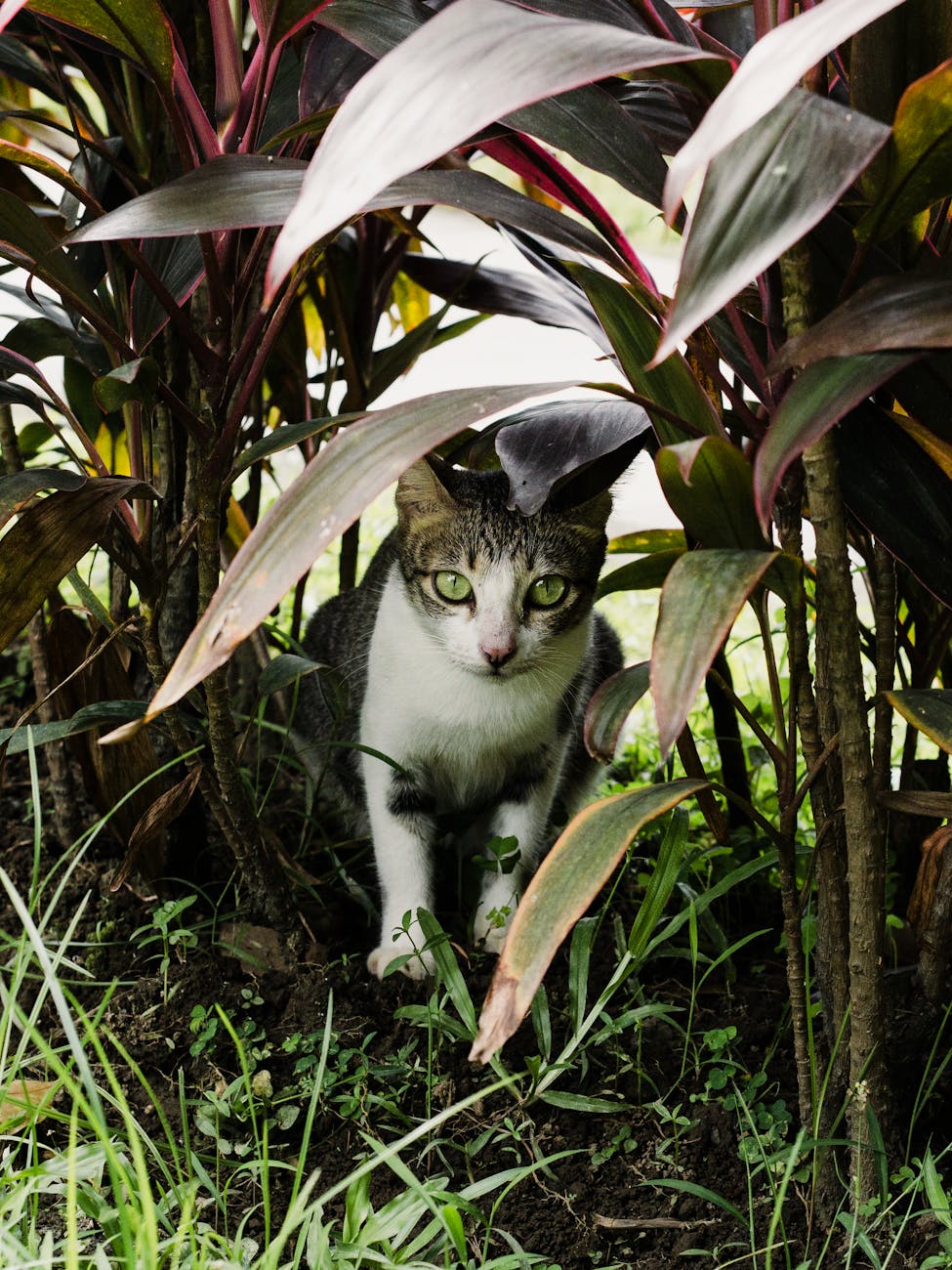
Credit: Dianne Concha/Pexels

This is also a failure of journalism, a failure to follow the most basic best practices and rules, to ask for proof when people assert opinions and call them facts. Those who call themselves journalists, who credulously spread the bunk studies about feline impact on native species, should be ashamed of themselves for not even taking a few minutes to read the studies they cite. Anyone who reads the research would immediately understand that the “studies” — which are really meta-analyses of old data — don’t provide any proof that cats are responsible for pushing endangered species toward extinction. They do nothing of the sort.

What we do know, and have confirmed over more than half a century of rigorous science, is that we are responsible for wiping out wildlife — more than 73 percent of the world’s monitored wildlife populations in the past 50 years alone, according to the World Wildlife Fund’s annual report.

Cats did not render more than half the rivers and lakes in the US unsuitable for swimming or collecting drinking water. Cats did not dump PCBs in the Hudson River, test nukes on desert ranges and in the ocean, create vast stormfronts of smog that shut down entire cities for days, or bleach coral reefs around the planet. Cats didn’t overfish the oceans, build the skyscrapers that kill innumerable birds every year, or bulldoze vast stretches of jungle in places like Borneo, Sumatra and the Amazon.

We did that.

Aside from the fact that they don’t have homes, these cats are no different than pet felines. They are the same species. Credit: Wikimedia Commons

Animal welfare groups have never disputed the idea that cats probably do have a part in endangering small mammals and bird species. They are predators. Hunting is their role.

But that is a far cry from proving they have a measurable impact, let alone are the primary drivers. In rare cases when research teams did the hard work of taking a feline census, as Washington, D.C.’s Cat Count did, the population numbers turn out to be considerably lower than expected.

Data from the Cat Count also confirmed what we know, that cats do not stray more than a few hundred feet from their territory, whether it’s a human home or a small shelter in a managed colony. In urban and suburban environments, the study found, cats have minimal impact through hunting unless they’re living directly adjacent to wooded areas.

Sending a bunch of lunatics out, dancing and skipping as they arbitrarily slaughter sentient creatures with real emotions, is the kind of monstrous behavior only humans are capable of.

Human-made devices and structures kill innumerable birds annually, a fact that isn’t accounted for in studies and news stories blaming cats for bird species extinctions. Credit: Amol Mande/Pexels

But it isn’t enough for New Zealand’s government to have vigilantes killing cats, or community-sponsored cat hunts. Now the government has pledged to eradicate feral cats by 2050. Because feral cats are the same species as stray and pet cats, and there is no way to determine by sight if a cat is feral or just frightened, that means any feline found outdoors will be killed.

“In order to boost biodiversity, to boost heritage landscape and to boost the type of place we want to see, we’ve got to get rid of some of these killers,” says Tama Potaka, the country’s conservation minister.

Note the language in the linked story, which describes domestic cats as if they’re a separate species. That’s the kind of ignorance that drives these cruel efforts.

New Zealand is heavily reliant on tourism, with visitors accounting for almost six percent of the country’s GDP before COVID-19, a number the country’s leaders expect to match in late 2025 as the tourism industry recovers. It’s part of New Zealand’s overall shift to services instead of products in an effort to diversify its economy.

Anyone who loves cats, who thinks men shouldn’t play God, who thinks we ought to demand at least something in the form of proof before allowing socially maladjusted vigilantes to brutally kill animals, should boycott New Zealand as a travel destination.

If you enjoy PITB’s content and want to help us keep the lights on, please consider whitelisting this site on your ad blocker.

Header image: Tinndale walking with a cat he killed via RNZ
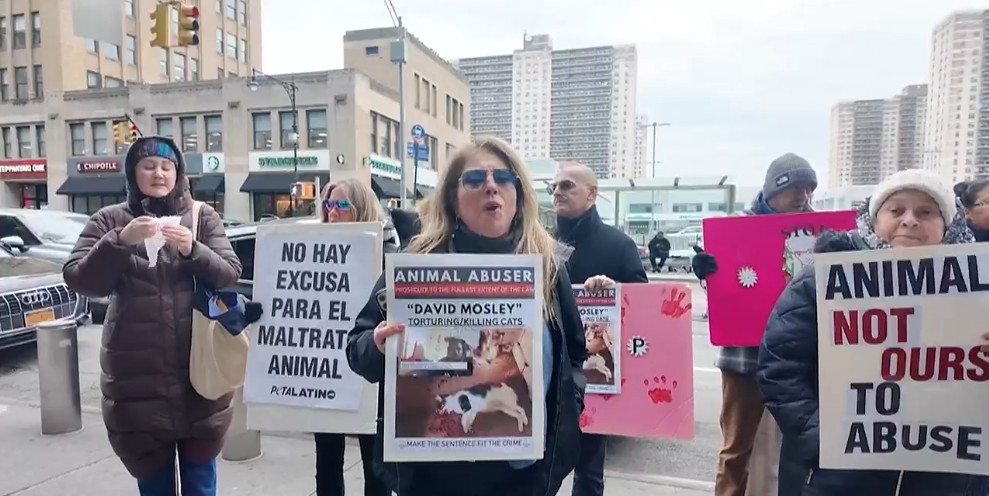
Cops: Wannabe Rapper ‘Ritually Sacrificed’ Cat To Promote Music

David Mosley wanted attention and allegedly killed a cat on camera to promote his Satanist-themed music.

What to do when you want to be a famous music artist, but your tunes are abominably awful and your gimmick is infantile?

If you’re David Mosley, apparently you beg the internet to notice you exist by allegedly murdering a cat.

The 26-year-old Bronx man was initially gleeful after sharing video and photos showing a dead cat in his Fordham North hovel surrounded by candles and a bunch of nonsense, including the word “SATAN,” spray painted on the walls.

“You should have heard the little bih squeal lol,” Mosley wrote on Instagram alongside a photo of a bloodied and dead cat in his apartment.

“I’m the king, n—a,” Mosley said in a follow-up video after mocking people who were upset that he allegedly killed the cat. “I can reach through the camera and put spells on you like that! That easily! I hexed you through the phone, through the camera. Ya’ll know I do f—ing voodoo, so don’t even call me delusional.”

Mosley during a live stream, during which he claimed supernatural powers.

A relevant question here: who adopted a cat out to this guy? I went through what felt like a CIA-level background check when I first went to adopt, and this Satanist who thinks he’s a wizard apparently had no problem just waltzing into a shelter and walking out with a cat.

Apparently angry that no one turned up to the first “show” in his illustrious music career, Mosley said he was going to take things to the “next level” with another “sacrifice” on Halloween night. In his musical endeavors he called himself Church of Ububal, with the latter word a reverse spelling of “Labubu” in reference to the viral toys.

“Be there or be square,” he wrote, per a screenshot posted to Reddit. “Like I said at my first show and no one came. But you will be at this one. Grab popcorn.”

When he got the attention he wanted, but not the reaction he wanted, he backpedaled during a live stream, claiming he found the already-deceased feline.

By that point, furious Redditors in a Bronx subreddit had closed in on his identity and exact location, and were pestering the NYPD to grab Mosley.

“Y’all are soft for falling for cheap parlor tricks” Mosley said during the live stream.

Incredibly, Bronx criminal court Judge Harold E. Bahr let Mosley walk free without having to post bail after a preliminary hearing this week, and adjourned a hearing this week after Mosley’s original attorney was not present. It’s not clear if that attorney will continue to represent Mosley.

Bahr must be confused about which decade this is. Constituents should (politely) register their displeasure with his office. People from several local cat rescues have already done so.

“We want the judge to take this seriously. We cannot wait for another crime like this to happen,” local animal welfare activist Rachel Ejsmont told News12 Bronx.

Mosley was initially charged with criminal mischief and aggravated cruelty to animals at his Oct. 30 arraignment. Activists are pushing the district attorney for more serious charges.

The court hasn’t set a date for Mosley’s next hearing after the Nov. 12 adjournment. We hope the scrutiny and his mounting legal troubles dissuade him from trying to get attention through violence again.

Lastly, I usually keep my mouth shut about this sort of thing because I know emotions run high and most people are well-intentioned, but already there are grifters latching onto this incident and using it to beg for donations for their activism, which amounts to little more than grumbling about this stuff on social media.

Be careful about who you donate to and make sure you’re giving to registered organizations with financials listed on Charity Navigator or Charity Watch. Donate your hard-earned money to groups that really do make a difference, such as the Humane Society, SPCA and local rescues that do outstanding work, like New Jersey’s Tabby’s Place. A transparent, effective charity will feature its IRS Form 990 on its website and use at least 75 percent of its revenue from donations on program spending. Be wary of “influencers,” people who say outrageous things for attention, clicks and donations, and anyone who claims they have special access to, or influence over, authorities.

Header image via News12 Bronx (screencap)

Tiger Kills ‘Joe Exotic’ Associate At Roadside Zoo

Ryan Easley “wanted to be the one with the most tigers in the ring at one time,” Joe “Exotic” Maldonado said of the Oklahoma man.

A circus big cat trainer and associate of so-called “Tiger King” Joe Maldonado was mauled to death by a tiger at a roadside zoo on Saturday.

Authorities say 37-year-old Ryan Easley was conducting a “show” at the Growler Pines Tiger Preserve when a tiger he “owned” turned on him. The captive predator mauled Easley, attacking his neck and shoulders “in full view of a group of visitors, including children,” PETA wrote in a statement calling on federal authorities to cancel the facility’s licenses.

Easley with a white tiger. Credit: Ryan Easley/Instagram

While Easley called the facility a preserve, others described it as a roadside zoo, and genuine animal sanctuaries do not put animals on public display. The roadside zoo description aligns with the Oklahoma man’s past as a circus trainer of big cats, and Maldonado — who was the subject of the popular 2020 Netflix documentary, Tiger King — seemed to confirm that description when he issued a statement on his friend’s death.

“He wanted to be the one with the most tigers in the ring at one time,” Maldonado wrote in a statement from prison. “Some of his cats were crazy in the head, but it was about having the most performing at one time at all costs.”

Easley acquired some of his tigers from Maldonado, who was convicted of conspiracy to commit murder for hire and 17 counts of violating federal conservation laws in 2019. Maldonado, who remains incarcerated in a federal prison in Fort Worth, Texas, tried in 2017 to hire two men to kill Big Cat Rescue’s Carole Baskin, an activist with whom he had a years-long feud. One of the men Maldonado tried to hire was an FBI informant.

Maldonado is serving a 21-year federal prison sentence. Mugshot credit: Santa Rosa County Jail

PETA has accused Easley of mistreating, neglecting and abusing the tigers at his facility. Tigers are apex predators and hyper-carnivores who do not recognize social hierarchy or have any innate compulsion to follow orders from humans, so “taming” them and getting them to “perform” involves coercion, including physical punishment, withholding food and torture. The brutal mistreatment required to force elephants, lions, tigers and other animals to perform is one reason why traditional animal circuses no longer exist in the west.

Maldonado admitted as much in his statement, noting “you don’t get a tiger to jump through a hoop of fire because they love you.”

“It’s never safe for humans to interact directly with apex predators, and it’s never a surprise when a human is attacked by a stressed big cat who has been caged, whipped, and denied everything natural and important to them,” PETA’s Debbie Metzler wrote in a statement.

Former big cat handler and caretaker Katherine Lee Guard, who is now an activist against keeping big cats as pets and using them in the entertainment industry, spoke to PITB about her experiences in 2023. She noted tigers can turn on their handlers at any time, even if the latter hand-reared the felids since infancy. Once their predatory instincts are triggered, the apex predators feel a powerful compulsion to attack.

Even in accredited zoos where tigers are provided with large enclosures designed for their well-being, given plenty of enrichment and stimulation, and fed well, Guard said people should never enter an area without barriers between themselves and the big cats.

“The cost is too great if something goes wrong,” she said. “And something always goes wrong given enough time.”

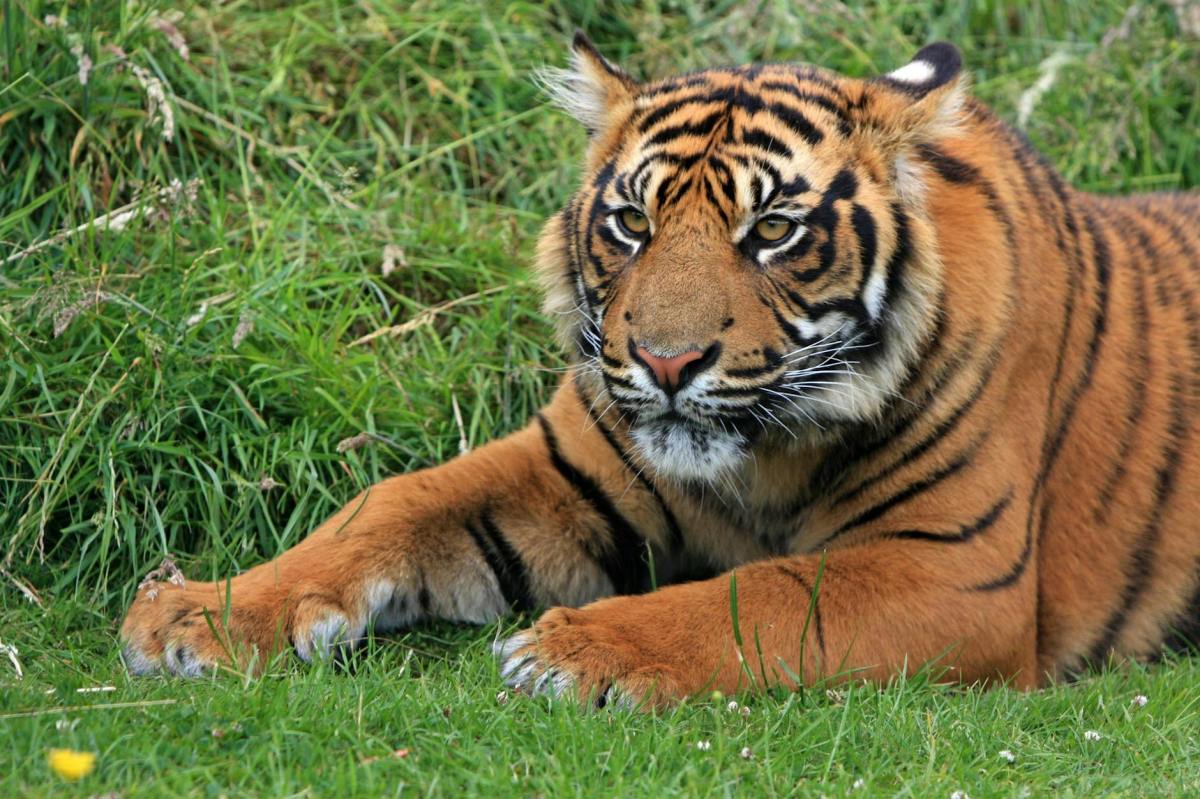
Header image of a Sumatran tiger via Pexels. Do you enjoy reading PITB? Please consider whitelisting us on your ad blocker so we can keep the lights on. Thanks!

Animal Rights Groups Are Begging For This UK Influencer To Be Banned From Owning Pets

The woman has been dubbed a “serial killer” of animals after eight of her pets and one of her horses met early ends, and several others simply disappeared. She’s part of an unfortunate trend of influencers and quasi-celebrities popularizing exotic pets, with “ownership” of the animals frequently leading to tragedy.

So apparently Katie Price is some sort of proto-Kardashian, a pioneer of the “famous for being famous” genre of hybrid reality/online celebrity, to use the term loosely.

Wikipedia says she got her first taste of fame in the 90s posing topless for British tabloid newspapers before moving on to loftier pursuits, like appearing on Big Brother and holding court on important topics, like whether toes have bones.

The background really doesn’t matter, except to establish that Price is someone with a lot of money, minimal common sense and extraordinarily poor judgment who has gotten so many of her pets killed or injured, PETA and other animal rights groups in the UK have begged politicians to write new laws preventing serial pet-killers from purchasing more animals.

Sort of a “10 strikes and you’re out” rule, if you will.

Four of Price’s dogs have been hit by cars, including one killed by a pizza delivery driver on her property. Another got stuck in an electric armchair and was crushed after Price gave him cannabis oil, pleading ignorance on its effects.

Previously, one of her breed cats was euthanized under mysterious circumstances at five months old, her rare chameleon fell ill and died because he wasn’t kept in a properly heated enclosure, and her “guard dog” was apparently intentionally killed by someone, although the information on that death comes from Price so there’s no way of telling what the actual circumstances were.

A horse Price owned was killed on the same road where two of her dogs met their end, which would bring the tally to nine depending on whether you consider a horse a “pet.”

Price, pictured this year.

There have also been animals — kittens, puppies, animals gifted by boyfriends, fiances, and friends — who were featured on Price’s social media feeds as babies and never heard from again, according to the UK’s Mirror. Some of them were given away to assistants and acquaintances. The fates of the others are unknown.

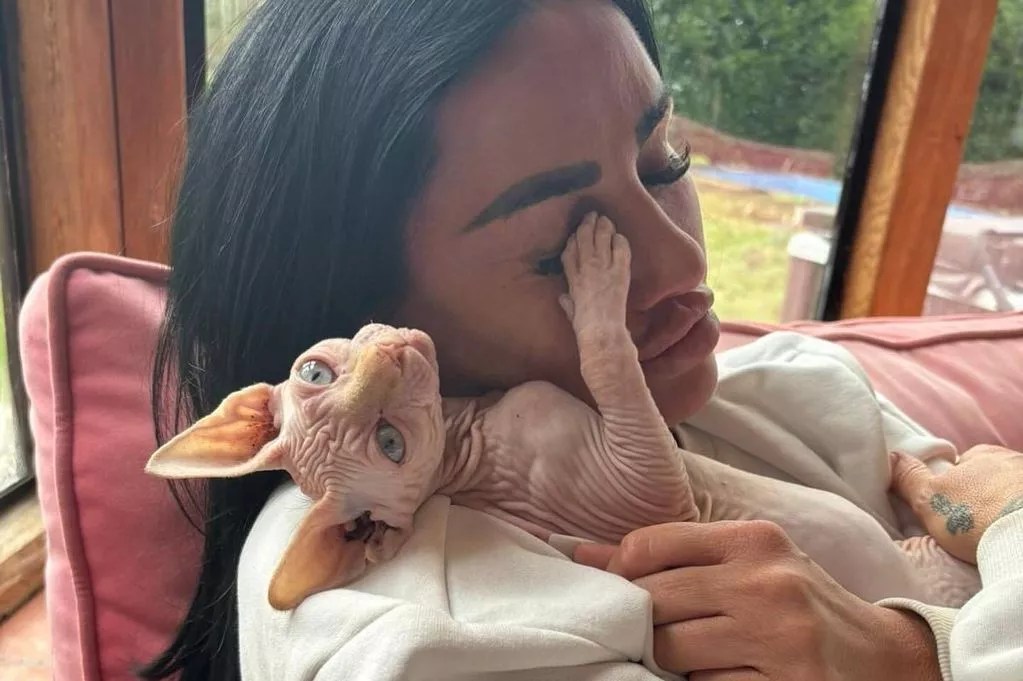
Price currently owns at least four chihuahuas and five Sphynx cats. An incident with one of the Sphynxes has animal lovers and welfare groups renewing calls to prevent her from buying new pets. (Price, like so many social media influencers, exclusively purchases breed pets for thousands of dollars each.)

In a new video posted online, Price — who has been dubbed a “serial killer” of animals by PETA — makes duck lips at the camera and rubs one of her Sphynx cats, Kevin, explaining that the little guy suffered sunburns.

“Oh Kevin you have been in the sun today, you have got sun burnt despite us putting sun cream on you… look at his little face,” Price said in the video. A caption written by Price claims “Trying to keep the cats out of the sun is hard work.”

A screen shot from Price’s recent video in which she shows one of her cats who suffered sunburn during the ongoing heat wave.

The latest incident is drawing fresh attention to a petition that calls for the UK government to step in to stop Price from owning animals.

As of July 10, there were 37,728 verified signatures on the Change.org petition, which mentions a number of additional disturbing incidents involving Price’s pets. One accusation claims Price’s guard dog — it’s not clear if it was the dog who was killed, or a new guard dog — bit the tail off one of her cats.

“Anyone who warns Katie not to hurt the animals she takes in might as well be screaming into the wind, for all she seems to care,” PETA’s Elisa Allen said. “And here we go again: her cat is sunburnt – something she was likely warned about when acquiring a gimmick cat, bred to look odd and be hairless.”

For her part, Price claims the deaths and unfortunate incidents that have befallen animals in her care are simply the result of bad luck and circumstances outside her control. Her representatives have also accused animal welfare groups of using the influencer’s fame to raise money.

That has not changed the narrative as new incidents continue to pile up. In a 2023 live TikTok stream, Price allegedly slapped her then-puppy, Tank — who she’s since discarded — for sitting on a hoodie. “Get off! You’re sitting on my jumpers, my jumpers that I love,” Price said after the sound of a loud slap off camera, leaving viewers fuming.

Price is not alone in the world of influencers, quasi-celebrities, Real Housewife types and entertainers who apparently view animals as disposable amusements.

Hilaria Baldwin, Alec Baldwin’s wife, has earned the nickname “Cruella Seville” from her detractors for her alleged treatment of her breed cats and dogs. The nickname is a play on the character Cruella de Vil from 101 Dalmations and the Spanish city of Seville, where Baldwin claimed to have roots before claiming she was born in Mallorca.

Baldwin with two of her Bengal kittens. New kittens have appeared in her Instagram posts several times in recent years, apparently replacing older Bengals she’d purchased previously.

Baldwin, you may recall, was enthusiastically Spanish until she wasn’t. She was essentially exiled from celebrity-adjacent society in 2020 after Twitter users dug up videos of her fluctuating accent and performative “forgetting” of English words like cucumber, outlet and onion. Former classmates, acquaintances and friends came forward to say she was the Boston-born Hillary Hayward-Thomas and didn’t go by Hilaria — or speak with an accent — until around 2010, when she met Alec Baldwin.

But the actor’s wife never stopped posting to social media, and in addition to animal lovers calling foul on videos that show her allegedly mishandling her dogs, her online posts show a rotating cast of Bengal kittens. Critics have called for action against Baldwin for her alleged treatment of animals, as well as buying Bengals despite the fact that it’s against the law to keep them as pets in New York City. PETA, which previously worked with Alec and Hilaria Baldwin on a publicity campaign, also called on the couple to stop buying exotic pets.

In the music world, mainstream pop artists like Justin Bieber and Rihanna have both come under fire for purchasing baby monkeys — a capuchin in the case of Bieber, and a slow loris for Rihanna.

The Rihanna incident, in which she shared a photo of herself with a slow loris pet to social media, resulted in raids on illegal wildlife markets in Thailand, where Rihanna allegedly acquired the animal. There are nine subspecies of slow loris, ranging from vulnerable to critically endangered in conservation status, per the World Wildlife Fund.

Rihanna posing with a slow loris, a nocturnal, arboreal animal that is notably the world’s only venomous primate. The venom glands are removed from slow lorises sold on the illegal wildlife market. People continue to poach and sell them despite their declining numbers in the wild.

Bieber named his monkey Mally OG and famously ditched the then-infant in Germany in 2013, when officials there seized the primate from his private plane after it touched down in Munich, citing his lack of permits and purchase records for the animal. (They essentially accused Bieber of buying Mally on the illegal wildlife market.)

“Honestly, everyone told me not to bring the monkey. Everybody,” Bieber told GQ magazine in an interview several years later. “Everyone told me not to bring the monkey. I was like, ‘It’s gonna be fine, guys!’ It was the farthest thing from fine.”

Bieber with his pet capuchin monkey, Mally OG, who was just an infant when he was ripped from his mother’s arms so he could be sold to the pop singer.
Bieber with another capuchin monkey as part of a skit in which he joked about German authorities seizing his first monkey pet.

The singer said he’d return for his pet after retrieving the paperwork from one of his US homes, but he never did, and Mally OG was placed in a sanctuary after a long rehabilitation period.

In a follow-up story five years later, Asta Noth of Serengeti Wildlife Park said Mally was still trying to imitate human speech, and didn’t know how to communicate with his own species. That’s a common problem with monkeys who are former pets, as they do not understand the complex social dynamics of troops and family units.

His developmental problems stem from the fact that “he was taken away from his mother and natural family way too early,” Noth said. “He did not learn to be a monkey.”

Breeder Arrested After 134 Cats, 28 Of Them Already Dead, Found In A Van In 99-Degree Weather

This is just one reason why animal advocates are not fond of breeders.

A California woman faces animal cruelty charges after police say she abandoned 134 cats in a U-Haul van without food or water in the sweltering summer heat.

The cats, ranging in age from a week to eight years old, have been removed from the van and the 106 survivors, described as “extremely emaciated,” are receiving veterinary treatment at the Merced County Animal Shelter, according to the Merced County Sheriff’s Office.

Jeannie Maxon/Facebook

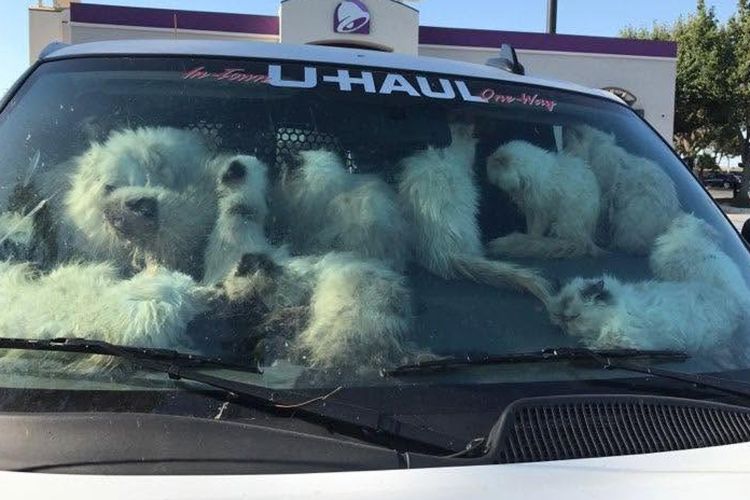
A deputy found the van at 5:30 p.m. on Sunday in Santa Nella, a small town about 40 miles south of Modesto. The cats were stuffed in the U-Haul, which was left in a Taco Bell parking lot, and about 20 of them had taken up spots on the dashboard, center console and driver’s seat.

Jeannie Maxon, a 69-year-old woman from Long Beach, Calif., was charged with 93 counts of animal cruelty.

Maxon is the owner of a cat breeding business called Magicattery, which she’s touted on her personal Facebook page and an Instagram page specifically dedicated to the breeding operation. A separate site on its own domain remained up as of Tuesday evening and says the breeding operation specializes in Persian and Himalayan kittens.

A screenshot of Maxon’s Instagram page for her breeding business.

Many of the cats and kittens are dressed up, wrapped in pearls and ribbons, and posted with accessories in the photographs Maxon shared on social media. Maxon was active on Facebook and Instagram until late 2024, according to her visible public activity on both sites.

It’s not clear why she abandoned the cats. California does not have a state licensing system for breeders, but individual towns and cities may require breeders to obtain a license.

It wasn’t immediately clear if Maxon had retained an attorney.

Merced County Animal Shelter said in a Facebook post that the cats will be put up for adoption once they’re all stabilized and receive proper veterinary care.

The cats were found in extremely poor condition and were described as “severely emaciated” by police. They were abandoned without food or water. Credit: Merced County Sheriff’s Office