‘They’re A Really Dope Companion’: Jordan Poole Is The NBA’s Most Doting Cat Dad

The Washington Wizards’ Jordan Poole loves cats, and he’s showing his fellow NBA players what awesome little buddies they can be.

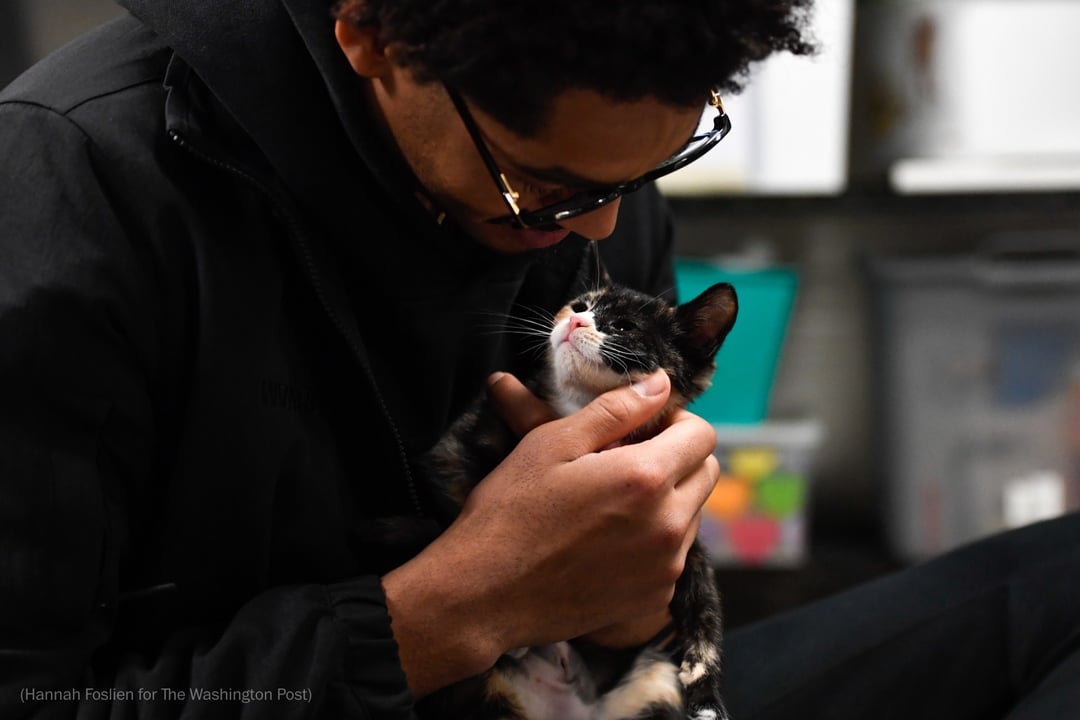
Jordan Poole finds it difficult to leave the Falls Church, Va., animal shelter where he volunteers.

He likes the staff and fellow volunteers, but most of all he hates leaving while knowing the cats he’s interacted with still need homes.

“Every time I come, it’s: ‘Let me leave with all of them! Give me 14 of them right now!’” he joked to the Washington Post’s Candace Buckner, who calls him “the lead crusader of the Secret Society of NBA Cat Dads.”

Some aren’t so secret: teammate Tristan Vukcevic recently adopted a cat after Poole converted him to the dark side, and a coy Poole says he “may have” convinced NBA superstar Stephen Curry to adopt a feline friend.

Poole with one of his tabby cats, brothers he adopted together from a California shelter when he was with the Golden State Warriors. Credit: Jordan Poole/Instagram

In a 2022 profile in The Athletic, Poole’s mother Monet says her son adopted his first cat when he was in high school.

“And when I tell you he fell in love with cats,” she said. “He loves his cats. … And he’s got some pretty cats too.”

When Poole was drafted by the Golden State Warriors in 2019, his cat stayed with his mom back in Michigan because she wouldn’t have adjusted well to the move to the west coast, as well as an empty apartment when Poole was on road trips with the team. Later that year, the then-rookie adopted brother cats who had been abandoned by their former owner.

Since he was traded to the Washington Wizards, Poole has volunteered at a Virginia shelter.

His enthusiasm is one reason why he’s been able to get teammate and friends interested in adopting. The NBA has other notable cat dads, including twins Brook and Robin Lopez, whose cats hilariously can’t stand each other. But Poole takes it to another level.

“A lot of guys are dog people, but just the energy [and] the way I talk about [cats], the pictures and videos and stuff that I show them, it just gives them a little bit more interest,” Poole told the Post. “So I give them a different perspective. Maybe they’re not as much maintenance, but they’re still a really dope companion and friend to have. You don’t have to really take them out three or four times a day. You can still get your rest. Normally [my peers] like to explore it. I’ve had a lot of friends and teammates who are also cat people.”

Former Knicks center Robin Lopez, pictured with his cat Edward, says his brother’s cat is sneaky and evil for attacking Edward: “The second I lay eyes on him, he’ll act like, ‘I’m a cherub. I’m innocent.’ I’m not buying it.”

The 25-year-old Poole is averaging 20.3 points, 4.8 assists, 3.1 rebounds and 1.5 steals per game this season while shooting an excellent .391 on three-point attempts. The 6’4″ guard spent his first four seasons with Golden State before he was traded to Washington.

More Than 400 People Applied To Adopt Foul-Mouthed Parrot

Requirements for adopting Pepper included a sense of humor and experience caring for birds. He’s now found a home with patient caretakers and another mercurial parrot to hang out with.

It’s too bad cats can’t swear.

While kittens don’t often have problems finding homes due to their overwhelming cuteness and antics, it usually takes a sad story to drum up considerable interest when an adult feline is up for adoption.

As the SPCA of Niagara learned, talkative parrots, especially birds who can swear up a storm, have their pick of homes.

In June, a potty-mouthed parrot named Pepper was surrendered to the shelter, and when the SPCA put the call out — specifying they’d prefer someone with experience caring for birds and a sense of humor — the applications kept rolling in, totaling more than 400.

“His famous line is ‘Do you want me to kick your ass?'” a shelter employee said in an interview last month shortly after announcing Pepper was up for adoption.

Shelter staff asked applicants to include photos of their bird enclosures in addition to the usual pre-adoption questions, eventually narrowing the Pepper Sweepstakes down to 10 potential homes.

This past week, Pepper was finally taken to his new abode in Olean, a small city in western New York. The couple who adopted him are not only experienced with birds, they know all about avian vulgarity. They have a parrot named Shelby who apparently “makes Pepper look like a saint.”

As for Pepper, it looks like he’s getting his bearings before heaping abuse on his new caretakers.

“He hasn’t cursed at them yet, but we know it’s coming,” shelter staff wrote in an update.

In recent decades, research has shown birds can be exceptionally intelligent. Crows, for example, use tools, can differentiate between human faces, and remember which humans have wronged them or treated them well.

While many people assumed parrots merely imitate human language, long term behavioral studies show the birds are able to use words in context and invent novel combinations of words. As with other animals, syntax remains elusive.

The most famous example was Alex the African Gray, who was the subject of research by animal cognition expert Dr. Irene Pepperberg. Alex, who died in 2007 at the age of 31, was able to count and could perform simple calculations. He was talkative, conversant and often told his caretakers how he was feeling, what he wanted, and what he thought of the tests they’d give him. (Like a child, Alex would try to get out of exercises he was bored with by asking for water, saying he was tired and wanted a nap, or just flubbing his answers.)

We are not above crude humor here at PITB, and in the past we’ve written about Ruby, our favorite talking parrot. Ruby lives in the UK with her owner, Nick Chapman, and the pair were among the very earliest Youtube stars thanks to videos of Ruby’s shockingly vulgar, extremely British tirades and Chapman’s infectious laugh.

Warning for those who are offended by bad language or are viewing at work: Ruby is known for liberal use of c-bombs-, t-bombs, f-bombs and just about every other linguistic bomb you can think of, in addition to British slang like “bollocks.” If that’s a problem for you, skip this video.

Eric the Legend, a parrot who lives in Australia, is also a favorite on Youtube for his habit of declaring himself “a fookin’ legend!

We’re glad Pepper has found a home where his idiosyncratic nature will be cherished, and we hope the future will bring videos of Pepper and Shelby going back and forth. Parrots are social animals, after all, and what fun are insults if you’ve got no one to trade them with?

Top image of Pepper courtesy of Niagara SPCA.

Scarlett The Cat Walked Through Flames Five Times To Save Her Kittens

When the abandoned garage she was sheltering in caught fire on a cold day in 1996, Scarlett the cat was determined to get all five of her babies to safety.

The night of March 30, 1996, was unseasonably cold, and as temperatures dipped below freezing, a young cat and her litter of five found shelter in an abandoned garage in Brooklyn.

Unfortunately for them a few humans had the same idea, huddling for warmth in the garage as they smoked crack.

Prodigy’s “Firestarter” was at the top of the charts at the time, an apt soundtrack for what would happen next — the crack-addled humans started a fire that spread quickly and took the young feline mother by surprise.

That momma, who would later be named Scarlett, scooped up one of her kittens and brought it to safety before immediately heading for the flames again.

Scarlett and her babies
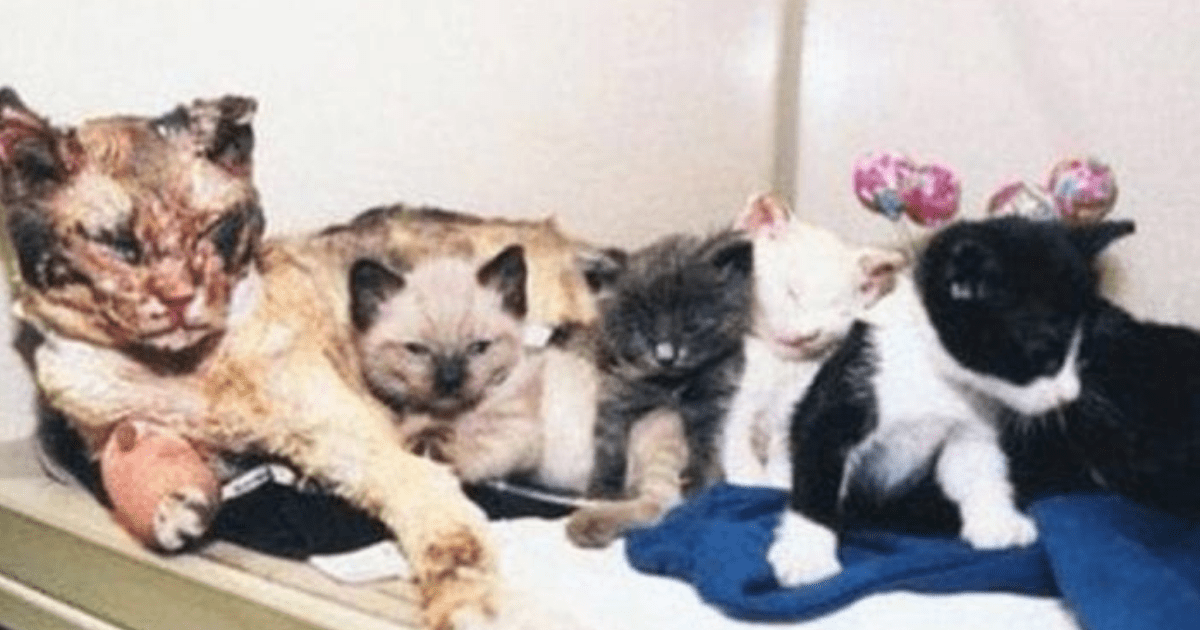
Scarlett, badly burned and bandaged, with her kittens at the North Shore Animal League. Credit: North Shore Animal League

FDNY firefighter David Giannelli was among the first responders at the engulfed garage and realized the small calico was rescuing her babies, running back into the flames to carry them out one by one.

When Scarlett had retrieved the last kitten, Giannelli watched her as she nuzzled all five of them to count them because she could no longer see — her eyes were sealed with burns and blisters.

Satisfied that her kittens were out of harm’s way, Scarlett collapsed.

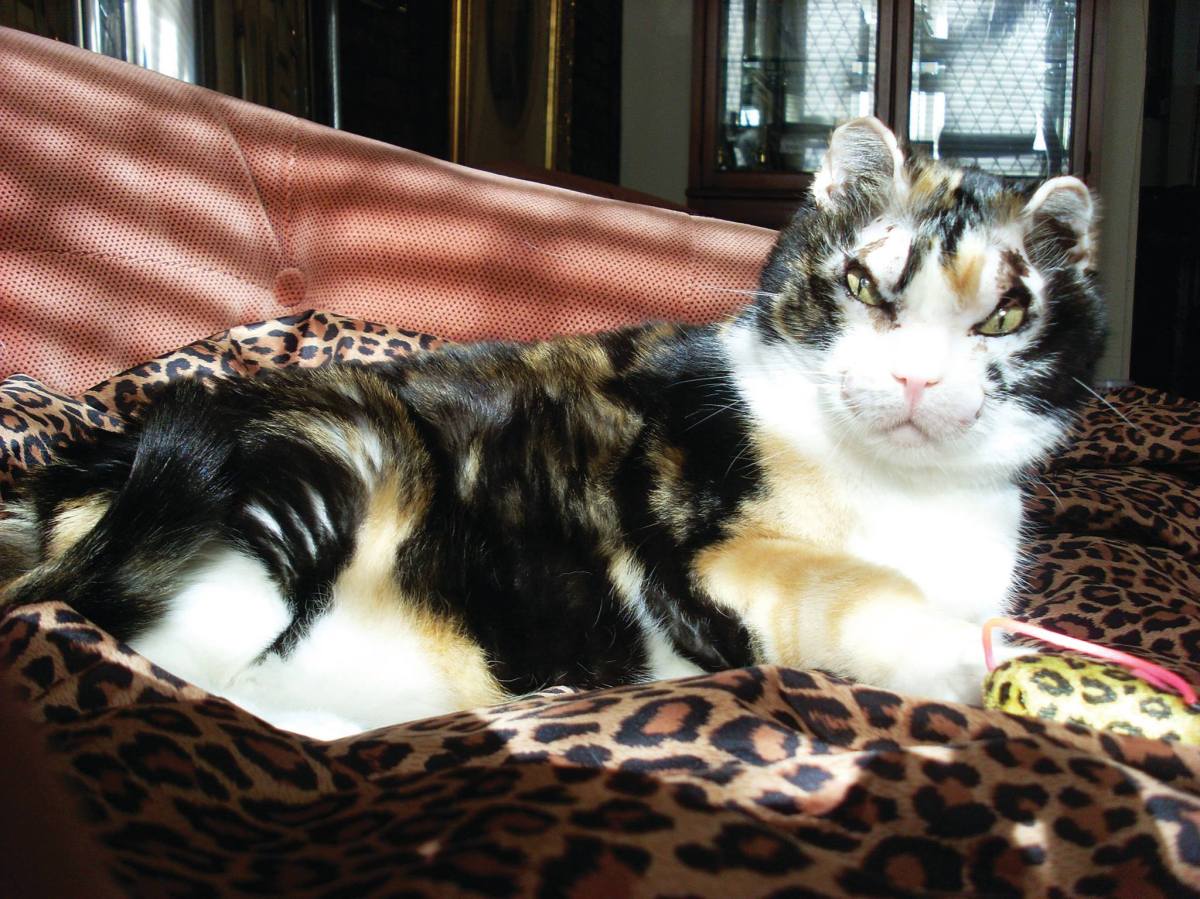
She paid a heavy toll for her actions. Her whiskers and the fur on her face was singed off, her ears were disfigured and she nearly died from smoke inhalation.

Giannelli brought the unconscious cat and her babies to New York’s North Shore Animal League, where veterinarians saved her life and put her on a path to recovery while also housing her with her beloved kittens.

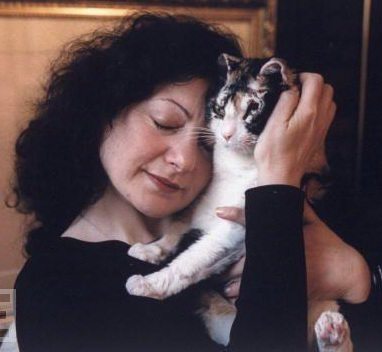
Four of Scarlett’s kittens survived and were adopted out in pairs. Scarlett herself was adopted by New Yorker Karen Wellen, who was chosen out of thousands of applicants who wrote to the shelter. Wellen, who had suffered a medical emergency of her own, was specifically looking to adopt a special needs cat.

Scarlett’s kittens went to nearby families, who kept in touch with Wellen and scheduled reunions between her and the kittens she risked her life for.

“This cat is definitely the queen of the house,” Wellen told a TV news crew during a segment about Scarlett in the late 90s. “Whatever she wants is hers.”

Scarlett was a house cat for the rest of her life, living comfortably until she passed away on Oct. 11, 2008, at 13 years old.

Wellen and Scarlett
Wellen with Scarlett.

Little Scarlett’s story is not only an example of extraordinary bravery, it’s testament to how much mother cats love their kittens and should give us pause before we separate mothers from their babies too early. The absolute minimum is eight weeks, but many shelters will only allow kittens to go home with adopters at 12 weeks old or older, which they say gives them enough time with their mothers and siblings to learn crucial social skills, like sharing, not playing too rough, and proper self-grooming.

In recent years, many shelters and rescues have enacted policies of requiring that kittens are adopted in pairs. Even when they’ve got loving homes with humans who dote on them and provide them with plenty of attention, having another kitten around to grow with and learn from has a huge positive effect on a young cat’s development.

Buddy’s my first cat, as regular readers of PITB know, and if I could do it all over again, I’d have adopted one of his litter mates too. And who knows? Maybe in the future we’ll learn that keeping feline families together is optimal. Scarlett is testament to the fact that mother cats will sacrifice their own lives to save their babies. If that’s not love, what is?

After Nine Years In A Shelter, Barney Gets A Family And A Home Of His Own

Meet Barney the cat, who waited NINE years for his forever home. PLUS: Buddy’s no longer chubby.

Barney goes home

Meet Barney, who finally has a forever home after nine years living in a shelter:

barneycat2

I’ve got a bias toward silver tabbies obviously, but look at this little guy! He’s handsome, he’s got bright green eyes and I’ve no doubt he’s got a ton of love to give to his new people.

The question is: Why did it take nine years for him to get adopted? It’s deeply unfair and depressing, although the people at Iowa’s Emmett County Animal Shelter deserve credit for never giving up on him.

Barney was born at the shelter and was passed over every time potential adopters came in to look at cats, shelter staff told the Des Moines Register. When someone posted a photo of Barney to Reddit along with a short note about his predicament, Amanda Scherer drove six hours to adopt him, telling the Register “I really wanted to give him a home.”

Social media has become an invaluable tool for shelters looking to place cats and dogs in homes, and there are two common denominators to the success stories: a great photo that capture’s the pet’s personality and a backstory. The more the story tugs at the heartstrings, the better.

No judgments here, but I wish people who are inclined to buy cats and dogs would think of all the Barneys out there who need homes. Some 1.5 million of them are killed every year because the demand for homes is greater than the demand for shelter pets. That’s a significant improvement over decades past thanks to relentless efforts to get animals spayed and neutered, but we can do better.

Bud’s looking ripped

Buddy’s been on a diet since early this summer, necessitated by my poor job of learning to say no when he screeches for snacks, which is approximately all the time.

It hasn’t been easy for either of us: He wants his treats and I desperately want him to stop meowing for them, but after three months I’ve really noticed a difference. He’s much trimmer these days and he’s mostly learned to be satisfied with smaller treat portions at longer intervals, so it’s been worth it.

Now all I have to do is avoid lapsing into being his human snack dispenser again and avoid using treats as a lazy way to get him to do things he doesn’t want to do. Like, for example, giving me a few minutes of meow-free peace when I’m trying to focus on writing. (The only time he stops trilling, chirping and meowing is when he’s eating or napping.)

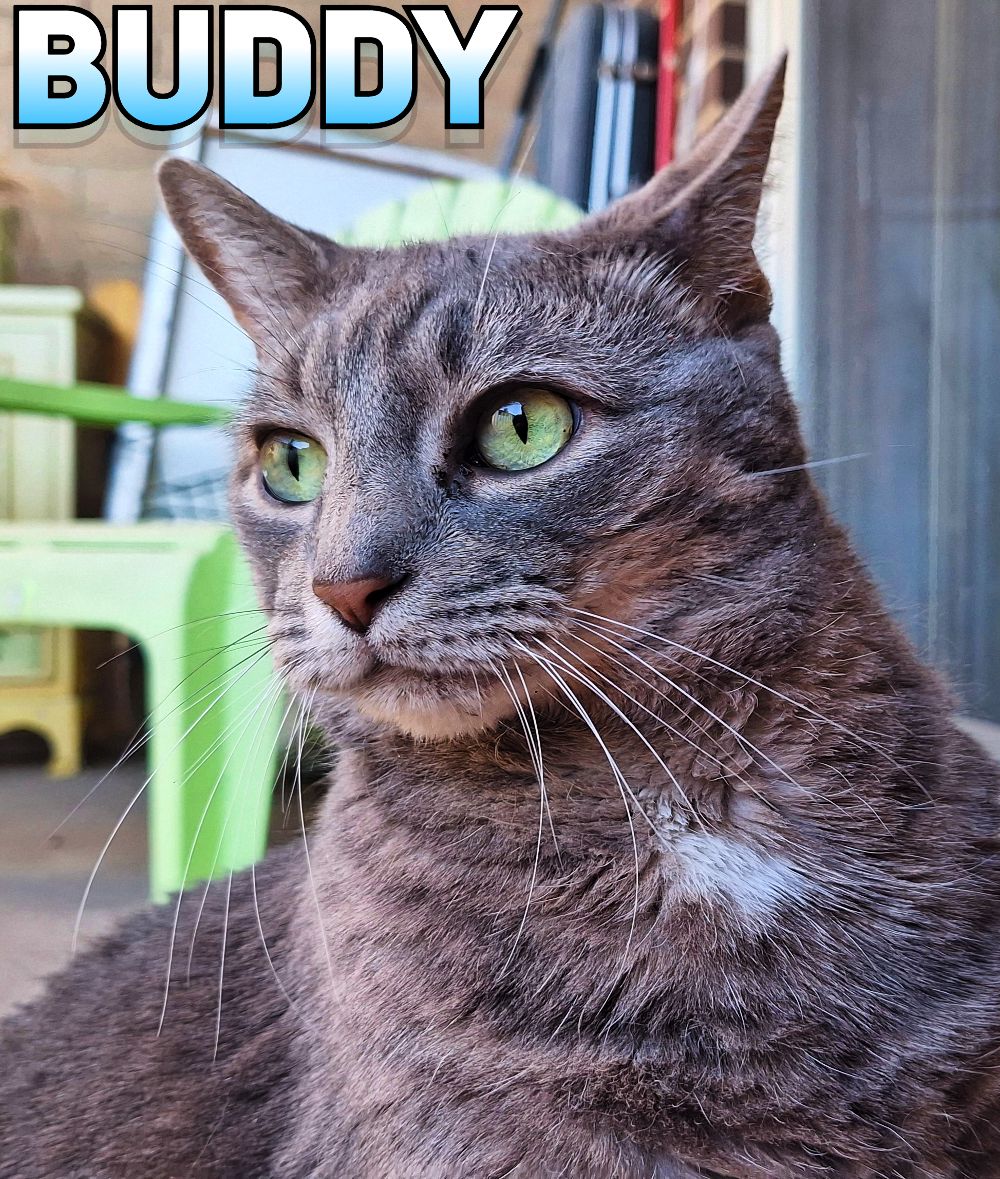
I’ll get a good full shot of my feline overlord so you can see how ripped he’s looking, but in the meantime here’s a photo I took this week on the balcony, where Bud likes to lounge in the summer. There are no color filters or any other edits except a simple crop and a shadow/highlight adjustment, and you can see his “terracotta nose” and just how bright and green his eyes are in natural outdoor light:

buddybalcony

Although there are no filters, I should note here that I took this photo with my new Samsung, and Galaxy phones are known for their saturated colors. My previous phone was a Google Pixel which often resulted in the opposite effect, with photos looking sapped of color in some lighting conditions. Still, the Galaxy’s photos are much closer to what I see with my own eyes when little man is playing outside.

P.S. Thank you to the reader who dubbed Bud “terracotta nose” a while back. I’m sorry, I can’t remember who bestowed him with that nickname, but I love it.

Little Buddy And Big Buddy: The Buddies

Human and cat, best buddies.

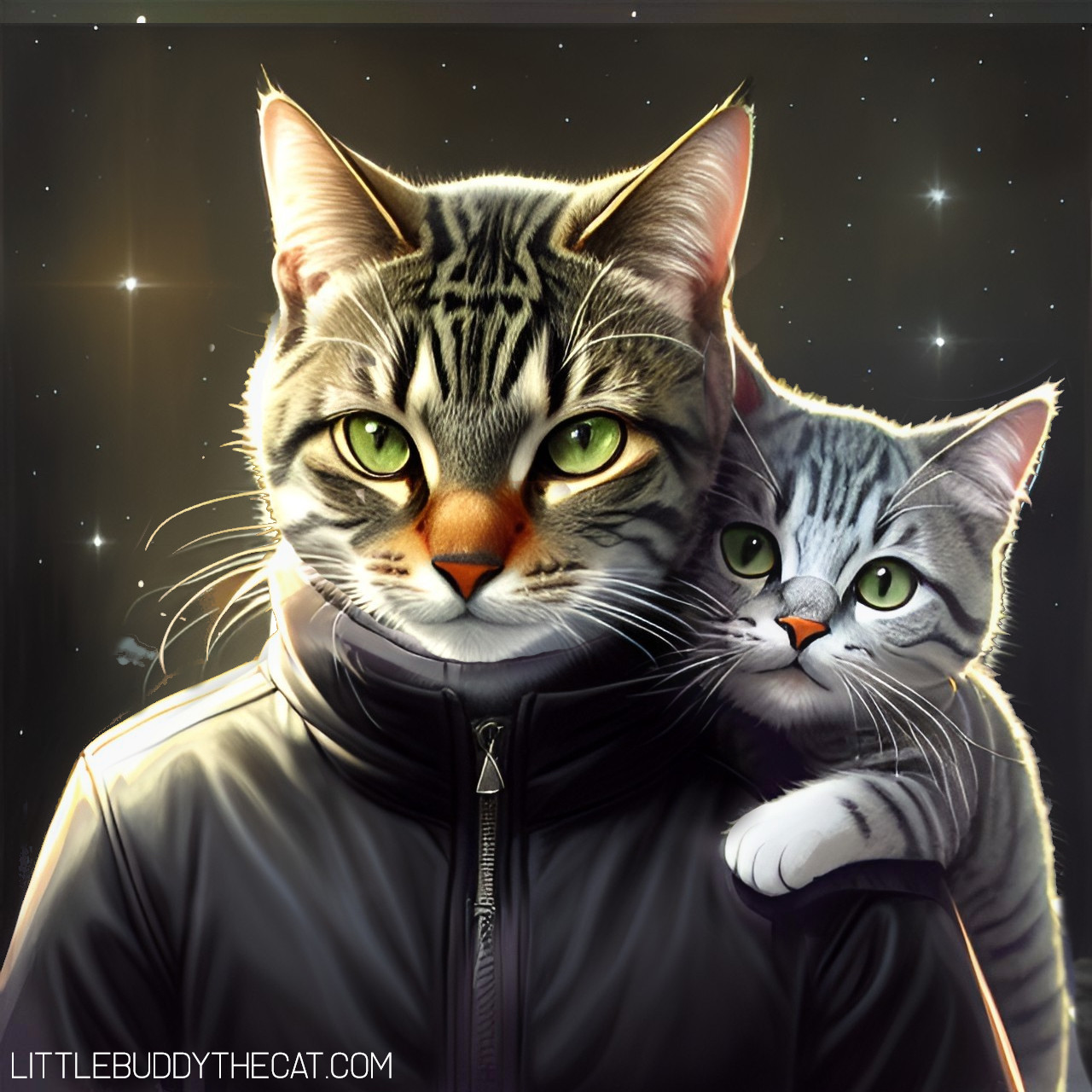
To celebrate my birthday and Bud’s adoptaversary, the little guy commissioned a portrait of us together. As many of you know, cats think of us as big, slow cats, which is reflected in the resulting painting. I present to you “Buddies: Airbrush on canvas”:

thebuddies_tagged

There is a slight inaccuracy, of course: I have gray eyes, not green. If I’m portrayed as a cat, I should probably be an orange tabby as well. And finally, little Buddy should be much more muscular. Perhaps he’s meant to be a kitten in this painting as he was more of a shoulder cat when he was tiny. Other than that, seems pretty accurate!

In truth we don’t really know exactly how cats view us.

We know there’s a parental element, that house cats retain kitten-like qualities for life as they remain in our care. The meow is probably the best example of that, since it mirrors the vocalizations kittens make to their mothers.

We know house cats depend on us physically, psychologically and emotionally. In recent years behavioral scientists have taken studies originally designed for children and modified them for cats, yielding interesting results: House cats who are bonded to their humans behave in ways startlingly similar to humans children.

When we form bonds with them, they draw comfort from our presence and look to us for behavioral cues to determine how they should respond to situations and objects that are new and potentially frightening. Just like kids, cats look to us, and just like kids, they stay calm if we do.

When you treat a cat well, kitty returns that love, trying to comfort you when you’re sick, refusing to leave your side, alerting you to potential trouble.

Bud is super friendly, but he isn’t the cuddliest cat out there. He doesn’t like being hugged or picked up, but he knows that when he pads up to me while purring and sits on my chest or in my lap, I’m never going to force him to stay or subject him to pets he doesn’t want. That’s why he approaches me often and why he feels so relaxed.

It’s probably also why he often wakes me up, purring like an engine, looking for a chin scratch and affirmation that he is indeed a good boy.

Perhaps the biggest complements are Bud grooming my hair and beard, and sleeping on me.

There’s no greater expression of trust between a feline and human than when a cat falls sleep in your lap. Cats are never more vulnerable than when they’re asleep, and sleeping in your lap means your four legged friend feels safe with you and trusts you completely.