For All Mankind May Be TV’s Best Show Right Now

For All Mankind shows us the future we could have had and the future that could still be if we celebrate our humanity instead of our differences.

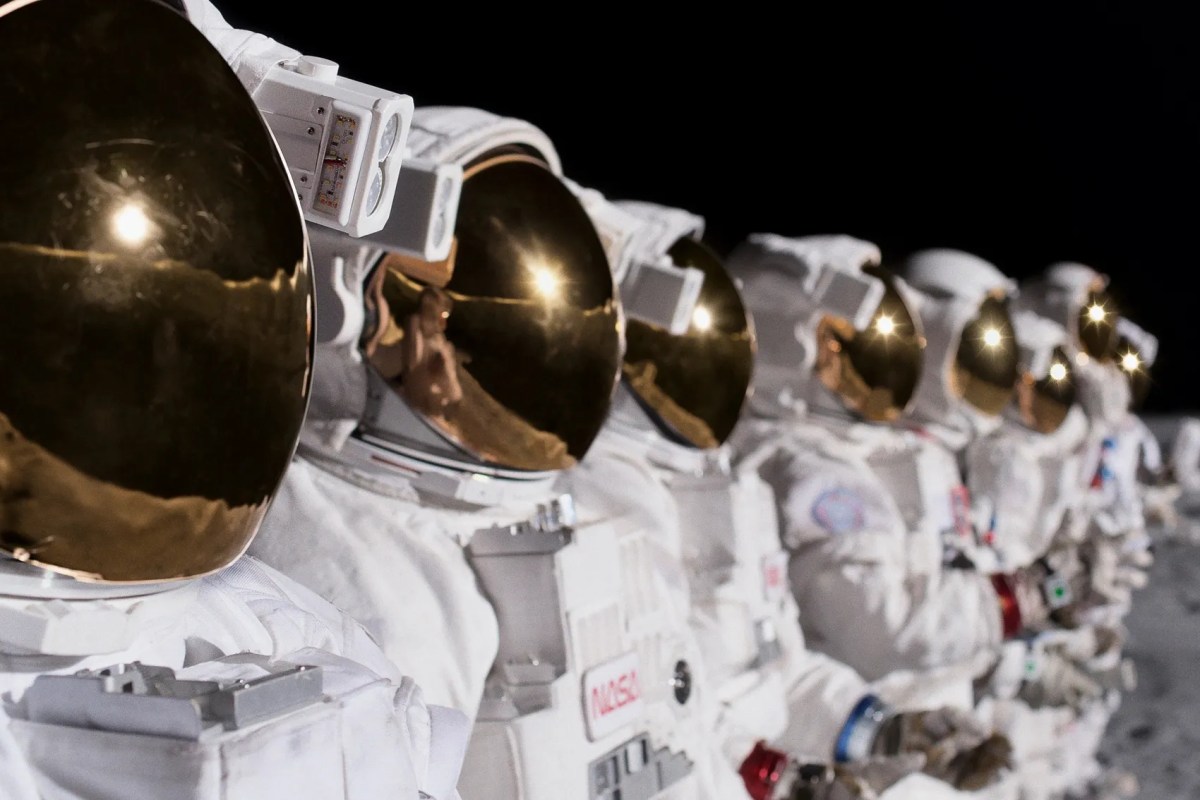
The first few minutes of For All Mankind play out like a documentary for the Apollo moon landing, interspersing archival footage of tense staff in mission control with shots of engineers in horn-rimmed glasses poring over data, backup astronauts raising their glasses in a pub and nervous families sitting in their 1960s living rooms, crowding around televisions.

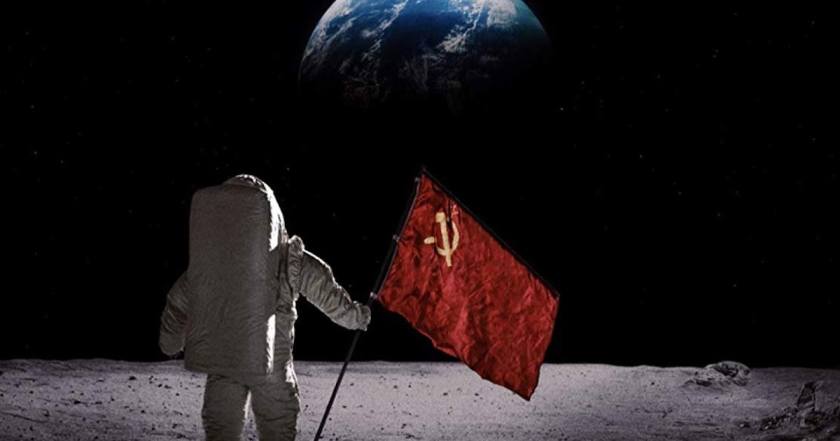
A news anchor cuts in to report he’s getting the live feed from the moon. We see the door of a lander open…and a Soviet cosmonaut strides out, planting the flag of the USSR on the lunar surface and becoming the first human to ever set foot on another world.

fam_sovietlanding

That’s the premise of For All Mankind. In this alternate history series, the fire that killed astronauts Virgil Grissom, Edward White and Roger Chaffee on Apollo I’s launchpad — which indeed happened in real life — led to policy changes and a more cautious culture at America’s space agency, resulting in the US losing the first and most momentous achievement of the space race.

That’s the start of the what-ifs.

What if the Soviets beat us to the moon? What if the rest of the space race was even more competitive than it was in our history, with an America struggling to prove its primacy? What if the US and Soviet Russia continued to pour incredible resources into space exploration? How far would we go? What kind of incredible new technologies would we invent? How would all of it impact American politics, culture, identity and standing in the world?

Could it have led to a better future?

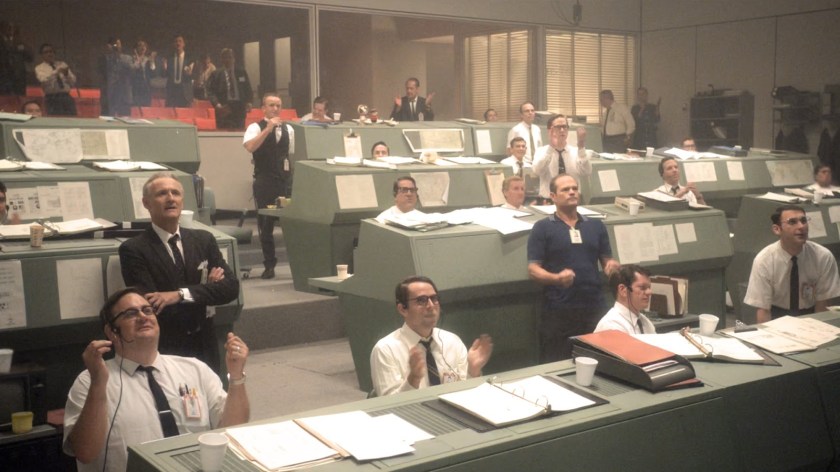
fam_missioncontrol
Werner Von Braun (Colm Feore) and Deke Slayton (Chris Bauer) in NASA mission control in For All Mankind. Von Braun and Slayton were real-life leaders at the space agency and formative figures in the space race.

The answer to that question is hinted at in the series’ title, and while the show is filled with tense moments of international, organizational and personal rivalry, it’s infused with rational optimism instead of the cheesy, manufactured aspiration we’re accustomed to. It’s more like asking: What could the human race achieve if we all worked together? Is that retrofuturistic gleaming vision of the future still possible, and how do we get there?

For All Mankind follows Ed Baldwin (Joel Kinnaman) and Gordo Stevens (Michael Dorman), astronauts and best friends whose Apollo mission came within a few thousand feet of landing on the moon just weeks before the Russian landing.

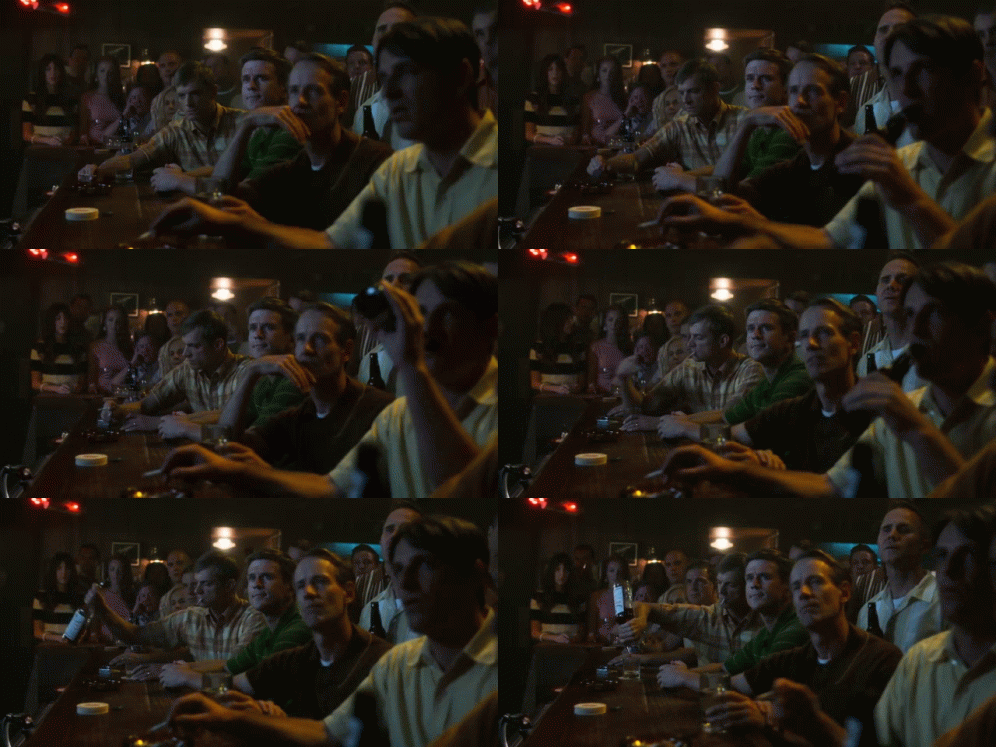
They’re miserable as they sit in a dive bar just off NASA’s campus watching grainy footage of cosmonauts claim their glory, and blame themselves for their failure to land even though it wasn’t in NASA’s cautious mission plan.

for-all-mankind-drink
Astronauts watch the Soviet moon landing from The Outpost, a dive bar frequented by NASA employees.

The scenes that follow look like they could have come from the 1995 blockbuster Apollo 13 as we meet the astronauts, their kids and their nervous wives, the eggheads and flight directors at NASA, and the political players who keep the space agency funded and protected from the wrath of President Richard Nixon.

With the agency rocked by the Soviet achievement and intense political pressure, it embarks on a series of bold new endeavors dictated by the White House. Not only will Americans land on the moon, they will build a permanent base there, and — embarrassed and spurred on by the fact that one of the cosmonauts was female — NASA will for the first time train a new, all-female class of astronaut recruits

The later group includes hotshot pilot Molly Cobb, “token black girl” Danielle Poole, quiet but determined Ellen Waverly — and Tracy Stevens, astronaut Gordo Stevens’ beautiful wife who is an accomplished pilot in her own right. While the women manage the normal pressure that comes with astronaut training and the high stakes nature of the job, they must also contend with pushback coming from directions they don’t expect — including hostility from some of the wives of current astronauts, who feel their husbands’ jobs will be threatened by women in space.

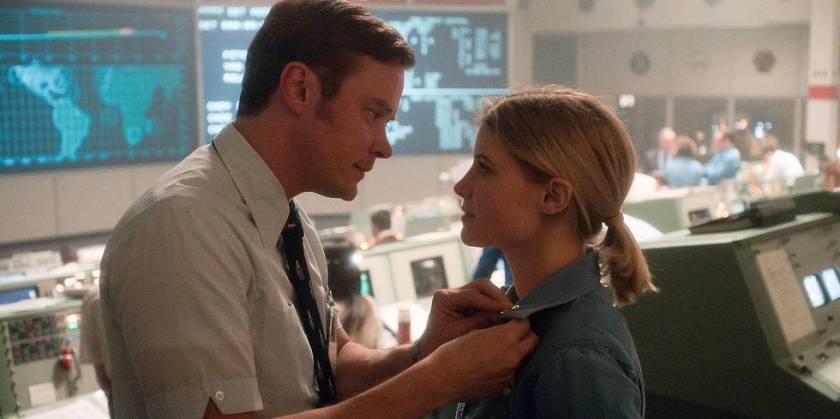
Gordo and Tracy
A proud Gordo gives his wife her astronaut pin.
Women of For All Mankind
Ellen Waverly, Molly Cobb, Tracy Stevens, Danielle Poole and another recruit are part of NASA’s first class of potential female astronauts.

For All Mankind is a science fiction show, but it’s also a drama and a thriller, putting viewers through the wringer of emotions.

There are funny and amusing moments as the show references celebrities, political figures and musicians from the 1960s onward, grounding the narrative in American culture. The fortunes of some celebrities and politicians change in the show’s alternate history while others stay the same.

In one running storyline — which you’ll only catch if you pay close attention to certain scenes and montages — John Lennon survives the attempt on his life, continues on as the grating, post-Beatles John Lennon most people would like to forget, and becomes just another aging musician cashing in on past glory alongside bandmate Paul McCartney and bands like the Rolling Stones.

The extension of the space race and continuation of US-Soviet rivalry impacts society in profound ways, many of them we may not realize from our historical perspective.

For example, DARPA created the internet because the US government and military wanted a decentralized communications network that could withstand nuclear attacks and remain operational even if major nodes are taken out in nuclear blasts.

That’s why the internet works on such a wide variety of hardware and why, even when major servers go down, our routers are able to move data packets via alternate paths. It’s difficult to imagine a time when the web wasn’t a medium for exchanging photos and videos of cute cats, but the early internet was populated by government officials, Pentagon brass and leading scientists in crucial fields.

In real life, restrictions were taken off the internet when the Soviet threat began to fade, allowing widespread civilian adoption of the technology and early dial-up services like AOL and CompuServe.

That doesn’t happen in For All Mankind’s alternate history as the USSR and communism remains a major threat, resulting in pop culture developing along a different cultural arc than the one we’re accustomed to.

While the pop culture references, sets, cars and costumes help ground For All Mankind historically, the show is at its best when it puts us in mission control and the command modules of high-risk space missions, constantly reminding us of the danger these men and women face while highlighting the commonality of astronauts, cosmonauts and later space explorers from other countries, all of them just human beings millions of miles from their families and everything they’ve ever known.

At the same time, the US and the USSR are playing a game of nuclear brinkmanship and astronauts are in many ways on the front lines as they figure out how to co-exist in unprecedented circumstances and places famously inhospitable to human life.

If astronauts tap a lunar mine too close to Soviet base camp, could that start a war? Are the Soviets spying on communications between NASA and its astronauts on the moon? What happens if someone gets hurt and their blood can’t clot in low/zero gravity?

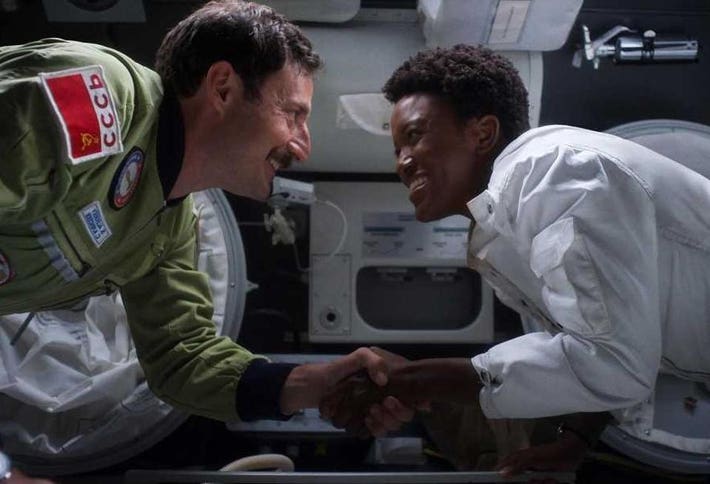
Handshake in space
NASA astronaut Danielle Poole shakes the hand of her Soviet counterpart as their modules dock in space.

Kinnaman, Dorman, Sarah Jones (Tracy Stevens), Sonya Walger (Cobb) et al shine in those scenes as they juggle the pressure of surviving in space with being exemplars of — and diplomats for — their country. Rather than be content painting the Soviets as the traditional bad guys, the show also gives us a close-up look at the people in the USSR’s space program and the pressures they face, particularly Polish actor Piotr Aleksander Adamczyk’s Sergei Nikulov in his relationship with his NASA counterpart, flight director Margo Madison.

In one of the show’s quieter moments, Poole (Krys Marshall) takes two cosmonauts to The Outpost when, during joint training exercises, they request real American cheeseburgers and whiskey. After a few drinks one of the cosmonauts grows somber and tells Poole how he held Laika, the Moscow street dog who was famously blasted into low Earth orbit in her own little module, before scientists were sure enough in the technology to risk human lives.

Although Soviet propaganda feted Laika as a hero and the official story said she survived until re-entry, the cosmonaut tells Poole that Laika died shortly after liftoff, terrified, alone and subjected to unimaginable forces as thousands of pounds of fuel carried her capsule heavenward via brute force.

(The west was no less barbaric: The French famously sent a street cat named Felicette into space while NASA used a young chimp named Ham. In all of those cases the animals were named only after their missions, as mission commanders didn’t want to risk humanizing them in the event of disaster. Had Felicette and Ham both died in space they’d be remembered only by their identification numbers as footnotes in early space history.)

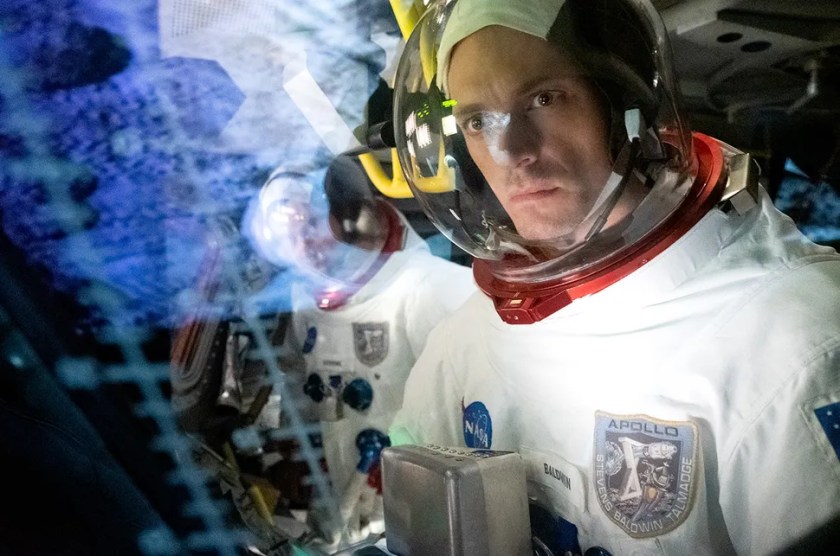
Ed Baldwin NASA commander
Kinnaman grounds the show as Ed Baldwin, one of the second generation of astronauts who take the mantle from men like Neil Armstrong and Buzz Aldrin.

For All Mankind recently began its fourth season and because AppleTV’s marketing and promotion is curiously weak, it remains one of TV’s best-kept secrets. If you haven’t seen the show yet, now’s a great time to jump aboard with so many TV shows on hiatus for the holidays and many others pushed back or canceled in the wake of the parallel strikes that halted production for most of 2023.

For All Mankind

Network: Apple TV

Content rating: TV-MA for bad language, occasional drug and alcohol use and mature themes.

Ratings: 8.1 (IMDB), 93% (Rotten Tomatoes), 4/5 (Common Sense Media)

Seasons: 4 (current)

PITB verdict: 4 Paws!

Happy Festivus 2022!

A Festivus for the rest of us who reject the relentless commercialization of the holidays.

Are you fed up with the relentless commercialization of the holiday season? Take heart: You’re not alone!

The late Jerry Stiller, in his iconic role as Seinfeld‘s Frank Costanza, explained the origin of his anti-consumerist celebration in a now-infamous 1997 episode titled “The Strike“:

“Many Christmases ago I went to buy a doll for my son. I reached for the last one they had, but so did another man. As I rained blows upon him, I realized there had to be another way … Out of that, a new holiday was born. A Festivus for the rest of us!”

On the surface Festivus  — celebrated annually on Dec. 23 — looks like any other family gathering for the holidays, but the details make it special. They include a Festivus pole instead of a tree, the Feats of Strength — in which a younger relative attempts to pin the family patriarch — and the Airing of Grievances:

“At the Festivus dinner, you gather your family around, and you tell them all the ways they have disappointed you over the past year,” Frank explains.

Festivus is completely absurd, which is what makes it fun, but it’s also a strong reaction against the all-encompassing commercialization of the holiday season. Every year it seems like the retail industry nudges the season a little further back. At first it was a few weeks, then the end of Thanksgiving marked the beginning of the holidays.

Now it’s not unusual to see lights, wreaths and images of Santa popping up in early November, setting the tone for more sales, more gifts, and more spending.

Of course if you’re reading this site, you’re a cat lover and you’re probably intimately familiar with the non-stop meowing of a dissatisfied cat. Not enough food, not enough snacks, not enough space on the bed, not enough scritches. To a cat, the Airing of Grievances can take place on any day of the year — and it often does. But that doesn’t mean there can’t be a special edition of it on Festivus.

Now if you’ll excuse me, it’s time for me to sit down to the Festivus table and get berated by Bud. I’m told his list of grievances is quite long this year.

Happy Festivus!

PITB Reviews: ‘The Peripheral’ Is A Refreshingly Original Science Fiction Thriller

Amazon’s newest streaming hit is heady, fast-moving and a lot of fun. There’s nothing else on TV like it.

Amazon’s newest big-budget prestige drama, The Peripheral, imagines a near future when technology has become even more deeply embedded in every day life.

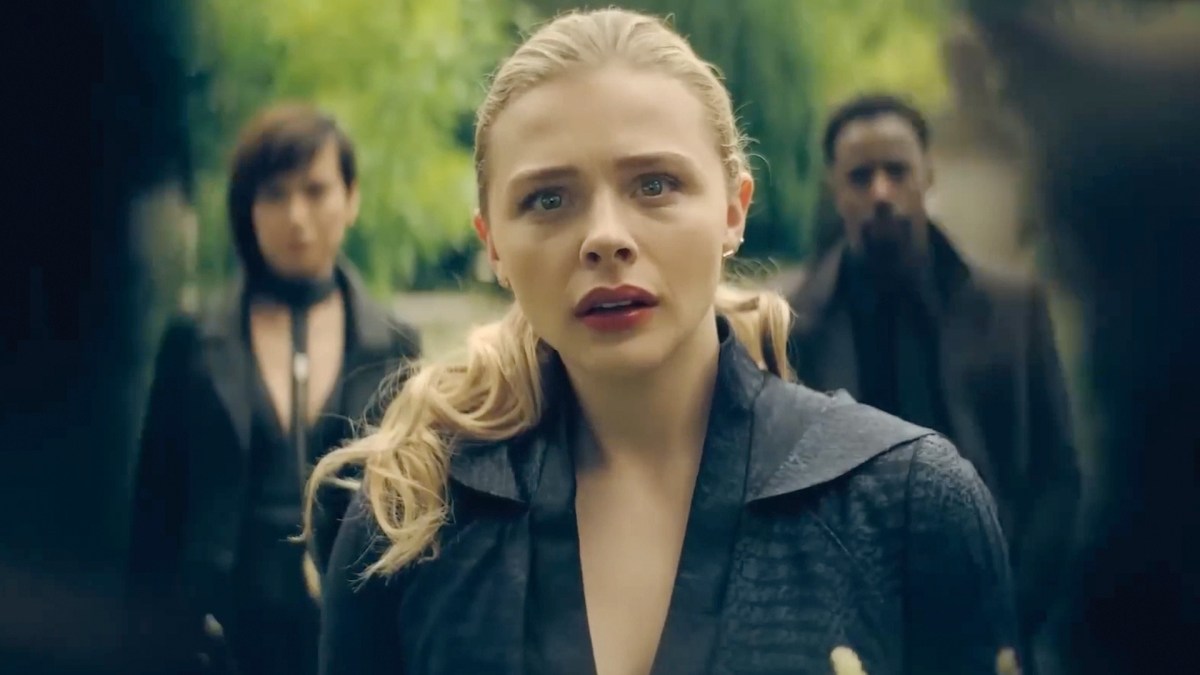
Flynne Fisher (Chloe Grace Moretz) is a young woman who lives in North Carolina’s rural Blue Ridge Mountains, works in a 3D print shop by day and plays virtual reality games by night.

The story is set a decade from now in 2032, and while Flynne’s brother, Burton (Jack Reynor), plays startlingly realistic VR games for fun, Flynne plays them for money. Although Burton is a former United States Marine Corps infantryman and war veteran, his sister is the superior player when it comes to video games, and she’s so good that well-heeled players across the world pay her to carry them through high-difficulty levels.

If that seems fanciful, consider that it already happens in real life: some people fork over big bucks to highly skilled players who can help them win in multiplayer video games like Fortnite, or run them through the most challenging missions in online role playing games to get coveted in-game gear.

Flynne’s side hustle allows her to afford expensive medication for her sickly mother. Apparently in 2032, Democrats and Republicans are still squabbling over how to pass meaningful prescription drug reforms while remaining in the good graces of the corporate behemoths who finance their campaigns. Some things never change.

When a Colombian company called Milagros Coldiron offers Flynne a hefty chunk of change to beta test their newest game — and the incredibly immersive new headset it comes with — Flynne thinks she’s just taking a lucrative but routine job, one that will help pay for her mom’s meds for at least a few weeks.

What she doesn’t know is that her life is going to change drastically the moment she steps into the newest form of virtual reality, revealing things about her world and herself that she never imagined.

The Peripheral
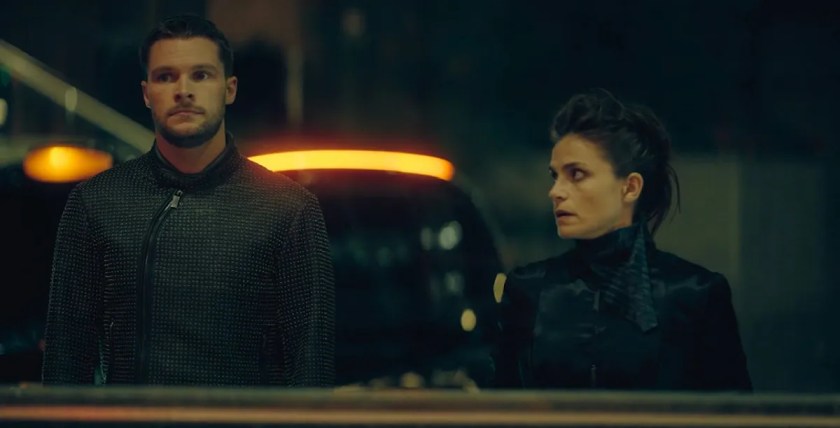
Jack Reynor as Burton Fisher and Charlotte Riley as Aelita West in The Peripheral.

There’s so much more to the story, and in fact we’ve barely scratched the surface, but The Peripheral is the kind of show best appreciated by knowing as little as possible going in.

The ambitious new series is based on a 2014 novel by technoprophet William Gibson of Neuromancer fame. Gibson envisioned the concept of cyberspace in 1981, more than a decade before the first mass market commercial dial-up services were available.

At the time, the idea of exploring almost photorealistic worlds in virtual reality was a radical new idea, and it took more than 35 years for technology to catch up by making it feasible. (We’re still not quite there yet. VR tech has improved by leaps and bounds, and we’re beginning to see the first deeply immersive VR games, but Mark Zuckerberg’s much-hyped version of the metaverse, for example, has fallen flat and been pilloried by press and players alike.)

By choosing to adapt Gibson’s work, Amazon has dipped into the largely untouched world of literary science fiction.

While the science fiction of movies and TV has been treading the same worn ground and returning to the same tired concepts for decades, SF novels are a rich source of astonishingly inventive big ideas, from the existential stories of Liu Cixin (The Three Body Problem) to the galaxy-spanning space opera of the late, great Iain M. Banks, to the gothic horror-tinged, wildly imaginative universe of Revelation Space by Welsh astrophysicist Alastair Reynolds.

Indeed, Netflix is developing a series based on The Three Body Problem, with Game of Thrones showrunners David Benioff and D.B. Weiss taking the helm. Amazon has acquired the rights to Banks’ first Culture novel, and Netflix’s highly-praised anthology series Love, Death + Robots adapted two of Reynolds’ short stories as episodes.

Finally we’ve moved beyond the Alien clones, Star Wars sequels, prequels, spinoffs and crossovers, as well as the unfulfilling JJ Abrams mystery box offerings that have made up the bulk of live action science fiction on the big and small screens.

There are no candy-colored light swords in The Peripheral, nor are there spandex-clad superheroes or franchise installments designed with merchandise sales in mind. Instead, we get a story for adults, one that gives the audience a lot to think about while also holding a mirror up to our own world, as the best science fiction always does.

After all, technology changes but people don’t. Human nature is a constant. What we do with our shiny new toys says a lot about us as a species and civilization.

Although The Peripheral begins with the comparatively low-stakes world of virtual reality, its scope rapidly expands until, by the end of the first episode, it becomes clear the show is asking its audience to grapple with existential questions about humanity and our future.

The Peripheral demands its audience’s full attention as it introduces concepts like the parallel universes of M-theory, nanotechnology and the idea that even if matter can’t be shifted between time and space, information in the form of photons can.

Gibson uses these heady concepts in his narrative sandbox, forcing his characters to consider wild concepts like the possibility that there may be infinite versions of themselves existing in infinite branching realities.

How would you react knowing there’s a version of yourself who chose to study classical literature and move to Athens, or a version who became a software programmer, authored a lucrative app and lives in a Manhattan penthouse? Can you imagine having a different wife or husband, or a different child? (Are there realities in which I am not the loyal and loving servant of Buddy? In that case, who is feeding him snacks, and are they doing it promptly?)

Cherise Nuland
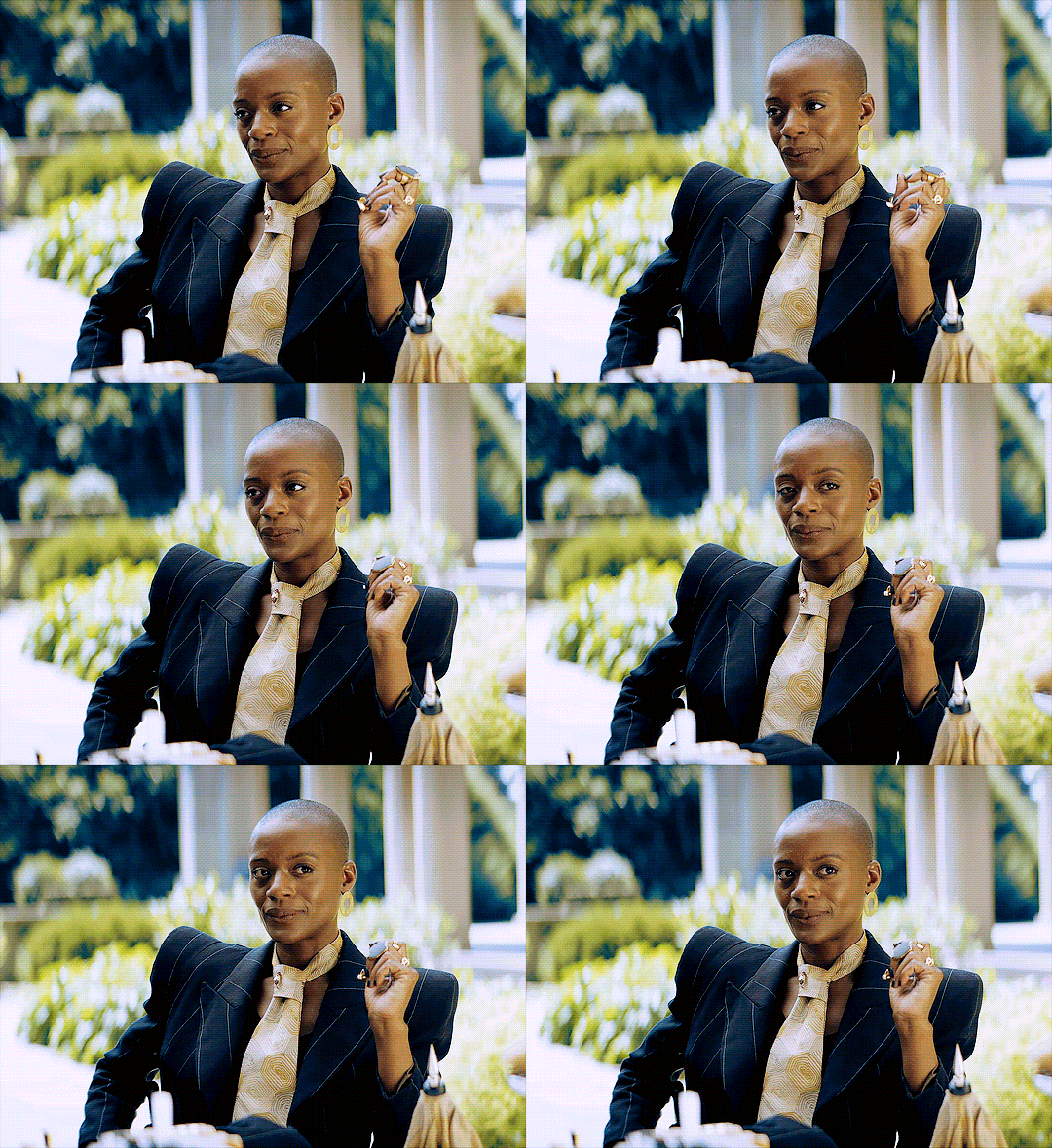
T’Nia Miller radiates malice as Cherise Nuland.

Of course, none of this stuff would matter without interesting characters and a compelling narrative. Moretz and Reynor have the chemistry of a real brother and sister in the way they regularly bicker but ultimately love each other. Eli Goree’s Connor is a man of wonderful paradoxes, and T’Nia Miller steals every scene she’s in as the delightfully malicious Cherise Nuland, an antagonist who loves making her enemies squirm while dispensing witticisms in cut glass RP.

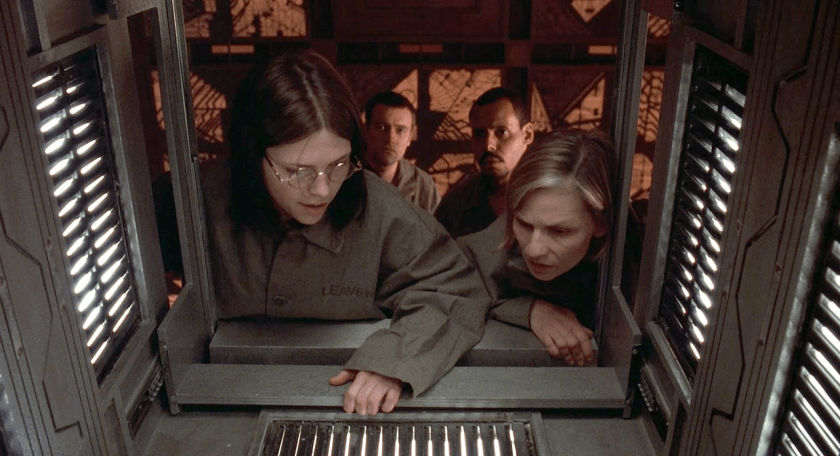
For longtime SF fans, there’s another compelling reason to give the series a shot: Canadian writer-director Vincenzo Natali, best known for his mind-bending 1997 indie film Cube, is an executive producer and directs four of the season’s episodes. Natali is a pro at incorporating heady ideas in ways that enhance his narratives instead of weighing them down.

The first season just concluded, and you can stream all eight episodes on Amazon Prime. Bud and I are already looking forward to The Peripheral’s return.

cube-pic-6
Cube writer-director Vincenzo Natali is behind the lens for half of The Peripheral’s episodes.

Oscars Shock! Garfield Slaps Buddy After Joke About Wife Venus

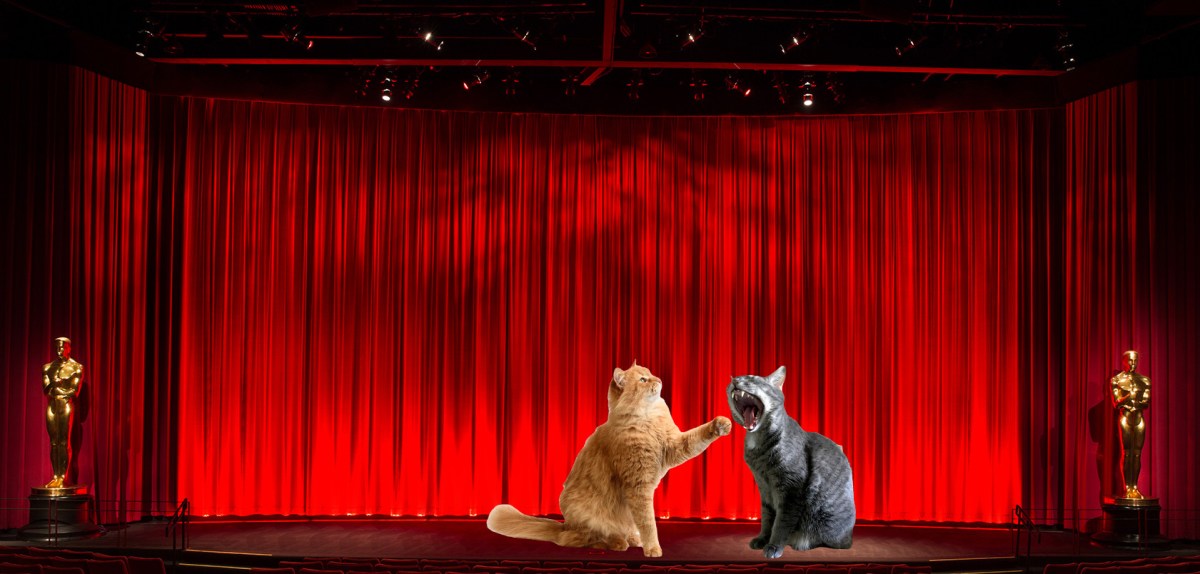
The Acatemy Awards turned into a beatdown on Sunday night after Garfield took exception to a joke by Buddy the Cat.

Buddy the Cat was cruising through Sunday night’s Acatemy Awards ceremony and razzing the celebrity cats in attendance when things took a turn for the bizarre and violent.

After joking that Alejandro Baldwinito the Spanish cat would have to lose Best Actor after his wife, Ellaria, lost Best Actress, comedian Buddy turned to Garfield and his better half, Venus the two-faced kitty.

“Venus, I love you! Two-Face in the next Batman movie, can’t wait to see it!” Buddy said, drawing laughs from the crowd — including from Garfield, who appeared to find the joke hilarious.

But when Garfield noticed Venus staring daggers at him, he cleared his throat and stood up.

“Uh oh!” Buddy said as Garfield padded over to him. “Uh oh! It’s…”

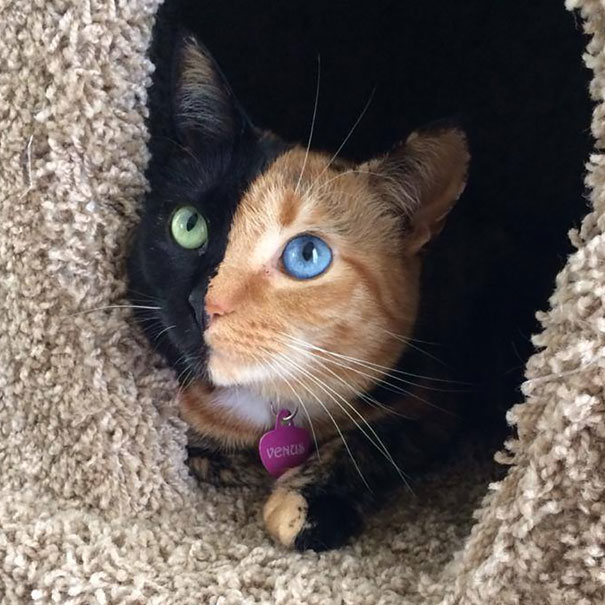
Venus
Venus, who did not take kindly to Buddy’s joke about her playing Two-Face in the upcoming Batman movie.

Buddy was stopped mid-sentence as Garfield paw-slapped him hard across the face, drawing shocked gasps from the stars in attendance.

“Oh, wow! Wow!” Buddy said. “Garfield just slapped the s— out of me!”

“Keep Venus’ name out your —-ing mouth!” Garfield yelled, settling back into his seat.

“Wow, dude!” Buddy replied. “It was a Batman joke!”

“Keep my wife’s name out your —ing mouth!” Garfield repeated, casting a glance at Venus as Lupita Purrongo looked on behind them, open-mouthed and horrified.

“I’m going to, okay?” Buddy said, momentarily at a loss for words.

“That was, uh, the greatest night in the history of television!” Buddy said, recovering and cutting some of the tension in the room.

Just minutes later, Garfield accepted the Oscar for Best Actor and had a meltdown on stage.

“I do it for love!” the rotund orange tabby said. “I have to protect the people around me, and Richard, King Richard, he once said, you know… Who has lasagna? Does anyone have lasagna?”

Netflix’s ‘Inventing Anna’ Reveals Friendship Between Anna Delvey And Buddy The Cat

The German-Russian fake heiress frequented many of the same parties and ran in the same circles as Buddy the Cat.

NEW YORK — Anna Delvey said she was at a low point when she crossed paths with Buddy the Cat at a party one night.

“So many of my friends were so disappointing,” Delvey says. “When people show up to a party looking poor or fat, and they’re not wearing designer clothes, it’s a huge buzzkill.”

But Buddy, who was a guest of Princess Charlotte Marie Pomeline Casiraghi of Monaco, was clearly someone who understood style and luxury and moved in the exclusive circles Delvey frequented.

“I was like ‘Oh my God, you know [Monegasque designer] Pauline Ducruet?” Delvey recalls. “Buddy had just arrived with Felix [Finch, editor of the Trafalgar Review of Books]. He knew all the right people, was at the best parties and always knew when to leave before unattractive people showed up.”

On the night she met Buddy, Delvey says she was already shaken by a woman who showed up to a film festival afterparty wearing clothes from Target when her group faced another setback: The maître d’ at Dorsia had double booked their reservation, so they were forced to head to Espacé on the upper west side.

“I was on the verge of tears when we arrived at Espacé, since I was positive we wouldn’t get a decent table,” Delvey recalls. “But we did, and relief washed over me in an awesome wave.”

It turned out Buddy knew the maître d’ at Espacé and was able to secure a table by slipping him two crisp $100 bills.

“Friends like that,” Delvey says, “are worth keeping around.”

Anna Delvey and Buddy the Cat
Delvey, center, with Buddy at New York Fashion Week in 2018. Credit: Netflix

Delvey’s roster of friends was whittled down to just a handful when she was arrested in 2018 and charged with defrauding various luxury hotels, spas, boutique shops and bankers out of more than $300,000. She was also on the verge of securing a $22 million loan from Cavendish Holdings, ostensibly to open a VIP arts club, when authorities caught up with her and charged her with multiple counts of wire fraud, grand larceny and tampering with financial records.

Delvey’s story was immortalized in a 2019 New Yorker piece which went viral and, with the premiere of Netflix’s Inventing Anna miniseries just 10 days ago, millions of people are now privy to almost every sordid detail of Delvey’s long con, in which she presented herself as a fabulously wealthy German heiress sitting on a $60 million trust fund.

The now-convicted former socialite, whose real name is Anna Sorokina, moved in the highest echelons of New York society for more than two years. She quickly made a name for herself after arriving in New York from Paris, where she’d interned at fashion magazine Purple, and soon worked her way into the orbit of celebrities, famous designers and even royalty.

Like Delvey, the source of Buddy’s wealth was shrouded in mystery.

“I think he was some sort of poultry oligarch,” said stylist Ronaldo Chen. “Vast holdings in eastern Europe, turkey farms, wineries and hotels.”

Bud and Anna
Delvey often took Buddy on her shopping sprees. Friends said she valued the feline’s astute fashion observations. Credit:

Others said he was a Youtuber and vlogger who helped popularize the wildly popular genre of unboxing videos, while some people said he was a tech bro raising venture capital.

“He comes from old money just like Anna does,” said French socialite Marinus. “House Buddeaux is one of the oldest catnip families west of the Seine.”

Episode 11 of the Netflix hit details the now-infamous party 2017 in Budapest at which Delvey is alleged to have made off with more than $150,000 of the Duke of Sandringham’s diamonds and left Buddy with more than $30,000 in hotel charges.

Still, there are apparently no hard feelings between the two.

“Buddy is a genius, bitches,” Delvey told Vogue last summer in a jailhouse interview. “I was surrounded by genius and now I’m here, wearing a horrid jumpsuit, locked up with basic bitches. My cellmate says she’s serving a life sentence for stabbing her cheating boyfriend, and I was like ‘Why are you being so dramatic?'”