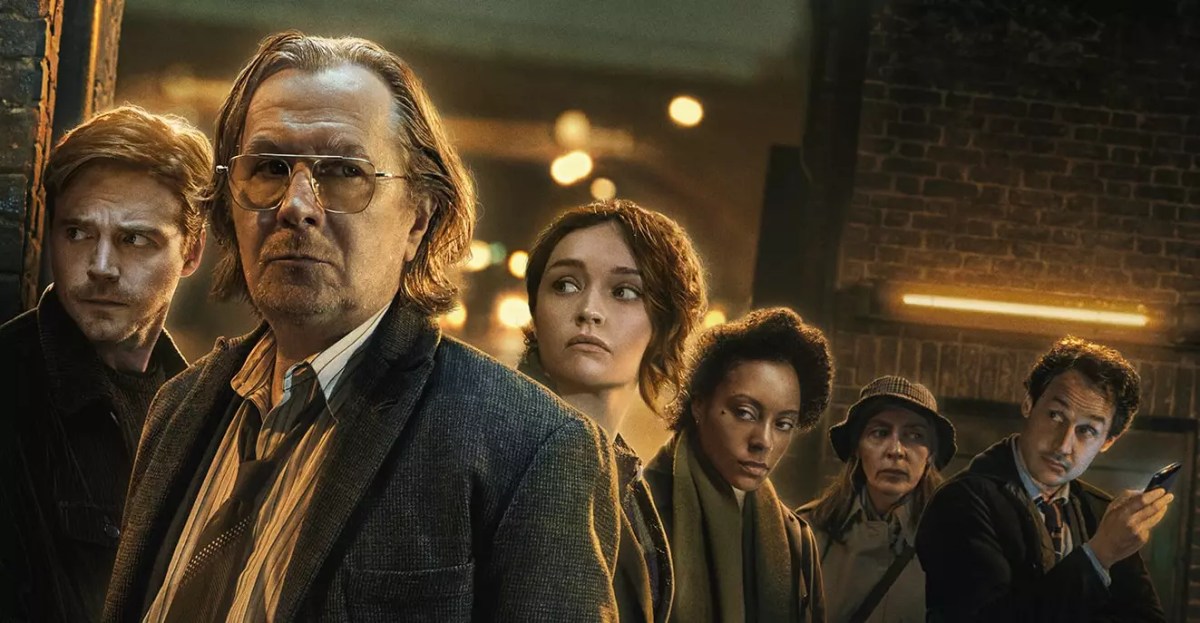
In Slow Horses, MI5’s Rejects Become Heroes

TV thrillers don’t get any better than this.

There’s a scene in the first season of Slow Horses when Gary Oldman, in the role of a lifetime as MI5 supervisor Jackson Lamb, gathers his team as they’re being hunted.

“I don’t normally do these kind of speeches,” he says with an exasperated sigh, “but this feels like a big moment and if it all turns to shit, I might not see any of you again.”

He looks each of his agents in the eye, their fear reflected back at him, and sniffs.

“You’re f—ing useless, the lot of you! Working with you has been the lowest point in a disappointing career,” he says before barking at one of the young agents to accompany him and warning the rest not to get themselves killed.

Oldman is spectacular as Lamb, the gaseous, miserable MI5 veteran who captains Slough House, a purgatory where the agency’s worst agents are sent to waste away the remainder of their careers after humiliating themselves, usually in novel and cringe-worthy ways.

One agent was exiled after forgetting a disc with sensitive information on a train. Another was an alcoholic who didn’t notice her supervisor was feeding information to the Russians for years, while a third was banished to Slough House simply for being an insufferable jerk.

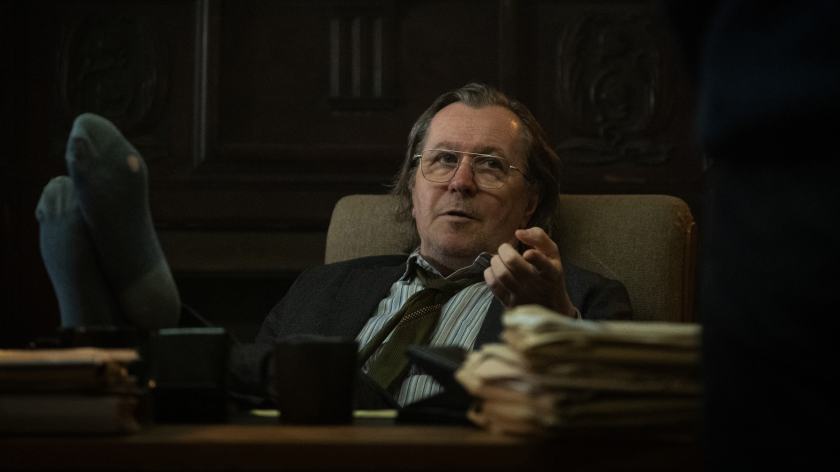
Gary Oldman as Jackson Lamb
Gary Oldman as Jackson Lamb, who oversees the purgatory for disgraced MI5 agents known as Slough House.

Regardless of the reasons, each of the agents at Slough House is determined to get back into the good graces of agency brass by redeeming themselves in service to king and country.

Or, as Mick Jagger puts it in the show’s catchy theme song, they want “to dance with the big boys again.”

To do that they must endure consistently brutal needling from Lamb and navigate the most mundane, least glamorous assignments. If a job is a lose-lose proposition, MI5 hands it over to the rejects of Slough House — the eponymous Slow Horses — figuring their already stained reputations can’t get much worse.

So when a secretive MI5 plot goes off the rails and the agency’s leaders need someone to take the fall, they serve up the Horses.

There’s just one problem: Lamb, for all his misery, disgusting habits and bone-dry British humor, is an exceptional agent with old-school skills, and the Horses themselves aren’t necessarily incompetent. Several were promising young agents of great skill who got railroaded or were collateral damage in political warfare.

When MI5 second-in-command Diana “Lady Di” Taverner (an icy Kristen Scott Thomas) decides the disgraced agents will be blamed for a major agency blunder, Lamb is aghast and warns her he won’t accept it.

“They’re losers,” he says, “but they’re my losers.”

When we meet them for the first time they’ve already been tagged for sacrifice to the media and public, but don’t know it yet.

And when it turns out that the case has real consequences — a young man will be beheaded on a live stream by extremists if their demands aren’t met — the Slow Horses, led by the acid-tongued Lamb, use every trick at their disposal in an attempt to rescue the innocent victim.

slowhorsesriversid
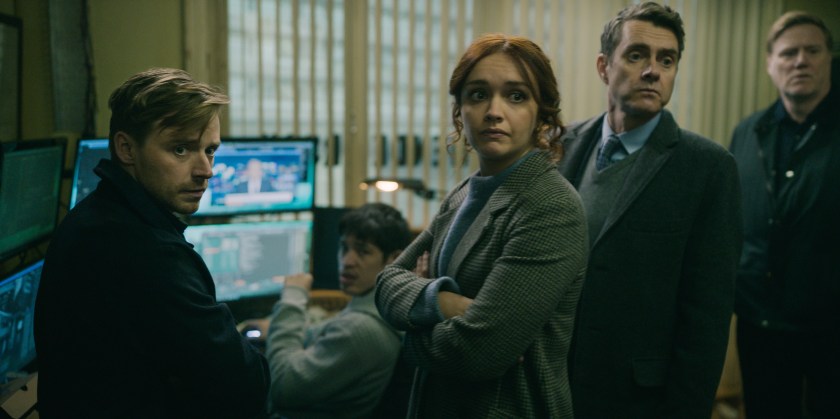
Jack Lowden as River Cartwright, left, and Olivia Cooke as Sid Barrett, center, disgraced agents of MI5. Credit: Apple TV

Slow Horses, like Luther and similar UK crime dramas, is a different animal than the bland, formulaic cop shows we’re accustomed to on this side of the pond.

Whether it’s Law and Order, the many incarnations of CSI and NCIS or shows like Chicago PD, the audience always knows a few things for sure: The case will be solved and the bad guys apprehended by the end of the hour, the police will be righteous and earnest, and favorite characters will never find themselves in real danger. Mariska Hargitay’s character will live another day to continue on in her third decade fighting crime. Chicago’s tough-talking detective Hank might be rough around the edges and bend a few rules, but he’s fundamentally a good guy on the side of justice.

The Slow Horses have no such pretenses, nor plot armor. They’re deeply flawed people and they’re not immune to bullets or bad luck.

The result humanizes the agents in a way other spy thrillers and crime shows never manage to accomplish with their own characters. When one of the Horses takes a bullet from a Russian agent or risks life and limb to protect the British public, there’s a real sense of tension because the show makes it clear not everyone survives.

The show’s writers also know when to dial it back with moments of genuine humor, separating Slow Horses from contemporary spy thrillers like Homeland, which — with apologies to Claire Danes — always took itself seriously.

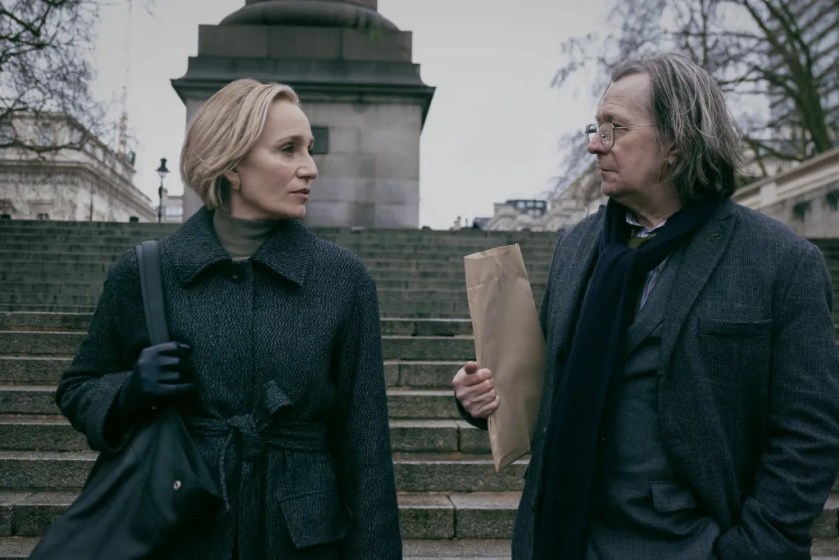
Slow Horses: Taverner and Lamb
Kristen Scott Thomas as Diana “Lady Di” Taverner, MI5’s ruthless second-in-command, with Oldman as Jackson Lamb. Credit: Apple TV

As for Jagger, he signed on to write the show’s theme song with composer Daniel Pemberton because he’s a fan of the original Slow Horses novels by Mick Herron. While writing the lyrics, he said, the phrase “strange game” kept coming back to him. That became the title of the theme song and its primary hook. It’s an apt description of what MI5 agents are involved in as operators for a domestic agency that, unlike the American FBI, has the green light to involve itself in extensive subterfuge on home soil.

Slow Horses just finished airing its third season. A fourth has already been filmed and completed, a fifth is in production and a sixth season is currently in the adaptation/writing phase.

A production that runs like a finely tuned engine is appropriate for the series: each season is a taut six episodes, meaning there’s no filler and the tension does not let up on the gas pedal. With eight books and counting, there’s plenty more material to adapt, and if the response so far has been any indication — universal praise by critics and audiences in rare agreement — we’ll get to see every one of them make it to the small screen.

Title: Slow Horses
Network: Streaming (Apple TV)
Format: Series
Release date: April 2022 (season 1), December 2022 (season 2), November 2023 (season 3), TBA 2024 (season 4)

Verdict: All the paws up! When it comes to crime and spy thrillers it doesn’t get any better than this. Slow Horses is tense and humorous in precisely the right proportions, knows when not to take itself too seriously, and benefits from an incredibly talented cast to match its excellent writing. We highly recommend this show.

PITB Reviews: Shadow And Bone Is Netflix’s Best Epic Fantasy

A look at Shadow and Bone, one of Netflix’s most exciting original fantasy epics ahead of its second season.

Title: Shadow and Bone (season 1, 2021, season 2 March 16, 2023)
Genre:
Fantasy
Medium:
Netflix

Shadow and Bone begins with a well-worn YA premise: A young girl lives a drab existence, dreaming of a better life, when she unexpectedly discovers via extraordinary circumstances that she’s Special.

Jealous rivals don’t like the fact that she’s Special and try to tear her down as she leads a revolution in a society ruled by idiotic adults, who Just Don’t Understand the complicated lives of teenagers.

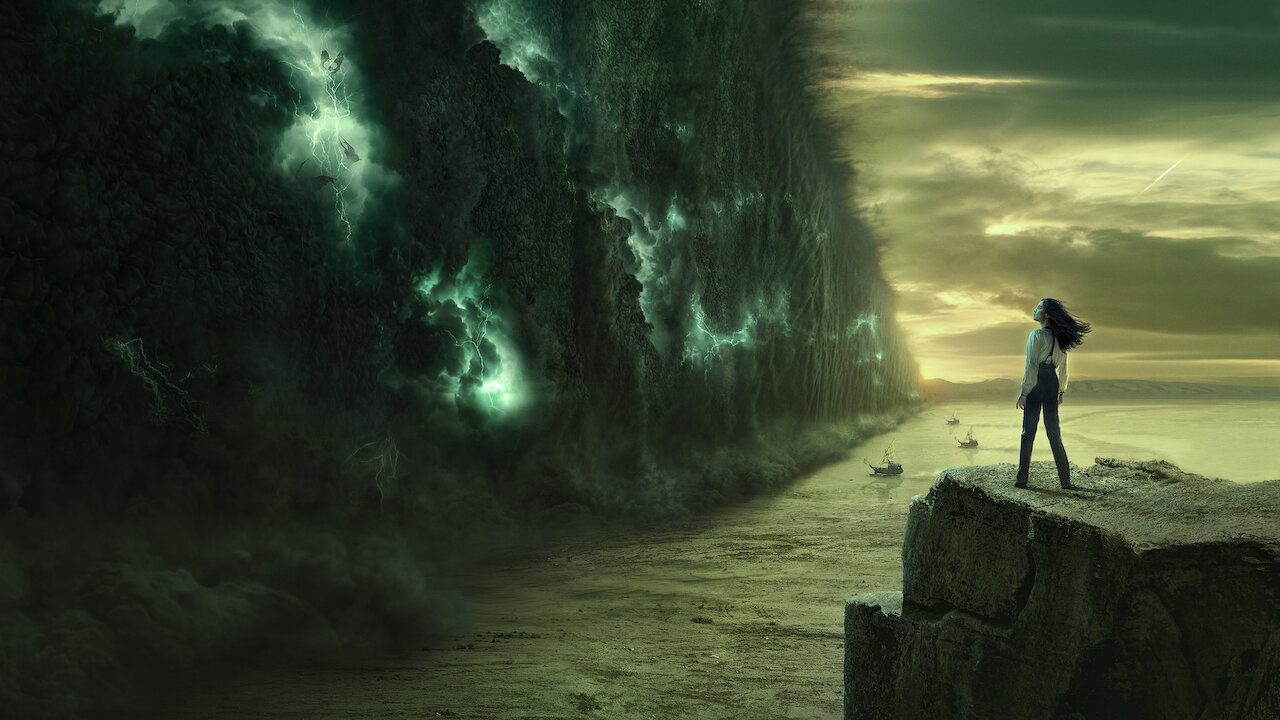
Normally that would be enough for me to steer well clear of a movie or TV show, but a teaser for Shadow and Bone tickled my interest: It shows the protagonist, Alina, on a boat that’s about to cross the Fold, also called the Unsea — a pitch-black, swirling mass of cloudy mist smudged right across the middle of her country, dividing it in two.

As the ship approaches, Alina and the other passengers can hear the shrieks of the unseen nightmares that populate the Fold. The bow of the boat penetrates the Unsea, Alina closes her eyes, holds her breath, and the preview ends.

That short scene was enough to convince me to give the series a shot. At the very least I wanted to know what The Fold was, how it came into being, and what kind of creatures stalk its gloom.

The Fold
The Fold is a wall-like scar that splits the country of Ravka in two, and many ships are lost trying to cross it. Credit: Netflix

While Shadow & Bone uses YA tropes as its jumping off point, it quickly sheds them in favor of clever world-building, affable characters and a well-established mythology that sets up the overarching heroic journey of its protagonist. It also ages its cast so they’re mostly in their twenties and thirties, and while Netflix may have played up the YA template while marketing the series to appeal to younger views, the show itself is geared toward adults of all ages.

The action is centered on a country called Ravka, which is modeled on Czarist Russia and has been split in two by the Fold. Ravka’s capital, Os Alta, is located to the east of the Fold while its major port cities and trading centers, Os Kervo and Novokribirsk, are situated to the west of the dangerous no-man’s land.

As a result, and despite the dangers, Ravka’s economy and unity depends on ships that regularly cross the Fold to move food from the breadbasket to the east and trading goods from the port cities to the west. Losing ships is the cost of doing business, not unlike crossing the Atlantic was during the days of colonial America, and it has a human toll as well: Alina, her best friend, Mal, and all the other children at the orphanage where they grew up lost their parents to the Fold’s horrors.

But Ravka has its blessings as well: A class of conjurors called Grisha who have the ability to manipulate elements. Grisha Tidemakers can control and shape water, Squallers can control wind, Healers can repair human bodies in ways normal medicine cannot, and Heartrenders can sense and manipulate hearts. They can sooth a person’s anxieties or ease them into a restful sleep, but they can also stop a person’s heart or tell if someone is lying by feeling the subtle shifts in their heartbeats.

The Grisha can mitigate the chances of a ship being lost to The Fold but they’re not immune to its dangers, and many of their number have been lost to its hazards as well. Making the crossing is a grim prospect for anyone aboard one of many ships that regularly journey across the so-called Unsea.

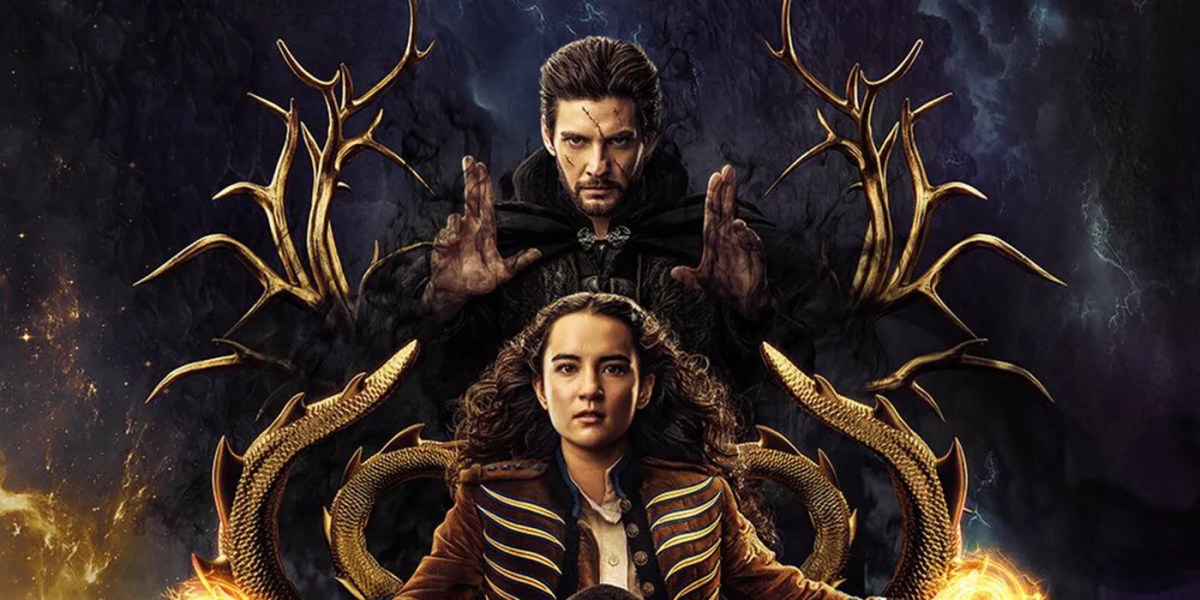
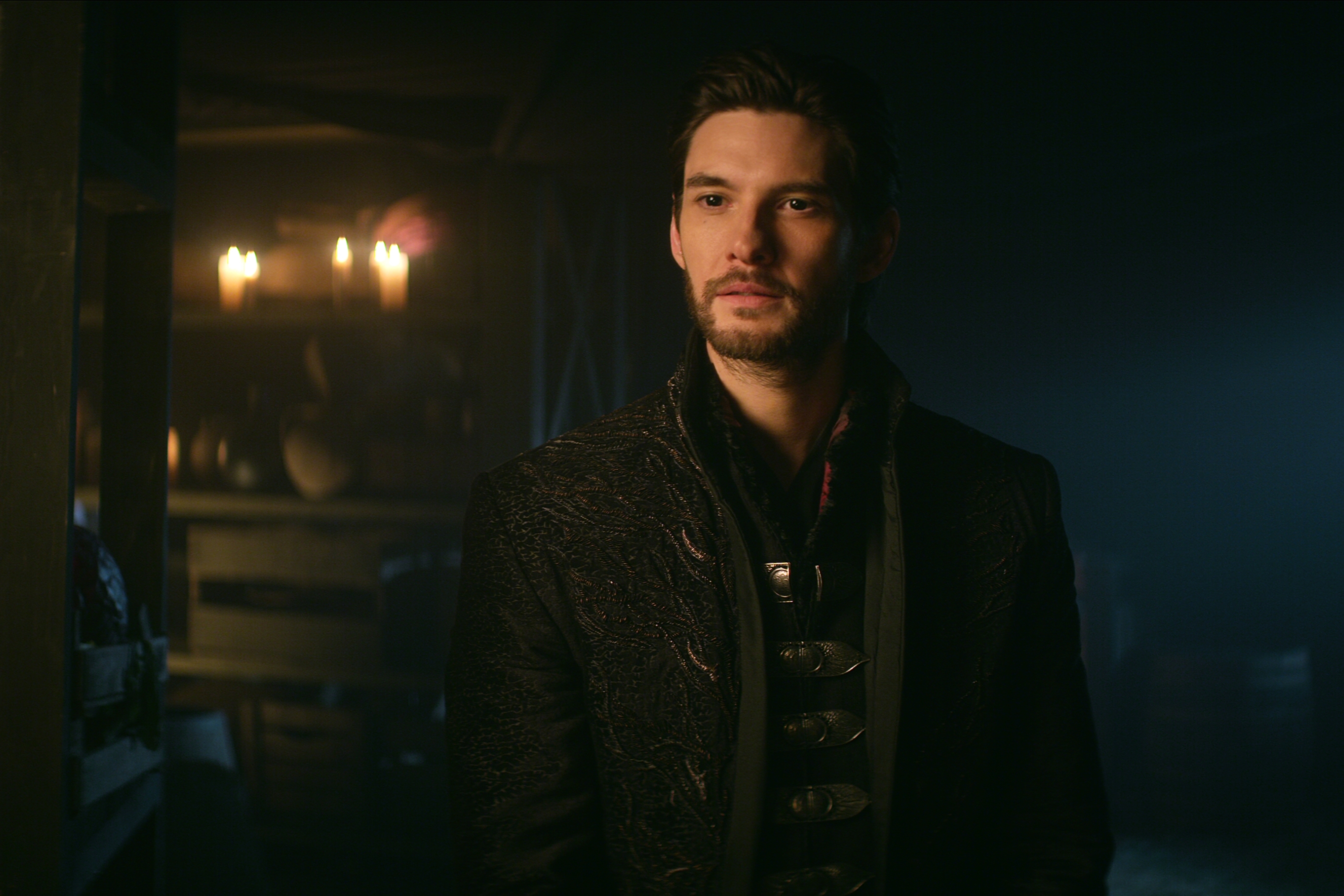
The Grisha are led by General Kirigan (Ben Barnes of Westworld and Narnia fame), who has the unique ability to manipulate shadows and destructive energy. It was Kirigan’s ancestor, the Black Heretic, who created the Fold, and Kirigan has vowed to redeem his family by destroying it.

kirigan
Ben Barnes is General Kirigan, Ravka’s military commander and its most powerful Grisha, or conjurer.

Prophecy foretold a new kind of Grisha — the Sun Summoner, who has the power to call on the sun’s energies and manipulate light. It’s said the Sun Summoner will be the one to finally destroy the Fold and emancipate Ravka from the terrible toll it takes. In addition to protecting Ravka against her many enemies as its general, finding the Sun Summoner has been Kirigan’s life’s work.

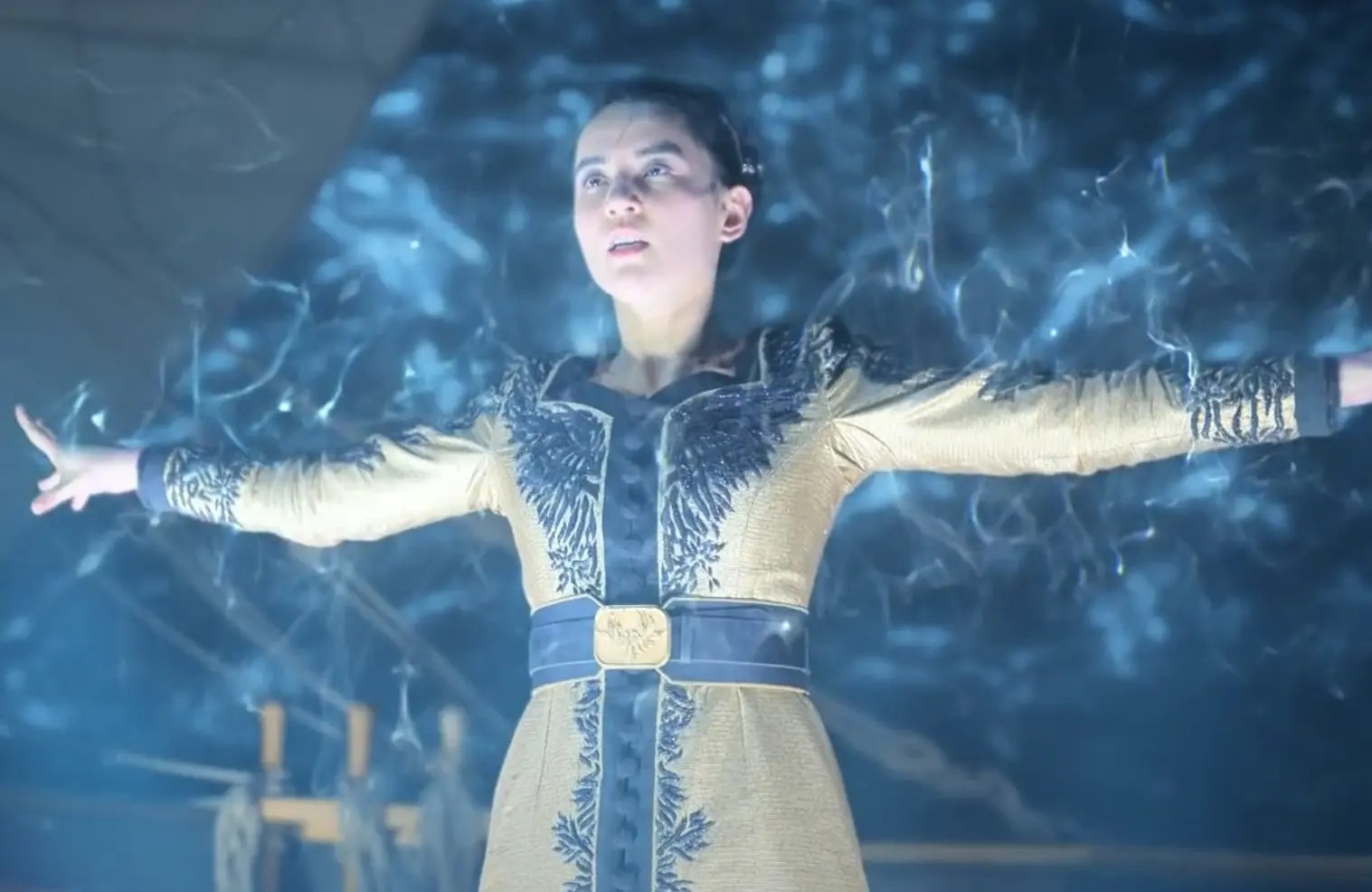
Alina is the Sun Summoner, but you already knew that because Shadow & Bone is based on a YA series of books. But she doesn’t know it until she’s forced to cross the fold and one of its nightmarish creatures is about to kill her beloved Mal, drawing out her latent powers in a moment of desperation. The sudden burst of energy and light as she intercedes is so powerful that it’s spotted for miles outside the Fold, and soon survivors of the ill-fated ship arrive at the docks, telling of a woman who can call upon the power of the sun.

alinastarkov
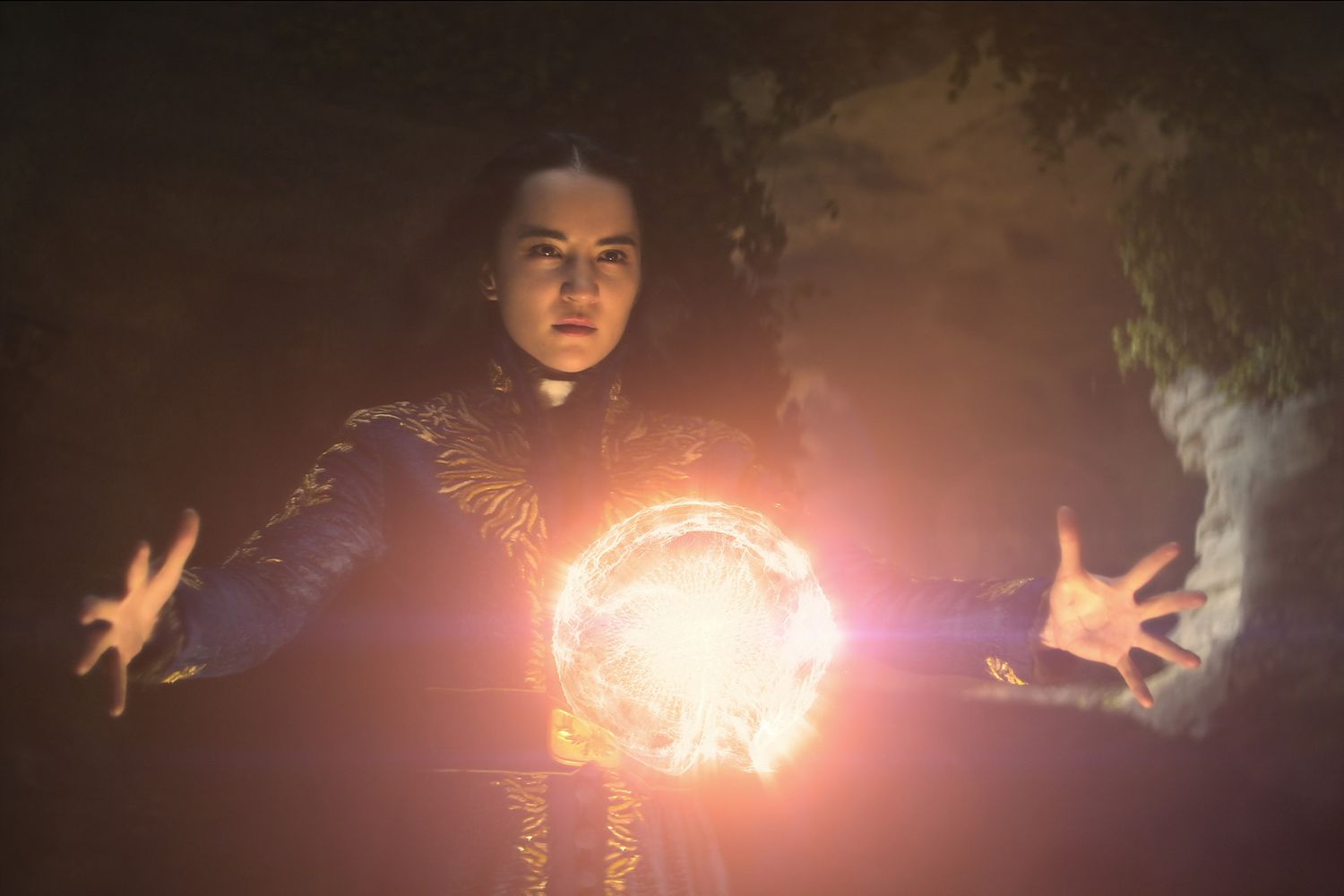
Alina Starkov, an orphan who occupies a lowly position as an assistant cartographer in the Ravkan army, learns she has the ability to summon the power of the sun.

In the series, Alina and her friends are aged up and appear as young adults. Mercifully, Shadow & Bone doesn’t mirror its genre’s traditional portrayal of adults as idiots, and unlike other big-time YA franchises, like Veronica Roth’s incoherent Divergent series, it doesn’t ask its audience to buy into an absurd society. Novelist Leigh Bardugo has clearly put a lot of thought and research into crafting her fictional universe. There’s rich lore, varied nations with their own distinct customs, prejudices and beliefs, a believable economy and conflict perpetuated by very human motivations and circumstances. Most of the characters we meet are just trying to get on with their lives and are caught up in the central drama.

Alina, played by 26-year-old British actress Jessie Mei Li, is mixed race, part Ravkan and part Shu. Shu Han, a nation based loosely on dynastic China and the Middle East, is in a perpetual state of conflict with Ravka, and Alina’s Shu appearance makes her the object of disdain, ridicule and ignorance even among her countrymen.

“I was told she was Shu,” the queen says in a later scene, when Alina is presented to the royal family and the court of Ravka for the first time. “I guess she’s Shu enough. Tell her… Oh, I don’t know, ‘Good morning.'”

Alina speaks up before a man by the queen’s side can translate.

“I don’t actually speak Shu, your highness,” she says.

“Then what are you?” the queen asks.

There’s a long pause, with Alina clearly unsure how to answer, before General Kirigin steps in.

“She is Alina Starkov, the Sun Summoner, moya tsaritsa,” Kirigin says. “She will change the future. Starting now.”

And with that, Kirigin claps his hands, enveloping the throne room in unnatural gloom with his shadow-manipulating ability. He turns to Alina, takes her hand, and there’s an eruption of ethereal light so powerful that the assembled aristocrats, guards and Grisha gasp and shield their eyes. The light solidifies into a bubble around Alina and Kirigin, its elements twinkling and orbiting them like stars, and the overjoyed king is convinced his nation has indeed finally found the prophesied Sun Summoner.

Becoming the Sun Summoner isn’t all flowers and rainbows. Alina feels the weight of expectations upon her. The king of Ravka is impatient for her to learn to control her newfound powers so she can tear down The Fold. Ravka’s aristocrats, as well as ambassadors and powerful figures from other countries, initially suspect she’s a fraud. Regular people, who have suffered the most from The Fold’s impact on Ravka, begin to venerate her as a living saint. And there are plenty of people who don’t want her to succeed or see her existence as a way to profit.

Shadow and Bone also has a parallel narrative following three lovable rogues from Ketterdam, an island nation west of Ravka. It’s clear early on that their journey will intersect with Alina’s at some point, but the series never feels predictable in the way the characters approach that point.

The Ketterdam trio, who call themselves the Crows, are led by Kaz, the owner of a tavern-slash-gambling den called the Crow Club. Kaz is practical, calculating and focused on making money, legitimately or not. Inej is another orphan of the Fold who was sold to a brothel in her early teens. She was bought out by Kaz, who recognized her intelligence, her light step and her talent for spying. Last but not least is Jesper, a wise-cracking, life-loving and fiercely loyal friend with uncanny sharpshooting abilities.

The Crows
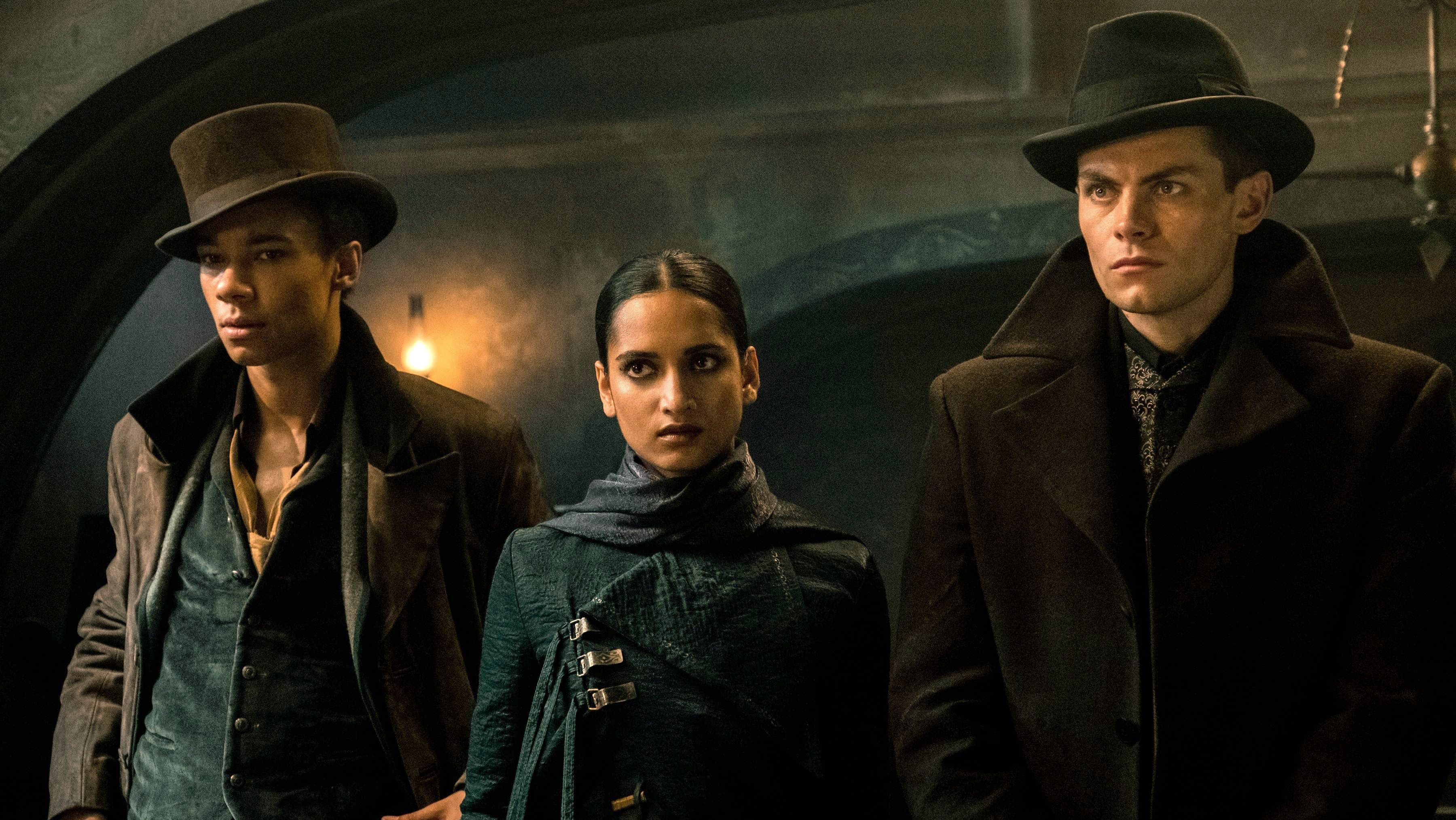
The Crows, lovable rogues of Shadow and Bone: Sharpshooter Jesper, spy and assassin Inej, and mastermind Kaz.

The Crows are the source of much of the series’ humor, despite being criminals and despite all of them having painful pasts. Jesper in particular is known for his wisecracks and his relentless, single-minded obsession with hiring “a demo man” — an explosives expert — for every job they do, regardless of whether the gig calls for it.

“Boss, I think we need a demo man for this one,” he tells Kaz at one point.

Kaz points out that the nature of their job is stealth, and the whole purpose is to get in and out without being heard or seen. You can almost see the gears moving in Jesper’s head as he thinks up reasons why they do, in fact, need someone to blow things up.

When word of the Sun Summoner’s appearance spreads to every corner of Shadow and Bone’s universe, the Crows catch wind of a contract offering a fortune to anyone who can abduct the Sun Summoner and bring her to Ketterdam.

Kaz believes the Sun Summoner is a hoax and views the job as a simple transaction, while Inej holds out hope that she’s the real deal, and if she is, the prospect of kidnapping a living saint weighs heavily on her conscience. Jesper is just content to go wherever there’s alcohol and explosions.

Alina Starkov
Once she’s revealed as the Sun Summoner, Alina feels the weight of expectations upon her, with everyone from the king to General Kirigan and regular people looking to her to save the kingdom.

A great strength of the series is that it begins from a familiar place and manages to regularly subvert expectations.

The production values are exceptional, and it appears Netflix spared no expense bringing Bardugo’s world to life. Ravka, Ketterdam and Novokribirsk feel like real places inhabited by real people, with authentic differences in culture, manner of speaking, dress and even the way they count money.

From imperial courts to military camps to the seedy underbellies of Ketterdam drinking clubs, the world feels like it continues to exist long after we turn our televisions off.

The first season takes several wild turns, which I won’t detail here because it’s very much worth watching, especially now: The long-awaited second season comes to Netflix on March 16, promising to expand on a series already bursting with lovable characters, thrilling adventures and political intrigue.

Of course all epic TV series will eventually be compared to the juggernaut that started it all. Shadow and Bone never tries to be Game of Thrones, and it doesn’t need to be — the first season carved out the show’s unique identity, and season two promises to make the world even bigger and more adventurous.

Buddy’s rating: 5/5 paws

paws55


PITB Reviews: ‘The Peripheral’ Is A Refreshingly Original Science Fiction Thriller

Amazon’s newest streaming hit is heady, fast-moving and a lot of fun. There’s nothing else on TV like it.

Amazon’s newest big-budget prestige drama, The Peripheral, imagines a near future when technology has become even more deeply embedded in every day life.

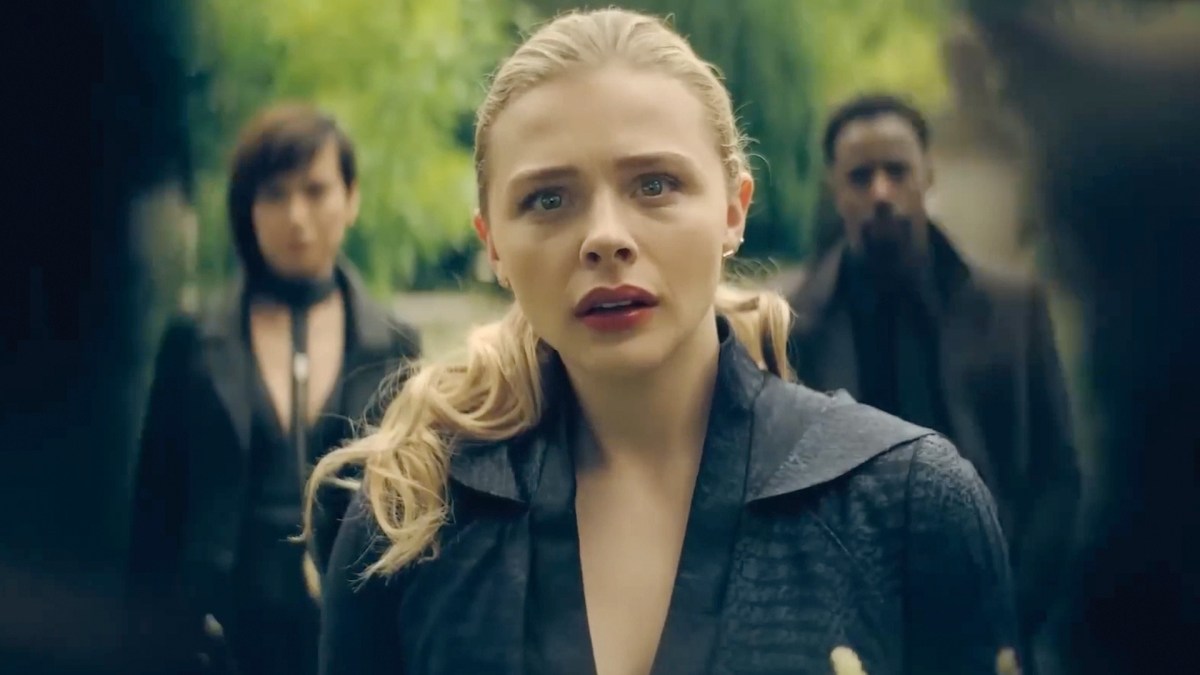
Flynne Fisher (Chloe Grace Moretz) is a young woman who lives in North Carolina’s rural Blue Ridge Mountains, works in a 3D print shop by day and plays virtual reality games by night.

The story is set a decade from now in 2032, and while Flynne’s brother, Burton (Jack Reynor), plays startlingly realistic VR games for fun, Flynne plays them for money. Although Burton is a former United States Marine Corps infantryman and war veteran, his sister is the superior player when it comes to video games, and she’s so good that well-heeled players across the world pay her to carry them through high-difficulty levels.

If that seems fanciful, consider that it already happens in real life: some people fork over big bucks to highly skilled players who can help them win in multiplayer video games like Fortnite, or run them through the most challenging missions in online role playing games to get coveted in-game gear.

Flynne’s side hustle allows her to afford expensive medication for her sickly mother. Apparently in 2032, Democrats and Republicans are still squabbling over how to pass meaningful prescription drug reforms while remaining in the good graces of the corporate behemoths who finance their campaigns. Some things never change.

When a Colombian company called Milagros Coldiron offers Flynne a hefty chunk of change to beta test their newest game — and the incredibly immersive new headset it comes with — Flynne thinks she’s just taking a lucrative but routine job, one that will help pay for her mom’s meds for at least a few weeks.

What she doesn’t know is that her life is going to change drastically the moment she steps into the newest form of virtual reality, revealing things about her world and herself that she never imagined.

The Peripheral
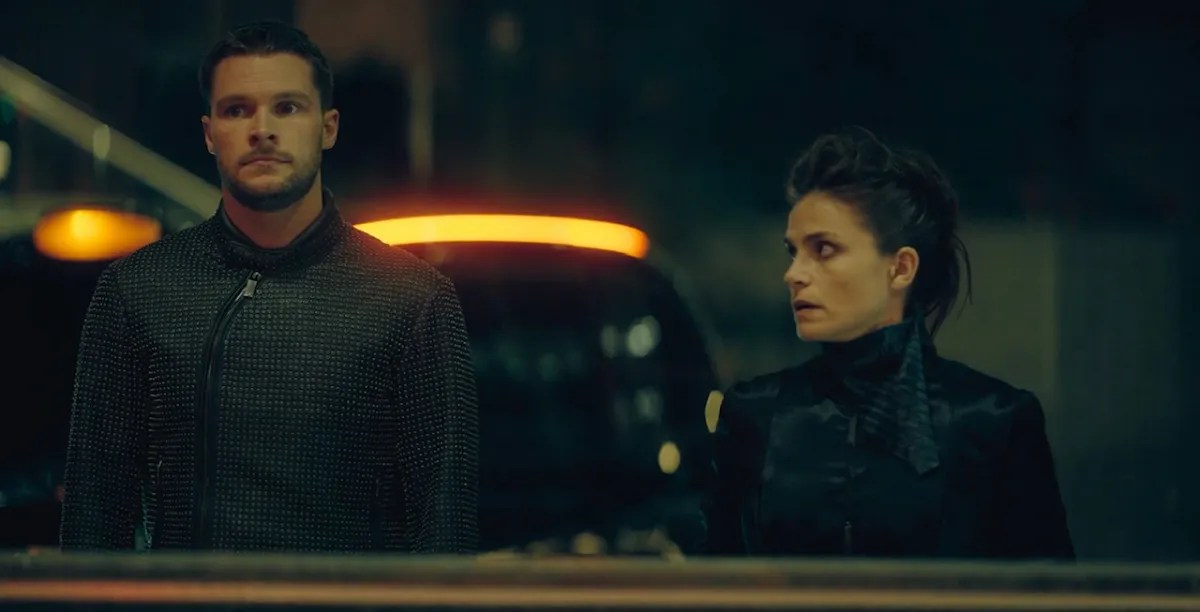
Jack Reynor as Burton Fisher and Charlotte Riley as Aelita West in The Peripheral.

There’s so much more to the story, and in fact we’ve barely scratched the surface, but The Peripheral is the kind of show best appreciated by knowing as little as possible going in.

The ambitious new series is based on a 2014 novel by technoprophet William Gibson of Neuromancer fame. Gibson envisioned the concept of cyberspace in 1981, more than a decade before the first mass market commercial dial-up services were available.

At the time, the idea of exploring almost photorealistic worlds in virtual reality was a radical new idea, and it took more than 35 years for technology to catch up by making it feasible. (We’re still not quite there yet. VR tech has improved by leaps and bounds, and we’re beginning to see the first deeply immersive VR games, but Mark Zuckerberg’s much-hyped version of the metaverse, for example, has fallen flat and been pilloried by press and players alike.)

By choosing to adapt Gibson’s work, Amazon has dipped into the largely untouched world of literary science fiction.

While the science fiction of movies and TV has been treading the same worn ground and returning to the same tired concepts for decades, SF novels are a rich source of astonishingly inventive big ideas, from the existential stories of Liu Cixin (The Three Body Problem) to the galaxy-spanning space opera of the late, great Iain M. Banks, to the gothic horror-tinged, wildly imaginative universe of Revelation Space by Welsh astrophysicist Alastair Reynolds.

Indeed, Netflix is developing a series based on The Three Body Problem, with Game of Thrones showrunners David Benioff and D.B. Weiss taking the helm. Amazon has acquired the rights to Banks’ first Culture novel, and Netflix’s highly-praised anthology series Love, Death + Robots adapted two of Reynolds’ short stories as episodes.

Finally we’ve moved beyond the Alien clones, Star Wars sequels, prequels, spinoffs and crossovers, as well as the unfulfilling JJ Abrams mystery box offerings that have made up the bulk of live action science fiction on the big and small screens.

There are no candy-colored light swords in The Peripheral, nor are there spandex-clad superheroes or franchise installments designed with merchandise sales in mind. Instead, we get a story for adults, one that gives the audience a lot to think about while also holding a mirror up to our own world, as the best science fiction always does.

After all, technology changes but people don’t. Human nature is a constant. What we do with our shiny new toys says a lot about us as a species and civilization.

Although The Peripheral begins with the comparatively low-stakes world of virtual reality, its scope rapidly expands until, by the end of the first episode, it becomes clear the show is asking its audience to grapple with existential questions about humanity and our future.

The Peripheral demands its audience’s full attention as it introduces concepts like the parallel universes of M-theory, nanotechnology and the idea that even if matter can’t be shifted between time and space, information in the form of photons can.

Gibson uses these heady concepts in his narrative sandbox, forcing his characters to consider wild concepts like the possibility that there may be infinite versions of themselves existing in infinite branching realities.

How would you react knowing there’s a version of yourself who chose to study classical literature and move to Athens, or a version who became a software programmer, authored a lucrative app and lives in a Manhattan penthouse? Can you imagine having a different wife or husband, or a different child? (Are there realities in which I am not the loyal and loving servant of Buddy? In that case, who is feeding him snacks, and are they doing it promptly?)

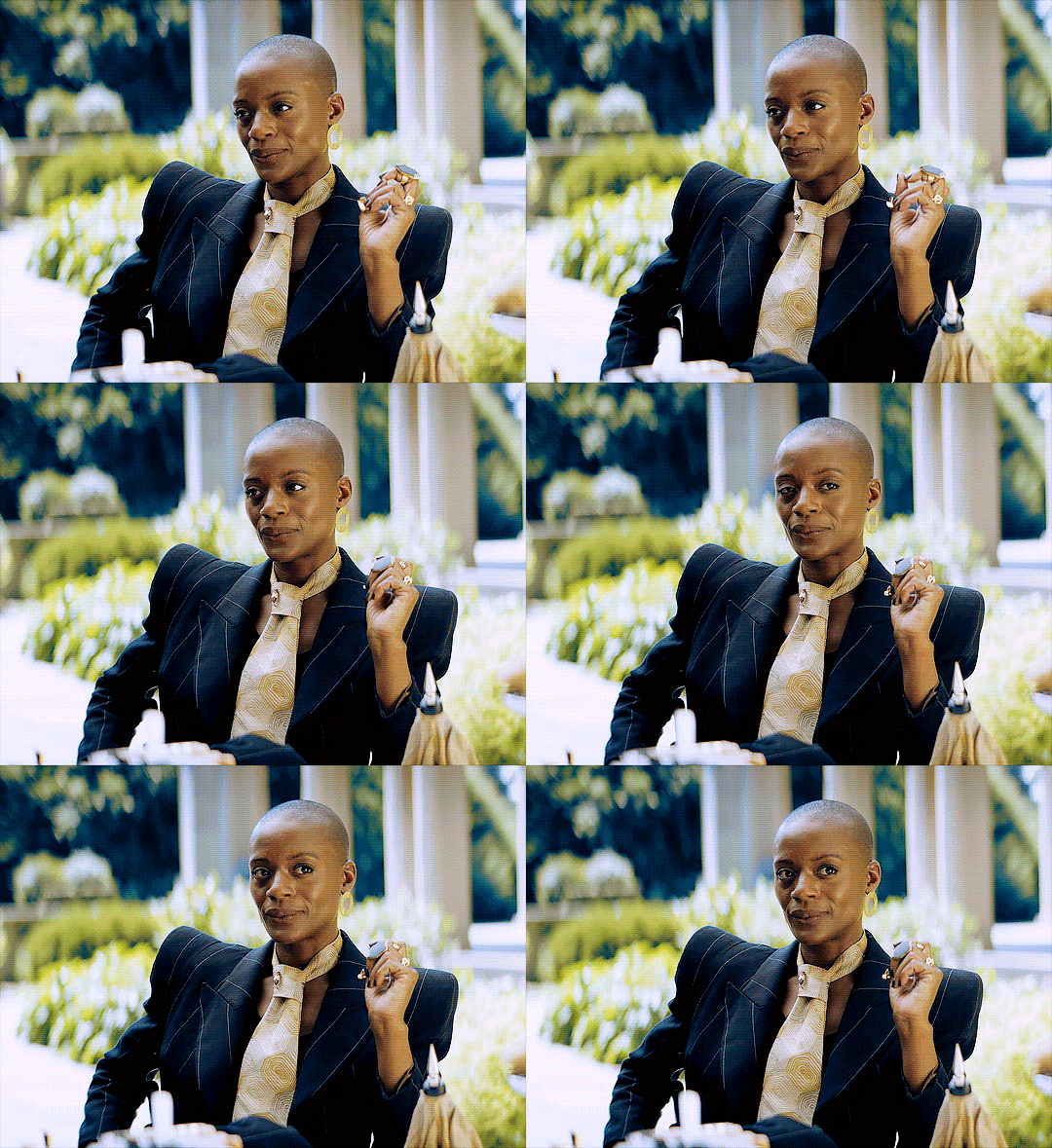
Cherise Nuland
T’Nia Miller radiates malice as Cherise Nuland.

Of course, none of this stuff would matter without interesting characters and a compelling narrative. Moretz and Reynor have the chemistry of a real brother and sister in the way they regularly bicker but ultimately love each other. Eli Goree’s Connor is a man of wonderful paradoxes, and T’Nia Miller steals every scene she’s in as the delightfully malicious Cherise Nuland, an antagonist who loves making her enemies squirm while dispensing witticisms in cut glass RP.

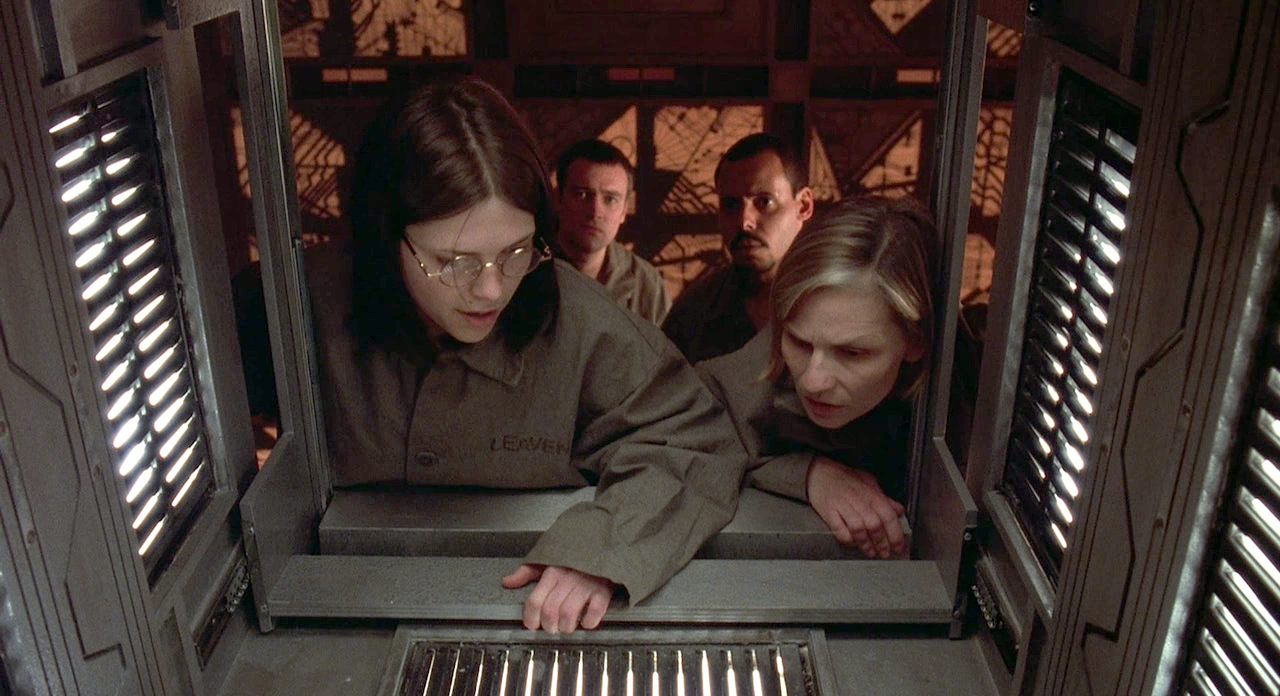
For longtime SF fans, there’s another compelling reason to give the series a shot: Canadian writer-director Vincenzo Natali, best known for his mind-bending 1997 indie film Cube, is an executive producer and directs four of the season’s episodes. Natali is a pro at incorporating heady ideas in ways that enhance his narratives instead of weighing them down.

The first season just concluded, and you can stream all eight episodes on Amazon Prime. Bud and I are already looking forward to The Peripheral’s return.

cube-pic-6
Cube writer-director Vincenzo Natali is behind the lens for half of The Peripheral’s episodes.

Stray: Early Impressions, Plus Real World Cats Benefit From The Game’s Launch!

Stray gets everything right about the way cats move and behave, while rescue groups and shelters are using the game to raise money.

Stray is the real deal. The game is beautifully atmospheric and slipping into its world feels effortless.

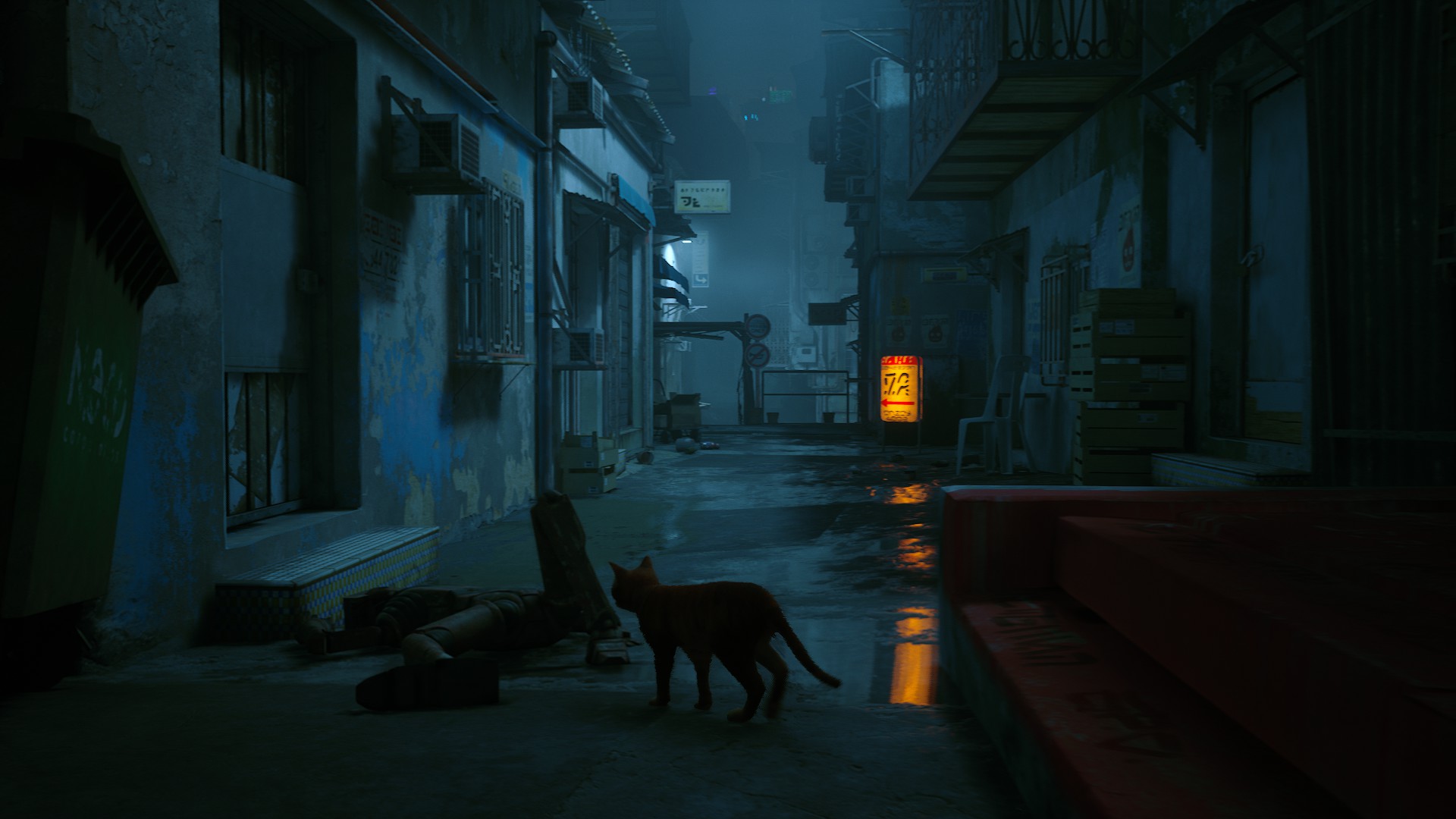
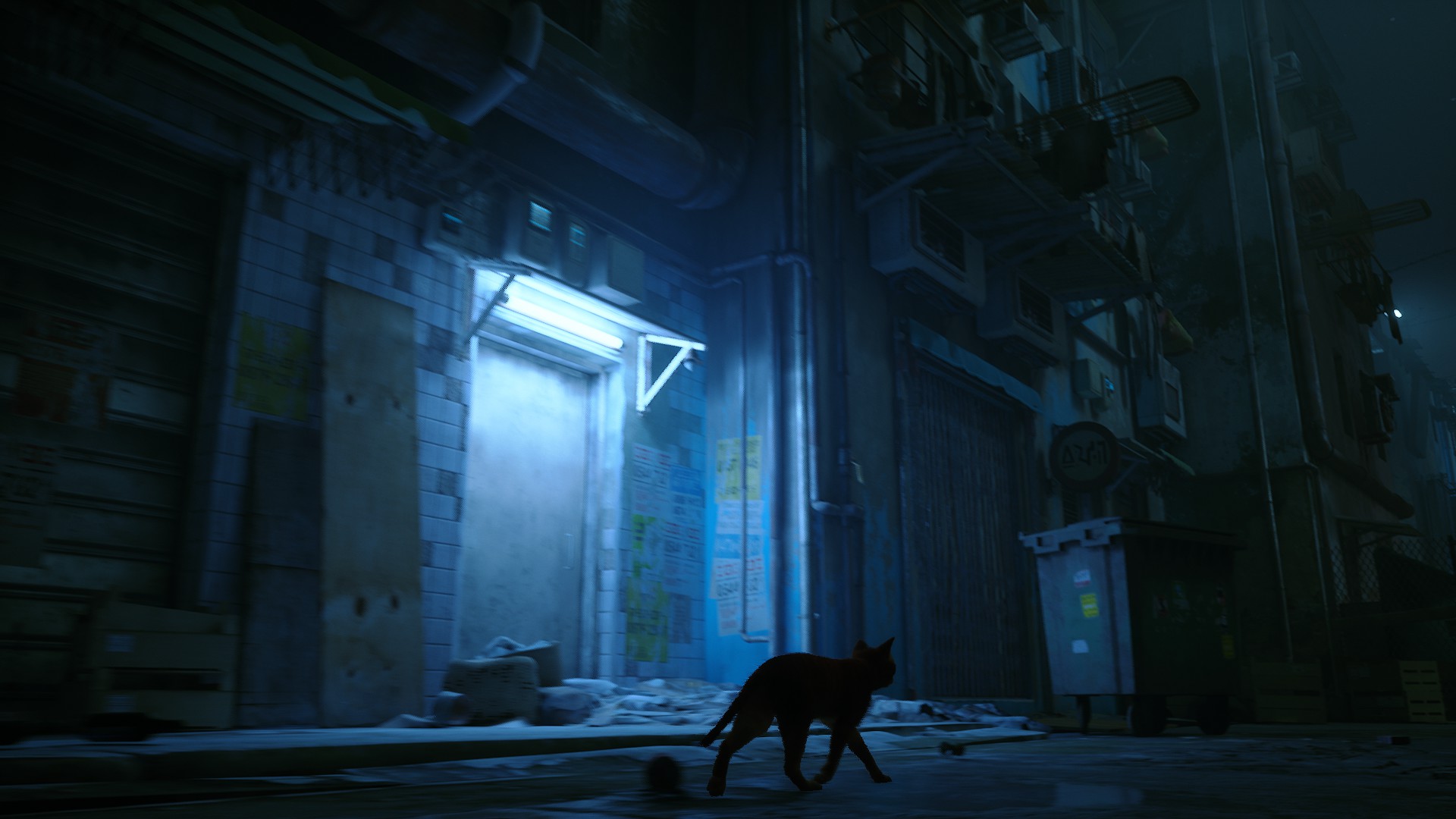
The adventure begins amid beautiful urban decay, with the titular feline and his family of three other moggies waking from a nap on the ledge of a concrete reservoir in the process of being reclaimed by Mother Nature. Tangles of branches and leaves push through the crumbling man-made structure everywhere, creating canopies, waterfalls and pools, and our hero and his buddies navigate their idyllic home in perfectly cat-like manner, leaping up, dropping down and pausing to lap water from reservoirs of running water.

The game gets you started with a few classics from the feline repertoire. You can walk, run, leap, hop up and, perhaps most importantly, meow by pressing the Alt key. A general interactive key allows you to sidle up to your feline friends for some head bunting and allogrooming, and the furry family members purr at each other in appreciation.

But things don’t remain idyllic, of course, because this is an adventure.

Our cat, an adorable ginger tabby, is separated from his tribe when he follows them across a chasm via a rusty pipe and the metal gives way.

It’s an enormous credit to the animators that they’re able to convincingly convey the panic and fear on kitty’s face as he tries to stop his fall, clawing at the edge futilely until he takes a nasty tumble onto hard concrete a few hundred feet below. Conveying authentic emotion on the faces of human characters is challenging, but doing it with a non-anthropomorphized animal is another thing entirely.

When you land, you can hear the distressed cries of your fur friends far above but can no longer see them, and your cat is injured: He limps along on three legs through a dimly lit sewer before passing out from his injuries.

An indeterminate time later he awakes, sniffs out a cat-size path of egress from the sewer and finds himself in the neon-tinted Walled City of Kowloon in an alternate future. (The real Kowloon Walled City, infamous for its urban density and its status as a hub for Hong Kong’s triad gangs, was demolished in 1994. It’s now a park.)

There’s so much that could go wrong with a game like this. It features a radical shift in perspective, putting players closer to the ground than they’re accustomed to and in the paws of an animal who isn’t particularly well-represented among game protagonists. Animating a feline is an enormous challenge, and cats have their own version of the uncanny valley: The slightest mistake in the rhythm of a moggie’s gait, for example, can throw the whole thing off, rendering the character unnatural. (See the wacky gallops of Assassin’s Creed’s horses, for example, or pretty much any third-person game in which a human character can run. More than two decades into making modern third-person games, developers still have trouble animating human running sequences that don’t look broken or comical.)

The care that went into animating kitty is evident, as is the work that went into controlling him feel effortless and instinctive. There’s no adjustment period here. From the first moment moving like a cat feels like second nature.

20220720100603_1

20220720100526_1

We’ll have more on the gameplay and story as we spend more time in Stray’s world. So far, the game gets an enthusiastic thumbs up from Buddy the Cat and me, his humble human servant.

In the meantime, as Stray sets sales records for an indie game and continues to generate incredible buzz on social media, publisher Annapurna Interactive is using the opportunity to help real life kitties, including a game code giveaway with the Nebraska Humane Society that netted more than $7,000 in donations.

Stray is blowing up online as well, with users publishing more than half a million tweets about the game within a day of its release, per CBS Marketwatch.

buddyinstrayweb

PITB Reviews: Ghostwire Tokyo: Cats Play A Central Role In This Japanese Horror Game

Felines play a major role in Ghostwire: Tokyo, a horror adventure from Japanese studio Tango.

The premise of Ghostwire: Tokyo is simple: The entire human population of the city has vanished in some mysterious, cataclysmic supernatural event, leaving the heart of Tokyo silent, vacant and draped in an ethereal fog.

Instead of the bustle of humanity, the city is now populated by demons and yōkai, which are roughly equivalent to ghosts in Japanese folklore.

Only one human survives: Akito, our protagonist. He remains alive due to pure luck after a spirit named KK inhabits his body, intending to use it to fight the supernatural forces that have emptied Tokyo of its human inhabitants.

Akito and KK come to an uneasy truce sharing one body due to their aligned goals. KK’s presence not only allows Akito to survive the malevolent forces at work, but also imbues him with fantastic elemental powers to wield against the yōkai prowling the otherwise empty streets: He can summon wind, fire and water, and cleanse spirits and locations with Shinto prayer rituals.

Akito is set on rescuing his sister from sharing the same fate as hundreds of thousands of others, while KK spent his human life — and now his afterlife — trying to stop the mysterious figure behind the spirit invasion from harvesting human souls. For Akito to do the former, he and KK must do the latter.

Oh, and there are animals — lots of scared, confused cats and dogs who don’t know what to make of the city’s supernatural new inhabitants and don’t understand why the humans have gone missing. KK’s powers allow Akito to read animals’ thoughts.

“I can’t smell my buddy anywhere,” a confused dog tells me early in the game, whimpering as he wanders near the Shibuya scramble crossing.

It’s worth paying attention to Ghostwire’s lost pets. Feed a dog and the good boy could lead you to a cache of cash or a Jizo statue where you can say a prayer and augment your powers. Stop to pet and talk to a cat, and she might tell you a yokai is hiding nearby, disguising itself as an every day object.

True to a country obsessed with felines going back centuries, a cat isn’t always just a cat in the world of Ghostwire: Tokyo.

There are your regular domestic pets and strays, which are simply called neko, the Japanese word for cat. Akito encounters them often, comforts them and can read their thoughts with KK’s powers. Like the dogs, they’re confused, scared and hungry.

Then there are nekomata, which are the spirits of domestic cats who have become yōkai. Nekomata have made themselves at home in the absence of humans, showing their entrepreneurial spirit. The ghost cats have taken over every convenience store and kiosk in the city, urging Akito and KK to buy their snacks and supernatural wares to “be purrpared” for what awaits them.

“You’ve gotta spend money to make money,” one nekomata tells me, “so why not spend it here with meow?”

Nekomata are not to be confused with bakeneko, who are also yōkai but differ from their spirit cat cousins in subtle ways. Bakeneko can be friendly, mischievous or ambivalent, they can move without making a sound, and like nekomata they can speak and understand human language. Unlike nekomata, which have two tails, bakeneko only have one.

Finally, there are maneki neko. You’ve seen maneki neko even if you don’t realize it, probably on the counter of your local Japanese grocery, sushi house or Chinese restaurant. They’re the smiling, beckoning cats who are said to bring good fortune, health and other benefits. They’re based on the legend of a friendly cat who led a road-weary Japanese feudal lord and his men to a sanctuary just before a violent thunderstorm centuries ago, and have become ubiquitous in Japan and wider Asian culture.

For a game with a grim premise set in an empty but lived-in city, there’s plenty of bizarre humor as well. One mission has you delivering toilet paper to a human spirit who really, really needs to wipe after an epic bowel movement before he can move on and rest easy in the afterlife.

On another occasion I stopped to admire the detail and near-photorealistic beauty of a street bordering a shrine when I heard a nekomata hilariously meowing a cheerful song out of tune. When I turned toward the little cat, I saw him floating in the air and bouncing to his happy song.

As Akito, the player is tasked with lifting the fog from neighborhoods of central Tokyo, rescuing the spirits of deceased humans before they can be harvested by the demons and yōkai, and investigating the what, why and how of Tokyo’s takeover by malevolent spirits.

Akito and KK accomplish the former by “cleansing” Tokyo’s many shrines using a ritual performed at the shrine torii gates. Once a torii gate is cleansed, the fog around it subsides and more of Tokyo opens up for exploration and investigation. Meanwhile, Akito and KK must fight off yōkai to reach the floating spirits of Tokyo’s citizens, using a talisman to secure them. The duo can then “wire” the spirits to an ally outside the city, who helps return them to their bodies. The game keeps track of how many souls are saved, with the count rising to the hundreds of thousands for adept players.

The game remains true to Japanese folklore in the way it presents enemies, who are usually corruptions of human souls who have deep regrets about their lives. The spirits represent anxieties unique to, or prevalent in, Japanese society.

There are Rain Walkers, unnaturally thin salarymen toting umbrellas who advance on you inexorably, representing the angry spirits of men who spent their entire lives in service to a corporation, hardly spending time with their families or raising their kids because they work so much.

There are the Students of Pain and Misery, headless schoolgirls and schoolboys representing the spirits of teenagers whose grades couldn’t carry them into good universities, damning them to a life of tedious, low-paying jobs. Those are real concerns in a country where students spend in excess of 10 hours a day, six days a week in school. Teenagers are under enormous pressure to get top grades, and teen suicide is a major contributor to the country’s unusually high suicide rates.

Spirits of Lamentation are dangerous and move in sickeningly unnatural ways as spirits of people who were estranged from loved ones, while the small, raincoat-clad Forsaken are the spirits of abused children.

These malevolent spirits and others wander the streets, linger in alleys and leap across rooftops, but they also form groups called Hyakki Yagyo, which are parades of oni and yōkai who march through the streets of Japanese cities on summer nights, according to folklore.

Hyakki Yagyo
You’ll hear the Hyakki Yagyo before you see it, tipped off by the booming taiko drums that accompany the ghostly parade.

The arrival of Hyakki Yagyo in Ghostwire is impressively atmospheric: Lights and neon signs flicker and die out, while taiko drums boom from the mists. Then you see the spirits — yōkai with their umbrellas, massive demons, bizarre apparitions.

The first time I encountered a Hyakki Yagyo, I was so engrossed in watching the procession that I didn’t realize I was in its path until it was too late. I learned that if you get too close, the spirits yank you into an ethereal plane and surround you in numbers, determined to end your physical existence and make you one of them. Those encounters are among the most difficult in the game, but they’re also a fun test of skill.

Ghostwire gives us the most complete recreation of Tokyo in any game to date, and it’s magnificent. The metropolis extends seemingly forever in every direction, with 36 million people living a metro area that sprawls for almost 1,000 square miles. (That’s three times the size of New York with all its boroughs.)

Because of that, no game studio can handle the challenge of recreating the entire city on a 1:1 scale, and Ghostwire doesn’t attempt it. Instead the game world encompasses the famous Shibuya district and part of Minato City, two of the most bustling and famous districts in the heart of Tokyo. It’s a massive playground stretching from west of the scramble crossing, through Roppongi and all the way to Tokyo Tower.

Ghostwire is beautiful, polished and a hell of a lot of fun to play. You’re not going to find the gloriously intuitive combat of a game like Control, or even an experience like the fluid melee action of Shadow Warrior 2. Ghostwire’s combat is pedestrian compared to those games, but it becomes more fun and interesting as the game progresses and you’re given different powers and options to deal with a growing variety of ghastly enemies.

The lure of a game like this is its moody atmosphere, magnificent visuals, tense sound design and a plot that weaves hundreds of years of Japanese folklore into the mix, creating a world unlike anything else in gaming.

The writing deftly transitions between serious and funny, tense and lighthearded, and the partnership between Akito and KK allows for a running dialogue throughout the game, with the two of them asking each other questions, arguing over tasks and reacting to the craziness around them. What starts out as an uneasy alliance held together by necessity becomes grudging mutual respect and eventually friendship.

Rounding out the cast of characters are Mari, Rinko, KK’s friend Ed, and the masked protagonist. Rinko is the spirit of a woman who worked with KK in their human lives. Rinko and KK were killed for their determination, and in death they continue the fight against the malevolent spirits. Ed is a weirdo: He’s KK’s man on the outside, helping to reunite the severed souls of Tokyo with their human bodies when Akito and KK rescue them, but the only way to talk to Ed is by payphone — and even then, he only answers in recordings.

Mari is Akito’s sister, who was unconscious and helpless in a hospital when everyone vanished. More than anything, Akito wants to protect her.

Finally, there’s the man in a oni mask, the mysterious mastermind behind the supernatural takeover of Tokyo. Who is he? What does he want? Can he be defeated?

To answer those questions requires an adventure very much worth having.

Title: Ghostwire: Tokyo
Release date: March 25, 2022
Platforms: PC, Playstation 5
Audience: Mature
Cats: Many