‘Nightbitch’: Animal Murder And Child Abuse In The Name Of Modern Feminism

In Nightbitch, Amy Adams stars as a woman who feels cheated by motherhood, so she reclaims her feminine energy by taking her rage out on her toddler and her cat, among other innocents. How brat is that?

In 2020, just after the height of the George Floyd protests, comedian Bill Burr hosted Saturday Night Live, and he was not kind to people who used the moment to complain about their minor misfortunes.

“Somehow, white women swung their Gucci-booted feet over the fence of oppression and stuck themselves at the front of the line,” Burr said. “‘My life is so hard. My SUV and my heated seats! You have no idea what it’s like to be me.'”

That’s Nightbitch in a nutshell, with some added animal and child abuse thrown in for good measure. And when I say “some,” I mean horrifically graphic, uncomfortably-long scenes depicting the murder and torture of animals and the total dehumanization of a baby.

Nightbitch was released as a book in 2021 to critical acclaim despite its risible plot, which says just as many unfortunate things about the publishing industry and media as it does about the book. (The US publishing industry was almost  80 percent white women in 2016, a survey found, resulting in a worrying lack of perspectives. The figures have remained similarly lopsided in the years since, and the industry’s output reflects that. Male readers are essentially ignored, as are women who aren’t of a certain socio-economic class.)

Nightbitch has now been adapted as a major motion picture, slated for a Dec. 6 wide release starring Amy Adams.

Adams plays a feminist and artist whose “art” involves butchering small animals on stage for audiences of over-educated NPCs stuffing themselves with fondue and artisanal fudge. (Think the modern art world isn’t quite so outrageous? Think again.)

Her art brings her adulation, but she wants more. She resents her husband for working too much, she resents her toddler for requiring too much of her time, and she resents her cat for seeking affection. None of the primary characters have names, because someone in the author’s MFA program said names are so out this season, so we get “son”/”the boy,” “woman”/”mother” and so on.

Nightbitch
“Who ruined mommy’s life by existing? You did, didn’t you?”

Most people would be grateful they get to stay home and raise their kid in his formative years, especially in an age of almost mandatory two-income families when so many people struggle to put food on the table. Most people are enchanted by the love of a cat, and the indescribable feeling of cuddling up on the couch with a soft, furry animal who literally buzzes with affection.

But if you’re a graduate of Vassar and you think torturing animals is feminist art, that’s not the life you envisioned for yourself. The main character was told she could have it all, and she’s indignant that the world didn’t give her what she believes she deserves.

So while jogging through her neighborhood at night, she starts to transform into a feminist dog/werewolf thing.

She sprouts fangs, grows the beginnings of a tail, and notices tufts of canine fur on her back. She develops a taste for raw meat, and becomes a de facto pack leader as neighborhood dogs join her on her after-dark runs. Most of all, she unleashes her “nightbitch” energy, reaching deep within herself to find all the power she knew she had.

Yaaasss queen, slay!

What’s “nightbitch”? It’s never explained. How does the protagonist transform into a werewolf? We’re never told.

nightbitch film
An actual scene from Nightbitch.

When we review movies with animal-related subject matter here on PITB, the first thing readers want to know is: does anything horrible happen to the animals? If I don’t address that in the review, I’m guaranteed to get emails and comments about it.

Nightbitch doesn’t just have elements of animal abuse. It glorifies and revels in it. It dedicates long, explicit passages to the butchering of innocent, helpless creatures. It makes the case that murdering animals is some sort of step on the way to feminist empowerment.

And yes, we can confirm the upcoming film adaptation’s cat murder scene, among other twisted elements, remains intact.

Nightbitch, which “explores the strange transformation of Adams’ character as she may be turning into a dog, generated laughter but also audible reactions during graphic scenes of tail-cutting, menstruating in the shower and the murder of a house cat,” Variety reports, noting the movie isn’t going over well with early audiences on the film festival circuit.

nightbitchfangs
The fangs come out.

In this twisted world view, a cat and a baby aren’t pure innocents who deserve to be cherished and protected. They’re objects of resentment, the things holding Nightbitch back from the fabulous life of cocktail parties, jet-setting and art world acclaim that she believes is her birthright.

In this perverse universe, it’s “empowering” to put a dog collar on your toddler, exchange his crib for a kennel, feed him raw meat and have him drink from a bowl. He’s probably going to grow up to perpetuate the patriarchy, so what do we say to dehumanizing him? Yaaass, queen!

The film’s defenders, like their book counterparts, will doubtless argue that Nightbitch is part black comedy, so anyone who is disturbed by its subject matter is being a bore.

The problem is, the only laughs here are unintentional.

I’ll be surprised if the people involved in this film don’t suffer the ire of animal welfare groups even if no real animals were harmed in the filming. We already have enough problems with cruelty to animals in this country without movies and books promoting it as some sort of cathartic way to reclaim gender-based power.

Hardly a day goes by without news stories about pet cats who are killed or paralyzed for life by people shooting them with BBs, arrows or rounds from a real firearm. Cats are often victimized by men and women in domestic situations who try to hurt their spouses or partners by harming their beloved pets. People kill cats on a whim, for fun, for target practice. We’re talking about intelligent, loving, sentient, innocent creatures.

As for the child abuse content, it’s equally as depressing and horrific, but sadly I’m less certain it’ll result in condemnation. That’s the world we live in.

Nightbitch stars Amy Adams and Scoot McNairy, and is set to hit theaters on Dec. 6. It’s rated R for mature themes and graphic violence.
Review: Alien Romulus Is The Only Worthy Sequel To The 1979 Original

It took a fresh vision to prove there’s still cinematic life in the xenomorph and its ability to terrify audiences, but Romulus really shines where its affable characters are concerned.

Over four decades and six films — eight if you count crossovers — in the Alien universe, no one had been able to capture even a fraction of the terror, novelty or magic of Ridley Scott’s original 1979 science fiction-horror classic.

James Cameron turned the immediate sequel into a James Cameron movie, which means it’s packed with Velveeta one-liners, Spanish catch-phrases that no Spanish-speaking person would ever utter, and doesn’t exercise an ounce of the restraint Scott used to such cosmic effect.

In the third outing, David Fincher took on the impossible task of trying to reconcile the tone of the first two films and set the entire thing in a drab space prison, while Joss Whedon’s script for the fourth film was Firefly in Alien trappings.

Alien: Covenant
While the xenomorphs never looked better, Alien: Covenant felt like half a movie, ending on a cliffhanger that will never be resolved.

The titular monster had been stripped of nearly all its mystique by the time Scott returned to the franchise with Prometheus and Covenant, the fifth and sixth installments.

Both films were visually spectacular thanks to Scott’s efforts, but suffered from characters audiences couldn’t connect with, and in the case of Damon Lindelof’s script for Prometheus, characters the audience loathed. Instead of leaving the origin of the aliens ambiguous, Prometheus and Covenant offered a bizarre, nearly franchise-killing backstory involving alien-designed panspermia, artificial intelligence gone rogue and half-baked creationism given the veneer of science.

Prometheus
A space jockey chamber in the derelict starship, of the same kind seen in the first film, only this time the ship is powered up. Prometheus and Covenant tried to give us a backstory for the creatures, which only made them more pedestrian.

When Fede Alvarez presented his vision for an Alien film, he understood he had two do two things:

  1. Ignore everything that came after Scott’s original film
  2. Offer something more than the formulaic “monster stalks the cast deck by deck and kills them one at a time, leaving only the Final Girl”

Alien: Romulus sets off on that task by engaging in economical world building to give us more context than the five previous sequels managed together.

It’s tightly focused on our heroes, a group of five twenty-somethings who were born on a fiery world where lava perpetually flows, novel diseases spawn every year and a permanent atmospheric coat of soot and ash hides the sun and sky from the people who live there.

It’s a hellish place, and they’re there because multinational megacorporation Weyland-Yutani (“the company” in Alien parlance) wants the valuable ores within the planet’s crust. Like the crew of the Nostromo, the people are expendable in the company’s pursuit of profit.

Alien Romulus: Jackson's Star
The people who live in the colony at Jackson’s Star can’t even see their own sun as they slave for Weyland-Yutani corporation.

Our heroes work for the company, and they’re all orphans who lost their parents to work-related accidents or diseases from the mines.

Marie Rain Carradine’s (Cailee Spaeny) hope lies in the completion of her indentured servitude. With 12,000 hours of service to the company under her belt, Rain can finally take her brother to the colony world Yvaga, where the air isn’t toxic, people aren’t worked to death, and best of all in her mind, you can see the sun.

When Rain visits a Weyland-Yutani administrative center to formally separate from the company and relocate to Yvaga, a bureaucrat doubles her work requirement to 24,000 hours with the stroke of a key, damning her to another five or six years toiling on a planet that kills everyone eventually. Worse, the bureaucrat transfers her from farming to the mines, where her parents died.

“Know that the company is really grateful for your service,” the Wey-Yu representative says with an infuriating affect, dismissing the shocked young woman.

It’s in the depth of her despair that Rain gets a message from her friend Tyler (Archie Renaux) and listens to his pitch. Tyler and the others were working their orbital jobs miles above the colony’s surface when their computers pinged, alerting them to the approach of a massive starship.

Scans revealed a decommissioned Weyland-Yutani vessel that hadn’t been entirely stripped of its useful parts, slowly drifting through the system. Crucially, the ship still carried functional cryo pods, which would allow the group to sleep out the nine-plus year journey to Yvaga.

It’s freedom, there for the taking “before someone else does,” Isabela Merced’s Kay tells Rain.

When Rain balks at the dangerous and highly illegal plan, Tyler points out Weyland-Yutani will never grant them approval to leave the nightmarish world where they were born.

“I don’t want to end up like our parents,” he says, nodding toward the dead-eyed, soot-covered miners marching back to their utilitarian prefab homes after another shift toiling for the company.

You don’t need to guess that the plan does not go smoothly, nor the reason why.

What most people will need to know, in order to entrust two hours of their time to a franchise that has been beating a dead horse for decades, is that Alien: Romulus is the kind of sequel Scott himself would have made after the original, at the height of his directorial powers, if he hadn’t moved on to other projects.

Romulus replicates the magic of the original by taking things in exciting new directions, and by giving the audience a series of astonishing set pieces, including a gloriously nail-biting sequence that not only captures the beauty of space, but reminds us how hostile it is to our fragile human bodies.

It also takes care to give us reasons to root for characters we’ve just met, to sympathize with their plight and understand why they’d do something so desperate and reckless.

Alien Romulus: Cailee Spaeny
Cailee Spaeny is inarguably the best of the actresses who have tried to take the mantle from Sigourney Weaver’s Ripley in the last several films from the franchise.

Rain and her friends have one important thing in common with the characters from the first Alien film — they’re fighting for survival in more ways than one. There’s the immediate threat to their lives, and their eventual slow, agonizing doom if they don’t find a way off their colony world.

Unlike the characters from the previous sequels, they didn’t volunteer for a military mission, an archaeological expedition or to be pioneers on a world full of life. They’re desperate adults barely out of childhood who know life holds nothing but misery for them if they don’t succeed.

Like the best science fiction, Romulus doesn’t just entertain, it uses an imagined future to comment on our society. AI has now permeated our lives, but mainstream science fiction is still stuck on the same tired “AI evolves, turns on humans for reasons and tries to wipe us out” narratives.

Alien Romulus
Andy (Jonsson) in an airlock early in the film.

For those of us who are genre fans, it’s frustrating to see Hollywood clinging to ideas that were first kicked around many decades ago by science fiction novelists. Besides, the “AI turns on humans” thing has little to do with reality and everything to do with human anxiety that we’ll be judged for our behavior as a species the moment we encounter an intelligence capable of judging us.

Romulus eschews the formulaic stuff to explore a more interesting question: what separates biological intelligence from artificial intelligence, and can the latter really qualify as life? Can machines ever approximate human emotions, or are they limited to simulating them for our benefit? It’s still not the most original idea, but it’s a marked improvement from the same old Terminator and Ex Machina-inspired narratives.

As for the alien itself, it’s more menacing than it’s been since the first film, and it has a few tricks up its sleeve thanks to circumstances that tie directly into the original. To say more would be an injustice, because the twists here are well-conceived. They also make perfect sense given what we already know, and don’t require any great shift in franchise lore.

Lastly, as an admirer of retrofuturism, I can’t let this review pass without praising the set designers, special effects teams and Alvarez for reviving the utilitarian 1970s vision of the future from the original. This is a worn, lived-in universe, not a gleaming utopia. Alien’s aesthetics influenced virtually every science fiction effort over the last 45 years, and for good reason.

Alien Romulus sets design
Set designers at work on an interior for Alien: Romulus

There’s something anachronistic about a civilization that has mastered interstellar propulsion, cryopreservation and advanced artificial intelligence, but remains reliant on monochrome displays with vector graphics and tactile interfaces. And yet that visual shorthand signals to viewers that this is a return to the fundamental elements of the franchise, and a universe where space exploration is corporate and soulless.

Perhaps the best sign that Romulus has revived Alien is the fact that a sequel is already in the works. Spaeny and David Jonsson, who plays Rain’s brother Andy, are already on board for a second installment.

There’s certainly more story to tell, and if Alvarez can maintain the magic blend of homage and novelty that made Romulus such a strong entry, we’re in for another fun ride. To Yvaga!


Alien: Romulus is available to stream on Max, Hulu and Disney+. For a list of alternate sites where the film can be rented or purchased, or to check availability in regions other than the US, check out the movie’s listing on JustWatch.

Apocalypse Z: A Man And His Cat Fight For Survival

As the world ends, Manel doesn’t lose sight of his most important priorities: making sure his cat is safe and well-fed.

Shhhh, don’t meow!

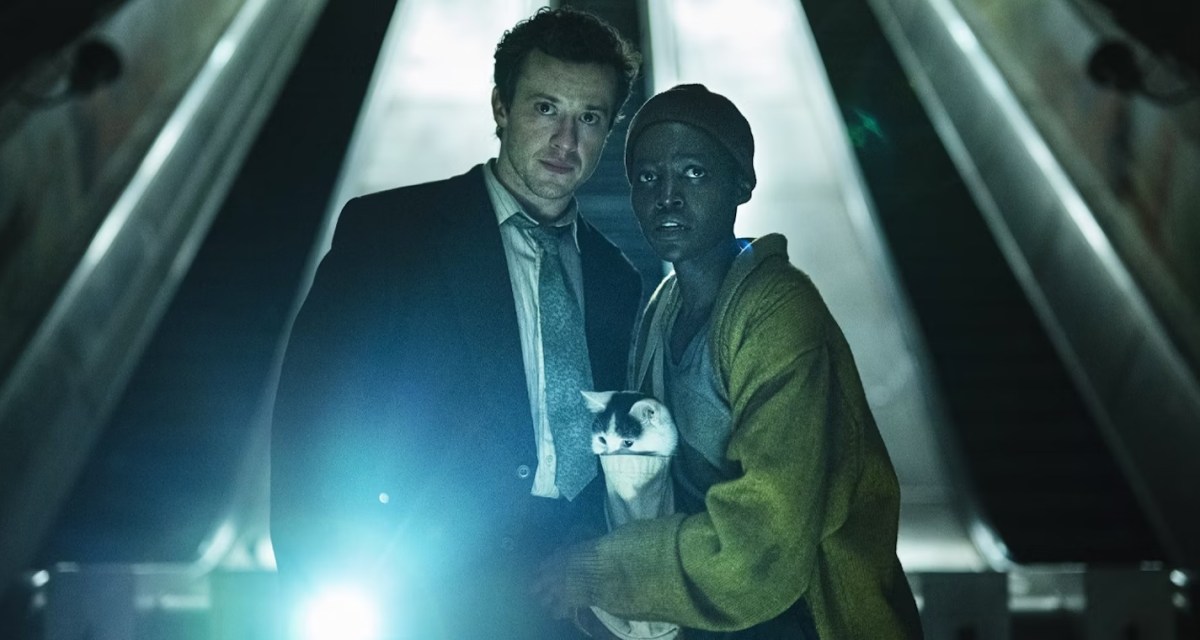
With A Quiet Place: Day One and Apocalypse Z: The Beginning Of The End, it looks like the “protagonist and cat surviving the world’s end” thing might be a growing subgenre.

While Day One lit up theaters in spring and early summer, Apocalypse Z is a zombie flick out of Spain, currently sitting atop Amazon’s Prime Video charts as a major crossover hit.

It stars Francisco Ortiz as Manel, the owner of a small solar power business and servant of a talkative cat named Luculo. Manel’s brother-in-law works for the Spanish military, and as reports of a deadly and spreading virus hit the news, his sister relays privileged information from her husband warning Manel to hide during mandatory evacuation and find a way to join the family on the Canary Islands, where Spain’s military and civil leaders have fled.

Vince McMahon Meme

After weathering the initial wave of the virus by huddling in his apartment in Galicia, Manel seeks out a way to make the 2,400km (about 1,500 mile) journey to safety.

One thing I loved about this movie was Manel’s absolute devotion to Luculo. When he tries to stock up at a store being ransacked by panicked locals, the first thing he does is grab cat food. When he finds a set of wheels at one point — a sporty motorcycle — he straps Luculo’s carrier securely to the back of the seat.

No matter how impractical, no matter how much danger it puts him in, Manel refuses to abandon his pal, even though the little guy can’t keep his mouth shut.

Apocalypse Z
Manel with Luculo the cat in his carrier, strapped to the back of the motorcycle.

While watching Day One, all I could think about was how conveniently silent Sam the cat was, and how dead I’d be trying to survive with Bud in the same situation.

Luculo is incapable of being quiet, although he’s not as loud or insistent as Bud is. He’s named after the Roman statesman and conqueror Lucinius Lucullus, described as “the greatest glutton of antiquity, who stunned Rome with his lavish feasts” and his dedication to bringing recipes for the tastiest dishes from the provinces back to the capital.

“He came, he ate, he conquered” might be an appropriate motto for Lucullus, and his feline namesake is similarly food-obsessed, often seen scarfing down yums as if the apocalypse is just a minor obstacle between meals.

Apocalypse Z
Manel refuses to leave his buddy behind, going to great lengths to keep Luculo safe as the world goes to hell around them.

Apocalypse Z isn’t a walk in the park, given the genre, but it’s significantly less gory than The Walking Dead, The Last of Us or even Zombieland. The film’s infected are Danny Boyle-style zombies, the terrifyingly fast baddies from 28 Days Later and 28 Weeks Later, rather than the slow shufflers of Romero-influenced productions. Accordingly, they’re much more dangerous and enable more intense action sequences.

Finally, because this is a cat blog and I’ll most certainly get emails and comments if I don’t address the tabby in the room: nothing terrible happens to Luculo. His greatest ordeal is having too many admirers, who are shocked to see a guy who’s survived so long with his pet cat.

Apocalypse Z
Luculo does quite a bit of hissing at the zombies, who stand between him and his beloved yums.

Apocalypse Z: The Beginning of the End is the first part of a bigger story, as the title suggests. It rocketed to the top as the most-streamed movie in more than 90 countries, so we should be hearing news about a sequel soon.

If you’re a fan of genre movies and escapism, Apocalypse Z is a fun way to spend a few hours.


Apocalypse Z is available now to stream on Amazon Prime Video. The stream will default to an overdubbed version, but we highly recommend enabling English subtitles and switching the audio track to its original Spanish.

Review: Civil War Is A Warning To America

Alex Garland’s latest film is a road trip through the ruins of America as the nation is engulfed in a modern day civil war. It wasn’t so long ago that such a scenario would be unthinkable. Now we wonder if it’s an inevitability.

There’s a moment in Civil War when Kirsten Dunst’s world-weary photojournalist sits down in the ruins of a US industrial park, with tracer fire lighting up the night a few miles away, and turns to Stephen McKinley’s print scribe.

“Every time I got the photo and survived a war zone,” Dunst’s character tells him, “I thought I was sending a warning home: don’t do this. And yet here we are.”

In a movie that works on every level as a warning to the American public not to throw away what we have, what we take for granted, that one quiet moment feels like director Alex Garland speaking directly to the audience, making sure no one can miss the point. Don’t do this.

civilwar08
Dunst, left, and McKinley share a quiet moment in an industrial park as a battle rages a few miles off. Credit: A24

The sad truth is, the United States now seem more divided than at any other point since the original civil war. We’re dangerously close to the abyss, and the people dragging us there are the most ignorant of us. They’re the people who can’t tell you the name of their own congressman and can’t articulate what the three branches of government do (or even what they are), but insist everyone listen with rapt attention as they screech incoherently about politics and demonize those whose views differ.

They’re the people who return the zealots to congress, who populate the extremes and openly fantasize about purging the country of the ideologically impure.

Civil War: Dunst and Spaeny
Kirsten Dunst, left, and Cailee Spaeny in Civil War. Credit: A24

They’ve sworn fealty to ideology, abdicating their responsibility to think about things for themselves. Because, frankly, it’s easier to pick a pundit and an alignment, construct a filter bubble in which they never have to be confronted with a fact they don’t like, and be constantly reminded how they should feel about everything from petty culture war issues to conflicts happening a comfortable distance away. That way everything remains neatly in the abstract, and the consequences are someone else’s problem.

But not this time.

Civil War’s cast is phenomenal, but much of the film’s power comes from seeing the familiar become the horrific. Garland illustrates the banality of evil by taking his characters on a journey through the war-torn east coast, past shopping plazas cratered by rocket propelled grenades, waterways filled with bodies and playgrounds on fire. One highway overpass is vandalized with a spray-painted “Go Steelers!” while the bodies of two Americans sway on ropes beneath it.

Civil War: Go Steelers

In refugee camps in Pennsylvania and Virginia, people who could be our neighbors talk quietly around fires while their kids play with soccer balls and chase each other. The film’s main characters, a quartet of journalists trying to get to Washington, DC (where we’re told presidential loyalists shoot members of the press on the spot), marvel when they ride through one idyllic small town where people walk their dogs and hang out in coffee shops as if the country isn’t tearing itself apart.

It’s only when they stop to talk to the proprietor of a small shop that they realize the illusion of normalcy is maintained by an army of sharpshooters keeping watch from the rooftops.

Garland wisely stays away from the specific ideological reasons for the civil war in favor of showing us the fallout.

The president is on his third term. He’s authorized airstrikes on fellow Americans, imprisoned dissidents, put a bounty on journalists and hasn’t offered the public anything more than teleprompter-fed remarks in more than a year. But his authoritarian grip on power is finally fractured when two fed-up coalitions of states break away from the union. The more powerful of the two, the so-called WF (Western Forces), is extremely well-equipped: a shot of one of their camps shows F-35 Raptors, mechanized infantry and heavy lift helicopters.

civilwar01
Dunst’s character in a Western Forces camp. Credit: A24

These aren’t people living on the margins of society, armed with civilian versions of AR-15s. They’re US military, entire divisions defected in opposition to Washington with all the firepower and logistics capacity that entails. Separately, another secessionist coalition led by Florida is making its way up the east coast, seeking to turn the Carolinas and other states to their cause.

The noose is tightening around the president’s neck, even as he insists “the greatest military campaign in American history” under his command has defeated the secessionists, like Baghdad Bob in the Oval Office.

Civil War: Nick Offerman
Nick Offerman plays the authoritarian, three-term president who has ordered airstrikes on American citizens and had journalists executed. Credit: A24

As the Western Forces and Florida Alliance push toward D.C., there’s a renewed sense of urgency in symbolism. The president, Wagner Moura’s Joel says early in the movie, will be “dead inside a month.” Both coalitions are intent on reaching Washington and ending the war on July 4th.

“The optics,” Joel tells the other journalists, “are irresistible.”

Thus, the reporters decide to go after “the only story left,” which is to attempt to interview and photograph the president before he’s deposed or killed, despite the very real possibility they’ll be executed on the White House lawn before they can ask a question.

The film’s central characters are Dunst’s Lee Smith, a celebrated photojournalist who has seen it all, Moura’s Joel, the reporter who is partnered with Lee, McKinley’s Sammy, a reporter for “what’s left of the New York Times,” and Cailee Spaeny’s Jessie, a green but fearless 23-year-old who wants to be a war photographer like Lee.

Lee and Jessie meet at the beginning of the film in Manhattan, where both are photographing unrest as people crowd a disaster relief tanker, hoping to fill their containers with water. The fact that one of life’s most essential needs is no longer guaranteed, in New York City of all places, is just the first sign of how bad things have gotten.

Jessie moves in, snapping away as the crowd pushes toward the tanker and NYPD officers try to maintain order. When several people rush the tanker, Jessie gets hit in the face by someone swinging a bat.

Reeling, she stumbles away from the crowd, and Lee immediately mothers her, taking the young woman a safe distance away. She takes off her bright yellow press jacket and gives it to Jessie, then tells her: “If I see you again, you’d better be wearing Kevlar and a helmet.”

Civil War: Cailee Spaeny and Kirsten Dunst
Spaeny, left, and Dunst. Credit: A24

They do meet again, the next morning. Lee is surprised to see the younger woman in the back seat of their truck next to Sammy. Furious, she pulls Joel aside. He explains that Jessie had approached him late the previous evening, asking to tag along with him, Lee and Sammy on their trip to DC.

Joel argues that Lee was Jessie’s age when she began her career, but he’s not acting out of the kindness of his heart. He is a man, Jessie is a beautiful young woman, and he has ulterior motives.

Lee’s mouth twitches in disapproval. She sees this fresh-faced, naive 23-year-old, and sees herself before she’s become jaded from a career of documenting humans doing horrific things to each other.

Civil War would be a road trip movie, if road trip movies illustrated camaraderie by shared trauma. Pockets of violence are everywhere. Some involve presidential loyalists fending off advance elements of the Western Forces, but some are civilians who see an opportunity to kill, torture and pillage with impunity.

Dunst is magnificent as Lee, wearing the war photographer’s trauma like armor, her disgust with humanity apparent in her tired eyes. McKinley is the old-school print scribe who can’t quit, even as his body fails him.

“You’re worried I’m too old and too slow,” he tells Lee and Joel early in the film as they drink in the lounge of a Manhattan hotel, imploring them to let him accompany them south to D.C.

“You aren’t?” Lee answers.

“Of course I am,” he admits. “But are you really going to make me explain why I have to do this?”

Civil War: Wagner Moura
Wagner Moura’s Joel screams in frustration and rage after a particularly traumatic scene. Credit: A24

Here again, so much of the movie’s power is showing America in a state we only see from a distance through the dispatches and footage of war reporters. As the three of them sip their drinks in the hotel bar, waiting for their stories and photos to transmit over glacial wifi, the power drops.

“That’s every night this week,” Lee sighs.

“They’ll switch to the generators,” Sammy says.

They’re not in the shell of a formerly grand hotel in Baghdad or Damascus, relying on juice from old car batteries. They’re in New York, America’s greatest city, the cultural, media and finance capital of the world, a metropolis that operates on 11 billion watt-hours a day. A devastated, eerily quiet New York which resembles the early days of the COVID lockdown, yes, but New York all the same.

Civil War
A sniper is pinned down by a civilian who has taken advantage of the lawlessness and chaos to kill fellow Americans. Credit: A24

After watching Civil War, I was disheartened to see the usual rage and incrimination in discussions about the film. Depending on their political backgrounds, people are sure Garland — a native and citizen of the UK — is “a lib” or “a MAGAtard.” Opportunities for thoughtful discussion are derailed in favor of the usual talking point regurgitation.

But the hope is that the sensible are the silent majority, that we aren’t so fattened by domestic stability, security and a feeling of invincibility that we can’t see what’s right in front of our faces. We would do well to remind ourselves that the scenarios we experience only in the safety of fiction still happen all over the world.

As you read this, people are dying of exhaustion and suffering pointless deaths in North Korean and Russian hard labor camps so brutal that we don’t even have a way to place them in context. The people of Haiti are terrorized nightly by ultra-violent gangs who have filled the power vacuum, raping and executing with impunity. Gaza has been bombed to rubble, and its rubble has been bombed to sand. People hoping to escape abject poverty embark on the hard journey to America only to find themselves sold into sexual slavery. Men and women in Asia, desperate to find jobs, arrive at what they think are interviews only to be kidnapped and spirited away into compounds in lawless Myanmar, where they’re forced to sit in front of screens for 20 hours a day running “pig butchering” romance scams on lonely American retirees. If they try to flee, they’re shot.

And just yesterday, a man walked up to a golf course in Palm Beach county, pointed the muzzle of an AK-47 through the chain link fence and tried to assassinate a major party American presidential candidate — the second assassination attempt in three months.

The people who most need to hear Garland’s message are those least likely to heed it, but we can hope. Reality has a funny way of obliterating fantasy, and it’s better for all of us if our delusional countrymen don’t find out the hard way that war is neither fun nor glorious.

Let’s hope Civil War remains a movie, and not a prescient preview of things to come.

Civil War is currently streaming on HBO Max and is available to rent via Apple, Amazon and other online streaming platforms.

Header image: Western Forces units fire rocket propelled grenades at White House loyalists using the Lincoln Memorial for cover. Credit: A24

buddy_thebuddinesetiger

If you like reading content from PITB, please consider whitelisting us in your browser’s ad block. All proceeds from PITB go toward Buddy’s turkey fund.

Gori: Cuddly Carnage Blends Cat Humor With Frenetic Fun

Gori is a cat game for people with a sense of humor and a love for high-octane, chaotic fun.

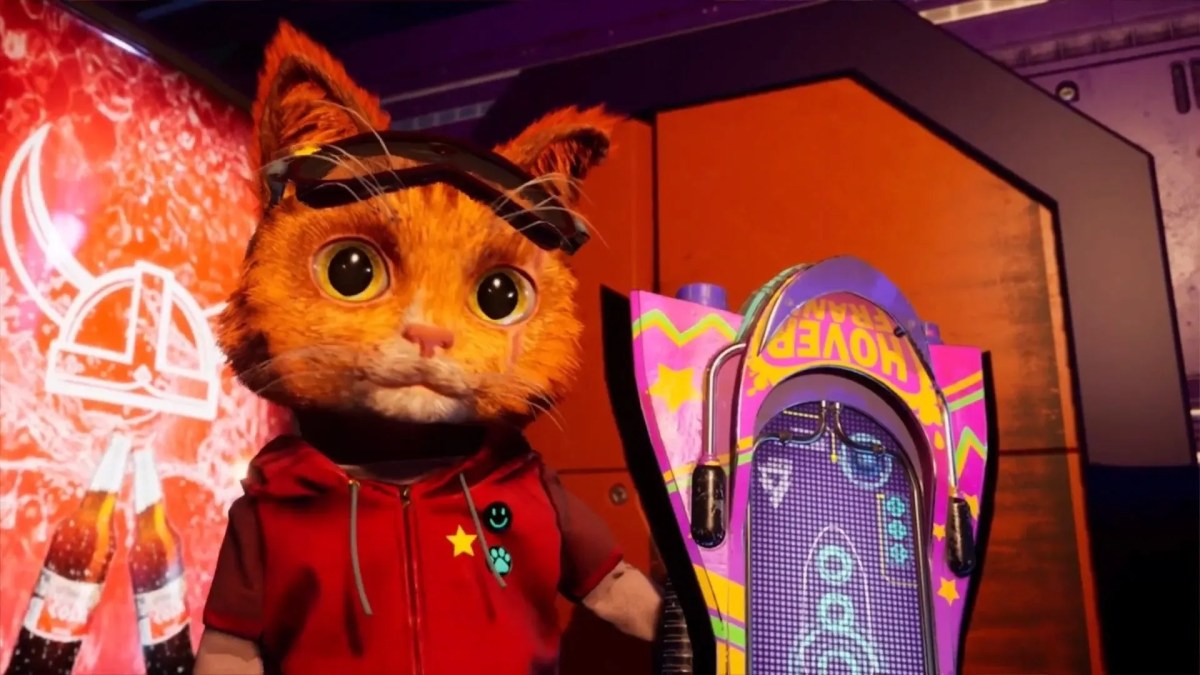
There’s a moment in the very first stage of Gori: Cuddly Carnage when you get your first weapon upgrade, and your talking hoverboard, Frank, chimes in: “Yeah! A new weapon! Let’s try it on those little shits!”

The “little shits” Frank is referring to are undead unicorns, cute little bad guys who squeak and hop but will murder feline protagonist Gori if he doesn’t kill them first.

And that’s what Gori: Cuddly Carnage is about: killing enemies, and doing it in the most stylish way possible, with satisfyingly-animated moves that involve spinning, smashing and slashing the bad guys with your hoverboard as you zoom through neon-lit levels at a frenetic pace. All of this is set to a grinding metal soundtrack, with high-sustain solos and singers extolling the awesomeness of Gori.

Gori himself is a cute orange tabby cat who happily meows as he executes rail slides and jumps, but this is not a game for children. Developers Wired Productions and CouchPlay have aimed this at cat lovers with a dark sense of humor and gamers who enjoy the nonstop war dance of games like Ghostrunner and the modern Doom franchise, which reward you for an improvisational and fast-paced approach to challenges.

The more quickly you complete levels, the more acrobatic your approach, the higher your score.

Gori: Cuddly Carnage wall grind
Cuddly Carnage’s gameplay feels more like Jet Grind Radio and Ghostrunner than Tony Hawk, despite our hero getting around on a board. Credit: Angry Demon Studio

The game gives you four difficulty choices, from Indoor Cat (“Easily slay enemies left and right in between naps!”) to Cuddly Carnage, the most difficult setting that promises aggressive enemies who hit hard. I’m terrible at games that involve heavy wall-running and constant speed, so I chose the second-easiest difficulty, although the difficulty level seems to have less to do with pace than it does the challenge posed by enemies. Next time I’ll kick it up a notch.

If there’s a story here, it’s almost incidental and serves only to introduce the comically absurd setting. Gori’s spaceship is destroyed, and he’s landed on the ruin of a planet abandoned by its human settlers to find a new ship. Why does he need a ship? To find yums and toys, of course.

The early game looks a bit like the third installment of Borderlands and plays like a faster version of Jet Grind Radio with the aforementioned elements of balletic violence. Hilariously, the first level is littered with what look like abandoned Tesla Cybertrucks, which you can slash in half with your hoverboard to collect resources.

Gori: Cuddly Carnage level screen
Gori hovers and battles his way through bright, neon-lit streets filled with bizarre and hilarious enemies. Credit: Angry Demon Studio

Cuddly Carnage eases you in, showing you how to execute moves and how to navigate the levels by rail grinding. The idea is to stay airborne as long as possible, using your feline agility and Frank’s boost abilities, descending only to unleash whoopass on your enemies.

While Gori: Cuddly Carnage represents another welcome “play as a cat” game, it’s a completely different beast than 2022’s slow-paced, thoughtful Stray or this year’s playful Little Kitty, Big City.

We played the PC version via Steam, but the game is also available on current versions of XBox, Nintendo Switch, and PS4/5. Steam reviews are extremely positive so far, with 97 percent of reviewers recommending taking a spin with the manic meowster.

Gori
Gori is designed as a cute orange tabby, but he’s also a slob: his ship is littered with toys and empty cat food cans, and he loos like he could use a good grooming.