Review: Civil War Is A Warning To America

Alex Garland’s latest film is a road trip through the ruins of America as the nation is engulfed in a modern day civil war. It wasn’t so long ago that such a scenario would be unthinkable. Now we wonder if it’s an inevitability.

There’s a moment in Civil War when Kirsten Dunst’s world-weary photojournalist sits down in the ruins of a US industrial park, with tracer fire lighting up the night a few miles away, and turns to Stephen McKinley’s print scribe.

“Every time I got the photo and survived a war zone,” Dunst’s character tells him, “I thought I was sending a warning home: don’t do this. And yet here we are.”

In a movie that works on every level as a warning to the American public not to throw away what we have, what we take for granted, that one quiet moment feels like director Alex Garland speaking directly to the audience, making sure no one can miss the point. Don’t do this.

civilwar08
Dunst, left, and McKinley share a quiet moment in an industrial park as a battle rages a few miles off. Credit: A24

The sad truth is, the United States now seem more divided than at any other point since the original civil war. We’re dangerously close to the abyss, and the people dragging us there are the most ignorant of us. They’re the people who can’t tell you the name of their own congressman and can’t articulate what the three branches of government do (or even what they are), but insist everyone listen with rapt attention as they screech incoherently about politics and demonize those whose views differ.

They’re the people who return the zealots to congress, who populate the extremes and openly fantasize about purging the country of the ideologically impure.

Civil War: Dunst and Spaeny
Kirsten Dunst, left, and Cailee Spaeny in Civil War. Credit: A24

They’ve sworn fealty to ideology, abdicating their responsibility to think about things for themselves. Because, frankly, it’s easier to pick a pundit and an alignment, construct a filter bubble in which they never have to be confronted with a fact they don’t like, and be constantly reminded how they should feel about everything from petty culture war issues to conflicts happening a comfortable distance away. That way everything remains neatly in the abstract, and the consequences are someone else’s problem.

But not this time.

Civil War’s cast is phenomenal, but much of the film’s power comes from seeing the familiar become the horrific. Garland illustrates the banality of evil by taking his characters on a journey through the war-torn east coast, past shopping plazas cratered by rocket propelled grenades, waterways filled with bodies and playgrounds on fire. One highway overpass is vandalized with a spray-painted “Go Steelers!” while the bodies of two Americans sway on ropes beneath it.

Civil War: Go Steelers

In refugee camps in Pennsylvania and Virginia, people who could be our neighbors talk quietly around fires while their kids play with soccer balls and chase each other. The film’s main characters, a quartet of journalists trying to get to Washington, DC (where we’re told presidential loyalists shoot members of the press on the spot), marvel when they ride through one idyllic small town where people walk their dogs and hang out in coffee shops as if the country isn’t tearing itself apart.

It’s only when they stop to talk to the proprietor of a small shop that they realize the illusion of normalcy is maintained by an army of sharpshooters keeping watch from the rooftops.

Garland wisely stays away from the specific ideological reasons for the civil war in favor of showing us the fallout.

The president is on his third term. He’s authorized airstrikes on fellow Americans, imprisoned dissidents, put a bounty on journalists and hasn’t offered the public anything more than teleprompter-fed remarks in more than a year. But his authoritarian grip on power is finally fractured when two fed-up coalitions of states break away from the union. The more powerful of the two, the so-called WF (Western Forces), is extremely well-equipped: a shot of one of their camps shows F-35 Raptors, mechanized infantry and heavy lift helicopters.

civilwar01
Dunst’s character in a Western Forces camp. Credit: A24

These aren’t people living on the margins of society, armed with civilian versions of AR-15s. They’re US military, entire divisions defected in opposition to Washington with all the firepower and logistics capacity that entails. Separately, another secessionist coalition led by Florida is making its way up the east coast, seeking to turn the Carolinas and other states to their cause.

The noose is tightening around the president’s neck, even as he insists “the greatest military campaign in American history” under his command has defeated the secessionists, like Baghdad Bob in the Oval Office.

Civil War: Nick Offerman
Nick Offerman plays the authoritarian, three-term president who has ordered airstrikes on American citizens and had journalists executed. Credit: A24

As the Western Forces and Florida Alliance push toward D.C., there’s a renewed sense of urgency in symbolism. The president, Wagner Moura’s Joel says early in the movie, will be “dead inside a month.” Both coalitions are intent on reaching Washington and ending the war on July 4th.

“The optics,” Joel tells the other journalists, “are irresistible.”

Thus, the reporters decide to go after “the only story left,” which is to attempt to interview and photograph the president before he’s deposed or killed, despite the very real possibility they’ll be executed on the White House lawn before they can ask a question.

The film’s central characters are Dunst’s Lee Smith, a celebrated photojournalist who has seen it all, Moura’s Joel, the reporter who is partnered with Lee, McKinley’s Sammy, a reporter for “what’s left of the New York Times,” and Cailee Spaeny’s Jessie, a green but fearless 23-year-old who wants to be a war photographer like Lee.

Lee and Jessie meet at the beginning of the film in Manhattan, where both are photographing unrest as people crowd a disaster relief tanker, hoping to fill their containers with water. The fact that one of life’s most essential needs is no longer guaranteed, in New York City of all places, is just the first sign of how bad things have gotten.

Jessie moves in, snapping away as the crowd pushes toward the tanker and NYPD officers try to maintain order. When several people rush the tanker, Jessie gets hit in the face by someone swinging a bat.

Reeling, she stumbles away from the crowd, and Lee immediately mothers her, taking the young woman a safe distance away. She takes off her bright yellow press jacket and gives it to Jessie, then tells her: “If I see you again, you’d better be wearing Kevlar and a helmet.”

Civil War: Cailee Spaeny and Kirsten Dunst
Spaeny, left, and Dunst. Credit: A24

They do meet again, the next morning. Lee is surprised to see the younger woman in the back seat of their truck next to Sammy. Furious, she pulls Joel aside. He explains that Jessie had approached him late the previous evening, asking to tag along with him, Lee and Sammy on their trip to DC.

Joel argues that Lee was Jessie’s age when she began her career, but he’s not acting out of the kindness of his heart. He is a man, Jessie is a beautiful young woman, and he has ulterior motives.

Lee’s mouth twitches in disapproval. She sees this fresh-faced, naive 23-year-old, and sees herself before she’s become jaded from a career of documenting humans doing horrific things to each other.

Civil War would be a road trip movie, if road trip movies illustrated camaraderie by shared trauma. Pockets of violence are everywhere. Some involve presidential loyalists fending off advance elements of the Western Forces, but some are civilians who see an opportunity to kill, torture and pillage with impunity.

Dunst is magnificent as Lee, wearing the war photographer’s trauma like armor, her disgust with humanity apparent in her tired eyes. McKinley is the old-school print scribe who can’t quit, even as his body fails him.

“You’re worried I’m too old and too slow,” he tells Lee and Joel early in the film as they drink in the lounge of a Manhattan hotel, imploring them to let him accompany them south to D.C.

“You aren’t?” Lee answers.

“Of course I am,” he admits. “But are you really going to make me explain why I have to do this?”

Civil War: Wagner Moura
Wagner Moura’s Joel screams in frustration and rage after a particularly traumatic scene. Credit: A24

Here again, so much of the movie’s power is showing America in a state we only see from a distance through the dispatches and footage of war reporters. As the three of them sip their drinks in the hotel bar, waiting for their stories and photos to transmit over glacial wifi, the power drops.

“That’s every night this week,” Lee sighs.

“They’ll switch to the generators,” Sammy says.

They’re not in the shell of a formerly grand hotel in Baghdad or Damascus, relying on juice from old car batteries. They’re in New York, America’s greatest city, the cultural, media and finance capital of the world, a metropolis that operates on 11 billion watt-hours a day. A devastated, eerily quiet New York which resembles the early days of the COVID lockdown, yes, but New York all the same.

Civil War
A sniper is pinned down by a civilian who has taken advantage of the lawlessness and chaos to kill fellow Americans. Credit: A24

After watching Civil War, I was disheartened to see the usual rage and incrimination in discussions about the film. Depending on their political backgrounds, people are sure Garland — a native and citizen of the UK — is “a lib” or “a MAGAtard.” Opportunities for thoughtful discussion are derailed in favor of the usual talking point regurgitation.

But the hope is that the sensible are the silent majority, that we aren’t so fattened by domestic stability, security and a feeling of invincibility that we can’t see what’s right in front of our faces. We would do well to remind ourselves that the scenarios we experience only in the safety of fiction still happen all over the world.

As you read this, people are dying of exhaustion and suffering pointless deaths in North Korean and Russian hard labor camps so brutal that we don’t even have a way to place them in context. The people of Haiti are terrorized nightly by ultra-violent gangs who have filled the power vacuum, raping and executing with impunity. Gaza has been bombed to rubble, and its rubble has been bombed to sand. People hoping to escape abject poverty embark on the hard journey to America only to find themselves sold into sexual slavery. Men and women in Asia, desperate to find jobs, arrive at what they think are interviews only to be kidnapped and spirited away into compounds in lawless Myanmar, where they’re forced to sit in front of screens for 20 hours a day running “pig butchering” romance scams on lonely American retirees. If they try to flee, they’re shot.

And just yesterday, a man walked up to a golf course in Palm Beach county, pointed the muzzle of an AK-47 through the chain link fence and tried to assassinate a major party American presidential candidate — the second assassination attempt in three months.

The people who most need to hear Garland’s message are those least likely to heed it, but we can hope. Reality has a funny way of obliterating fantasy, and it’s better for all of us if our delusional countrymen don’t find out the hard way that war is neither fun nor glorious.

Let’s hope Civil War remains a movie, and not a prescient preview of things to come.

Civil War is currently streaming on HBO Max and is available to rent via Apple, Amazon and other online streaming platforms.

Header image: Western Forces units fire rocket propelled grenades at White House loyalists using the Lincoln Memorial for cover. Credit: A24

buddy_thebuddinesetiger

If you like reading content from PITB, please consider whitelisting us in your browser’s ad block. All proceeds from PITB go toward Buddy’s turkey fund.

Gori: Cuddly Carnage Blends Cat Humor With Frenetic Fun

Gori is a cat game for people with a sense of humor and a love for high-octane, chaotic fun.

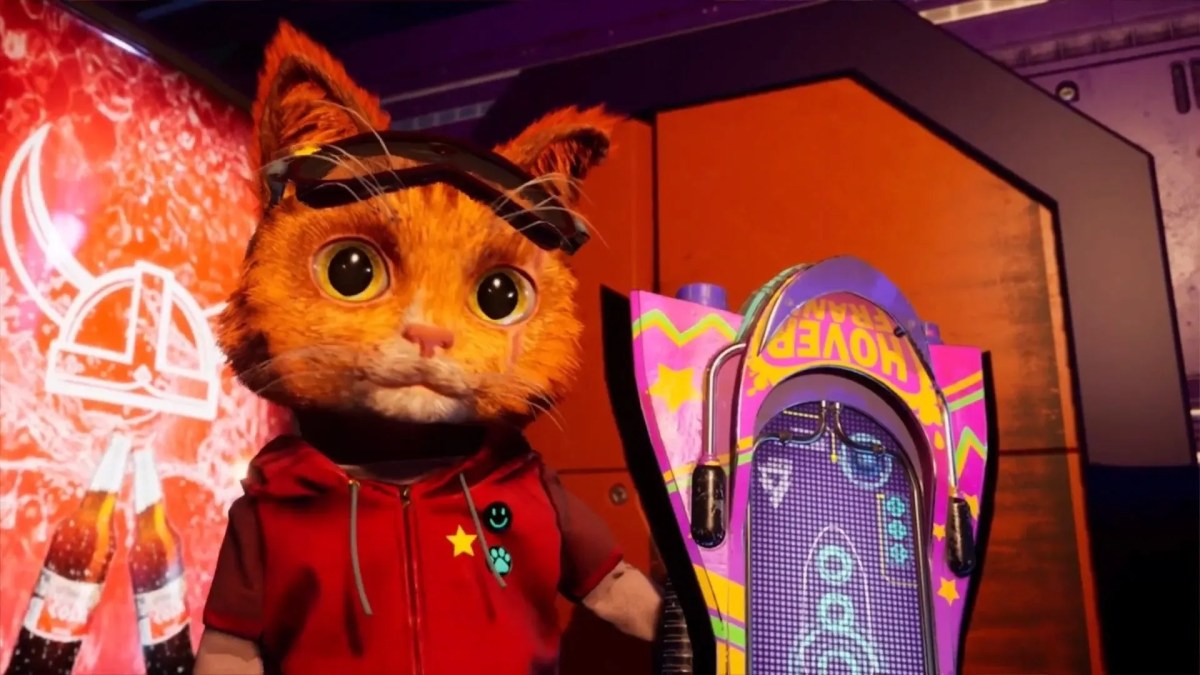
There’s a moment in the very first stage of Gori: Cuddly Carnage when you get your first weapon upgrade, and your talking hoverboard, Frank, chimes in: “Yeah! A new weapon! Let’s try it on those little shits!”

The “little shits” Frank is referring to are undead unicorns, cute little bad guys who squeak and hop but will murder feline protagonist Gori if he doesn’t kill them first.

And that’s what Gori: Cuddly Carnage is about: killing enemies, and doing it in the most stylish way possible, with satisfyingly-animated moves that involve spinning, smashing and slashing the bad guys with your hoverboard as you zoom through neon-lit levels at a frenetic pace. All of this is set to a grinding metal soundtrack, with high-sustain solos and singers extolling the awesomeness of Gori.

Gori himself is a cute orange tabby cat who happily meows as he executes rail slides and jumps, but this is not a game for children. Developers Wired Productions and CouchPlay have aimed this at cat lovers with a dark sense of humor and gamers who enjoy the nonstop war dance of games like Ghostrunner and the modern Doom franchise, which reward you for an improvisational and fast-paced approach to challenges.

The more quickly you complete levels, the more acrobatic your approach, the higher your score.

Gori: Cuddly Carnage wall grind
Cuddly Carnage’s gameplay feels more like Jet Grind Radio and Ghostrunner than Tony Hawk, despite our hero getting around on a board. Credit: Angry Demon Studio

The game gives you four difficulty choices, from Indoor Cat (“Easily slay enemies left and right in between naps!”) to Cuddly Carnage, the most difficult setting that promises aggressive enemies who hit hard. I’m terrible at games that involve heavy wall-running and constant speed, so I chose the second-easiest difficulty, although the difficulty level seems to have less to do with pace than it does the challenge posed by enemies. Next time I’ll kick it up a notch.

If there’s a story here, it’s almost incidental and serves only to introduce the comically absurd setting. Gori’s spaceship is destroyed, and he’s landed on the ruin of a planet abandoned by its human settlers to find a new ship. Why does he need a ship? To find yums and toys, of course.

The early game looks a bit like the third installment of Borderlands and plays like a faster version of Jet Grind Radio with the aforementioned elements of balletic violence. Hilariously, the first level is littered with what look like abandoned Tesla Cybertrucks, which you can slash in half with your hoverboard to collect resources.

Gori: Cuddly Carnage level screen
Gori hovers and battles his way through bright, neon-lit streets filled with bizarre and hilarious enemies. Credit: Angry Demon Studio

Cuddly Carnage eases you in, showing you how to execute moves and how to navigate the levels by rail grinding. The idea is to stay airborne as long as possible, using your feline agility and Frank’s boost abilities, descending only to unleash whoopass on your enemies.

While Gori: Cuddly Carnage represents another welcome “play as a cat” game, it’s a completely different beast than 2022’s slow-paced, thoughtful Stray or this year’s playful Little Kitty, Big City.

We played the PC version via Steam, but the game is also available on current versions of XBox, Nintendo Switch, and PS4/5. Steam reviews are extremely positive so far, with 97 percent of reviewers recommending taking a spin with the manic meowster.

Gori
Gori is designed as a cute orange tabby, but he’s also a slob: his ship is littered with toys and empty cat food cans, and he loos like he could use a good grooming.

Review: A Quiet Place: Day One’s Frodo The Cat Steals The Show

A rare prequel that matches or exceeds the original, Day One explores relationships feline and human in a harrowing, life-or-death situation. With its Manhattan setting and post-apocalyptic vibe, the film also invites comparisons to the chaos and insanity of 9/11, when shocked survivors were just beginning to grapple with what they’d experienced.

If there’s one thing director Michael Sarnoski knows about cat people, it’s that putting a feline in danger is a reliably manipulative way to ratchet up tension.

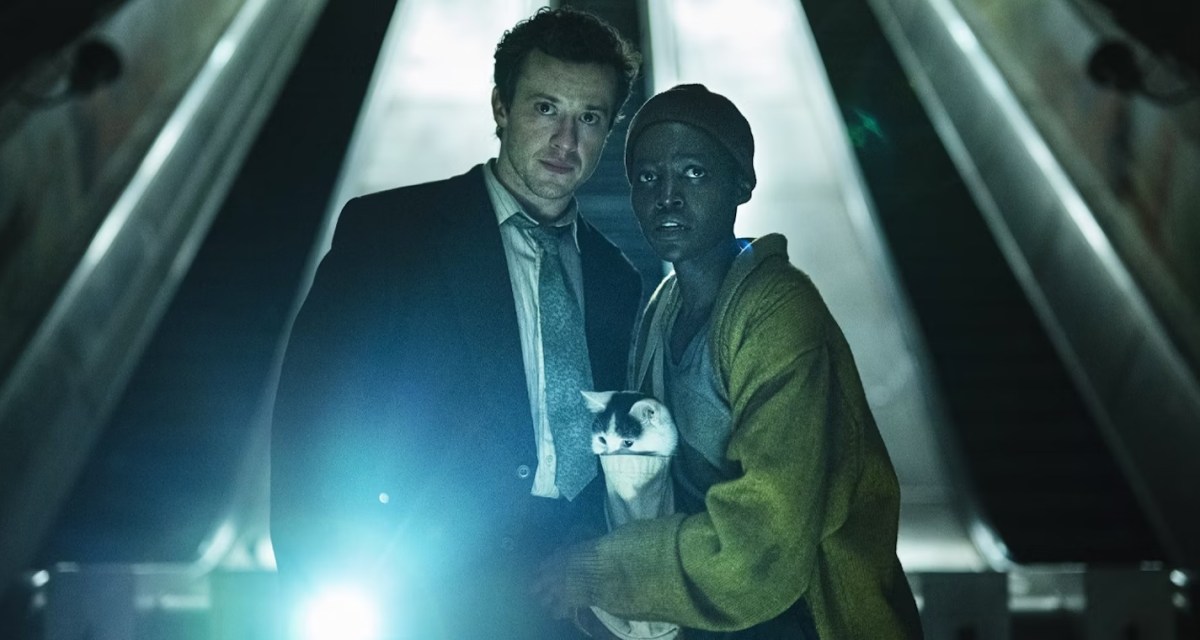
Frodo the cat, therapy pet to Lupita Nyong’o’s Sam in A Quiet Place: Day One, is every bit the handsome co-star.

In a story about a woman and her cat trying to survive an apocalyptic event in New York City, the cat gets plenty of screen time. There are entire sequences following the little guy as he dashes away from danger (and sometimes toward it) and as he follows his feline instincts, which might not be the right instincts in a world that suddenly has its rules rewritten.

Frodo
Nyong’o’s Sam, right, introduces Frodo to a young admirer in a Manhattan theater during the early minutes of A Quiet Place: Day One. Credit: Paramount

A Quiet Place: Day One is the third installment of the Quiet Place films. The first one thrilled audiences with a tight script, tense acting and a quiet/loud dynamic that made the absence of sound more sinister than sound itself.

A Quiet Place (2018) and its sequel (2020) take place about 16 months after the arrival of monstrous creatures of indeterminate origin. The aliens are blind, but that doesn’t impede their ability to rampage through human cities. They have an unearthly sensitivity to sound and can echolocate. Even a whisper can be enough to draw their attention if they’re in relatively close proximity.

We meet the Abbott family (John Krasinski, Emily Blunt and their children) some 16 months after the initial invasion, when they’re living silently on their isolated farm in upstate New York.

The audience is told nothing about where the creatures came from or what they are, and except for a short sequence in the very beginning of the sequel, we don’t see their arrival. The first two films deal exclusively with the aftermath, with scattered survivors trying to eke out an existence.

Frodo the Cat
A curious Frodo watches Quinn’s character, Eric, emerge gasping from a flooded subway station. Credit: Paramount

Day One is a different beast entirely, both from a plot perspective and through the lens of Sarnoski, who leaves his fingerprints all over the franchise and imbues the prequel with a surprisingly poignant relationship between Nyong’o’s Sam and Joseph Quinn’s Eric, a young British student who moved to New York for law school. (If you’re a fan of Stranger Things, you’ll know Quinn as Eddie Munson, the D&D-playing metalhead and stand-out character from the show’s fourth season. He also had a brief appearance in the seventh season of Game of Thrones, and will appear in the upcoming sequel to Ridley Scott’s Gladiator.)

Sam and Eric are strangers thrown together by circumstance and quickly grow close. Eric, overwhelmed by the world being turned upside down in a country he’s not yet accustomed to, needs someone to latch onto. Sam, who has isolated herself as she wastes away from cancer, finds the companionship she didn’t know she needed.

While tens of thousands of New Yorkers heed the US military’s call to head to South Street Seaport for evacuation via boats, as the Death Angels apparently cannot swim, Sam is determined to reach Patsy’s pizzeria in Harlem, where she believes the world’s last slice of their beloved thin-crust pizza awaits. Unlike the other survivors, she doesn’t have the possibility of a future if she makes it to safety.

Walking from Chinatown in lower Manhattan to Patsy’s in Harlem is a hike, about nine miles as the crow flies. It would take most people the better part of three hours to walk under normal circumstances. In an invasion, when the slightest sound can mean death, it’s an extraordinarily dangerous and long journey.

Still, being determined to get the very last slice of pizza in an apocalypse is precisely the sort of ridiculous thing I’d do, so I sympathize with Sam.

Day One
In an amusing scene early in the film, a man in a bodega tells Nyong’o’s Sam she can’t have a cat in the store — while his own shop cat lounges on the counter next to him. Bonus point for the Knicks hat. Credit: Paramount

As for Frodo, he’s one cute little dude! I appreciate the fact that Michael Sarnoski elected to have an adult cat rather than a kitten, not because I have anything against kittens, but because Frodo is a reminder that felines of all ages are beautiful, and there are plenty of Frodos in shelters.

Nico and Schnitzel, the cats who play Frodo, are great animal actors. In one scene Frodo sees Quinn emerge from a flooded subway and stops, curiosity playing across his little face. He looks at the stranger and his mouth opens ever so slightly, as if in shock. How many takes did Sarnoski need to get that?

Nico and Schnitzel
Nico and Schnitzel split duties as Frodo. Credit: Paramount

Frodo is also a survivor. His hunting instincts kick in when he sees a rat, drawing him closer to danger, and at one point curiosity beckons him toward the ruined shell of a building where the Death Angels are apparently nesting.

Incredibly, he never meows. There are times when he freaks out and runs, as cats are known to do, but he reliably finds his way back to Sam, and he has a knack for remaining absolutely still and silent when he needs to be.

There were so many moments when I imagined myself in Sam’s shoes and Buddy in Frodo’s paws, and we’d have been dead in all of them. As I noted in my post about the “Quiet Place Challenge” trend on social media, the Budster and I would have a life expectancy of approximately 60 seconds in the film’s world. Death by Buddy would be my fate, as inescapable as his mealtime screeching.

There is also a visceral 9-11 feel to the opening sequences of the invasion, and any New Yorker old enough to remember that day will be reminded of it. It’s impossible not to with the scenes of ash-covered survivors huddled inside buildings, crowds of dead-eyed people walking away from disaster and the eerie sight of a sooty Manhattan bereft of its usual bustle and life.

There are of course plot holes in Day One, or at least unanswered questions to things that don’t seem to make sense. When the military’s helicopters sweep over Manhattan, announcing via loudspeakers that survivors should head to the ports because “the enemy cannot swim,” I wondered: did these aliens just land in Manhattan? If so, why? Surely they don’t recognize the arbitrary municipal boundaries of humanity, and the whole area is one seemingly endless metropolis.

Day One
Quinn, left, and Nyong’o, right, panic as a Death Angel crashes down from above, listening for its prey. Credit: Paramount

The Death Angels are obviously sentient, but whether they’re sapient is another matter. They don’t seem to have much in the way of a sense of self-preservation, and there is no method to their madness. During the aforementioned helicopter scene, the characters watch as hundreds of Death Angels race toward lower Manhattan, drawn by the sound of the choppers and the loudspeaker. It’s impossible not to think it would be trivial to draw the lot of them with the loudest possible sound, then drop a few daisy cutters on them and call it a day.

Of course if any of that happened there would be no movie and no drama, so as with most stories like this, it’s best to let the film pull you along without stopping to over-analyze what you’re seeing.

If you’ve watched the first two films, you also know the reasons for the invasion are nebulous. The Death Angels don’t eat their kills, as Krasinski’s Lee Abbott learned, and if they’re the vanguard of a more intelligent species, doing all the dirty work before the masters arrive, well, we’ve yet to see who’s pulling the strings.

Overall, like horror master Mike Flanagan taking on a sequel to the tepid Ouiji earlier in his career, Sarnoski doesn’t view the fact that Day One is a prequel as an excuse to phone in a performance. He approaches the film with enthusiasm and energy as if it’s one of his own creations, and that’s evident in every frame. It’s a Sarnoski movie that happens to be a genre film, not the other way round.

There’s a surprising poignancy to Day One that makes it more than the sum of its parts. We’re not here to spoil anything, but if you’re a cat lover, we will say that Day One doesn’t pull an I Am Legend. You can watch the film with reassurance that Sarnoski has better tricks up his sleeve for stirring your emotions than gratuitous animal-involved violence.

It’s rare when a sequel or a prequel reaches the same heights as the original. How many of us wish franchises like Alien and The Matrix stopped at one film? Thankfully that’s not the case here. There’s life in A Quiet Place yet, and like the best science fiction, it’s a film that uses extraordinary circumstances to tell a very human story.

Perhaps the best part is the experience has made a cat lover of Nyong’o. In a short promo (below), she explains that she’s always been afraid of cats, viewing them as miniature lions.

“Now,” she says with a laugh, “somehow, I love them!”

She’s not just saying that either. After filming Day One, she adopted her own cat, Yoyo, and it takes just a glance at her Instagram page, which is festooned with photos of the orange tabby, to know that she really does love the little guy.

This Is The Zoo Of My Dreams!

Have you ever wanted to own or design your own zoo?

Visitors to Buddy’s Tropical Paradise are greeted by friendly staff who man the entrance, a broad vertical garden shaped like an arch that straddles the main path leading inside.

When they walk through the gate a new vista opens up before them: tiered tropical gardens, waterfalls, and wide boulevards lined with palm trees and flowers. They hear the rumble of big cats calling to each other in the distance and monkeys shrieking as they fling themselves from branch to branch.

Buddy's Tropical Paradise
Welcome to Buddy’s Tropical Paradise!

A monorail carries passengers above, its tracks looping over animal enclosures and threading tunnels that emerge amid the terraced jungle, eateries and souvenir shops.

And straight ahead, the first exhibit: a sprawling habitat occupied by jaguars who are enjoying some yums and will probably have a nap in a few minutes.

Buddy’s Tropical Paradise doesn’t exist in the real world, of course. It’s my first attempt at fully functional, guest-attracting park in Planet Zoo, a simulator that allows you to do practically anything you can think of.

You can design your own habitats, enclosures, buildings and scenery. Fancy a monorail that laps the entire zoo? You can do that. Picturing a 1940s style Tarzan-themed jungle boat ride where visitors can see caiman, capuchin monkeys and jaguars up close? Start carving up the river, my friend!

Bengal Tiger
A Bengal tiger stalking the tall grass in Planet Zoo.
Jaguars
Lunch time in the jaguar habitat, followed by the all-important nap time.

As the zoo’s architect, you’re responsible for everything. You’ll need veterinary facilities, animal quarantine, keeper huts. You’ll need to staff your park with veterinarians, keepers, security officers, maintenance staff and mechanics.

And don’t forget the vendors to run the souvenir shops and man the food stalls, where your guests can grab hot dogs or cool off with slushies on a hot day.

A suitable home for your animals

Designing a habitat is about a lot more than reserving space for your animals. You’re tasked with picking the right barriers, mindful of which species can climb or leap great heights. A good habitat should reflect the animal’s home in the wild with appropriate flora, temperatures the species thrives in and a feeding system that mimics the way they’d naturally obtain food.

Elephant shower
Elephants cool off in their enclosure in Planet Zoo. Every habitat must be designed with the right atmosphere, flora, terrain, shelter and enrichment appropriate for the species it houses.
Orangutan habitat
A wide view of my orangutan habitat. Two orangutans are at the base of the stone steps in the distance.
Cheetahs
Cheetah sisters.

Then there’s enrichment. Trees for your monkeys to climb, ponds for your tigers to take a dip, bushes for your elephants to strip. Different species enjoy different toys and challenges. An ice block with meat in the middle would hit the spot for carnivores on a hot summer day, but your pandas will want bamboo.

Designing habitats and getting them just right is not only fun, it’s an intuitive way to learn about the needs of individual species and how they live.

The leopard learning incident

My first stab at building a leopard enclosure was a disaster. It looked pretty enough with its Hindu-inspired temple architecture and pond. There were plenty of scratching posts and trees that could withstand claws.

I installed a sprinkler to help the big cats cool off, designed a series of raised platforms for them to climb, and scattered enrichment items all over the habitat. The leopards had balls to bat around, boxes to sit in, rubbing pads, logs and rocks to climb, and plenty of cover and shade.

But when I had the leopards brought into the zoo, through quarantine and into their exhibit, I realized you can’t just design a home for animals from an aesthetic perspective. I’d used several plant and tree species that weren’t native to leopard habitats, the terrain was wrong and I hadn’t paid any mind to ambient temperature.

Making those mistakes was truly educational. When your animals aren’t happy in Planet Zoo, protesters show up, and it’s up to you to read the alerts about where you went wrong and how to remedy your mistakes. It’s an intuitive and fun way to learn about each species and the environments they thrive in.

The escaped jaguar

I’m still learning the ropes, although I do have a basic knowledge of the way the game is designed thanks to some time playing Frontier’s theme park building game, Planet Coaster. The first time I tried to build a jaguar enclosure, I forgot to wall off a viewing cave with protective glass, which my guests did not appreciate.

Even though jaguars don’t like to confront humans, a big cat is a big cat, and the game sent me urgent warnings as people ran for the exits. When I found the escaped jag, he was lounging not far from his enclosure, watching people freak out.

Elephant and ball
Enrichment is a key aspect of habitat design. Toys, puzzles, obstacles, climbing platforms for arboreal species, ponds for animals who like to get wet — they’re all necessary to keep animals healthy and happy.

In real life it’d be a disaster, but I was able to revert to a previous save, make sure the viewing cave was sufficiently protected, and this time around I placed only two jaguars — a male and a female — in the large enclosure.

After a while, while I was tinkering  with an exhibit meant for capuchin monkeys, the game sent me an alert: the female jaguar was pregnant! She gave birth to two energetic, curious cubs who are currently having fun chasing each other around the enclosure and going for dips in their pond.

Night view
Part of the main boulevard in Buddy’s Tropical Paradise, viewed at night. Players are responsible for everything you see here — lighting, shops, flowers and plants, benches, waste baskets and more.
Asian section
Shops and a monorail station in an unfinished Asia-themed area of the zoo.

As in real life, the game has you source animals from an international pool, with information on breeding and genetics so you can contribute to conservation. When you adopt animals, their first stop is the veterinary facilities for examination, then quarantine. When they pass quarantine, you can have your staff release them into their enclosures.

It took me several hours to familiarize myself with the basics, design an entrance and a main boulevard for the guests, create some tiered gardens with eateries and shops, and get my jaguar and orangutan exhibits up and running.

My monorail currently runs out of track a quarter of the way through the park, and my river boat ride looks pretty cool, with dense jungle, towering trees and the ruins of Mayan temples not far from shore, but completing it will require appropriate barriers to keep the animals in as well as building out more scenery.

Jaguar habitat
A jaguar in her habitat.

I’ve got my sights set on an elephant exhibit next. It will be necessarily huge, so it’s good to reserve the land early and plan smaller exhibits and facilities around it. I’d also like to put the elephants, lions, zebra, giraffes etc into one Africa-themed section of the park, while the tigers, giant pandas and snow monkeys will be housed in an Asia-themed section, with buildings that reflect the architectural styles of countries like Japan and China.

There are also aquatic exhibits, animals for your own reptile house and aviaries. Those enclosures are more complex than the relatively straightforward orangutan exhibit, for example, so I’ll have to spend some time figuring out what makes a good home for peacocks, sharks and komodo dragons.

So far I’ve resisted the temptation to make one giant felid park, with snow leopards, pumas and cheetahs joining the tigers, lions, jaguars and others. Of course I did name it Buddy’s Tropical Paradise, so I may be forced down the all-cat road if Bud gets his say.

Cougar

Planet Zoo is not a traditional video game. There are no winners or losers, and there’s no “end state” unless you intentionally include one.

It’s more relaxing and much slower-paced than your typical game, and it’s a great feeling when you’ve managed to take something from your imagination and perfect the design. When you want to check your progress or just admire your own work, you can set the camera to follow guests and watch as people stroll through your zoo, taking in the sights and sounds.

In that sense it’s more like a virtual model train set or living diorama. You can load up the game and tinker with your zoo when you’ve got a spare 15 minutes, or spend a few hours getting absorbed in the finer details of how to keep pangolin and red pandas happy.

Planet Zoo is appropriate for all ages, although its depth and complexity would probably be a lot for younger kids. In that case, it’s probably best to have an adult guide them so they understand the game is built on interlocking systems: exhibits need power and water, shops need staff, veterinary surgeries need veterinarians and so on.

It’ll have enormous appeal to kids who enjoy Lego, Minecraft and other building games, so if you’ve got a little builder in your life, this could be a good fit. But make no mistake, there’s a lot here for adults to enjoy too.

PITB verdict: Four out of five paws!

Paw Rating

The only thing keeping Planet Zoo back from a five-paw rating is the DLC (downloadable content) scheme, which requires users to pay extra for certain “packs” containing extra animals, scenery pieces and scenarios. That’s a problem plaguing the larger video game industry, but if you wait for a sale, the normally $44.95 game can be had for as low as $11.24 on Steam. DLC is likewise discounted. Steam’s summer sale is a great opportunity to get games like this for a fraction of their normal price. This year’s summer sale is scheduled for June 27, though it’s possible Planet Zoo could be put on sale before then as well.

In Slow Horses, MI5’s Rejects Become Heroes

TV thrillers don’t get any better than this.

There’s a scene in the first season of Slow Horses when Gary Oldman, in the role of a lifetime as MI5 supervisor Jackson Lamb, gathers his team as they’re being hunted.

“I don’t normally do these kind of speeches,” he says with an exasperated sigh, “but this feels like a big moment and if it all turns to shit, I might not see any of you again.”

He looks each of his agents in the eye, their fear reflected back at him, and sniffs.

“You’re f—ing useless, the lot of you! Working with you has been the lowest point in a disappointing career,” he says before barking at one of the young agents to accompany him and warning the rest not to get themselves killed.

Oldman is spectacular as Lamb, the gaseous, miserable MI5 veteran who captains Slough House, a purgatory where the agency’s worst agents are sent to waste away the remainder of their careers after humiliating themselves, usually in novel and cringe-worthy ways.

One agent was exiled after forgetting a disc with sensitive information on a train. Another was an alcoholic who didn’t notice her supervisor was feeding information to the Russians for years, while a third was banished to Slough House simply for being an insufferable jerk.

Gary Oldman as Jackson Lamb
Gary Oldman as Jackson Lamb, who oversees the purgatory for disgraced MI5 agents known as Slough House.

Regardless of the reasons, each of the agents at Slough House is determined to get back into the good graces of agency brass by redeeming themselves in service to king and country.

Or, as Mick Jagger puts it in the show’s catchy theme song, they want “to dance with the big boys again.”

To do that they must endure consistently brutal needling from Lamb and navigate the most mundane, least glamorous assignments. If a job is a lose-lose proposition, MI5 hands it over to the rejects of Slough House — the eponymous Slow Horses — figuring their already stained reputations can’t get much worse.

So when a secretive MI5 plot goes off the rails and the agency’s leaders need someone to take the fall, they serve up the Horses.

There’s just one problem: Lamb, for all his misery, disgusting habits and bone-dry British humor, is an exceptional agent with old-school skills, and the Horses themselves aren’t necessarily incompetent. Several were promising young agents of great skill who got railroaded or were collateral damage in political warfare.

When MI5 second-in-command Diana “Lady Di” Taverner (an icy Kristen Scott Thomas) decides the disgraced agents will be blamed for a major agency blunder, Lamb is aghast and warns her he won’t accept it.

“They’re losers,” he says, “but they’re my losers.”

When we meet them for the first time they’ve already been tagged for sacrifice to the media and public, but don’t know it yet.

And when it turns out that the case has real consequences — a young man will be beheaded on a live stream by extremists if their demands aren’t met — the Slow Horses, led by the acid-tongued Lamb, use every trick at their disposal in an attempt to rescue the innocent victim.

slowhorsesriversid
Jack Lowden as River Cartwright, left, and Olivia Cooke as Sid Barrett, center, disgraced agents of MI5. Credit: Apple TV

Slow Horses, like Luther and similar UK crime dramas, is a different animal than the bland, formulaic cop shows we’re accustomed to on this side of the pond.

Whether it’s Law and Order, the many incarnations of CSI and NCIS or shows like Chicago PD, the audience always knows a few things for sure: The case will be solved and the bad guys apprehended by the end of the hour, the police will be righteous and earnest, and favorite characters will never find themselves in real danger. Mariska Hargitay’s character will live another day to continue on in her third decade fighting crime. Chicago’s tough-talking detective Hank might be rough around the edges and bend a few rules, but he’s fundamentally a good guy on the side of justice.

The Slow Horses have no such pretenses, nor plot armor. They’re deeply flawed people and they’re not immune to bullets or bad luck.

The result humanizes the agents in a way other spy thrillers and crime shows never manage to accomplish with their own characters. When one of the Horses takes a bullet from a Russian agent or risks life and limb to protect the British public, there’s a real sense of tension because the show makes it clear not everyone survives.

The show’s writers also know when to dial it back with moments of genuine humor, separating Slow Horses from contemporary spy thrillers like Homeland, which — with apologies to Claire Danes — always took itself seriously.

Slow Horses: Taverner and Lamb
Kristen Scott Thomas as Diana “Lady Di” Taverner, MI5’s ruthless second-in-command, with Oldman as Jackson Lamb. Credit: Apple TV

As for Jagger, he signed on to write the show’s theme song with composer Daniel Pemberton because he’s a fan of the original Slow Horses novels by Mick Herron. While writing the lyrics, he said, the phrase “strange game” kept coming back to him. That became the title of the theme song and its primary hook. It’s an apt description of what MI5 agents are involved in as operators for a domestic agency that, unlike the American FBI, has the green light to involve itself in extensive subterfuge on home soil.

Slow Horses just finished airing its third season. A fourth has already been filmed and completed, a fifth is in production and a sixth season is currently in the adaptation/writing phase.

A production that runs like a finely tuned engine is appropriate for the series: each season is a taut six episodes, meaning there’s no filler and the tension does not let up on the gas pedal. With eight books and counting, there’s plenty more material to adapt, and if the response so far has been any indication — universal praise by critics and audiences in rare agreement — we’ll get to see every one of them make it to the small screen.

Title: Slow Horses
Network: Streaming (Apple TV)
Format: Series
Release date: April 2022 (season 1), December 2022 (season 2), November 2023 (season 3), TBA 2024 (season 4)

Verdict: All the paws up! When it comes to crime and spy thrillers it doesn’t get any better than this. Slow Horses is tense and humorous in precisely the right proportions, knows when not to take itself too seriously, and benefits from an incredibly talented cast to match its excellent writing. We highly recommend this show.