Sunday Cats: Hoarders In Buddyland, Alleged Dallas Zoo Thief Nabbed, P-22 Remembered

More than 6,000 people, a capacity crowd, said goodbye to the famed mountain lion P-22 at The Greek Theatre in LA.

When police went to a Yorktown, NY, home for a welfare check this week, the last thing they expected was to find an army of cats.

The responding officers breached the home when no one answered, finding an elderly couple deceased inside, along with some 150 hungry, neglected cats. Police don’t believe there was foul play in the death of the couple, but the number of cats and the condition of the home have “hindered” their investigation.

The Westchester County SPCA is taking on the monumental task of collecting the cats, giving each of them veterinary care and finding homes for them. Staff there are calling it the largest single rescue in their history, and they’d already filled their own facilities and local shelters to capacity by the time they’d rescued 100 of the famished felines, leaving them scrambling for room to place the others. Some have upper respiratory, eye and skin infections, the SPCA said, while most of the cats were malnourished and dehydrated.

Despite living in conditions police described as “filth and squalor,” the cats are well-socialized and friendly, rescuers say. They believe the husband and wife may have been Abyssinian breeders at some point.

“It’s very unusual in a case like this, especially with that number of cats, for them to be as social and sweet as they are, usually they are scared when they come from a situation like this because they haven’t had a lot of human interaction,” the SPCA of Westchester’s Lisa Bonnano told the New York Post.

Yorktown is about 28 miles north of Casa Buddy, and we can vouch for the excellent work done by the Westchester County SPCA, whose veterinarians gave kitten Buddy his first shots and gave him the snip.

Veterinary costs alone are expected to exceed $40,000, so if you’d like to help, you can make a donation here.

Alleged Dallas Zoo thief nabbed

When 24-year-old Davion Irvin stopped an employee at the Dallas World Aquarium to ask about exotic animals there, the staffer recognized him as the same man pictured in a surveillance still from the Dallas Zoo.

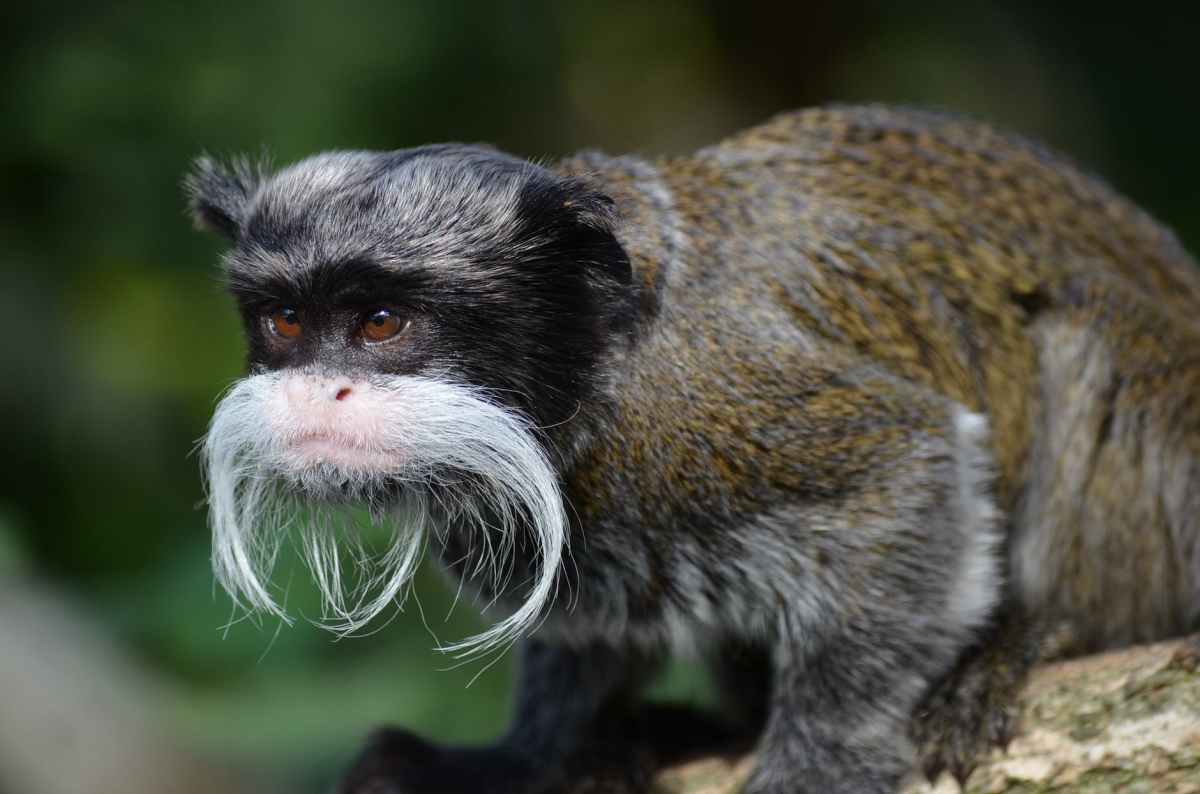
Police released the image to the public after three separate enclosures at the zoo were breached, leading to the brief disappearance of a spotted leopard on Jan. 13 and the theft of two emperor tamarin monkeys about two weeks later. The langur monkey exhibit was also breached, but the animals were not removed.

After the aquarium’s staff tipped them off, cops caught up to Irvin a few miles away and have since linked him to all three break-ins. They charged him with two counts of burglary — for the monkeys and the leopard — and six counts of animal cruelty. They’re also looking into whether Irvin may have been involved with the “very suspicious” death of an endangered lappet-faced vulture on Jan. 21.

Cops, who initially suspected the thief was looking for exotic animals to breed or sell, have said Irvin hasn’t told them why he wanted the primates and the medium size cats. Their investigation is ongoing.

Thousands say goodbye to P-22

More than six thousand people crowded into The Greek Theatre in Los Angeles on Saturday to say goodbye to P-22, the Hollywood Lion, a puma who made the hills above the city his home for more than a decade.
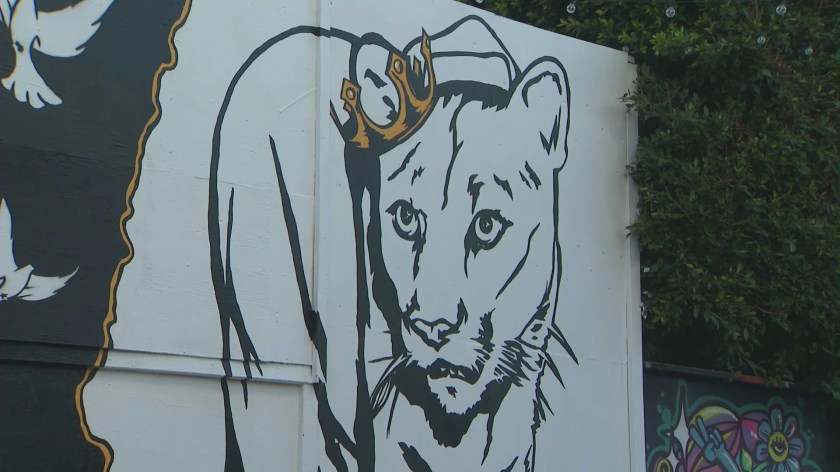
p22mural
One of several new murals of beloved mountain lion P-22, who was euthanized in December after he was hit by a car and suffering from an infection.

People spoke about seeing his curious face pop up on their doorball cameras, spotting him disappearing into the trees in Griffith Park, and how his presence piqued the curiosity of many people who took the time to learn more about mountain lions.

But the unofficial theme of the event was how P-22 showed people humans and wildlife can co-exist, and how our species can do a lot more to make sure the animals we share the Earth with will survive in the future. One woman told LAist that before she learned about P-22, she “used to think they were scary” and aggressive like the big cats they’re often confused with.

Others said he inspired them to get directly involved with conservation efforts.

“We are wildlife. We are creatures of nature, just as all the animals and plants are,” archaeologist Desireé Martinez, a member of the indigenous Gabrielino-Tongva tribe, told KTLA. “What can we do to make sure that the creatures that we are sharing this nature with have the ability to survive and live on — just like us?”

P-22’s unforgettable visage, already familiar to Los Angelinos, is now ubiquitous in his former range, with several murals adorning the sides of buildings and other displays bearing his image.

“He inspired so much happiness. I mean, look at all the people that are here,” Babetta Gonzalez told LAist. “We have to remember that we are in their neighborhood and we need to respect their environment. We have integrated, but we could do a lot better.”
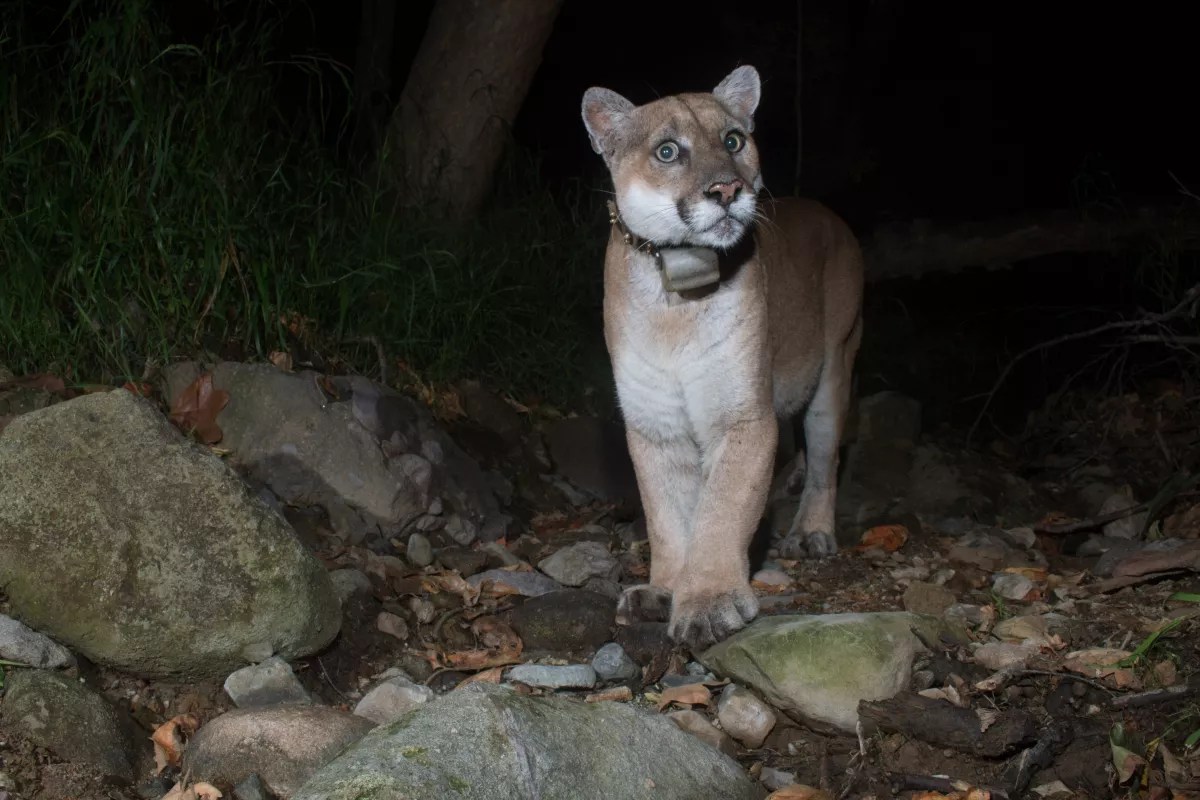
P-22, ‘A Celebration of Life’ To Live Stream On Feb. 4

Thousands are set to gather at The Greek Theatre in Los Angeles’ Griffith Park to celebrate the extraordinary life of perhaps the most famous mountain lion in history.

You don’t often hear about public memorials for cats, let alone thousands of people participating in them, but the fact that tickets were gone for P-22’s “Celebration of Life” within three hours speaks to the special place the mountain lion had in the hearts of Californians.

The famous puma, who was euthanized in December after he was suffering from an infection and was hit by a car, called Los Angeles’ Griffith Park home, and that’s where the celebration will be held at noon Pacific (3 pm Eastern) on Feb. 4. It’ll be held at The Greek, the outdoor amphitheater more commonly associated with rock stars, although one could argue P-22 was a rock star in his own right.

P-22 was the subject of books, movies and music festivals during his 12-year life, and his face adorned t-shirts, murals and street signs asking people to be careful while driving around the Griffith Park area, where the big guy ranged. He was the most famous mountain lion in an ongoing study of his species, and was easily identified by the radio collar around his neck.

P-22’s “origin story” was equally fascinating. Born in southern California in 2010 or 2011, the fearless puma migrated north, crossing several of the busiest and most dangerous highways in the world before he settled in Los Angeles. His nine-mile home range was the smallest ever recorded for a member of his species.

Bookmark this link or this alternate to livestream the event, which is set to include music, performances and remembrances from Los Angelinos and celebrities who loved the “Hollywood Lion.”

Separately, there’s an effort to honor the late puma with postage stamps featuring his famously derpy visage.

Top image credit Miguel Ordeñana/Natural History Museum. Bottom image credit Steve Winter.

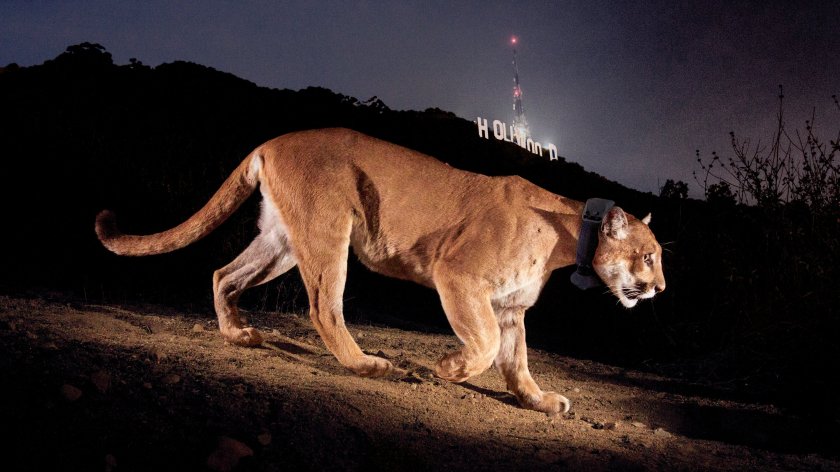
p22hollywood2
Steve Winter’s iconic photo of P-22 prowling in front of the Hollywood sign.

UPDATED: Monkeys Go Missing From Dallas Zoo Weeks After Clouded Leopard Freed From Habitat

Authorities believe the person or people who stole the monkeys intend to sell them as pets or breeding animals.

UPDATE, 2/1/2023: A tip led police to an empty home in Lancaster, Texas, about 15 miles from the zoo. The missing tamarins were found inside a closet and were unharmed, per CNN. They were returned to the zoo and examined by veterinarians.

Police still want to speak to an unidentified man (see story below) who was seen on zoo grounds, but they haven’t said what the man was doing or how he may be connected to the thefts. The abduction of the tamarins follows two other incidents of breached enclosures at the zoo, and the theft of 12 squirrel monkeys from Zoosiana in Broussard, Louisiana, this weekend.


Original story, 1/31/2023:

Dallas police released a photo of a “person of interest” they’d like to speak to after a pair of emperor tamarin monkeys went missing from their enclosure in the Dallas Zoo, the latest of three incidents in which animal habitats at the zoo were breached by human hands.

The first incident happened on Jan. 13 when zookeepers noticed a three-year-old clouded leopard named Nova was missing from her enclosure. They found a breach in the mesh netting that serves as one of enclosure barriers, and said it was a clean, intentional cut with a blade, not from the animals.

After a frantic search — and multiple appeals to the public informing people the leopard was not dangerous and should not be shot — zookeepers found Nova hiding in a tree on the zoo grounds, not far from her enclosure. Nova’s sister, Luna, lives in the same enclosure and remained there.

That same day, staff at the zoo also found another breach, this time at the langur exhibit. Langurs are old-world, leaf-eating monkeys native to Asia. None of the monkeys were missing, but the discovery strengthened the suspicion that someone had tried to steal Nova and at least one monkey, but were not successful.

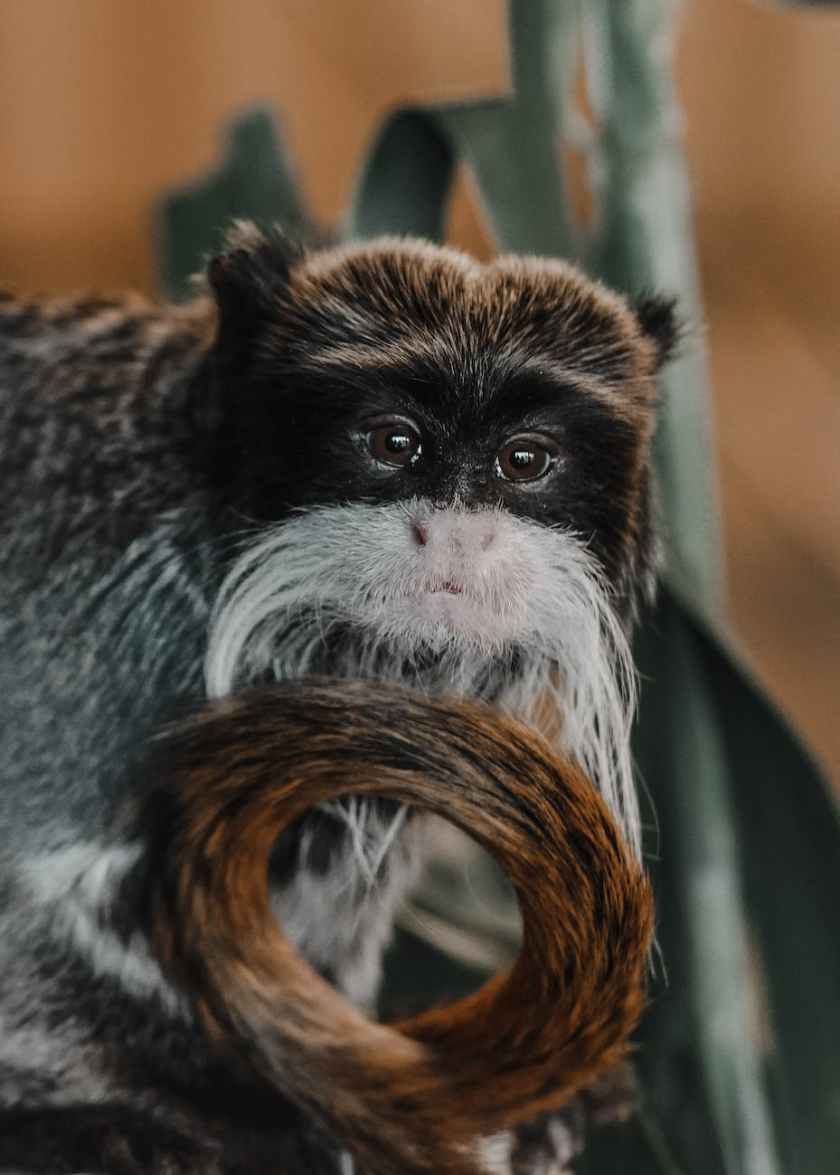
Now it appears that same person or a copycat has been successful in another habitat. On Jan. 30, zookeepers found a breach in a habitat that hold’s the zoo’s emperor tamarin monkeys. Two of the monkeys were missing.

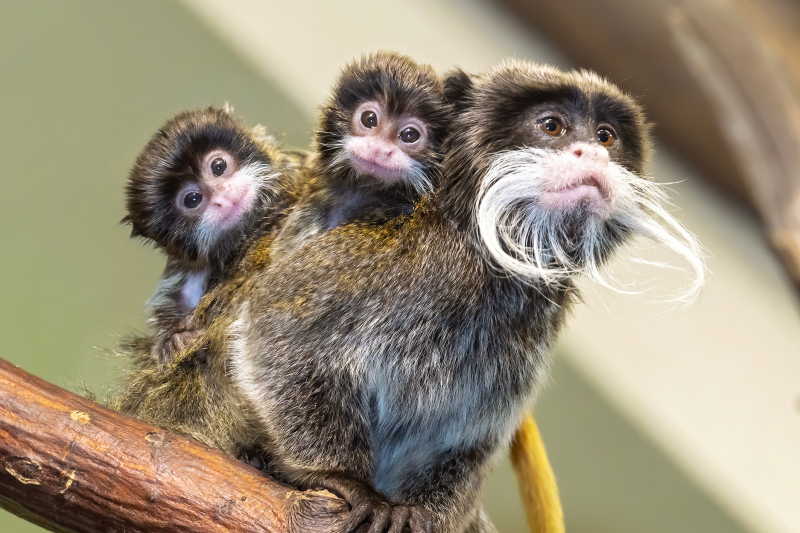
Tamarins are tiny arboreal new world monkeys that have become popular pets due to “influencers” popularizing them on sites like Youtube and celebrities purchasing them.

tamarinwithbabies
A tamarin mother with her babies. Primate babies are virtually attached to their mothers for the first years of their lives

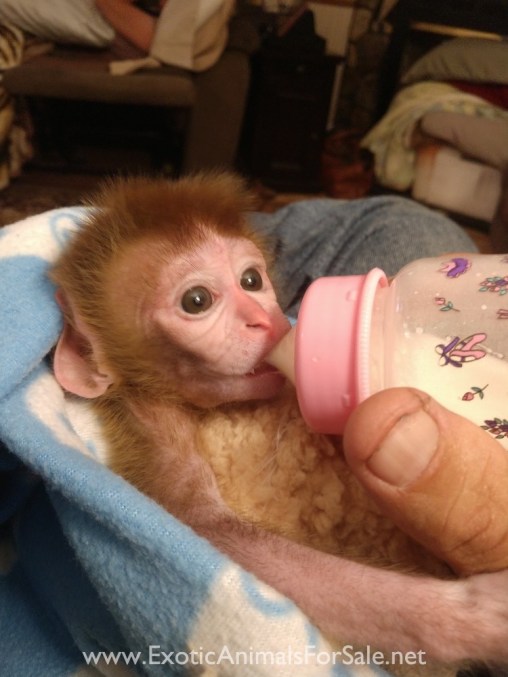
There are an estimated 15,000 monkeys living as pets in the US, and some species fetch up to $7,500 as infants, when they’re violently “pulled” from their mothers when they’re just days old and sold. Most are temporary pets, lasting up to two years before docile, adorable infants become destructive, resentful juveniles and the “owners” decide to cut their losses. Buying monkeys as pets and subsequently abandoning them has become so common that sanctuary spots are at a premium, with a handful of sanctuaries taking thousands of monkeys annually.

Some people buy new babies every year or two, shipping the “old” ones off to sanctuaries — or simply dumping them in the woods where they don’t know how to fend for themselves — and repeating the process of infantalizing newly-purchased monkeys. Macaques, capuchins, marmosets and tamarins are the most popular monkeys kept as pets.

Despite the appeal to some people, humans cannot meet the social or environmental needs of monkeys, who naturally live in troops with complex social hierarchies and relationships.

“Monkeys are not surrogate children, and they’re not little people,” the Humane Society’s Debbie Leahy told the New York Post in a 2013 story.

“Pulling” monkeys from their mothers traumatizes infants and the mothers, and there is a wealth of data from primate maternal deprivation studies — going all the way back to the cruel experiments of psychologist Harry Harlow — documenting the psychological damage done to the animals when they’re removed from their mothers and troops.

“If you try to keep them as pets you’re creating a mentally disturbed animal in 99.9 percent of the cases,” Kevin Wright, director of conservation, science and sanctuary at Phoenix Zoo told National Geographic. “The animal will never be able to fit in any other home. Never learn how to get along with other monkeys. And, more often than not, will end up with a lot of behavioral traits that are self-destructive.”

rhesusmonkeybaby
A rhesus monkey baby, already separated from its mother at just a few days old.

Tamarins, which are often called “pocket monkeys” by people who keep them as pets, can fetch up to $5,000 apiece, generally less than larger primates like capuchins or macaques. Demand for macaques has skyrocketed since the pandemic, as laboratories test various drugs on the old world monkeys, and prices for infants have risen as well.

Despite officials at Dallas Zoo installing additional cameras and increasingly patrols on the grounds at night, an intruder or intruders were able to evade detection and successfully remove the animals some time between Sunday night and Monday morning.

Police have released an image of a man who was seen strolling through the zoo and have asked for the public’s help identifying him so detectives can speak with him. Police did not say why they believe the man, who is pictured wearing a hooded jacket and eating Doritos, would have information on the missing animals or what his role might be.

close up photo of a tamarin monkey
An emperor tamarin. Credit: Nathan J Hilton/Pexels

Sunday Cats: Maine Coon Kitten Is The Size Of 4 Buddies

Plus: Bruno, who was surrendered to the shelter twice for being “too affectionate,” has found a new home.

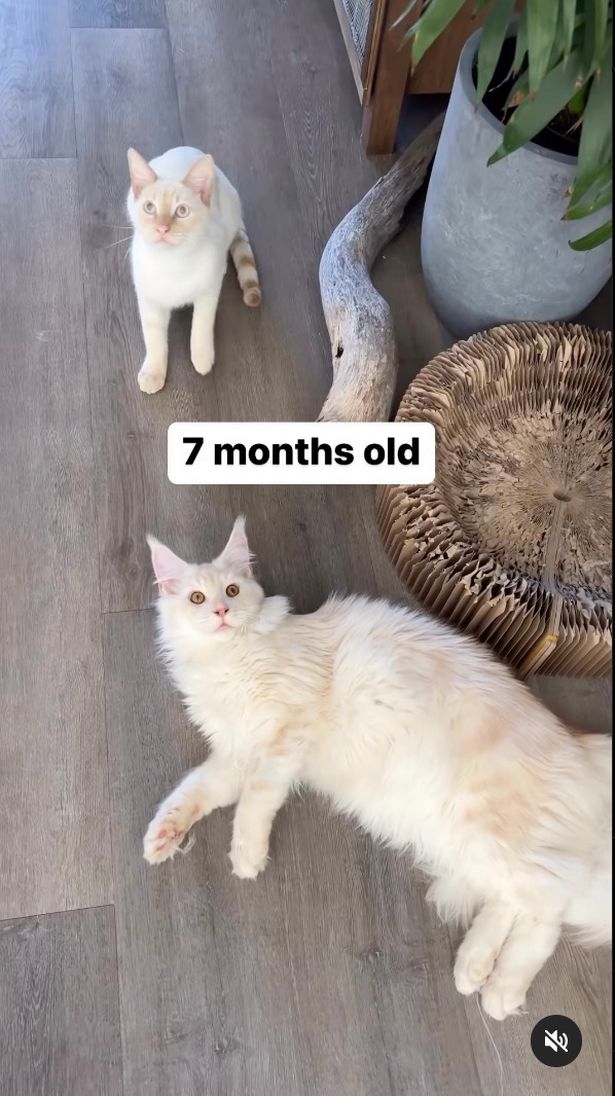
Meet Kusa, an absurdly large Maine Coon.

Of course you’ve seen huge Maine Coons before, so what’s special about Kusa? Aside from being a stunning white-furred beast of a cat, the big guy is still a kitten! At nine months old, Kusa could make a light snack of most felines. And because Maine Coons continue to grow until they’re three years old or even past that age, Kusa could have a legitimate crack at being the biggest domestic cat in the world, in addition to scaring the pants off unsuspecting pedestrians if his people take him out for a stroll.

Here’s Kusa as a baby:

And here’s Kusa now:

Kusa lives with his human, Chastity Hobbs, in Phoenix, Arizona. She says one of the biggest challenges was finding a litter box big enough to accommodate him. She may have to swap it out for an even bigger one before long.

“People are amazed when they see him,” Hobbs said. “They always think that he’s crossed with a bobcat or something.”

kusa7months
Maine Coons are known as gentle giants and tend to be relaxed compared to most cats. Credit: Chastity Hobbs/Instagram

Bruno gets a new home

Bruno the Cat has had a tough run early in life through no fault of his own.

The first time he was adopted all seemed well until one of his family’s children appeared to have a cat allergy, so the little guy was brought back to the shelter. But he was still young and very cute, so it wasn’t long before another family brought him home during the pandemic.

Unbelievably that family returned Bruno because he was “too affectionate.” Their definition of “too affectionate”? Little Bruno liked to head bunt the mother while she was working from home and he liked to sleep in bed with her daughter. The mother didn’t like the fact that her daughter was staying up late to play with Bruno, so back he went to the shelter.

Bruno’s story went viral when Montville Animal Shelter of New Jersey posted about his plight and included a photo of him looking depressed. Who wouldn’t be if they thought they’d found their forever home twice, only to be rejected for being a snugly, happy cat?

The Facebook post amassed more than 200,000 views and hundreds of comments, leading to more than 50 applications to adopt Bruno, Montville Animal Shelter’s Lindsay Persico told USA Today. It was also a boon for the shelter’s other animals.

“People were coming to our door to meet Bruno and we got almost all the cats in the store adopted in the meantime,” Persico said.

Let’s hope the third time’s a charm for dear Bruno and he really has found his forever home. He deserves it.

Manly, Heroic Ex-NFL Player Kills Puma For Fun, Cries About Backlash

Wolfe complained to Tucker Carlson when, instead of the praise he expected, online commenters blasted him for killing an animal that was merely surviving.

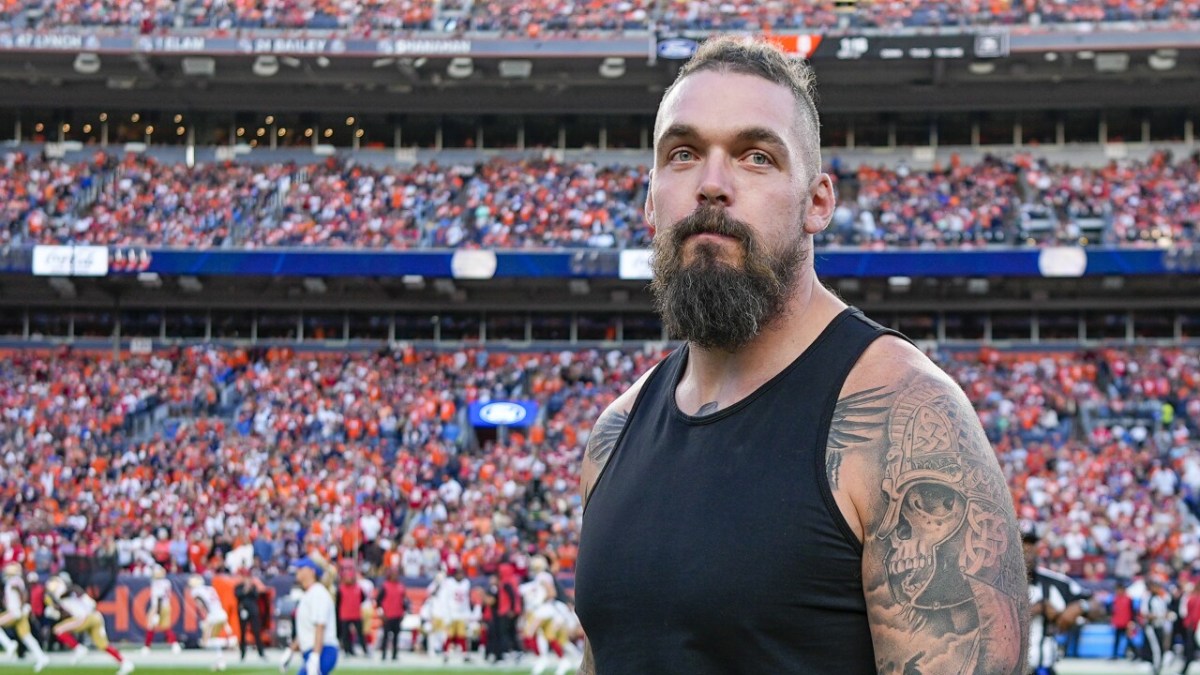
Derek Wolfe is a badass.

The 295-lb former NFL lineman recently got a license to kill mountain lions, so when he heard about a puma that was “terrorizing” a Colorado community by existing near it, he packed his weapons of war, rounded up his hounds and set off, trailing testosterone like a beefed up Jim Corbett gone to deliver justice to the Champawat tiger.

First he spoke to a local homeowner, who had an ominous warning for him.

“And when we had talked to the landowner, they said, ‘Hey, we have house cats. And the cats are acting weird.’

No doubt the cats were agitated and wanted to get out there to cause havoc with their feline brother by existing and eating stuff. The cats would have to be dealt with later.

Arriving at the scene, Wolfe (what a badass name) found the remains of a recently-killed deer and knew the evil mountain lion hadn’t reformed its ways. By continuing to exist despite the discomfort of people in the area, and continuing to eat, the defiant cougar was practically asking to be hunted down and killed.

bowofrighteous

Moving downwind of the fearsome predator so that it wouldn’t smell the pheromonal cloud of machismo that permanently surrounds him, Wolfe began climbing. The ascent was exhausting — not only is the 6’5″ Wolfe almost 300 pounds, but he was also carrying his sword, his health elixirs and his Bow of Righteous Smiting, a 1,000-DPS legendary weapon he obtained after slaying the Goblin King of Dreadmoore. Wolfe was carrying more than 400 pounds up the slope when he caught sight of the puma and did what men of testicular fortitude do: he released the hounds, who cornered the cat and chased it up a tree.

Then, with righteous fury, Wolfe drew his bow and killed — excuse me, “harvested” — the mountain lion, whose species is notoriously averse to conflict with humans and has killed fewer people in a century than dogs do in a week. But what are a few inconvenient facts between friends, amirite?

When Wolfe descended the treacherous slope with the corpse of the mighty cat like Geralt of Rivia toting the trophy from a monster hunt, the villagers applauded and sang songs of his bravery, then feasted in his honor.

wolfekill
Derek Wolfe, conqueror. Credit: Derek Wolfe/Instagram

But all was not well, for when Wolfe posted the manly photos of himself posing manfully with the corpse of the big not-quite-big cat, a contingent of insignificant peons criticized him on Instagram for killing an animal that was allegedly “just surviving.”

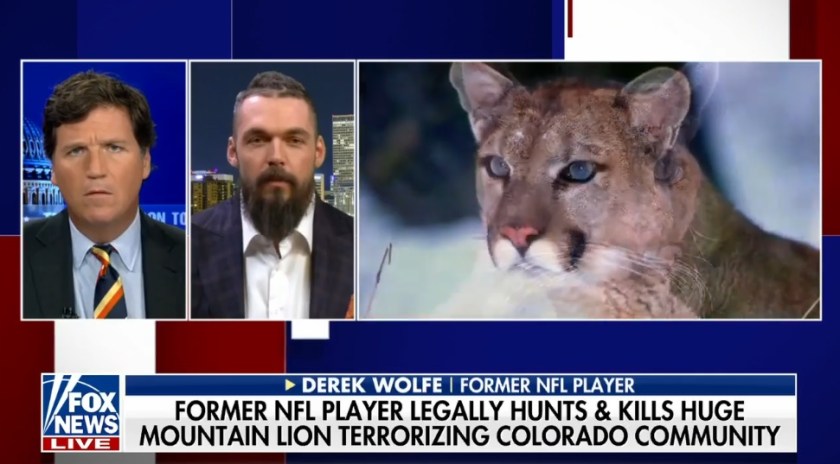
So Wolfe did what men of his stature do, and went on Tucker Carlson’s show to cry about the rodential men and women nipping at his heels.

wolfecarson
Wolfe on Carlson’s TV show. Credit: Fox News

It is said that the combined testosterone of Wolfe and Carlson created a vortex of badassery that threatened to spark untameable hair and muscle growth in anyone who ventured too close. Female assistants had to be ushered out of the studio before the segment began, and the lesser men manning the cameras had to sign waivers absolving Wolfe and Carlson of blame if they were transformed into hulking man-beasts by the combined presence of the former lineman and the scion of a TV dinner empire.

“I’ve been through some tough training camps, brother, but this hunt was –  man – it beat me up bad. I was beat up bad. I’m all cut up and scraped up. I was in full-body cramps [and] barely made it up there,” Wolfe told Carlson.

Wolfe proceeded to regale Carlson with tales of how dangerous mountain lions are. Puma concolor, the scientific name for the species, is responsible for a whopping 27 deaths in the last century. That’s one person every four years, and most of those people triggered the confrontations by getting too close to puma cubs or cornering the animals. By comparison, dogs kill 25,000 people a year via attacks, and another 25,000 by spreading disease, the latter mostly in third-world countries. Cows killed 655 Americans over a nine-year period from 1999 to 2007. More than 40,000 Americans are killed in car crashes annually.

And while you’re 25 times more likely to be killed by a tornado than a shark, there were five times as many fatal shark attacks (144) in the US over the past century compared to fatal mountain lion attacks.

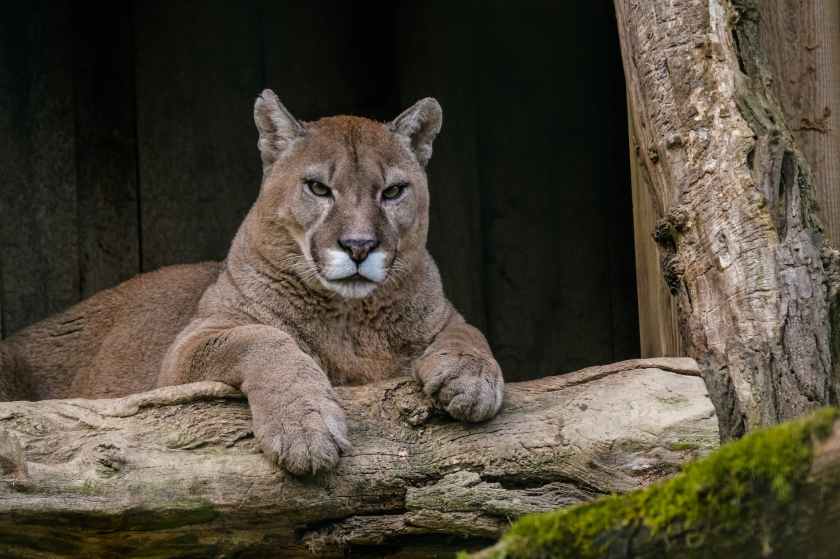
In other words, pumas rank extremely low on the list of potential dangers to people, despite their size and their superficial resemblance to much more dangerous African lions. Pumas/mountain lions, also known as catamounts and cougars, actively avoid humans and try to steer clear of conflict with people. When they kill a deer or even a pet, it’s not because they’re “terrorizing” communities — it’s because they’re obligate carnivores who need to eat meat to survive.

photo of a cougar near a log
A mountain lion. Credit: Nicky Pe/Pexels

Wolfe explained that it’s important to “tree” mountain lions in order to do recon on them and make sure they’re appropriately big and impressive-looking.

“Those full-grown males will kill kittens as well, they’ll kill kittens to get the females to go back into heat,” Wolfe said, confusing terms and the dominance behavior of African lions with American pumas, which are not the same species. “It’s important to manage that herd, right? You have to manage every population of animal out here, especially mountain lions. So we got the dogs on ’em.”

Who knew cats were herd animals? Who knew pumas had decided to give up their solitary lifestyles and live in prides? Who knew former NFL linebackers arbitrarily killing random pumas qualifies as ‘managing a population’? Someone call the wildlife biologists so they can rewrite their field guides!

Despite his ability to scale mountains and slay (mountain) lions, Wolfe was wounded by the backlash when he posted photos of himself with his “harvest.”

“I can’t believe what’s happening to me…They’ve had 200 calls to Colorado Parks and Wildlife trying to turn me in like I did something wrong,” Wolfe complained. “I’ve been harassed.”

Disclaimer: Since this is the internet, and this post is bound to bring in readers unfamiliar with PITB and the fact that we’re sarcastic jerks, allow us to state for the record that Wolfe did not kill the Goblin King of Dreadmoore, does not own the legendary Bow of Righteous Smiting, and we’re not exactly sure if the villagers in the unidentified rural Colorado community threw a feast in Wolfe’s honor after he returned with the corpse of the cat that had been “terrorizing” their community. I mean, they probably feasted him, but we haven’t confirmed it.