Check Out This Beautiful Gallery Of Larry The Cat, PLUS: A New Game Features A Furious Feline

Cats, real and anthropomorphized.

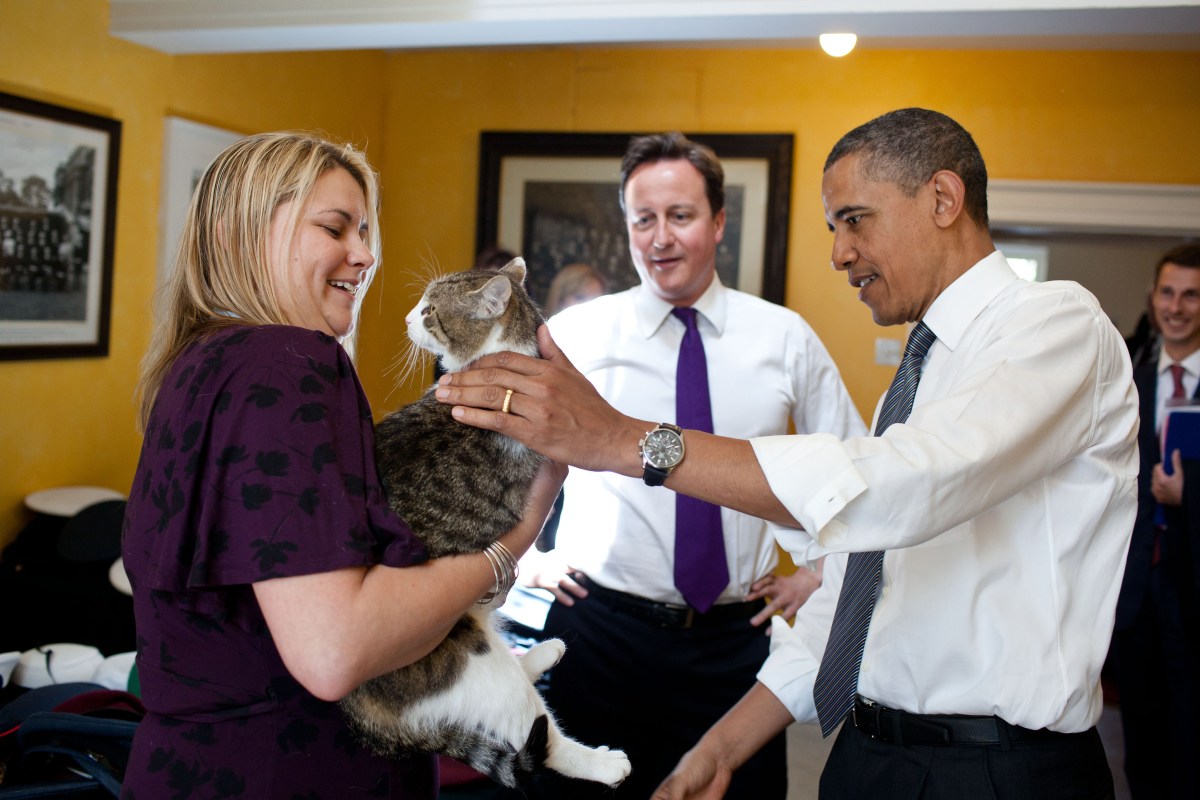
As we noted on Sunday, Larry the Cat just celebrated his 12th anniversary as chief mouser at No. 10 Downing St., the UK prime minister’s residence and office. The Atlantic has a new gallery featuring photos of Larry’s adventures over the years, and it’s fantastic.

See Larry chase a pigeon, tolerate former President Barack Obama, pose for the press, bolt from a Mitsubishi bigwig, cautiously supervise a police dog working on his turf, hang out with photographers and steal the show during meetings of world leaders.

The gallery also includes rare photos of Larry inside No. 10 (during which he’s mostly gazing longingly at his turf outside) and other amusing moments from his long tenure as de facto head of government in the UK.

(Top image credit: Pete Souza/White House photo)

Cuddly carnage!

The camera pans from a wet, neon-lit street to the jagged remains of a wall spray painted with “Death to Humans” when a tiny head pops up, with the unmistakable shape of cat ears and the markings of a ginger tabby.

Zoom in: An orange tail speeds by, its owner just out of the frame, then the guitars kick in and Gori the cat stylishly disembowels some freak monster from atop his trusty Back To The Future-style hoverboard.

The game is called Gori: Cuddly Carnage, and it looks completely ridiculous, absolutely glorious and a hell of a lot of fun.

cuddlycarnage2
Gori stylishly puts down a monster. Credit: Angry Demon Studio and Wired Productions

It’s from Angry Demon Studios and Wired Productions, the same people behind the well-received 80s/90s nostalgia trip Arcade Paradise, so the production values look great and Gori shares some elements of the retrowave aesthetic prevalent in Paradise.

It probably won’t get the kind of hype that the feline-centric Stray received, nor will people laud it for educating players about cat behavior, but that’s okay. It’s not that kind of game. Gori: Cuddly Carnage is still in development with no announced release date, but we’ll be keeping an eye on it.

ss_65c72aebb98390d4a3cda988cffa50065f871cf7.1920x1080
Gori the “ultimate pet cat” on his hoverboard. Credit: Angry Demon Studio/Wired Productions

Cat With Gang Tattoos Rescued From Mexican Prison, Up For Adoption

Authorities found the cat in a sweep after a New Years Day riot resulted in 17 deaths and the escape of thirty inmates.

On Jan. 1, the inmates in one of Mexico’s most notorious prisons celebrated the New Year by starting a riot.

Ten prison guards and seven inmates lost their lives in the violent chaos, and thirty inmates escaped the CERESO 3 prison, according to press reports from Mexico.

When authorities finally regained control — an effort that required the military, national guard and local cops — they conducted a sweep of the facility for contraband and weapons, and that’s when a police K9 unit found a cat wandering the dangerous grounds by himself.

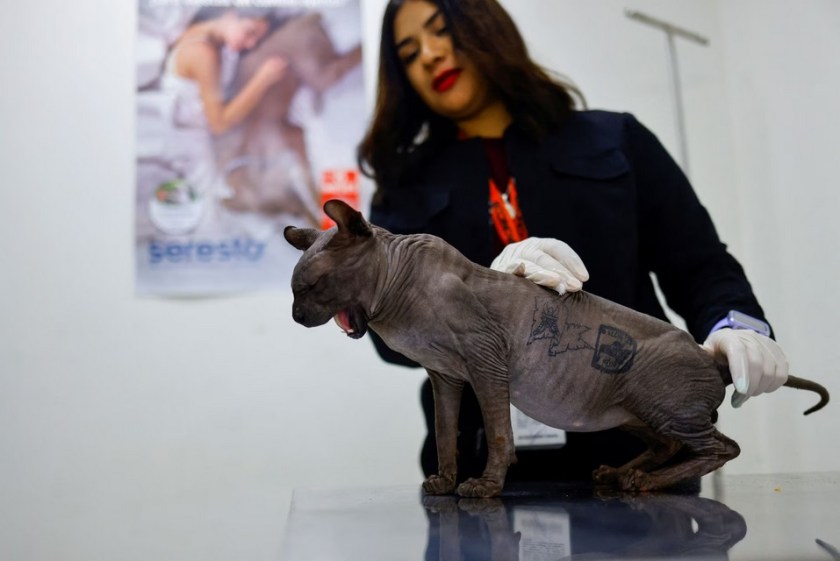
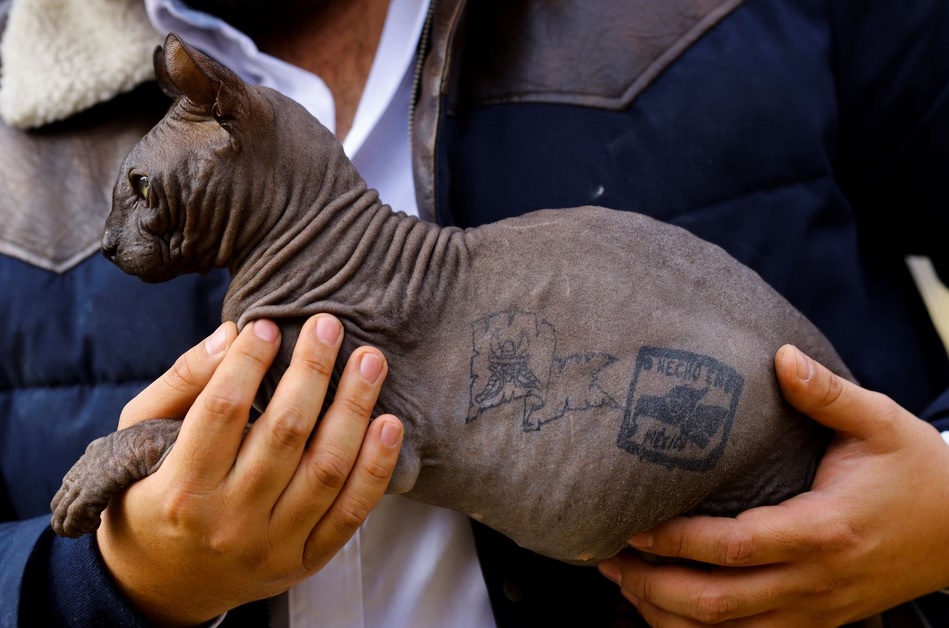
Dubbed “the gangster gato” by the local press — he doesn’t yet have a real name — the feline was taken into the care of Juarez’s Department of Animal Welfare for the Rescue and Adoption of Pets while police complete their investigation.

tatcat3
The cat, who reportedly belonged to the late Los Mexicles gang leader, is in good health. Credit: Juarez Animal Control

He’s an Egyptian, a breed that commands up to $2,000, and reportedly belonged to Ernesto Alfredo Piñon de la Cruz, aka “El Nato,” the former leader of the Sinaloa cartel-aligned Los Mexicles gang. Cruz was the alleged “mastermind” of the escape who died on Jan. 5 when police caught up to him. He didn’t go quietly and died in the resulting shootout.

Although it may be difficult for Americans and others to imagine how prisoners could keep pets, stories about the subsequent raid and sweep say authorities found “VIP cells” stocked with amenities like space heaters, air conditioners, personal washing machines and various other electronics. The Chihuahua State Human Rights Commission and other NGOs had previously warned that the inmates were “practically running the prison,” and that guards there didn’t have the manpower or will to crack down on illegal activity in the cell blocks.

Gang leaders and others who had power were able to set up their cells like lounges, with couches, plasma TVs, video game consoles, stereos and card tables. One had a pet snake in a terrarium, and several kept safes full of cash they’d use to pay for items smuggled in through a secret entrance. There was even a mechanical bull to amuse the inmates and help them kill time.

In all, authorities seized more than 2,800 pieces of contraband, according to reports.

“The privileges are over,” Chihuahua Gov. Maru Campos said earlier this month as authorities showed some of the contraband and weapons they’d seized to reporters.

The cat is in good health, staff at the Juarez Department of Animal Welfare say. He’ll always carry scars from his time in CERESO 3, unfortunately, because the Mexicles tattooed him with the gang’s logo and an associated slogan, “Hecho en Mexico,” or “Made in Mexico.”

Despite living in such chaotic and dangerous conditions, “the cat is very sociable, and is in great shape, with no infections,” said Cesar Rene Diaz, a Juarez official.

The city is taking applications for adoption and a committee of Juarez officials will make the final decision on who gets to give the kitty a forever home. Government officials and their relatives are barred from applying to adopt the cat.

Sunday Cats: Super Bowl, Kitten Bowl, Tiger Bowl

Today’s the big game!

Happy Super Bowl, a special day when Americans across the country will gather and watch more than 200 commercials, and some team will play some other team in just 11 minutes of actual game time.

No wonder the NFL and its advertising partners try to sell the commercials as entertainment in their own right: If you watch the Super Bowl, you’ll be subjecting yourself to an relentless onslaught of adverts for everything from Budweiser to Booking.com,  insurance companies trying to out-zany each other, and gambling commercials. Lots and lots of gambling commercials for sites like DraftKings, Caesars Sportsbook, MGM and FanDuel.

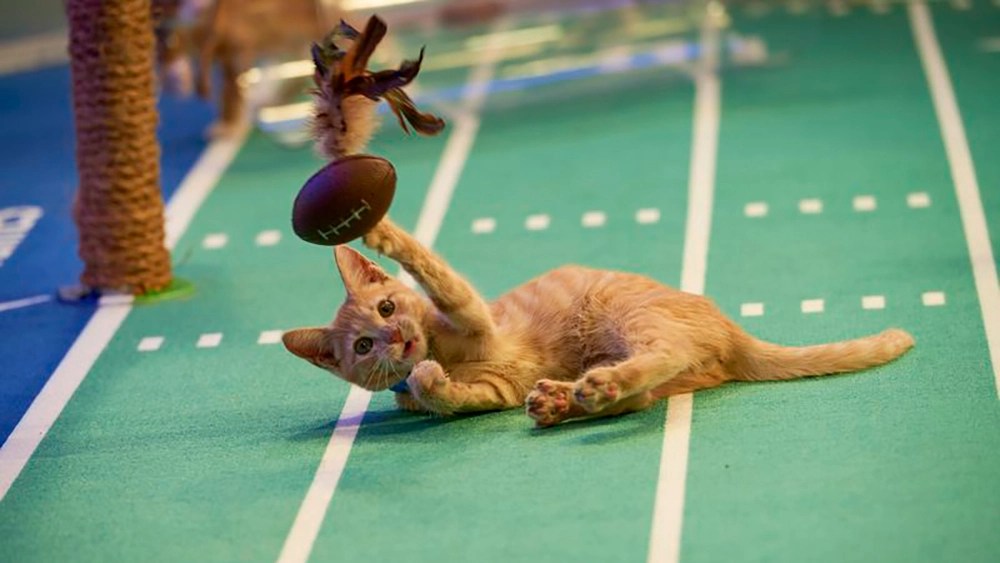
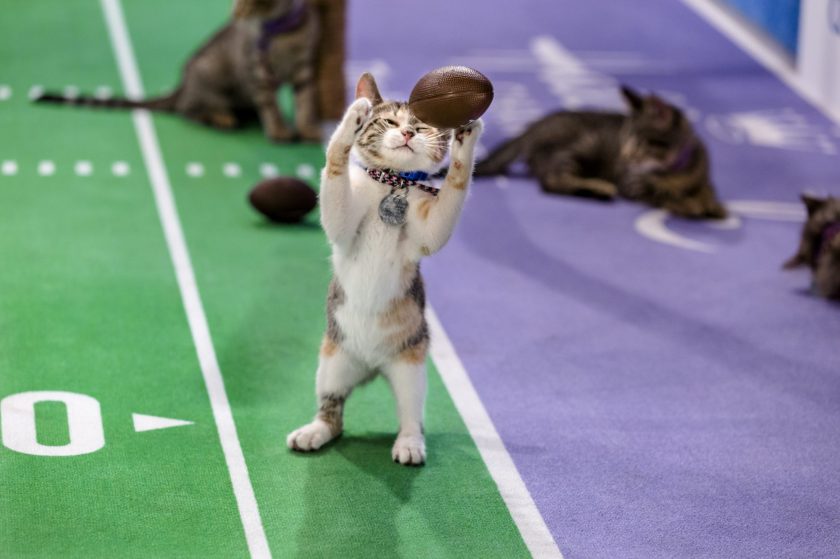
Super Bowl Sunday was previously made brighter by the Kitten Bowl, but Hallmark canceled the cute fan favorite last year, saying only that it’s “not currently developing original animal-centric programming.”

It was inevitable that another network would move in to capitalize on Hallmark dumping its popular annual special, and taking the place of Kitten Bowl is the Great American Rescue Bowl, an event by the Great American Family Channel and the North Shore Animal League which will feature adoptable dogs and cats on a pet-size football field, along with host Beth Stern revisiting the stories of kittens, cats, puppies and dogs who were featured last year and found their forever homes. If you don’t get the Great American Family Channel you can stream the event on Hulu beginning at 10:30 a.m. (See the previous link for other streaming options.)

image

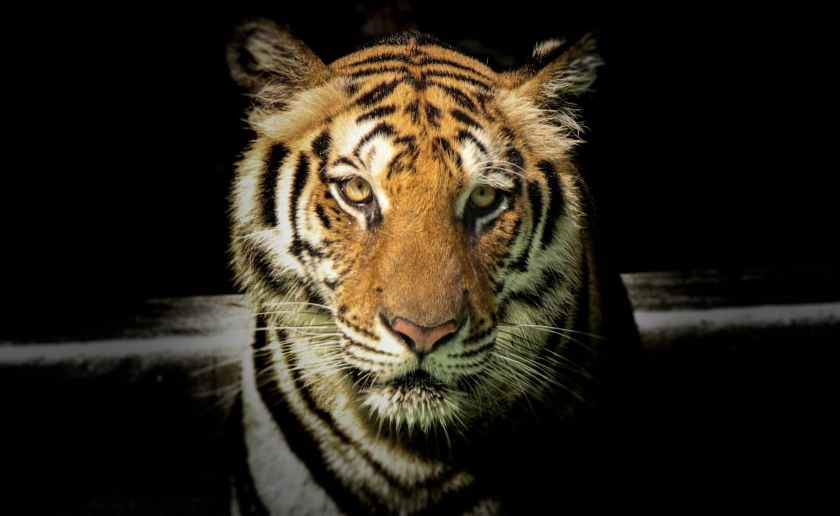
Viva la Tiger Bowl!

Watch this space in the coming week for a new longform story about the Champawat tiger, the most dangerous animal documented in more than 5,000 years of recorded human history. Little Buddy and I did quite a bit of research for this one, and we hope it’ll make for a good read.

wildlife photography of tiger
Credit: Sayantan Kundu/Pexels

Chonky Cat Is Polish City’s Biggest Attraction

People come from all over Poland, neighboring Germany and beyond to see Gacek up close.

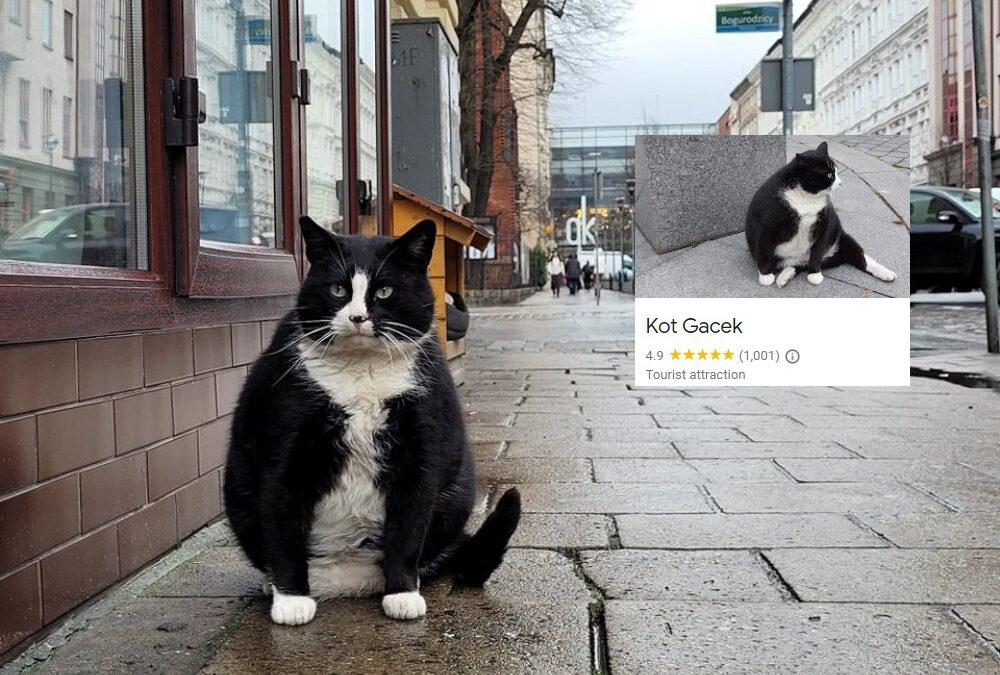
The Polish city of Szczecin has a message for visitors: Come, see Gacek and marvel at his chonky feline glory, but please don’t feed him!

It’s not a joke. The rotund tuxedo kitty, dubbed the “King of Kaszubska Street” in a 2020 local news report, has become so famous that he’s listed as the top-rated tourist attraction in Szczecin, a riverfront city of 395,000 people in northwest Poland. That’s no small feat in a place that boasts a beautiful historic old town and a bustling riverfront lined with shops, restaurants and attractions.

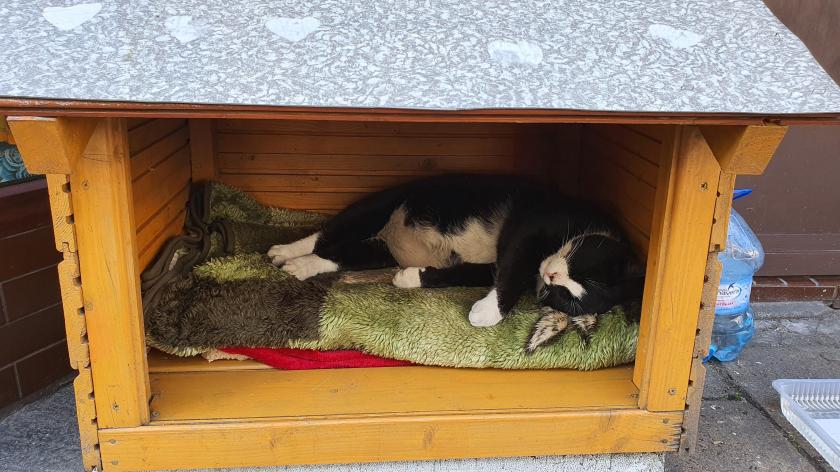
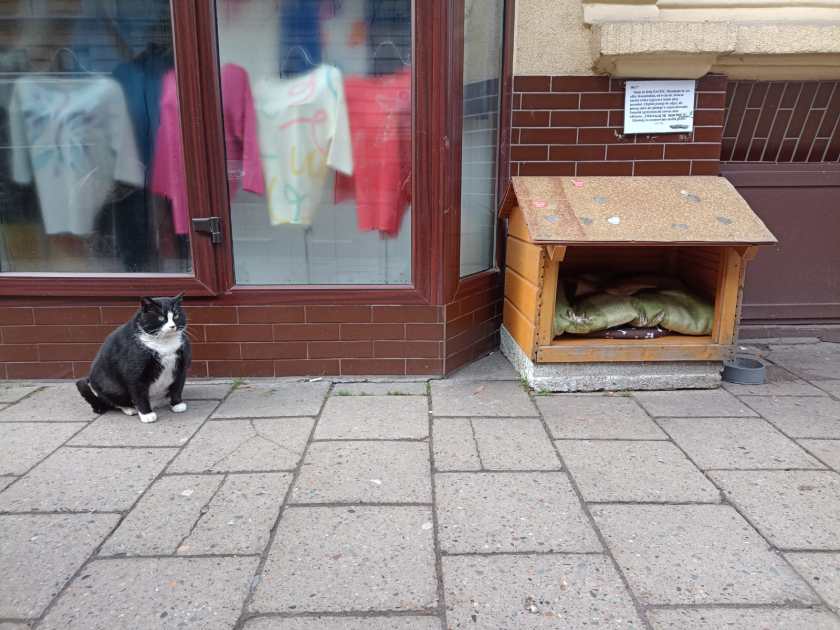
Locals think Gacek is about seven years old, and some years ago they built him his own little house on the street, where he can be found snoozing comfortably when he’s not strolling the block, charming tourists and nibbling on the food they (still) bring him.

gacek2
Gacek isn’t bothered by street sounds or crowds of admirers as he naps in his house. Credit: Krola_Karo/Reddit

There are more than 1,100 reviews for the big guy on Google, with an average of a 4.9/5 rating. (We suspect the handful of less-than-perfect reviews are from dogs or jealous rivals.)

“It was worth traveling three hours to feel ignored by him,” one reviewer wrote.

Another visitor got too close to the magnificent chonkster and found out what happens: “He stole a sausage,” the reviewer deadpanned.

As Notes from Poland points out, there’s a sign on Gacek’s house informing visitors that Gacek will “happily pose for photos,” and asking for people to leave food in sealed bags in a box, so Gacek’s caretakers can keep him on a somewhat normal diet and prevent him from gaining more weight. A post on the Slavic social media site VK describes Gacek as calm and nonchalant about the attention he draws, but notes he doesn’t particularly like it when people pet him, and he’s not a fan of the cold.

h/t reader Gilda P. for letting us know about Gacek.

Old-Market-Square-Szczecin-Stettin-Poland-1
Szczecin is especially busy in the warm summer months, but Gacek is a year-round attraction. Credit: InYourPocket
gacek3
Gacek is accustomed to being the center of attention and seems to revel in his celebrity as he makes his daily rounds around the block. Credit:hollusaurus/Reddit
gacek4
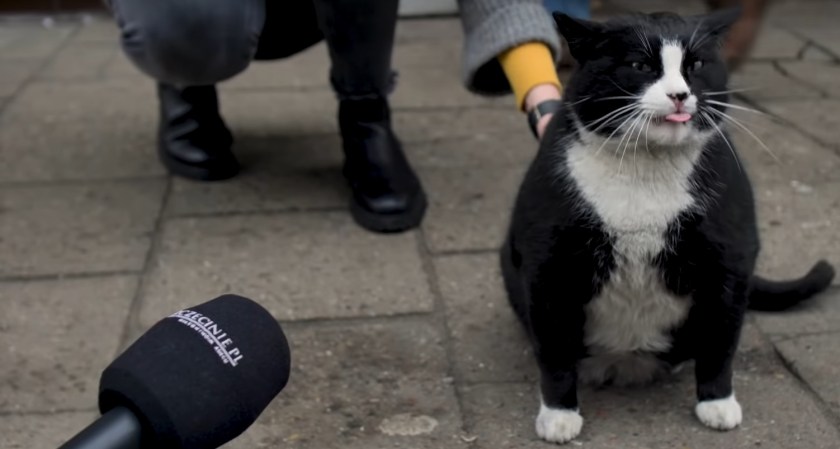
Gacek responded with a few excited meows when a Polish TV crew interviewed him in 2020.

Study: Jaguars Aren’t As Solitary As We Thought

Using a network of trail cameras, researchers studied jaguars for years and observed behavior that surprised them.

Lions are famously described as the only social big cats, known for living in extended family units called prides and even forming coalitions, which young males sometimes do before they lead their own prides.

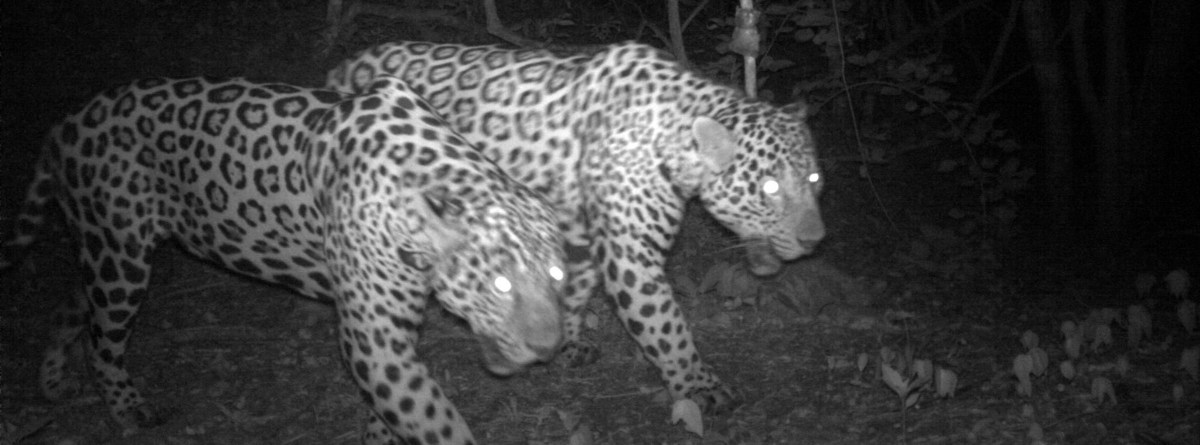
But now, thanks to a research team that monitored trail cameras in the Amazon for years, we know that jaguars form their own coalitions, doing things never before seen like patrolling and marking territory together, cooperating on kills and sharing prey. The researchers focused on areas in Brazil’s Pantanal and Venezuela’s Llanos region, both of which provide varied landscapes and water access for the famously water-friendly big cats, who are strong swimmers and prey on aquatic and land animals.

The team pored through more than 7,000 instances of jaguars appearing on the trail cameras, which gave them a look at a range of jaguar behaviors that normally would not be seen.

“It shows the value of having long-term camera tracking, movement ecology data and direct observations through citizen science,” said Allison Devlin, a co-author of the study. “And from that we’re able to see that if you have a relatively stable jaguar population, healthy prey base, and protection for the species, we can start seeing these more natural behaviors, and start understanding some of the interactions that a solitary species might have.”

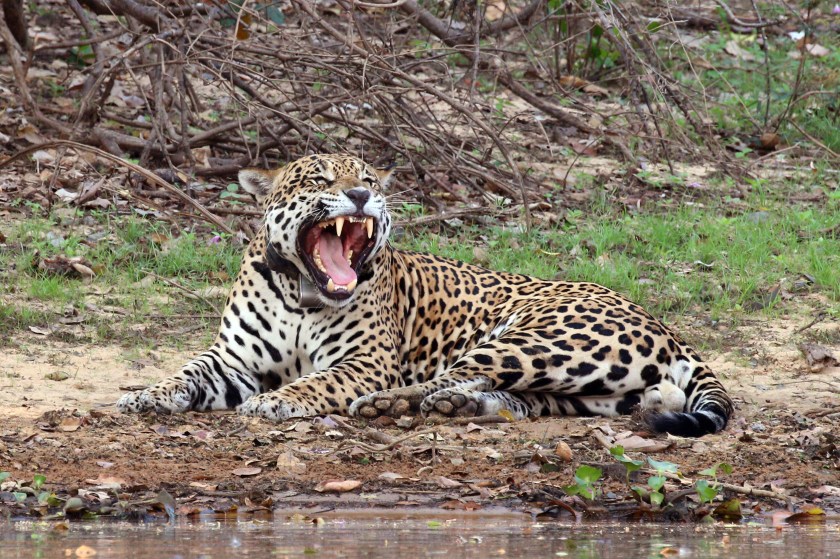
Jaguar_(Panthera_onca_palustris)_male_Rio_Negro_2
Credit: Wikimedia Commons

In two cases, coalitions between jaguars lasted for more than seven years, the researchers said. The jaguars were seen cooperating for almost every activity as they went about their daily lives in the jungle.

Not only are the findings remarkable, but they’re a reminder that we’re still woefully ignorant about the only big cat of the Americas, especially compared to lions, tigers and leopards.

“The secret life of jaguars is more complex than previously thought,” Devlin said. “We still have so much to learn about the intricate lives of these secretive wild cats, with findings that can help scientists better conserve these species and the landscapes on which so many plant, animal, and human communities depend for their survival.”

One reason they’re less studied than other big cats is because jaguars are notoriously elusive. People who have spent their lives in and on the periphery of the Amazon say jaguar eyes are on humans from the moment they enter the jungle, watching from the shadows. Yet there are no recorded cases of man-eating jaguars, and conflicts with the feline apex predators and humans are rare, most often relegated to instances where people got too close to jaguar cubs or tried to corner the animals. Jaguars do a lot of watching, but they don’t allow themselves to be seen.

Of course that doesn’t mean they’re cuddly. Jaguars are the third-largest cats in the world, after tigers and lions. They have the strongest bite force of any cat, which allows them to crunch through giant turtle shells and kill in one bite by literally crushing the skulls of their prey with their teeth. (The name jaguar comes from the indigenous yaguar, which means “he who kills with one leap.” No other cat kills the same way.)

Jaguars are also perpetually confused with leopards, their look-alike African cousins, which leads to further uncertainty about their behavior and habits. Aside from being separated by an ocean and living on separate continents, jaguars are heavier and have thicker limbs than leopards, and the biggest give-away is the presence of spots within their rosettes, which leopards do not have.

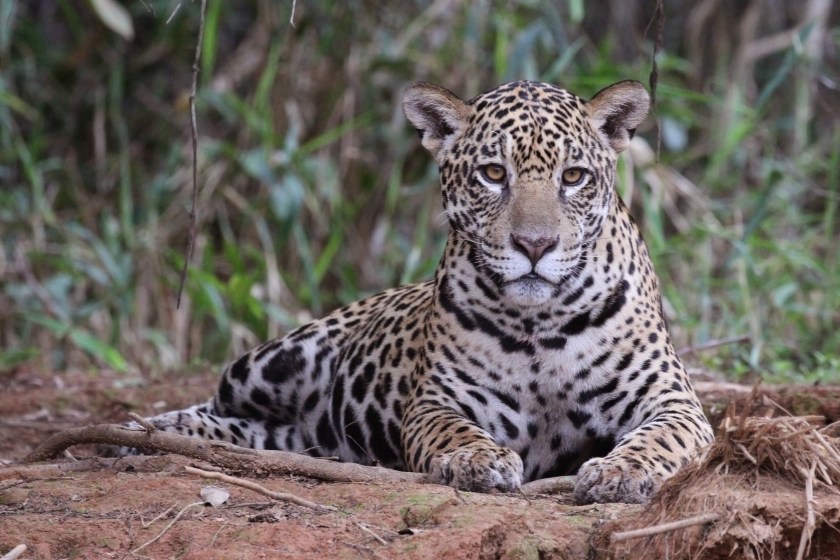
Jaguar_(Panthera_onca_palustris)_female_Piquiri_River
Credit: Wikimedia Commons