Bella and Luna retain their spots as the most popular names for female cats, while male cats are commonly named Leo, Milo, Simba and Oliver.
The top cat and dog names for 2023 have been released, and Rover lists the usual suspects for the New York area.
The top female names for felines include Luna, Pepper, Lily, Coco and Bella, while the boys were Leo, Oliver, Milo, Jack and Henry.
There is no Buddy to be found even amongst the dogs, whose list included Charlie, Max, Teddy and Oliver, while females included Lucy and Rosie in addition to the ever-popular Bella and Luna.
I have a niece named Lucy and a nephew named Milo, neither of whom are old enough yet to understand their names are more popular with four-legged little ones than humans.
Nationally, Luna and Bella occupy the two top spots for female cats, followed by classics like Nala, Kitty and Cleo, while the most popular male cats in the US are Oliver and Leo, with names like Simba, Ollie and Jasper rounding out the top 10.
Again, not a Buddy to be found among the most popular male cat names.
This is obviously because the name Buddy is so special it is only conferred upon the most meowgnificent, meowscular and meowsterful felines. (Is he still looking over my shoulder?)
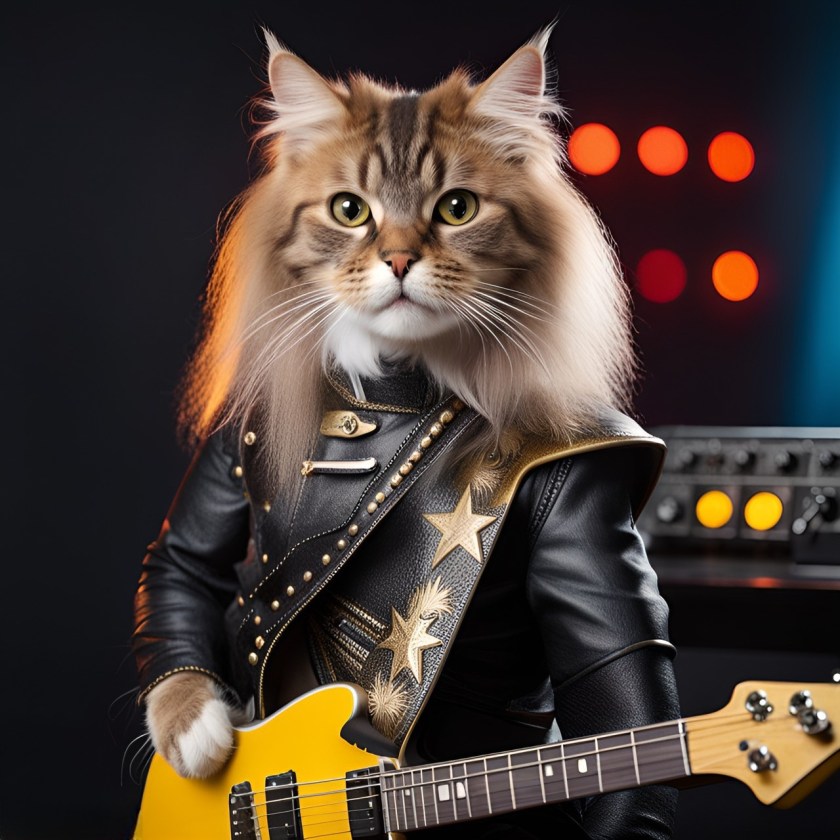
Who’s ready to rock? After a nice nap, of course!
Interestingly, nostalgic names from the 80s and 90s are trending, with people naming their female dogs and cats Alanis (Morisette), Ginger Spice, Avril (Levigne), Richard Gere and Leonardo DogCaprio among other monikers.
I don’t know if I could see myself naming a cat after a 90s band, musician or actor. I think, in these situations, it’s always best to imagine what happens if your furry friend gets lost and you have to walk around the neighborhood calling them by name.
“Come ‘ere, Weezer!”
“Where are you, little RZA? Who makes dope beats? You make dope beats, yes you do!”
“Time for din-din, Ol’ Dirty Bastard!”
“Where’s my widdle Rage Against the Machine? Aren’t you just a precious Red Hot Chili Pepper!”
If you feel like a jerk calling a name out, it’s probably best to go with something else. Which is one reason why Bud isn’t Brutus the Bone Cruncher or Supreme Warlord Felinius Decimus Maximus.
Rover compiles its annual lists of most popular names from its user database, which includes millions of pets registered by their proud humans…and not enough Buddies.
The promise of a revolutionary new method of claw trimming is all hype, sadly.
I was hyped when I saw the headline.
“Cat Owners Rejoice,” the Newsweek headline blares. “Science Can Make Trimming Claws Less Stressful.”
Well if cat owners are rejoicing, it’s gotta be amazing, yeah?
I imagined cat affionados feting the creator of some miraculous new device that keeps cats comfortably restrained and relaxed, or maybe celebrating the discovery of some previously-unknown sound frequency that lulls felines into such a state of carefree bliss that they purr contentedly while we carefully clip their claws.
What I didn’t expect was a “protocol” that amounts to: Touch your cat’s leg. If he doesn’t try to murder you, touch your cat’s paw. If he still doesn’t murder you, trim a single claw. Repeat steps the next time your cat is in an agreeable mood.
That’s it. That’s the revolutionary new method that “science” made for us, according to Newsweek. “Science” must be proud of itself!
With this wonderful new method I should be able to trim one of Bud’s paws by 2067.
Obviously this is not science. It’s a method, not research. It’s well-intentioned and designed to keep cats comfortable, and those are noble goals, but calling it “science” is misleading, just like every other dumb headline that asserts “science says” or something is true “according to science,” as if science is an omniscient entity lounging on pillows, being fed candied figs by worshipful attendants and occasionally dispensing little nuggets of wisdom for our tiny little brains to absorb.
“The designated hitter rule shall henceforth be abolished,” Science says betwixt pulls from a hookah. “Fifty years of conclusive OPS plus FIP and OAVG data dictate it must be so.”
Come to think of it, that probably is what most Americans think science is. The other half think it’s Anthony “I Am Soyence” Fauci.
Where were we? Ah yes, cat claws!
The truth is I’ve give up on trimming Bud’s claws. If I notice a really long one I’ll try to trim it, but otherwise I leave the job to him and his 4-foot scratching post.
Maybe that makes me a bad caretaker, but I challenge anyone who’d stick me with that label to try trimming Buddy’s claws.
The little dude goes from chill and relaxed to demonic in a millisecond. He yowls, he thrashes, he flails with claws out and tries to bite any flesh he can reach, no matter how careful I am to try at the “right” time, how gentle I handle him, how careful I am to avoid the quick.
Bribe him with treats? Hah! He will stop yowling and thrashing about with murderous intent just long enough to gobble down the yums, then return to being a whirlwind of claws and teeth without skipping a beat.
And you should hear him. It sounds like I’m torturing Elmo, for crying out loud.
Thankfully he doesn’t hold a grudge and if I give up on trimming, he’ll be ready to plop down into my lap within minutes.
It’s generally understood that all that ghastly claw trimming nonsense is behind us, and we shall speak no more of it.
Speaking of ghastly business, the below video started auto-playing while I was on the throne and filling the idle time by searching for cat-related news:
The kittens died “foaming at the mouth, throwing up bright green.” Acts of vigilantism against cats are happening more frequently as junk science about their hunting habits spreads via news reports.
Cat rescuer Erica Messina was trapping stray kittens to get them out of the cold and into homes before winter, hoping the young cats would have better lives.
Instead, they died horribly shortly after she successfully trapped them from a lakeside colony in October.
“All of the 13 kittens that I had all passed the same way,” Messina told KBTV, a Fox affiliate in Beaumont, Texas. “They were foaming at the mouth, they were throwing up bright green and peeing bright green.”
Two weeks later, per KBTV, a dozen adult cats from the same colony died the same way the kittens did, “some with chemical burns on their noses.”
“I was upset. I was at work when I found out and I came out here and started asking people, you know, what the problem was,” Messina told the station. “I got no answers.”
Like others who have cared for large colonies of strays who were killed by overzealous birders, Messina says she now has PTSD as she’s trying to save the lives of the remaining cats. She’s managed to catch all but four of them with the help of other local cat lovers and rescue organizations.
They’re getting no help from the authorities. Police referred Messina to Beaumont Animal Care, who told her they can’t help unless she can prove the cats were intentionally harmed. Not only are they putting the burden of proof on the victims in this case, but the victims can’t speak for themselves.
‘A bird-watcher’s paradise’
The colony lived in Collier’s Ferry Park, a lakeside park that also borders marshes where migratory birds spend time alongside native species. Indeed, Beaumont, a coastal Texas city of 115,000, markets itself, and Collier’s Ferry Park in particular, as a prime bird-watching spot.
Collier’s Ferry Park in Beaumont, Texas, where 25 cats were killed in an alleged poisoning. Credit: National Parks Service
A 2013 story in the local newspaper, the Beaumont Enterprise, detailed how local officials and business owners were promoting the park as a bird-watching paradise, noting that “[b]irders in particular are a lucrative market” driving tourism in the city. The story explains how the park is ideal for birds and those who like to watch them, details prized species found there — including herons, the least grebe and cinnamon teal — and includes input from a zoologist with a focus on birds, along with a local businessman who leads guided bird tours on the lake.
Collier’s Ferry Park is also listed on a site for “birding hotspots” while Texas Monthly calls it “one of the country’s best bird-watching spots.”
It is precisely the sort of place misguided bird watchers, driven to rage by widespread junk science blaming cats for declines in bird population, tend to dispense what they believe is vigilante justice. It stretches credulity to imagine anyone but a self-styled conservationist who blames cats for bird extinctions would risk a criminal conviction to poison a colony of cats, especially in a well-known hotspot for bird watchers.
Junk science blames cats for declining bird populations
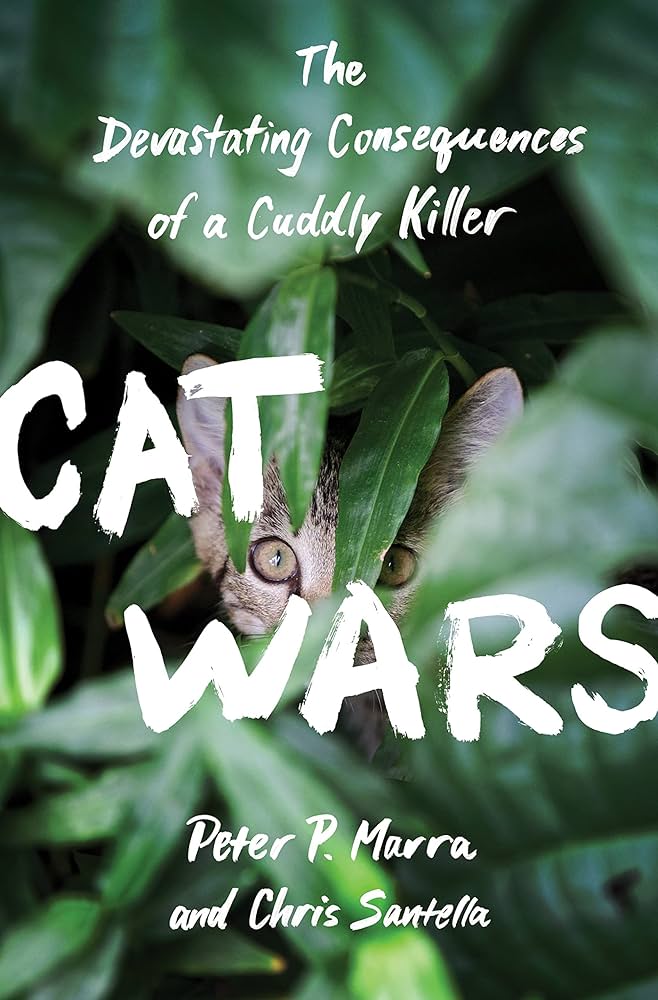
We’ve written our share about the disingenuous and agenda-driven activism that passes for research, most of it published by Peter Marra, a Georgetown avian ecologist who also authored the book Cat Wars: The Devastating Consequences Of A Cuddly Killer. The book advocates a “war” on cats and says they must be extirpated “by any means necessary” to protect birds and small mammals.
It does not, notably, put the blame on human activity, including but not limited to habitat destruction, the widespread use of harmful pesticides, wind farms, sky scrapers and all the other man-made structures, chemicals and machines that have contributed to a 70 percent decline in wildlife in the last 50 years.
But don’t take our word for it. Vox Felina calls Marra “a post-truth pioneer” who has claimed cats “kill more birds than actually exist,” while Alley Cat Allies echoes our own criticism by pointing out that Marra’s studies are composites of “a variety of unrelated, older studies” which his team uses to concoct “a highly speculative conclusion that suits the researchers’ seemingly desperate anti-cat agenda.”
“This speculative research is highly dangerous—it is being used by opponents of outdoor cats and Trap-Neuter-Return (including the authors) to further an agenda to kill more cats and roll back
decades of progress on TNR. And it is being spread unchecked by the media.”
In an NPR piece criticizing the studies blaming cats, Barbara J. King shares many of our own criticisms, chiefly that Marra and company have done no original research, relying instead on older studies, most of which have nothing to do with feline predatory habits, and none of which actually measure bird deaths from cats. King also notes, as we have, that it’s impossible to arrive at anything resembling a precise figure for feline ecological impact when Marra et al admit they don’t know how many free-ranging cats there are in the US, offering a uselessly wide estimated of between 20 and 120 million.
She also points out that the research team conducted “statistical perturbations” to massage the data into something fitting their agenda, which is activism, not science.
The researchers are guilty of “violating basic tenets of scientific reasoning when making their claims about outdoor cats,” bioethicist and research scientist William Lynn wrote.
“Advocates of a war against cats have carved out a predetermined conclusion,” Lynn noted, “then backfilled their assertions by cherry picking an accumulation of case studies.”
The war on cats
Across the world, people are using these studies and those of Marra’s acolytes to justify cruel cat-culling programs, like the recently-canceled cat hunt that would have rewarded children for shooting felines in New Zealand, and Australia’s widely-condemned mass culling that used poisoned sausages to kill millions of cats.
Stories of stray and feral cat poisonings in the US abound. Here at PITB we wrote a series of stories exposing how a government biologist in California took it upon himself to hunt cats under the cover of night, killing them with a shotgun and later celebrating in emails to colleagues, calling the dead cats’ bodies “party favors.”
Indeed, one of Marra’s own proteges, Nico Arcilla — formerly Nico Dauphine — went vigilante. Arcilla, who shares author credits with Marra on studies claiming free-ranging cats kill billions of birds, was a working for the Smithsonian National Zoo in Washington, D.C., when she was convicted in 2011 of attempted animal cruelty. The managers of a local colony, suspicious after strange substances began appearing in the feeders they’d set up for the strays, set up cameras which caught Arcilla placing poison on the food left out for the cats.
Back in Beaumont, Texas, a familiar story plays out: people who manage cat colonies out of love for the animals are working with local rescues, pooling together limited resources to save the remaining strays and hoping for justice.
“It’s terrible, you know? There are some people that just hate cats,” said Vyki Derrick, president of local rescue Friends of Ferals. “The rescuers have been trying to pull them out of the colony and it’s just sad that people want to interfere with that when the problem, ‘problem’ is being taken care of.”
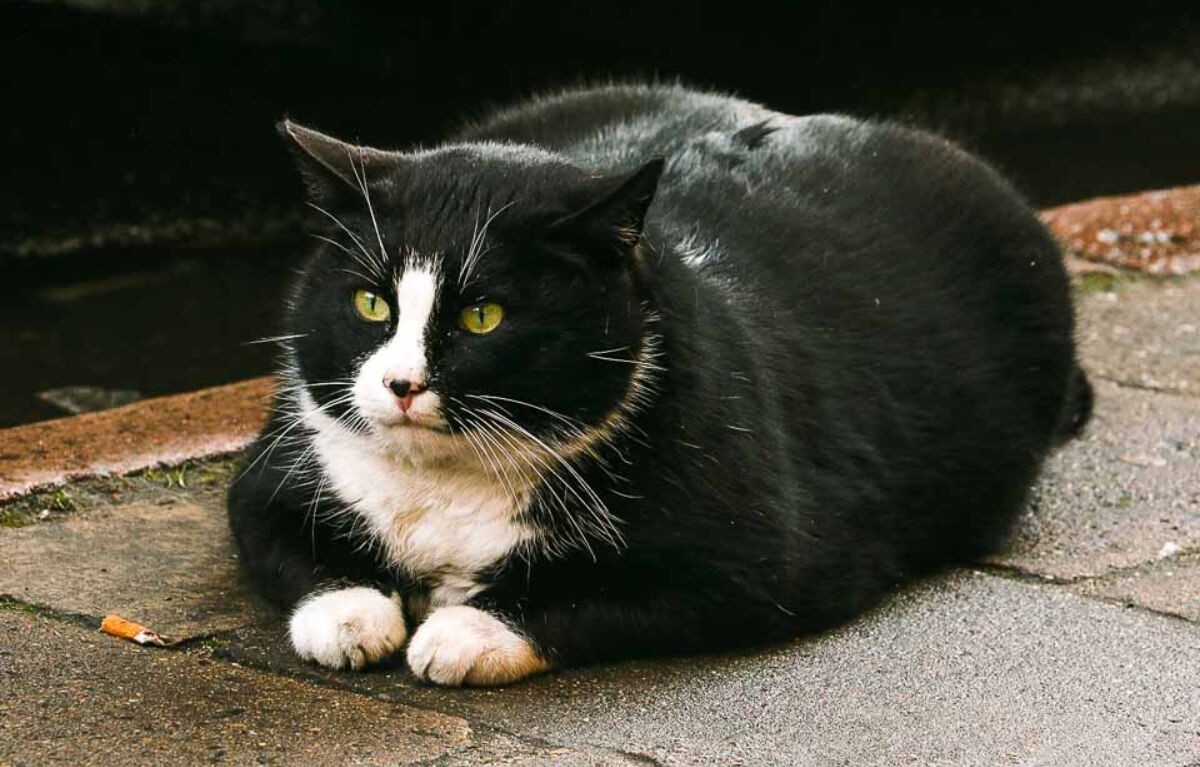
Gacek the cat went viral earlier this year, commanding international headlines as thousands of tourists rated him the top attraction in his home city in Poland.
But as the feline’s renown grew so did his waistline, with tourists flocking to his little wooden home on the street to snap photos of the rotund tuxedo and — despite signs pleading with them not to feed him — gift him with snacks.
That wasn’t the only problem. Gacek couldn’t walk around most of the time without an entourage following him, and in March a woman tried to snatch “The King of Szczecin” in broad daylight. Her catnapping caper was quickly canned when Gacek slipped out of her arms and took refuge under a car while his admirers turned their phone cameras on his would-be abductor, who sheepishly retreated to a cab and took off.
The last straw was a recent veterinary exam which found the tubby tux was as many as 11 pounds overweight.
Something had to change.
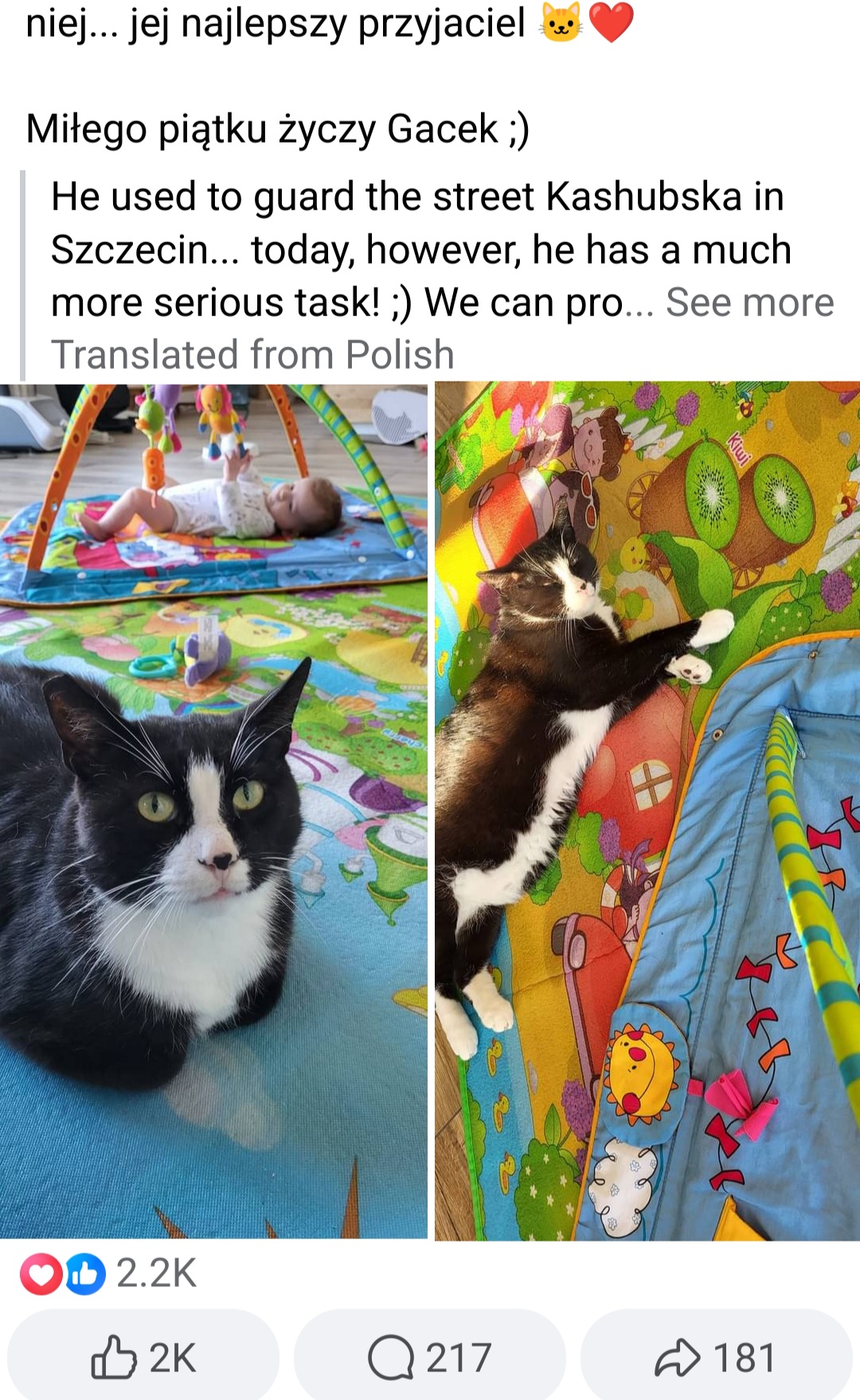
Szczecin’s municipal animal shelter took the little big guy in their care and put him on a diet while looking for an appropriate home for him. Now Gacek has been adopted, the shelter wrote in a series of social media posts, and he’s starting to slim down after six years of livin’ la vida treats with a steady stream of visitors to his court, seeking his favor with offerings of yums crunchy and soft.
That’s okay. He’ll be a different kind of king now, with dedicated servants to see to his needs 24/7.
And although his old wooden cat house was cozy, well-maintained and lined with blankets, it wasn’t enough to keep him warm on cold winter nights. Now he’ll snooze indoors with the option to use a human pillow should he desire additional body heat.
The proprietors say they wanted to create a space that “calms and relaxes” guests and gives Athens’ street cats a chance to find forever homes.
Natalie and Dimitris went all in on their dreams for a cat cafe.
After experiencing similar places overseas and falling in love with the concept, they quit their jobs in tech and hospitality, found a nice spot in the Athenian neighborhood of Thissio — known for its prime views of the acropolis and Parthenon — and established the first cafe in Athens’ 3,000-year history.
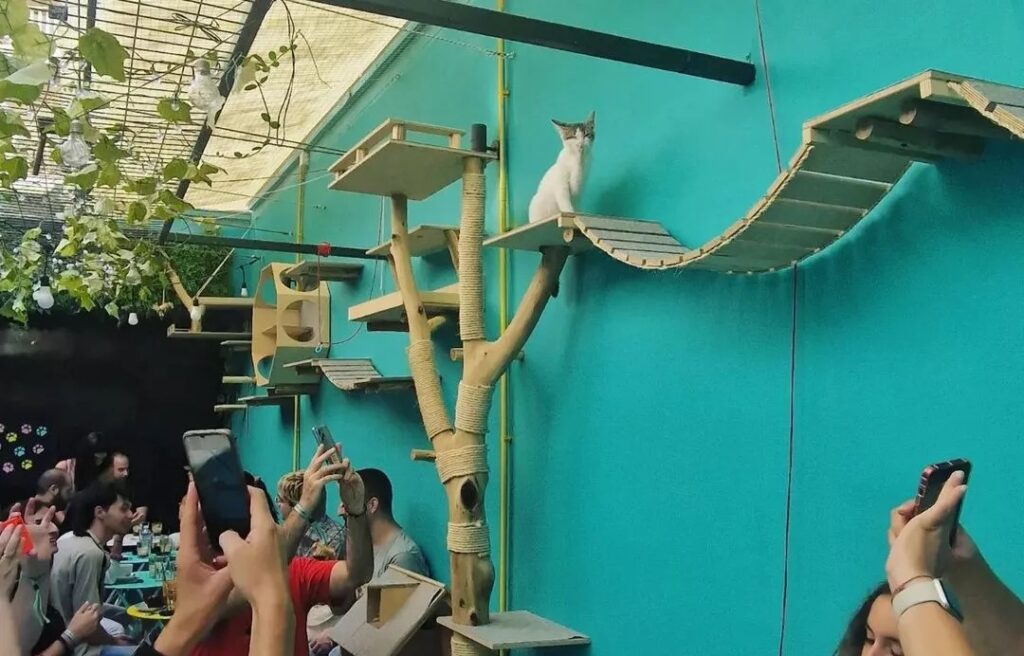
Guests film their favorite cats as the little ones play on a network of walkways and cat trees. Credit: Greek City Times
When I visited a cat cafe in Tokyo, slots were segmented into 30 minutes at 2,000 yen (about 13 bucks) per and coffee was from a vending machine. (To be fair, Japan’s vending machines are excellent and many of them brew fresh coffee internally.) Cat cafes in New York tend to operate in a similar manner, although without the vending machines and with strict separation between food prep areas and the sections where the cats roam, lounge and poop.
But Natalie and Dimitris wanted a cafe that reflected the pace of Greek life, so appointment is by reservation, there aren’t any limits on how long people can hang out, and half the cafe’s space is a fenced-in yard where people can enjoy the cats and the Mediterranean weather.
People can even serenade the kitties, who are all former strays by sitting down and playing a piano inside the cafe.
But ultimately, the couple told the Greek City Times, they opened the cafe — called simply Cat Cafe — because they love cats. Unlike their Turkish neighbors across the Aegean, Greeks aren’t known for caring for street cats despite many of them eking out a living in Athens and other cities.
In Greece, Natalie and Dimitris said, cats are “very misunderstood animals.”
“From the beginning, our goal was to bring people who don’t have cats into contact with cats,” they told Greek City Times. “To interact with them and get to know them. And decide to adopt one.”
Note: The original interview was in Greek and translated to English for the Greek City Times, so there’s some funky phrasing. Readers who are fluent in Greek can read the original here. Top image credit: Pexels