Viking raiders, Roman ruins, an astronomical clock and a bishop who badly needed the services of a competent feline hunter: the story of the oldest known cat flap.
In 1598 Bishop Cotton arrived at his new post to find he had a serious rodent problem.
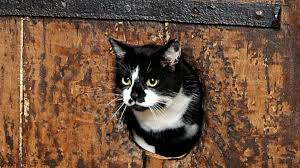
The new leader of Exeter Cathedral realized mice and rats were attracted to the animal fat used to lubricate the complex inner workings of the ancient structure’s astronomical clock, so he did what any sensible person would — he got himself a cat and had a flap installed so kitty had free reign of the church grounds and the chambers that held the hidden clockwork.
The newly-discovered details came to light thanks to the efforts of Diane Walker, the cathedral’s historian. One record shows the bishop paid a carpenter eight pence to cut a circular, cat-size hole in the heavy wooden door leading to the clockwork chamber, as well as ledgers showing the cat was officially on the church’s payroll.
“Back in the 14th and 15th Centuries we have records in the cathedral of payments of 13 pence a quarter for the cat and occasionally 26 pence a quarter for the cat,” Walker told the BBC. “We don’t know if that was double rations because they had been doing a good job or whether there were actually two cats.”
Credit: Exeter Cathedral
I love the idea of a happy cat licking her lips and cheerfully chowing down on medieval Temptations as reward for a job well done.
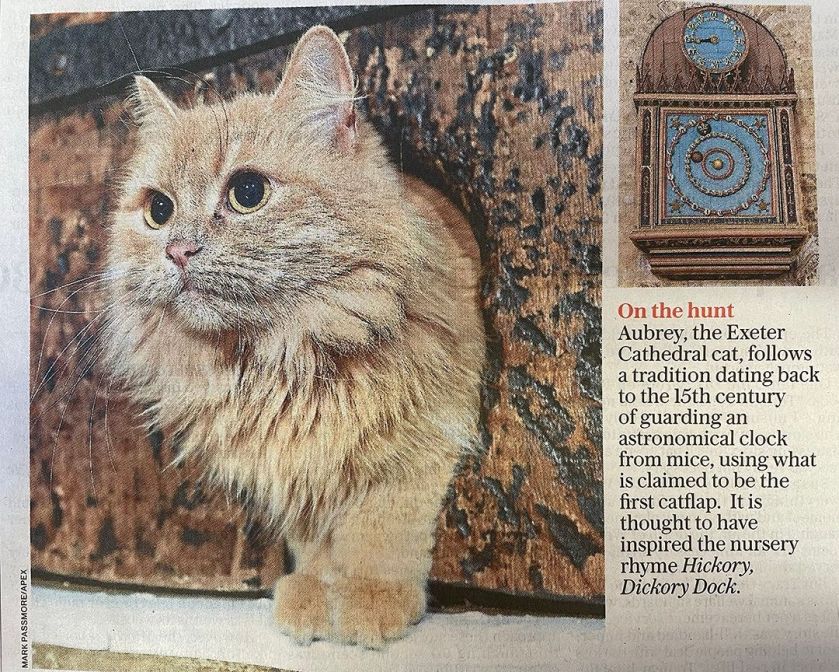
The cathedral has provided steady employment for felines, who still keep the rodents at bay on the grounds more than 400 years after Bishop Cotton hired his first mouser. Cute ginger tabby Audrey, pictured above, holds down the fort these days.
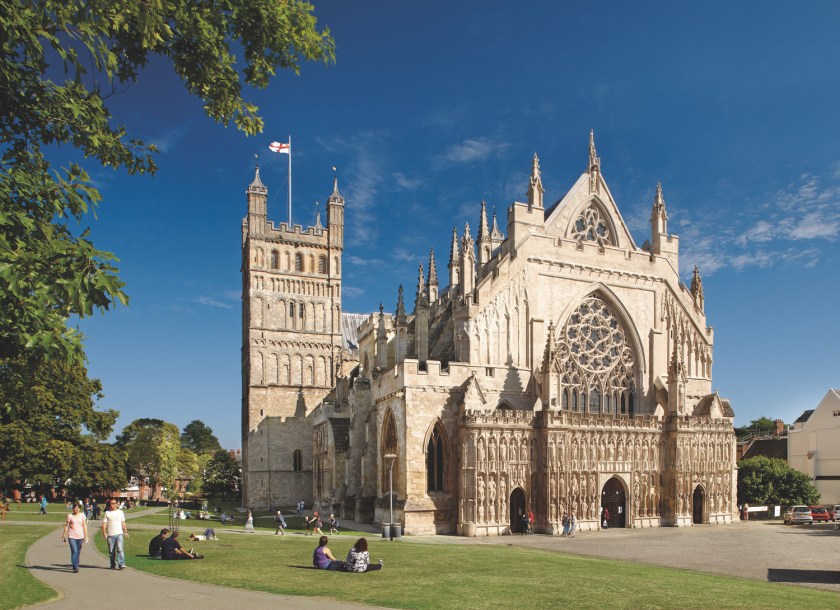
Exeter Cathedral has an interesting history besides its feline employees. It owes its existence to the vikings: the church decided to build a new cathedral as the bishop’s seat because his previous post was located near river routes and was vulnerable to raids from viking invaders.
Credit: Exeter Cathedral
Previously the site of several Roman structures, including a public bath house, the grounds were chosen because Exeter was a prosperous, bustling city and church officials thought it had a bright future.
The cornerstone was laid in 1112 and it took almost 300 years to finish, becoming one of the finest examples of a gothic cathedral in the Norman style.
Mankind’s achievements in space came at the expense of dogs, cats and non-human primates, who were sent into orbit during the early days of the space race.
I’ve been watching Apple TV’s exceptional show, For All Mankind, which dramatizes the space race of the 1960s and beyond in a sort of alternate history where the Soviets, not Americans, first lay boots on the lunar regolith.
That loss lights a fire underneath the behinds of the people at NASA and convinces American politicians that the space race is the ultimate measure of our civilization. In real life, American ingenuity and the creativity fostered by a free society allowed the US to leap ahead and “win” the space race. Space missions were already becoming routine by the time the drama of Apollo 13 briefly rekindled public interest.
Then the Soviet space program faded, the competition turned one-sided, and without an arch-enemy to show up, American politicians pulled back NASA’s funding to a fraction of what it once was, where it remains today. That’s why the rise of the private space industry — Elon Musks’s Space X, Jeff Bezos’ Blue Origin, etc — will almost certainly be our ticket to Mars.
But in For All Mankind, NASA remains the budgetary behemoth and source of prestige it was in the 60s and 70s, leading to the development of a permanent moon base, lunar mining operations and a planned mission to the red planet.
There’s a quiet moment in the second season when a Soviet cosmonaut, visiting the US as part of a peacekeeping mission, shares a drink in a dive bar with an American astronaut.
“Do you like dog?” the cosmonaut asks.
“Dogs?” the astronaut replies. “Of course. Who doesn’t like dogs?”
The Soviet shakes his head.
“No, dog,” he tells her. “Laika.”
Laika was the first dog in space, or more accurately, the first dog the Soviets acknowledged sending into space. (The Soviets didn’t acknowledge their failures, and we can only guess at the number of lost cosmonauts and animals officially denied by the Russians, drifting in space for eternity or disintegrated in atmospheric re-entry.)
Laika, also nicknamed Muttnick, wanted to please the humans who had taken her in, and didn’t understand that her trip would be one way. (Historical photo)
The moment turns somber as the cosmonaut recalls the Moscow street dog who was selected because she was docile, fearless and could handle the incredible noise and g-forces of a rocket launch.
“I held her in my arms,” the cosmonaut tells his American counterpart, taking a sip of his Jack Daniel’s. “For only one or two minutes on the launchpad.”
Then he leans in and tells her the truth: Laika didn’t triumphantly orbit the Earth for seven days in 1957 as the Soviet Union told the world. She didn’t endure the mission.
She perished, alone and afraid, just hours after launch when her capsule overheated.
The Soviets never designed the Sputnik 2, Laika’s ship, to return to Earth safely. Her death was predetermined.
We laud astronauts and cosmonauts, the brave men and women who willingly strap themselves into tiny capsules attached to cylinders of rocket fuel the size of skyscrapers and depart this Earth via brute force, knowing something could go wrong and their lives could end before they realize what’s happening. We should admire them. Their accomplishments are all the more impressive when you consider the fact that the combined processing power of every computer at NASA’s disposal in the 1960s was but a fraction of what we each hold in our hands these days when we use our smartphones.
Those first astronauts and cosmonauts were extraordinarily brave — but only up to a point.
Unwilling to risk human lives in the early days of space exploration, space programs used dogs, cats and later monkeys and apes, strapping them into confined spaces, wiring their brains with electrodes for telemetry data, poring over the information they gleaned about their heart rates, blood pressure and breathing as they left our home planet.
The sad eyes of a stray dog, separated from everyone she loved, were the first to behold Earth from space. A few years later the eyes of a French street cat took in the same view before humans did.
Felicette couldn’t move when she was placed into the capsule that took her to space and back.
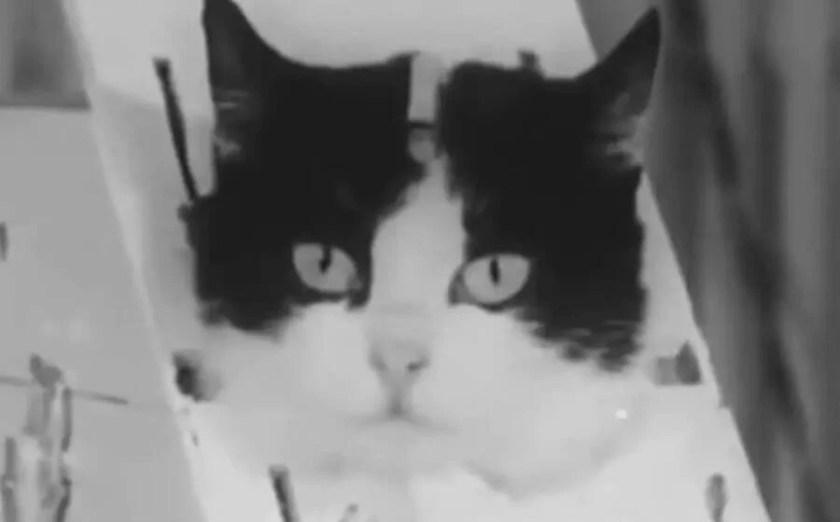
Felicette, the tuxedo cat who was launched into space by the French on Oct. 18, 1963, didn’t even have a name until the French recovered her capsule and took her back for examination.
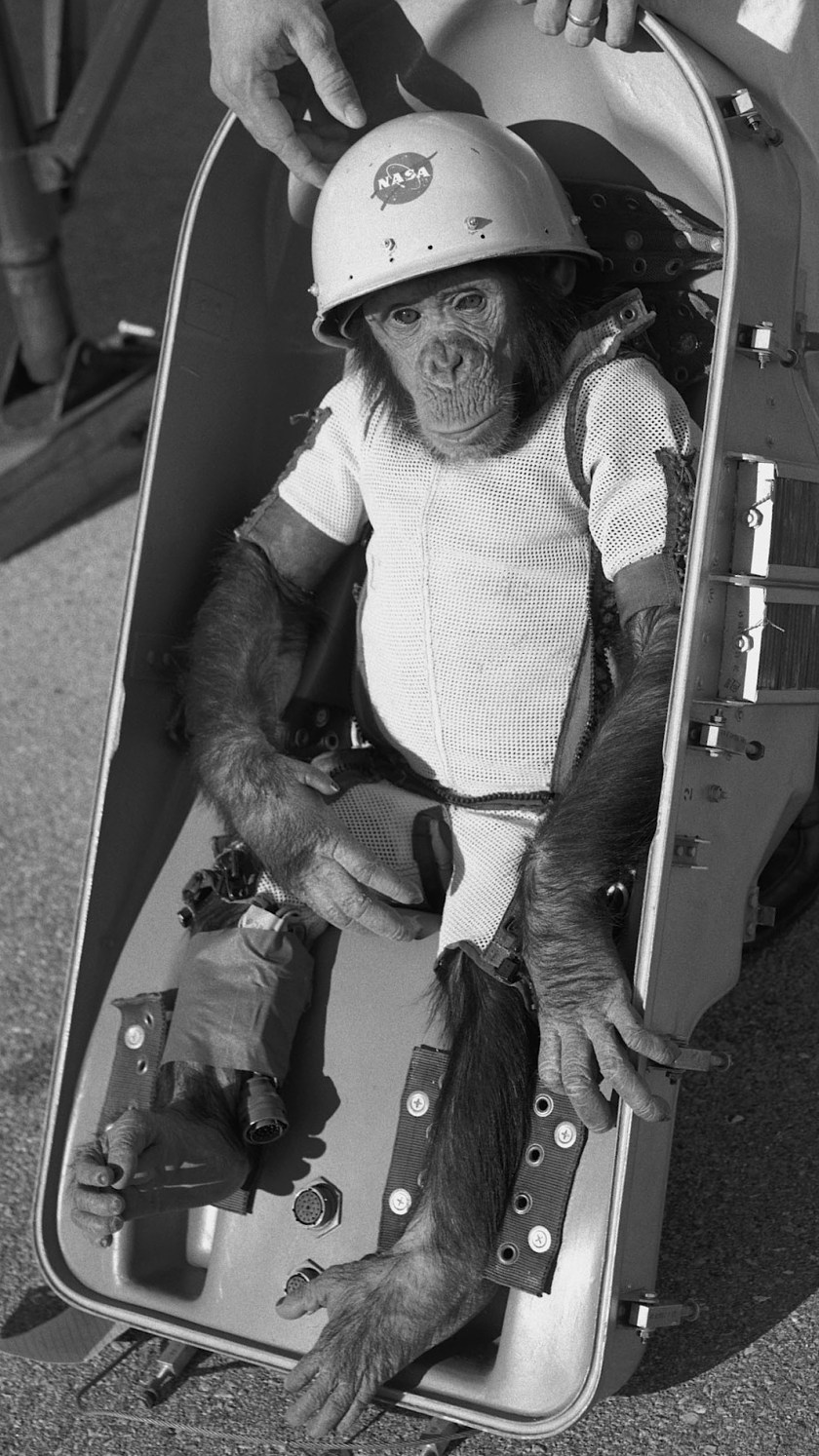
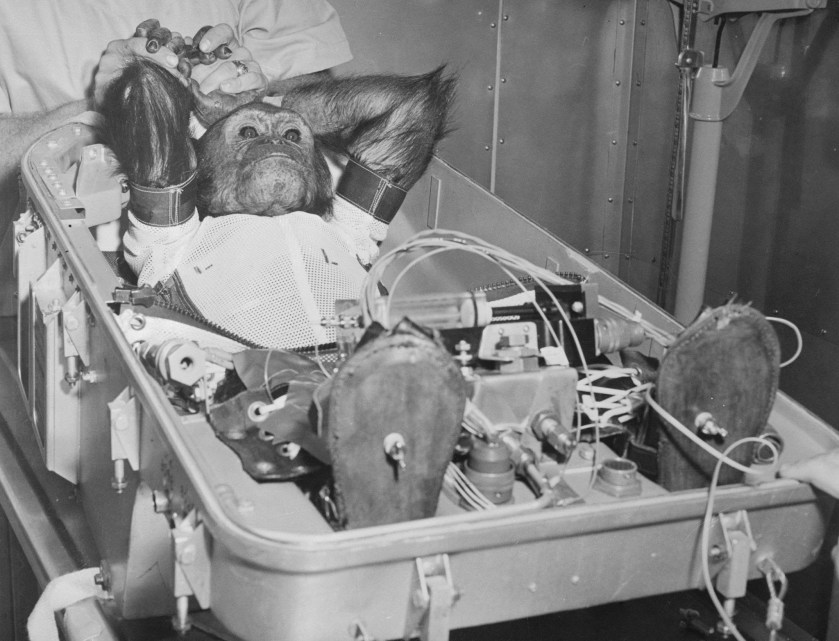
The scientists and engineers in charge of the launch didn’t want to humanize her if she didn’t make it, which was a common practice in space programs. (Ham, the chimpanzee sent into space by NASA in January of 1961, was known as No. 65 until his successful recovery. NASA was worried that a name would make him more sympathetic and lead to bad press if the chimpanzee died during the mission.)
Ham the chimpanzee was little more than a baby. Credit: NASA archives
Despite Felicette’s endurance and successful return, French scientists repaid her bravery by euthanizing her a month later so they could study her brain and learn more about the effects of spaceflight on mammalian biology.
Felicette, like Laika and Ham, was never given a choice. Those animals, with their child-like mental capacity, endured their missions out of a desire to please their human caretakers as much as any natural stoicism they may have possessed.
Would we do the same thing today? Will we repeat those experiments as we set our eyes on Mars?
Consider that the moon is a three day trip, and it’s close enough to Earth’s magnetic field to protect living beings from radiation. Mars is at least a seven month trip if the orbital conditions are right, and there will be no protection from radiation aside from what can be built into the craft. Take that trip without adequate protection and you’re guaranteed to get cancer.
It’s easy to say we wouldn’t make animals our test subjects for a Mars journey, and NASA now has decades of data on the effects of space and zero gravity thanks to the International Space Station.
And yet Neuralink, another company owned by Elon Musk, currently uses monkeys to test its brain interface technology, which allows the primates to operate computers with their thoughts. Those monkeys are forced to endure radical surgery to implant microchips in their brains. The teams working on the technology say suffering by those animals will be worth it as people with paralysis are able to do things with their thoughts and regain a measure of independence, increasing their quality of life.
Likewise, it will probably be an animal, or animals, who will be the test subjects on board craft that first venture beyond the Earth’s protective magnetosphere. Scientists and engineers will do their best to create a vessel that shields its occupants from harmful radiation, but they won’t know how successful they’ve been until the test subjects are returned to Earth and their dosimeters have been examined.
Will an astronaut volunteer for that kind of mission, knowing the “reward” could be a drastically shortened life?
Felicette pictured on commemorative stamps.
Felicette, left, was just one of several cats considered for the launch by French scientists.
To hear Musk and futurists tell it, pushing toward Mars is not just a matter of exploration or aspiration, but is necessary for the survival of our species. Earth becoming uninhabitable, they say, is an eventuality, not an if.
Others point out it’s much easier and wiser to pour our resources into preserving the paradise we do have, and the creatures who live in it, rather than banking on a miserable future existence on Mars where society will have to live underground and gravity, at 0.375 that of Earth, will change the human form in just a few generations.
To put it bluntly, while Musk and futurists look at life on Mars through the rose-colored glasses of science fiction fans, in reality living there is going to thoroughly suck.
If people do live on Mars they’ll never venture outside without a suit, never feel the sun on their skin, never swim in an ocean. They’ll never have another backyard barbecue, watch fireworks light up the sky on the fourth of July, or fall asleep to the gentle rain and crickets of warm summer nights. They’ll never hear birdsong or have the opportunity to see iconic animals like elephants and lions. Every gulp of air will be recycled, every glass of water will have passed through the kidneys of others. There will never be snow. Circadian rhythms will be untethered from the cycle that governed human biology for the 200,000 years our species has existed.
And while there could be a future — if you want to call it that — for people on Mars, there won’t be a future there for the rest of the living creatures on Earth.
As a lifelong fan of science fiction who devours SF novels, counts films like Alien and Bladerunner among my favorites, and is fascinated by shows like For All Mankind, The Peripheral and Star Trek, I understand the appeal of space and the indomitable human spirit that drives us to new frontiers. I just hope we can balance that with respect for the Earth and the animals we share it with. Let’s hope there is never another Laika, Felicette or Ham.
Correction: For All Mankind is the name of the Apple TV series about an alternate history space race. The first reference to the show’s name was incorrect in an earlier version of this story.
A close-up of Felicette’s face. Credit: French government archivesHam the Space Chimp waits for his apple reward. Credit: NASA archives
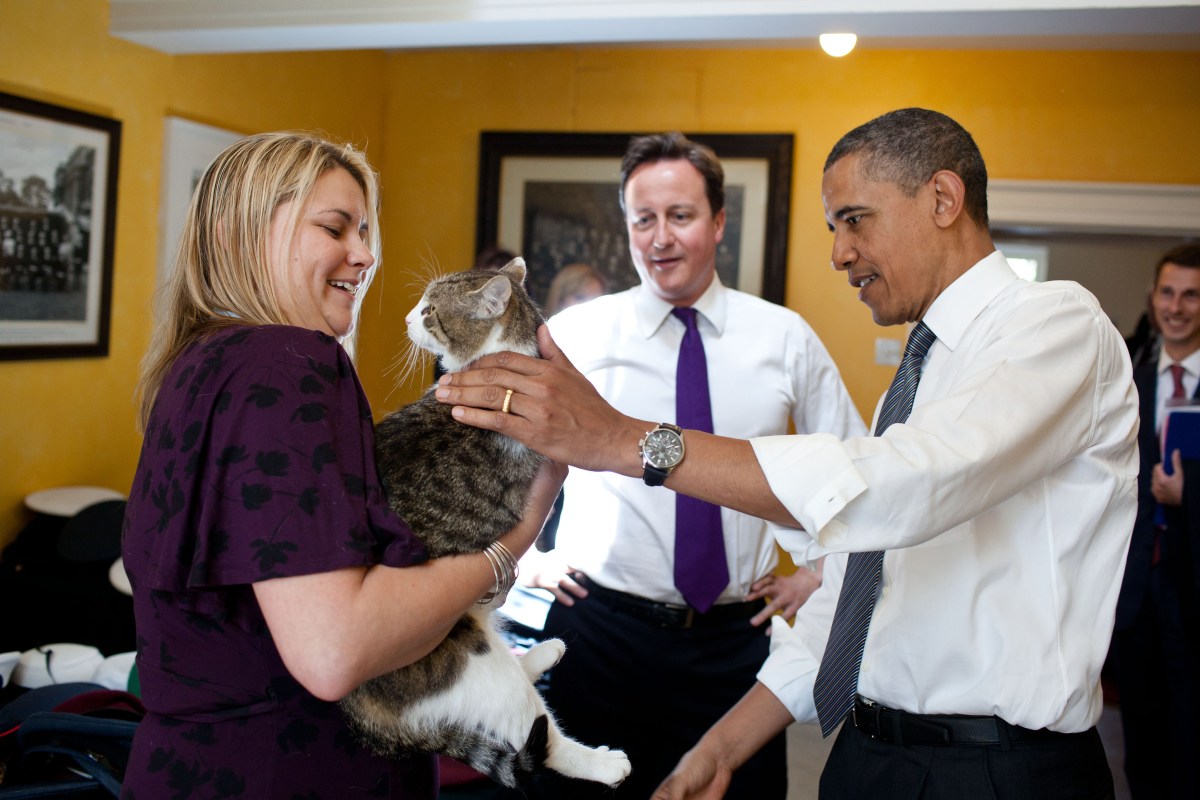
As we noted on Sunday, Larry the Cat just celebrated his 12th anniversary as chief mouser at No. 10 Downing St., the UK prime minister’s residence and office. The Atlantic has a new gallery featuring photos of Larry’s adventures over the years, and it’s fantastic.
See Larry chase a pigeon, tolerate former President Barack Obama, pose for the press, bolt from a Mitsubishi bigwig, cautiously supervise a police dog working on his turf, hang out with photographers and steal the show during meetings of world leaders.
The gallery also includes rare photos of Larry inside No. 10 (during which he’s mostly gazing longingly at his turf outside) and other amusing moments from his long tenure as de facto head of government in the UK.
(Top image credit: Pete Souza/White House photo)
Cuddly carnage!
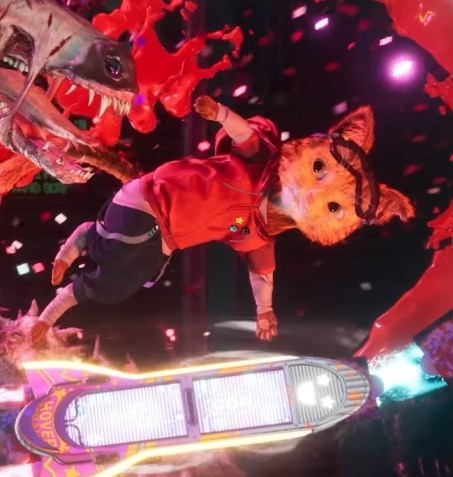
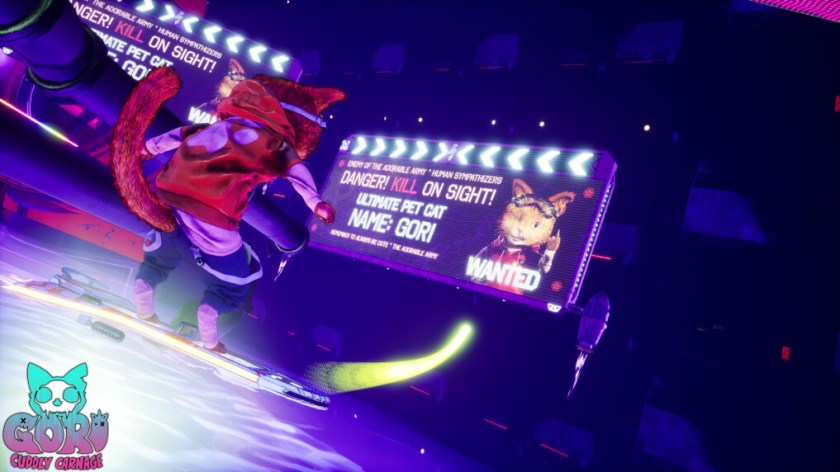
The camera pans from a wet, neon-lit street to the jagged remains of a wall spray painted with “Death to Humans” when a tiny head pops up, with the unmistakable shape of cat ears and the markings of a ginger tabby.
Zoom in: An orange tail speeds by, its owner just out of the frame, then the guitars kick in and Gori the cat stylishly disembowels some freak monster from atop his trusty Back To The Future-style hoverboard.
The game is called Gori: Cuddly Carnage, and it looks completely ridiculous, absolutely glorious and a hell of a lot of fun.
Gori stylishly puts down a monster. Credit: Angry Demon Studio and Wired Productions
It’s from Angry Demon Studios and Wired Productions, the same people behind the well-received 80s/90s nostalgia trip Arcade Paradise, so the production values look great and Gori shares some elements of the retrowave aesthetic prevalent in Paradise.
It probably won’t get the kind of hype that the feline-centricStray received, nor will people laud it for educating players about cat behavior, but that’s okay. It’s not that kind of game. Gori: Cuddly Carnage is still in development with no announced release date, but we’ll be keeping an eye on it.
Gori the “ultimate pet cat” on his hoverboard. Credit: Angry Demon Studio/Wired Productions
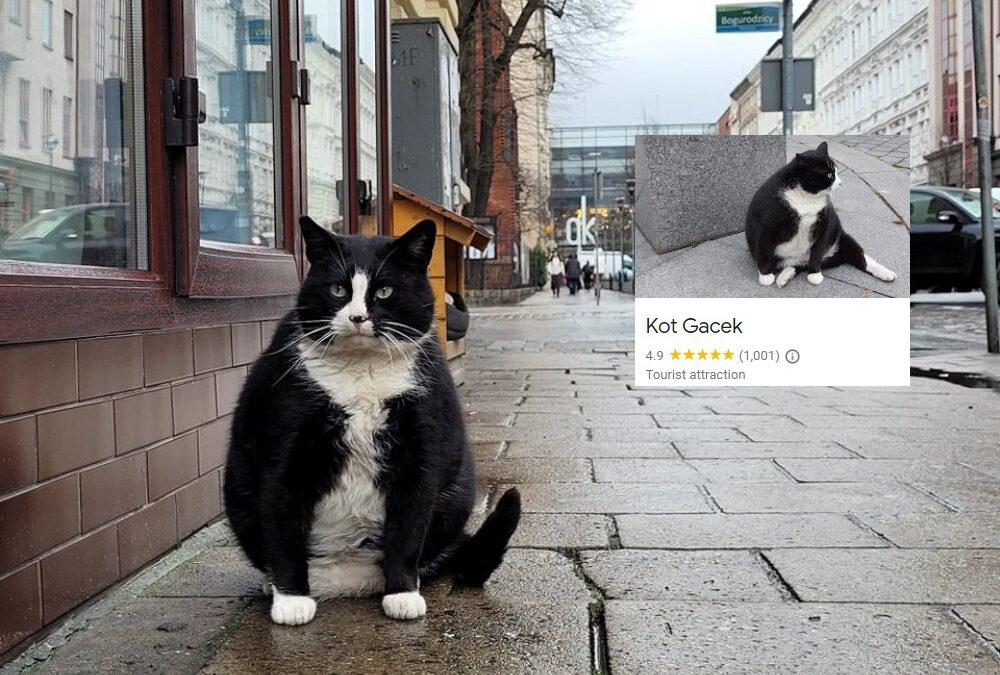
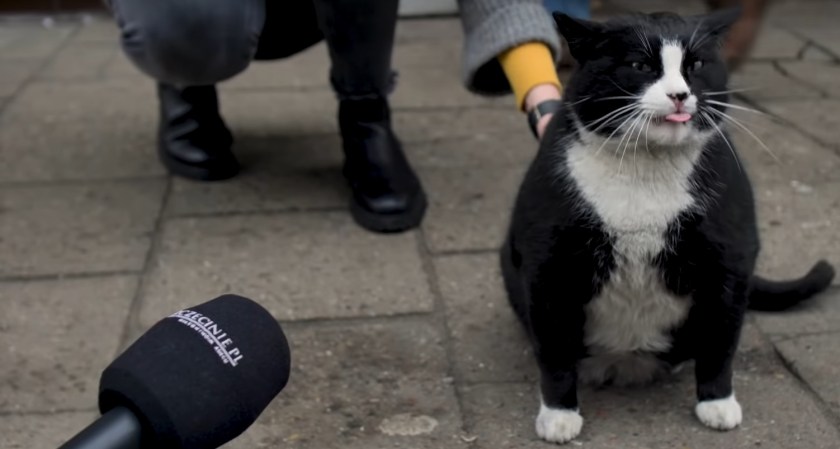
People come from all over Poland, neighboring Germany and beyond to see Gacek up close.
The Polish city of Szczecin has a message for visitors: Come, see Gacek and marvel at his chonky feline glory, but please don’t feed him!
It’s not a joke. The rotund tuxedo kitty, dubbed the “King of Kaszubska Street” in a 2020 local news report, has become so famous that he’s listed as the top-rated tourist attraction in Szczecin, a riverfront city of 395,000 people in northwest Poland. That’s no small feat in a place that boasts a beautiful historic old town and a bustling riverfront lined with shops, restaurants and attractions.
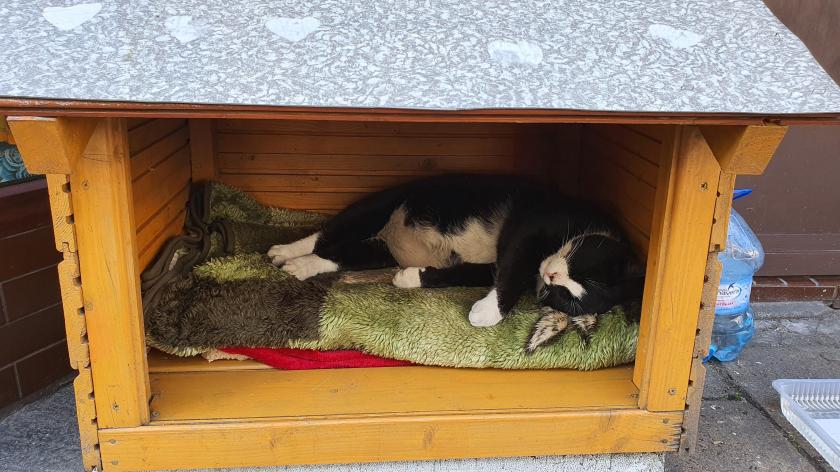
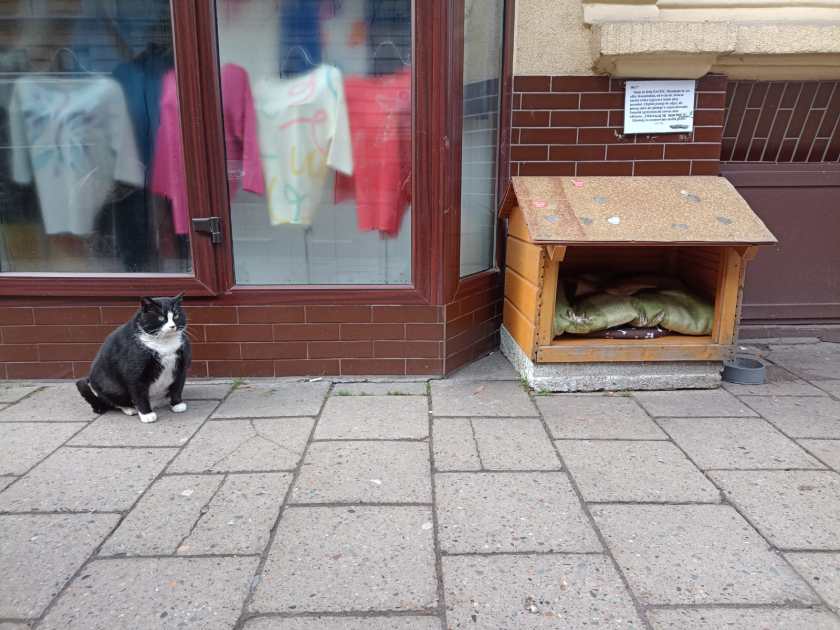
Locals think Gacek is about seven years old, and some years ago they built him his own little house on the street, where he can be found snoozing comfortably when he’s not strolling the block, charming tourists and nibbling on the food they (still) bring him.
Gacek isn’t bothered by street sounds or crowds of admirers as he naps in his house. Credit: Krola_Karo/Reddit
There are more than 1,100 reviews for the big guy on Google, with an average of a 4.9/5 rating. (We suspect the handful of less-than-perfect reviews are from dogs or jealous rivals.)
“It was worth traveling three hours to feel ignored by him,” one reviewer wrote.
Another visitor got too close to the magnificent chonkster and found out what happens: “He stole a sausage,” the reviewer deadpanned.
As Notes from Poland points out, there’s a sign on Gacek’s house informing visitors that Gacek will “happily pose for photos,” and asking for people to leave food in sealed bags in a box, so Gacek’s caretakers can keep him on a somewhat normal diet and prevent him from gaining more weight. A post on the Slavic social media site VK describes Gacek as calm and nonchalant about the attention he draws, but notes he doesn’t particularly like it when people pet him, and he’s not a fan of the cold.
h/t reader Gilda P. for letting us know about Gacek.
Szczecin is especially busy in the warm summer months, but Gacek is a year-round attraction. Credit: InYourPocketGacek is accustomed to being the center of attention and seems to revel in his celebrity as he makes his daily rounds around the block. Credit:hollusaurus/RedditGacek responded with a few excited meows when a Polish TV crew interviewed him in 2020.
Thousands are set to gather at The Greek Theatre in Los Angeles’ Griffith Park to celebrate the extraordinary life of perhaps the most famous mountain lion in history.
You don’t often hear about public memorials for cats, let alone thousands of people participating in them, but the fact that tickets were gone for P-22’s “Celebration of Life” within three hours speaks to the special place the mountain lion had in the hearts of Californians.
The famous puma, who was euthanized in December after he was suffering from an infection and was hit by a car, called Los Angeles’ Griffith Park home, and that’s where the celebration will be held at noon Pacific (3 pm Eastern) on Feb. 4. It’ll be held at The Greek, the outdoor amphitheater more commonly associated with rock stars, although one could argue P-22 was a rock star in his own right.
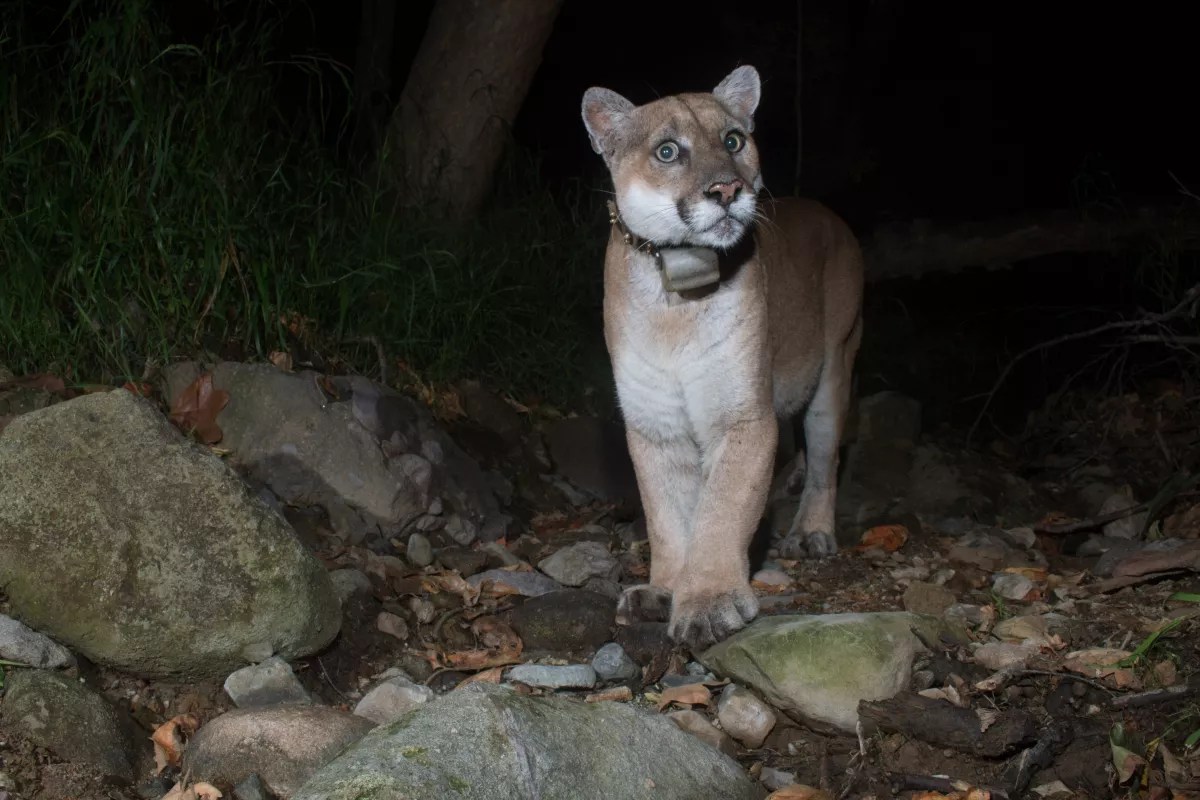
P-22 was the subject of books, movies and music festivals during his 12-year life, and his face adorned t-shirts, murals and street signs asking people to be careful while driving around the Griffith Park area, where the big guy ranged. He was the most famous mountain lion in an ongoing study of his species, and was easily identified by the radio collar around his neck.
P-22’s “origin story” was equally fascinating. Born in southern California in 2010 or 2011, the fearless puma migrated north, crossing several of the busiest and most dangerous highways in the world before he settled in Los Angeles. His nine-mile home range was the smallest ever recorded for a member of his species.
Bookmark this link or this alternate to livestream the event, which is set to include music, performances and remembrances from Los Angelinos and celebrities who loved the “Hollywood Lion.”
Separately, there’s an effort to honor the late puma with postage stamps featuring his famously derpy visage.
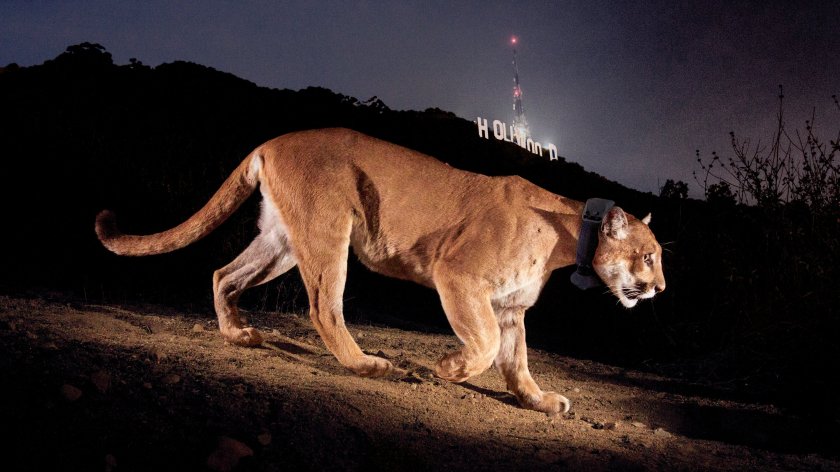
Top image credit Miguel Ordeñana/Natural History Museum. Bottom image credit Steve Winter.
Steve Winter’s iconic photo of P-22 prowling in front of the Hollywood sign.






 Pain In The Bud