From TNR to managing colonies and finding homes for friendly strays, cat ladies never stop working to make life better for our furry friends.
Hat tip to Mollie Hunt for making us aware of Cat Lady Day, an unofficial holiday that is part of an effort to reclaim the concept of the “cat lady” through positive association.
That’s a noble goal, and at PITB we’ve long scoffed at the idea that gender makes a difference in appreciating felines.
Cats are paradoxically regal yet derpy, imperious yet loving, and their antics are always amusing. Those are qualities that can appeal to anyone regardless of gender, nationality, age or cultural background.
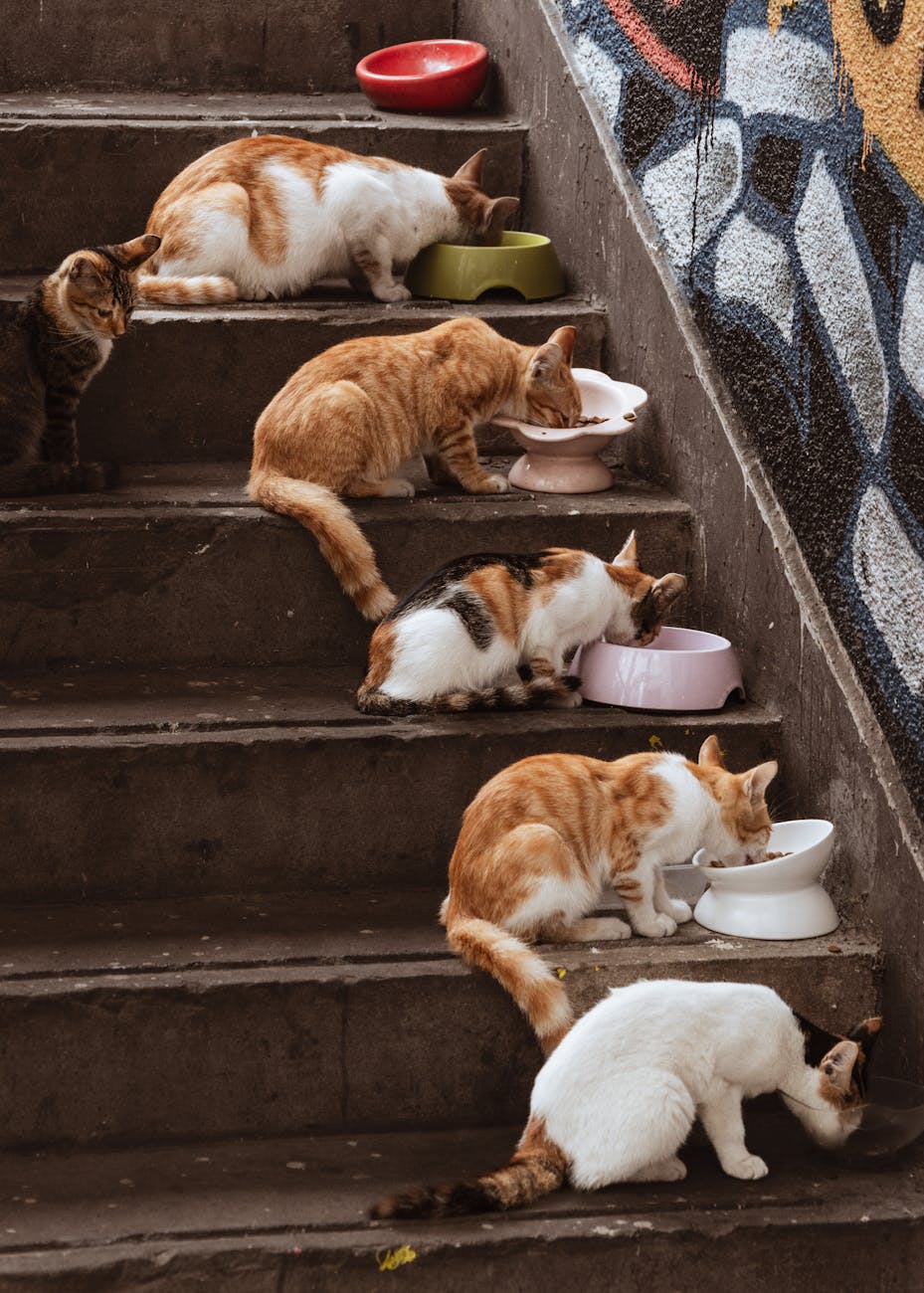
But I think we should also use a day like this to thank the innumerable cat ladies in every city, town and village across the country who work tirelessly to improve the lives of strays, ferals and shelter cats.
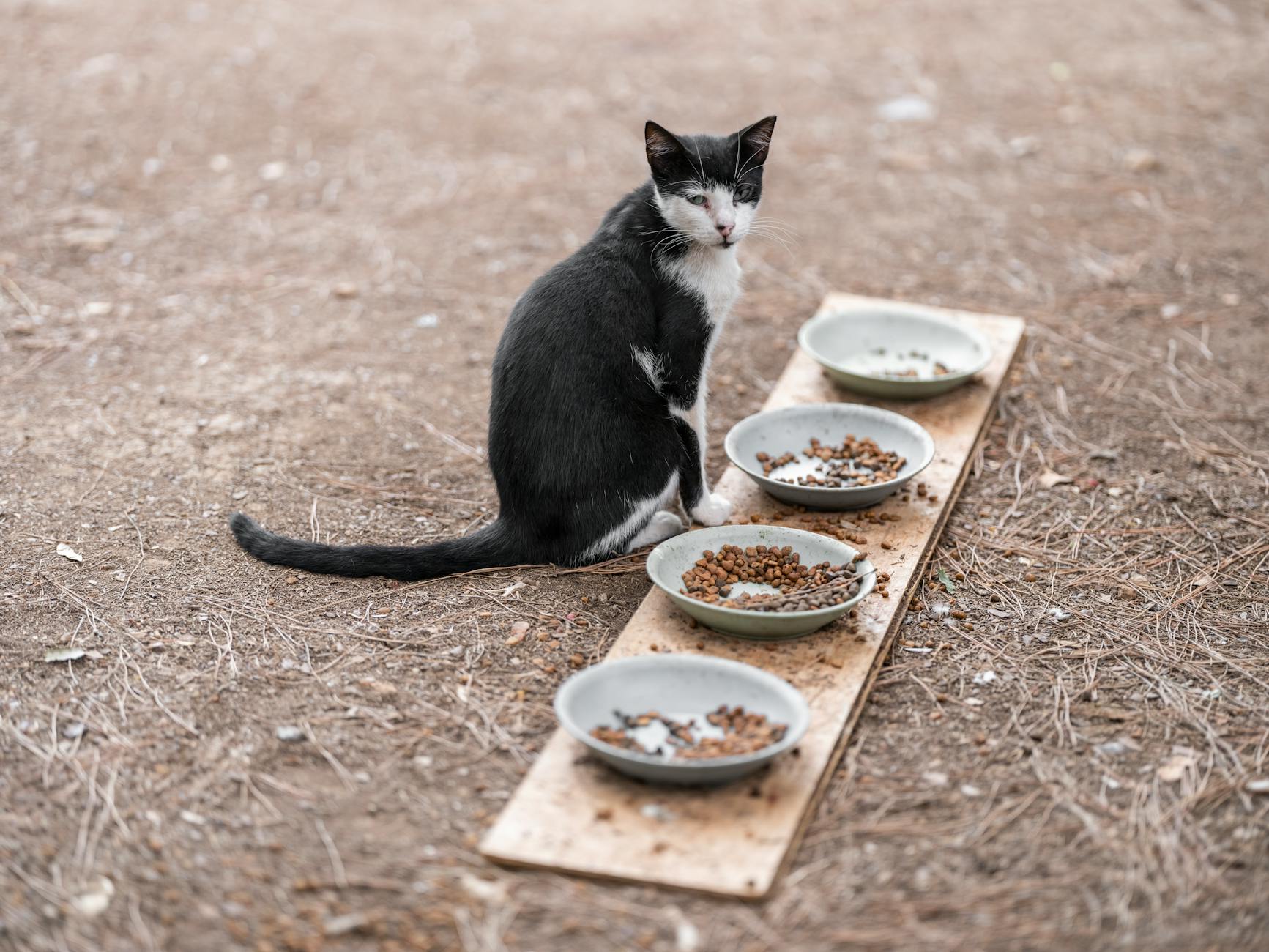
These are the people who walk the walk, who do the hard work of TNR (trap, neuter, return), managing colonies, and protecting cats without homes from animals and mean-spirited humans.
Credit: cottonbro studio/Pexels
Cat ladies find homes for friendly strays, keep colony cats fed, and obtain veterinary care for the sick and injured.
More often than not, they provide help out of their own pockets when donations can’t cover all the costs.
Not only is it thankless work most of the time, but misguided bureaucrats sometimes take it upon themselves to make life more difficult for the cat ladies caring for local strays and ferals.
Yet these women persist because they’re driven by one thing — love for our furry friends.
Like us, cats get bored with the same stuff all the time.
One good piece of advice I got before adopting was to introduce the kitten to as many different flavors and textures of food as possible.
That way you won’t have a picky cat and you won’t find yourself in a scramble if the one variety of cat food your feline master will eat is discontinued or becomes difficult to get. That became a major problem during and after the pandemic, when disrupted supply chains and shortages of packing materials meant you never knew what you’d find on store shelves.
Even if your cat has a favorite food, too much exposure to that food will have diminishing returns, a research team from Japan’s Iwate University found.
But it’s not just the type of meat, texture or brand. Smell is hugely important to cats, and the study found they have much bigger appetites when presented with a novel food odor.
This is helpful not only to help us make sure our little buddies eat, but also because most of us don’t think about olfactory stimulation with cats. We build them cat condos and catios, we provide scratchers, we rotate toys. But how often do we give our cats the opportunity to enjoy new smells?
One of Buddy’s favorite things to do is sniff around the apartment building. I wait until late at night when it’s quiet and let him walk the hallways, stopping at each door to sniff. (I always remain a few feet away because it makes him feel safe, and because I can scoop him up and bring him back if he gets frightened.)
He loves it, and I don’t do it enough. After reading this, I’ll make sure little dude gets his sniffing tour more regularly.
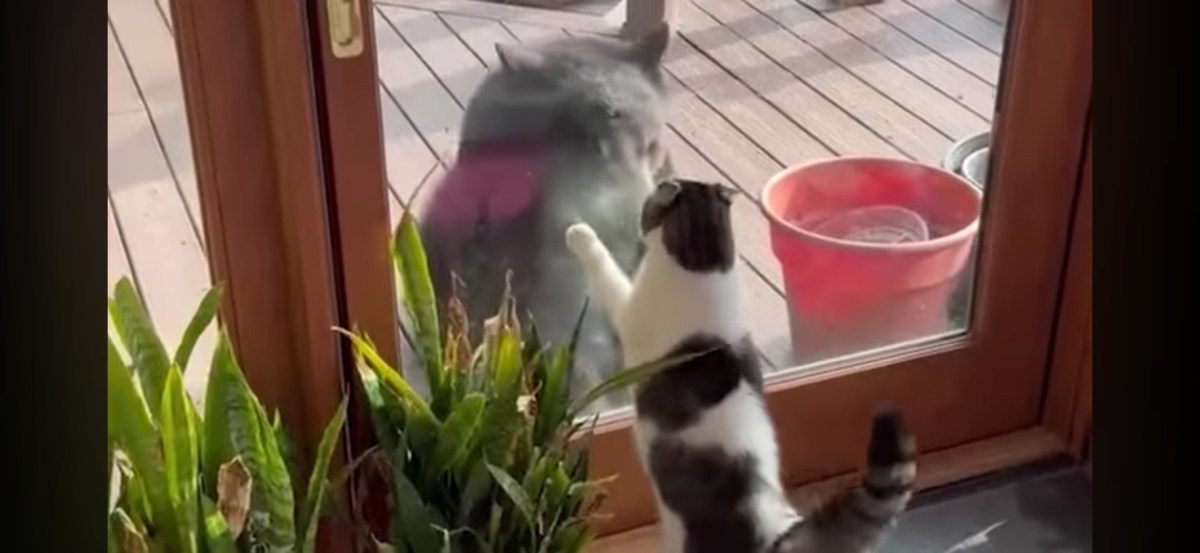
“Scooter does not like bears,” the fearless feline’s human said.
Scooter is one brave little dude!
The tuxedo cat from Asheville, North Carolina, wasn’t even phased by a pair of young bears who unwisely entered Scooter’s territory. Sure, Scooter had the benefit of a glass door between him and the ursine invaders, but Buddy here would have bravely and valiantly defended his home run screaming and taken up a position behind my legs while moaning pathetically.
Plus, I mean, they’re bears. Young bears, yes, but Scooter and his human placed an awful lot of faith in the strength of that glass.
Will Jones, Scooter’s human servant, made the understatement of the year when he posted the video and said flatly “Scooter does not like bears.” Ya think?
Regardless, the little guy clearly had the big animals spooked. They flinched from his hiss-accompanied flurry of rapid paw jabs, then decided it wasn’t worth dealing with the furry lunatic behind the glass and promptly left Scooterland.
Maybe they should be grateful Scooter couldn’t break through the glass instead of the other way around.
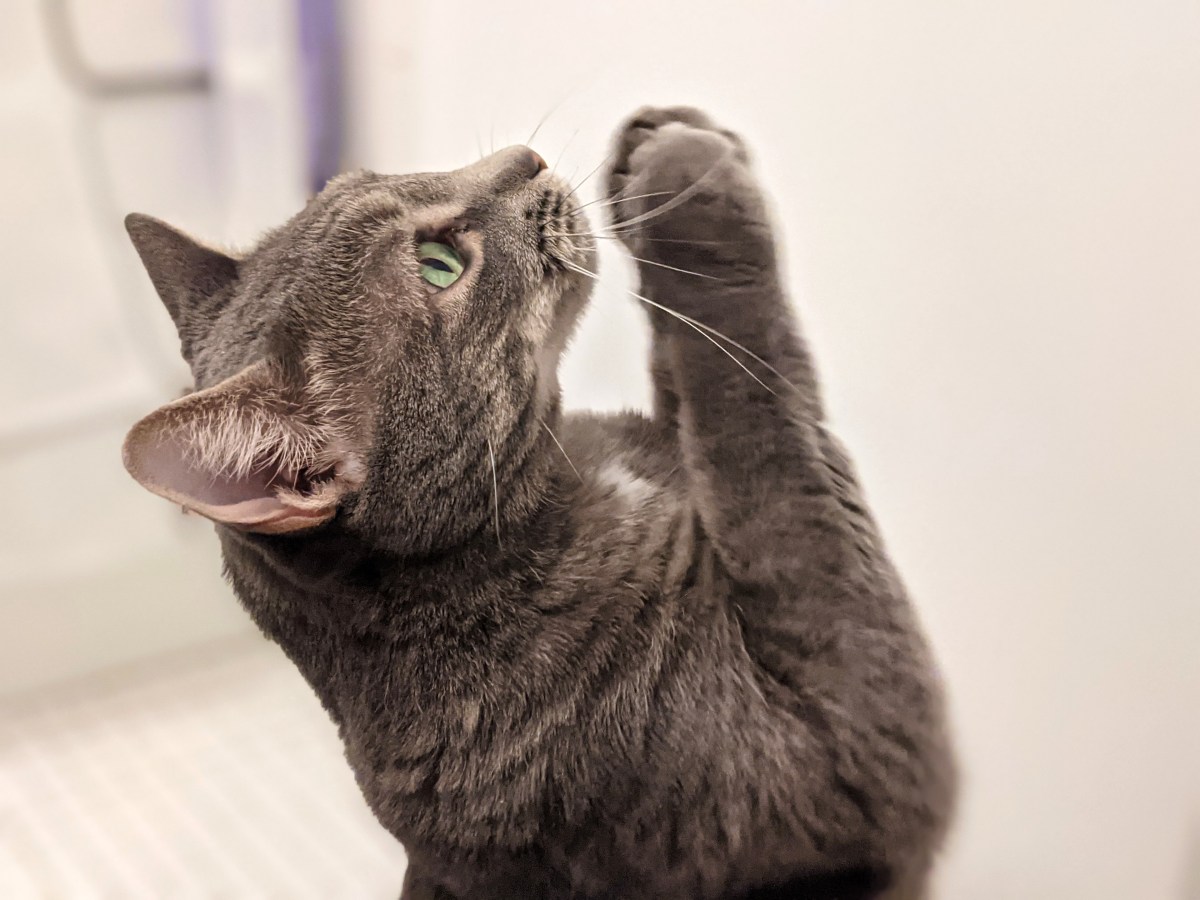
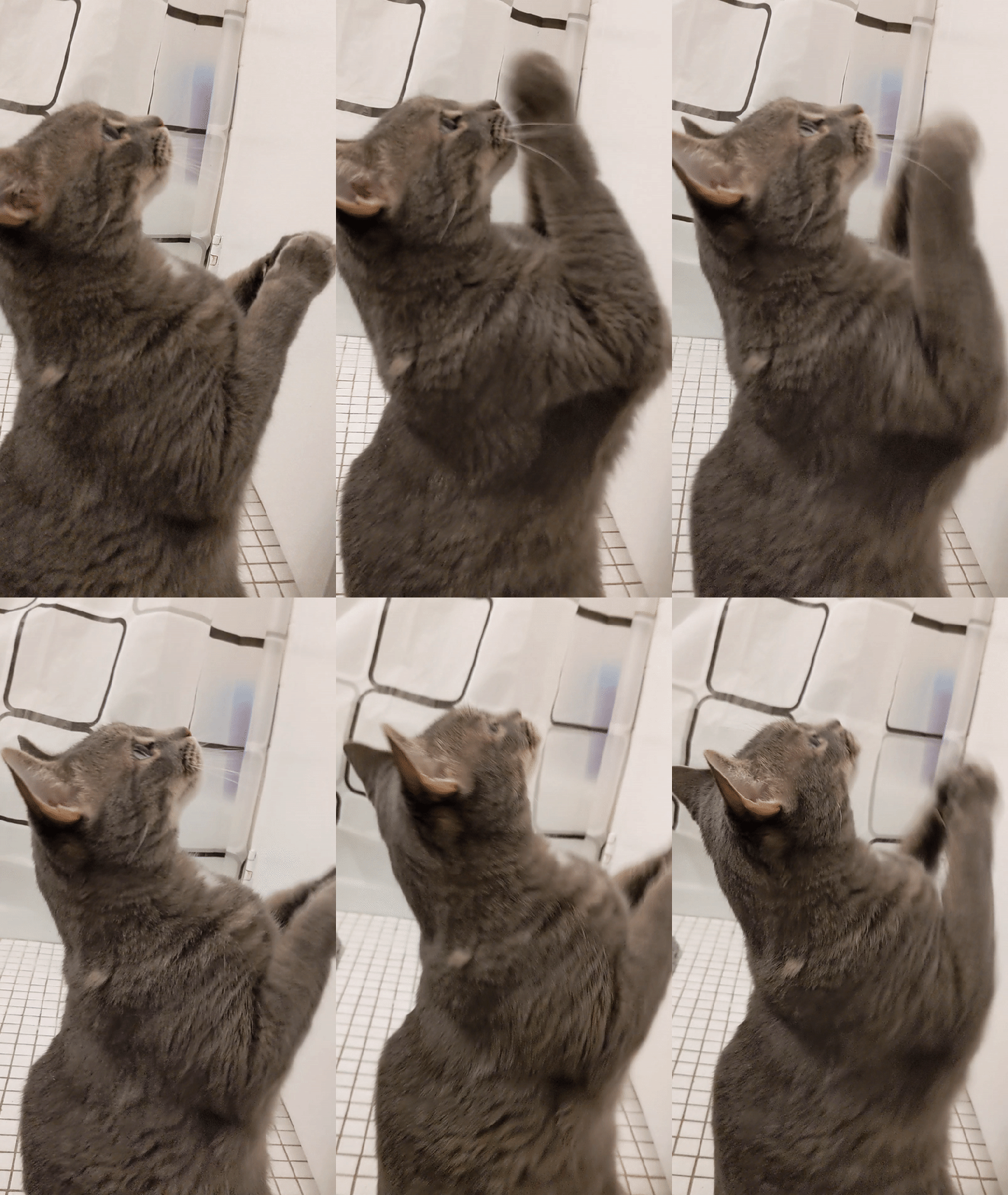
For the uninitiated, it’s a quirky behavior in which a cat sits upright on its back feet, then places the front paws together and moves them up and down as if fervently at prayer — or begging for something. (Though that’s undoubtedly our anthropomorphic interpretation of a distinctly feline quirk.)
Our post about the begging paws has become one of the most popular stories on this site, with people regularly finding us via search engines as they try to learn more about this strange behavior.
The last time we asked around, several veterinarians and behaviorists were happy to speak to us about the subject, but no one could say for sure what the begging paws motion means.
We’re going to give it another shot and hopefully get some answers by comparing notes with people whose cats engage in the behavior. If your cat does the begging paws/praying gesture, we’d love to hear from you!
Please comment here or email paininthebud at gmail along with:
The name, age and gender of your cat
How frequently your cat does the gesture
Anything patterns or related behavior you’ve noticed: does your cat “pray” at certain times or in response to something she sees? Do you reward the behavior with treats, affection or attention? Has your cat always done it, or did the behavior emerge at a particular time?
Any detail could help uncover what exactly our furry friends are doing.
If you have photos or video of your cat “praying,” we’d love to include those clips in our follow-up story as well.
Hopefully by working together we can understand this quirky behavior and finally solve the mystery of why our cats do it!
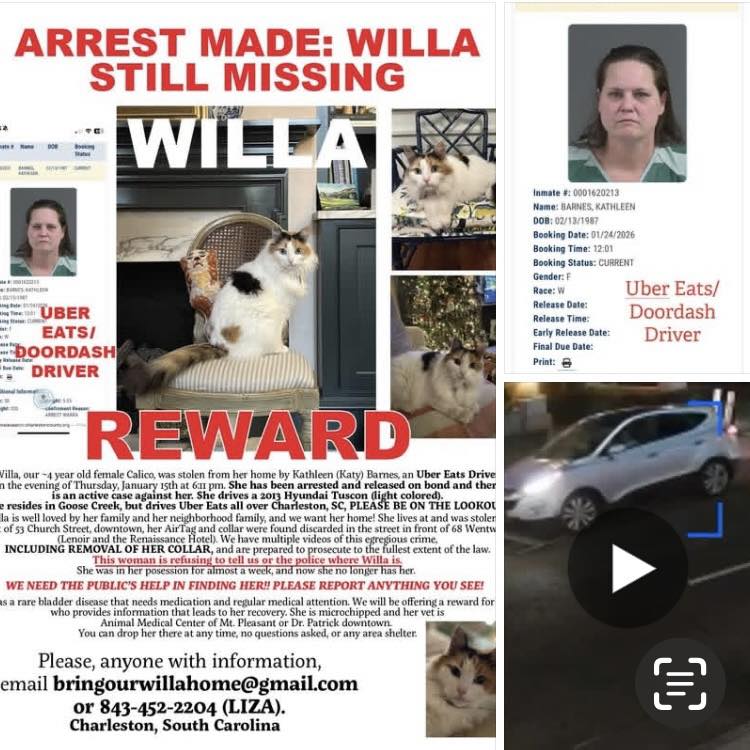
A substantial new reward from a local shelter is providing incentive for the return of Willa the cat, who was stolen from her home by an Uber Eats driver in January.
It’s been two months since a delivery driver working for Uber Eats allegedly stole their cat, but a South Carolina family is determined to get their feline family member back.
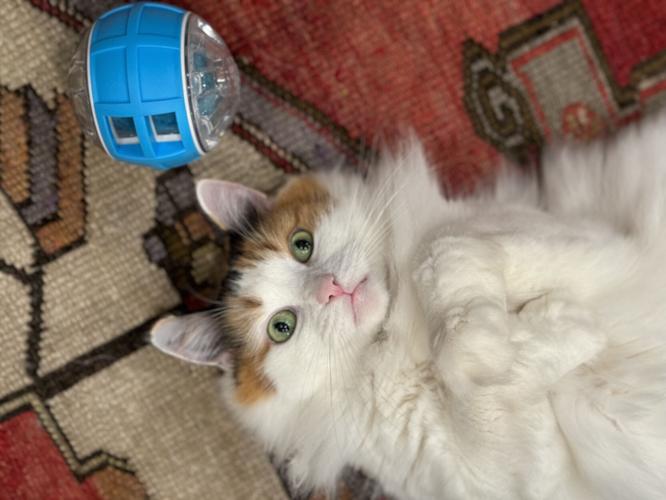
Four-year-old Willa the cat was a fixture in her neighborhood, known and loved by neighbors and people taking walking tours of the area. The 17-pound Calico, with her magnificent floof and striking coat pattern, could usually be spotted lounging on the front porch of her home, where she liked to watch people going about their business.
Now Pet Helpers, a shelter in Charleston, is helping keep the story in the news and creating greater incentive for people to join the search for Willa by offering a $2,500 reward for her return, in addition to a reward the family is offering.
On Jan. 15, shortly after delivering Greek food to a home on the same street, Katy Barnes of Goose Creek, SC, allegedly scooped Willa up, carried the Calico to her SUV, and drove off.
Willa’s family, the Layfields, did not have an angle on the cat-napping from their home security cameras, but cameras belonging to neighbors and a gym about a mile away show a woman police have identified as Barnes taking Willa, then pulling over and discarding the feline’s collar and AirTag.
Despite her arrest and the footage, Barnes has refused to cooperate with police, claiming she no longer has the Calico. If she did simply release Willa, as she claims, she did it during the coldest season of the year during a deep freeze, when most of the country was seeing single-digit or sub-zero temperatures. That’s a challenge for any cat, especially a feline accustomed to an indoor life.
“I am amazed that people can be so cruel,” Liza Layfield told PITB. “Why? Why would this person take their animal and then put her out to essentially die? Why would Katy take Willa and refuse to give her back or tell us anything about her whereabouts in the face of freezing temperatures and snow? Why would she want to torture a family over a cat that is apparently no longer in her possession? We cannot understand, and it is keeping us awake at night.”
Despite the stress of the situation, the family has continued their relentless efforts to get Willa back.
Charleston police have taken the case seriously, arresting Barnes and charging her with petty larceny. They secured a search warrant for Barnes’ home, which did not turn up any signs of Willa, and they arrested her a second time, charging her with littering for disposing of the collar and AirTag and keeping her in police lockup overnight twice in two weeks.
The message: they’re not letting this go either. Neither are locals, who have rallied to support the Layfields and have started a petition asking authorities to do as much as they can to help find Willa, and calling on Uber to do more to help. Almost 1,700 people have signed the petition, and it continues to accrue signatures.
In the meantime, the Layfields have turned to their community for help. An email account they set up has yielded promising tips, and neighbors have been on the lookout for Willa in Charleston as well as in Goose Creek near Barnes’ home.
“It is very much an active and ongoing investigation,” Liza Layfield told PITB.
“We love our animals as our children, they are a part of our family, and we can’t rest until she is found.”