Guitarists, synth players and other musicians can get their meow on with this unique FX pedal.
As a guitarist I’m partial to pedals, FX and other gear that can imbue the instrument with the funkiness of the wah or the satisfying crunch of harmonic distortion.
But this? This is something I never expected.
Meet The Meowdulator, an FX pedal that does precisely what it sounds like it does.
Created by B’s Music Shop and pedal-maker Cusack Music, the Meowdulator is a monophonic guitar synth, meaning it plays single “notes” similar to a Moog. That means you can’t strike a chord and get a chorus of discordant meows, but you can for example play a solo that sounds like a cat in heat — if you want to. (The “Little Mew” setting sounds like an octaver in meow, generating multiple voices, but still triggered by plucking single strings.)
Brian of B’s Music Shop called the pedal “maybe the craziest thing I’ve ever collabed on.”
“It’s glitchy sometimes, it’s its own animal,” he said in a video demonstrating the new pedal. “But it’s a little kitty cat and we hope it makes you happy and you have some fun with it.”
My favorite of the seven presets demoed in a Youtube video is “Acid Kitty Synth,” which generates a funky, wah-like meow. In the right hands, something awesome can be done with it. I can imagine Acid Kitty Synth breathing life into an Earth, Wind and Fire style or Televisor-esque track, compelling the listener to hit the rewind button while asking “Did I just hear what I think I heard?”
Finally, there’s a “hidden feature” — if you hold down the bottom-most button, the pedal will purr. Perhaps it’s something to work into the rhythm of a track or give the audience a relaxing vibe between songs while playing live?
The Meowdulator retails for $199 and is expected to ship in mid-July. Those of you who fall into the cat lover/guitarist venn diagram overlap can pre-order now.
Now can someone make a puma scream pedal? Ratatat, a New York duo and one of my favorites, has a thing for working the screams of the iconic cat into their tracks, and it makes me love them even more.
A UK couple created a cat flap that uses algorithmic AI to determine if their cat is trying to come inside while carrying prey in her mouth. If she’s carrying prey, the cat flap won’t open.
Jinx the cat was so grateful to UK couple Martin Rosinski and Michelle Bowyer for giving her a home that she decided to bring them a gift.
“The first time I was working at home, I heard Michelle making a commotion because Jinx had come in with a mouse and dumped it on the carpet in front of her as a ‘thank you’. That’s their way of expressing love. You can’t tell her off, so we thanked her a lot for it and took it away from her,” Rosinski said.
“Then this started happening more and more often to the point where we would be woken up at 2 a.m. as Jinx would meow loudly and announce, ‘Hey I have a gift. If we didn’t get to her fast enough she would decide to eat it herself, which would involve piles of mouse parts being smeared into the carpet. This was happening at 2 a.m., then again at 4 a.m. on many nights and we’d not get any sleep having to deal with this. Her record was four in one night – that night was a frenzy of three mice and one bird. It was something that was a real cause of stress.”
The solution is pretty simple, right? Keep Jinx inside.
The former stray won’t like it at first. There will be an adjustment period when the meowing will be seriously annoying. But it’s better than allowing your cat to play Predator at night and waking up to find your cat sitting on your chest, proudly presenting a twitching mouse to you.
Rosinski and Bowyer didn’t take Jinx inside.
Instead they created a bespoke intelligent cat flap that allows Jinx to come and go as she pleases, but won’t open if she’s carrying prey. They both have backgrounds in tech: he’s a researcher who also tinkers with software and hardware, and she’s a web developer.
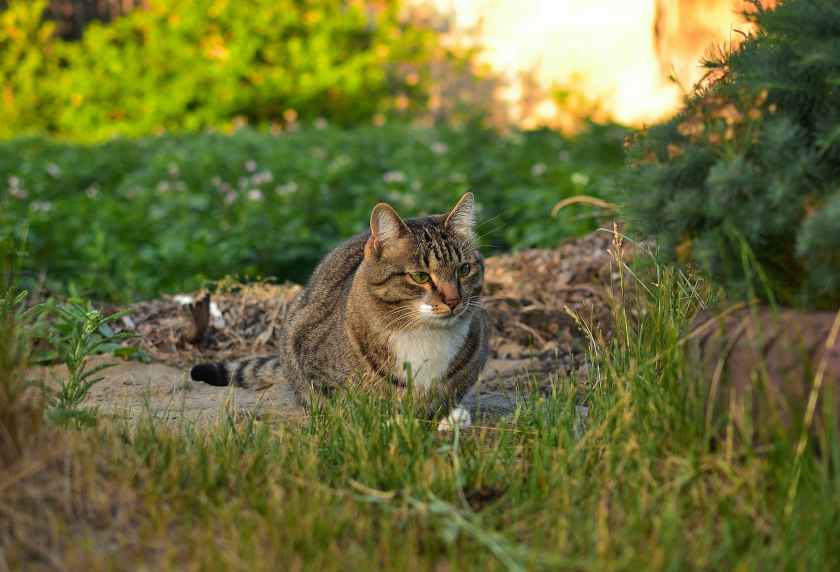
Despite being domesticated, cats retain their predatory instincts and many will kill small mammals and birds if allowed to wander on their own outdoors. Credit: Aleksandr Gorlov/Pexels
Their system, OnlyCat, uses a camera and an algorithm to determine if Jinx is carrying something in her mouth. If she is, the cat flap won’t grant her access, and Bowyer and Rosinski will get a text informing them Jinx has been up to her hi-jinx again, along with a photo of her entry attempt.
The OnlyCat prototype has prevented Jinx from bringing in 42 prey animals since June of 2021, the couple said. OnlyCat may prevent her from bringing her prey inside, but it hasn’t dissuaded her from killing.
“Two months ago I think something clicked and she realized, ‘I can’t bring these home. It’s just not going to work,’” Rosinski told the UK’s South West News Service. “She still catches them outside but she’s learned that there’s no point even trying to bring them home, which is a relief.”
The couple developed the OnlyCat into a full product, which launches on Aug. 16 at £499. (A little more than $600 USD.) Their site says the retail version of the flap has worked 100 percent of the time in tests, and the developers believe “99%+ accuracy should be achievable for everyone.”
It’s similar to a device built by Amazon engineer Ben Hamm which uses DeepLens, an AI-enabled camera system, and Sagemaker, a software tool for training machine-learning algorithms, to determine if cats are carrying prey.
Hamm’s version, which he created for his cat Metric in 2019, initiates a 15-minute lockout timer if Metric tries to enter while carrying a kill, and automatically sends a donation to the National Audubon Society, which protects birds and their habitats. The algorithm was trained using tens of thousands of images of cats approaching normally, and with prey in their mouths. So far, Hamm hasn’t developed a retail version of his AI-enabled cat flap.
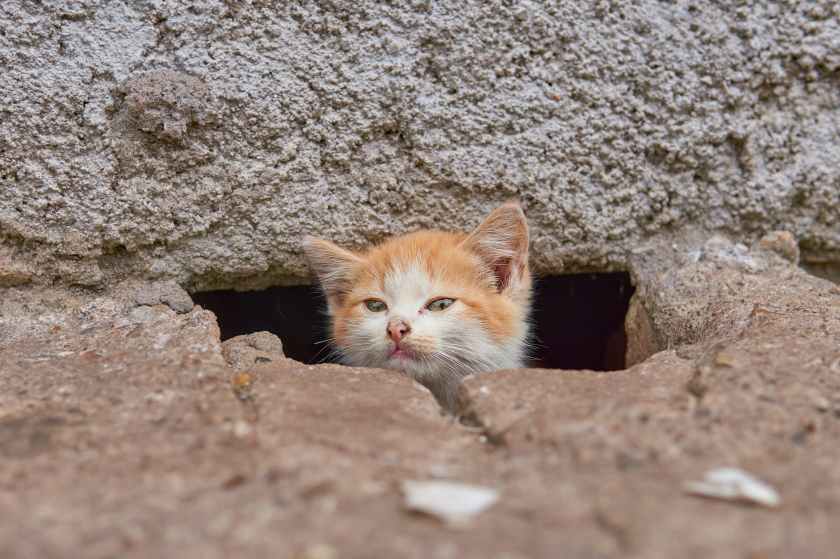
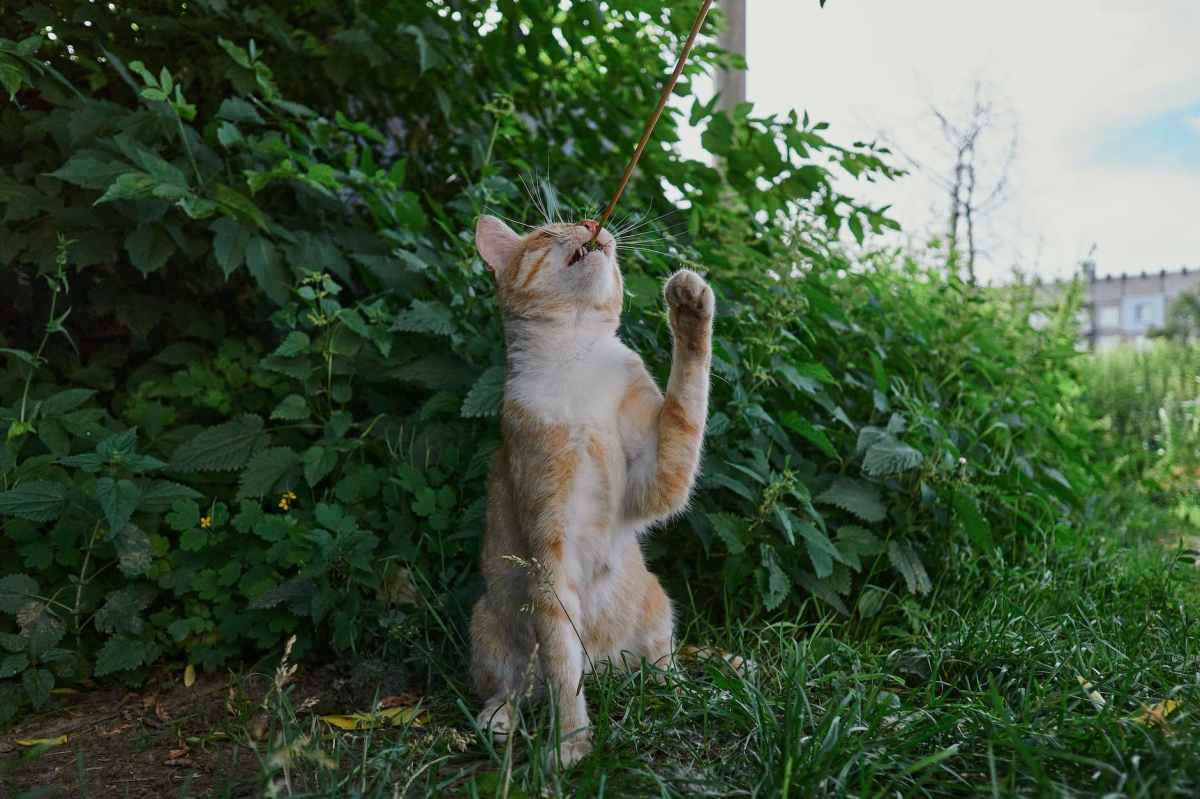
The feline predatory drive is instinctual. Indoor cats can exercise that drive with wand toy games and by chasing laser pointers. Credit: Aleksandr Nadyojin/Pexels
We don’t think there’s any one way to raise cats, and it’s obvious there are different cat cultures in various countries.
Nevertheless, seven out of 10 cat owners in the UK allow their cats to roam free, and anecdotes like the ones about Jinx, with her multiple kills a night habit, draw the ire of birders and conservationists.
Peter Marra is the author of Cat Wars: The Devastating Consequences Of A Cuddly Killer and co-author of many of the leading studies claiming cats are the primary threat to bird populations. He’s currently making the media rounds and endorsing strict policies — many of them in enacted in response to his studies — that would make it illegal to allow cats outdoors.
Maybe it’s time for more people to reconsider allowing their cats to roam free. Like putting a cat on a diet or trying to break a bad habit, there’ll be loud and annoying protests in meow, and it’ll get worse before it gets better, but eventually cats always adjust to changes if given long enough.
As domesticated animals they don’t have a natural habitat anymore, and they don’t actually need to be outside. It’s entirely possible to keep things fun and interesting for the furry little guys, and that’s on us. All that’s required is our time, attention and affection. Interactive play time. Toys that can keep a cat occupied by herself. Catnip. Condos and tunnels. Window perches. Cat TV on Youtube. Simple things to play with, like plastic bottle rings, crinkled tin foil and cardboard boxes.
We don’t think anyone should be required to keep their cats indoors, and that’s the point. We have an opportunity to meet conservationists halfway and make a real effort to reduce feline impact on small wildlife. If we don’t, eventually we’ll be forced to comply by laws that’ll be draconian compared to the voluntary measures we could have taken to prevent the government from getting involved.
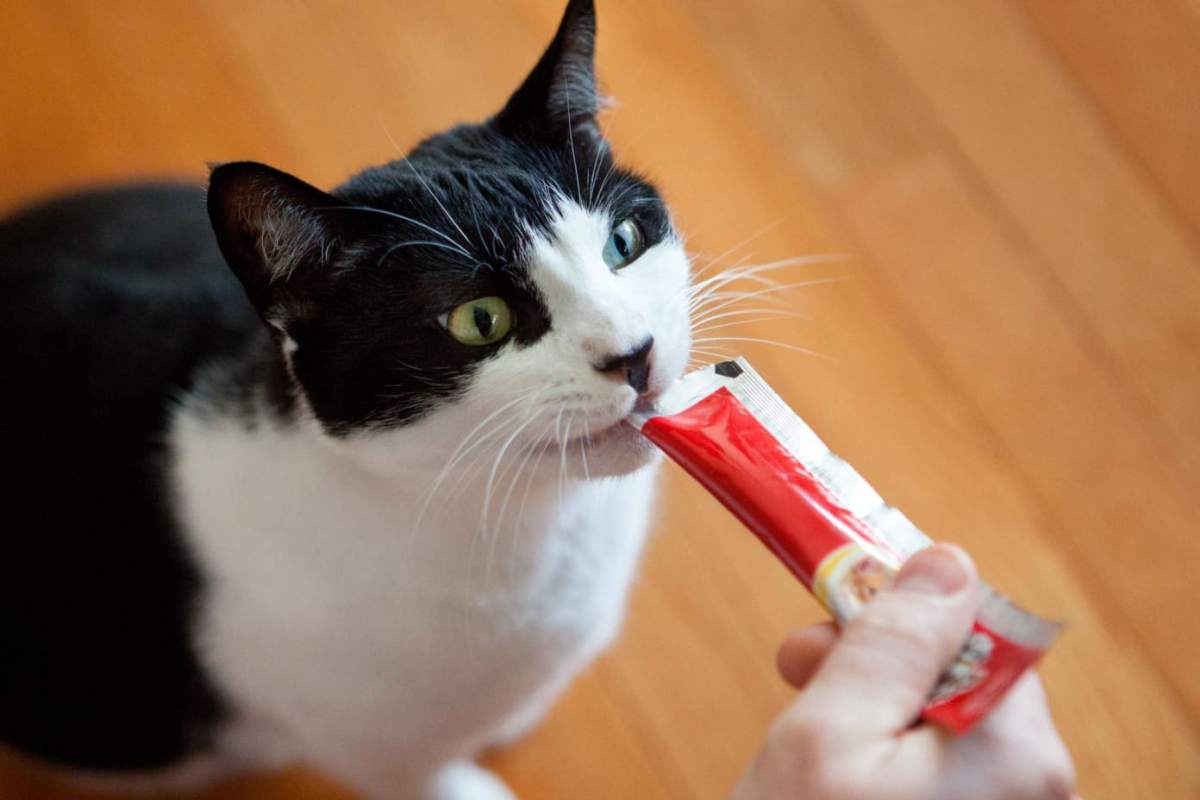
Cats love ’em, they said. It’ll be a great bonding experience, they said. You’ll have to stop your cat from eating too much, they said.
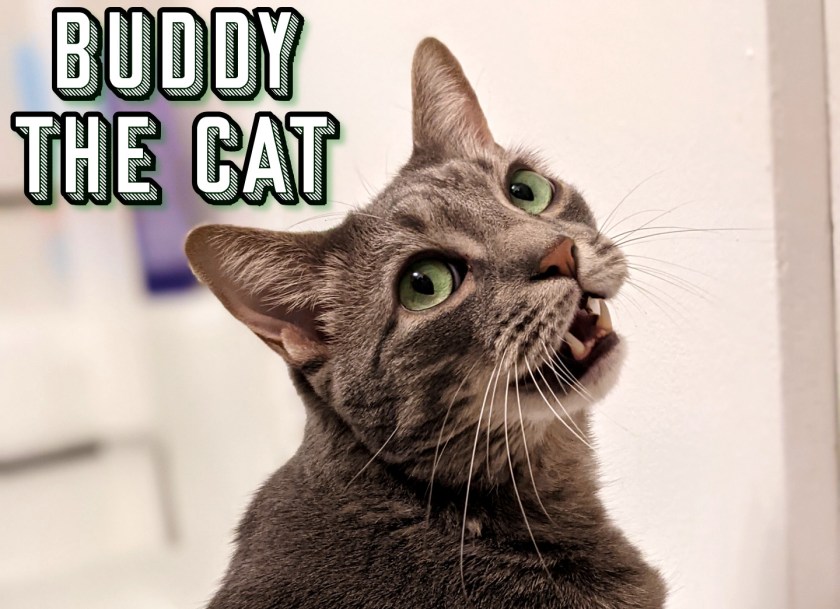
I had high hopes for the “squeeze” treats and was looking forward to getting home and giving Buddy a snack he hadn’t had before.
The problem? The Budster cannot get it through his stubborn little head that the squeeze treats are food.
He thinks they’re some sort of toy and every time I try to give him some, he head bunts the lickable chicken paste like it’s something he’s claiming with his scent, along with his plushies and wands.
After wiping the stuff off the top of his head for the umpteenth time, I squeezed a little bit of it on a paper towel and set it down for him, reasoning that he must finally understand it’s food.
Nope. Bud approached it, sniffed it, then dipped his face in it!
“Please grant me turkey, so that I might eat more delicious yums!”
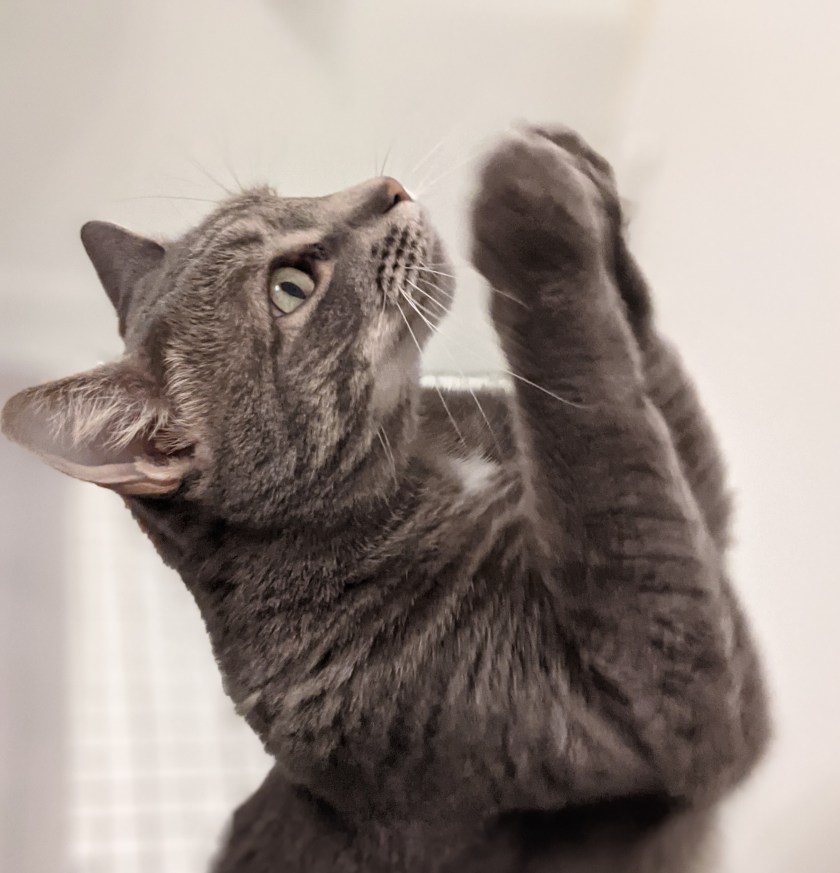
I’m not sure if this result means the stuff is so processed it doesn’t register as food, or if Bud’s just dense. After all, other cats love it, and we’re talking about a cat who whose idiosyncratic behaviors range from folding both front paws together and raising them as if in prayer, to spending months in late kittenhood engaging in boxing matches with the Bizarro Buddy in the mirror.
(I always knew when Bud was participating in a boxing match because I’d hear “Mmmmrrrrppp!” followed by THWAP THWAP THWAP! as his little paws hammered the glass. Then I’d gently pick him up off the table and set him down on the floor, praising him for his pugilistic skills while redirecting him to a less potentially destructive activity.)
Maybe I’ll try mixing some of the paste in with Bud’s wet food. Will he understand if it’s served with his beloved turkey? Or will be smoosh his entire face into the bowl and leave me with another mess to clean up?
Stay tuned until the next installment, same Buddy time, same Buddy channel!
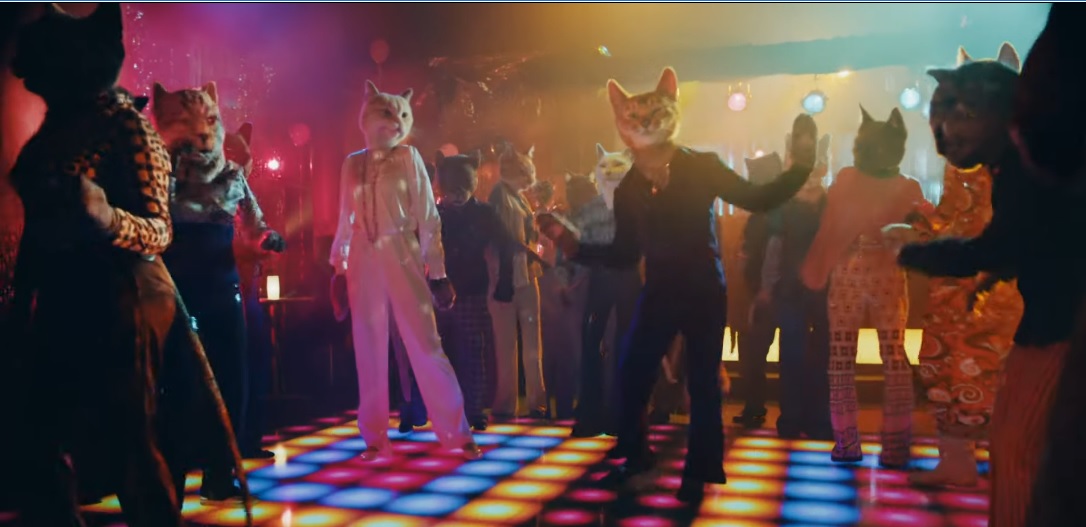
Buddy the Cat is known for his movie star good looks, charm and wit, but one fact remained little known until recently — he’s meowgnificent on the dance floor.
The tabby cat set the dance floor on fire this week when he dropped in at New York’s most popular disco club and showed off a series of spectacular moves that left observers shocked — and sparked several cat fights among his admirers.
All jokes aside, how awesome is this commercial?
I’m curious about how this was done. We’re not seeing people in cat costumes. It looks like the paws are practical effects, but the cat faces are rendered with something similar to deepfake tech, with the render following the actors’ performances. Or it may have been done the labor intensive way, with full modeling. Either way, the effect is fantastic: Look at the two cats at the end talking about how Disco Cat learned to slide.
Any readers out there with FX backgrounds who might have some insight?
If a Toronto man gets his way, cats will soon get their catnip fix the same way their humans get their marijuana: In colorful, slickly-produced packaging featuring whimsically named strains purchased through a dispensary.
The aspiring catnip entrepreneur calls himself Mikey Fivebucks and has launched his business, Catnip Dispensary Inc., from his Toronto apartment.
Now he’s trying to take his business to the next level with a Kickstarter to help fund the equipment and growing space he’ll need to make a name for himself among the world’s stoner cats and the humans who enable them.
Mikey Fivebucks and his catnip.
Catnip, also known as nepeta cataria, is a mint plant that produces euphoria and acts as a sedative for most cats via a naturally occurring chemical compound called Nepetalactone, which is found in the plant.
About two thirds of cats are susceptible to catnip’s effects, while other cats may respond to silver vine. The compounds in both plants bind to feline olfactory receptors, prompting cats to roll on the ground, purr, drool and mellow out.
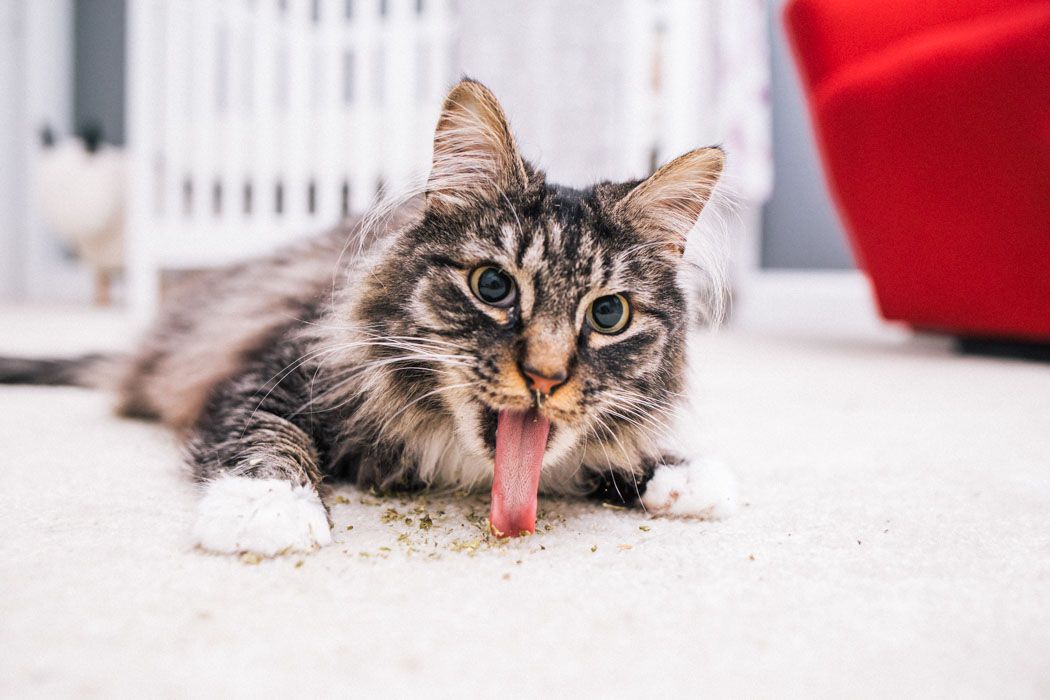
Most cats sniff, lick or chew catnip, while others (like our very own Buddy) eat the plant. (Response from Buddy: “It’s delicious!”)
Catnip isn’t just for domestic kitties: Wildcats like lynx and Servals are susceptible to it, as are big cats.
Fivebucks says his product is not the same as the dried, flaky catnip found in pet stores. The leaves are kept moist by controlling humidity during the drying and storing process.
“It keeps it flavourful and it keeps the natural oils,” Fivebucks told blogTO, a local Toronto news site. “It’s moist, a bit like weed.”
Cats On Catnip by Andrew Marttila
Fivebucks isn’t the only entrepreneur pushing high-grade ‘nip in packaging and under names reminiscent of marijuana dispensaries. Meowijuana, a Kansas-based company, has been selling catnip in “medicinal” bottles and naming their strains after feline puns for years.
The catnip company’s packaging and tongue-in-cheek advertising has been so successful that sometimes people show up expecting a marijuana dispensary, employees say. On another occasion, someone called the police. Although the officers said they were required to follow through on the complaint, they joked around with Meowijuana employees and even posed with a staffer wearing the company’s cat mascot costume.
Like its counterparts in the marijuana industry, Meowijuana has enjoyed record sales during the COVID-19 pandemic as people practice social distancing and hunker down with their pets.
“People get that this is a little bit tongue-in-cheek that we’re having a little fun, but there’s a good quality product for pets under it,” said Meowijuana’s Scott Ragan. “Part of having pets is sharing time with them — not just feeding them — but sharing time and engaging in that emotional bond, and I think everybody here appreciates that.”