In The UK, Cat ‘Ownership’ Can Be A Hazy Concept

What does it mean to “own” a cat? If you believe a cat is neglected, can you take custody? As UK law changes, those questions need answers.

For the second time this week, two people are fighting over a cat after the original “owner” received a request from a microchip company to confirm another person’s claim on the feline.

Charlotte Sawyer of Swindon, a town in southwest England, told her local newspaper she was livid when she got the request to sign over her claim to one-year-old Oreo.

“I can’t believe the audacity of this person trying to steal our beautiful cat,” she told the Swindon Advertiser.

But Sawyer readily admitted Oreo was going out for days and sometimes weeks at a time before returning home, and she hasn’t seen him for four months now.

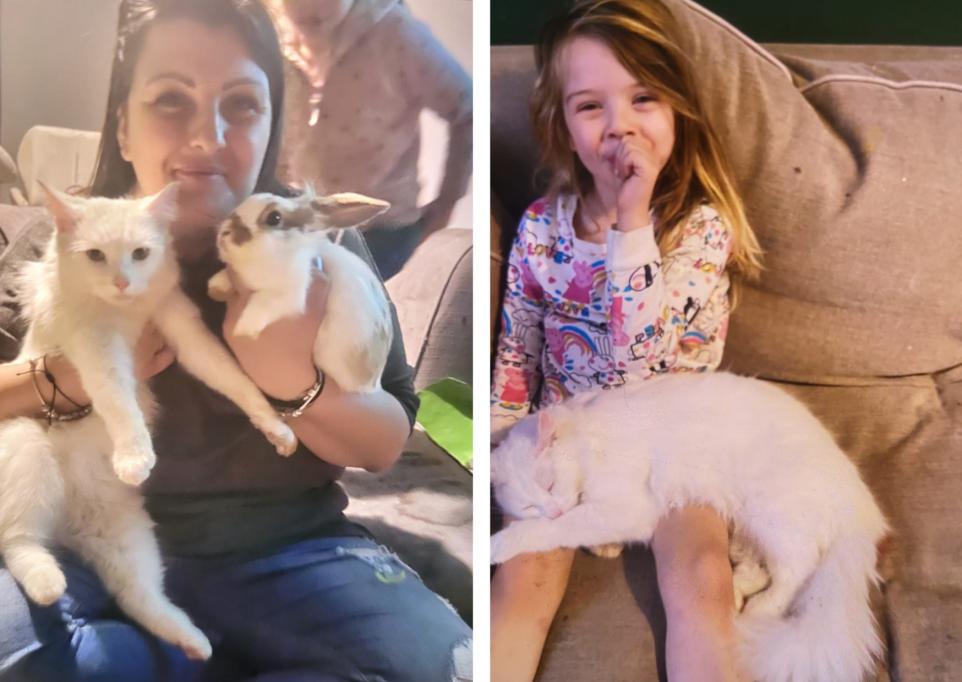
Sawyer and Oreo
Charlotte Sawyer, left, with her cat Oreo and a pet rabbit. Sawyer’s daughter, right, with Oreo. Credit: Charlotte Sawyer via Swindon Advertiser

Like many cats in the UK, Oreo not only had access to the outdoors, he was accustomed to coming and going as he pleased. Other families were feeding him, and it’s likely he made the rounds among several houses before returning home. Because “home” is a nebulous concept in this instance, it’s not the first time someone has asked Sawyer to relinquish custody of Oreo.

“A woman claiming to be someone who looks for missing cats once knocked on my door and handed me a form asking for permission to change Oreo’s microchip,” Sawyer said. “I wanted to rip it up, I was furious, and told her he was my cat. Now it’s happened again. At least it’s provided some reassurance that he’s still alive.”

While I feel for anyone who loses a pet, I don’t know how someone who truly loves a cat can accept the kitty being gone for days or weeks at a time, not knowing if he’s in danger, hurt or still breathing. That kind of arrangement isn’t in the cat’s best interests, and it’s not compatible with our responsibility to ensure the welfare of our four-legged friends, an obligation all of us take on when we adopt our pets.

The people who encountered Oreo likely thought he was a stray or an abandoned former pet. If they’re requesting a change to microchip registration, it probably means they spent their own money to take the little guy to the vet, where the chip was discovered and scanned.

This is emphatically not a blanket criticism of UK norms regarding outdoor access, by the way. Americans cannot claim moral superiority. In the past week or so we’ve had a Pennsylvania man kill a cat with a blow dart because the feline “was trying to kill my birds,” a vulgar approximation of a human being in New Jersey “repeatedly raped” his pet cat before torturing her to death, and some deranged lunatic in Florida used a cat as target practice, leaving 30 pellets lodged in the innocent animal’s little body.

That represents a tiny fraction of the cat abuse stories from the last 10 days and I’ve omitted the worsted examples because I know we have readers who can’t handle this stuff. (I can’t either, which is why I paused my Google News alerts for most of the past two weeks.)

My point here is not to shock. It’s to underscore the fact that we have absolutely no moral authority when it comes to telling people in other countries how to care for animals.

Outdoor cat
A cat exploring outdoors. Credit: Openverse

Moral authority concerns aside, the two examples of ownership claims by microchip this week raise important questions about the definition of “ownership” and what it means to properly care for a cat.

Like many cat lovers I don’t like the term “owner” and I describe myself as a caretaker, but where the law is concerned, ownership is important concept because it determines who has claim over the animal. The law views cats and dogs as property, whether we like it or not. That’s why animal welfare statutes fall under agriculture and markets law in many US states instead of the criminal code, and it’s why so many of those laws need updating.

Cat culture across the Atlantic is different in that the majority of people who have cats believe our furry friends must have access to the outdoors to live a complete, fulfilled life. In the US, 63 percent of cat caretakers keep their felines strictly indoors, while in the UK it’s virtually the opposite, with 70 percent allowing cats to roam outdoors. Not all definitions of outdoor access are equal: Some people allow only supervised outdoor time in the backyard (or “garden”), some make sure their kitties are safely indoors by nightfall, while others have cats who return at their own whim.

There are also differences regarding geography, traffic density, the prevalence of natural predators and the nature of city life that account for how much outdoor access they allow their cats.

As the UK sets a June 2024 date for the mandatory microchipping of pet cats, disputes like this are going to become more common, which means people would be wise to make sure their cats’ microchips have up-to-date information and have readily available proof that they own their felines. If cat owners don’t establish the criteria for what it means to “own” a feline, the government will.

Family Returns Cat After A Day To ‘Swap Her For A Kitten’

PJ is a shy cat, and her adopters were reminded that she would need time to adjust to her new home.

A family adopted a shy, anxious cat who has been waiting months for a forever home, then brought her back within 24 hours, explaining that they decided they wanted to “swap” her for a kitten.

I’ll pause for a second here to let PITB readers yell a few choice words about the family.

Okay, now that’s out of the way, hear me out: I think the cat, PJ, dodged a bullet.

The staff at the Melbourne, Australia shelter say they went above and beyond to screen for people who insisted they would be patient with the two-year-old Calico, made sure the adopters met her several times, and sent them home with a list of resources for dealing with a shy cat.

PJ
PJ Credit: AAPS Victoria

It sounds like they did a pretty thorough job, and the whole situation illustrates how difficult it is for people who run shelters to be sure they’re sending their animals to good homes.

But PJ wasn’t going to a good home. The kind of people who would return a cat after a day to “swap her for a kitten” are extremely unlikely to be good caretakers, and to treat PJ like the thinking, feeling feline she is.

PJ
PJ’s back at the shelter after her “forever home” didn’t work out.

I’ve seen cats like that, and they live miserable, bored, unloved lives. Once their novelty wears off or they’re no longer cute kittens, they become background noise, ignored as if they’re basically house plants. They have no way out of those situations, sadly, and no way to express their feelings, which is why it’s so important for us to learn to listen to our cats. But that’s a subject for a different post.

And no, the shelter did not honor the request to “swap” PJ with a kitten, as if the adopters were in Target, bringing back a 44 inch flat screen for a 50 inch 8K model.

Let’s hope a kind soul hears about PJ’s situation and has a home for her. If any of our Australian readers are interested, PJ’s with the Australian Animal Protection Society (AAPS) in Victoria, and you can find her adoption profile here.

PJ
Credit: AAPS

Screenshot_20230503-032026~2

Case Dropped Against Alabama Cat Ladies After Appeal

Prosecutors dropped charges against Mary Alston and Beverly Roberts 10 months after their arrest for caring for a local cat colony.

Prosecutors in Alabama have dropped their case against two women who appealed after they were convicted for feeding and trapping cats in their hometown.

Mary Alston, 61, and Beverly Roberts, 85, were arrested on June 25, 2022 after a bizarre confrontation in which four police officers pulled up in three squad cars and treated the longtime stray caretakers like hardened criminals.

The women were convicted of related charges in December and vowed to appeal the ruling, with their attorneys calling it a case of retributive and petty small town politics.

On Wednesday, Elmore County Circuit Court Judge J. Amanda Baxley accepted a motion by prosecutors to drop the case against Alston and Roberts.

It took their attorneys four months to get the body camera footage from the Wetumpka Police Department, but when they finally obtained and released it to the public in October, Wetumpka became the subject of national scorn for the way its police treated the women.

The footage showed the officers grabbing Alston by her wrists and pulling her out of her car, cuffing Roberts and berating the women for not moving fast enough when they were ordered to collect their traps and leave a wooded area on public land.

Wetumpka cat arrests
A police officer pulls Alston from her car on June 25 before arresting her for trespassing.

When Alston and Roberts expressed shock that police were hassling them, much less threatening them with arrest for managing a cat colony, one officer yelled at Roberts.

“It’s gonna get ugly if you don’t stop,” the cop said, jabbing a finger in Roberts’ face before cuffing her.

One officer told the women they were “too old to be acting this way,” and the footage captured audio of the officers laughing after one of them remarked that it was good there were no witnesses because they would have seen “a bunch of cops beatin’ up on some old ladies.”

There are no laws on the books against feeding cats in Wetumpka, so police charged the women with two misdemeanors each for disorderly conduct and resisting arrest.

Roberts and Alston argued that they were performing a service for the town by caring for the colony of strays. They were conducting TNR (trap, neuter, return) operations in cooperation with local shelters, often at their own expense, to stop the cats from continuing to breed.

Despite the fact that TNR is widely accepted as the most humane and effective way to manage stray cat populations, Wetumpka officials stuck to their allegations that the women were exacerbating a nuisance.

Wetumpka Mayor Jerry Willis doubled down after his department received overwhelmingly negative feedback over the arrests, and in a December trial witnesses described an ongoing argument between Willis, Roberts and Alston over the stray cat issue.

During the trial it was revealed that it was Willis himself who called the police when he spotted Alston’s car near the wooded area. Willis claimed he did not tell the police to arrest the women, but Officer Jason Crumpton testified that he was indeed told to arrest them.

Despite that, municipal Judge Jeff Courtney — who was appointed to his position by Willis and was not elected — found Alston and Roberts guilty of all four charges.

Prosecutors did not say why they dropped the charges on Wednesday, and it was not immediately clear if Roberts and Alston will be allowed to return to caring for the cats, who live in a wooded area on public land not far from the same municipal courthouse where they were earlier convicted. PITB has reached out to the women for comment.

“We are very worried about them,” Roberts told PITB in December. “A few animal lovers have said they would help, but we are not sure this will happen. I’m not sure there is enough food available to hunt. The weather is getting colder, and they need protein.”

A Woman Wanted This Gorgeous Kitty Euthanized For Litter Box Issues

A veterinarian realized kitty was healthy and put her in the care of a local no-kill shelter, where she remains while hoping for a forever home.

Lulu is 13 years old and began eliminating outside her litter box last year after a long life of doing her business properly.

Instead of realizing that a change in behavior was almost certainly precipitated by health issues — and attempting to get those issues sorted out — Lulu’s “owner” brought her to a veterinarian to be euthanized.

The vet realized Lulu was healthy and her issues were easily remedied, wisely persuaded the woman to sign over ownership of Lulu and brought the Himalayan to the local SPCA. She’s been there since December.

Lulu had urinary crystals which were remedied after a change in diet, and she hasn’t had an “accident” in months.

Staff at the SPCA want people to know that they don’t have to surrender a cat for litter box issues or other behavioral changes even if they think they can’t afford veterinary treatment.

“If your pet is not behaving or their behavior has changed, the first step is to get them to a vet to see if something is medically wrong. Even if it is not a medical condition, there are numerous resources — many available at Dutchess County SPCA — to help resolve the issue and avoid both euthanasia and surrender to a shelter,” Lyne Meloccaro of the Dutchess County SPCA told People. “Medical assistance, expert guidance, and management plans, and training referrals are all available for you.”

Lulu
Lulu has a regal bearing, an epic coat and beautiful coloring. Credit: Dutchess County SPCA

Dutchess County, which is about 75 miles north of New York City, happens to be the former college stomping grounds of Big Buddy. I graduated from Marist College and lived in the area for some years after. The SPCA there does good work, and its law enforcement division has handled some high profile animal-related crimes over the years.

It’s sad that Lulu lost her home after 13 years, but maybe it’s for the best if she ends up with a devoted servant who will really love her. Her caretakers at the SPCA say she’s stubborn, demands affection on her own terms and wants an “emotional support human.”

Lulu is still available for adoption. The SPCA says she’ll do best as an only cat in a quiet household, and we have no doubt she’ll bring joy to the lucky person who brings her home.

So Many People Are Abandoning Cats Due To Inflation, Shelters Have Surrender Waiting Lists

More people are abandoning their pets, saying they can no longer afford to care for and feed them amid historic inflation.

Unless you’ve been living under a rock you’ve experienced sticker shock in the last six or seven months, especially in grocery stores.

Staples like milk and bread cost two or three times what they did pre-inflation, some retailers are taking the opportunity to arbitrarily hike prices even higher, and a perfect storm of economic uncertainty and a rampaging bird flu caused the price of eggs and poultry to skyrocket.

By late 2022, almost 50 million chickens and turkeys had been killed by avian flu or culled because of it, and almost 10 million more were lost to the virus in the first 12 weeks of 2023, according to the CDC. That breaks the record for most birds lost to avian flu, which was set in 2015 when 51 million died or were culled.

Pet food prices are up too, mirroring grocery inflation, as are veterinary costs and medicine for cats and dogs.

Inflation has squeezed so many people that shelters in the US and UK are reporting unprecedented surrenders from people who believe they can’t afford their pets anymore. In some areas it’s so bad that local shelters have waiting lists — or surrender queues, as they’re called in the UK — for people parting with their pets.

“We get between 10 and 12 surrenders per week, so we’re looking at anywhere between 30 and 50 a month,” Ashley Burling of Montana-based Help For Homeless Pets said. “When you’re talking about inflation, you’re talking about vet bills, pet food, pet supplies and pet rent. I think inflation, I think people going back to work after the pandemic, there’s other reasons that they’re surrendered.”

More than 70 percent of adoptable pets at the Nevada SPCA previous had homes, executive director Lori Heeren told the local NBC affiliate. Her organization is on pace for 2,500 surrenders in 2023.

Free cute european shorthair cat

News outlets tell the same story in local markets across the country, and the Humane Society is seeing the same trend nationally, CEO Kitty Block told CNN. While pet-related costs increased sharply in 2022 — with food and supplies increasing by as much as 30 percent, according to NielsenIQ — statistics show they haven’t relented yet this year. In fact, prices are still edging up, albeit at a slower rate than the previous year.

To cope, more people are leaning on pet food pantries. In Iowa, for example, the Animal Rescue League gave away more than 40,000 pounds of pet food in 2020 and 2021, and a whopping 146,000 pounds in 2022.

Shelter operators say they want people to know there are options so they don’t feel they have to part with cats and dogs who have become family.

“This is bigger than dogs or cats in shelters,” Block said. “It’s about the people who love them.”

PITB readers are the kind of people who dote on their cats and most of us couldn’t imagine abandoning them even in hard times, but chances are we all know someone who’s thought about parting with their fluffy overlords.

a gray cat eating from the ceramic bowl
Credit: Angelina Zhang on Pexels.com

They don’t have to give their beloved cats and dogs up. There are resources to help them meet their animal’s needs to prevent them from surrendering:

– Many local chapters of the Humane Society and SPCA, as well as private shelters, offer free spay/neuter clinics and free or low-cost veterinary exams. A guide from the Humane Society notes PetFinder allows users to search for pet-specific food pantries and low cost veterinary services

– There are programs that provide pet food to people who can no longer afford it

– Some shelters will place pets in temporary foster homes to help relieve the burden until their owners can take them back

– Buying food and medicine online is significantly cheaper than in grocery stores. Some offer deep discounts on meds to existing customers and prices from online retailers have remained relatively stable, especially when buying in quantity

– Social services programs may include provisions for pets

It’s in the best interests of shelters and animal welfare programs for cats and dogs to stay with their people, and not only because they don’t have the resources to house hundreds of abandoned pets on top of their usual intake.

Keeping people and pets together benefits both. Cats and dogs obviously don’t understand that their people are tearfully, reluctantly giving them up. All they know is they’ve been abandoned by the people who made them feel safe and loved. For the mental health and overall well-being of humans and their furry companions, they should stay together.

For some people, like Patricia Kelvin of Poland, Ohio, that means scrounging up whatever she can and cutting back on her own expenses before she will allow her cat to go without.

“There’s just no question in my mind. If my diet was going to be more beans than something else, I wouldn’t hesitate,” Kelvin told CNN. “If I had to sell my sterling silver, which I’ve had for 60 years, that would go before my little ‘Whiskers’ would be deprived.”