My Thoughts On ‘Don’t F*ck With Cats’

Another installment of True Crime porn diminishes the victims to afterthoughts while glorying the killer and the people who obsessed over him.

I finally got around to watching Netflix’s Don’t F*ck With Cats, a documentary about the effort to track down a narcissistic killer whose victims included several kittens, an adult cat and finally a Chinese-Canadian engineering student.

If you’re not familiar with the three-part documentary, here’s the short version: A man uploaded sadistic videos of himself torturing and killing cats, prompting a group of online vigilantes to conduct their own investigation and offer the information to police, who promptly ignored all of it.

The cat killer taunted the horrified netizens for two years, vowing to continue taking life and leaving a trail of breadcrumbs for them to follow each time he killed more kittens, until finally someone found the headless, limbless torso of his first human victim in a garbage dumpster in Ontario.

The murderer had arranged to meet another man he’d met on Craigslist, then filmed himself killing the incapacitated man just like he’d filmed himself killing kittens. The video appeared online shortly after the murder.

The police, who couldn’t be bothered when it was “just” cats, suddenly got really interested. The killer fled to Paris — where he became the subject of an international manhunt and media circus — then to Berlin. He stopped in an internet cafe to Google stories about himself,  but the cafe’s clerk recognized him and called the police. He was taken into custody without incident, then promptly extradited back to Canada for trial.

The police don’t exactly cover themselves in glory with this case. Not only did they fail to act on information from concerned tipsters, they were either unaware or uninterested in the statistical correlation between people who kill animals for pleasure “graduating” to human victims once killing animals loses its thrill.

junlin3
Jun Lin, 33, the victim of the cat killer.

They had a man in their jurisdiction torturing and killing cats, capturing the horrific deeds on camera and regularly uploading new videos. They failed to act.

The thing is, animal life has intrinsic value. We delude ourselves into believing that because the voiceless — human and animal — can’t express their suffering,  it doesn’t exist. The police should have acted when the killer’s victims were “just” cats for the sake of the cats, and not only because animal abusers often move on to harming human beings.

Canadian police culture

It was also surprising to see how deferential and naïve the Canadian investigators seemed in comparison to their American counterparts. At various turns they failed to preserve evidence, missed important clues and underestimated the killer. In one scene an investigator casually mentions the discovery of a dead puppy in the same trash the human torso was found, failing to connect the dots despite the many warnings her agency had received.

When Canadian police finally got the killer into custody they handled him with kid gloves, allowing him to play the part of scared little boy who didn’t know what he was doing rather than what he was: A calculating 32-year-old man who clearly enjoyed inflicting suffering on people and animals, playing to his captive audience of several thousand people on Facebook as he led them on a scavenger hunt.

The killer routinely interrupted police interviews, shrugged off difficult questions by complaining that he was tired, and tried to buy time for himself to think by asking for things like warmer clothing, cigarettes and beverages.

In short, they allowed him to manipulate them as he had manipulated everyone else.

When the killer’s mother appears on camera, you can see the beginnings of his psychosis. She believes her son is a sweet little angel who was himself manipulated by a phantom, a person her son invented to excuse his deeds.

She also admits she knew about the cat videos and did nothing. In her view, people concerned about animal welfare are “crazy,” and those crazies shouldn’t have gotten so wound up over a few videos in which her son kills kittens while singing along to pop songs. Just a sweet little boy having fun.

Remembering Jun Lin

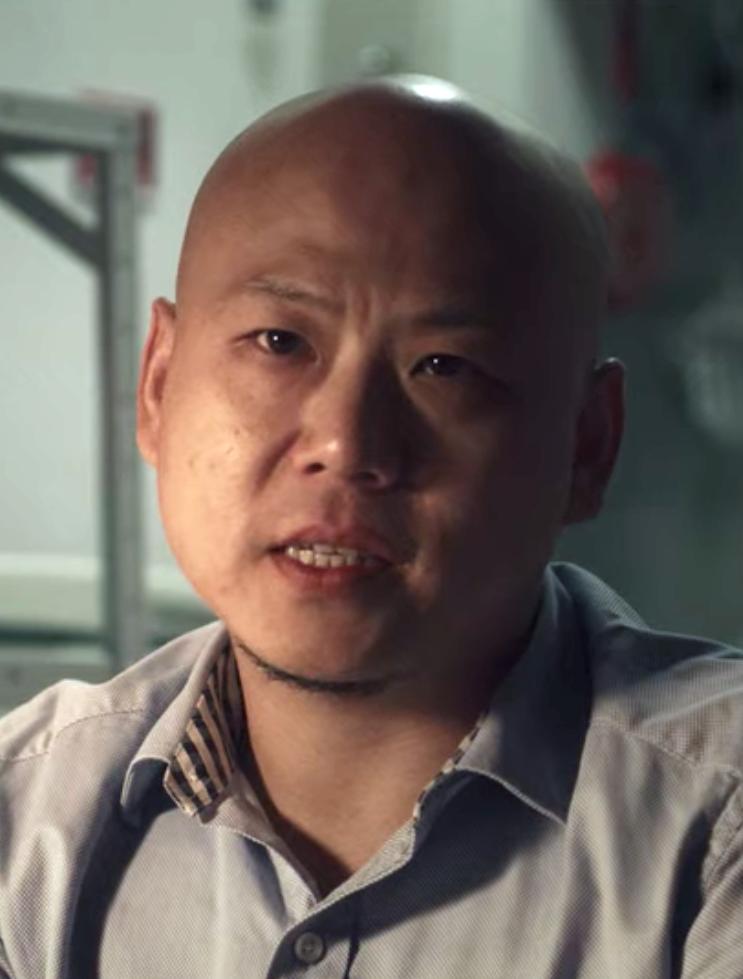
As for the killer himself, I’m not going to name him. His victim was Jun Lin, a 33-year-old engineering student who moved from China to Canada because, as his friend Benjamin Xu explained, the latter country is more accepting of gay men.

xu
Benjamin Xu/Credit: IMDB

Toward the end of the documentary, Xu mentioned something I’ve often thought about: Society’s obsession with “true crime” and how our morbid curiosity gives would-be murderers precisely what they want. If they can’t achieve fame, infamy is the next best thing.

We do a great disservice by immortalizing the killers and forgetting the victims. Everyone can name the two Columbine killers, but how many of us can name the victims?

“The really sad thing is, everybody is talking about [the killer] and nobody has ever remembered Jun,” Xu said. “That doesn’t seem fair at all to my friend. He doesn’t deserve that.”

The other stars of the show

Finally, there are the two “sleuths” at the center of the documentary, who spent two years of their lives ostensibly investigating the killer while giving him exactly what he wanted. Contrary to what the documentary’s title suggests, they weren’t cat lovers, just a couple of people motivated by the thrill of the hunt.

As their Facebook group about the murderer swelled to thousands of members he reveled in the attention, intentionally leaving clues for them in each subsequent video like a scavenger hunt, a fun little game for them to play as long as he remained the star of the show.

The documentary glosses over their mistakes, and there were some big ones: At one point they were so sure a South African man was the killer that they made his life a living hell, with an entire team of online vigilantes across the world harassing him from afar.

That man killed himself and was likely collateral damage in this fun little game the “sleuths” had going, but who has time for that when there are fresh clues and leads to track down? We got the wrong guy, LOL! Oops!

In the end it was someone else — quite likely the killer himself — who provided the alleged sleuths with the killer’s name once they’d exhausted their leads and the hunt became stale. He wanted them to continue the chase.

While the would-be detectives did manage to collect some information via their own efforts, it’s not accurate to say they solved the mystery.

On the other hand it’s fair to question whether the killer would have gone as far as he did if he didn’t have tens of thousands of people on Facebook hanging on his every video and utterance.

deannathompson
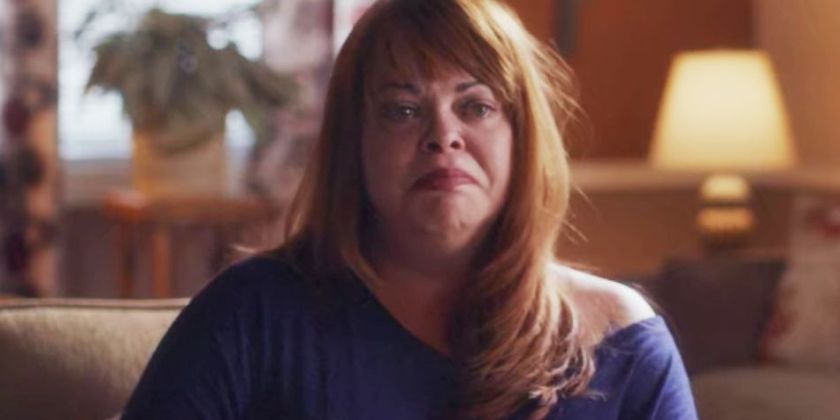
Deanna Thompson, who has now appeared in two documentaries about the killer and has parlayed her role into a side business.

The documentary ends with one of the killer’s obsessives, a Las Vegas woman named Deanna Thompson, looking at the camera and admonishing the audience for being interested enough to watch the documentary, as if everyone shares in the guilt for the killer’s actions.

But what she’d like everyone to forget is that her actions egged him on while he was on the loose and actively taking life. Playing into his scheme is a much different thing than passively watching a documentary more than half a decade after his conviction. There’s a good argument to be made that the vigilantes should be embarrassed by their role in this story, rather than reveling in the attention they’re getting as a result.

Remember Jun Lin. Remember the poor cats. Forget about the killer and the people who helped him achieve the fame he so desperately craved.


Note: I realize refusing to name the killer on this blog is like putting a single grain of sand back in a bottle after the whole thing has been spilled, but hey, we have to start somewhere.

Help Your Local Strays: They’re Starving During COVID-19 Lockdown

As stray cats suffer, their plight has been mostly overlooked. Cat lovers in cities across the world are trying to keep them fed and safe during the pandemic.

Years ago I worked with a guy who started a food pantry from scratch.

This man, a retired software engineer, approached the biggest restaurants, bakeries and food distributors in the area, asking them to donate their leftover/unused food so his pantry could distribute it to the poor.

Many obliged, but they all had the same request: “Don’t tell anyone we’re participating,” they told him.

The request wasn’t prompted by humility. These businesses didn’t want the public to know how much food they waste, and they waste a lot of perfectly good food, a dirty little secret of the restaurant, hospitality and food industries.

The reason I bring this up is because there’s another demographic that depends on the food those businesses toss out: Stray cats.

Stray Cat
Credit: Wikimedia Commons

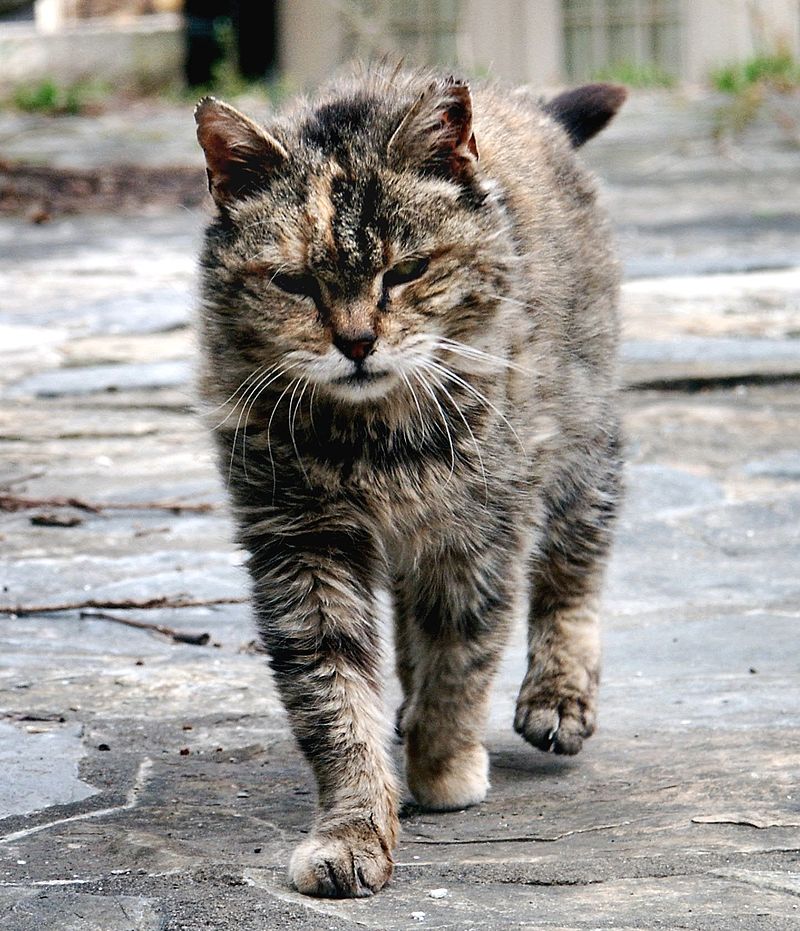
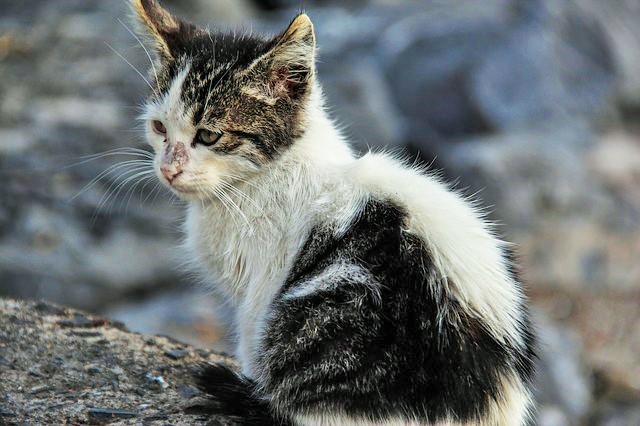
With restaurants shuttered because of the Coronavirus, stray cats are going hungry and dying for lack of the scraps they scavenge from rubbish bins, dumpsters and sidewalks. It’s happening here in New York, across the United States, and in countries like Turkey, India, Greece and Morocco.

For animals who already live difficult lives, the pandemic made things worse.

“The strays have no means of feeding themselves as all offices, restaurants [and] roadside eateries are closed,” an animal rights activist in India told the environmental news site Mongabay, in a story headlined ‘Slim pickings for strays and pets during COVID-19 lockdown.’

Cats aren’t the only animals suffering. One particularly dramatic example was caught on video in a Thai city where thousands of long-tailed macaques live and depend on food given to them by tourists.

Hundreds of starving monkeys stopped traffic in a chaotic brawl over a single piece of food, shrieking, clawing and pushing each other aside to get at it.

As if things weren’t bad enough, stray cats are now competing with former house pets for the little food available.

In India, where bad actors have been spreading false information about COVID-19, animal rights activists are finding abandoned pets — including pedigreed cats and dogs — on the streets after their caretakers abandoned them.

“A lot of this is happening because of misinformation that went viral earlier about pets being carriers of the virus in China. It turned out to be fake, of course, but a lot of damage has been done now,” People For Animals’ Vikram Kochhar told Quartz.

Much of the damage has been done on social media, where conspiracy theories and rumors about contracting COVID-19 from animals are rampant. In China, where pet owners abandoned cats and dogs en masse during the first wave of Coronavirus, some social media users on Mandarin-language platforms called for the “extermination” of cats after a pair of studies conducted by Chinese research labs suggested cats are susceptible to catching the virus.

It isn’t easy to combat waves of viral misinformation, even as health authorities across the world stress cats cannot transmit the virus to humans.

Stray Cat
Credit: Animal Bliss

In Greece, abandoned pets — many with their collars still on — are following strays to food sources, especially in larger cities like Athens.

“We are seeing an increase in the numbers of cats in areas where we feed, some appear to have been abandoned, while others have roamed far from their usual spots in search of food,” animal welfare advocate Serafina Avramidou told Barron’s.

In feline-loving Turkey, where taking care of street cats is considered a cooperative responsibility, the central government has told local officials to make sure strays are well fed and taken care of. By making it a government responsibility, their thinking goes, citizens who normally care for the cats will be much more likely to stay inside during the pandemic.

“There are lots of cats on the side streets where there are only closed businesses,” a Turkish Twitter user wrote. “I haven’t seen food anywhere for days. The cats are running after us [looking for food].”

In Istanbul, Muazzez Turan fed some 300 stray cats daily before the pandemic, but said she’s had to stay home: Not only has her country been particularly hard hit by COVID-19, but she has pre-existing medical problems that make her susceptible to complications should she contract the virus.

Still, she said, her mind “was always with the cats,” and she told Turkish news agency Anadolu that she was relieved to hear the strays hadn’t been forgotten.

“I will sleep peacefully for the first time today,” Turan said.

latonyawalker2
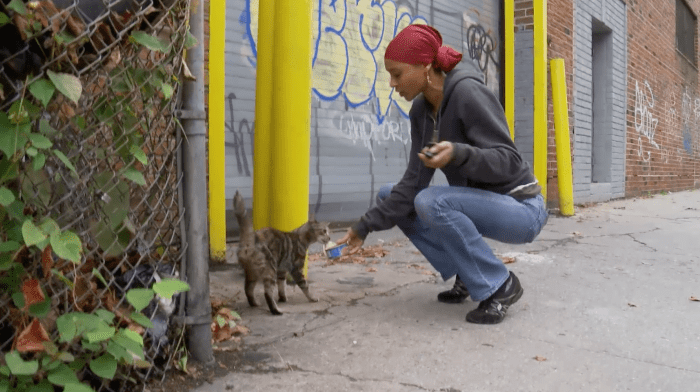
LaTonya Walker of Brooklyn feeds a stray in Canarsie. Credit: 24 Cats Per Second

Here in New York, some animal lovers are picking up the slack for closed restaurants as well as at-risk people who normally feed strays.

Among them is Latonya Walker, who told the New York Post she normally spends $600 a month feeding several colonies of strays but expects her costs this month will be “way more since there’s less restaurant garbage they can eat from, and more hungry cats walking around.”

“The cats have no clue what’s going on because nothing has changed for them,” Walker said. “It’s not in my DNA to see a cat suffering and not do anything about it. I’m equipped to make a cat’s life better, so I’m going to.”

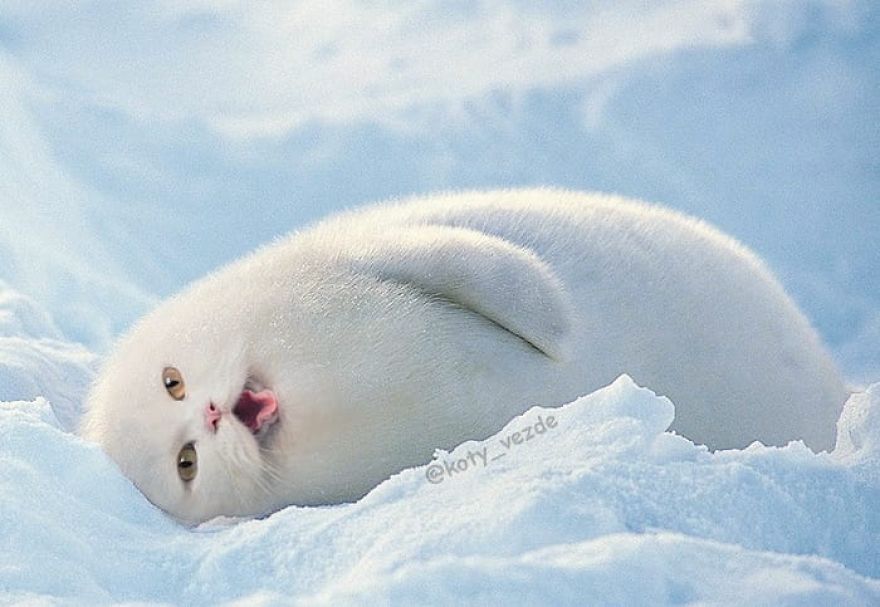
A Cat Mixed With A Koala?

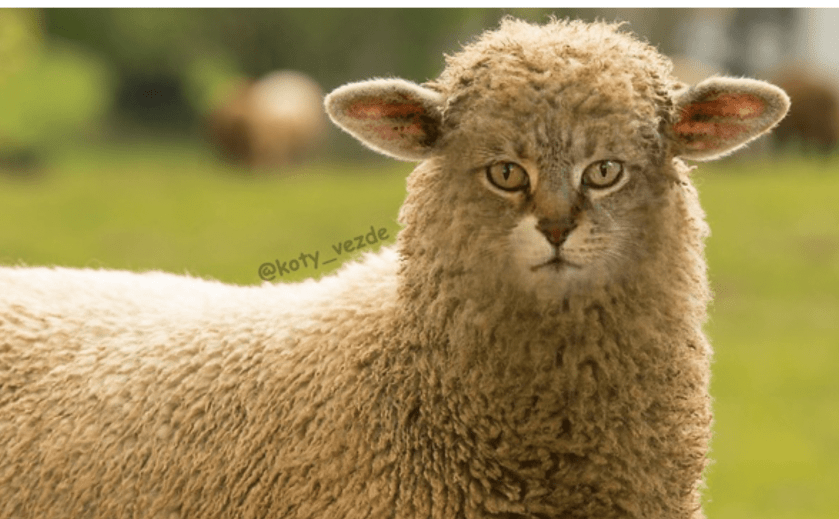
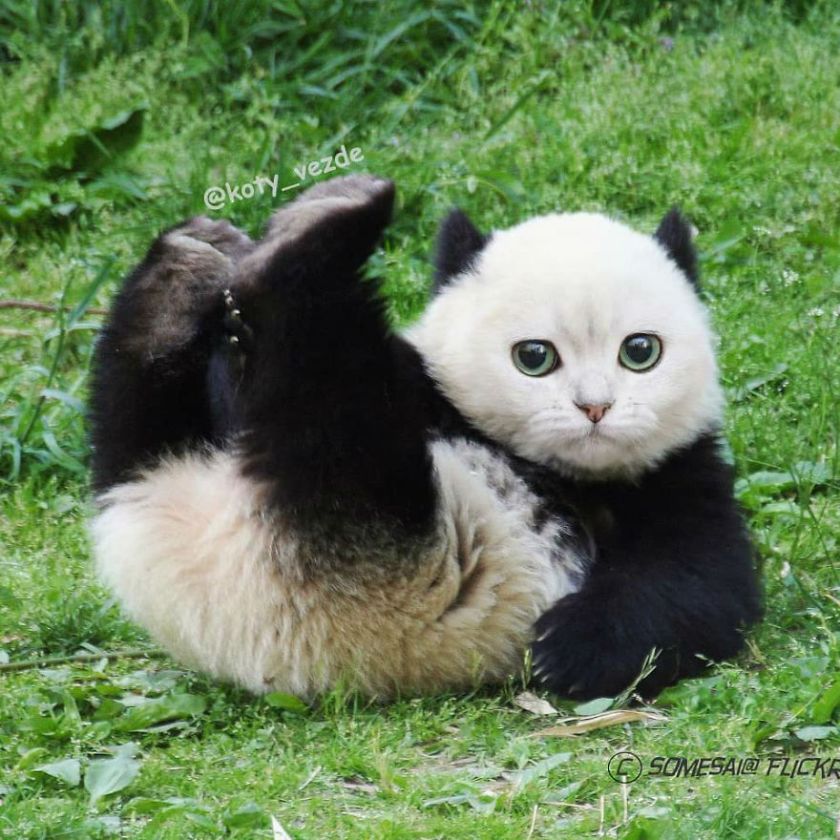
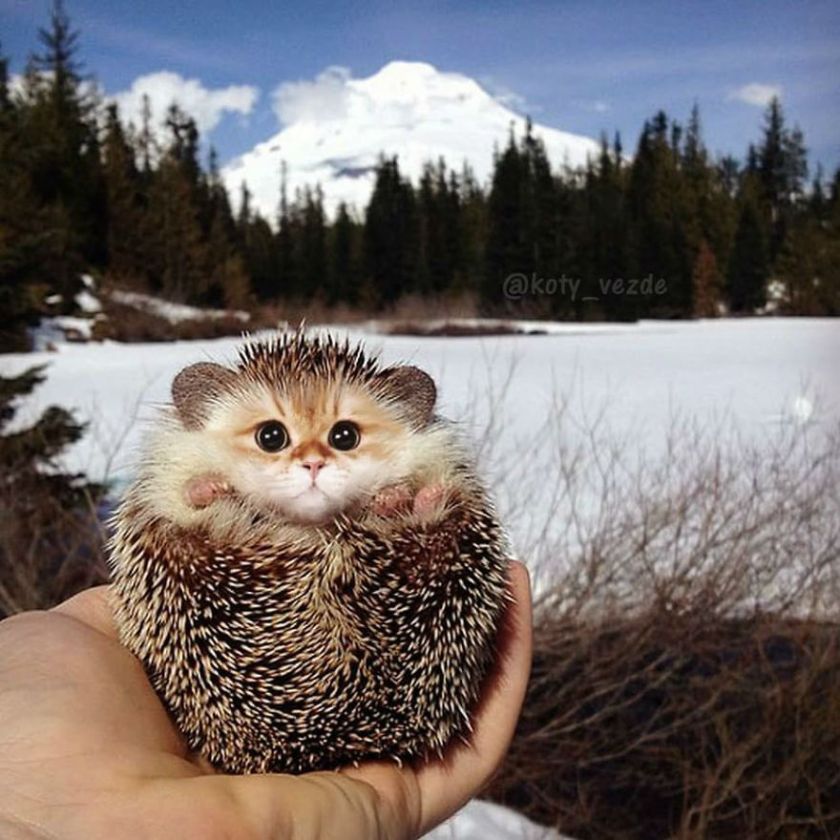
A Russian artist catifies other animals like real-life Pokémon. The results are amusing, cute and sometimes a bit freaky.

Thanks to a Russian artist with a skilled hand at Photoshop, we now have an answer to a question no one asked: Can other animals be improved by catifying them?

The answer is yes, at least for the furry ones.

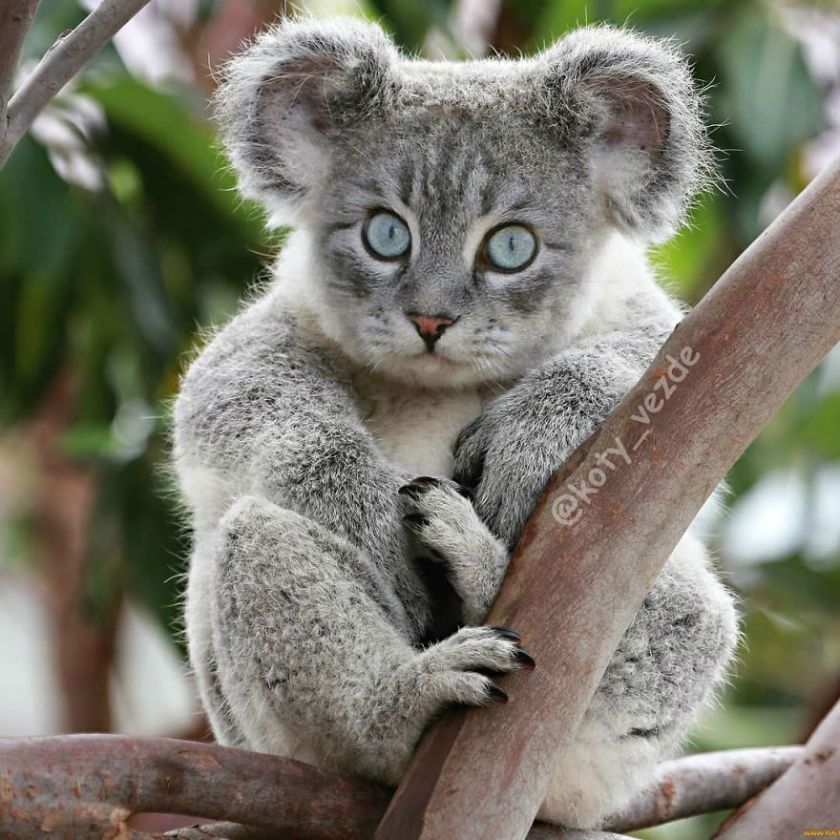
Like this KoalaCat:

CC9CBBFC-A441-4A96-A935-3BBDFB86F756

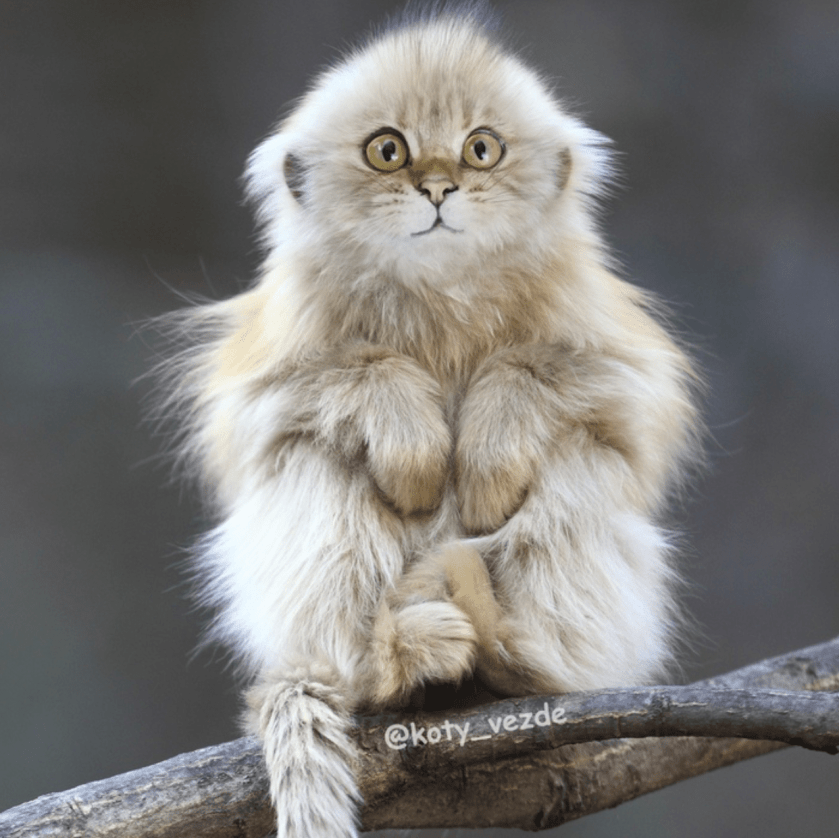
This moncat. Or macatque:

BC525E4A-12FB-445B-8FE4-575089DD0DAE
Credit: Koty Vezde

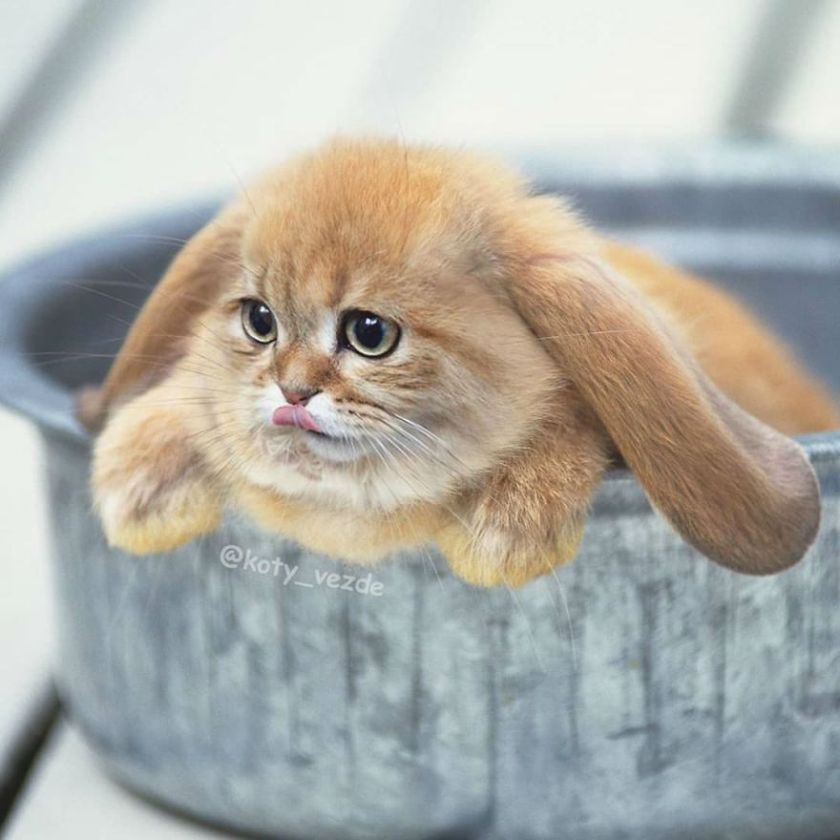
This cabbit:

ADBCB4F1-9BE6-4106-B5CB-2F0EFEF7EAD9
Credit: Koty Vezde

This not-very-amused looking ceep (shat?):

5DB0A090-648E-4417-97B6-B2A20C74ACA0
Credit: Koty Vezde

And this Canda, or Pancat:

69EA8C79-8E0D-43DA-B815-629E91D6911D

And finally this Cedgehog:

50C88E20-65CB-444B-AB5B-E661F12F032D
Credit: Koty Vezde

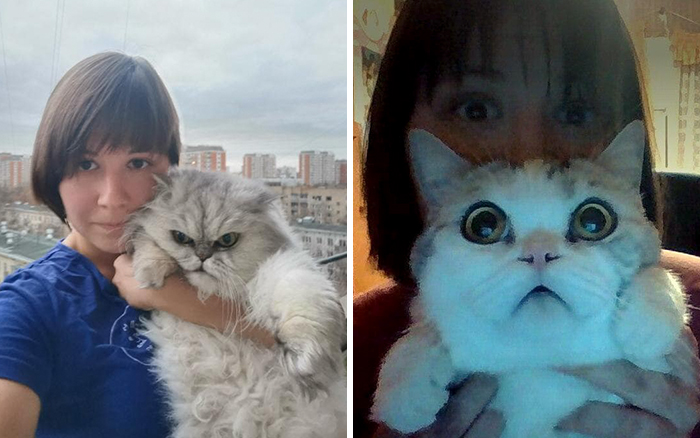
The artist, Galina Bugaevskaya, posts her creations to an Instagram account she created and dubbed Koty Vezde, Russian for “Cats Are Everywhere.” The 29-year-old is based in Moscow and, not surprisingly, she has her own feline overlords.

Visit Bugaevskaya’s Instagram and VK pages to see more.

03850B05-EF9B-4E98-91E4-4C4131344344
Credit: Galina Bugaevskaya

The Mixed Legacy of CC the Cloned Cat

Scientists now clone animals for experimentation and genetics companies clone pets.

Like Dolly the sheep, CC the cat’s arrival into this world was accompanied by apocalyptic pronouncements, grave concerns about man’s hubris at playing God and warnings that human clones wouldn’t be far behind.

At the time cloning was revolutionary, something that was only supposed to exist in science fiction movies. Most people were uneasy with it, and much of the public debate centered around ethical concerns.

It was 2001: The world had just gotten over the Y2K scare, the Sept. 11 attacks and an abundance of turn-of-the-century, end-of-the-world prophesies. When people thought of cloning, they pictured tyrannosauruses rampaging through Jurassic Park and Jeff Goldblum’s scientist character lecturing the park’s proprietors on playing with the awesome power of nature.

CC passed away on March 4, 2020 at 18 years old — a full life by feline standards. The real consequences of her existence were less dramatic than predicted, but ultimately disappointing.

CC the Cat
CC with her surrogate mother, Annie. Credit: Texas A&M

Copy Cat’s birth didn’t herald an age of human cloning, but it did open the door to widespread animal cloning — including, as of last year, non-human primates — and eventually, to pet cloning.

A Mixed Legacy

Mark Westhusin, a scientist who was part of the team that successfully cloned CC, sees it as progress.

“CC’s passing makes me reflect on my own life as much as hers,” Westhusin said Wednesday. “Cloning now is becoming so common, but it was incredible when it was beginning. Our work with CC was an important seed to plant to keep the science and the ideas and imagination moving forward.”

CC lived as any typical house cat would, according to Shirley and Duane Kraemer, who adopted the famous feline. Duane Kraemer was also part of the research team involved in CC’s cloning.

cckraemer
Kraemer with CC. Credit: The Eagle (Bryan, Texas)

When Barbra Streisand admitted she had her dog cloned in 2017, she responded to the backlash by writing an editorial in the New York Times, defending cloning as a way to get over the heartbreak of losing a pet.

There are now several genetics companies that offer pet-cloning services for people who want to bring their dear dogs and cats back to life.

“The human–animal bond is a pretty strong thing,” said Kerry Ryan, a veterinarian who works for pet cloning firm Viagen. “Our pets truly are a part of the family, and people want to have a piece of their pets around forever.”

Clones, But Not Your Real Pets

Except, of course, they really aren’t bringing cats and dogs back to life, and the animals won’t be around forever. Viagen’s customers get a genetic copy, but that doesn’t mean the clone will look or even act the same.

“It can be a genetically identical animal that can come out looking differently than the animal that you had,” veterinarian Katy Nelson told WTOP in 2018.

To the people who can afford dropping between $25,000 and $50,000 to clone their cats and dogs, it doesn’t seem to matter that both nature and nurture will ensure differences.

Pet cloning has also drawn the ire of animal welfare activists and major organizations like the Humane Society and SPCA, who point out that every cloned cat or dog means one less home for strays in shelters.

The Humane Society “opposes cloning of any animals for commercial purposes due to major animal welfare concerns,” HSUS’s Vicki Katrinak told National Geographic. “Companies that offer to clone pets profit off of distraught pet lovers by falsely promising a replica of a beloved pet. With millions of deserving dogs and cats in need of a home, pet cloning is completely unnecessary.”

False Starts, Gene Splicing and Clone Experimentation

Then there’s the truly dark side of cloning.

Each cloning attempt involves implanting eggs into several surrogate cat (or dog) moms, and no one wants to know what happens to the other clones, whether or not they make it to term. There’s no law requiring the companies to disclose the fate of those animals, so for now it remains a mystery.

Not all clones end up in loving homes, either. The lucky handful do, but others are birthed into the world to be experimented on, like a quintet of monkeys cloned by scientists in China.

Cloned Monkeys from China
Scientists edited the DNA of these monkeys to remove a gene that regulates sleep, resulting in depression and anxiety, among other problems. Three of the five monkeys pictured here are sucking their thumbs, which is a sign of stress when primate infants are taken from their mothers. Credit: Institute of Neuroscience, Shanghai

The scientists who brought the monkeys to life also edited their genes, “cutting out a gene involved in regulating the sleep/wake cycle.” A 2019 story on Phys.org explained the consequences:

“The gene removal created multiple effects in edited monkeys, such as reduced sleep time, increased movement during the night, changed blood hormone levels, increased anxiety and depression, and some schizophrenia-like behaviors.”

Which was precisely the point: The research team wanted to study the unintended consequences of gene-editing on animals to learn more about how it could impact humans.

To be sure, none of this is Copy Cat’s fault.

The famous cat, who was delivered by a surrogate mother, lived for 18 years, a year or two more than the average house cat. She spent the remainder of her days as a typical house cat, albeit one whose vet visits and blood work were carefully pored over as geneticists confirmed she was as healthy as any other kitty.

But as science barrels forward and labs — many of them in countries with no regulations — are bringing cloned animals into this world, we should think about the consequences for animals and the human race.

Best Buddies: You’re Not So Bad For A Cat!

A kitten and his best friend, a puppy, are warming hearts with a video of them showing their love for each other.

Who says cats and dogs have to be enemies?

Bo, a 5-month-old Beagle puppy, drapes a paw around his best feline bud, 10-month-old Jasper, in this video showing that cats and dogs getting along is not a sign of the apocalypse, contrary to what Bill Murray said in Ghostbusters all those years ago.

Lisa Plummer of South Bend, Indiana is the pet mom to the adorable duo.

“Bo loves his cat siblings so much,” Plummer wrote, adding the little ones sometimes “drive me crazy with their constant chaos.”

“This sweet moment melted my heart,” she wrote, “and made me want to take back all the bad things I’ve said about them.”