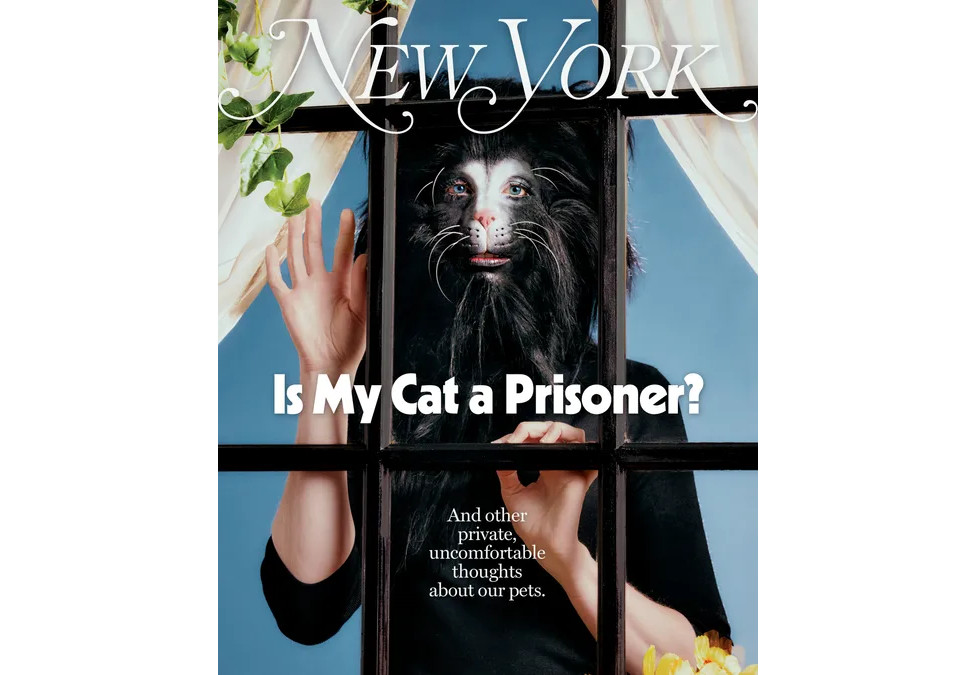
Are we doing right by our furry friends? The latest issue of New York magazine takes a deep dive into the concept of pet “ownership” and the ethics of keeping animals in our homes.
Almost the entirety of New York magazine is devoted this week to what its editors call “an exhaustive exploration of the ethics of pet ownership.”
There are also articles about what veterinarians really think of “pet owners,” whether runaway dogs deserve to be free, and even a story asking whether the word “owner” is appropriate to begin with. (You’ll notice PITB almost always avoids that word, unless we’re quoting others. I refer to myself as Buddy’s servant and his caretaker, words that feel more honest than owner.)
The stories are worth reading. Some are free for a limited time, others can be read as part of the weekly article limit. And if you can afford it, supporting a magazine or two during these brutal times for the publishing industry is a good way to help quality publications survive, so we’re not all drowning in a sea of clickbait garbage tuned for algorithms instead of human readers.
Regular readers of this blog are likely familiar with the story of Bud’s one and only “escape” as a kitten. When I found him, this cat who hates being picked up leapt into my arms, holding onto me like a terrified toddler, and his relief was palpable as I felt him purring into my neck. We were both relieved.
He’s had the opportunity to leave since, but he won’t. He’s got a good thing going here, living like a little king with his personal servant. He gets tons of attention, he’s allowed to do pretty much anything he wants as long as it isn’t dangerous for him, and he loves his Big Buddy.
I know he does from the way he approaches me, purring and meowing happily as he bunts his forehead against mine. I know it from the way he makes biscuits on me and falls asleep in my lap, feeling content and secure. And I know it from his refusal to leave my side the two times I was so sick I could barely move.
He’s got his own site, awesome retrowave logos and online admirers, but Buddy only cares about the snacks.
We shouldn’t feel guilty for giving cats a home.
I think we tend to forget that as domesticated animals, cats don’t have a natural habitat. The process of domestication made them friendlier, more trusting and more capable of reading human body language, facial expressions and tone of voice.
But those changes came at a cost, as they always do in domestication. Felis catus looks like its wild relatives and retains many of the amazing abilities of wild cats, but compared to them the species has lost a step. Domestic cats are not as quick or agile, they’re too trusting, and they’re not well suited to providing for themselves. The statistics on life expectancy reflect that, with ferals and strays living short, miserable lives.
Although it’s usually very difficult to tell a domestic cat from felis lybica, the wildcat species seen here, there are major differences in their respective survival abilities and instincts. Credit: Wikimedia Commons
So if felis catus has a habitat, it’s our living rooms. When our ancestors welcomed them into human settlements ten thousand years ago, they formed an indelible bond and made a pact, even if they didn’t realize it at the time.
Consider it a debt we owe for the survival of our species, when nascent civilization would have likely been snuffed out were it not for cats protecting the grain stores over long, cold winters.
Without cats, rodents would have eaten their way through the season’s rations, starving out the early settlers before the next harvest. The great agriculture experiment would have been over as quickly as it began with people returning to the nomadic life of hunter-gatherers, and it’s likely that everything after — from the first cities, to the birth of western civilization in Greece, to the remarkable achievement of putting a human being on another world — would have been jeopardized or taken radically different paths otherwise.
So you can thank your cat for your house, your car, the medicine that keeps you tip top, all the comforts of modern civilization, and all the stories and songs of humanity. Without cats and their heroic willingness to eat their way into our good graces, we wouldn’t have gotten here. Thank them often. You can’t go wrong with treats.
After an Amazon delivery driver stole their cat from their driveway, a Washington state family went to great lengths to recover their beloved tabby — without the help of the online retail giant, which declined to put them in touch with the driver.
Feefee’s back home.
The tabby cat, who belongs to the Ishak family of Everett, Washington, has been reunited with her humans after an 11-day ordeal that started with her abduction by an Amazon Flex delivery driver on July 21 and ended with a long and determined search by her family that led to an apartment complex about six miles from their home.
“My wife and I drove around over the last three days concentrating on apartment buildings until [Thursday] when I spotted a car that matched [the driver’s],” Ray Ishak told PITB. “I have been in the car business for 26 years. I know what to look for. Perfect match, even missing the front wheel cover, just like in the [home security camera] video.
“We went to the leasing office and explained we were looking for our cat and reason to believe it might here. The office employees immediately commented that the police were there a few days ago asking about the cat. We knew then we were at the right place.”
Feefee gets a warm welcome from one of the family’s dogs. The 13-year-old tabby cat was stolen from her family’s driveway on July 21 by an Amazon delivery driver. Credit: Ray Ishak
Feefee’s back home. Credit: Ray Ishak
Feefee digs into a bowl of food after returning home. Credit: Ray Ishak
Ishak and his wife spent the next few hours searching the grounds around the apartment complex, which are covered in heavy brush. While they didn’t find Feefee, they spoke to several children playing nearby who confirmed they’d seen the missing tabby. They gave their phone number to the kids, asking them to call if they spotted Feefee again.
“Around 6 pm they called,” Ishak told PITB. “We took off and found her in very heavy brush and sticker bushes.”
The couple gave the kids rewards for their crucial help, then gently coaxed their frightened cat from out of the brush where she’d been hiding.
A video taken afterward shows a famished Feefee digging into a large bowl of food after her long ordeal. She’d clearly not been eating over the past week and since she’s been home she’s been doing little else besides sleeping and eating.
Ishak said his grandchildren, who are particularly close to Feefee, were “elated” when told she’d been found.
For the family, the reunion comes after lots of worry, stress, taking time off work to search for her — and frustration that neither Amazon nor the driver who stole Feefee helped them recover her.
“What is infuriating is the area where [Feefee was found] is right behind the building where that person’s car was parked. That cat has been out there for days with no food and multiple people have seen her on multiple days. [The Amazon driver] just let her out and could have very easily told us and we could have very easily found her days ago and all this would be put to rest.”
The driver stole Feefee from the family’s driveway after delivering a package on July 21. Footage from the Ishaks’ security cameras shows the female driver squatting down in their driveway to pet the 13-year-old cat. The motion-activated camera timed out momentarily, then was triggered a second time as the Amazon driver left with Feefee in her car.
When confronted with video evidence, Amazon admitted the driver had taken the cat and told Ishak the driver went to the police to return her. That wasn’t true: Ishak checked with the Everett police as well as the county sheriff’s office, and neither had been contacted by anyone trying to return a stolen cat.
Then the driver’s story changed. An Amazon rep told Ishak that the driver claimed Feefee had escaped and was missing.
When Amazon would not put Ishak in touch with the driver, he pleaded with them to at least point him in the right direction, suggesting the driver could make a burner email address or call from a blocked number — anything just to get a lead on where Feefee might be.
The woman refused to cooperate.
“She knew where the cat was for over a week and still refused,” Ishak fumed. “She purposely left that cat outside to basically die, while everyone online was calling us bad people for letting our cat be an indoor outdoor cat and that she is better off with that person.”
The online retail giant never gave Ishak an explanation for why one of its drivers would steal his cat, and said only that she no longer works for the company. In an email exchange with Amazon, Ishak pointed out that his family had been victimized in a crime committed by a company employee, yet Amazon was treating it like a customer service issue and protecting the driver.
In the meantime, the family was frustrated by online comments criticizing them for allowing their cat outdoors on their own property. Feefee was diagnosed with asthma years ago and benefits from fresh air, Ray Ishak said. The cat was in the family’s driveway, just a few feet from their home, when she was stolen.
“I took time off work and after a few days of pure determination looking for a needle in a sea of haystacks we found her,” Ray Ishak told PITB. “I guess we’re not so bad after all.”
Videos and photos in this post courtesy of Ray Ishak.
Feefee the cat’s family is deeply frustrated at the lack of answers about their cat and the lack of urgency by the company in trying to locate her after an Amazon delivery driver stole the 13-year-old tabby on July 21.
After a 10-day saga in which tan Amazon driver stole their cat — and Amazon did little to help recover her — a Washington family has been told the feline is gone, and has been offered stuffed animals in her stead.
Feefee the cat was taken from the Ishak family’s driveway in Everett, Washington, on July 21. Footage from a motion-activated security camera shows an Amazon delivery driver crouching in the driveway and petting Feefee, then driving off.
A representative from Amazon’s customer service department confirmed the driver took the cat, but has not helped reunite Feefee and the Ishaks beyond giving the family an email address that law enforcement can use to contact the company.
At first, an Amazon rep told Ray Ishak that the driver — who has not been named by the company — contacted law enforcement to return Feefee. However, neither the Everett Police Department nor the Snohomish County Sheriff’s Office said they had any record of anyone approaching them about surrendering a cat.
An Amazon customer service representative told the Ishak family that the driver “contacted the police to return your cat.”
Amazon declined to put Ray Ishak in touch with the driver or to tell him the general area where the driver lives, so he might contact local law enforcement there.
The story changed on the morning of July 30, when the sheriff’s office told Ishak that the driver now says Feefee “allegedly escaped a few days ago,” Ray Ishak told PITB.
“They will not tell me where. If I could find out the vicinity I’m pretty sure I could have found the cat,” Ishak said. “I asked the sheriff’s deputies how I can find out the area and the only way is for the driver that stole the cat to tell me.
“I asked them to have her text me or call me from a blocked number or [create] a temporary email, just to tell me where it is because [the police] can’t tell me. It has to come from her and she has refused to do so so far. I fear that [Feefee’s] gone.”
PITB has reached out to Amazon and will update this post if the company responds.
In the meantime, while Amazon will not assist Ishak in trying to recover Feefee himself, a customer service representative asked the Washington man for a description of the 13-year-old tabby “so they can send me a stuffed animal that looks like her,” Ishak told PITB.
“I am serious,” he said, adding that he’s kept copies of the email correspondence with Amazon’s customer service department.
An Amazon customer service representative said the company would do “everything we can to investigate” and offered to send stuffed kittens “that look like” Feefee for the family’s grandchildren, who are close to the cat. Credit: Ray Ishak
As we wrote in our earlier post about the incident, Amazon has handled the case as if it were a dispute over a returned item or a delivery problem, even asking Ishak to rate his experience with the company’s customer support immediately after informing him they can’t give him more information. The company has not taken active measures to reunite the Ishak family with their cat, and has refused to provide any information about the driver, even vague information that could help Ishak find Feefee.
“What baffles me is that no one seems to understand that this is a CRIME and we the people who were hurt by this crime are being kept in the dark when we should be able to find her,” the family wrote in response to Amazon’s most recent reply.
The language reflects the deep frustration the family has felt over the incident and the company’s response.
“I just pray we find her alive. I am also tired of getting the brush off, generic emails and no information on our case.”
An Amazon driver playing with Feefee in the Ishak family’s driveway before driving away with the cat. Credit: Ray Ishak
If the driver is telling the truth and Feefee escaped, finding her quickly is critical. The vast majority of house cats do not do well when forced to fend for themselves, and Feefee has been a member of the Ishak family for 13 years, since she was a kitten.
If the driver is not being truthful and still has the cat, there’s no way for the family to know, and no indication Amazon or law enforcement can be convinced to find out if she’s telling the truth.
As one of our readers wrote in response to our previous story, few things are more heartbreaking than someone stealing a family’s well-loved cat. The saga has been stressful for the Ishak family, and has undoubtedly taken a toll on Feefee, who was taken from the only home she’s ever known. Feefee suffers from asthma, Ray Ishak said, which is why she was allowed to spend time outdoors immediately outside the family’s home.
Ray Ishak said his family was gathered this weekend for his son’s wedding and he had to tell his grandkids, who are particularly close to Feefee, that the cat was elsewhere. That quickly backfired.
“The emotional distress for me having to lie to my grandkids that the cat is safe and fine,” Ishak told KING5, a Seattle NBC affiliate, earlier this week. “Then, watching my granddaughters cry after they found out because they heard us talk about it. It was a double whammy from every single front.”
This is not the first time a delivery driver has stolen a pet, and not the first time an Amazon driver has done so.
In 2021, a driver for Uber-owned Postmates stole an 11-month-old ginger tabby named Simba from a Colorado family’s driveway after delivering a package. Postmates was similarly reticent to help the victims, and the family was never reunited with Simba.
In 2020, a 23-year-old delivery driver stole a Minnesota woman’s cat from outside her home and repeatedly denied taking the 12-year-old tabby until, three months later, he wrote an apologetic letter admitting he nabbed her, felt guilty and tossed her out of his truck later the same day.
In 2022, an Amazon driver stole a Michigan family’s dog. The pup was returned four days later.
Earlier this year, an Amazon driver tried to steal a family’s dog after admiring the pup and telling the family he wanted a puppy of his own. The family caught the driver in the act, and the driver did not escape with the dog.
On July 3, a FedEx driver stole a French bulldog named Tori after delivering a package to her owner’s home in North Carolina. The driver, 44-year-old Kimani Joehan Marshall, left Tori in his truck as he continued making deliveries and the pooch died as temperatures pushed well into the 90s with high humidity. Marshall dumped Tori’s body by the side of a road and the family continued to post missing flyers and search for her until July 10, when police confirmed their dog was dead. Marshall remains in jail on $50,000 bail and faces a felony cruelty to animals charge as well as larceny and possession of stolen property.
Most recently, an Amazon Flex driver allegedly stole an Austin, Texas woman’s dog on July 25. The woman, with help from friends and online sleuths, tracked the driver to his home 50 miles away and was able to recover her dog after confronting the man with evidence — including video from a neighbor’s security camera — showing he’d taken the pup.
That’s not a comprehensive list, and the cases that make the news involve pet thefts caught on camera. Victims who don’t have security or doorbell cameras generally have no recourse, and thefts by delivery drivers won’t make the news unless the victims take their stories to local newspapers or TV news stations, or local reporters discover reports by checking police blotters. The latter situation is becoming increasingly unlikely as so-called “news deserts” — locales not covered by any local media — expand with every newspaper that folds and every round of newsroom layoffs.
We hope someone in Amazon management is paying attention and can help the Ishak family get Feefee back. After all, who wants Amazon drivers delivering packages to their homes if the company allows those drivers to steal from customers with impunity?
As we wrote previously, this isn’t a customer returning a sweater or complaining about a late package, and it shouldn’t be handled that way. Feefee is a living being with emotions, and she’s been part of the Ishak family for 13 years. The very least Amazon can do is have a compassionate and empowered manager call them, apologize profusely, and vow to do everything possible to reunite the family with their well-loved cat.
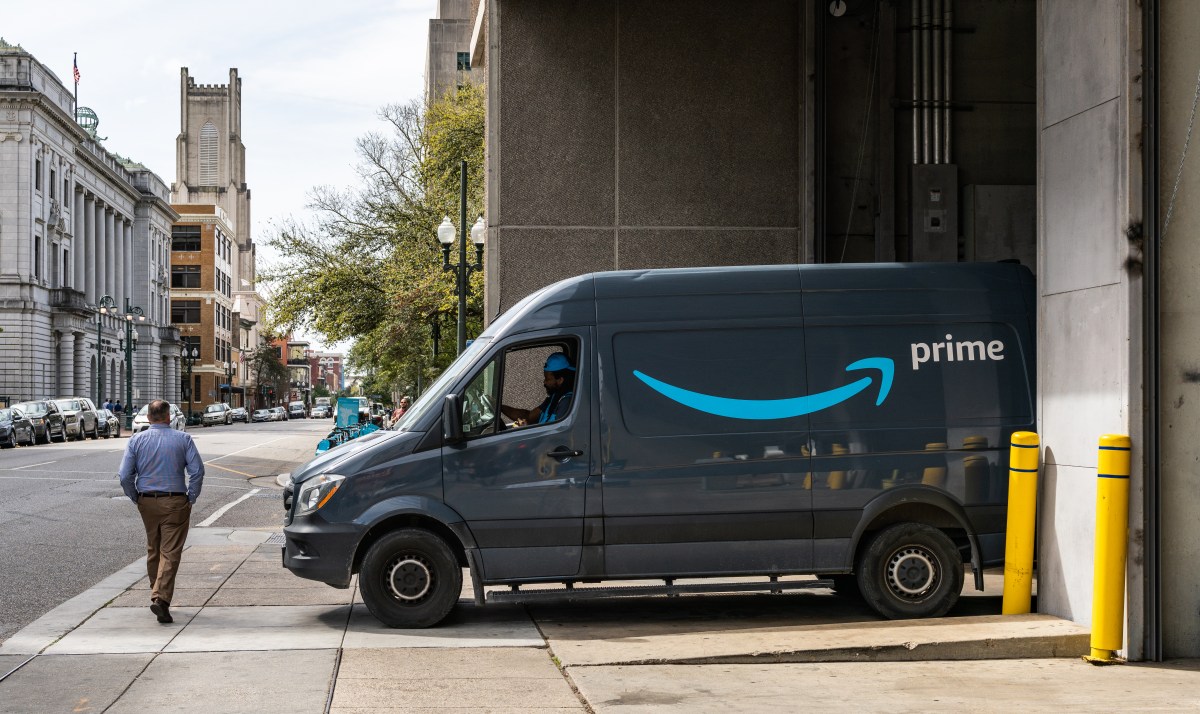
Top image of an Amazon delivery driver in a Prime van courtesy of Wikimedia Commons.
Amazon’s response not only leaves a lot to be desired, it’s also an example of precisely what not to do when an issue goes beyond a simple customer service complaint. The company missed an opportunity to respond with compassion and earn a family’s gratitude.
An Amazon delivery driver took a Washington family’s cat and drove away with her on July 21.
Since then, Amazon has admitted its driver has the cat, but has offered little more than carefully-worded customer service responses mixed with boilerplate language about valuing the family’s business and feedback.
Ray and Karin Ishak have video of the driver petting and playing with 13-year-old Feefee in the family’s driveway during the delivery. The motion-activated camera timed out, according to a report by Seattle ABC affiliate KING5-TV, but when the camera began recording again, triggered by the driver pulling away, Feefee was gone.
“The driver [was] driving away and there’s not a cat in sight. It’s pretty obvious the cat disappeared in those seconds,” Ray Ishak told the station, adding he filed a report with the Snohomish County Sheriff’s Office.
An Amazon driver playing with Feefee in the Ishak family’s driveway before driving away with the cat. Credit: Ray Ishak
Amazon has chosen to deal with the incident via email, as if it’s a dispute over a returned item rather than a living being who is valued as a family member by her people.
A company customer service representative told the Ishaks that the driver said she contacted the police to return Feefee, but the family called the sheriff’s office and the police in Everett, Washington, where they live, and both agencies told them they hadn’t heard from the driver or from Amazon.
The Ishaks asked Amazon if the company could at least tell them the town or city where the driver lives, figuring the driver may have contacted police there instead of the departments that have jurisdiction over their hometown. Amazon declined to provide that information.
When the Ishaks followed up with Amazon again, a customer service representative said she’d be happy to help — if the police approach Amazon. She provided an email address for law enforcement use only, said Amazon will cooperate if the police contact them, and ended the reply with a request to “vote about your experience today.”
This is an awful response by Amazon, and the company deserves any bad PR it gets as a result. The very first thing the company should have done was escalate the ticket to a manager empowered to take care of the case directly, and that manager should have picked up the phone, called the family and promised to get their cat back immediately.
If the company doesn’t have anyone in its customer care hierarchy who understands why it’s important to make that kind of judgment call, then it’s done a poor job of hiring and training its employees.
Treating this like a routine complaint only exacerbated the Ishak family’s stress and uncertainty regarding the fate of their beloved cat. Putting the onus on the family and the police to sort out of the problem makes things worse, and you’d think any halfway competent customer service rep would skip the “rate your service” pitch, at least until after the problem is solved and Feefee is back with her family.
Ray Ishak said Feefee’s disappearance has been especially hard on his grandchildren, who love the gentle feline. Credit: Ray Ishak
It doesn’t matter how massive and successful the company is, there has to be a better way to handle issues like this without requiring even the police to approach Amazon like customers dialing a service line, or supplicants petitioning a king to turn his gaze toward a situation that normally falls beneath his notice. There’s also no recognition of the impact on Feefee, who is almost certainly confused and stressed at being separated from the only home and family she’s known for her entire life.
Lastly, Amazon missed an opportunity to respond with compassion and earn the gratitude of a family whose members are obviously very concerned about their cat. A PR win like that is worth a thousand commercials, and can earn enormous good will with customers. Instead, people will hear about how the company treats a problem like this as if a customer is returning a shirt that’s too small.
As for the Ishak family, they say they’re giving the driver the benefit of the doubt. Maybe she thought Feefee was a stray. But, as Ray Isha told KING5, it’s been made abundantly clear that Feefee is a beloved member of the family, and she needs to be returned.
“Maybe you did this out of the kindness of your heart,” Ray Ishak said. “I appreciate it, but bring me my cat back.”
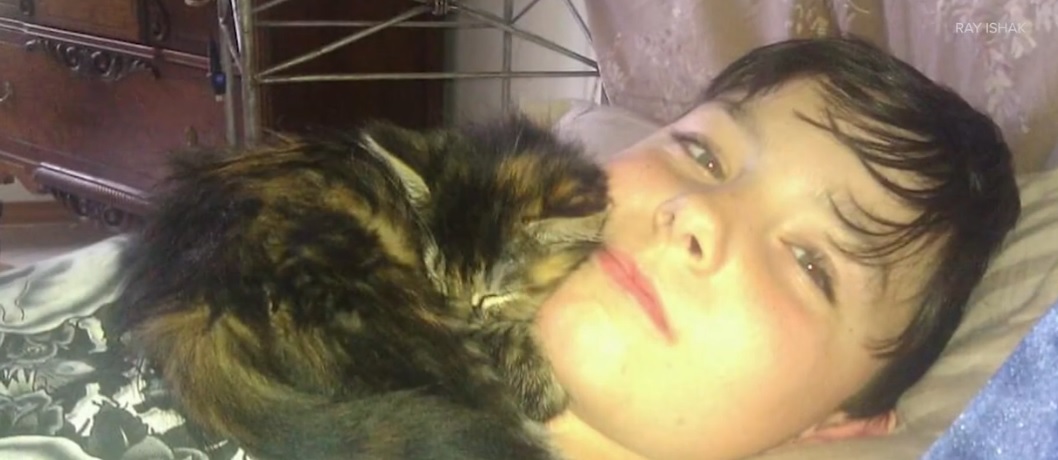
Top image of Feefee as a kitten with one of Ray Ishak’s grandchildren courtesy of Ray Ishak, via KING5.
Requirements for adopting Pepper included a sense of humor and experience caring for birds. He’s now found a home with patient caretakers and another mercurial parrot to hang out with.
It’s too bad cats can’t swear.
While kittens don’t often have problems finding homes due to their overwhelming cuteness and antics, it usually takes a sad story to drum up considerable interest when an adult feline is up for adoption.
As the SPCA of Niagara learned, talkative parrots, especially birds who can swear up a storm, have their pick of homes.
In June, a potty-mouthed parrot named Pepper was surrendered to the shelter, and when the SPCA put the call out — specifying they’d prefer someone with experience caring for birds and a sense of humor — the applications kept rolling in, totaling more than 400.
“His famous line is ‘Do you want me to kick your ass?'” a shelter employee said in an interview last month shortly after announcing Pepper was up for adoption.
Shelter staff asked applicants to include photos of their bird enclosures in addition to the usual pre-adoption questions, eventually narrowing the Pepper Sweepstakes down to 10 potential homes.
This past week, Pepper was finally taken to his new abode in Olean, a small city in western New York. The couple who adopted him are not only experienced with birds, they know all about avian vulgarity. They have a parrot named Shelby who apparently “makes Pepper look like a saint.”
As for Pepper, it looks like he’s getting his bearings before heaping abuse on his new caretakers.
“He hasn’t cursed at them yet, but we know it’s coming,” shelter staff wrote in an update.
In recent decades, research has shown birds can be exceptionally intelligent. Crows, for example, use tools, can differentiate between human faces, and remember which humans have wronged them or treated them well.
While many people assumed parrots merely imitate human language, long term behavioral studies show the birds are able to use words in context and invent novel combinations of words. As with other animals, syntax remains elusive.
The most famous example was Alex the African Gray, who was the subject of research by animal cognition expert Dr. Irene Pepperberg. Alex, who died in 2007 at the age of 31, was able to count and could perform simple calculations. He was talkative, conversant and often told his caretakers how he was feeling, what he wanted, and what he thought of the tests they’d give him. (Like a child, Alex would try to get out of exercises he was bored with by asking for water, saying he was tired and wanted a nap, or just flubbing his answers.)
We are not above crude humor here at PITB, and in the past we’ve written about Ruby, our favorite talking parrot. Ruby lives in the UK with her owner, Nick Chapman, and the pair were among the very earliest Youtube stars thanks to videos of Ruby’s shockingly vulgar, extremely British tirades and Chapman’s infectious laugh.
Warning for those who are offended by bad language or are viewing at work: Ruby is known for liberal use of c-bombs-, t-bombs, f-bombs and just about every other linguistic bomb you can think of, in addition to British slang like “bollocks.” If that’s a problem for you, skip this video.
Eric the Legend, a parrot who lives in Australia, is also a favorite on Youtube for his habit of declaring himself “a fookin’ legend!“
We’re glad Pepper has found a home where his idiosyncratic nature will be cherished, and we hope the future will bring videos of Pepper and Shelby going back and forth. Parrots are social animals, after all, and what fun are insults if you’ve got no one to trade them with?






 Pain In The Bud