A shelter operator has received death threats amid confusion over the facts after animal welfare authorities raided a Los Angeles County shelter on Friday.
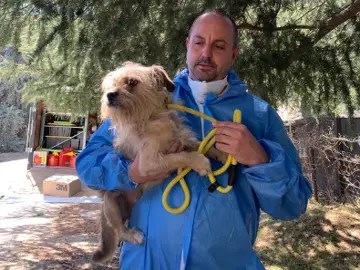
The initial news headlines were apocalyptic — more than 700 dogs and cats were found in deplorable conditions according to authorities, who said the California property where they executed a search warrant represented the most extreme animal hoarding case in history.
A day later the numbers have been revised down to a still-significant 250 dogs and 66 cats, and the owner of Rock N Pawz shelter in Los Angeles County says she and her facility have been smeared, resulting in a flood of death threats directed at her.
The story is a reminder that facts aren’t always established as quickly as we’d like them to be in the age of 24/7 news and social media, and the advent of photorealistic AI can add to confusion and stir public outrage by distorting the reality of fluid situations.
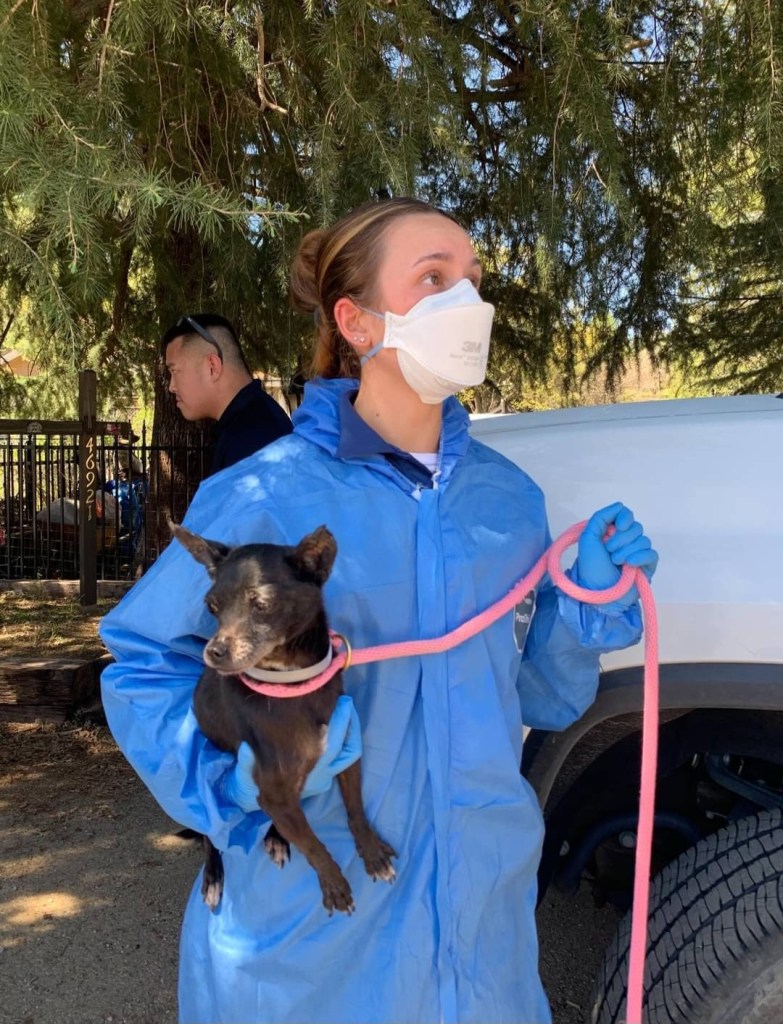
A woman holds a dog found on the Rock N Pawz property. Credit: Los Angeles County Department of Animal Care and Control
What we know for sure is that officers from the Los Angeles County Department of Animal Care and Control executed a search warrant on the property in Lake Hughes, an unincorporated community in the Sierra Pelona Mountains, about an hour’s drive from Los Angeles proper. The investigation was prompted by repeated complaints from neighbors, who said there were overwhelming odors coming from the shelter and claimed there were regular dog fights and incessant loud barking.
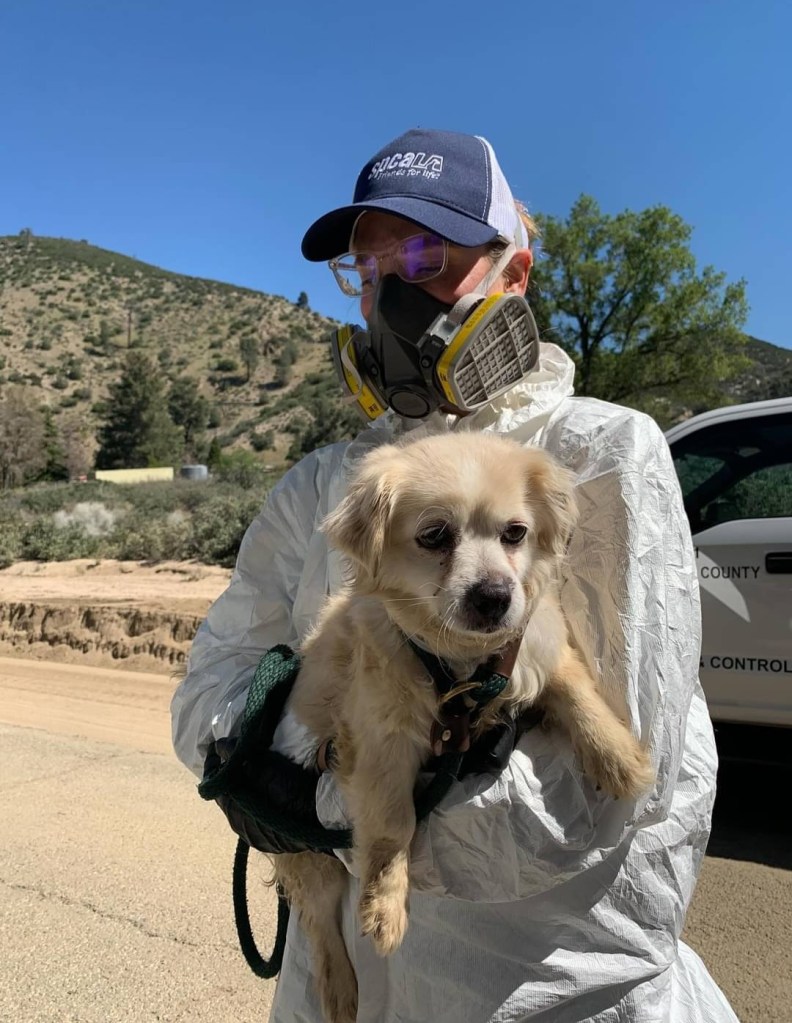
A local news station, KTLA, reported authorities on site were wearing respirators with protective gear, and quoted authorities who said they did not believe it was a case of intentional neglect.
“Sometimes people try to do the right thing, and they may bite off more than they can chew,” the Department of Animal Care’s Sgt. Matthew Davoodzadeh told the station. “They end up ultimately not being able to care for the animals in a proper way.”
Authorities have not filed charges related to the case and there have been no allegations of criminal conduct.
Credit: Los Angeles County Department of Animal Care and Control
The influx of animals has strained nearby shelters while veterinarians examine the 316 dogs and cats taken from the property.
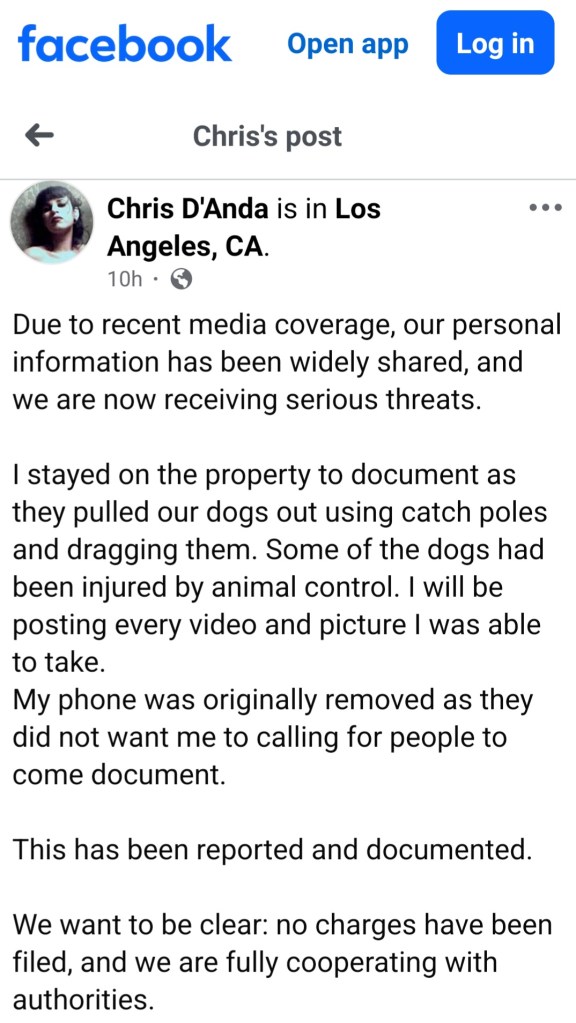
In the meantime, shelter owner Christine D’Anda said descriptions of the property and the conditions of the animals aren’t accurate, and took to social media to complain of harassment and death threats directed at her since news of the search warrant hit the web.
The shelter operator asked people to withhold judgment until the facts are established.
On Facebook, users posted images allegedly taken from the property, while others pushed back, alleging the images are either AI creations or were taken from unrelated news stories.
The shelter’s page indicated active rescue and adoption efforts, including fundraisers and an advertised adoption event last weekend.
D’Anda said she will fight the allegations in the legal system.
“There’s nothing that I can do. I’m a very stoic person,” she said. “I’m very sad about the whole situation, and I can’t wait to go to court.”
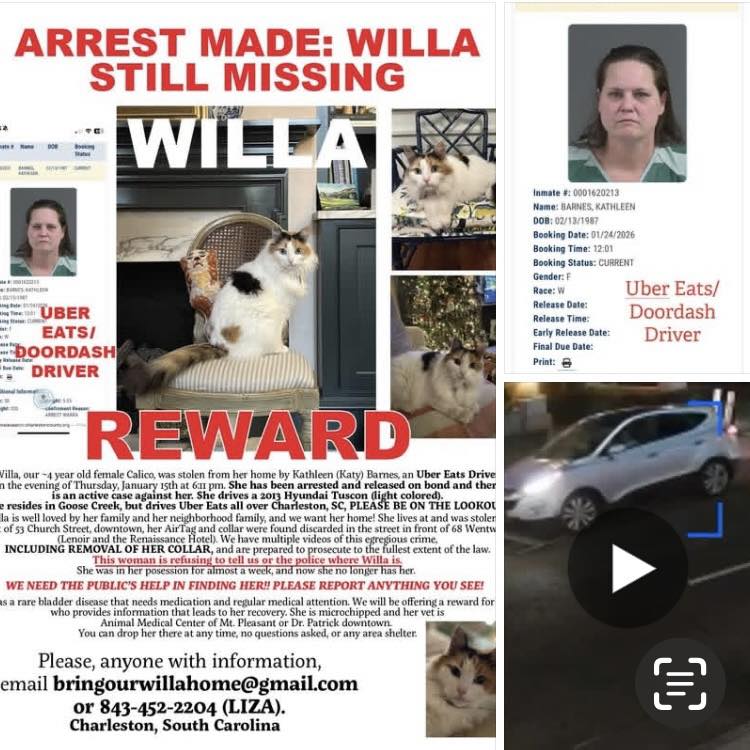
A substantial new reward from a local shelter is providing incentive for the return of Willa the cat, who was stolen from her home by an Uber Eats driver in January.
It’s been two months since a delivery driver working for Uber Eats allegedly stole their cat, but a South Carolina family is determined to get their feline family member back.
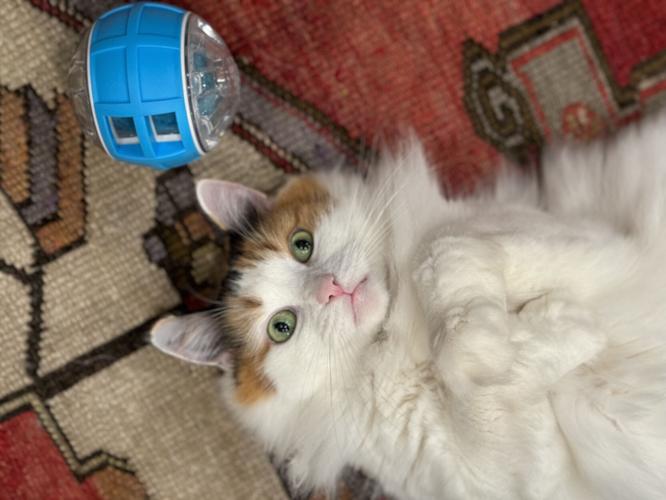
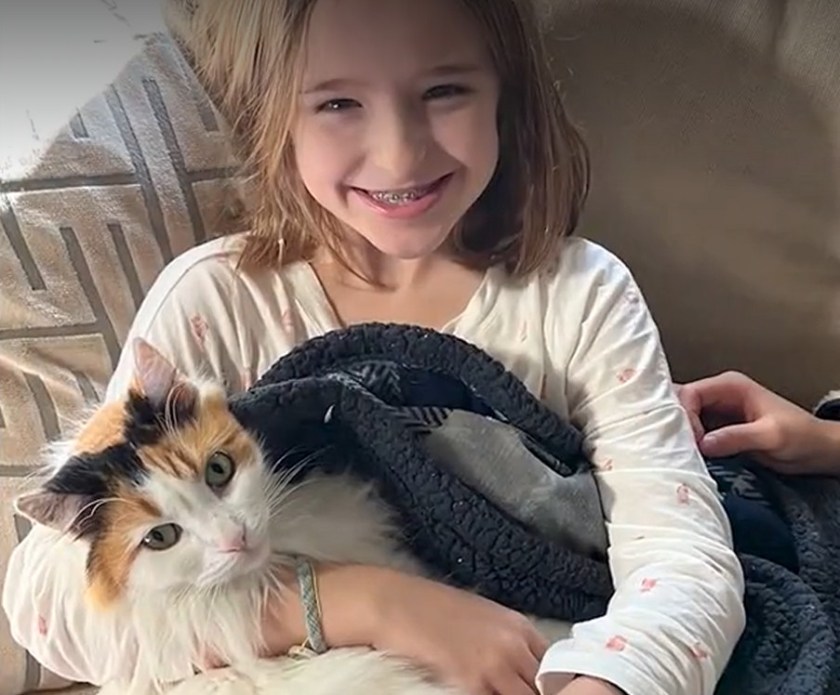
Four-year-old Willa the cat was a fixture in her neighborhood, known and loved by neighbors and people taking walking tours of the area. The 17-pound Calico, with her magnificent floof and striking coat pattern, could usually be spotted lounging on the front porch of her home, where she liked to watch people going about their business.
Now Pet Helpers, a shelter in Charleston, is helping keep the story in the news and creating greater incentive for people to join the search for Willa by offering a $2,500 reward for her return, in addition to a reward the family is offering.
On Jan. 15, shortly after delivering Greek food to a home on the same street, Katy Barnes of Goose Creek, SC, allegedly scooped Willa up, carried the Calico to her SUV, and drove off.
Willa’s family, the Layfields, did not have an angle on the cat-napping from their home security cameras, but cameras belonging to neighbors and a gym about a mile away show a woman police have identified as Barnes taking Willa, then pulling over and discarding the feline’s collar and AirTag.
Despite her arrest and the footage, Barnes has refused to cooperate with police, claiming she no longer has the Calico. If she did simply release Willa, as she claims, she did it during the coldest season of the year during a deep freeze, when most of the country was seeing single-digit or sub-zero temperatures. That’s a challenge for any cat, especially a feline accustomed to an indoor life.
“I am amazed that people can be so cruel,” Liza Layfield told PITB. “Why? Why would this person take their animal and then put her out to essentially die? Why would Katy take Willa and refuse to give her back or tell us anything about her whereabouts in the face of freezing temperatures and snow? Why would she want to torture a family over a cat that is apparently no longer in her possession? We cannot understand, and it is keeping us awake at night.”
Despite the stress of the situation, the family has continued their relentless efforts to get Willa back.
Charleston police have taken the case seriously, arresting Barnes and charging her with petty larceny. They secured a search warrant for Barnes’ home, which did not turn up any signs of Willa, and they arrested her a second time, charging her with littering for disposing of the collar and AirTag and keeping her in police lockup overnight twice in two weeks.
The message: they’re not letting this go either. Neither are locals, who have rallied to support the Layfields and have started a petition asking authorities to do as much as they can to help find Willa, and calling on Uber to do more to help. Almost 1,700 people have signed the petition, and it continues to accrue signatures.
In the meantime, the Layfields have turned to their community for help. An email account they set up has yielded promising tips, and neighbors have been on the lookout for Willa in Charleston as well as in Goose Creek near Barnes’ home.
“It is very much an active and ongoing investigation,” Liza Layfield told PITB.
“We love our animals as our children, they are a part of our family, and we can’t rest until she is found.”
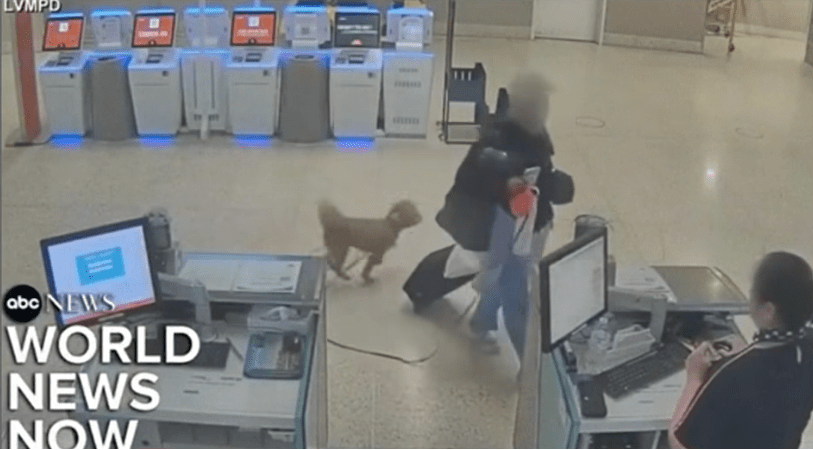
The woman left her dog tied to a post near the departure gate, telling police she didn’t want to miss her flight after the airline told her she didn’t have the right paperwork to bring her dog in the cabin as a service animal.
A dog who was abandoned by his owner at a Las Vegas airport has a happy ending to his ordeal after he was adopted by one of the police officers who responded to the initial abandonment call.
The sequence of events began on Feb. 2 at Harry Reid International Airport in Las Vegas. A woman was trying to board with her goldendoodle — a medium-size breed that is a cross between a golden retriever and a poodle — when an airline employee told her she needed paperwork proving the pooch was a service animal. Emotional support animals don’t need paperwork and aren’t certified by any agency, public or private, but service dogs must be trained and certified.
Instead of trying to work the problem out, the woman abandoned her dog, leaving him tied to a post near the departure gate. The airline’s staff called police and when officers arrived, they found the woman waiting to board her flight.
The woman pictured with Jet Blue the dog before abandoning him at the airport. Still image from a video provided by Las Vegas PD.
She was insistent she’d done nothing wrong, according to Las Vegas police, and said she could find the dog again after returning home because he has a tracking device. That excuse didn’t fly, and neither did the woman– officers pulled her off the departure line and arrested her for abandoning an animal.
In a positive twist of fate, one of the officers who responded that day had been looking to adopt a dog of that same breed and had already applied and been cleared by a local shelter. He was just waiting for the right dog.
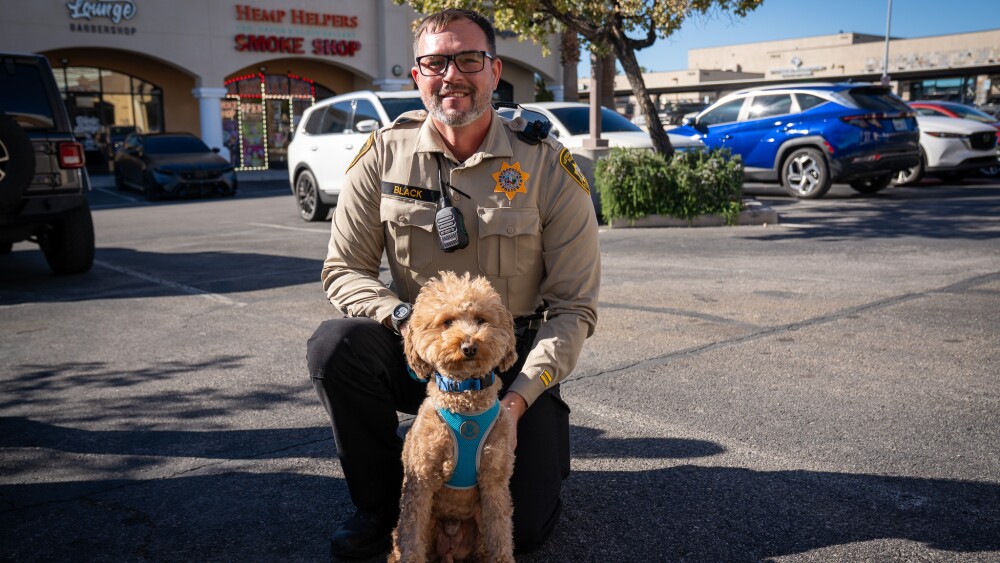
The officer, Skeeter Black, adopted the abandoned good boy and named him Jet Blue after the airline. Jet Blue joined his new family on Sunday after undergoing the usual veterinary checks, quarantine and a 10-day mandatory hold with animal control.
“We’re very excited to add him to our family,” Black said when animal control handed three-year-old Jet Blue off to him. “We’re gonna enjoy him. He’s gonna be very much loved.”
As for the Las Vegas Police Department, the brass issued an exasperated statement reminding people that animals are living beings with their own feelings.
“We can’t believe we have to say this,” police wrote in a post, “but please don’t abandon your dog at the airport — or anywhere else.”
I expected something truly extravagant when a reader wrote to Slate’s advice column to say she was considering doing something “wildly elitist” involving her cat.
What could it be? I wondered. Pure gold or silver eating and drinking bowls, a la Choupette? A fashionable $600 pet stroller like the young, childless women of Tokyo favor for their felines? Feeding premium meat from the butcher exclusively to her cat?
None of the above, it turns out. The allegedly “wildly elitist” thing this woman was deliberating was simply paying a veterinarian to have dental work done on her cat, with costs estimated at between $800 and $2,000, depending on the extent of the kitty’s cavities.
To make matters even stranger, the letter writer says the cost won’t be a financial hardship for her family. Their cat is only three years old, she notes, and the family has had him since he was found on the street as a kitten.
“I guess I didn’t think that part of taking him in would entail thousands of dollars to keep him alive at this stage of the game,” she wrote. “At what point do people draw the line on what it costs to save a cat’s life?”
Credit: Wikimedia Commons
The writer was essentially looking for “permission” to have the cat put down, for Slate’s advice columnist to virtually pat her on the head, say “There, there!” and agree that taking care of your own cat is “wildly elitist.”
Thankfully, Slate columnist Athena Valentine was having none of it, telling the woman seeking advice that “when you adopt an animal, you take financial responsibility.” Spending money on veterinary care when needed, Valentine noted, is “exactly what you signed up for” by adopting the little guy. A cat who, by the way, could easily live another decade at least.
“If you do not want to pay for your cat’s treatment, please surrender him to a rescue that will,” Valentine wrote. “The rescue will raise the funds you do not want to part with to pay for his teeth and will then adopt him out to a new home that understands the responsibilities of pet ownership. I also advise you to not adopt any more animals until you’re fully ready to accept the financial obligations that come with it.”
Cheers to Valentine for not taking the bait.
Do your feline overlords use their own beds?
One of the first things I bought for Bud, along with his litter box, bowls and toys, was a bed. It’s nothing extravagant, but it does look pretty comfortable.
He has never used it.
Or rather, he lounged on it a handful of times when he was a kitten, but he claimed my bed as his own. He was very clear on the new ownership situation, and generously allowed me to continue sleeping on my his bed as long as I accepted the fact that he would use me as a pillow, which he has been doing for more than a decade now.
A Newsweek story details the efforts of a woman who bought her cat a new bed, hoping he’d let her sleep at night, only for the feline overlord to drag his new bed onto her bed. Essentially, she bought him a new pillow.
Do cats ever do what we want them to? That’s a rhetorical question, by the way.
A cat whose fantasy soccer team ranked 222 out of 13 million players
At The Athletic, Conor Schmidt writes about creating a fantasy football (soccer) team for his cat, and letting the little guy choose who to draft and trade by writing the names of players on a dry erase board and putting treats next to each name. The first treat his cat goes for is the one whose associated player is dealt or drafted.
He says his cat reached an astonishing world ranking of 222 out of almost 13 million players on the same platform worldwide, which means either the little dude has incredible luck, or he’s a genius who knows a lot more than he lets on.
Maybe I should register a fantasy basketball or baseball team for Buddy, smear turkey gravy next to players’ names, and see how he does.
The family has pleaded for the return of four-year-old Willa, but the the woman accused of taking her has not cooperated and the Calico has now been missing for two weeks.
Despite an arrest, a criminal charge hanging over her head and widespread scorn from locals, a delivery driver has “refused to speak about” what she did with a Charleston family’s cat after allegedly stealing the Calico.
A story in Charleston’s Post and Courier details the herculean efforts by a family to get their cat back after 38-year-old Kathleen “Katy” Barnes allegedly stole the feline on Jan. 15, shortly after receiving a $15 tip for delivering Greek food on the same street.
When the Layfield family returned home that day, four-year-old Willa was nowhere to be found. The Layfields checked their security camera footage, which last showed Willa about 45 minutes before the family returned home but did not show her disappearance.
Since the extent of Willa’s outdoor activities involved straying no further than a few feet from the home, and mostly consisted of her sitting on the family’s front porch, the Layfields were worried and went to bed for an “uneasy” and “restless night,” per the Post Courier. When Willa’s AirTag pinged at 4 am near the Lindy Renaissance hotel about a mile away, Daniel Layfield got out of bed and rushed to the location. The device had been tossed in the street along with Willa’s collar.
The family has been relentless in tracking down information about Willa’s disappearance and getting access to surveillance camera footage from neighbors and local businesses, which is how they found footage of Barnes allegedly taking Willa (spotted on a neighbor’s cameras), then additional footage of her SUV stopping in front of the Lindy Renaissance hotel.
In video the Layfields pulled from a nearby gym’s surveillance cameras, Willa is seen on the dash of Barnes’ silver SUV. Barnes grabs her, removes the collar and AirTag, and tosses both out of the car before driving off again.
The Layfield family has also appealed to Barnes through statements to the press.
“Please let us know where she is,” Daniel Layfield said per the Post Courier, “if you have any compassion for animals and people.”
Charleston police deserve credit for taking the case seriously, going above and beyond what most departments would do in similar cases. They were able to secure a warrant to search Barnes’ home in Goose Creek, SC, but did not find Willa.
And this week they arrested Barnes for a second time, charging her with littering for disposing of Willa’s collar and AirTag, according to the Post-Courier.
It was the second time in about a week that police kept Barnes in overnight lockup, likely to send a message that they will not forget about the case. The Layfields have also enlisted the help of people who live in Barnes’ Goose Creek neighborhood, asking them to keep a lockout for the Calico, who has distinct markings.
This case is reminiscent of the theft of Feefee, a cat belonging to the Ishak family of Everett, Washington. Fefee was taken in the summer of 2024 by an Amazon Flex driver, and like the Layfields, the Ishaks had solid footage they were able to provide to the police, which led them to identify and track down the woman who took their cat.
That woman also refused to cooperate with police or tell the family what she did with their cat, despite their pleas and assurances that they weren’t interested in anything other than getting Feefee back.
Like the Layfield family, the Ishak family’s cat was well loved by the entire family, especially the kids, so Ray Ishak took the next several days off work and began driving around in an increasing radius, looking for the vehicle the Amazon contractor had been driving in the footage.
He found Feefee a few days later, scared and cowering in the bushes near the driver’s apartment. The driver had allegedly dumped the cat instead of returning her to the family, despite initially agreeing to bring her to the local police department.
In both cases, the families did everything right in their efforts to recover their four-legged family members.
They posted to social media, posted flyers, rallied support, and asked others to help spread the word. They reached out to local media, sent copies of the footage, then made themselves available for interviews and to plead for the return of their cats.
They also filed reports with the police and complained to the corporations — Amazon in the Washington case and Uber in the South Carolina case.
While Amazon is notoriously slow to respond to incidents like this and has repeatedly infuriated victims by treating the thefts as customer service issues, Uber said it contacted the driver and tried to persuade her to hand over the cat. While Barnes can’t technically be fired, as she’s a gig worker, the company said she will no longer be allowed to contract for Uber Eats.
“What’s been reported by the Layfields is extremely concerning,” Uber’s team wrote. “We removed the driver’s access to the Uber app and are working with law enforcement to support their investigation. We hope Willa is safe and reunited with her family.”
Unfortunately Willa’s been missing for two weeks now, and like most of the US, the normally temperate Charleston has been in a deep freeze, with temperatures plummeting below zero.
Because South Carolina views pets as property, as many states do, the worth of Willa’s life is pegged at a few hundred dollars at most, and she’s treated in the eyes of the law as an object.
That means the most severe charge the police could arrest Barnes for is petty larceny, a misdemeanor that carries a penalty of up to 30 days in county jail and a fine, if she’s convicted.
It is important to note that despite the footage, the charges are an allegation, and Barnes remains legally innocent pending a possible conviction.
But because the charge is just a misdemeanor, there is no pressure for her to cooperate and help the family get Willa back. (Or return her, if she still has the cat in her possession.)
Historically, pet theft has been associated with two primary motivations: thieves target breed cats and dogs because they believe they can make easy money selling them, whole others use stolen pets as bait or “training” for the violently conditioned dogs used in dogfighting. Some also target pedrigree pets to breed them.
In both these cases, and others that have been in the news recently, the thefts were crimes of opportunity, not pre-planned, and the cats were moggies. In addition, the cats were spayed/neutered. That rules out monetary gain by reselling or breeding. It also stretches credibility to believe gig workers are somehow more likely to be involved in dog fighting.
This is something new, a category of theft that may have began in earnest during the COVID era, when people felt isolated and shelters were literally being emptied due to the dramatic uptick in adoptions. Unable to find a companion animal through normal channels, some people stole pets for themselves.
But the shortage was short-lived, shelters and rescues are back in the familiar situation of having too many animals, and there’s no impediment to someone simply adopting a cat or dog instead of inflicting trauma on the animal and its family.
We hope the Layfields receive good news soon, and Willa is returned to the warmth and love she’s known with them.



 Pain In The Bud