Cats don’t accept blame, George Carlin once observed. Even when you catch them red-handed.
A few nights ago I was watching the Yankees lose when Buddy jumped on the coffee table, settled into a loaf position and started doing what he does best — knocking things onto the floor.
Usually it’s remote controls, water bottles, my phone. Usually he has the good sense not to knock over glasses with liquid in them, or plates of food. But not always.
Bud turned, looked me in the eye, meowed and proceeded to swipe a tub of wasabi peas (just the like one pictured above) off the table. The package hit the ground and popped open, spilling the peas and their powdered wasabi coating all over the floor.
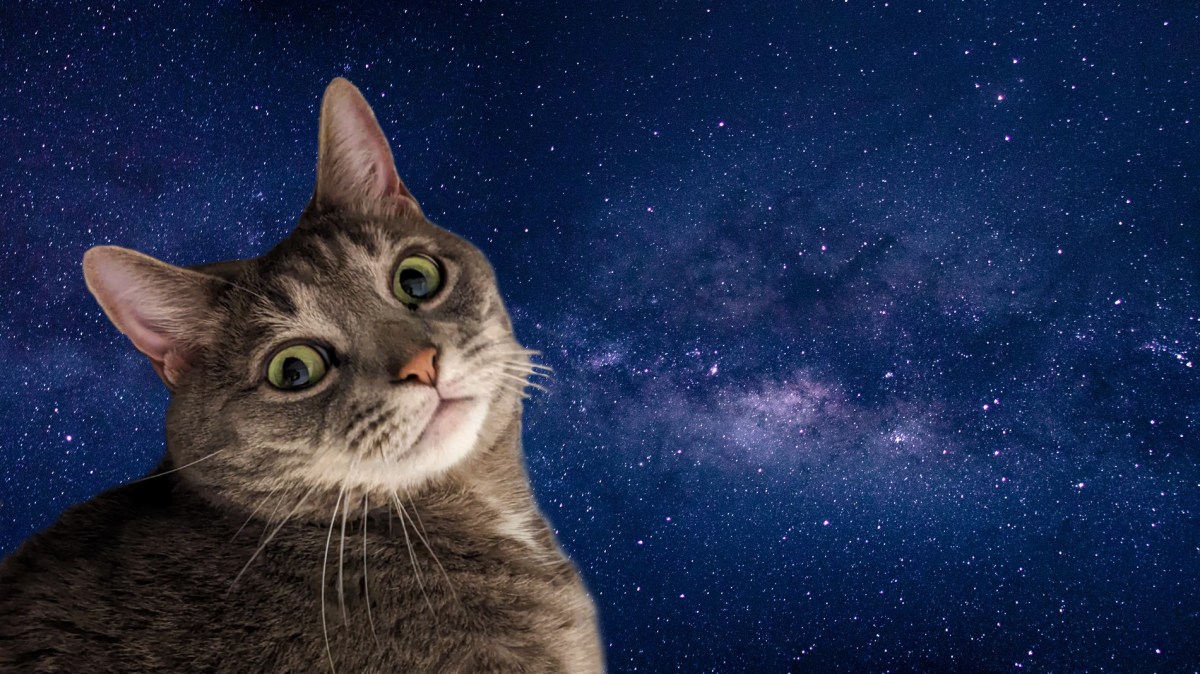
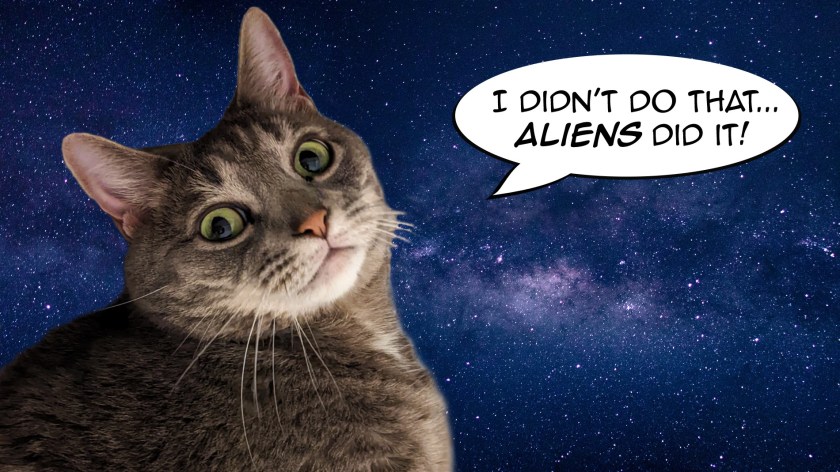
“They came down in a big spaceship, and they said ‘Buddy, we’re gonna spill your human’s snacks and then blame it on you!’ And I said ‘No, aliens! Not on my watch!’ But they distracted me with turkey…”
Bud looked at me, trilled, then took off, perhaps put off by the scent of the wasabi.
A few seconds later he returned as I was sweeping them up, trilled again, and looked at me like “What happened, dude? Someone knocked over your wasabi peas? That’s terrible!”
If he could speak — you know, besides his incessant trilling and meowing — the conversation would probably go something like this:
“It was you! You did it!”
“No I didn’t.”
“I watched you do it! You made eye contact with me as you casually slapped them off the coffee table!”
“You’re mistaken. Perhaps it was another cat who looks like me.”
“You’re the only cat who lives here!”
“Then it was a chalupacabra.”
“You mean a chupacabra? Those don’t actually exist, you know. Have you ever heard of Occam’s Razor?”
“Aliens, then. Yeah. Probably aliens. I keep trying to tell you, aliens are responsible for those hairballs. Remember the time you found puke in the bed? That was aliens too. I told them ‘Be gone, aliens! You’re not welcome here!’ but they just can’t help themselves….”
As George Carlin said, “Cats don’t accept blame.” Even when they do things right in front of you, apparently.
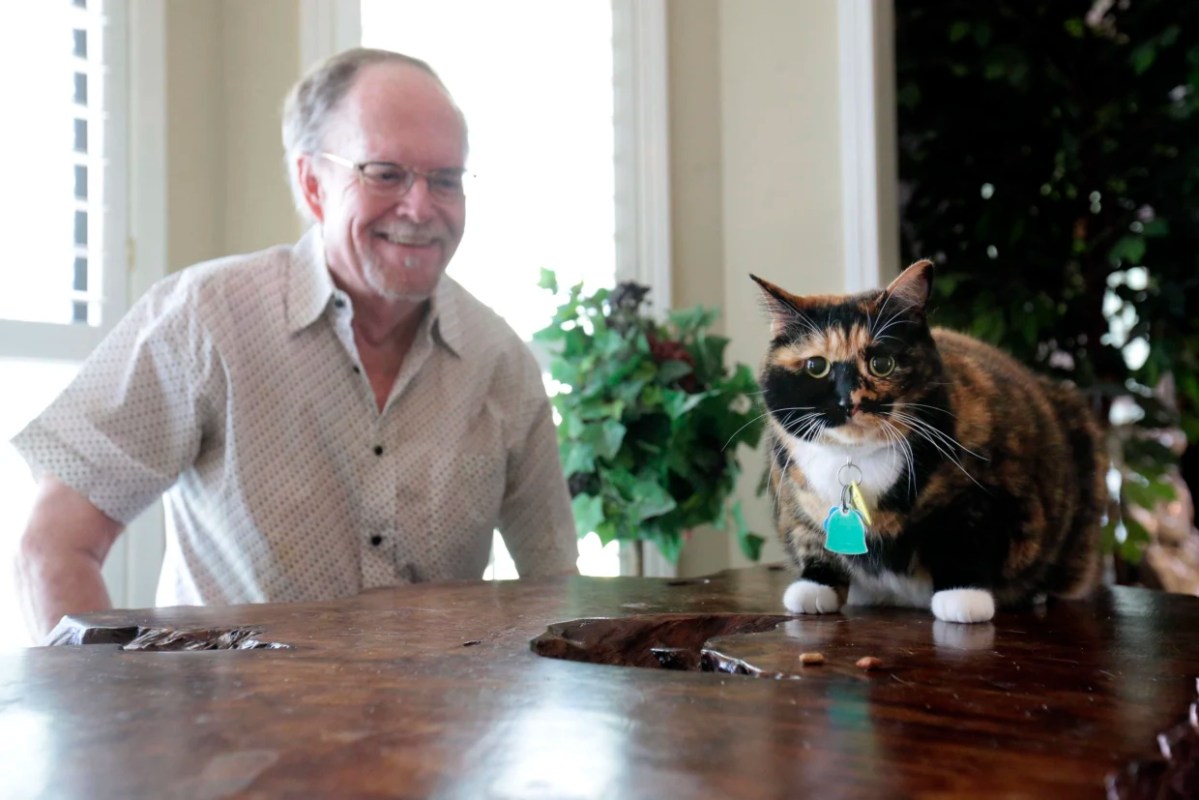
A Mississippi man was jolted awake by his cat when two armed men tried to break into his home overnight.
Fred Everitt woke at 2:30 a.m. to his cat’s “loud guttural meows” coming from the kitchen.
The retiree didn’t think much of it until the cat, Bandit, came running into the bedroom, leaped onto Everitt and began tugging his comforter off. Then she clawed at his arms, trying to communicate how urgent the situation was.
“She had never done that before,” Everitt said. “I went, ‘What in the world is wrong with you?’”
Bandit was trying to alert her human to the presence of two men outside — one carrying a handgun, the other trying to pry the back door open with a crowbar.
Everitt, a 68-year-old retiree, said he ran to his bedroom and retrieved his own gun after getting a look at the men through his kitchen window, but by that point the would-be robbers had either been scared off by the noise Bandit was making — and the probability that someone was awake inside — or they split to find easier pickings.
Either way, Everitt credits Bandit for preventing an armed robbery and possibly saving his life. The incident happened on July 25.
“It did not turn into a confrontational situation, thank goodness,” Everitt said. “But I think it’s only because of the cat.”
Everitt welcomed the delightfully chonky Calico into his home four years ago after he went to the Tupelo Humane Society in Tupelo, Miss., about 115 miles southeast of Memphis, Tenn. He was writing a donation check when shelter staff introduced him to Bandit. Even though he hadn’t planned on adopting a cat, Bandit came home with him and she’s been his companion ever since.
He said he’s telling his story because it’s important for people to know pets can give back to their humans.
“I want to let people know that you not only save a life when you adopt a pet or rescue one,” Everitt told the Northeast Mississippi Daily Journal. “The tides could be turned. You never know when you save an animal if they’re going to save you.”
It’s nice to know some cats are just as good as dogs when it comes to alerting their humans to potential danger. Given Buddy’s long track record of hiding behind my legs and moaning nervously when something scary happens — and the fact that he literally slept through a mouse encounter in July — I wouldn’t hold out much hope for the Budster heroically raising hell to wake me up if armed men ever tried to break in.
It’s more likely he’d watch the burglars break in without raising the alarm, and satisfied that they have no interest in the turkey pate and treats in his Buddy Food Cabinet, return to my bed to stretch, yawn and go back to sleep.
Protecting birds from extinction will take a lot more than passing laws requiring people to keep their cats indoors.
Prompted by the recent news that Polish scientists have added cats to a list of invasive alien species, the New York Times ran an enterprise story on Tuesday titled “The Outdoor Cat: Neighborhood Mascot Or Menace?”
I’m highly critical of print media stories on animals because I’ve been a journalist for almost my entire career, and I know when a reporter has done her homework and when she hasn’t. Unfortunately it looks like Maria Cramer, author of the Times story, hasn’t.
Her story identifies the stray cats of Istanbul as “ferals,” cites bunk studies — including meta-analyses based on suspect data — and misrepresents a biologist’s solutions “to adopt feral cats, have them spayed or neutered and domesticate them.”
Doubtless the biologist understands cats are domesticated, but Cramer apparently does not, and her story misrepresents the domestication process.
Individual animals can’t be domesticated. Only species can. It’s a long, agonizingly slow process that involves changes at the genetic level that occur over many generations. Domestication accounts for physical changes (dogs developing floppy ears while their wolf ancestors have rigid ears, for example) and temperamental ones. A hallmark of domestication is the adjustment to coexisting with humans.
In other words, if cats were wild animals it would take hundreds of years to fully domesticate them, and I’m sure no one’s suggesting we wait hundreds of years to solve the free-ranging cat problem.
Ferals can be “tamed,” but the majority of cats living in proximity to humans are strays, not ferals. The difference? Strays are socialized to humans and will live among us, while ferals are not and will not. Strays can be captured and adopted. In most cases ferals can’t, and the best we can hope for is that they become barn cats.
To her credit, Cramer does make efforts to balance the story and quotes the Royal Society for the Protection of Birds in the U.K., which places the majority of the blame squarely at the feet of humans, noting “the decline in bird populations has been caused primarily by man-made problems such as climate change, pollution and agricultural management.”
Even our structures kill billions of birds a year. That’s the estimated toll just from the mirrored surfaces of skyscrapers, and no one’s suggesting we stop building skyscrapers.
Indeed, Saudi Crown Prince Mohammed bin Salman al Saud (MBS), the de facto ruler of Saudi Araba, has been busy commissioning science fiction city designs when he’s not murdering journalists critical of his policies. The design he’s chosen for his ultra-ambitious future city, which he hopes will rival the pyramids in terms of lasting monuments to humanity’s greatness, is a 100-mile-long mirrored megacity called Neom, which is Arabic for “Dystopian Bird Hell.” (Okay, we made that up. Couldn’t resist.)
Take a look:
INTRODUCTION Depictions in a planning document show The Line as a massive micro that would be located at the Gulf of Aqaba and part of it extends into the sea
The point is, of the many factors driving bird extinction, humans are responsible for the majority of them, and if we want to save birds we have to do more than bring cats inside. Additionally, sloppy research portraying cats as the primary reason for bird extinction has resulted in cruel policies, like Australia’s effort to kill two million cats by air-dropping poisoned sausages across the country.
This blog has always taken the position that keeping cats indoors is the smart play, and it’s win-win: It protects cats from the many dangers of the outdoors (predators like coyotes and mountain lions, fights with other neighborhood cats, diseases, intentional harm at the hands of disturbed humans, getting run over by vehicles), ensures they’re not killing small animals, and placates conservationists.
At the same time, we don’t demonize people who allow their cats to roam free, and we recognize attitudes vary widely in different countries. Indeed, as the Times notes, 81 percent of pet cats are kept indoors in the US, while 74 percent of cat caretakers allow their pets to roam in the U.K.
We have readers and friends in the U.K., and we wouldn’t dream of telling them what to do, or suggest they’re bad people for letting their cats out.
Ultimately, tackling the problem depends on getting a real baseline, which Washington, D.C. did with its Cat Count. The organizers of that multi-year effort brought together cat lovers, bird lovers, conservationists and scientists to get the job done, and it’s already paying off with new insights that will help shape effective policies. To help others, they’ve created a toolkit explaining in detail how they conducted their feline census and how to implement it elsewhere.
Every community would do well — and do right by cats and birds — by following D.C.’s lead.
I was digging through some old files when I found these photos of a young Buddy the Cat:
What a dapper fellow!“Hey, where’s that steak you promised?”
These were taken in my brother’s apartment on the Upper East Side. It was early summer, so Buddy was probably about four months old, give or take.
He spent almost the entire day in the yard where he made friends with Cosmo the Dog and had lots of fun chasing insects, running around and rolling in the grass. He made friends with every human there, of course. Then when he was tired out from all that playing, he had a super special treat: Steak from the BBQ.
I’d love to bring the little guy to more social events and barbecues, but alas, almost all of them involve dogs who are not Cosmo, and I’m not sure how Bud would do with three or four dogs running around, let alone 20+ people. Smaller gatherings sans pups are a better bet.
SPCA staff and veterinarians believe the well-socialized wildcat was the illegal pet of someone living in or near Central Islip.
The saga of a “big cat” spotted on Long Island this week has come to an end with the animal’s capture.
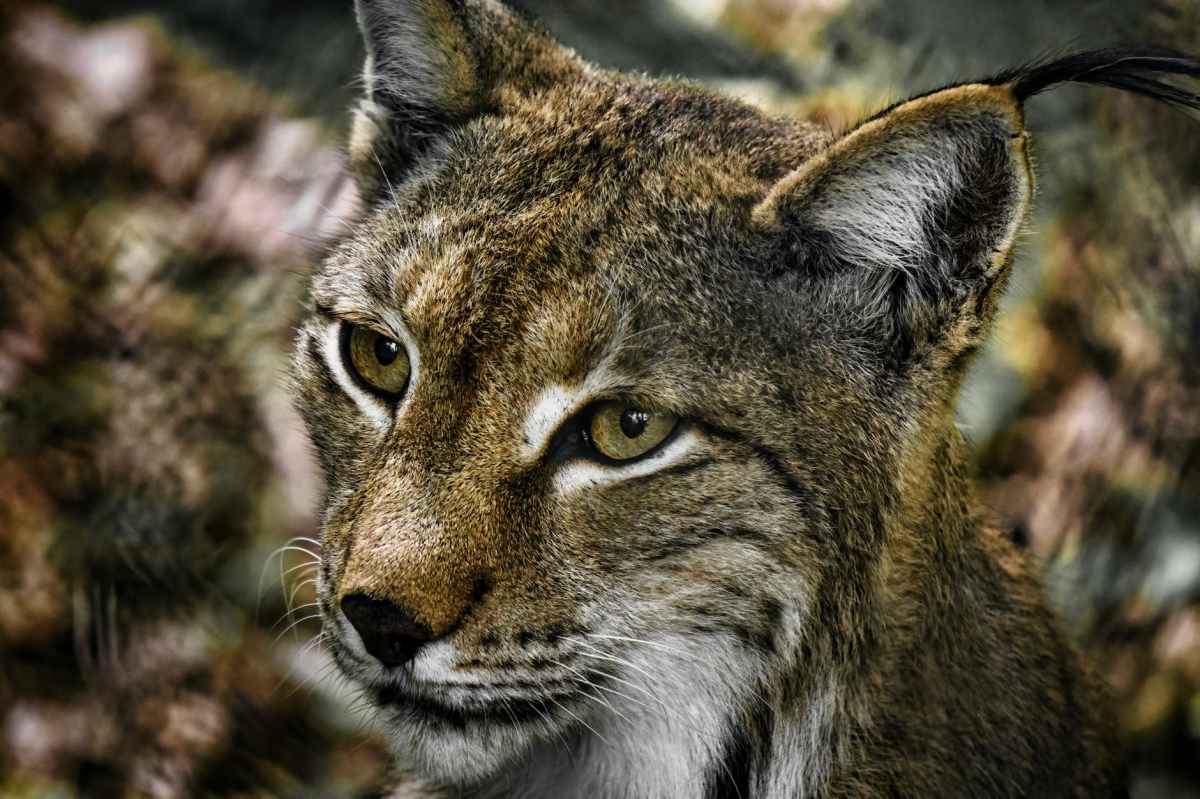
Authorities believe the cat is a Eurasian Lynx and was a pet who escaped or was abandoned by his owner. The frightened feline was first spotted on Wednesday in Central Islip, Long Island, a suburb that stretches for 118 miles just south of New York City.
“Scared the daylights out of me,” Diane Huwer, a self-proclaimed cat lover who was the first to encounter the lynx, told the local ABC affiliate.
The area encompasses two counties and is one of the most densely populated places in the U.S. with more than 7.6 million people. It’s one of the worst places in the world for a wild cat to be abandoned, with heavy traffic, ubiquitous environmental noise and endless shopping plazas surrounded by labyrinthine residential neighborhoods.
It’s illegal to own wild animals in New York, and the cat’s “owner” likely would have kept it without a proper enclosure to avoid attention from authorities.
The lynx’s sightings made the headlines in the New York papers, as well as coverage by local TV news and online publications. It went viral on social media, with users trying to determine what kind of cat it was from the handful of blurry photos witnesses were able to snap. Some media coverage suggested it was a true big cat. (Here at PITB, we thought it was possibly a Savannah cat or an American lynx.)
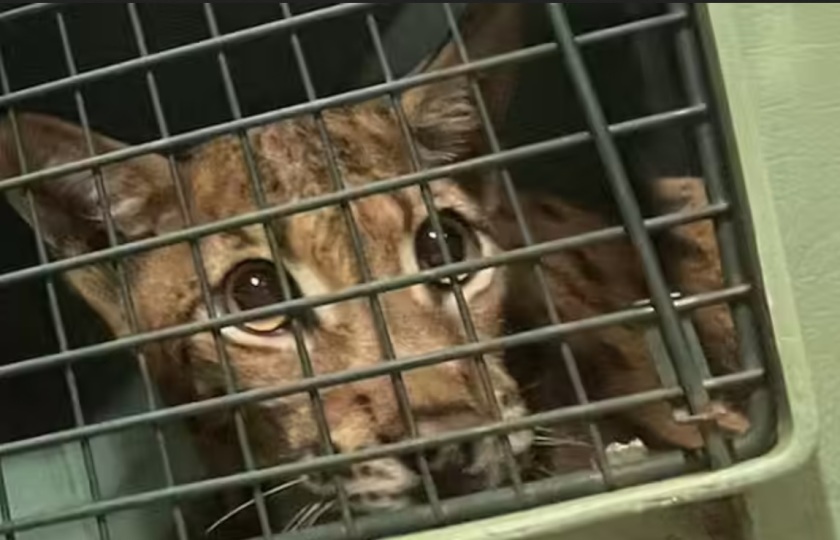
Authorities said the Eurasian Lynx was clearly socialized and wasn’t aggressive when they finally caught him. Credit: SPCA
Local authorities searched fruitlessly for three days and were about to give up early Saturday morning when someone spotted the wild cat in a residential neighborhood and called police.
The hungry feline was pawing through garbage cans next to a house in Central Islip. Authorities said the young lynx was friendly and socialized to humans.
“He was rubbing his face on the cage, looked like he was a friendly cat and from the tips we’ve gotten,” Frankie Floridia of Strong Island Animal Rescue said. “It seems these people have had him since he was a baby.”
Veterinarians have named the lynx Leonardo de Catbrio and said he’s about a year old. Despite his ordeal, the 40-pound cat was not malnourished or dehydrated, and the vets who gave him a check-up said he’s in good health. They’re waiting on lab results to confirm his species.
“Someone obviously had it as a pet,” the SPCA’s Roy Gross told Newsday. “These are wild animals, not the type of animals anyone should have. … They don’t belong in captivity this way.”
In the meantime, police, the state Department of Environmental Conservation and the SPCA are looking for Leonardo’s “owner,” who faces misdemeanor charges and a fine of up to $1,000 if he or she is convicted. They’re sure to have questions about how the person acquired a wild cat, let alone a non-native species. It’s been illegal to “import” wild animals since the Wildlife Act of 1976, and the illegal wildlife market has been a scourge on law enforcement and conservationists alike.
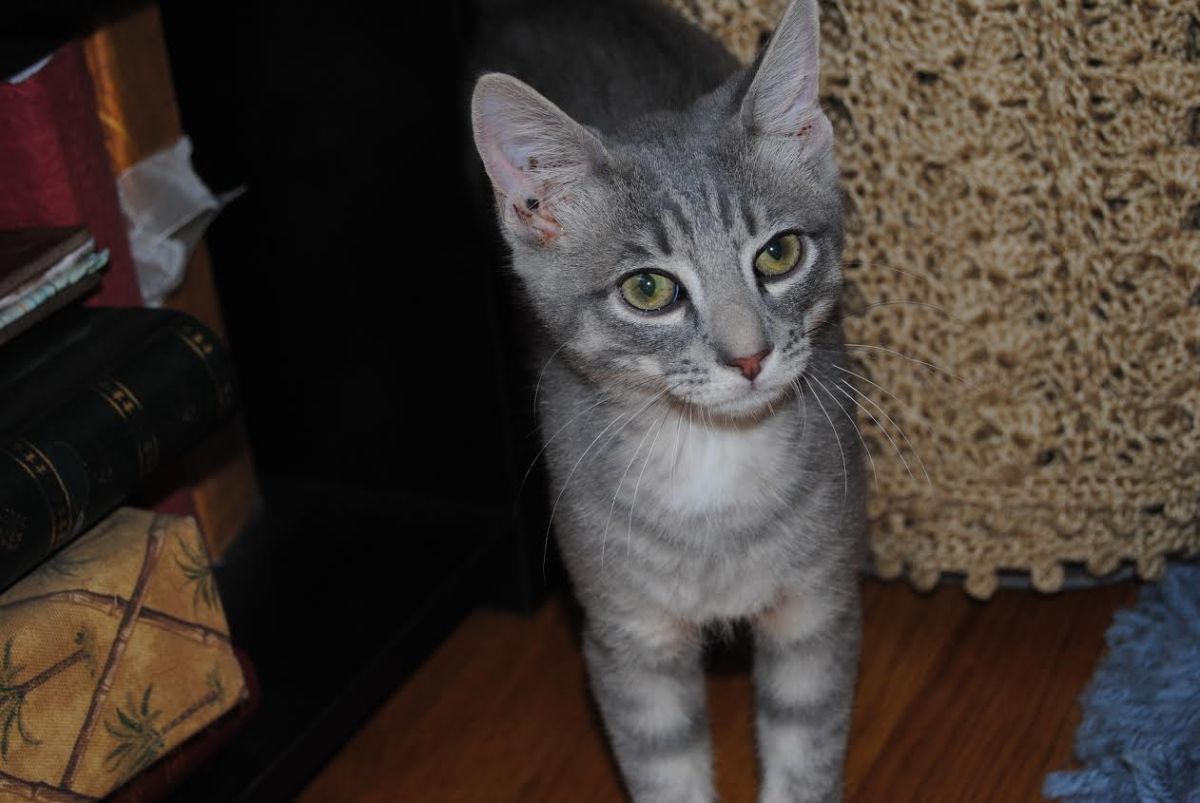
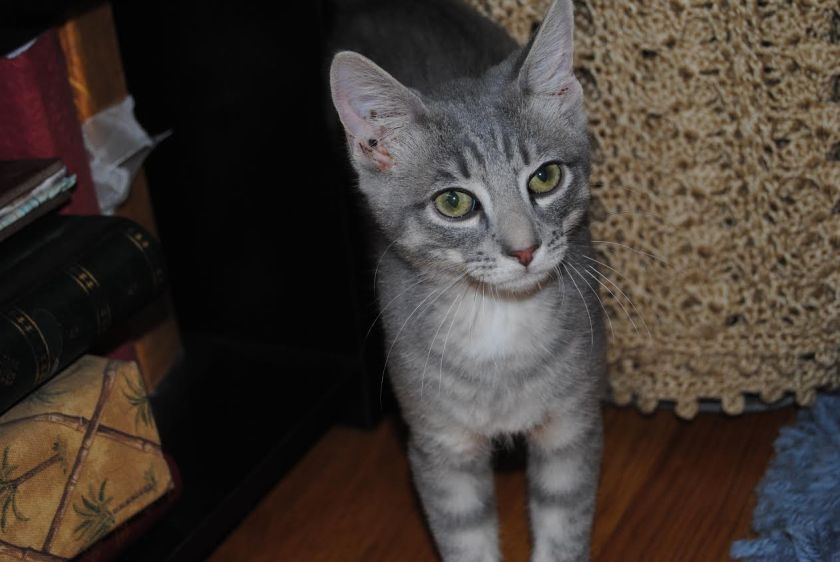
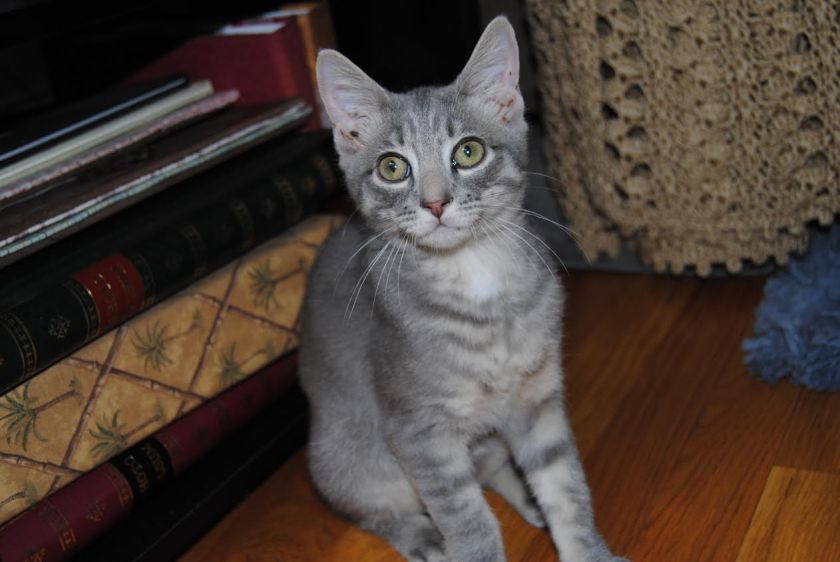
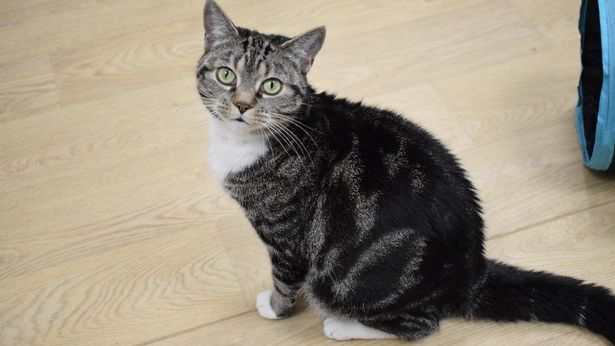
Eleven is a silver tabby who’s been returned to the shelter twice by would-be adopters, and staff at the shelter are appealing to the public to find her a forever home with patient humans.
The four-year-old with bright green eyes has been with Battersea Cats and Dogs in south London since April. Her rescuers say she takes a while to adjust to new surroundings, and they believe that’s why Eleven was returned twice within days. If Eleven’s failed adopters had been more patient, shelter staff said, they would have discovered she’s a loving lap cat once trust is established.
Eleven the Cat takes a while to warm up to new people. Credit: Battersea Cats and Dogs
They hope to place her in an “understanding home” with people who “will give her the time and space to settle in, as she would be a wonderful addition to a home.”
“Eleven needs her own space when she’s settling in, so she can hiss and swipe if pushed into interactions that she is not ready for,” a shelter spokesman told the Mirror. “She expects respect, but once given she will reward you with plenty of love. She is a super clever cat, who enjoys learning and she will sit on command for a treat of course.”




 Pain In The Bud