Knighted By The Queen, Buddy Becomes Sir Buddy

Buddy, a close friend of Queen Elizabeth II, is now known as Sir Buddington, KBE.

LONDON – Call him sir!

Buddy the Cat was officially knighted on Friday during a ceremony at Buckingham Palace, granting him the title Knight of the British Empire and making him the most-honored cat in the Anglosphere since Able Seaman Simon, the decorated ship’s cat who was injured aboard the HMS Amethyst in 1949.

It’s unusual for an American to be knighted and unprecedented for a cat to be elevated to knighthood, but Buddy was honored “for his innumerable contributions to human-feline understanding, unprecedented innovations in the art of napping, and status as tastemaker supreme in the world of delicious snacks,” according to the Central Chancery of the Orders of Knighthood at St James’s Palace.

Buddy has become a trusted confidante of Queen Elizabeth II, royal insiders noted, and the two speak by telephone for at least 15 minutes each week.

“Her Majesty grew to appreciate Sir Buddy’s counsel in trying times,” a palace insider said. “In return, she advised Sir Buddy to keep a stiff upper lip during the Great Turkey Shortage of early 2021.”

Palace sources say the queen refers to her feline friend as “my dearest Buddington,” and often addresses him by the familiar “Bud-Bud.” Sir Buddy is also said to be close with Prince William.

EvW67UwXIAE7pUc
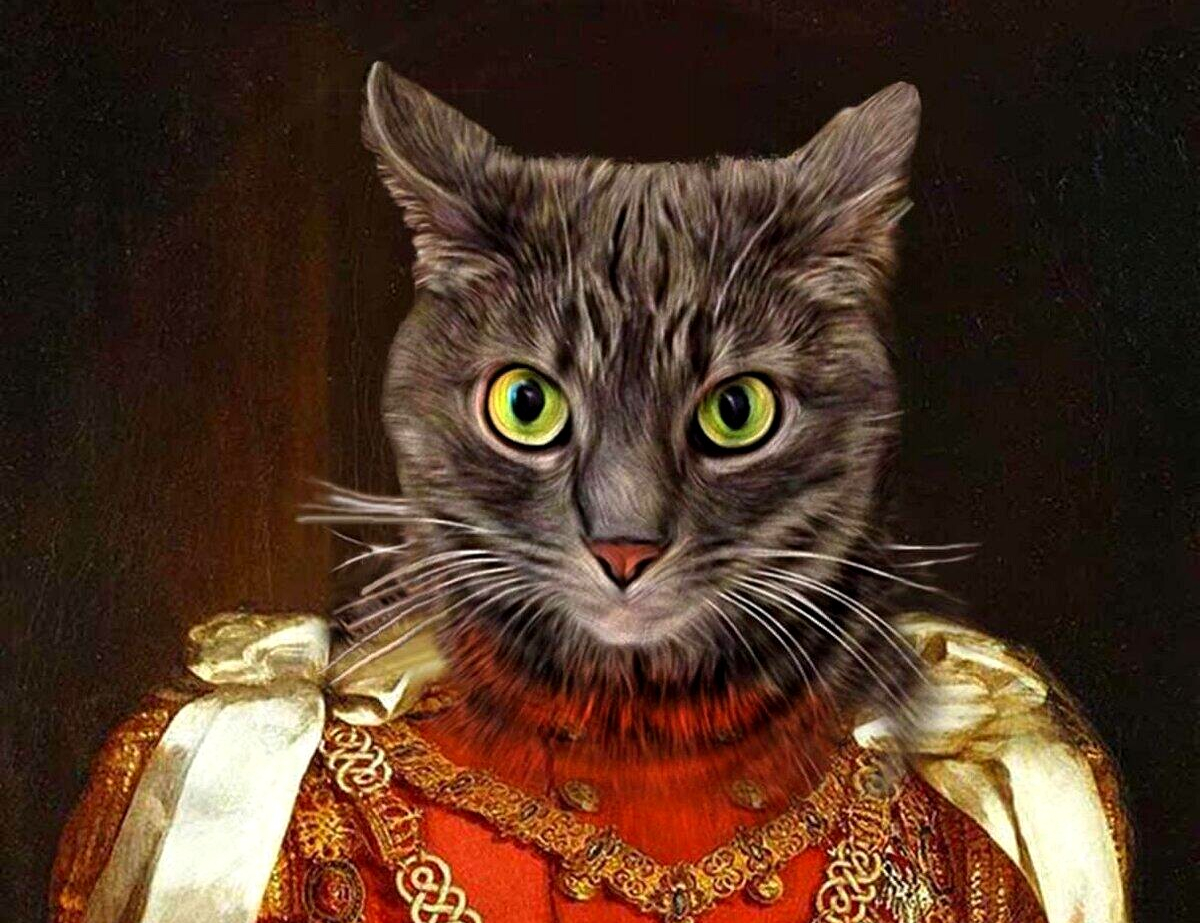
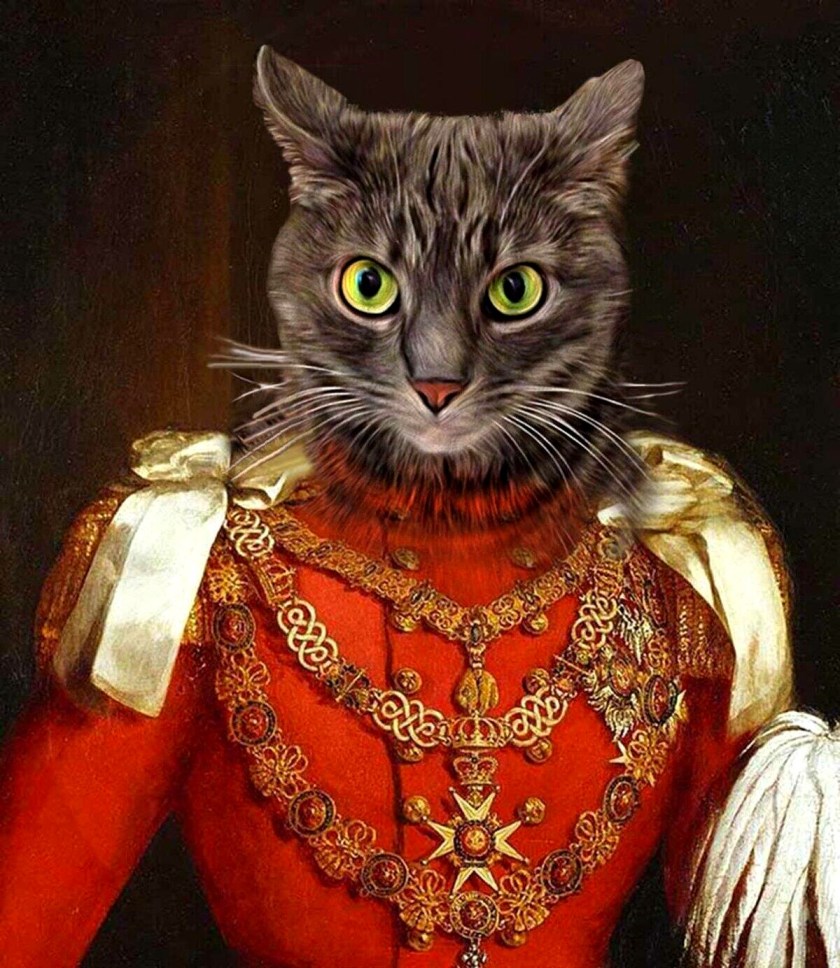
Official portrait of Sir Buddy, KBE. Credit: Royal portraitist Eldar Zakirov.

In addition to the knighthood, which entitles the American cat to refer to himself as Sir Buddy, KBE, the Crown gifted holdings including a cat-size palace on Buckingham grounds, as well as a country estate in Oxfordshire.

The estate’s central manor, Budsworth House, has 32 rooms, 86 couches, a dozen fireplaces and at least 16 antique litter boxes. The grounds are home to sprawling gardens featuring feline-centric statuary and boxes made of stone, as well as guest cottages for human and feline visitors.

lionsimonds
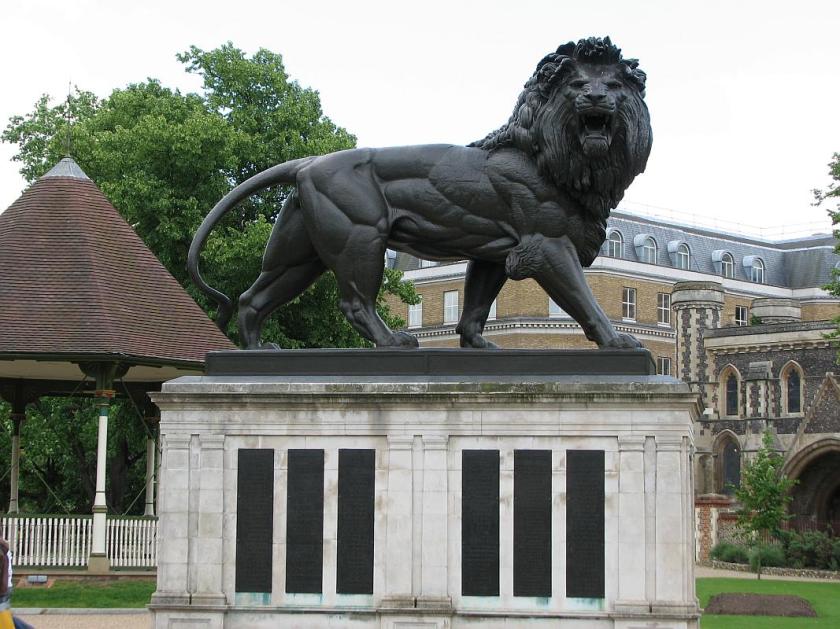
One of 14 statues of Sir Buddy that decorate the grounds and gardens of Budsworth House.

Rumors that Sir Buddy would be created Buddy, Earl of Buddington, did not come to fruition, although royal experts say an earldom is not off the table for the Queen’s favorite feline.

“Her Majesty is quite fond of Bud-Bud and was delighted when a parcel arrived with a Christmas card and a framed photograph of the two of them together,” a palace sources said. “In fact, Prince George and Princess Charlotte refer to Sir Buddy as ‘Uncle Bud-Bud.’ So in a sense, Sir Buddy is already part of the family.”

Continue reading “Knighted By The Queen, Buddy Becomes Sir Buddy”

Someone Has To Rescue This Poor Cat

A real estate agent discovers a terrified, depressed cat left behind in a trashed rental home after the tenant vacated the place.

A real estate agent in Texas was filming video for his TikTok channel, sarcastically providing a voice-over in which he promises a “look at the beauty of rental houses when the tenants move out.”

As the agent, who goes by the name Felix Jaimes on TikTok, showed broken blinds, inexplicably removed wood floor panels, a cracked mirror, dirty bathroom and garbage left everywhere. Then he heard noise coming from another room.

“Honestly I got scared, I thought someone was in there because the house was pretty much empty,” Jaimes explained later in the comments.

But he didn’t find a burglar — just a terrified, depressed-looking cat huddling in the corner of a closet.

“He was obviously scared,” Jaimes wrote. “My heart broke” for him.

“Immediately I thought they left their cat behind. What kind of people do that,” Jaimes asked. “I thought they had just abandoned the place since they destroyed it.”

After calling and sending text messages to the tenant, she called Jaimes back and said she wasn’t finished moving out.

“When I came back, the cat was gone,” Jaimes said.

The video was posted on Dec. 7. It’s not clear from Jaimes’ profile exactly where he is — or where the home is located — in Texas, but perhaps some sharp-eyed Texan will be able to tell from the exterior shots at the beginning of the video.

Regardless, the video is distressing. It seems to me that organizations like county-level SPCAs — which employ animal welfare officers with law enforcement jurisdiction when it comes to animal abuse and welfare investigations — are made to handle cases like this, not just the “saving 50 cats from a hoarding situation” stories we hear all the time.

At the very least, the SPCA’s law enforcement division should locate the owner, interview her, check on the cat and have him brought in for a veterinary exam. If they don’t like what they see, they should confiscate the cat and take extra care to place him with people who know how to treat cats and will give him the love he deserves.

Maybe everything really is on the up-and-up and just looks bad, but someone who really knows cats — and loves them — would never leave their kitty in an empty apartment, cowering in a closet and believing he’s been abandoned. That’s why it should be investigated. Better safe than sorry.

Jennifer Garner Is A Good Cat Mom

A video of Garner bathing her cat shows she really loves the little guy.

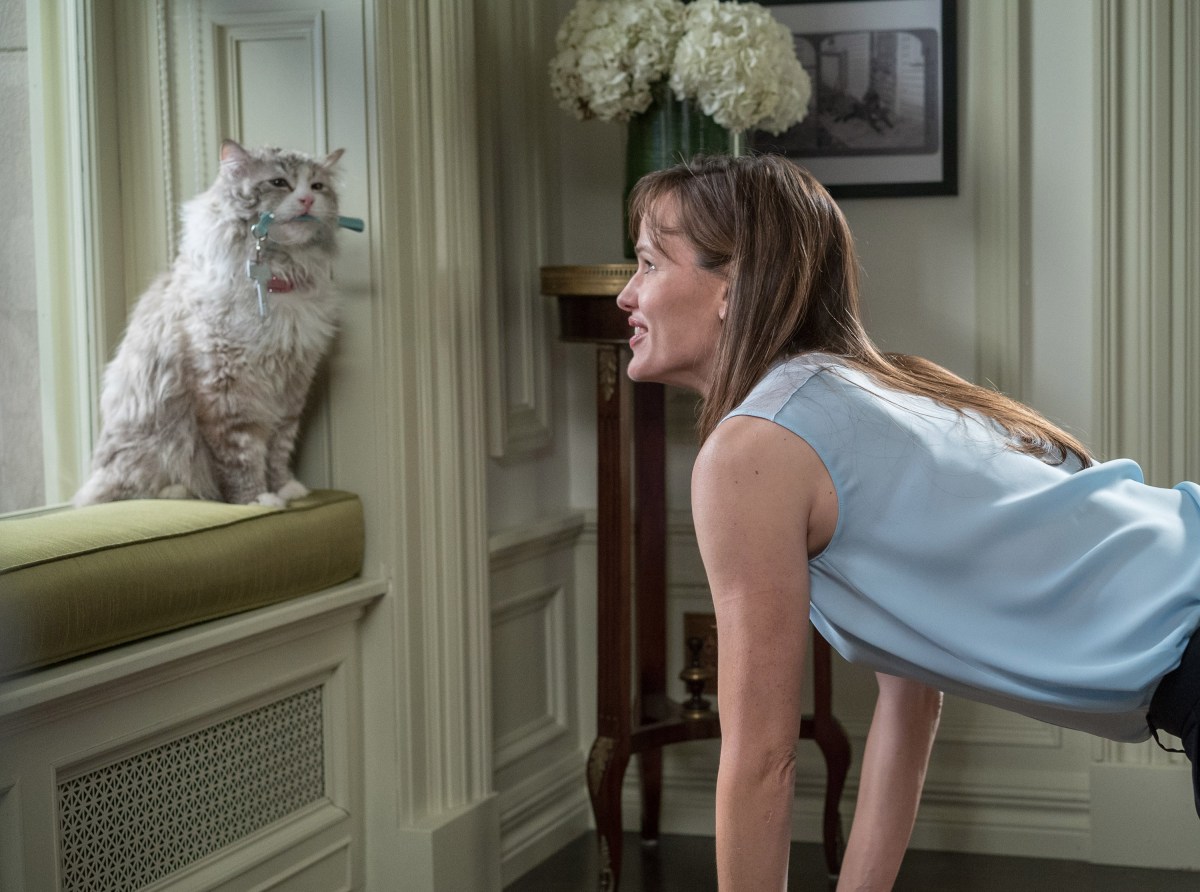
We’re not big on celebrity stuff here on Pain In The Bud, but we’ll make an exception for Jennifer Garner, her cat Moose and The Case of the Relentless Klingon.

The entirely ghastly ordeal unfolds on video (below) as the Alias star takes, uh, matter into her own hands when Moose’s business gets stuck in his fur.

“Something’s gone awry,” Garner says in the beginning of the clip before whispering into the camera. “Moose pooped his pants … He’s befouled!”

Garner proceeds to lift Moose into the kitchen sink, alternately praising him and saying she feels bad giving him a bath because he’s the nicest cat she’s ever had. At first Moose endures it like a champ, seemingly resigned to getting scrubbed and having the offending piece of poop removed from his long coat.

“There’s something caught,” Garner says as she struggles to free the Klingon from a tangle of fur. “I know, Moose. I’m so sorry!”

But it’s all too much for Moose, who doesn’t want to wait for Garner to wash the soap out of his fur and grows increasingly impatient. After Garner tells him to hang in just a little longer and second guesses herself (“What would my mom do?”), Moose has finally had enough and delivers a paw smack to Garner’s cheek, then lets his claws do the talking.

“I don’t blame him,” she says later as she bleeds from claw wounds to her neck.

It’s clear Garner loves the little guy. The actress, a known cat lover, has been photographed walking with Moose in a stroller, and starred in 2016’s Nine Lives, a movie about a cat who was unfortunately voiced by Kevin Spacey less than a year before he became persona non grata in the wake of the Harvey Weinstein scandal and the #MeToo movement.

Pa. Politician Resigns After Running Over Stray Cats With His Truck

“We don’t need his idea of animal control,” says one neighbor, who has been caring for the local cat colony for years.

Neighbors who live on a quiet street in rural Pennsylvania were horrified when a man in a white pickup truck intentionally tried to run over stray cats last week, hitting at least one.

Now, thanks to one neighbor who captured part of the attack on video, they’ve identified the man at the wheel, and he’s a local politician.

Frank Pagani Jr. resigned from his seat on the municipal council of Galilee, a rural Pennsylvania town with a population of 379. Video shows Pagani Jr. speeding up and swerving to hit one of two cats who were in the road at the time. He was going so fast he blew through the stop sign at the end of the street.

The brazen politician then made a left turn and casually pulled into his own driveway on a side street.

William Bittner, who captured part of the Dec. 1 hit-and-run on video, said Pagani called him afterward, admitted what he’d done, and said he would resign his council seat.

“He thinks that’s the end of it,” said Bittner, who takes care of the cats along with other neighbors on the street. “You just can’t let an act like that go on without someone being charged.”

The Beaver County Humane Society said its humane officers were investigating the incident, but Pagani Jr. hadn’t been charged as of Dec. 6. Neighbors told the Beaver County Times that police officers were going door to door on Dec. 3 to speak to witnesses. Pagani has not returned calls from at least two local media outlets.

Pagani works with his father in their family business, Pagani and Son Trucking LLC, which contracts with the United States Postal Service to shuttle mail in bulk to and from a processing facility to individual post offices in the area. The company has had three USDOT violations in 2020 and 2021, records show.

As for the cats, their fate remains unknown. The video appears to show Pagani’s truck hitting or running over the tail of one cat, who immediately bolted along with the other cat who was in the street at the time. Those two cats took off with a larger group that was on the nearby sidewalk. The injured cat hasn’t been seen since.

“He could have hit the undercarriage of the front, he could have had his tail run over, he could have been bruised,” Bittner told KDKA, the local CBS affiliate. “We’ve been searching and searching and we can’t find him.”

”And when I feed him in the morning and night, he’s not showing up. So we don’t know whether [he] ran off to die or…” Bittner said, trailing off.

In a follow-up post on Facebook, Bittner explained that the strays are part of a managed TNR colony, with neighbors pitching in to help feed the cats and adopt out kittens. So far, 28 cats have been trapped and fixed.

People in the neighborhood believe Pagani was taking matters into his own hands, which follows a disturbing trend of vigilantism toward cats by people who either hate them or think they’re protecting local wildlife by killing cats.

“We don’t need his idea of animal control,” Bittner wrote.

With A Three-Fold Increase in Cat Thefts, UK Chooses Microchip Mandate

With breed cats commanding prices in the thousands, thieves see pet theft as a quick score. Lack of prosecution has made it an almost zero-risk crime in the UK.

Mandates in the wake of COVID-19 haven’t been especially popular with a weary public, but surveys show one proposed directive has almost universal support in the UK: Requiring all cat owners get their pets microchipped.

Cat thefts in the UK have tripled in the last five years, with the pandemic contributing to the increase since early 2020, police say. Authorities say they hope compulsory microchipping — and consolidating the many chip ID databases into one — will help discourage people from stealing while making it easier to reunite felines with their families.

Thieves mostly target pedigreed kitties over moggies, with Bengals as the most commonly-stolen cats, followed by British Shorthairs and Persians, according to police statistics. Thieves try for breed cats because of resale value, police say.

Dog thefts have skyrocketed as well, with thieves targeting Chihuahuas, Jack Russell Terriers and German Shepards, among other popular breeds. The price of breed dogs has ballooned by as much as 89 percent since the beginning of the pandemic, when demand for new pets and a slowdown in breeding created a boom market.

For context, an estimated 3.2 million British families welcomed new pets, mostly cats and dogs, into their homes since the first lockdowns in late winter and spring of 2020, the BBC reported. Like their counterparts here in the States, UK shelters experienced unprecedented adoption rates as people battled loneliness and depression during the initial COVID waves and last year’s long winter when the virus came back with a vengeance.

“The number one reason behind pet theft is because the prices for pets have gone up drastically,” Becky Thwaites, spokeswoman for UK pet charity Blue Cross, told SWLondoner. “This happened exponentially over lockdown, as responsible breeders stopped breeding due to social distancing guidance, but more people were wanting pets.”

Despite the spike in animal thefts, only about one percent of all such crimes have led to an arrest, according to a public information request by a UK animal welfare group. 

Police have been reluctant to pour resources into those cases, partly because the law lacks serious consequences for people who steal animals. While the maximum sentence for stealing a pet is seven years in jail, under current UK law sentences are pegged to the value of the stolen item. (Unlike the US, the UK does not make a distinction between prison and jail.)

But for people who love their cats, it’s not about the monetary value — it’s about sentiment, love and the distress to human and animal when they’re separated.

Abductions instead of thefts

To change that, a new pet theft task force — set up earlier this year to study the growing problem — recommended a change in the law. Instead of treating pet thefts as property thefts, under the proposal they would be treated as abductions, with all the increased charges and consequences that come with the classification.

Treating animal thefts as abductions “acknowledges that animals are far more than just property and will give police an additional tool to bring these sickening individuals to justice,” UK Home Secretary Priti Patel told the BBC.

Advocates say treating pet thefts as abductions makes sense not just as a legal adjustment, but also as a reflection of the way cats and dogs are stolen. While some thieves stalk dog parks and lure pets away with treats, others have taken to more brazen and violent means like taking animals by force and jumping people while they’re walking their dogs.

The change would require owners to have their kittens chipped by 20 weeks and adult cats chipped upon adoption from a shelter or rescue.  Failure to microchip a pet would result in a warning and a three-week grace period. After that, cat owners would face a steep fine of £500, equal to $660 in USD.

Consolidating chip databases

There are about 10.8 million pet cats in the UK, although widespread chipping alone won’t solve the problem of pet thefts and lost pets flooding shelters. There are currently 16 different microchip databases in the UK. They don’t always share information and scans don’t cover each of the databases, so even if a cat is recovered, brought to a shelter and scanned, there’s no guarantee the kitty will be returned home.

The existence of so many non-cooperating databases operated by private companies “can pose a huge barrier to successful reunification of pets” said the British Veterinary Association’s Malcolm Morley.

UK authorities and the animal welfare groups pushing for the change are cognizant of the problem and want to streamline the 16 existing database into one central repository of cat microchip registration. That will take time and will have to include compromise on the part of the various private companies running the existing fractured databases.

“Every day, we see how important microchipping is for cats and for the people who love them,” said Pet Protection’s Jacqui Cuff, “whether it’s reuniting a lost cat with their owner, identifying an injured cat, or helping to ensure an owner can be informed in the sad event that their cat has been hit and killed by a car.”