The effort follows Buddy’s unsuccessful attempt to get vaccinated and plans for airtight domes over his sleeping and eating spots.
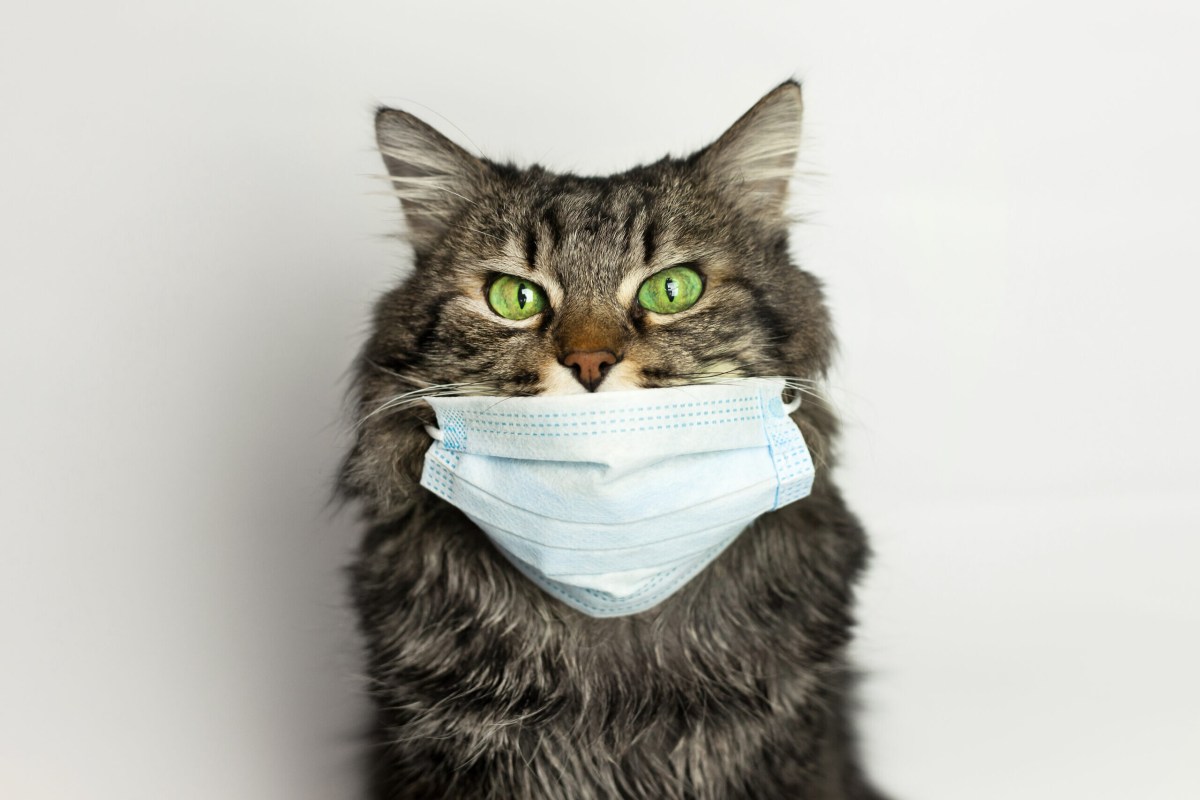
NEW YORK — Citing a recent article about the possibility of humans infecting their pet cats with Coronavirus, Buddy the Cat took the extraordinary step of quarantining his human, sources said.
The tabby cat, who is normally infamous for his deep loathing of barriers, had constructed an elaborate series of intra-apartmental checkpoints and procedures designed to keep him separate from his human, Big Buddy.
Under the new procedures, Big Buddy was banned from his own bedroom and had his snuggling privileges revoked.
“I just can’t take the chance, especially not with this Omicron variant infecting everyone,” Buddy said of his decision. “It’s not just about getting sick. Did you know sometimes COVID destroys your sense of taste and smell? It’s true! What life is worth living if you can’t taste every delicious morsel of turkey, if you can’t savor the aroma of dirty socks?”
As of Friday, the cautious cat had placed ads on Craigslist and other local sites.
“Seeking Temporary Servant,” the ad reads. “Must serve my meals, clean my poops, feed me snacks, allow me to sleep on you, and give me massages while telling me what a good boy I am. Applicants must agree I am a very handsome cat, and you will be expected to write a short essay about why you’re excited to serve me. THIS IS NOT AN ENTRY LEVEL POSITION. Experienced cat servants only!!!”
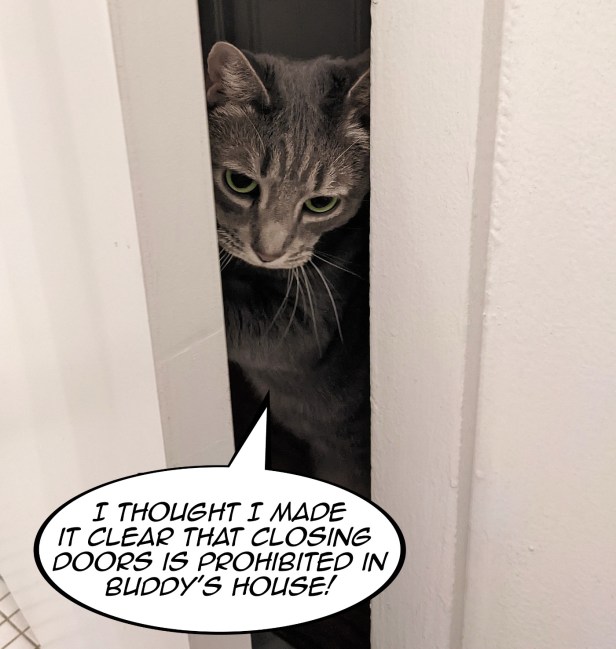
“Back away, human, and return to your designated quarantine zone!”
The new quarantine measures mark the second time Buddy has taken drastic action in response to fears about COVID. The silver tabby constructed an air tight, clinically sealed dome around his food and water bowls in November after three snow leopards at a Nebraska zoo fell ill and died from the virus.
A second, larger dome meant to encapsulate his human’s his bed was under construction when Buddy was convinced to delay his plans for the holidays in order to spend time with friends and family. Now construction on the bubble has resumed.
Pharmacy techs at CVS refused to vaccinate the domestic shorthair after he showed up for an appointment in early January. A spokesman for the pharmacy chain said the vaccines were not FDA approved for cats, and Buddy isn’t as smart as he thinks he is.
Meanwhile, efforts to get Big Buddy to secure a dose for Buddy have been fruitless.
“I’m not asking much,” Buddy said. “All I want him to do is steal a vaccine from a highly secure area, educate himself on how to inject me, calculate an appropriate dose for my species and body weight, and give me the jab. How hard is that?”
Lost In Space is a rare reboot with heart that updates the classic story with gorgeous visuals and a compelling narrative for kids and adults.
I wasn’t quite sure what to expect from Netflix’s reboot of Lost In Space.
Would it hew closely to the brightly-colored 1960s original in all its cheesy glory? Would it aim for a darker tone, as so many television series do these days? Would it be a low-effort nostalgia cash-in like so many ill-advised reboots of the past decade? And would the series, which was slated to keep things PG, have enough going on to appeal to adults as well as kids?
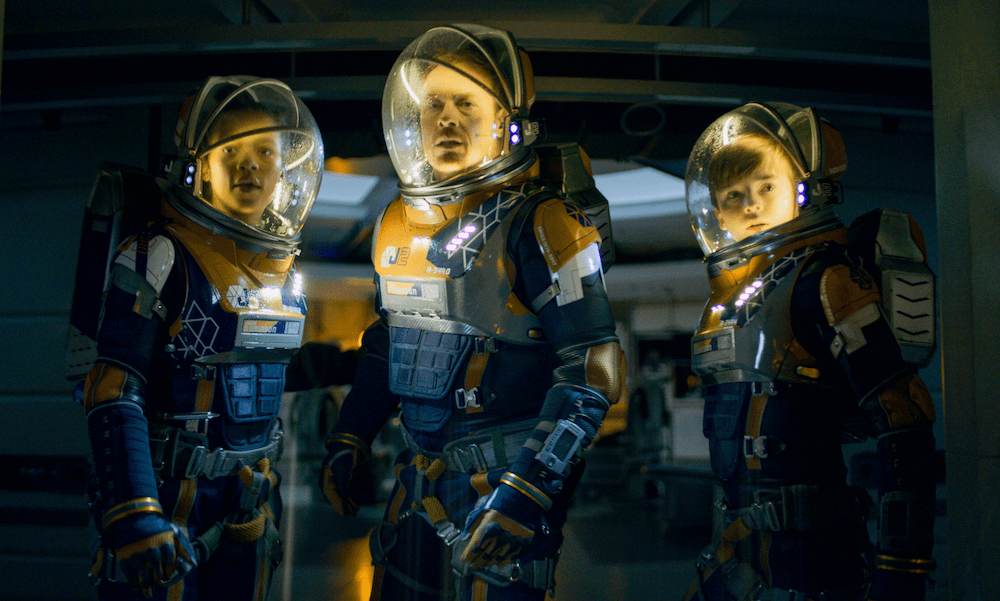
With Netflix delivering the third and final season last month, my verdict is in: Lost In Space is the rare worthy reboot, a visually spectacular retelling of the original that tweaks and modernizes the details in all the right places. There’s a generous amount of adventure, quiet character moments, and an overarching theme about the importance of family. Over the course of the story, the latter group that widens to include not only the Robinsons but also their closest friends who brave the cosmic dangers alongside them.
Speaking of danger, the original show’s most-used catchphrase — the robot’s “Danger, Will Robinson!” — will be familiar to almost anyone, even those of us who were born in the decades after the show went off the air. It’s become part of the pop cultural fabric.
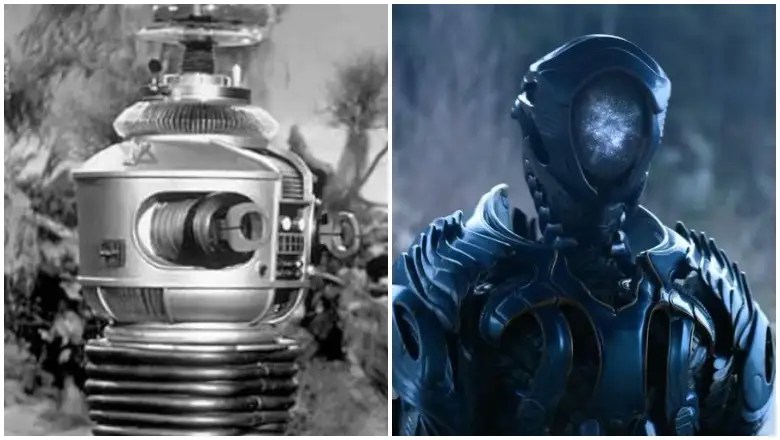
In the original Lost In Space the Robot is a human-engineered tin can, a 1960s retrofuturistic vision of what sentient machines might look like that was dreamed up at a time when servers occupied entire rooms and a computer’s output came in the form of punch cards.
In the reboot, the Robot is an alien intelligence: a towering, six-limbed, digitigrade machine with an inscrutable face and serrated claws. Where the 1960s Robot was risible, the reboot Robot is terrifying in its default form — until a brave Will Robinson, who encounters it after crash landing on an unnamed planet, helps the dying machine repair itself.
He does so as a raging fire engulfs the forest around them, reasoning that he can’t escape, but perhaps the robot can.
The curious Robot, awash with gratitude, immediately rescues Will and, on safe ground, studies the boy for a moment before rearranging itself into an androform shape to mirror Will. From that point on, boy and Robot become inseparable.
The Robot and Will Robinson form a mysterious bond, with the machine becoming fiercely protective of the boy.
It’s Robot who gets the Robinson family out of trouble in the first episode and many times over subsequent installments, earning the trust and eventually the love of the Robinson family, their friend, mechanic Don West (Ignacio Serricchio), and the mercurial Dr. Smith (Parker Posey).
It’s a credit to the writers and visual effects team that the series appeals to kids as well as adults. I watched the first episode with my eight-year-old niece, who’s younger than the target audience. She was absorbed in the story, her attention beginning to wane only during moments of expository dialogue.
The series is probably better suited for kids at 11 or 12 years old, as there are some relatively heady science fiction concepts and subsequent episodes range from PG to PG-13ish.
There’s no sex, the relatively little violence happens off camera, and the narrative regularly stresses the importance of family. Will, his sisters Penny and Judy, and the Robinson parents all rely on each other to meet challenges. There are, however, adult themes like divorce and near-death experiences, and occasional bad language which never gets more profane than Dr. Smith derisively calling Don West out on his “bullshit” in one episode.
Judy (Taylor Russell) and Penny (Mina Sundwall) play important parts in the narrative and bring different skills to the table.
The show takes off right away and delivers excitement and mystery, but it takes a little while to find its rhythm, with early episodes following a “crisis of the hour” format more suited to episodic television. The writers were clearly trying to convey the power of the united Robinson family, and how each member brings different skills and ways of thinking to the table, but the show is at its best when storylines work in service to the overarching narrative.
Mom Maureen is a brilliant engineer who designed the colony starship Resolute and its Jupiter landers. Dad John Robinson is a former Navy SEAL, a man of action who encourages his children to make bold choices. Eldest daughter Judy Robinson is a young medical doctor who, despite her obvious talent, often feels she has something to prove. Her younger sister, Penny, is the least scientifically-minded member of the family. Penny’s better with people, serving as a peacemaker and scribe who documents the Robinson family’s adventures.
Last but not least, young Will Robinson is a dreamer who marvels at alien worlds and distant stars, and takes after his mom in scientific aptitude. He becomes something of a legend among the colonists for his inexplicable bond with Robot, who is extremely protective of the boy.
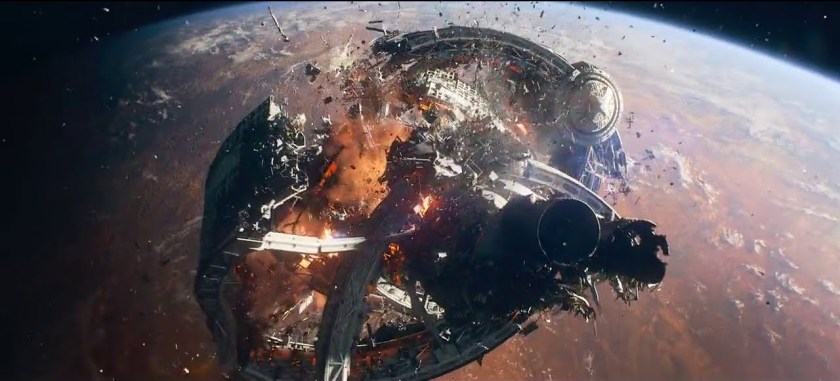
The Resolute is attacked en route to Alpha Centauri, forcing its passengers to flee to their Jupiter “lifeboats” and make emergency landings on a nearby planet.
Of course there wouldn’t be much of a story to tell if the Robinsons and the other colonists simply made it to the idyllic colony at Alpha Centauri without incident. It turns out the colonists fled the Resolute — and crash landed on an inhospitable planet — because Robot’s brethren attacked the ship.
Although the viewers are shown the act of kindness that sparks the bond between Will and Robot, the other colonists aren’t as trusting once they realize Will’s seven-foot-tall protector came from the same place as the murderous machines that attacked the Resolute. Dr. Smith also has her own designs on the mysterious Robot, and the Resolute’s crew has been hiding a secret from its passengers that will come back to haunt them.
Can the colonists survive on a dangerous world without the resources they need? Will they ever reach Alpha Centauri?
Why did the robots attack the colony ship? What do they want from humans? And who made them?
Those are the questions at the heart of the mystery, but the characters can’t hope to answer them if they’re stranded on a hostile alien world.
Netflix spared no expense with Lost In Space and the writers clearly had a complete vision for the story, wrapping it up in just three seasons over the course of 28 roughly hour-long episodes. (The first two seasons had 10 episodes each, while the final season had only eight.)
In a sea of Netflix content, Lost In Space stands out as one of the streaming giant’s best original shows, especially for fans of science fiction and parents looking for a show they can watch with their kids.
Buddy’s Verdict: Four Paws out of Five
Big Buddy’s Verdict: Recommended
Will Robinson, front, with Dr. Smith, Judy, Robot, Penny and Maureen Robinson.
A non-profit helps terminally ill and elderly clients find future homes for their beloved cats so they don’t end up in shelters.
Buddy has a dirty little secret: He’s a biter and scratcher.
The little guy has improved dramatically over the past few years and it’s something we actively work on, but he occasionally has his moments when he gets freaked out and indiscriminately lashes out, or gets frustrated and redirects his flood of emotion on the nearest person, which is almost always me.
I love the little dude anyway, I can anticipate his moments of overstimulation or freak-outs, and I know how to calm him down.
But I also know that, if anything were to happen to me and Buddy ended up in the shelter system, he probably wouldn’t make it out. He’s even more likely to lash out in a scary, unfamiliar situation, and cats who bite and scratch are usually deemed unadoptable and put on the express route to the needle.
That’s why I made my relatives promise that, if I get hit by a bus or something, one of them has to adopt Bud, give him a loving home, and treat him as an extension of me.
Not everyone has that luxury, especially the elderly and the terminally ill. That’s why Angela Rafuse, a 27-year-old from Novia Scotia, founded My Grandfather’s Cat.
Rafuse’s grandfather had recently lost his wife of almost 60 years and had his own health problems that demanded urgent attention, but he resisted going to the hospital because he didn’t want to leave his wife’s cat, Mackenzie, alone.
“That cat was all he had left of my grandmother, and he didn’t want Mackenize to end up in a shelter,” Rafuse told People.
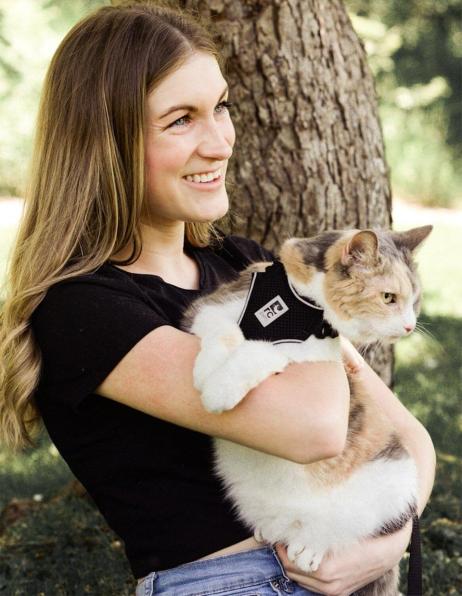
Rafuse with Mackenzie. Credit: My Grandfather’s Cat
When her grandfather passed away in 2019, Rafuse adopted Mackenzie. When she posted a video of the quirky cat to TikTok, the resulting discussion in the comments led to the realization that lots of people have been in similar situations, with relatives whose illnesses were compounded by worry about what will happen to their beloved pets when they’re gone.
“We heard stories from people who had to put their grandparents’ pets into shelters after they passed because there wasn’t a family member to adopt them,” Rafuse told blogTO, a local news site focused on Toronto.
My Grandfather’s Cat works “to keep the animal with their human up until the very last day and provide the comfort of knowing a loving family will adopt their pet when the time comes,” according to the non-profit’s site.
Refuse and volunteers work with people who are terminally ill, seniors who are forced to move into housing situations that don’t allow pets and other situations, and helps them find loving homes for their pets. Knowing their cats and dogs will be taken care of after they’re gone grants peace of mind to people who are already dealing with major life changes or their own mortality.
The group relies entirely on donations and doesn’t charge clients or adopters. My Grandfather’s Cat offers its services to all Canadian regions, and Rafuse said she hopes to expand to the US.
“It is the most rewarding thing in the entire world to be doing this,” she said, “and I know my grandfather would be proud.”
The pope’s comments were made in the larger context of an imminent “demographic winter” caused by an aging population and historically low birth rates.
Popes have a mixed record when it comes to cats.
Back in the 13th century Pope Gregory IX famously declared cats were at the heart of alleged Satanic rituals in Europe, relying on the account of one Konrad von Marburg, an author of massacres, church inquisitor and all-around idiot known for brutally torturing his victims to elicit “confessions” of heresy.
Von Marburg told the pope that Satanists had a ritual involving a black cat who would walk around backwards while the Satan-worshipers kissed its ass. The pope bought the risible story and believed von Marburg’s accounts of growing numbers of heretics, especially in Germany.
The resulting papal letter, Vox in Rama, did not declare cats were evil and didn’t ask Catholics to kill them, despite widespread claims to the contrary on the internet, but it did contribute to distrust of the animals a century ahead of the Black Plague, when people thought cats were carrying the disease.
The pope who loves cats
Then there’s the Pope Emeritus, Benedict XVI.
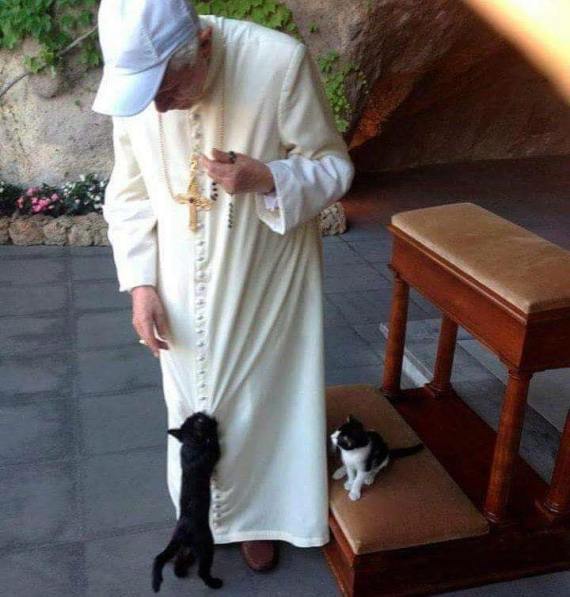
Pope Emeritus Benedict XVI with two kittens in 2017. Credit: The Joseph Ratzinger/Pope Benedict XVI Foundation.
Cat lovers around the world rejoiced when it was revealed Pope Benedict was a cat lover and had two pet felines of his own. Cardinal Roger Mahoney, the former archbishop of Los Angeles, said Benedict was wild about kitties.
“The street talk that the pope loves cats is incorrect,” Mahoney said in 2005. “The pope adores cats.”
Catholics petitioned Benedict to help with animal welfare causes and to lend his support to efforts to help the many stray cats of Rome.
Francis the Saint and Francis the Pope
That brings us to our current pope, Francis. The elevation of Francis was met with approval from animal lovers: His chosen papal name honors St. Francis of Assisi, a Radagast the Brown type figure who lived a life of luxury as a wealthy playboy and party-goer until he had a religious conversion, sold all his possessions and became a monk.
St. Francis believed true faith in God meant having a deep respect for animals. While it’s not clear what’s true and what’s apocryphal, there are stories of Francis preaching to birds, nursing various animals back to health and even convincing a wolf to stop attacking a village in Italy in exchange for the villagers feeding it. St. Francis was by all accounts gentle with animals and appreciative of nature.
St. Francis is revered in the Catholic church and beloved by groups like the Humane Society. He is the patron saint of animals, and on his feast day Catholics bring their pets to be blessed at church.
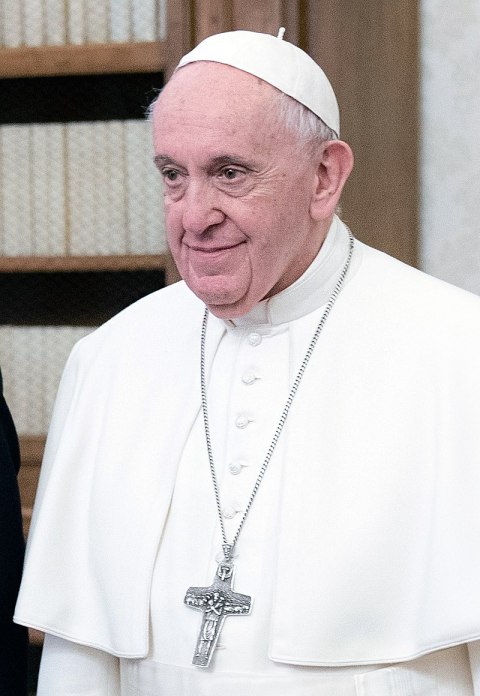
Pope Francis during a visit with former US Vice President Mike Pence. Credit: Wikimedia Commons
Pope Francis continued his namesake’s work with Laudato Si, a papal encyclical which endeared him to animal lovers all over the world.
The encyclical was notable for the church’s strongest language yet in advocating for protecting and respecting animals. PETA made Pope Francis its person of the year in 2015, and the pope was feted by many other animal welfare groups across the world.
In Laudato Si, Francis explicitly rejected the idea that animals are resources for humans to exploit, asserted the Catholic view that animal life has intrinsic value, and called on human beings to be stewards of animals and the Earth. Abusing and exploiting animals is “beneath human dignity,” he wrote, and the associated desensitization and heartlessness of practices like factory farming are a stain on the human race.
Animals, the pope wrote, not only have souls but will “take their place” in heaven, “resplendently transfigured” in the presence of God. He also pointed out the disastrous effects we’re having on wildlife by destroying habitats, carving up the remaining land, over-fishing the oceans, poaching and hunting.
What Francis said about pets
So why are people suddenly upset with the pope?
He made some off-the-cuff remarks about people choosing pets over children, said it was “selfish” to choose the former, and brought up the plight of the world’s orphans. He pointed out that people collectively spend hundreds of billions on pet food and products while humans in the third world lack basic things like clean water, food and medicine. He also said “denying” motherhood and fatherhood leaves us spiritually poorer, as the experience brings us closer to God.
As usual any time a pope speaks, his statements are taken out of context and rehashed in the media. That’s expected, especially in the age of clickbait, the 140-character tweet and the 15-second news segment. Pope Francis gets himself into trouble by sometimes speaking too candidly when he should know his message will be garbled by gatekeepers and information filters, leading to strong reactions to things he didn’t actually say.
The pope wasn’t condemning keeping pets across the board, and he wasn’t saying all pet owners are selfish. His comments were made in the context of a larger discussion on universally declining birth rates in developed countries, specifically Europe’s “demographic winter,” also called a “demographic time bomb.”
In simple terms, Europe’s population is rapidly aging and birth rates are historically low. Populations are dying off, there are fewer people to care for the elderly, and there aren’t enough babies to replace the dead. The average age in Europe is 43, which is 12 years older than the average in the rest of the world.
COVID has compounded the problem, partly due to social distancing and partly due to economic uncertainty as a ripple effect of the virus. Of course it isn’t all that simple, and the demographic winter’s wider effects are complex and well beyond the scope of this blog.
It also helps to remember the Catholic Church has a strong social justice streak. Not the kind that involves writing snarky tweets and first world problems, but real social justice through charity, schools, scholarships, food banks, shelters, soup kitchens, hospitals and innumerable other efforts.
The pope’s background as a native of Argentina, a former janitor and chemist who became the first Latin American pontiff, also colors his outlook. He doesn’t hesitate to call out the hypocrisy of first-world nations, and although we don’t like to hear it, most of the time we need to. After almost two thousand years of popes existing in or near the world’s seats of power, for the first time we have a pope who grew up from the outside looking in.
That’s not to say I agree with everything Pope Francis had to say on the matter, but I think it’s also important to recognize that he didn’t just take shots at people who care for pets out of the blue, and he didn’t condemn people for caring for animals.
Buddy’s back to his usual routine, including loudly demanding snacks.
The streak continues!
“I make the rules, human!”
Buddy had to wait an extra day for my return from the Outer Banks due to the snowstorm, which made a mess of the roads, led to canceled flights and would have been miserable — and impossible — to drive through. My SiL’s brother tried to drive through it and gave up after 13 hours, getting as far as just north of Washington, D.C., before booking a hotel room and driving the rest of the way to New York the next day.
As expected, little dude tried to play it cool at first. He couldn’t stop himself from getting up and going to the door, but he played it off like “Hey, you’re home. That’s cool, I guess.” Then he nonchalantly padded away.
The indifferent act lasted for about 15 minutes, as usual, before Bud forgot he was supposed to be mad at me. He hopped up to the couch and started nuzzling and scent-rubbing on me, happily purring.
However, it took him longer than usual to act like his normal self, and he’s been particularly clingy since then. At one point I put on my coat and shoes to get a bag I’d left in the car, and Bud started nervously pacing, loudly vocalizing and sat down in front of the door as if to say “No! Big Buddy stays here!”
I think he does okay if someone’s here with him, but having a cat sitter stop by once a day probably doesn’t cut it anymore. Partly that’s Bud’s fault for attacking her last time, because she won’t play with him anymore, but I’ll have to think about alternatives next time I’m away for more than two days or so.
I took some photos of OBX and will post them this week after I’ve had time to sort them. We were very fortunate, with 65-degree days for the entire stretch, and even in winter there’s lots of interesting history to see on the islands where two Americans first achieved powered flight, colonies disappeared and notorious pirates stashed their treasure.







 Pain In The Bud