The Vet Thought This Stray Had No Chance, Now He’s Stealing Hearts At The Shelter

Gulliver was hit by a car and left for dead, but he never stopped clinging to life.

Gulliver was in a seriously bad way when a Good Samaritan found him on Oct. 27, on the outskirts of a “well cared-for cat colony” in New Jersey.

The little tuxedo cat had been hit by a car and left to die with a fractured pelvis, femur and tail. A veterinarian who examined him didn’t give him much of a chance to live, but his rescuer was familiar with Tabby’s Place in Ringoes, NJ, and knew if anyone would go to extraordinary lengths to save the little guy’s life, the staff there would.

Tabby’s Place took Gulliver in and their emergency veterinarians got to work on repairing his shattered body. It was touch and go, but Gulliver had a glorious will to live that saw him through the surgery and emerge on the other side with a ravenous appetite.

When the staff at Tabby’s Place saw him tuck into a bowl and begin “eating like a champ,” they knew Gulliver was probably going to make it.

Famished from his ordeal and in desperate need of nutrients to help his body heal,  he displayed “the best appetite I have ever seen in twenty years of feline medicine” said “Dr. Fantastic,” the collective name Tabby’s Place staff use for the skilled veterinary surgeons who put the most catastrophically injured felines back together again.

And then there was a second surprise — despite all he’d been through, despite the unimaginable pain of getting flattened by 3,000 pounds of aluminum, steel, glass and rubber and left to suffer in a broken heap, and despite pain signals hammering their way through the fog of painkillers, Gulliver turned out to be an “extremely affectionate” kitty.

“He is so affectionate and snuggly,” said Bree, a sanctuary associate at Tabby’s Place who has been caring for the little survivor. “He leans his whole body into you and makes muffins. He has personally reminded me that there is good in this world, and it is worth fighting for.”

Three weeks after his surgery, Gulliver summoned the strength to stand on his own for the first time since he was hit. He took his first few uncertain steps, Bree said, to get close enough to her so she could pet him while she cleaned his crate. His tail was so badly damaged that it had to be amputated and he’s going to require care — including manually expressing his bladder — for the near future, but the staff at Tabby’s Place will find a forever home for him.

Despite the trauma he endured, Gulliver “should enjoy a long, healthy life like any other cat,” said Angela Hartley, the sanctuary’s development directory. “It would take a special adopter to learn how to express his bladder, but as we learn continually, there are many, many special adopters out there.”

It’s not clear yet whether Gulliver will regain the ability to use the litter box on his own, but Bree said she’s “hopeful that this will not be permanent.”

Because a sickly cat from Gulliver’s colony had found his way to Tabby’s Place earlier, the colony managers knew of the shelter and Gulliver found himself “in the care of a person who knew his life was worth saving,” Bree said.

“She was so right. Gulliver’s life was saved because there are good people in the world. I feel like his loving and gentle personality is a reflection of that.”

All images courtesy of Tabby’s Place. To fill out an online application or browse the adoptable cats of Tabby’s Place, click here.
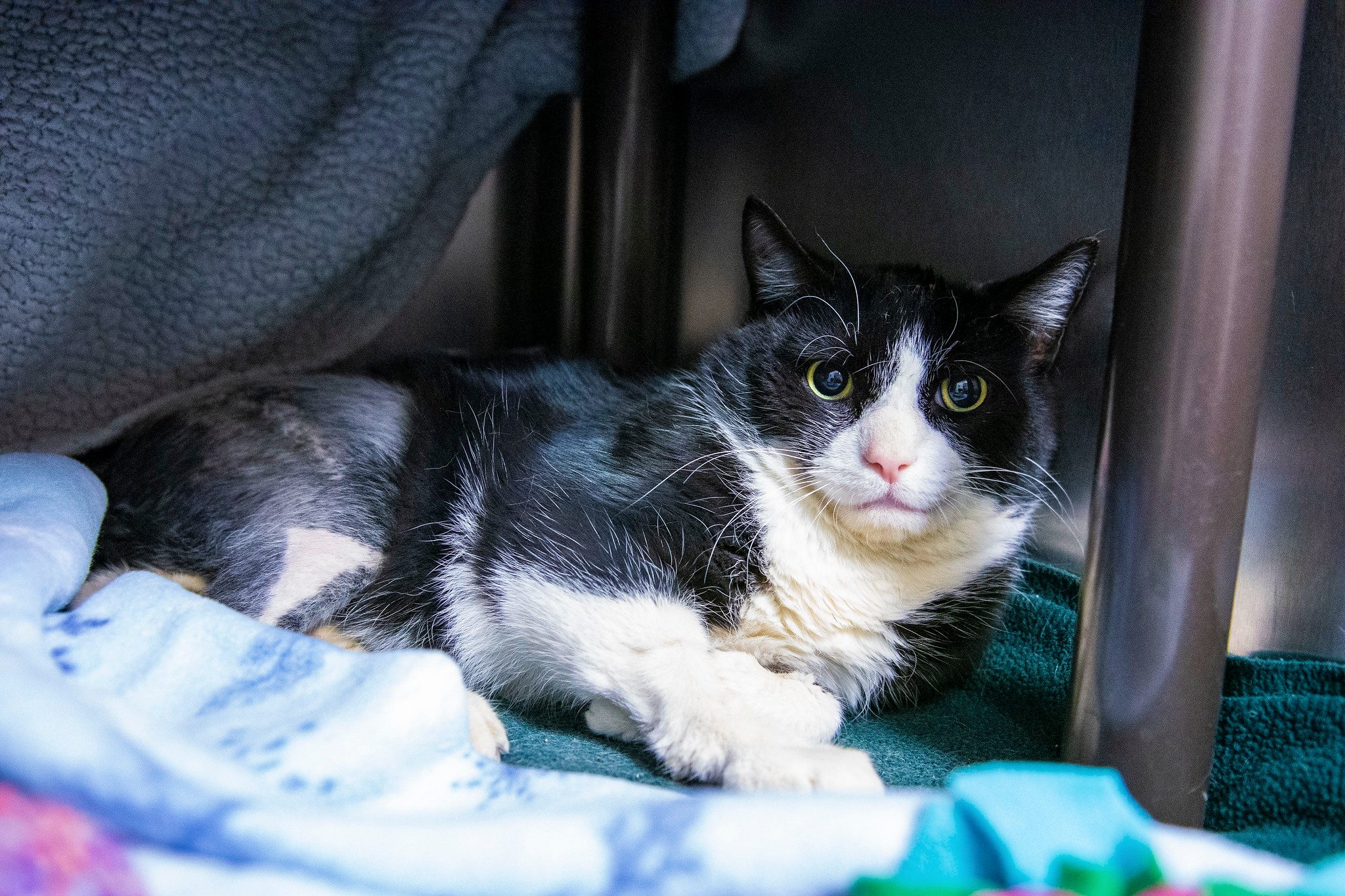
Gulliver
Now that he’s a month removed from his brush with death, Gulliver’s much healthier and even has a regal look about him. Credit: Tabby’s Place

Is Your Cat In Pain? The Feline Grimace Scale Can Tell You

For the first time, veterinarians and regular cat parents have a tool that can tell them if their cats are hurting.

Although there’s been lots of talk claiming cats don’t have facial expressions humans can parse — or even the muscles to noticeably change expressions — that’s not actually true.

It’s more accurate to say feline facial expressions are far more subtle than their human or even canine equivalents, and it takes an expert — a veterinarian or behaviorist with specialized training — to accurately read them.

This is a brand new frontier for veterinary science, and it’s all thanks to the feline grimace scale, a system developed by researchers at the University of Montreal in 2019. Using video clips of cats in various moods and stages of pain or pain-free expression, the researchers built a system that could reliably determine how a cat is feeling. (You can read more about how they did that here.)

“I call it the Rosetta Stone for interpreting how a cat is feeling,” veterinarian Liz Bales says in a new video at dvm360. “It turns out that very subtle changes in cat’s facial expressions can tell us whether or not they’re in pain. It includes the position of the ears, the opening of the eyes, the expression on the mouth, how the cat is holding its whiskers, and how they’re holding their head.”

Each of the five elements of feline facial expression are scored on a three-point scale, then added up. The result provides an accurate assessment of how a cat feels.

“It’s amazing, and it allows us to interpret feline pain in a way we never could before,” Bales says. “The hard part is, it can be a little bit tricky to learn. It is learnable, but I specialize in this and I’m still struggling to get it right every single time.”

Despite the challenge, she says, it’s well worth learning.

“The applications of this are so far and wide, and I think as the technology grows and it becomes easier and easier to use the grimace scale, the more exciting it’s going to be.”

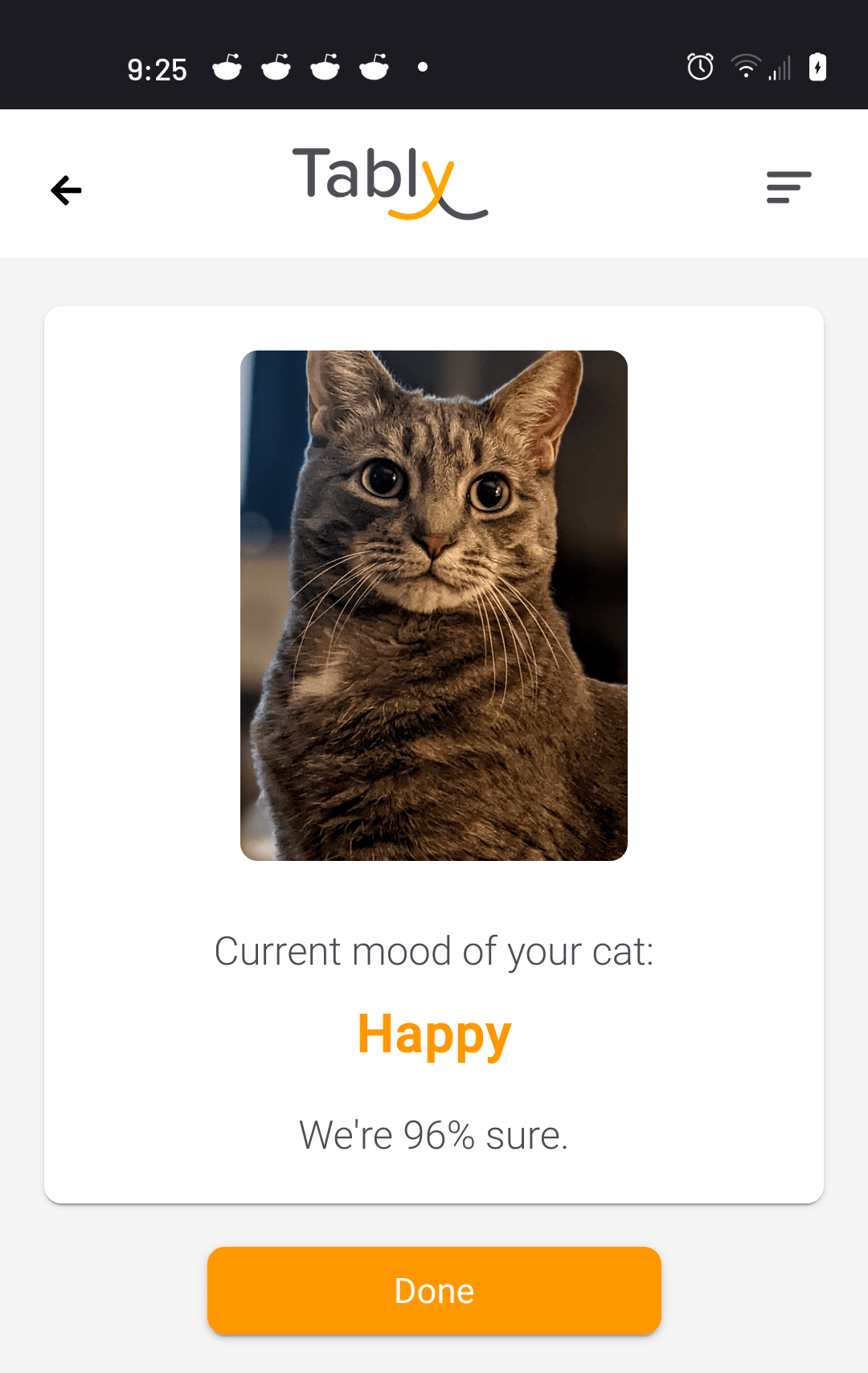
Thanks to an app named Tably, cat servants don’t have to know how to read the most subtle feline facial expressions anymore. By running a photo of your cat through the app’s algorithm, Tably can read your cat’s expression for you.

Tably Bud
Tably gauges cats’ moods in addition to their pain levels. We used the web app to evaluate Buddy last year. Thankfully he was happy!

Bales says she envisions a near future in which pet parents monitor their cats’ health and mood daily, and the scale becomes the standard for end-of-life care. With a “validated, consistent way to measure pain, we can look into more pain drugs for cats, what’s working, what isn’t.”

“A cat in pain looks like a resting cat to most people, but now we have this tool,” Bales says. “And I think as the tool evolves and we give cats a way to really speak for themselves through this Rosetta Stone of the grimace scale, then the more we understand that we can do for them, the more we’re going to do for them.”

We wrote about the feline grimace scale and Tably last year, and noted it had a lot of promise for veterinarians and us cat servants. At the time Tably was in beta and had a web app that allowed anyone to use the technology.

Unfortunately the web app seems to have disappeared, and the app is now available only to iOS users. Since we switched from an iPhone to Android, we can’t access Tably for the time being. (Let’s hope an Android version is forthcoming.) But if you have an Apple device, the app is definitely worth checking out.

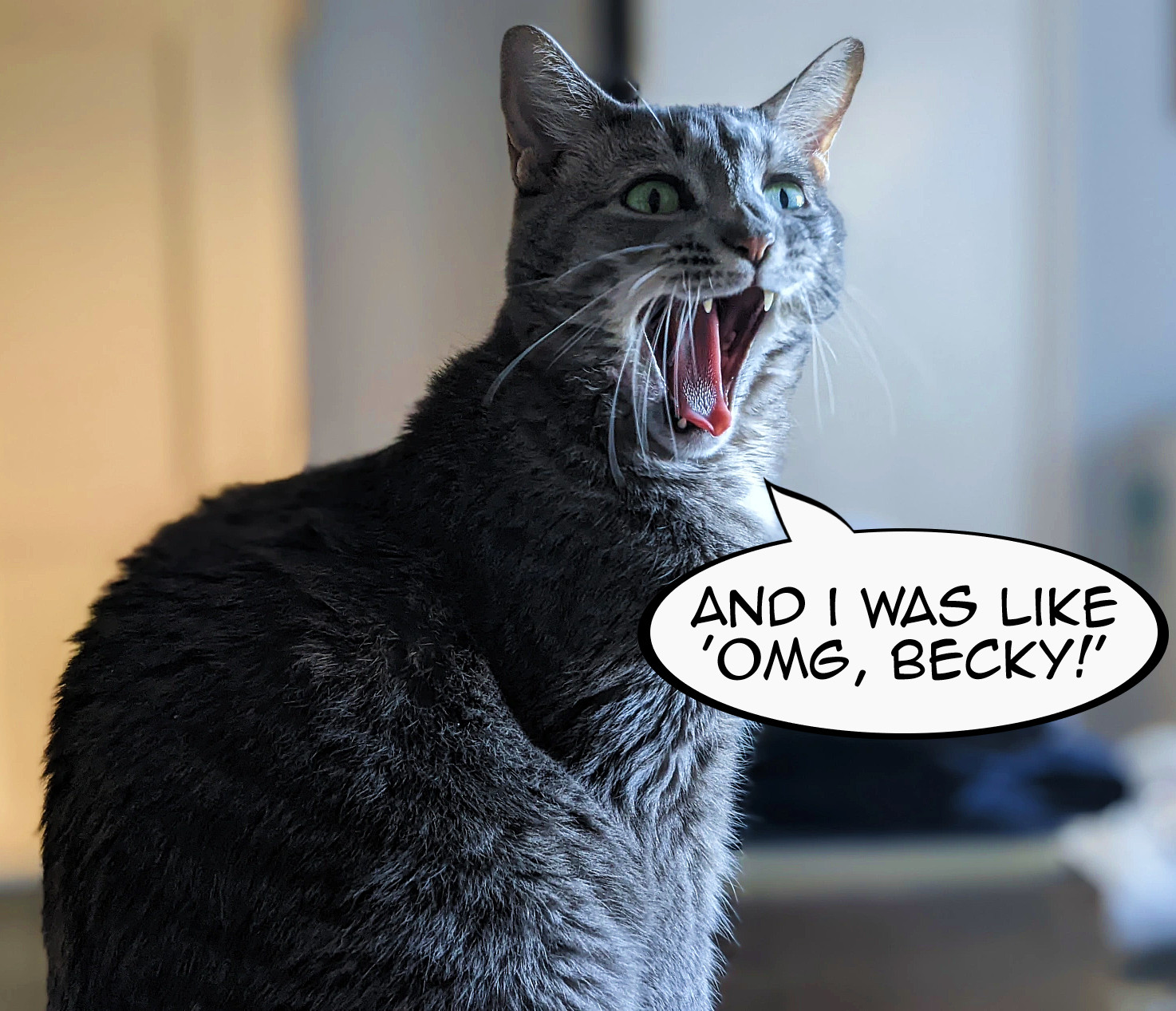
Bud and Becky
“You go, girlfriend!”

SPCA Offers $6k Reward After Shooter Kills NY Woman’s Beloved Cat

Stella’s shooting is the latest in an inexplicable trend of people targeting cats with pellet guns.

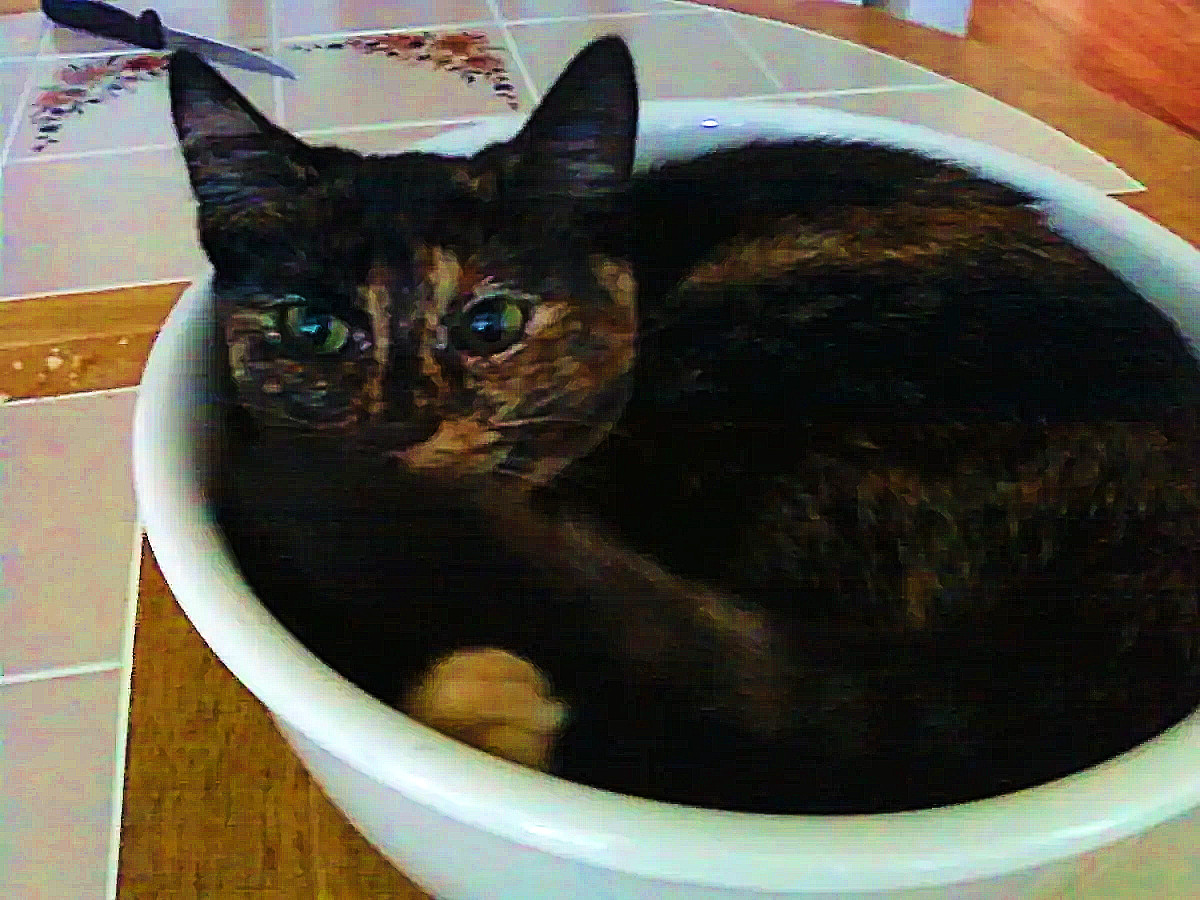
When Margaret Oliva’s husband died eight years ago, her cat Stella helped her through her grieving.

“She was my sanity, you know?” the Long Island woman said.

Oliva’s beloved tortoiseshell went outside on Sept. 1 and didn’t come back that night. Oliva enlisted the help of relatives to find Stella but wasn’t able to locate her until she heard “whimpering cries” on her Ring system’s audio.

Stella had collapsed near a bush on the front lawn. Oliva rushed her badly injured cat to an emergency veterinarian, where the fading feline fought for her life but succumbed hours later. The vet told the shocked Hicksville woman that someone had shot Stella twice, likely with a pellet gun.

“To have her taken like this…No, I can’t accept that,” Oliva told a local TV news station.

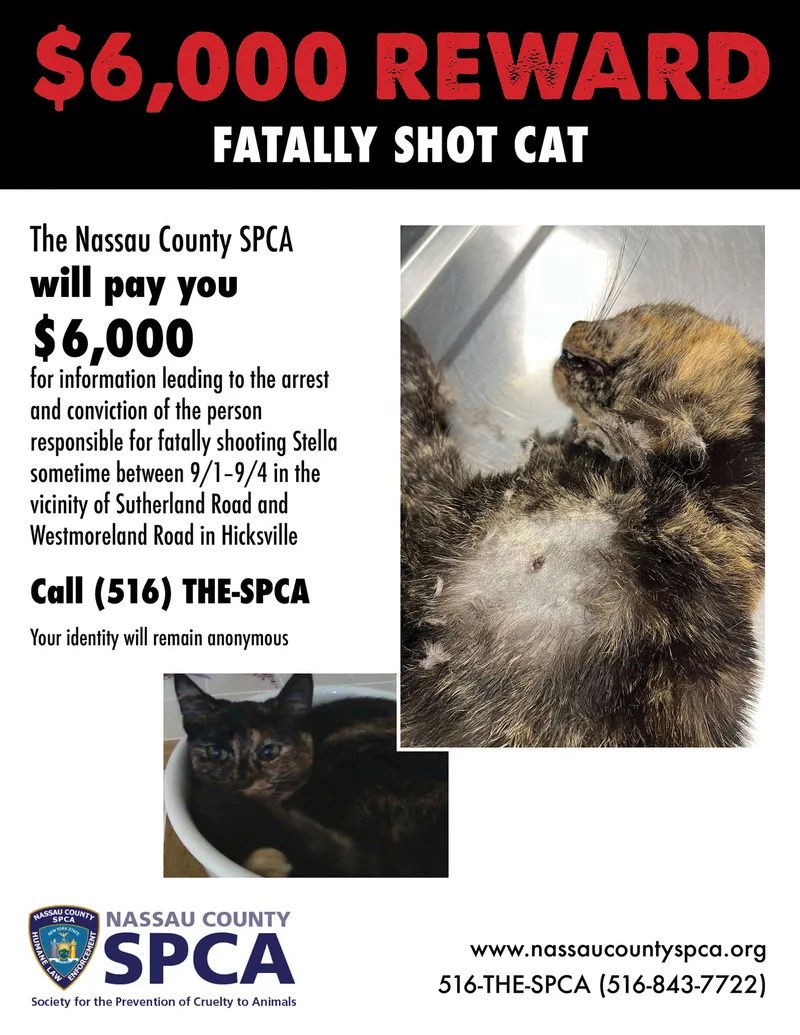
Now the SPCA is offering a $6,000 reward to anyone who provides information leading to the arrest and conviction of Stella’s killer. Matt Roper, a detective with the Nassau County SPCA’s law enforcement division, said he believes Stella was shot by someone in the immediate neighborhood.

spcastella
The SPCA is offering a $6,000 reward for Stella’s killer.

Studies have shown that house cats who are allowed to wander outside during the day rarely go far. In a paper published in Scientific Reports earlier this year, a team of scientists from the Norwegian University of Life Sciences tracked 100 indoor/outdoor cats by equipping them with GPS collars. The data showed cats spend almost 80 percent of their time within 50 meters — or about 164 feet — of their homes, and a handful of statistical outliers who traveled a longer distance didn’t exceed more than a quarter mile.

The SPCA’s Roper said Stella suffered one projectile to her chest and one to a leg. Her killer is likely nearby and almost certainly knows about the anguish caused to Oliva. If caught, the killer could face a felony charge.

“This could be a high powered pellet gun,” Roper said. “This could be something that could be shot a couple of houses length, a couple of yards in length.”

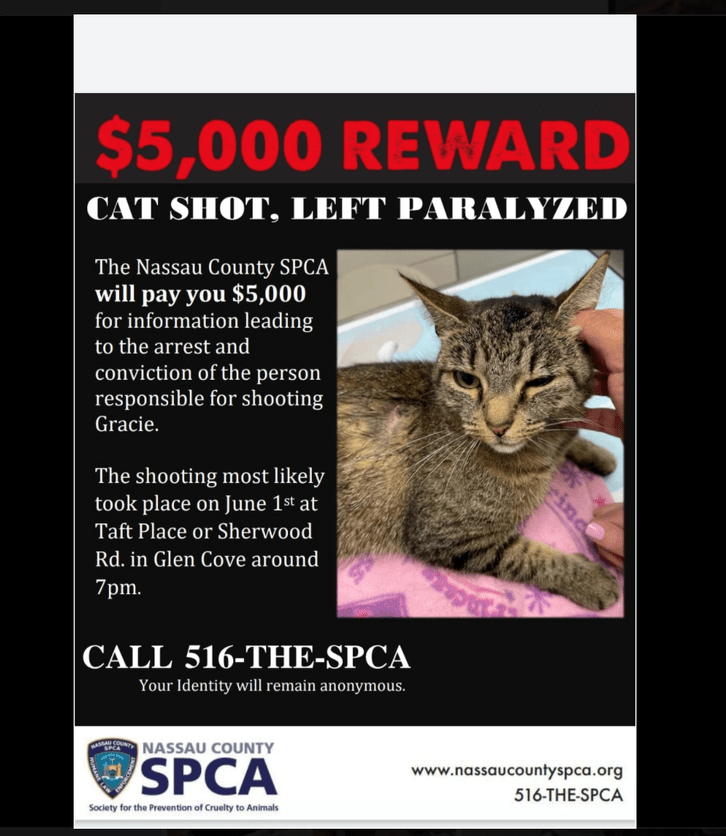
Oliva’s home in Hicksville is about 10 miles from Glen Cove, where a cat named Gracie was shot and left paralyzed last summer when one pellet hit her stomach and another hit her spine. Poor Gracie was in a neighbor’s yard, dragging herself toward her home while her back legs hung limp. A woman found Gracie after hearing her crying out in pain, Newsday reported.

“What happens is a woman takes her kids for a walk,” said detective Lt. John Nagle of the Glen Cove Police Department. “When she returns to the house she hears an animal crying and goes to investigate. She finds this cat, just beyond the neighbor’s chain link fence, and the animal is crying and it can’t walk. Another neighbor, who happens to be a vet, comes over. She gets a cat cage, places it in the yard — and the cat immediately crawls over to it … She takes the cat to her vet, where she works, thinking maybe it’s been hit by a car. That’s when she finds out it’s not damage from a car, but that there’s two bullets.”

There’s a $5,000 reward for Gracie’s shooter.

In October of 2021, a young cat the rescuers named Abraham was shot with a pellet gun in Suffolk County on eastern Long Island. Like Gracie, Abraham was struck in his spine. The SPCA of Suffolk County, which called Abraham’s shooting “a horrific act of animal cruelty,” is offering a $4,000 reward for information leading to the arrest and conviction of his shooter.

graciecatreward
Gracie’s shooter hasn’t been found yet either.

‘Why I Took 50,000 Pictures Of My Cats Pooping’

One software engineer went to incredible lengths to monitor her cat’s bathroom habits.

When Alan Turing, the father of artificial intelligence, posed the heady question “Can machines think?”, he inspired generations of computer scientists, philosophers, physicists and regular people to imagine the emergence of silicon-based consciousness, with humanity taking the godlike step of creating a new form of life.

And when science fiction writer Philip K. Dick wrote his seminal 1968 novel, “Do Androids Dream of Electric Sheep?” — the story that would eventually become Ridley Scott’s 1982 classic Bladerunner — he wondered what makes us human, and whether an artificial being could possess a soul.

It’s safe to say neither of those techno-prophets were thinking of fledgling AI algorithms, representing the first small steps toward true machine-substrate intelligence, announcing themselves and their usefulness to the world by helping us watch felis catus take a shit.

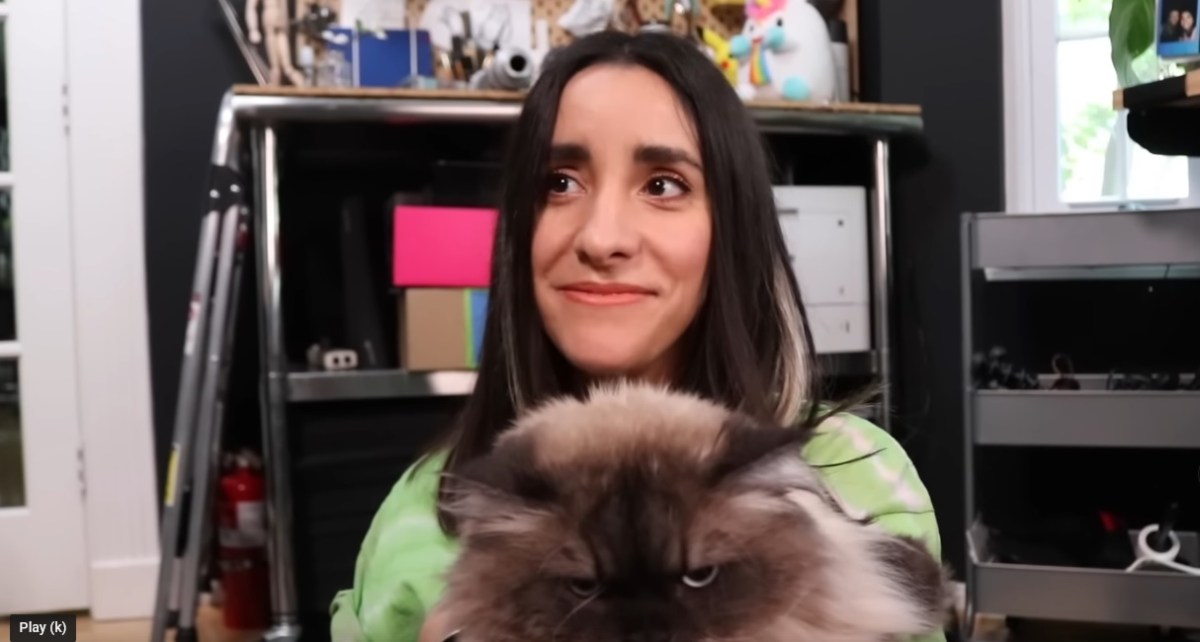
And yet that’s what the inventors of the LuluPet litter box designed an AI to do, and it’s what software engineer and Youtuber Estefannie did for her cat, Teddy, who’s got a bit of a plastic-eating problem.

“The veterinarian couldn’t tell me how much plastic he ate, and it would cost me over $3,000 [to find out]. So I didn’t do it,” Estefannie explains in a new video. “Instead, the vet gave me the option of watching him go to the bathroom. If he poops and there’s no plastic in his intestines, then he won’t die, and he might actually love me back.”

Estefannie casually described how she wrote a python script, set up a camera and motion sensor, and rigged it to take photos of Teddy doing his business. But, she explained, there was “a tiny problem”: Luna the Cat, aka her cat’s cat.

“This is Luna, this is technically not my cat, this is Teddy-Bear’s cat, and she uses the same litter box as Teddy,” she explained.

For that, she’d need more than a script. She’d have to build a machine learning algorithm to gorge itself on data, cataloguing tens of thousands of photos of Teddy and Luna along with sensory information from the litter box itself, to learn to reliably determine which cat was using the loo.

So Estefannie decided it was a good opportunity to “completely remodel” Teddy’s “bathroom,” including a compartment that would hide the bespoke system monitoring his bowel movements. The system includes sensors, cameras and lights to capture still images of Teddy dropping deuces in infrared, and a live thermal imaging feed of the little guy doing his business. (Teddy’s luxurious new bedroom turned out to be too dark for conventional cameras, thus the pivot to infrared.)

From there, Estefannie manually calculated how long Teddy’s number ones and twos took, and cross-referenced that information with photo timestamps to help determine the exact nature of Teddy’s calls of nature.

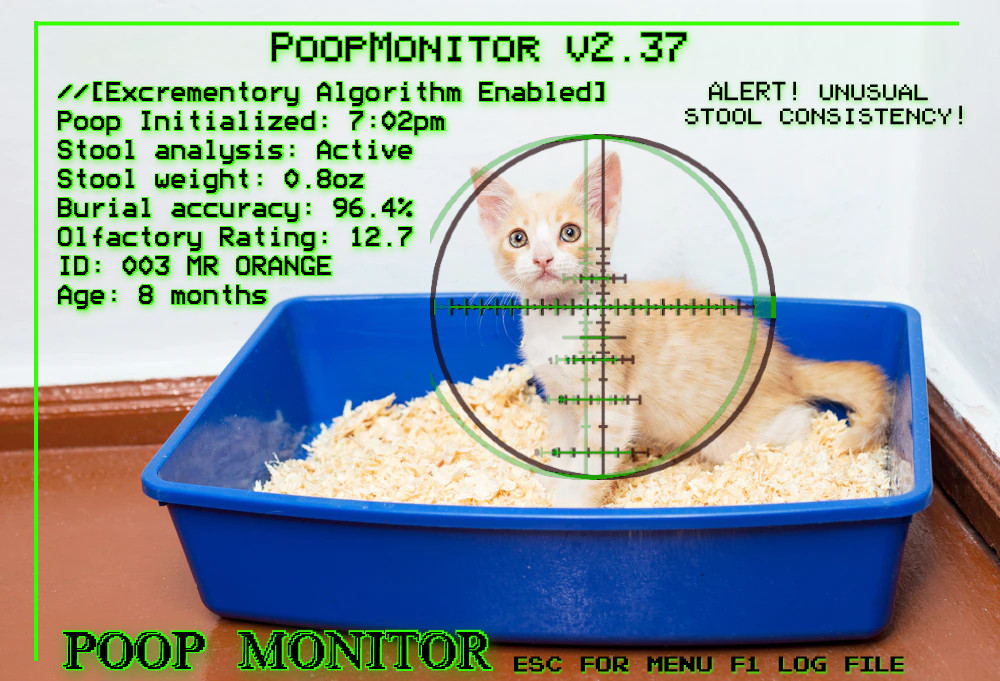
catpoopinggui
The future! (Note: This is our cheesy photoshopped interpretation, not Estefannie’s actual stool monitoring interface.)

When all the data is collected, Estefannie’s custom scripts sends it to an external server, which analyzes the images from each of Teddy’s bathroom visits and renders a verdict on what he’s doing in there.

Finally, Estefannie gets an alert on her smartphone when one of the cats steps into the litterbox, allowing her the option of watching a live feed and, uh, logging all the particulars. The software determines if a number two was successful, and keeps detailed records so Teddy’s human servant can see aberrations over time.

“So now I definitely know when Teddy-Bear is not pooping and needs to go to the hospital,” she said.

I am not making this up.

For her part, Estefannie says she’s not worried about a technological singularity scenario in which angry or insulted machines, newly conscious, exact revenge on humans who made them do unsavory tasks.

“Did I make an AI whose only purpose in life is to watch my cats poop?” Estefannie asked, barely keeping a straight face. “Mmmhmm. Will it come after me when the machines rise? No! Ewww!”

Thanks To A New Treatment, These Cats Have A Second Chance At Life

Parsnip and Jupiter are fighting off FIPV, a virus that until recently was a death sentence for cats. The future looks bright for both cats.

After almost three months in treatment, little Parsnip is back to her old self.

The tabby cat with expressive sky blue eyes had been diagnosed with Feline infectious peritonitis, a variation of feline coronavirus that attacks the body’s white blood cells and can render even the most playful kittens lethargic, eventually robbing them of their ability to walk and ultimately, their lives.

Parsnip was an affectionate whirlwind of energy when 21-year-old Californian Anae Evangelista adopted her. When she lost her kitten exuberance six weeks later, Evangelista knew something was wrong. When the little cat stopped eating and drinking, Evangelista realized the problem was much more serious than an initial veterinary examination suggested.

After more tests, she received grim confirmation that Parsnip had FIPV, a virus that is almost always fatal.

But a veterinarian connected her with an online group for people whose cats have FIPV and Evangelista was able to get her kitty accepted for experimental treatment with GS-441524, a nucleoside analogue antiviral drug that has proven effective at treating all types of FIP in several trials in recent years.

After a regimen of almost three months of GS-441524 treatment, Parsnip has her energy back, she’s gained a pound and a half, and “looks perfectly healthy,” Evangelista said. Equally important, her blood work and other health indicators are all positive.

She’s overjoyed at the result. Parsnip came into her life at a difficult time, when Evangelista was grieving the loss of two friends. Losing the kitten she’d bonded with — an animal who had become such a comfort to her over the months — would have been too much.

Evangelista will graduate from college in about a week’s time, “so I’m honestly so excited to have her ‘graduate’ from her treatment too,” she told PITB.

Parsnip at the vet
Parsnip being a little trooper during one of her many veterinarian visits.

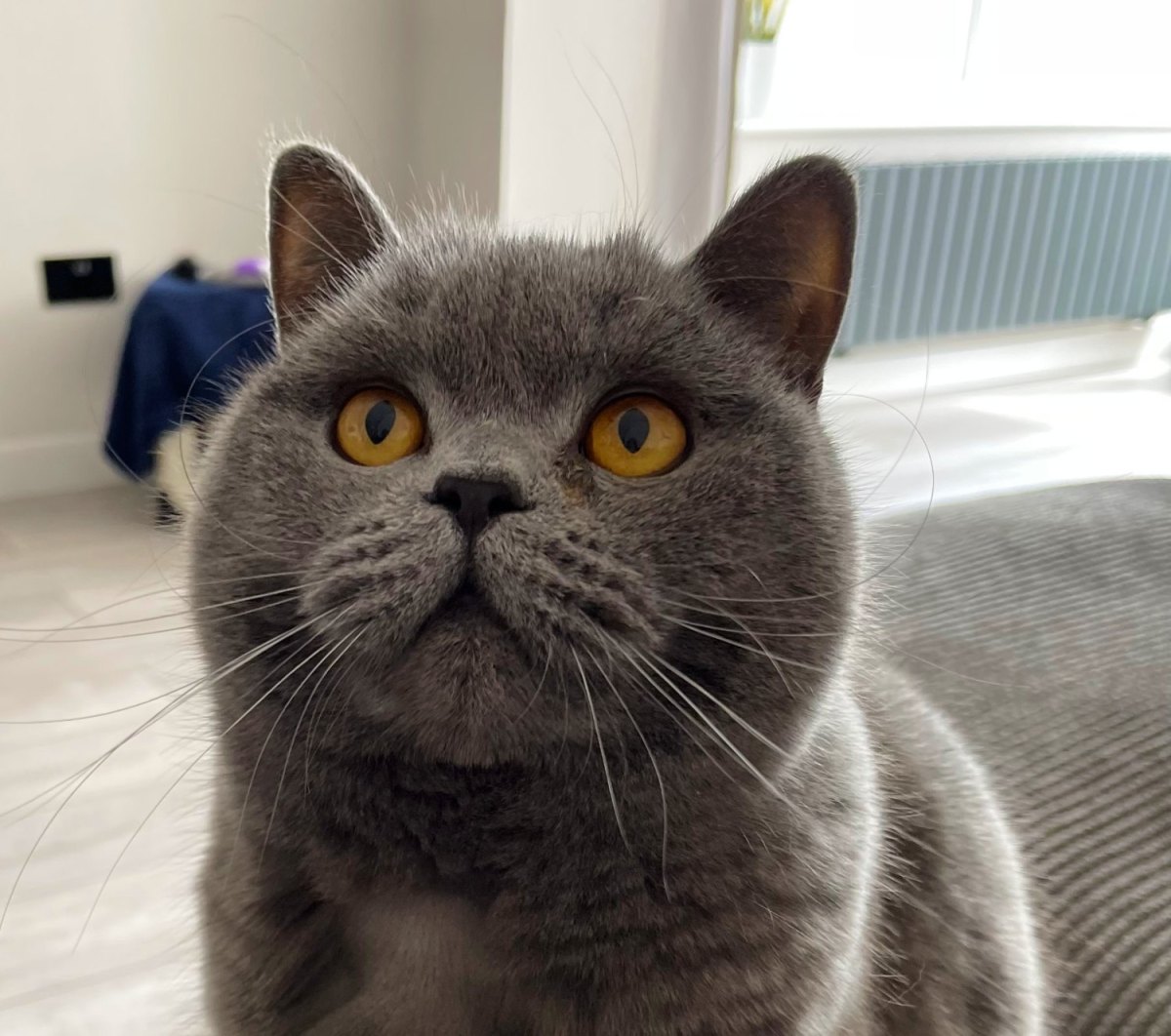
Londoner Billie’s cat, Jupiter, also suffers from FIPV. When she went to adopt him, Billie knew the British shorthair had Feline herpes virus (FHV) and that it would require careful monitoring. But the infection wasn’t life-threatening and Billie had already fallen in love with the golden-eyed chonkster.

When Jupiter’s appetite waned and his behavior changed earlier this year, Billie thought the little guy was just suffering from a FHV flare-up.

“He is very loving, he is like my shadow and he loves to play,” Billie told PITB, “but he wasn’t doing any of these things.”

As was the case with Parsnip, the veterinarians didn’t think Jupiter was seriously ill. They sent Billie and Jupiter home with antibiotics and anti-inflammatory medication, but after a week Jupiter still hadn’t improved. He was subject to a battery of tests — bloodwork, ultrasounds, x-rays — and kept overnight for observation.

“FIP is notoriously hard to diagnose, and there are so many symptoms that you could mistake for other things,” Billie said, noting veterinarians often have to “work backwards” and eliminate other potential ailments before diagnosing a cat with FIPV. “Jupiter’s symptoms were so minor initially, he just seemed a bit off and hadn’t eaten much and felt hot. I think because I know him and his behavior so well, we were able to catch it early.”

jupiterjubilee
Jupiter proudly displaying the Union Jack in celebration of Queen Elizabeth’s Platinum Jubilee.

Because the tests didn’t confirm FIPV, a third visit with more tests followed before Jupiter was placed on his meds. While the FDA has yet to approve GS-441524 treatment in the US, the UK had approved the drug in fall 2021, so Jupiter was able to begin treatment right away. Like Evangelista, who paid $5,000 for the FIPV drugs, not including the initial veterinary examinations, Billie was faced with hefty bills: The three initial veterinary visits, tests and five nights of observation added up to £5,500 (about $6,930 in USD), and the medication set her back £7,500 (about $9,400).

Her family helped her pay the initial veterinary bills, her sister started a GoFundMe campaign, and her nieces began making “FIP Warrior crystal healing bracelets,” with the proceeds from sales going to Jupiter’s treatment. (A GoFundMe for Parsnip also exists, and has raised $2,060 of its $2,500 goal so far.)

So far, Jupiter is responding well to the treatment and the signs are encouraging.

Both cats will enter an 84-day observation period after their regimens. They’ll have their bloodwork monitored and will be examined several times over that stretch to make sure they’ve recovered. They’ll also be closely watched at home for any symptoms.

Evangelista and Billie said they’re heartened by the 85 percent success rate.

Despite the cost, Billie said she didn’t balk at taking care of her cat.

“Jupiter is my whole world,” Billie said. “It is just the two of us, he is my one constant and he means everything to me. He is so loving, and so sassy. He has such a little personality and I would be so lost without him.”

Follow Jupiter on Instagram @_jupitersfipfight and Parsnip at @lilmissparsnip