TikTok Influencer Rages At Shelter In Video About Adoption Fee

After a TikToker raged about an adoption fee for a cat who had medical issues, her army of followers began harassing the shelter and its staff.

I don’t advocate criminality, but if some enterprising, preternaturally skilled hacker were to go Tyler Durden on TikTok and not just disable it for a few hours with a DDoS attack, but nuke it to oblivion by taking down its servers, backups and back-end code, that hacker would be a hero.

Songs would be written for this legend of a human being, performed to raucous applause by bards in taverns. A reincarnated Abraham Lincoln would lead a parade of patriots to the White House to wrap the benevolent hacker in the American flag and present the presidential Medal of Freedom. A bald eagle would alight on a Rose Garden cherry tree, raising a wing in salute to our hero, and fireworks would inaugurate a new federal holiday in honor of the glorious deed and its magnificent author.

But that’s not going to happen, so I have to type the words “TikTok influencer” and try not to gag as I relate the story of one Chloe Mitchell, a Michigan college student who sicced her army of three million followers on a non-profit, no-kill animal shelter.

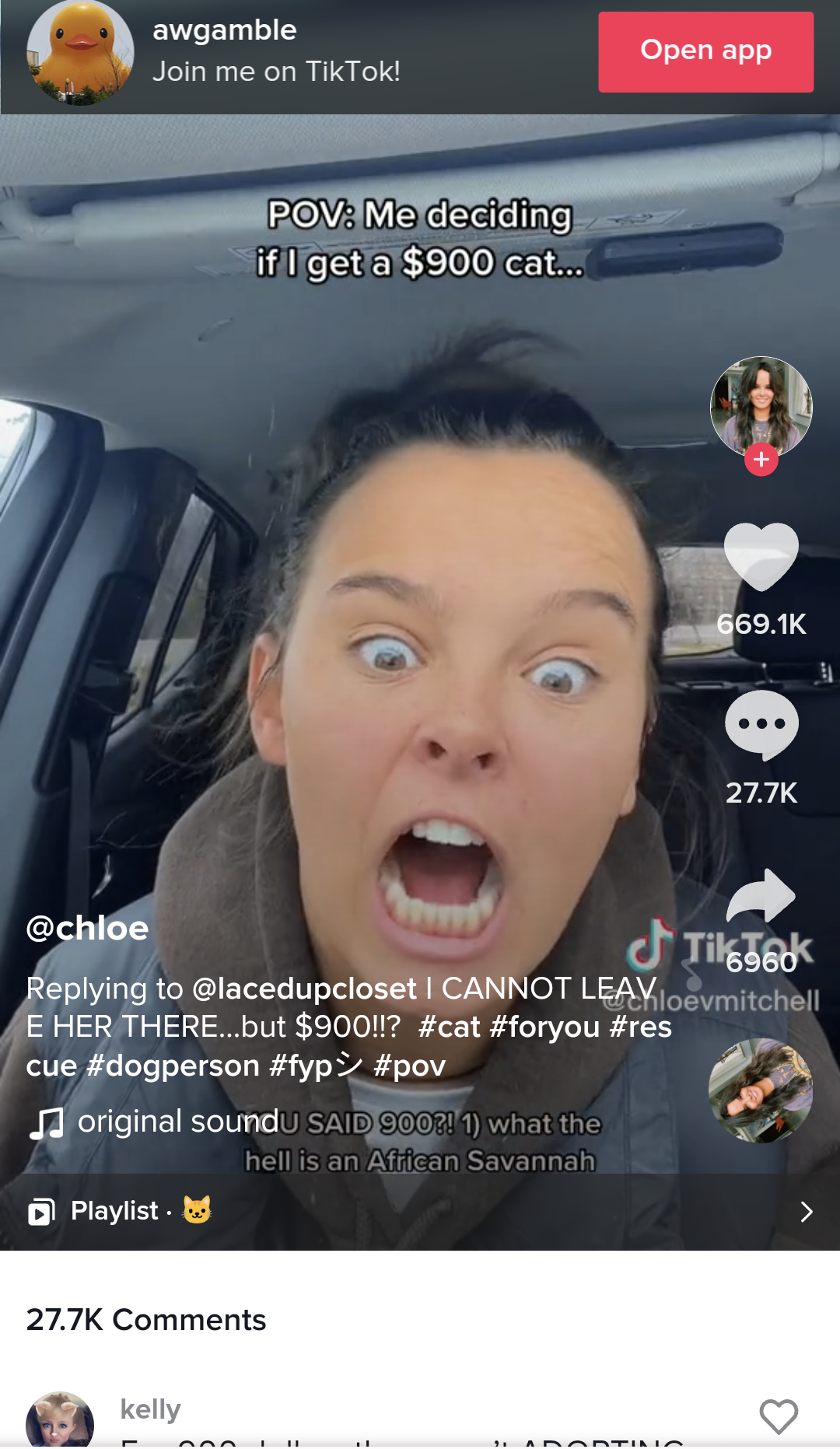
Mitchell is one of those people who makes you wish life had mute buttons. She tells her side of the story with theatric facial expressions, frequently screaming — literally screaming — into the camera as she claims she fell in love with a cat at Michigan’s Noah Project and didn’t balk at the $900 adoption fee.

Screenshot_20230324-162847~2

@chloevmitchell

Replying to @lacedupcloset I CANNOT LEAVE HER THERE…but $900!!? #cat #foryou #rescue #dogperson #fypシ #pov

♬ original sound – chloe

She says she’s happy with her cat, Puka, and loves her. But she still has adopter’s remorse.

“I spent $900 on a fuzzy scratch ball that’s going to puke all over my furniture,” she says at one point in a video she made after the adoption.

She bemoans the adoption fee, saying the cat costs “two thirds of a Yorkie” and a quarter the price of a new Louis Vuitton bag.

“Why isn’t there a price tag on her cage?” Mitchell screams. “Why can’t she be a $25 cat? … That’s life changing money, $900. I could just not eat.”

Mitchell’s followers, who called the shelter operators “scammers” and said they “played” Mitchell, among less charitable comments, have been targeting the shelter online and by phone, making “profanity-laced calls,” according to MLive.

Mitchell says the shelter told her the adoption fee was so high because Puka is an F5 Savannah, a fifth-generation hybrid of a domestic cat and an African serval. In her video she admits she doesn’t know what a Savannah is and confuses a tabby coat pattern for a breed.

But Mashele Garrett-Arndt, Noah Project’s director, told MLive the adoption fee reflected the substantial costs the shelter incurred by rescuing Puka, her litter mates and kittens from the other litters she came with, who had multiple medical issues. The shelter paid for veterinary surgery, including procedures for one cat who had two legs amputated, as well as shots, microchips, spaying/neutering, and special diets for the ailing kitties.
EJJG3JQJUZAARIQLXKTMK3GHPY
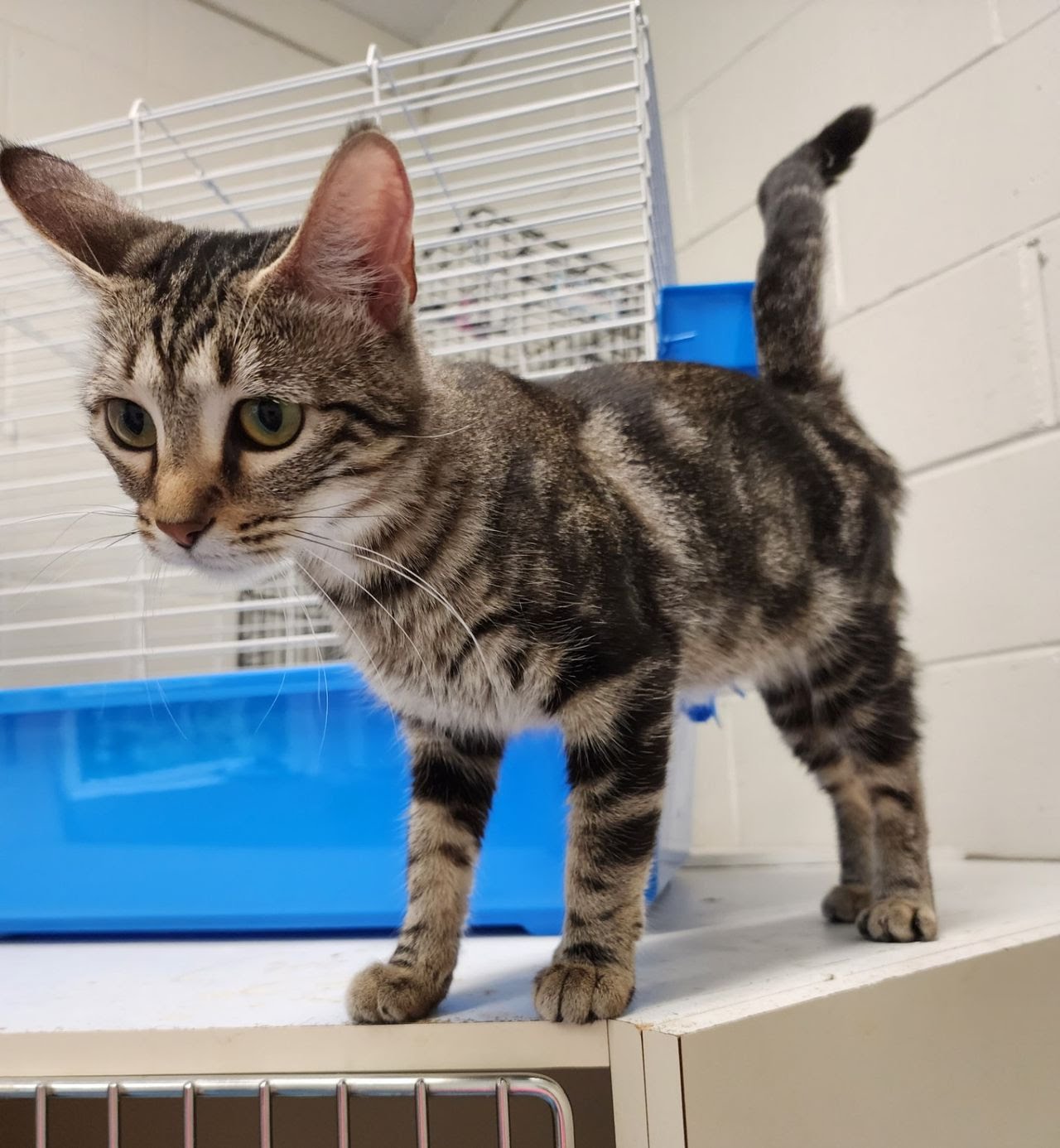
Puka, originally named Heart by the shelter. Credit: Noah Project

The Noah Project took in the young cats and their mothers from a woman who purchased the momma cats from a breeder. The mother cats went into heat again, predictably, and the problem multiplied litter by litter until the woman realized it was out of her ability to control and passed the problem along to the shelter.

The Noah Project took the mother cats and kittens, like any good rescue would, but an intake like that would stretch the resources of most shelters, let alone a small local operation. (See the appeals for assistance when larger organizations like the SPCA take in cats from hoarding situations, for example.) That this happened on the cusp of kitten season makes it even more difficult.

Since adopting Puka — and making a video in which she goes back and forth between saying she already adopted her and claiming she was thinking of adopting her — Mitchell has made at least half a dozen additional monetized videos about “the $900 cat,” including one in which she introduced her parents to their “$900 grandfurchild” and another in which she seemingly pretends to be on the phone with someone from the shelter, lecturing them about “taking advantage” of people and “profiting” off them. In the video, she does not pause long enough for the alleged person on the other end to speak.

“I’m so mad about this because she’s not only lying about this story but she’s making a profit off this,” Garret-Arndt said. “These cats came from an older woman in her 80s who bought these cats and overbred and couldn’t handle the situation. They all had medical issues and that’s the reason they were $900.”

Garret-Arndt told MLive her books are open for Mitchell and anyone else to inspect. In addition, the IRS 990 forms of non-profits are available via sites like Guidestar, allowing donors to check information like percentage of revenue spent on programs, meaning the amount that goes to the charitable cause after overhead.
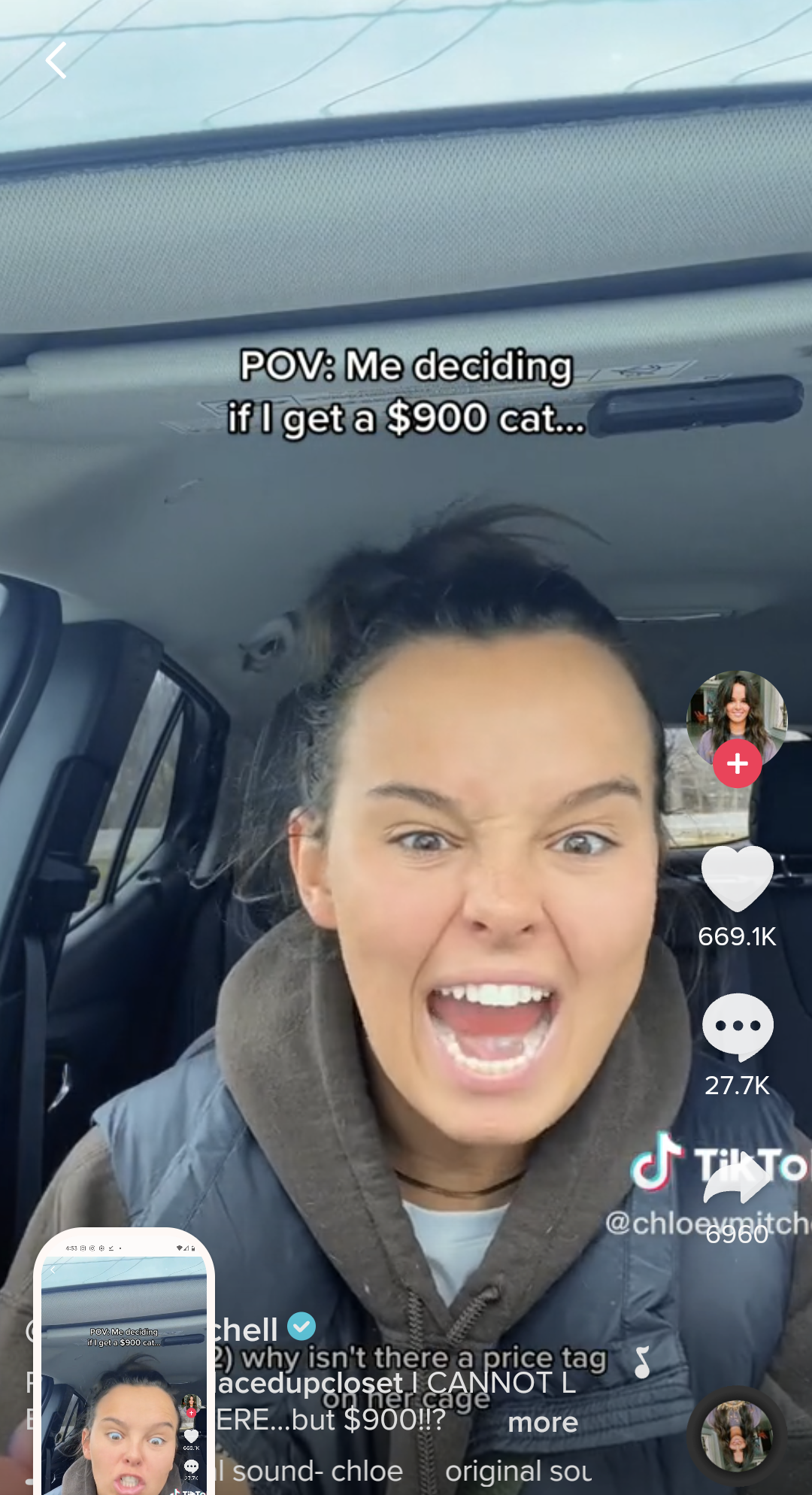
Mitchell
Mitchell’s series of videos on her “$900 cat” saga had amassed almost 30 million combined views as of March 24

Mitchell isn’t hurting for cash despite her claim that she might have to go without eating after adopting her “$900 cat.” As a college volleyball player, she’s known as the first NCAA athlete to profit financially from NIL (name and image likeness), co-founded a company for other athletes looking to capitalize on NIL, and says she paid for Puka with money she made from the TikTok Creator’s Fund. In addition, she’s bragged about her many sponsorships.

An earlier story about Mitchell’s earnings said that in addition to the money she earns directly from the NCAA NIL deal, “five-figure deals are her baseline” for sponsorships.

Mitchell earns up to $20,000 per sponsored post, the story notes — and that was in 2021, when her follower count wasn’t as high. That’s an extraordinary amount of money for anyone, let alone a college kid, and doesn’t match up with her video pleading poverty over an adoption fee.

With 3 million followers, Mitchell could earn as much as $15,000 a month directly from TikTok alone, not including the lucrative sponsorships. Her initial post about the saga of her “$900 cat” registered almost six million views, some 28,000 comments and more than 660,000 likes. In all, her series of videos on the cat saga have amassed almost 30 million views. Most creators can only dream of those engagement numbers and the revenue associated with them.

In other words, Mitchell is not the typical college student working a part-time job in between classes and eating Ramen noodles to stretch her budget, and it wouldn’t be inaccurate to say she’s punching down by picking a fight with a small local rescue.

“I feel like she (Mitchell) got that cat as a stunt for her followers,” Garret-Arndt said. “She specifically asked for that cat. We were told she was an African Savannah cat but we don’t know.”

To her credit, Mitchell does seem taken with Puka, and we hope she cherishes the beautiful kitten regardless of whether she’s got serval lineage or is just a “basic” cat. Every cat is worthy of love and deserves a good home, and it appears Mitchell is doting on Puka, buying her lots of toys and cat furniture and cuddling with her.

Take it from me, loyal servant to a “basic” no-breed kitty: what’s important is the bond you form and the memories you make together, not the rarity of the breed. I wouldn’t part with Bud for $900,000, let alone $900.

In the meantime, the Noah Project continues to take abuse from the “influencer’s” followers, “swearing at us and calling us a horrible organization,” Garret-Arndt said.

“We don’t scam people,” she told MLive. “If they want to see my books and what I paid for medical, they can.”

She said the Noah Project is a small organization that focuses on making sure cats go to good homes instead of ending up in kill shelters where they’re likely to be euthanized.

“All of our animals leave here fixed and with all of their shots and preventatives, as well as being microchipped,” she wrote in a Facebook post in response to the manufactured controversy. “This all-costs money. No one is making a profit here, everything goes back into the shelter for medical supplies, food, etc.”

Mitchell says she’s ordered a DNA test for Puka and plans to do a reveal on TikTok, providing more material for more monetized videos in her ongoing saga of “the $900 cat.” She says she’ll “defend” the shelter to her followers if the DNA test does reveal serval lineage, but the damage has already been done, and we can’t help but wonder if she’ll be willing to offer a meal culpa after quadrupling down on claims that the shelter ripped her off.
Woman Sets Up Camera, Paranormal Activity Style, To Film Her Kitten Body-Slamming Her In Her Sleep

Kittens: cute and utterly ruthless.

I have to admit, as cute as Buddy was as a kitten, I don’t miss the “war on sleep” phase.

A woman who adopted a kitten set up a camera to film what happens while she sleeps, like the main characters of the surprisingly scary 2007 film Paranormal Activity, except instead of doors opening and slamming shut by themselves, TVs turning on randomly and other freaky ghost stuff, she got footage of her new kitty gleefully waking her, mostly by belly-flopping on her snoozing human:

@jenna_nicole29

bet y’all can’t guess why i’m sleeping on the floor #catsoftiktok #psycho #fyp #fail #cat

♬ original sound – Jenna

I know the experience all too well, and I’d imagine most people who have had a kitten know it too.

Buddy was absolutely ruthless as a baby! He’d scurry into a corner or hide under my desk, wait until I was snoring or just on the cusp of sleep, then climb up and screech the kitten equivalent of “Geronimo!” as he kamikaze’d himself onto my stomach.

Not a fun way to wake up. At all.

Bud would celebrate with delighted trilling, then pad back into the shadows to wait for his next opportunity. Oftentimes I’d hear squeaky little kitten chirps and imagine him laughing as he planned his next attack. He had entirely too much fun torturing me at night.

But fear not, Jenna, it gets better! I’m happy to report the Budster is much sweeter and more considerate as an adult cat. He still wakes me up, but often not to the level of fully awake, and instead of a cat landing a triple lutz, double axle on my stomach, I’m treated to super-soft fur against my face and the calming vibration of the little dude’s purrs.

It might take the better part of a year, but your kitten will chill out, adjust to your sleep schedule and realize a peaceful snooze is more satisfying than nighty games of Harass the Human.

The feline tendency to sit on your face and screech into your ear if your cat’s hungry or really wants your attention? Unfortunately that never goes away…

TikTok’s Latest Viral Trend Is Popping Cat Pimples: Can We Ban This App Already?

Each viral trend on the app is more grotesque than the last.

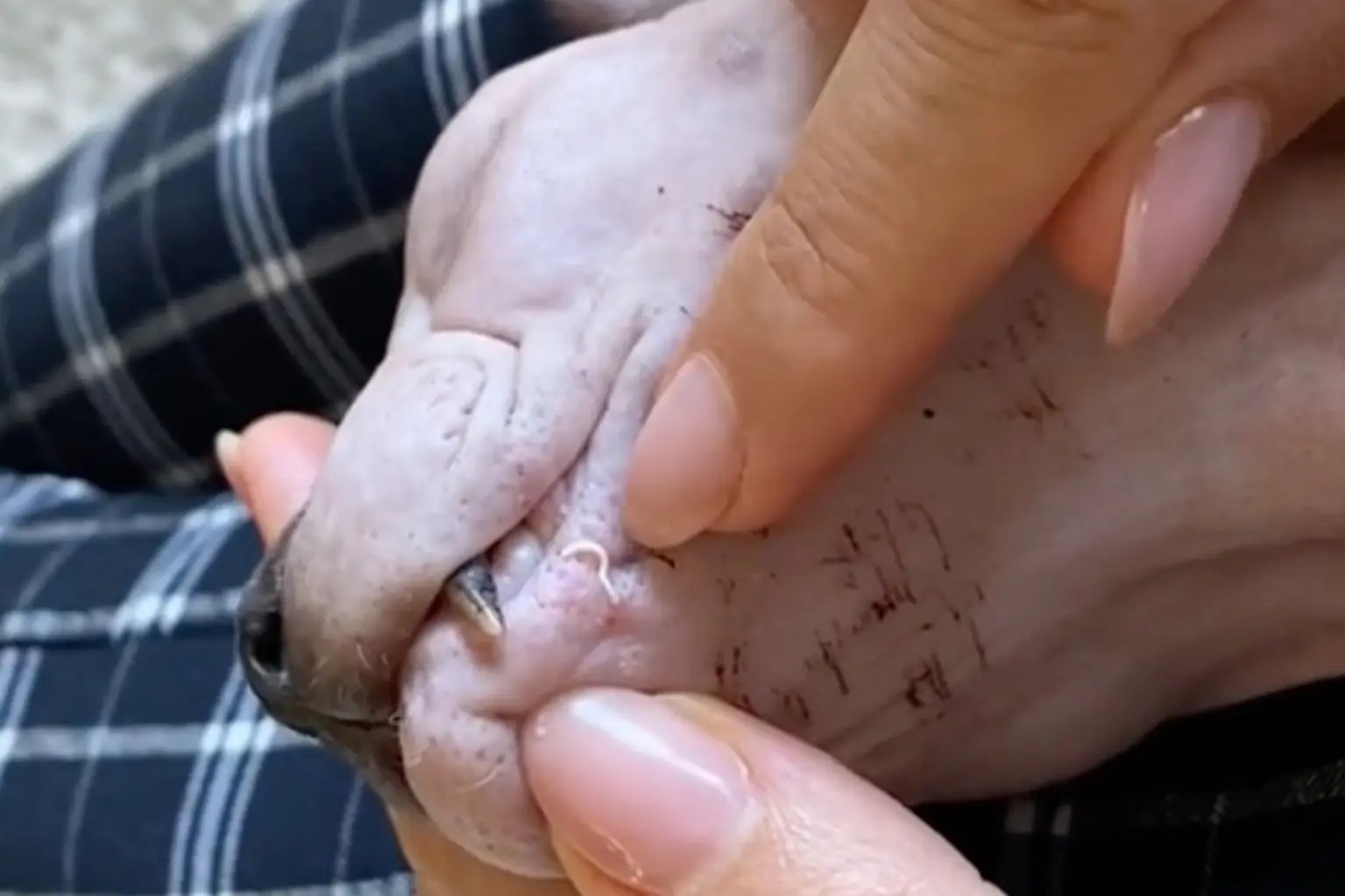
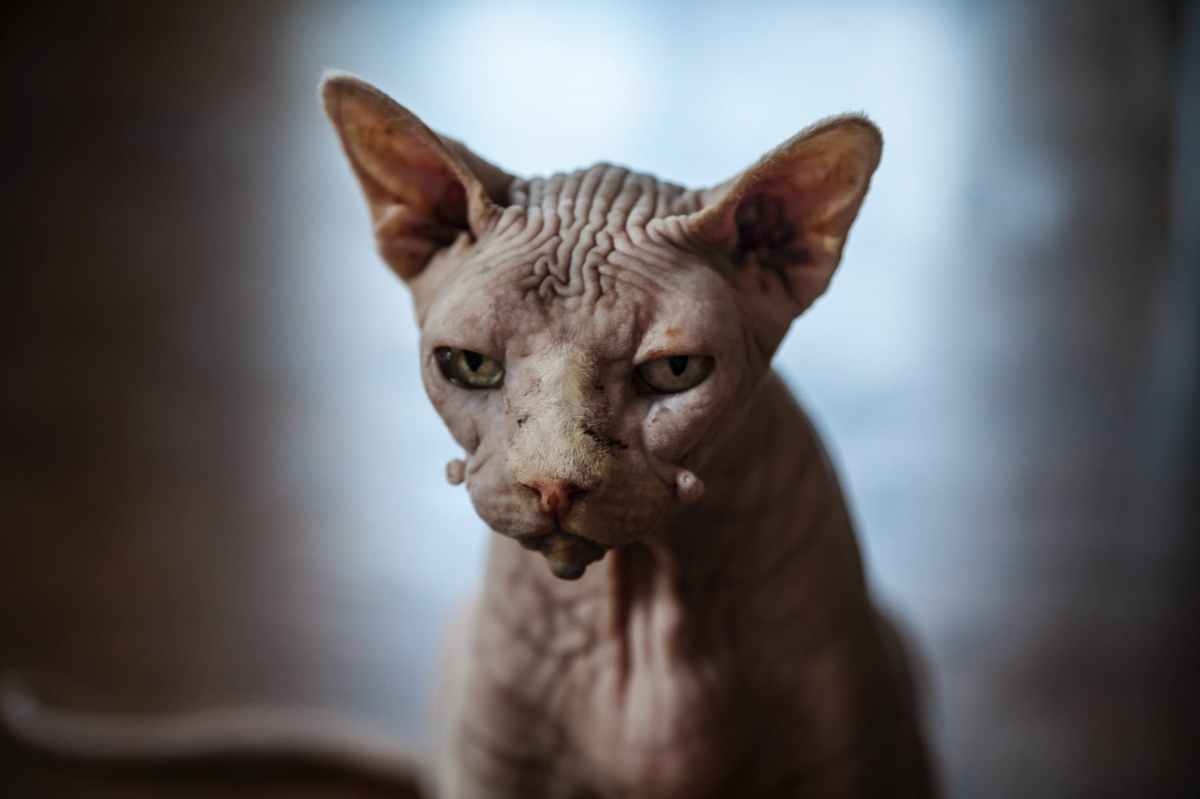
I’m all out of withering sarcasm, so I’ll just say it: The newest trend on TikTok involves close-up videos showing people popping their Sphynx cats’ pimples.

The PewDiePie of the craze, if you will, is one @Sphynx.cleaner, whose videos show a woman’s carefully manicured hands holding a defeated-looking Sphynx cat and popping its pimples between her formidable fingernails.

Tens of millions of people have watched her videos of puss pimple-popping, not including the millions of other views accumulated by lesser practitioners of the grotesque genre.

Sphynx cats lack fur and have skin often compared to chamois leather. Fur helps cats absorb and redistribute naturally-occurring oils secreted by the skin, so felines of the Sphynx breed are much more susceptible to acne problems than typical short- and long-haired cats. Without fur to help redistribute them, the skin oils can create a “film” that clogs pores, according to Jessica Taylor, a veterinarian in North Carolina.

Sphynx pimples
Uh, no. Credit: Sphynx.cleaner/TikTok

Not surprisingly, popping a cat’s pimples makes things worse and is not pleasant for the kitty.

“These lesions indicate a disruption in the skin and skin barrier, and squeezing or poking them can introduce bacteria, potentially worsening the lesion, causing pain and infection,” Taylor told Newsweek. “If the lesion is already infected, handling it could spread bacteria to the pet parent.”

As for TikTok, this is not the first time one of the app’s trends has been detrimental to the health and safety of felines, although most of its inanity is focused on humans. I suppose you can view it as some sort of advanced Darwinian engine, accelerating the self-removal of human beings from the gene pool. Among the trends that have gone viral on the app:

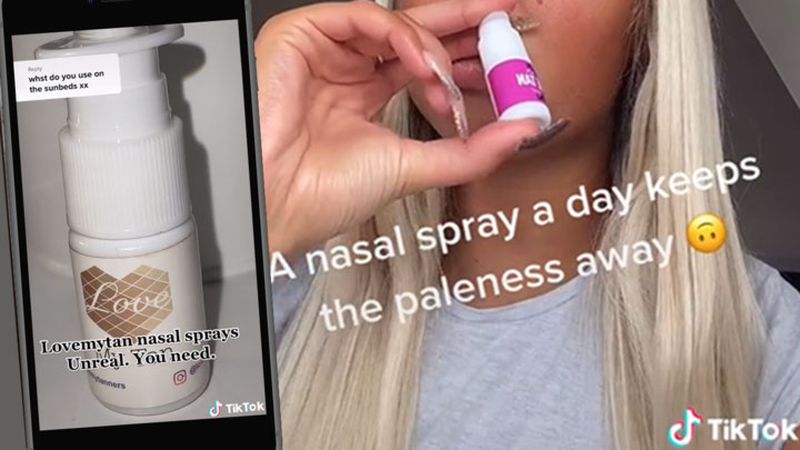
  • People who use self-tanning bottles as nasal spray out of some misguided belief that ingesting the stuff will not only achieve the desired effect, but somehow lead to a more even, natural-looking distribution of tanner. It reminds me of former President Donald Trump’s impromptu suggestion, during a national press conference, that ingesting hand sanitizer could be a “tremendous” way to stop COVID.
  • Videos instructing women to eat the tablets inside Clearblue pregnancy tests as a “contraceptive hack,” claiming the tablets — which are designed to absorb urine during the chemical test — are actually morning after pills.
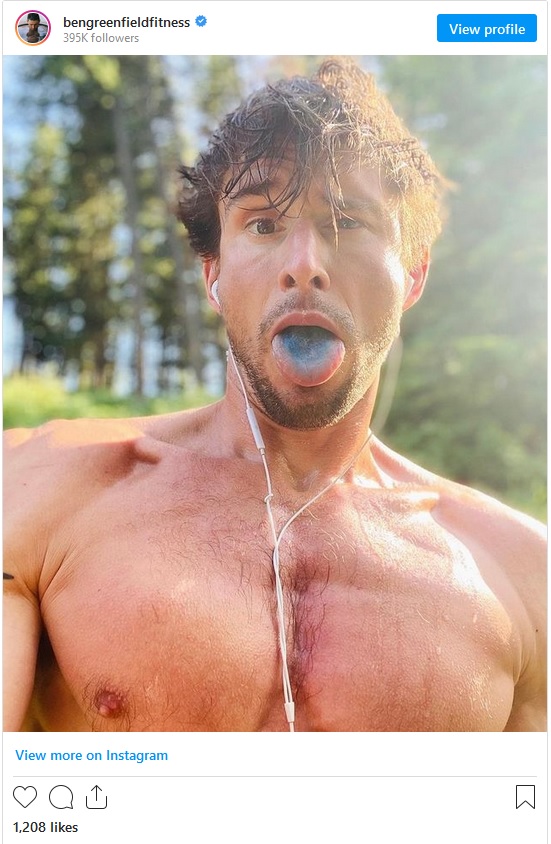
  • People ingesting methylene blue — an anti-fungal fish tank cleaner — because “fitness influencers” say it can “cure” COVID-19, boost metabolism and slow the aging process. Think of the triumph of critical thinking here: These are people who won’t get a vaccine that’s been through three-stages of trials before getting FDA approval, and whose efficacy and safety have been the subjects of rigorous peer review, but they’re willing to drink a chemical manufactured and sold as a cleaning solution for fish tanks.
  • The so-called Nyquil Challenge, in which people use Nyquil instead of cooking oil to cook chicken in a frying pan.
  • Period blood face masks, which are self-explanatory. Another grotesque and potentially dangerous trend started by “influencers” who claim some sort of nebulous expertise and know that “hacks” will net them attention and clicks. The more outrageous, the better.

https __prod.static9.net
“Did you know that urinal cakes are made by Carvel? It’s true! They’re deliciously chocolatey, with just a hint of vanilla, cinnamon and industrial strength anti-bacterial. Mmmmmm!”

Of course, we’ve known for years that Chinese companies are beholden to the Chinese government according to Chinese law, which means the government — and the communist party — can help itself to TikTok user data whenever it wants.

After TikTok’s US-based executives insisted to congress that American users’ data is firewalled and cannot be accessed by the company’s employees in China — and, by extension, the Chinese government — a series of leaks confirmed that China’s government was in fact regularly accessing that data. Absolutely no one, except maybe the politicians who think the internet is a “series of tubes,” were surprised by this revelation.

China’s government can use the data to track journalists, exploit American and European users, program its algorithm to shuffle them toward harmful content, censor content the Chinese government doesn’t like, and even coerce individuals by threatening to release information on their viewing habits.

So can we evacuate TikTok’s US headquarters already, raze it to the ground, and ban the app from every mobile store?

methblue2
“Mr. Darwin! Mr. Darwin let him go! Magnifico!”

Former Stray Cat Adopts A Stray Kitten

There are cat dads, and then there are catdads.

This former stray clearly has paternal instincts. He found an abandoned kitten and, remembering his own rough life on the street not so long ago, brought the little guy home to his human like “Can we keep him?!?”

@arnold.little

My cat found a kitten and this was right before he brought him inside his new house! #straycats #straykitten #meantforeachother #feralcats

♬ original sound – Arnold.little

The white cat’s human agreed to let him adopt the hungry baby, and now he’s a full time dad:

@arnold.little

He definitely has his hands full! Single dad life is not easy!! #straycats #feralboys #ijustwanttosleep

♬ Ricotrap God why – Ricotrap

Study: Even Experienced Caretakers Give Cats ‘Unwelcome Affection’

When it comes to petting cats, less is more. Not everyone knows that.

By chance, one of the first things I saw Tuesday in my post-wake-up browsing was a short video of three guys standing in a triangle formation, each of them with a puppy. A drum recording began, and the men began drumming an overturned pot in the middle with the puppies’ paws.

The dogs, of course, had no idea what was going on. They were confused and stressed. Then I saw this from the official TikTok page of Imperial Point Animal Hospital in Delray Beach, Florida:

That’s a veterinarian abusing a kitten.

It might not be overt abuse. She’s not hitting or screaming at the poor cat. But she’s taking a sentient being with its own feelings, likes and dislikes, comforts and discomforts, and using it as a toy for clicks and likes on social media.

I thought about that when I read the newest study from Nottingham Trent University and the University of Nottingham, which looks at the way people interact with their cats and how their behavior may or may not align with what cats prefer and what they’re comfortable with.

Although Bud and I have a deep bond formed over more than seven years of spending time together, establishing trust, mutual respect and love, he would tear my face off if I did to him what the vet tech is doing to the kitten in the above video.

And you know what? He’d be justified, once he got over the shock and wondered if I’d been replaced with a doppleganger.

The UK study involved more than 100 felines at Battersea Dogs and Cats’ London cattery, with scientists recording interactions between humans and cats via a GoPro camera in a large pen where people can interact with cats one-on-one. There were 120 human participants of various ages and from different walks of life. Each person interacted with three cats separately.

Researchers looked at whether the cat or the human initiated interaction, where the human touched the cat, whether the human restrained the cat, and the cat’s response.

They also collected information on each human participant, such as how many cats they have at home and how long they’ve been caring for felines. Human participants rated themselves on how well they know cats and how well they take care of them.

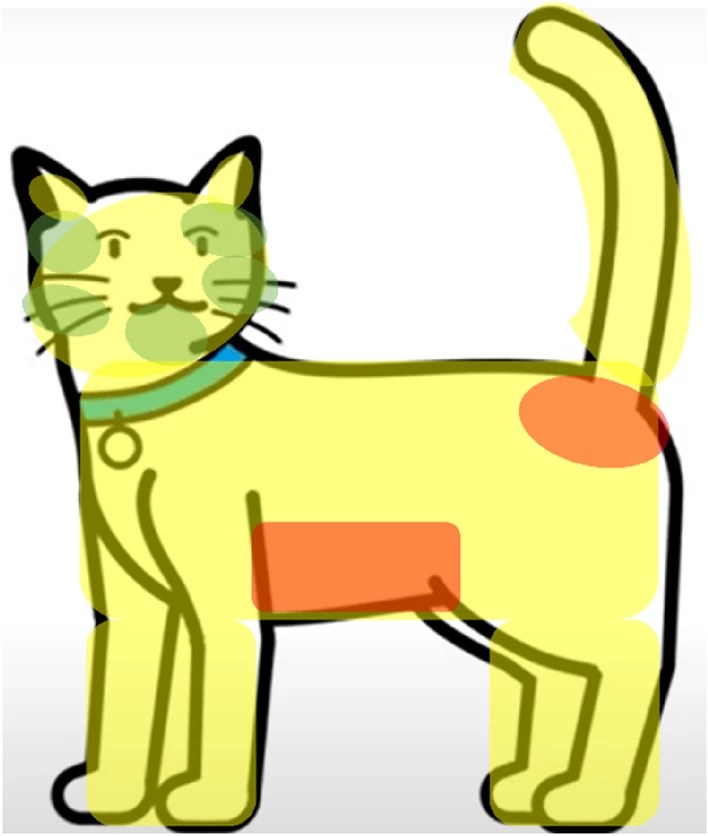
They used a system that corresponds to the below image to grade physical affection. The image is mostly self-explanatory, but to be clear, the green areas are where cats like to be touched, the yellow areas are “meh,” and the red areas are no-go zones for most cats:

greenyellowredcatareas

In earlier studies, the team established what many cat caretakers know: Allowing cats to initiate physical interactions, going easier and lighter on petting, letting cats control how long the interactions last, and avoiding any kind of restraint are “best practices” for petting cats. They reaffirmed that scratching cats under the chin, rubbing their cheeks and forehead are “the best ways to increase their affection and reduce aggression.”

That might seem obvious, but in research there’s an important distinction between knowing something (or thinking you know it) and proving it with research. It’s important to prove it, and to forgo assumptions, to produce credible and repeatable experiments.

Animal behaviorist Lauren Finka, lead author on the new study, said although the above may seem like common knowledge among experienced caretakers, that’s not always true, and it’s not always reflected in their behavior.

“Our findings suggest that certain characteristics we might assume would make someone good at interacting with cats—how knowledgeable they say they are, their cat ownership experiences and being older—should not always be considered as reliable indicators of a person’s suitability to adopt certain cats, particularly those with specific handling or behavioral needs,” Finka said.

We should point out here that these are “best practices” for establishing a healthy, trusting relationship with cats, and taking their feelings into consideration. Lots of people might force their cats to do things without much push back, but that doesn’t mean the cat is happy. No one’s perfect, and there are always things we can learn about how to do better by our furry friends.

Finka also said she hopes people who run shelters and rescues take the research into consideration. That’s because some people run into the same problems I did: When you’ve never had a cat, and/or you don’t fit the profile of what people think a “cat person” is or should be, you could encounter resistance or skepticism from shelter staff.

One volunteer at an animal shelter asked me if I was adopting a kitten for my kids or girlfriend, because it didn’t occur to her that I’d want a cat. Some shelters require references from a veterinarian, which you can’t get if you’ve never had a pet before.

“Importantly, within shelters, we should also avoid discriminating against potential adopters with no previous cat ownership experience,” Finka said, “because with the right support, they may make fantastic cat guardians.”

For us, it’s more confirmation of what we’ve always believed: The more you take your cat’s feelings into consideration, and treat the little one with the respect he or she deserves, the happier your cat and the deeper your bond will grow.