Blurry photos and fleeting encounters keep the legend of big cats in the UK alive. Could there be leopards, pumas and other large cats roaming the countryside?
For all the advances in optics and camera technology over the last 20 years alone, there are two kinds of people who love blurry, low-resolution footage: UFO enthusiasts and people who are convinced the UK is like a cold, rainy Africa with big cats lurking in every bush and field.
To be a member of either group you’ve got to shut down critical thinking faculties, suspend disbelief and put faith in the highly improbable. (Or the impossible when it comes to people who insist little green men are zipping across the night sky in sleek ships that defy all we know about physics and aerodynamics.)
The UK’s big cat believers claim the country is home to a thriving native population of large felids. Some of them think they’re “panthers,” not specifying which species of cat they think is out there, while others claim jaguars, leopards or tigers are prowling the English countryside, spotted only fleetingly at the edges of fields or in the brush, and only by people who own two-decade-old Nokia flip phones with rudimentary cameras.
They believe a native, breeding population not only exists, but for centuries has eluded capture and avoided leaving compelling evidence.
“Pardon me, mate, could you point me toward Aldersgate Street?”
The phantom cats have remarkable stealth abilities. They’ve never tripped a trail camera or appeared in a single frame of CCTV footage. Not a single tree marked for territory, not a single pile of cow bones picked clean by giant barbed tongues, not a single clump of panthera dung. Not even a hungry cub drawn into a village by the smell of barbecue on a summer night.
The reported sightings say more about human capacity for imagination — and how poor we are at estimating size over distance — than they do about the crypto-pumas and melanistic tigers some people swear they’ve seen.
When alleged big cats are spotted in the UK, they’re always seen fleetingly and from afar. When witnesses try to confirm what they’ve seen, the animals are gone.
“I was coming up to Jolly Nice from Oxford at around 7.50pm and the car in front of me was travelling at a steady pace. I looked to the verge of the other side of the road because I saw a bright pair of eyes low down. Upon further inspection, I suddenly realised there was a large outline of a low and stocky cat that was huge.”
That’s the testimony of a UK man who told the Stroud Times, a local newspaper, that he encountered a big cat a few minutes before 8 p.m. on Friday in Nailsworth, a town of about 5,600 people a little more than 100 miles west of London. His description mirrors that of others who say they’ve spotted large felids, mostly in the UK’s countryside and small villages.
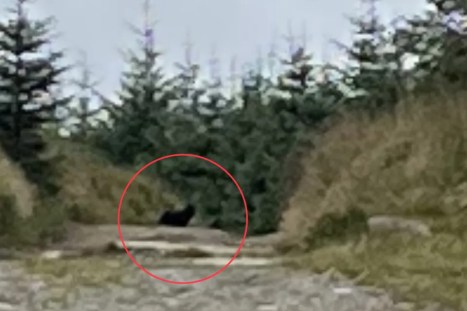
Photograph from a previous “big cat sighting.” It’s typical of the photos that surface with claims of leopards and pumas stalking the countryside. Blurred details and digital zoom make it difficult to gauge distance and scale.
The story’s headline reads: “Big cat expert’s verdict: beast spotted was a leopard.”
The expert in question is Rick Minter, an amateur biologist who has made UK big cat legends into something of a cottage industry by publishing books, hosting a podcast and frequently speaking to newspapers about the phenomenon. It’s not clear how Minter decided the animal in Friday’s sighting was a “black leopard,” but he’s said in previous interviews that he believes most alleged big cat sightings in the UK are leopards, with pumas accounting for most of the others.
Neither animal is native to Europe. Pumas range from South America to the American northwest and midwest, with isolated populations in places like Florida. Leopards are native to Africa and Asia, with ranges that overlap with lions on the former continent and tigers on the latter, mostly in India.
“I’m originally from San Diego, actually, but the expat life suits me and the British are very tasty.”
Some have floated the possibility that the mysterious felids are escaped pets who have successfully adjusted to the countryside. Minter says the evidence points to breeding populations.
If there are thriving populations, the cats would need to exist in numbers, with at least 50 on the extreme low end. If they’re escaped pets, the authorities would know.
Unlike the US, where big cat ownership was banned in the vast majority of states even before the recent Big Cat Public Safety Act was passed, owning a massive carnivore slash killing machine isn’t illegal in the UK. But owners have to register their animals, seek approval for the habitats and enclosures they’ve built, and submit to annual inspection.
There have been a handful of escapes over the decades and each time the authorities were able to capture or kill the animals, often tracking them via livestock kills. Pet tigers and leopards might be dangerous, but they’re still at a disadvantage compared to their wild brethren, meaning they go for the easy, guaranteed kills when they’re hungry. Nothing’s easier than a docile farm animal that’s never seen a big cat.
“Oi, wanna have a pint and watch Man U vs Arsenal on the telly?”
More recently, big cat hunters in the UK have tried to find more compelling evidence than a couple of blurry photographs of house cats out for a stroll. They’ve touted suspicious-looking pug marks, and in August 2022 found black fur on a barbed wire fence. According to the believers, a UK lab confirmed the fur belonged to a leopard, but there was no chain of custody, no documentation of how the sample was found and handled. Big cat experts remain skeptical.
— Big Cat Sightings In Scotland (@BCSI_Scotland) October 24, 2022
Indeed, Oxford’s Egil Droge, a wildlife conservationist, points out that in places where big cats live, you don’t have to go hunting for evidence. It’s everywhere.
“I’ve worked with large carnivores in Africa since 2007 and it’s obvious if big cats are around. You would regularly come across prints of their paws along roads. The rasping sound of a leopard’s roar can be heard from several kilometres,” Droge wrote, noting that leopards in particular are not discriminating about what they kill and leave ample evidence of their handiwork when they’ve hunted.
Still, as improbable as the sightings are, the big cat enthusiasts of the UK have one up on UFO enthusiasts and hunters of cryptics like Big Foot, the Loch Ness Monster and the Jersey Devil: the creatures they’re looking for actually exist and may surprise us yet.
It took a tiger swiping at her for her to wake up from the dream of being close to big cats. Now Katherine Lee Guard’s mission is to educate people about the animals and how helping them means keeping a healthy distance.
No one knew Saigon better than Katherine Lee Guard.
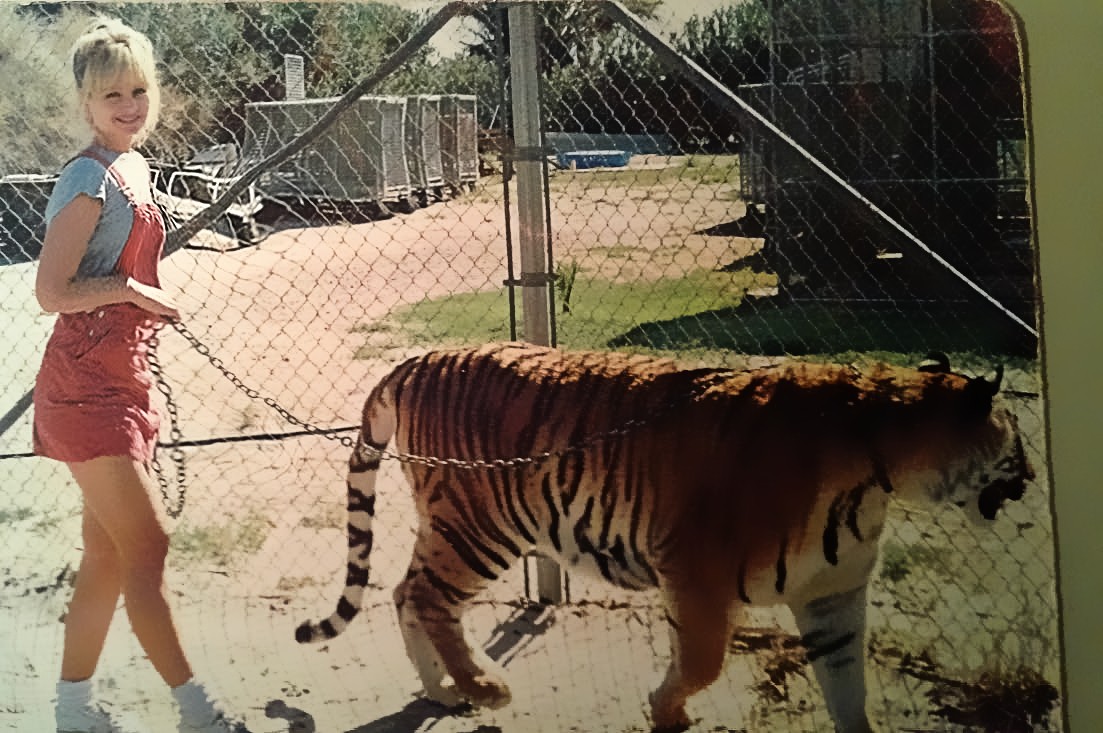
When he arrived at the wildlife ranch in Thermal, Calif., as a baby in the mid-90s, it was Guard who stayed up with him at night, bottle-feeding the orphan cub and swaddling him in soft blankets. She was by his side as he grew, tending to his needs, taking walks with him through the desert and scrubland on the compound that was his home.
Then one day the massive Amur tiger turned on her.
“It was just so shocking even though I knew it could happen,” Guard recalled. “I thought I knew but until it happened, I had no idea. It was terrifying and oddly a weird ‘How dare you!’ kind of feeling that came over me. Like ‘How dare you come at me after all I’ve done for you?’ Because I’d raised him, bottle fed him, been up all night with him.”
Guard was equally surprised by her own reaction, which she described as “more indignation than fear,” but it was that indignation that “allowed me to shelve my fear long enough to get away and out of the enclosure.” If Saigon had sensed her fear, his predatory instincts could have overridden the maternal affection he felt for her.
Saigon never tried to kill Guard. If he had, she wouldn’t be here to tell the story. He was merely warning her that he didn’t want her near him that day, and he made sure she got the message.
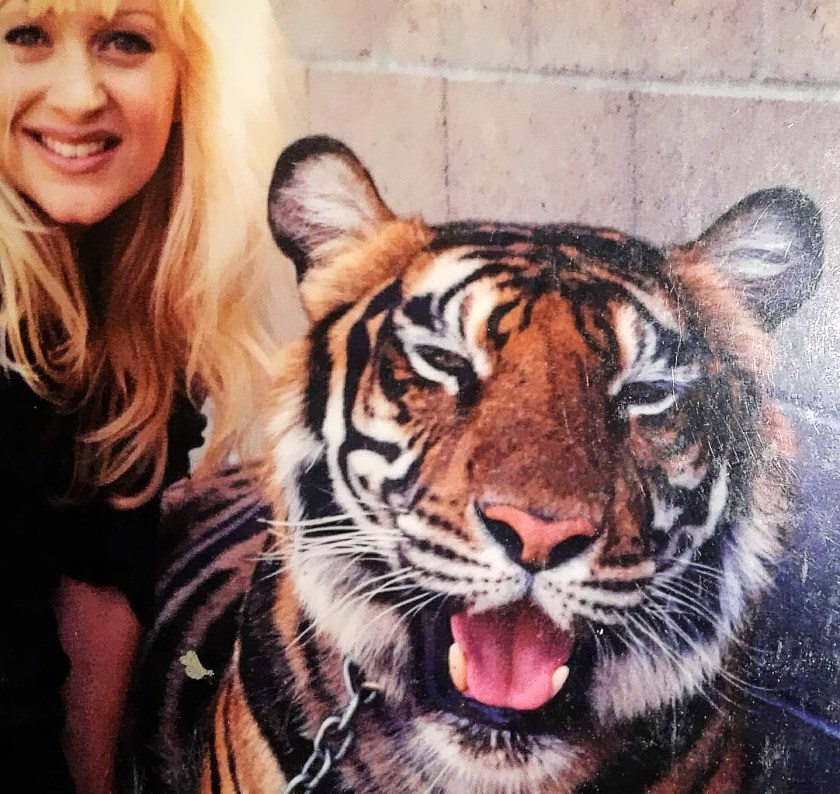
Katherine and Saigon on a happier day when the massive tiger was in a better mood. Credit: Katherine Lee Guard
Amur tigers, also known as Siberian tigers, are the largest big cat subspecies in the world, topping out at 700 pounds, with males spanning 10 feet from nose to tail.
But the encounter — a growl, a much-less-than full strength swipe and a warning bump — was enough to turn Guard into “a nervous, vomiting wreck” once she extricated herself from the enclosure.
“Getting swatted by a paw, even with sheathed claws, hurts like hell,” Guard told PITB. “I’d feel trounced, disappointed and relieved at the same time. And stupid for being in there with them, although I never would have admitted that to anyone back then.”
That first bad encounter with Saigon, and similar encounters with a lion named Tsavo that Guard had also bottle-fed when he was a cub, planted seeds of doubt in her mind about what she was doing on that California ranch, working with a man who had previously used the big cats in circus performances.
Years earlier when Guard’s mom came to visit her, Guard came out to meet her with baby Saigon in her arms, feeding him from a bottle.
Her mother stopped and took in the scene. “That’s not the baby I imagined for you,” she said flatly.
“I never forgot it,” Guard said.
Later, while caring for a female Bengal named Bombay, Guard had an epiphany. Like so many others who make it their life’s work to be near big cats, she had always been beguiled by the beautiful, powerful and dangerous animals. Looking at Bombay, Guard realized the regal tiger was “totally without pretense,” moving with the purpose and grace of a being self-assured in her existence.
“She was purposeful and unyielding and for the first time I felt separate from her and it didn’t bother me,” Guard said. “It was beautiful to realize that she didn’t need me or anyone else. Had she been given a chance in the wild, she would have flourished. The desire to know her thoughts and be her friend lessened in me because I started to appreciate her for her, not for how she could make me feel. ‘She’s not existing for me! She exists for herself!’ We don’t ‘own’ Bombay. Bombay ‘owns’ herself.”
“It was a light bulb moment, and in hindsight I think it was the beginning of the change in my mindset.”
Guard stopped the practice of going “full contact” with the big cats — meaning caring for them without any barriers or safety measures in place, relying on luck to avoid death or dismemberment — and eventually left the ranch around 2003.
In the two decades since, she’s been focused on educating the public about big cats, supporting conservation efforts and trying to rescue the unfortunate tigers, lions, jaguars, leopards and other wild felids who have the misfortune of living in roadside zoos where they’re sedated and exploited for customer selfies, or living sedentary, unnatural lives in cramped backyards in states like Texas and Florida.
Tsavo the lion, who was rescued from “a shitty private owner,” was another one of Guard’s bottle babies at the sanctuary.
Like many others who have dedicated their lives to helping those animals, Guard is encouraged by the 2022 passage of the Big Cat Public Safety Act — but also miffed that it took lawmakers so long, and worried that loopholes in the law will be exploited by people determined to “own” Earth’s endangered apex predators.
The world of big cat handling is a small one, and the people in that world tend to know each other if not always well, then by reputation or in passing. Guard remembers meeting Joe Exotic, the “star” of the infamous Netflix documentary Tiger King, in the late 1990s. Her boss and mentor at the time, Wayne Regan, wanted Exotic to surrender some of his cats to the sanctuary. Regan and Guard had seen “Exotic’s” handiwork up close when they examined some of the tigers another sanctuary had managed to wrangle out of his care. The tigers were stressed, suffered from poor nutrition and were not well cared-for.
Exotic came to the meeting with a sickly, malnourished lion cub as if taunting the pair.
“I hated him immediately,” Guard said.
She was overcome with a desire to “steal the poor malnourished cub he had with him,” but Regan cautioned her against it. Knowing what “Exotic” — real name Joseph Allen Maldonado — is capable of, it’s probably a blessing that she didn’t, but she still thinks of the cub all these years later.
Exotic remains in a federal prison in Fort Worth, Texas, where he’s serving a 21-year sentence after he was convicted of two counts of trying to hire a hitman to kill his arch-nemesis, big cat sanctuary operator Carole Baskin. He was also convicted of 17 counts of animal abuse, and his name is synonymous with the horror and suffering big cats endure when they’re in the possession of private “owners” and roadside zoo operators.
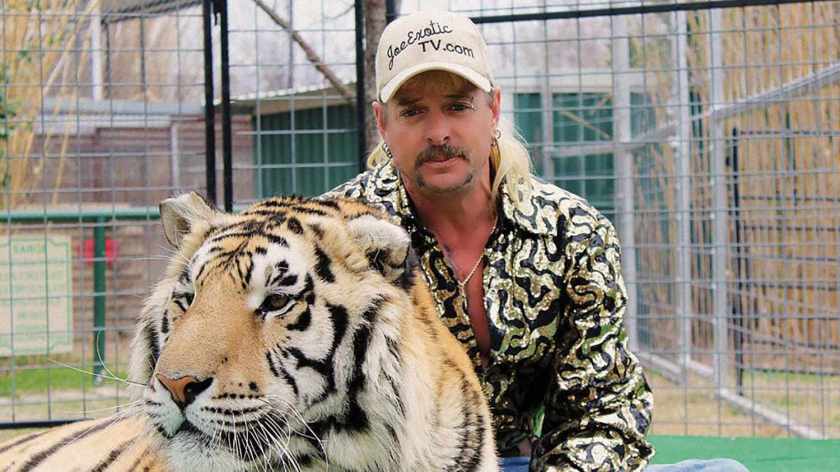
Joe Allen Maldonado, who styled himself as Joe Exotic, was the subject of the infamous documentary Tiger King detailing his exploitation of big cats and his outlandish criminal activity. Maldonado remains imprisoned in a federal facility after he was convicted of trying to have sanctuary operator Carole Baskin killed.
Big cat advocates lament the fact that the documentary, as popular as it was, spent more time focusing on Maldonado’s eccentricities, Machiavellian maneuvering and manipulation of people in his orbit than it did on the suffering of the animals in his “care,” but it did draw attention to his crimes and the plight of tigers in the US.
“He tortured and killed and exploited so many animals,” Guard told PITB. “He is a coward piece of shit who is right where he should be. He is no ‘Tiger King’ and never should have had a minute of fame.”
She has a similarly low opinion of Kevin “Doc” Antle, another eccentric animal abuser featured in the documentary. Antle has provided big cats and other animals for projects including the Ace Ventura films, a Jungle Book adaptation, a Britney Spears performance and an appearance on Oprah Winfrey’s talk show.
Earlier this year he was convicted of illegal wildlife trafficking in Virginia, where authorities said he tried to buy endangered lion clubs in violation of federal law. He’s racked up almost three dozen USDA violations for mistreatment of animals over the years, has been accused of gassing adult tigers to “make room” for more cubs, and faces a slew of additional charges related to money laundering and the alleged import of wild animals, including a chimpanzee and a cheetah.
Kevin “Doc” Antle, who now calls himself Bhagavan Mahamayavi Antle,
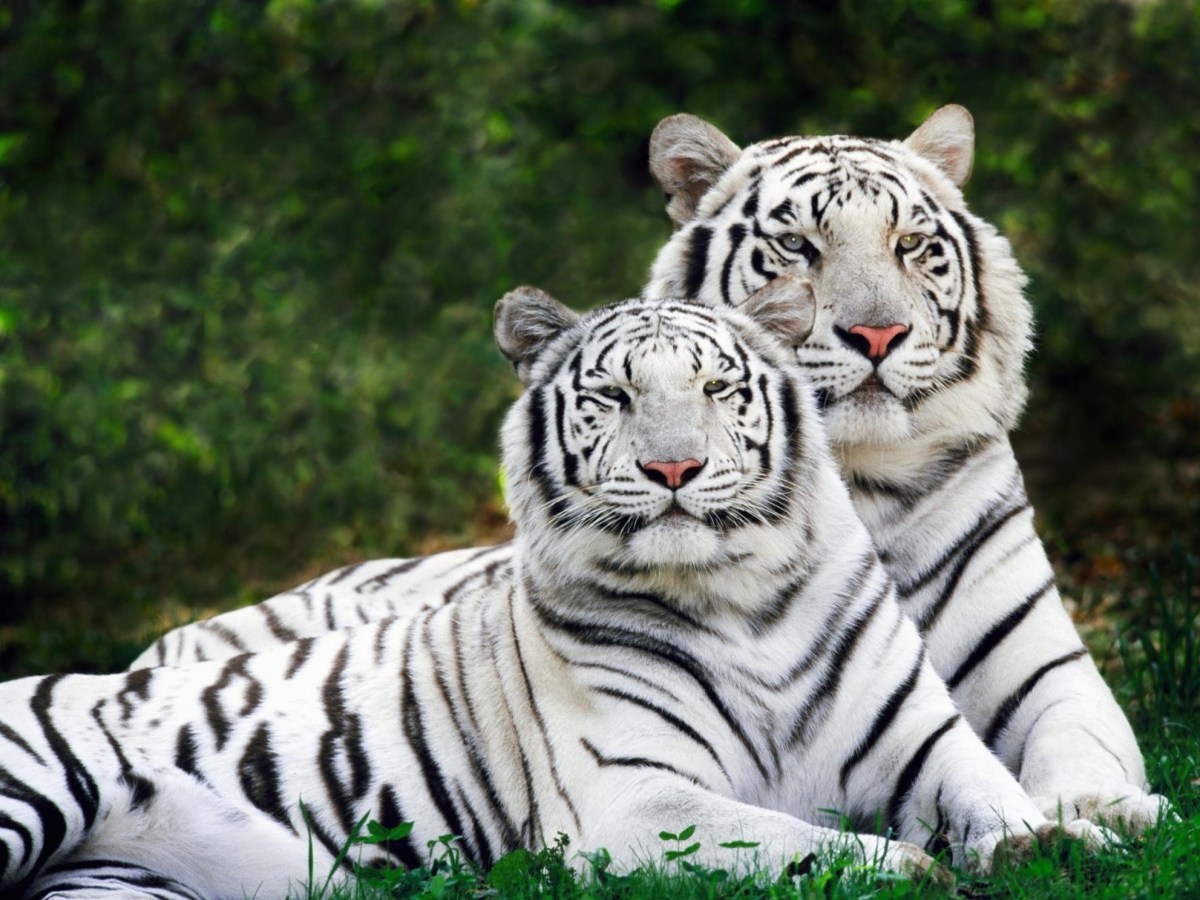
Antle has also raised the ire of animal welfare advocates and conservationists for the controversial practice of breeding ligers — massive cats that are the result of breeding male lions with female tigers — and inbreeding tigers to produce a color morph commonly known as white tigers. While the latter are beautiful, majestic and rare, intentionally trying to breed them often results in cubs with malformations who either die in infancy or live short, brutal lives.
Guard does not regret the time she spent working with big cats on Regan’s ranch, just the naïve way she went about it. Like others who have spent years thinking about how to best protect and save big cat species, she’s come to the conclusion that the majestic felids are best helped — and appreciated — from a distance.
At the ranch, some of the felids were former show animals rescued from the entertainment business. Some, like Saigon, were abandoned young by people who had planned to use them in shows. Others were like Tsavo the lion, who “came from a shitty private owner.”
Regan was a former tiger trainer for circuses but had changed his views on using the animals for entertainment. He “was fastidious about taking care of the cats, very invested in their welfare and had only the best care for them,” she said. The ranch was sprawling, with enrichment items and toys everywhere, as well as a large lake with an island in the middle so the cats — particularly tigers, who are known for their love of water — could swim and play. At night they settled into their own individual habitats, each equipped with smaller pools, entertainment items and bedding.
In addition Wayne, Guard and their volunteers were reluctant to display the cats for anyone, even donors. They felt it would be a betrayal to the animals to be gawked at in a place that had become a haven for them.
Regan had learned the business from a man named Ron Whitfield, who remains active in the big cat community as the large carnivore curator at the San Francisco Zoo and trained animals for 30 years at the now-defunct Marine World in San Francisco.
“The business is so small that word gets around and Wayne, and Ron too, were known as good people to care for unwanted animals,” Guard said.
Guard and Saigon.
Tsavo as an adult.
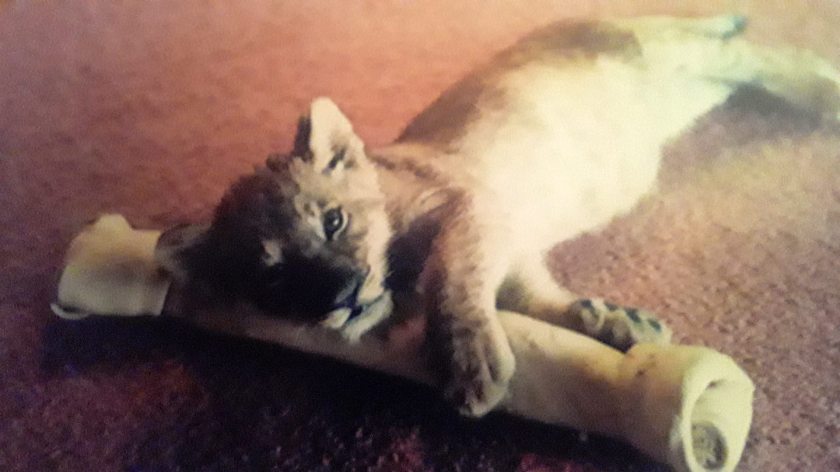
Baby Saigon
These days, Guard cares for small cats too as a caretaker and feeder of stray cat colonies in her California neighborhood. It’s a reminder of the good people can do in their own backyards, and of the need that exists in a country where some 800,000 unwanted felines are euthanized every year despite Herculean efforts to push spaying and neutering. (Those efforts have been very successful, and euthanizations of cats and dogs are only a fraction of the millions they were just 15 years ago, but the fact that so many unwanted animals are still killed illustrates the enormity of the problem.)
Mostly, she wants people to know that the idea of having a big cat for a companion, or even living in something resembling harmony with them, “is a fool’s paradise.” Luck is the only determining factor in whether a handler lives or, as Siegfried and Roy can attest, suffers life-altering injuries from accidentally triggering the ever-present predatory instinct of tigers, lions and other big cats like jaguars and leopards.
They are, after all, the planet’s apex predators, hyper-carnivores designed by nature with the most deadly weapons of any extant animal.
Guard says she hopes the practice of keeping big cats truly ends after the current generation of panthera “pets” — those grandfathered in under the Big Cat Public Safety Act — pass on. And she hopes that young people who are as “spellbound and mesmerized” by the spectacular felids as she was don’t follow her lead and endanger their lives, which is why she’s brutally honest about her own experiences and makes no pretense about benefiting from any factor other than luck.
“It’s been a long road for me to go from there to here,” she said. “I’m glad I can recognize my mistakes and hope I can prevent others from doing the same. I don’t know why people are drawn to do dangerous things but for me I didn’t think about the danger because I just wanted to be close to my cats.”
She understands the allure, but always comes back to the same conclusion: humans and big cats are not meant to live side by side.
“The cost is too great if something goes wrong,” she said. “And something always goes wrong given enough time.”
Did you like this story? Read some of PITB’s other long-form journalism and essays:
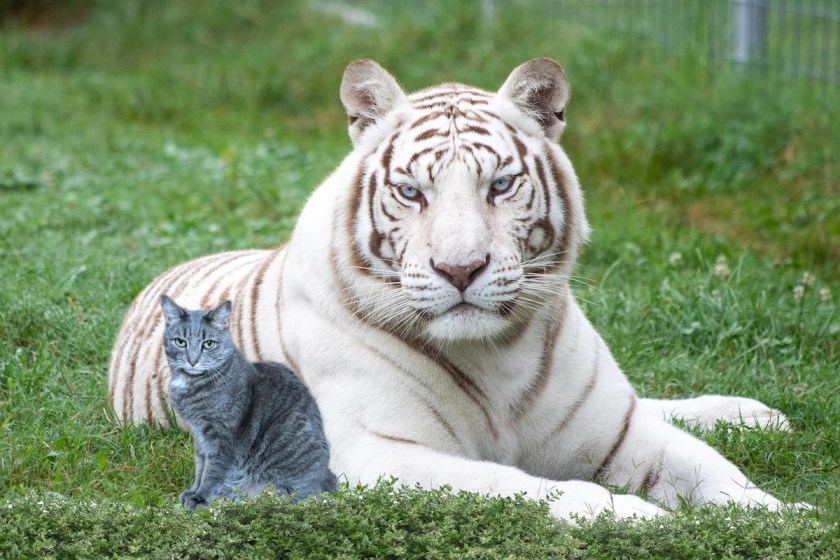
NEW YORK — A domestic feline entered the big cat enclosure at the Bronx Zoo on Wednesday, with the bemused tiger inhabitants unsure of how to respond to the brazen intruder.
“Sup guys!” the silver tabby calling himself Buddy meowed to the confused big cats, according to witnesses.
The bold domestic feline, who weighs approximately 10 pounds, made his way around the enclosure, fist-bumping each of the tigers before sauntering over to the rock pool and laying down next to a 506-pound male named Gerald.
“Whaddup, Gerald,” Buddy the Cat said as he emulated the much larger cat’s posture. “What’s good, my homie?”
Gerald turned his head toward the smaller cat and roared, but Buddy was unperturbed.
“Yeah,” he said to the massive tiger. “I feel you, bro. Haters gonna hate, am I right? Us apex predators just don’t get no respect no more.”
Gerald roared again.
“Exactly what I’m saying, my dude,” Buddy replied.
The massive felid eyed Buddy for a second as if deciding whether there was enough meat on his bones to justify turning him into a snack, then shrugged and yawned.
Best homies.
Asked later why he entered the tiger enclosure, Buddy said it was “important to connect with my heritage.”
“I’m showing solidarity with my peeps,” the silver tabby told reporters.
Encouraged by the fact that the tigers seemed to tolerate his presence, Buddy returned to the enclosure later the same day, only for a white tigress to claim him.
“I’m not your cub!” the tabby said, squirming as the tigress lifted him with the scruff of his neck between her teeth. “I’m a grown tiger! Put me down this instant!”
The domestic cat still hadn’t emerged from the tigress’ den by the next morning. A witness using a telephoto lens confirmed Buddy tried to make a run for it several times, only to be pulled back and given a tongue bath.
“Unpaw me! Untongue me!” he could be heard screaming from inside the den. “Help! Somebody help me!”
A zoo spokesman said there were currently no plans to free Buddy the cat.



 Pain In The Bud