Amazing Cats: The Adorable Colocolo, Feline Of The Pampas

With a perpetual kitten-like appearance and mismatched coat patterns, colocolos may look like the product of AI or Photoshop, but these little ones are very real — and very feisty.

We’re heading back into obscure territory with this edition of Amazing Cats, focusing on a little-known species that ekes out an existence in the forests and plains of South America.

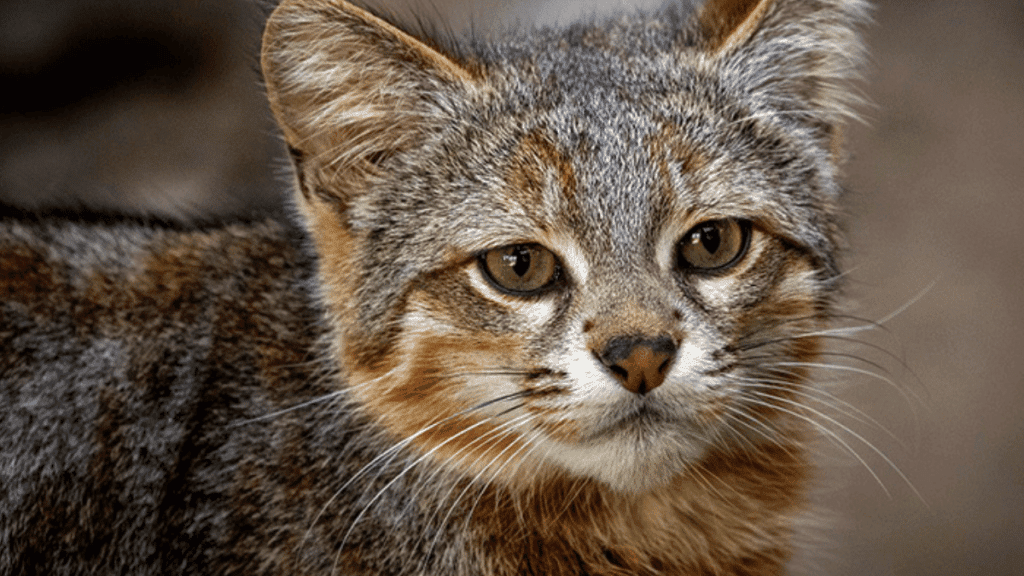
The colocolo, also known as the Pampas cat, superficially resembles the familiar house cat, but a closer look reveals some striking differences.

Colocolos are small, about the same size and weight as felis catus, but their tails can be quite a bit shorter and extremely fluffy.

Colocolo full
Colocolos have pattern and color combinations seen only in their species. This one has rosettes on his body and tabby stripes on his limbs and tail. Some colocolos have thick tails with tabby-like rings, while others have bushy tails more commonly associated with long haired domestic cat breeds.

There are at least five variations of fur color and pattern, ranging  from marbled to jaguaresque rosettes and, most strikingly, a seemingly mismatched pattern in which the legs have dark stripes over rusty/cinnamon-colored fur, which contrasts dramatically with the gray, gold, silver or tan of their bodies. The overall effect makes some colocolos look like they’ve been photoshopped, or assembled from spare parts.

Some colocolos appear to have solid-color coats which are actually an agouti pattern with barely visible bands of slightly darker fur.

While the species may look stocky, conservationists say it’s smaller than it appears, with its fur making up the majority of its “bulk.”

Colocolo color variant
This photo might look like a fake, but it’s a documented combination of coat pattern and color among colocolos.
Colocolo color variant
Another photograph of a colocolo with the rusty/cinnamon limb coloring.

As if that wasn’t enough to distinguish them, Pampas cats have neotenous features that give them an even stronger kittenlike appearance compared to house cats and comparable species like the rusty spotted cat.

In other words, they’re very cute and looking at them can trigger the same protective instincts we feel when we see kittens and cute adult cats. But don’t let their disarming features deceive you — these little guys are not cuddly, don’t respond well to people who get close, and will turn aggressive if you encroach on their space.

Cute colocolo
This adorable colocolo appears to be giving the side-eye to someone. Note the slight suggestion of the classic tabby “M” on the forehead.

While they’re alternately called the Pampas cat, the word “colocolo” comes from the language of the Mapuche, an indigenous group that lived in lands that are parts of modern day Chile and Argentina.

In the Mapuche language, Colo Colo was the name of a Mapuche warrior who led his people in their resistance against Spanish conquistadors in the 16th century, but it’s also the name of an evil rat-like creature in Mapuche folklore. It’s not clear how a feline came to bear the name, but the species — leopardus colocolo — is often called gato colocolo to distinguish between the historical figure and the modern-day Chilean football club, Colo-Colo.

Colocolo
You might feel an urge to hug a colocolo, but that would not be a good idea. Experts say the small cats don’t take kindly to close human proximity.

Although they’re associated with the pampa, the flatlands in and around Peru best known for the mysterious Nazca lines, colocolo are adaptable and thrive in forests, jungles, wetlands, and mountain ranges like the Andes, among other terrain.

Their range stretches from Argentina in the south through Chile, Bolivia, Paraguay, Ecuador, western Brazil and an isolated population in Uruguay.

Despite their relatively wide distribution and variety of habitat, colocolos are not well understood. Experts still haven’t settled the question of whether they’re all one species or whether subgroups qualify as their own subspecies. Their hunting habits are not well-documented, although it’s known they prefer small rodents, and there is ongoing debate about whether they are crepuscular, like most felid species, or nocturnal.

Colocolo share a continent with jaguars, pumas, ocelot, jaguarundi, margay, oncilla, kodkod, Geoffrey’s cat and the Andean cat, and the fact that they live in the deep wilderness makes them more difficult to study.

Because their coloration and coat patterns can vary so widely, Pampas cats are often mistaken for other small wildcats living in South America, and people unfamiliar with their species sometimes mistake them for domestic felines.

They’re also very rare in zoos, with only one US zoo (Cincinnati) counting them among their exhibits, and only four Pampas cats in captivity worldwide. (Excluding private captivity by poachers and illegal wildlife traders.)

Like virtually every species of wildcat, the colocolo’s numbers are declining due to a number of factors, primarily human activity like habitat destruction, sport hunting and development cutting populations off from each other.

The more people are aware of these beautiful and little-known felines, the better their chances for long term survival as conservation groups receive more donations to help protect them, and lawmakers are pressured to protect the wilderness where they live.

Yawning colocolo
Like all cats, colocolos appreciate the value of a nice nap.

Previously:

Amazing Cats: The Mysterious Marbled Cat
Amazing Cats: The Rusty-Spotted Cat
Amazing Cats: ‘He Who Kills With One Bound’
Amazing Cats: The Puma


Amazing Cats: The Sunda Clouded Leopard

Buddy Claps Back At Tennis Star Over ‘Small Cat’ Insult

Feline leaders were outraged after the world tennis number one managed to insult cats, chair umpires and Australians on Friday.

NEW YORK — Buddy the Cat declared men’s tennis number one Daniil Medvedev “a lanky human” after the latter called a chair umpire “a small cat” during a match on Friday.

Medvedev, who is known for his outbursts on the court, suffered a meltdown during his semifinal victory at the Australian Open. The Russian yelled at the chair umpire for allegedly allowing his opponent, Stefanos Tsitsipas, to receive coaching from the stands, which is a no-no in professional tennis.

After the umpire hit Medvedev with a warning, the top-ranked men’s player launched a minute-long tirade.

“Bro, are you mad?” Medvedev yelled to the umpire. “For what? And his father can talk every point? Bro, are you stupid? His father can talk every point!”

When the umpire made it clear he wasn’t sympathetic to Medvedev’s complaints, the frustrated Russian dissed him.

“If you don’t give him a warning, you are — how can I say it? — a small cat!” he said, gesticulating wildly.

It was the second time in as many matches that Medvedev had resorted to insults. Asked why Australian fans booed him during his quarterfinal match against Nick Kyrgios, Medvedev told an interviewer it was because the fans “probably have a low IQ.”

Screenshot_20220129-165436~2

Screenshot_20220129-165424~2
Above: Medvedev’s meltdown and offensive anti-feline insults

Buddy the Cat assembled a hasty press conference within a few hours. Flanked by the Rev. Al Sharpclaw and other feline community leaders, Buddy accused Medvedev of “blatant antifelinism.”

“There is nothing wrong with being a small cat,” the silver tabby said, pounding his paw on a table for effect. “In fact, Medvedev unknowingly paid the umpire a compliment. But that doesn’t change the fact that he intended it as an insult.”

Buddy, Sharpclaw and other leaders demanded the WTA sanction Medvedev and mandate his participation in species tolerance classes.

In the meantime, the 25-year-old Medvedev has advanced to the Australian Open men’s final, where he’ll face 36-year-old Rafael Nadal on Sunday.

The Mallorcan not only has 20 major titles under his belt, he’s also held in high esteem by the world’s felines, who see a kindred spirit in Nadal’s obsessive-compulsive behavior and tendency to erupt into short bursts of energy expenditure. It’s also long been rumored that Nadal loves boxes.

Fellow tennis star Sebastian Korda named his cat after Nadal. No one has named a cat after Medvedev.

Rafa Nadal

Amazing Cats: The Puma

The puma is a majestic feline native to the Americas.

What would domestic cats be like if they were the same size as big cats?

It’s a question that seems to pop up often on cat-centric and Q&A sites and the answer is complex, but it turns out nature has given us a pretty good idea with the puma.

Also known as the cougar, mountain lion and the more generic panther (which can be a name for jaguars and leopards as well), the puma is big, but genetically it’s related to small cats and it shares some physical features with our familiar domestic kitties.

It’s capable of the intimidating wild cat scream often heard from the largest felines, but the puma can’t roar like big cats. Instead, it purrs like its smaller relatives, and it can even meow with the best of them!

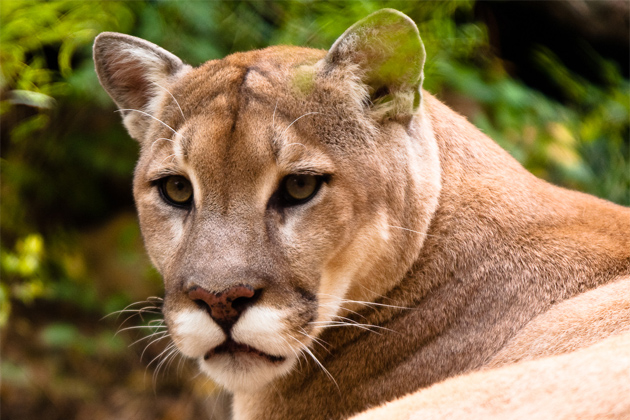
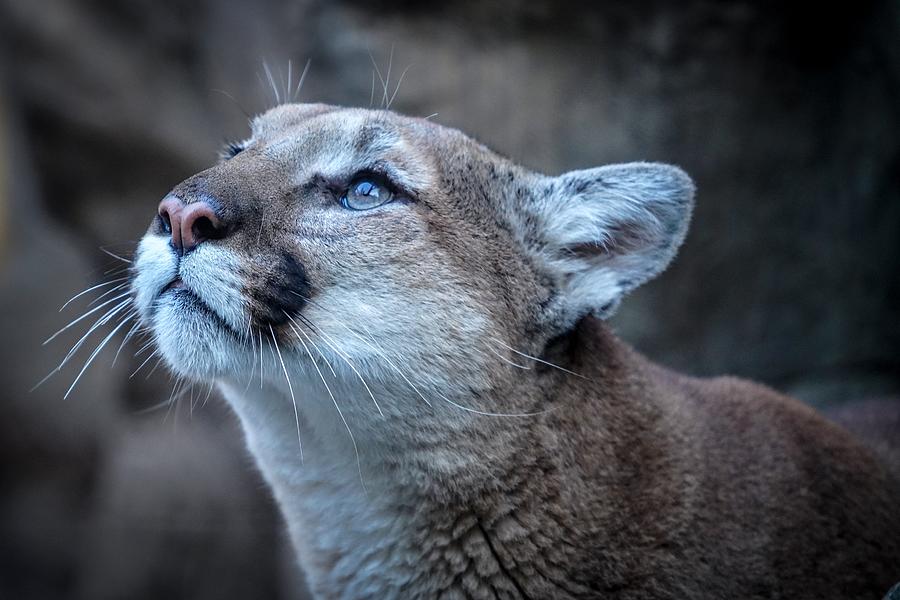
Visually, the puma is a striking animal — it’s muscular with a shiny tan coat and facial features reminiscent of both panthera and felis. While its ears more closely resemble those of small cats (felis), the puma’s eyes have circular irises like its larger cousins.

The Majestic Puma
Pumas, also known as mountain lions and cougars, are the widest-ranging cats in the world.

It’s also remarkably adaptive. The puma boasts the largest range of any cat, and is found all throughout South and North America. Here in good ol’ ‘Merica, the cat ranges from the coastal mountains of California to the forests of New England, and a subspecies — the famous Florida Panther — occupies swampland and dense jungle habitats.

After the jaguar, it’s the second-largest cat in the Western Hemisphere.

The puma is a wild animal, meaning its place is out in the world fending for itself, protecting its territory, hunting, mating, grooming and sleeping a lot, like all cats do. Pumas are emphatically not pets.

Yet pumas have a disposition closer to house cats than big cats, meaning they’re not hostile to humans by default, and much like feral cats, they’ll go out of their way to avoid humans.

Again — and it cannot be emphasized enough — pumas are wild animals who belong in the wild, but there have been rare cases where the big-little cats have lived with humans when circumstances make it impossible to return them to their natural habitat.

In some cases it’s because the puma is maimed and can no longer hunt for itself, while others remain under human care because they were born into zoos or circuses and literally do not know how to live like wild cats. Those animals are better off in sanctuaries than left to fend for themselves, which they’re unable to do, but should only be cared for by professionals.

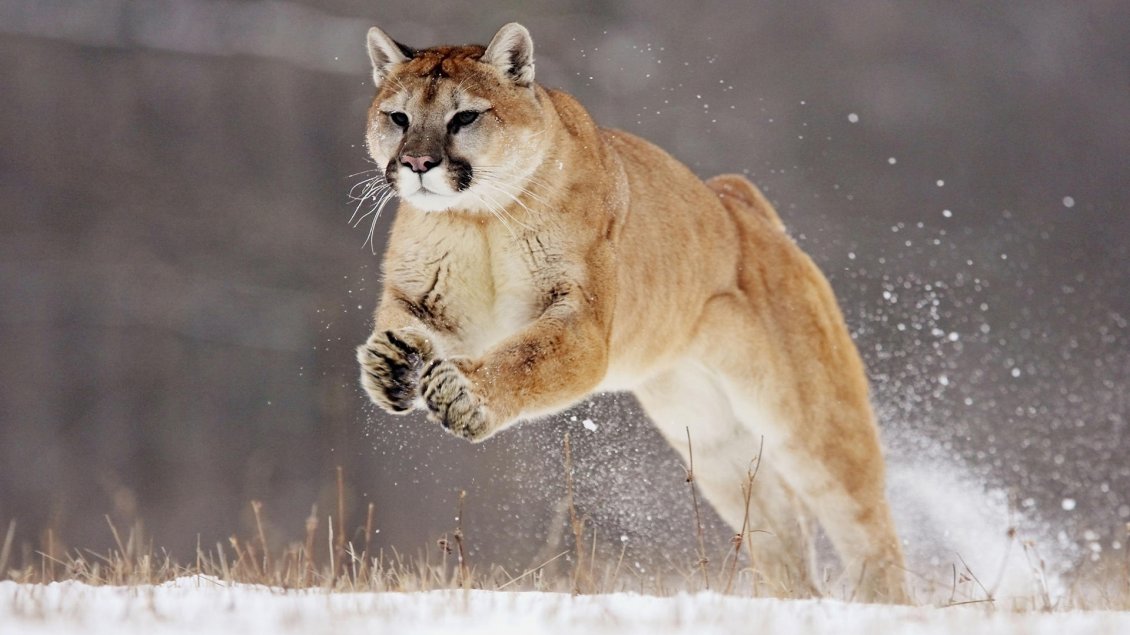
Puma leaping
While they aren’t hostile to humans by default, pumas can tip the scales at 220 pounds and are capable of rendering serious damage.

While pumas don’t have any interest in hunting or harming humans, that doesn’t mean they’re not dangerous. Males can tip the scales at up to 220 pounds, while females can weigh as much as 140.

That’s a LOT of cat: Most of us know the kind of damage 10-pound domestic felines are capable of rendering, especially with sharp claws and teeth that can shred delicate human skin. A 220-pound puma, while not as lethal as a tiger pushing 600-plus pounds, can fatally injure a human being.

Thankfully, these animals are famously elusive and confrontations with humans are exceedingly rare.

buddy_september2019_alt
That’s 10 pounds of pure muscle to you, mister! Everyone knows Buddy is ripped!