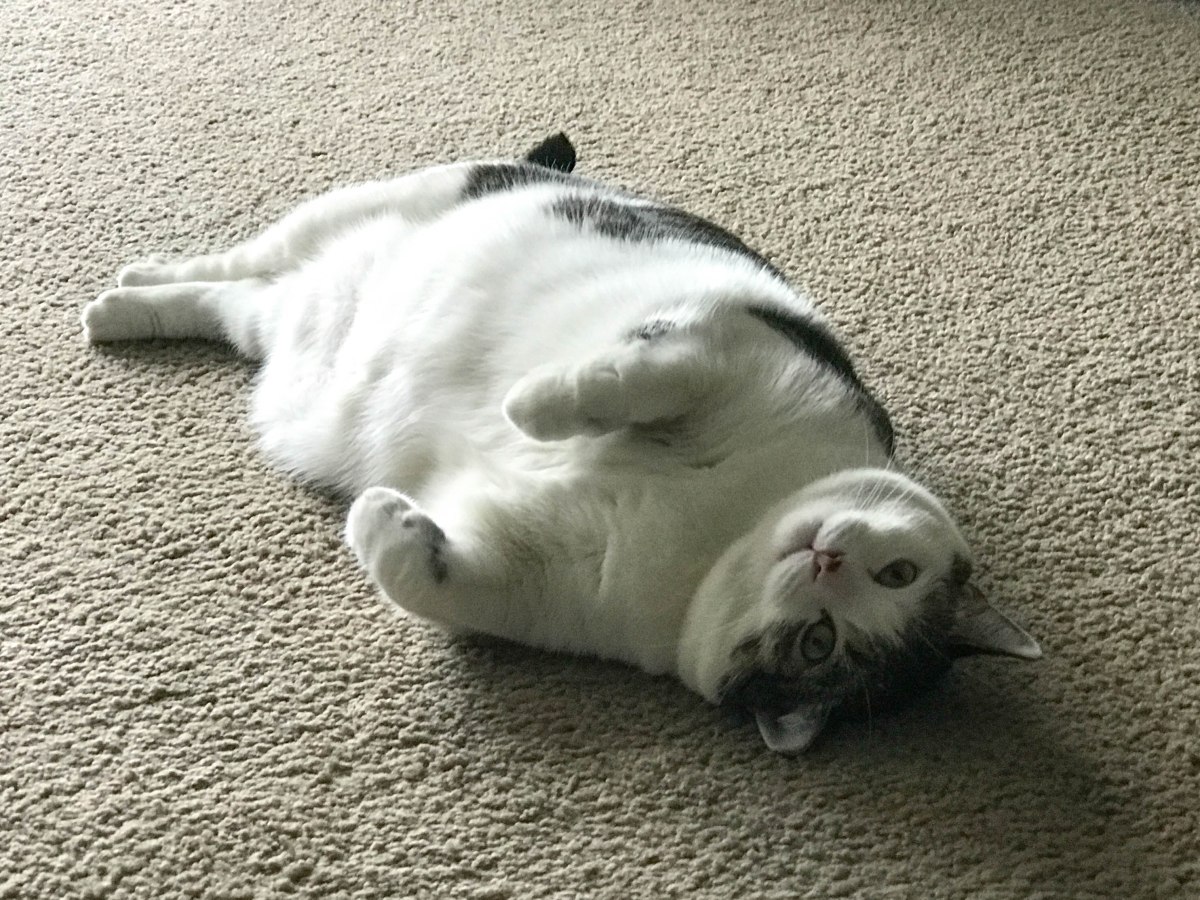
Oh Oh Oh Ozempic For Our Oh Oh Oh Obese Cats? It’s Close To Reality

In apocalyptic news for house cats everywhere, a pharmaceutical company is kicking off a trial of a GLP-1 drug for felines.

If cats could read newspapers, chances are they’d be gripped by a cold terror right about now, wondering if they’re among the unfortunates to have their yums curtailed by the same weight loss drugs their humans have been gobbling.

As the New York Times reports, a biopharma company headquartered in San Francisco, Okava Pharmaceuticals, is about to begin a trial to determine if GLP-1 drugs can help our chonksters slim down. More than 60 percent of American pets are packing extra pounds, the Times notes, while consequences like diabetes are shortening the lifespans and reducing quality of life for felines and canines.

“It is our belief that the condition of obesity, the condition of being overweight, is by far the number one most significant preventative health challenge in all of veterinary medicine,” Okava founder and CEO Michael Klotsman told the paper.

The upcoming study will include 50 cats. Most will receive a GPL-1 medication while a control group — about one third of the cats — will be given a placebo.

Since cats aren’t exactly known for being cooperative when it comes to taking oral medicine and weekly injections at a veterinary office are impractical, Okava has developed a system with a patch about the size of a microchip that will dispense the weight loss drugs over six months before a tiny cartridge needs to be replaced.

If all goes well with the trial, Okava will seek FDA approval and address other obstacles like convincing caretakers that their little pals can benefit from the feline version of Ozempic, Mounjaro and Wegovy.

That may be easier said than done considering our relationships with our furry friends and the role food plays in things like training, bonding and every day life

For lots of cat caretakers “their main way that they interact with and show their love to their pet often revolves around food,” Dr. Maryanne Murphy, a veterinary nutritionist at the University of Tennessee, told the Times.

How could the dynamic between cat and human change if the flow of yums is reduced to meals only? Will training — for everything from walking on a harness, to entering a carrier and fun tricks like high fives — still work if the reward is just a bit of encouragement or a scratch behind the ear?

An earlier weight loss drug developed for dogs, Slentrol, did not catch on because, as one veterinarian noted, “the main way [people] interacted with their pet was by feeding them, and seeing their excitement and happiness when they were eating the food.”

There’s also the not-so-small matter of cost. GLP-1 drugs are in high demand, and they’re expensive. One in eight Americans has taken Ozempic or one of its competitors. At times, the demand has threatened availability for diabetics, for whom the drugs were developed in the first place.

If the trials are successful and the GLP-1 drugs for pets gain FDA approval — which would require a series of much larger scale, more rigorous studies — the company hopes to offer them to consumers at a cost of about $100 per month per pet.

Even if this iteration of the drug fails, it’s unlikely to derail the larger effort. Vets have been prescribing tiny doses of the human version to cats with diabetes, and perhaps most telling of all, pet obesity continues to rise despite years of efforts by the veterinarian community to get people to play with their pets more and feed them less.

As Dr. Ernie Ward, a veterarian and founder of the Association for Pet Obesity Prevention, told the paper: “We haven’t moved the needle.”


And now we check in with our correspondent, Buddy the Cat. Buddy, what do you think about the possibility of GLP-1 for your species and the end of the proverbial gravy train?

Buddy? Bud? Are we having technical difficulties?

I’m sorry, ladies and gentlemen, we can’t find Buddy the Cat. We’ll resume this segment if and when we manage to locate him.
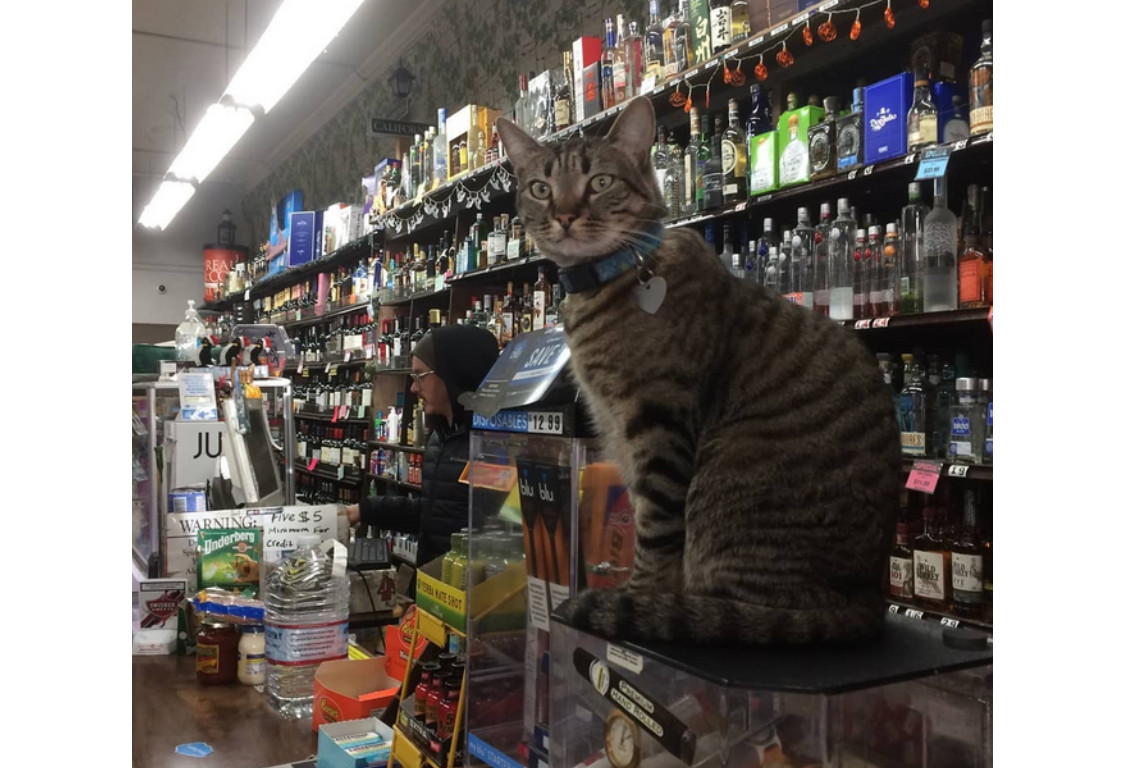
Actress Shares Why She’s A ‘Crazy Cat Lady,’ PLUS: Waymo Denies Responsibility For SF Cat’s Death

Waymo says KitKat “darted under our vehicle as it was pulling away” in the accident that killed the popular bodega cat.

Last week when we wrote about a San Francisco cat hit by an autonomous taxi, the Google subsidiary that produces the cabs hadn’t responded to media requests for comment.

Now Waymo has confirmed one of its driverless taxis did strike KitKat late on the night of Oct. 27, but claims the nine-year-old tabby got in the car’s way as it began to move. Here’s Waymo’s statement:

“The trust and the safety of the communities we serve is our highest priority. We reviewed this, and while our vehicle was stopped to pick up passengers, a nearby cat darted under our vehicle as it was pulling away. We send our deepest sympathies to the cat’s owner and the community who knew and loved him, and we will be making a donation to a local animal rights organization in his honor.”

People in the neighborhood where KitKat was a fixture are not happy with the response. Per Mission Local: “Waymo did not reply to a request to review the video, and did not say how much it would donate or what group would receive the gift.”

Mission Local noted witnesses gave slightly different accounts of the collision, saying KitKit was in front of the taxi for several seconds before it began moving.

As testament to how well-known and beloved KitKat was, there’s now a considerably sized memorial to him in front of the store he called home, with flowers, candles, drawings of KitKit and even cans of cat foot left on the spot. The San Francisco Chronicle has photos of the memorial.

KitKat featured prominently on Instagram, where photos show him hanging out with customers, patrolling the sidewalk in front of the store, and curling up for naps on the counter. Credit: https://www.instagram.com/randasmarket/

The paper also quotes a local who explained the outpouring of grief: “If you’re not a 16th Street regular this can seem silly, but this cat meant so much to this community. If you knew KitKat, you’d understand.”

KitKat’s death has soured more people on Waymo, with the Chronicle noting it “struck an emotional nerve in a neighborhood already wary of driverless cars weaving through its crowded streets.”

Waymo, a subsidiary of Alphabet Inc. (Google’s parent company), operates driverless fleets in San Francisco, Los Angeles, Phoenix, Austin (TX) and Atlanta, with plans to offer automated taxi service in Washington, D.C., and Miami.

“When they show up in your yard and they need you, we can’t look away.”

As someone who avoids medical dramas like the plague, I’m not familiar with Wendi McLendon-Covey’s work, but I’m sure many PITB readers will know the St. Denis Medical star. In an interview, McLendon-Covey talks about rescuing cats, earning their trust, and getting satisfaction from knowing she’s improving one life at a time.

The actress with one of her feline friends. Credit: https://www.instagram.com/wendimclendoncovey/

Most recently she’s been earning trust with a stray she calls Harvey, saying it’s “taken me forever to bond with him” and she still has work to do before he trusts her enough to go indoors.

Cats, she said, are “cuddly, they’re cute, they’re hilarious. They all have their different personalities and they have their little meetings and their little way of talking to each other, and it’s just fascinating to watch. So that’s a hot Friday night for me, is just throwing treats to the cats.”

You can read the rest of the interview here.

Beloved Bodega Cat Killed By Autonomous Taxi In San Francisco

In disrupting another industry, AI has moved into a realm where its use has physical consequences.

I’d planned on taking a break and easing up on posts after the glut of cat-related news the past few days, but this story is disturbing, timely, and sadly we’ll almost certainly hear about more of these incidents in the near future.

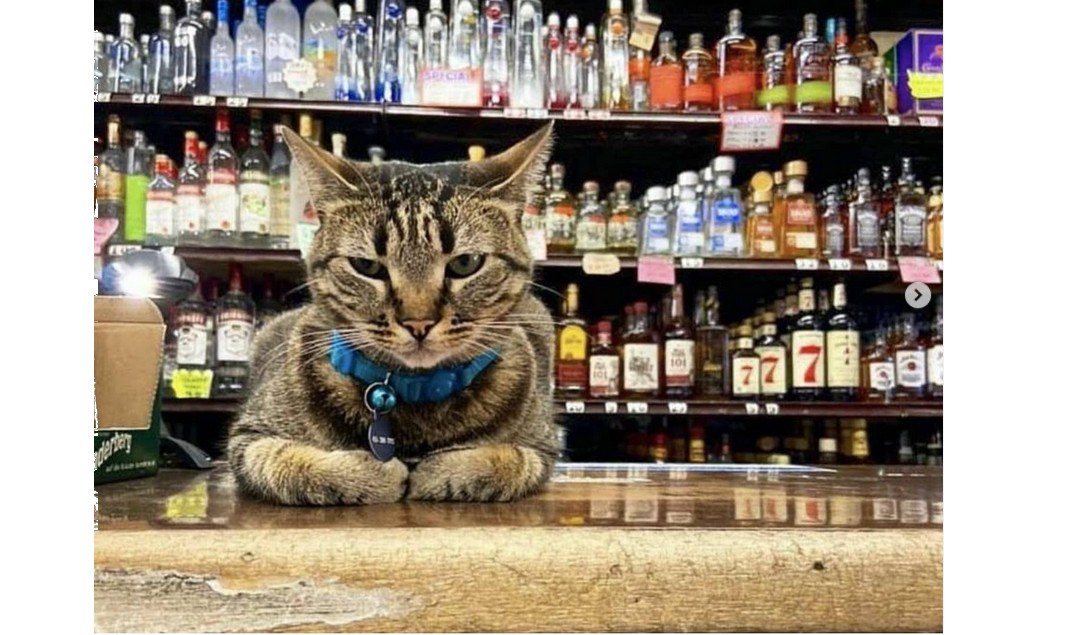
KitKat, a nine-year-old tabby who called Randa’s Liquor Store in San Francisco’s Mission District home, was killed late Monday night by a vehicle owned by Waymo, an autonomous ride-hailing service.

Witnesses said they saw the Waymo hit the cat and pulled him out from under the self-driving car. They say KitKat was sitting on the sidewalk at the time. It’s not clear if the Waymo vehicle drove up onto the sidewalk or if its bumper was the impact point.

A witness who filed a report with 311 via smartphone said the Waymo vehicle “did not even try to stop.” The car continued on to its next pickup.

Several people rushed the injured tabby to a 24-hour emergency veterinary clinic, but his injuries were too severe and he died five minutes before his human arrived.

KitKat outside Randa’s Market. Credit: Randa’s Market Instagram

KitKat was extremely popular with people in the neighborhood, patrons of the neighboring bar and sandwich shop, and passersby. They described him as a feline who liked to patrol the sidewalk and pop into the bar and sandwich shop to “supervise,” making sure all was well in his little realm.

“Everyone’s heartbroken,” Jessica Chapdelaine, who tends bar next door and lives in an apartment above the liquor store, told Mission Local. “He’s the baby. He was everyone’s best friend and he was just the sweetest boy.”

Waymo didn’t respond to requests for comment by Mission Local, TheSFist and other media. The Google-owned company had not addressed the incident on its website’s press page, nor on its X account despite several users bringing it up, as of Thursday morning.

“You can’t even drive in the dark in normal weather without killing a cat,” one user wrote, while others weren’t nearly as diplomatic.

The San Francisco Standard provides a bit of context on the autonomous vehicle issue in California:

“The state had logged 884 autonomous vehicle collision reports as of Friday, according to the Department of Motor Vehicles (opens in new tab). A dog was struck and killed by a Waymo in Bernal Heights in 2023. A week later, a Labrador survived getting hit by a Cruise self-driving car; the company no longer tests its cars in San Francisco.”

On the other hand, there have been several dramatic incidents involving autonomous vehicles that have successfully avoided collisions with other cars, people and animals, even when given a fraction of a second to respond. In an incident in LA from earlier this year, a home security camera caught footage of a Waymo stopping instantly to avoid a dog that ran out into the street directly in the car’s path:

A human driver almost certainly could not make a safe decision in that time interval, but a machine can confirm there is no car immediately behind it and execute the stop within a few milliseconds.

Still, as more ride hailing services roll out autonomous fleets and expand into more cities — as the major players in the still-developing industry are already doing — this will become more of an issue. Waymo operates fleets in San Francisco, Los Angeles, Phoenix, Austin (TX) and Atlanta, and plans to roll out its service in Miami and Washington, D.C., in the near future.

The obvious question is whether AI-driven vehicles are safer than cars with people behind the wheel, for drivers and pedestrians. The answer seems to be yes, especially as the technology improves. Machines don’t text while driving, don’t get distracted fiddling with radios and don’t get behind the wheel after drinking. Sensors and software have improved dramatically in just a few years.

But that won’t be enough. There’s a psychological hurdle in giving up control. It’s the same reason why so many people are terrified of flying even though we’re statistically much more likely to die in car collisions. When you’re behind the wheel, you have control over your fate — or the illusion of control, anyway.

A close-up shot of hardware and some of the sensors on the Jaguar I-PACE Waymo autonomous vehicle. Credit: Waymo

Parallel to the questions about safety are concerns about whether any corporation should be permitted to put driverless cars on the road, especially when the companies with the resources to commit to a major venture like this are the familiar Big Tech conglomerates run by the same handful of tech oligarchs.

Should they be allowed to wipe out yet another industry, taking away work from people who drive taxis or for rideshare companies? Do we need the government to step in and place some guiderails on tech that has developed at an unprecedented pace and threatens to upend huge swaths of society? Should we demand a much more robust regulatory process and risk falling behind other countries in the AI race?

These are questions we’ll all have to grapple with, and there are no easy answers.

RIP KitKat.

All images of KitKat credit: Randa’s Market/Instagram


Massachusetts Becomes 3rd State To Ban Declawing

The Massachusetts law is a significant victory in the quest for a national ban on the cruel procedure, which involves amputating cat toes at the first knuckle

There’s good news today from Massachusetts, which just joined New York and Maryland in banning cat declawing.

The bill, signed Friday by Massachusetts Gov. Maura Healey, prohibits all declawing surgery except for rare circumstances when it’s medically necessary, like cancer in the nail bed.

Veterinarians who violate the law face fines up to $2,500 and professional discipline if they continue the practice.

Despite its name, declawing is the partial amputation of cat toes, equivalent to cutting off human fingertips at the last knuckle.

a little cat playing
Photo credit: Alex Ozerov-Meyer/Pexels

Declawing changes a cat’s gait, causing the animal pain when it walks, and usually leads to early arthritis. It causes cats to stop using their litter boxes, because the act of standing on and shoveling litter becomes painful for them.

Last but not least, it has a profound psychological impact on felines, making them vulnerable by taking away their primary form of defense. Consequently, cats who are declawed are much more likely to bite than those with intact claws.

Most of all, declawing is cruel and inflicts a lifetime of pain on innocent animals, punishing them for doing what cats naturally do.

Aside from New York, Maryland and Massachusetts, a few dozen cities and counties have banned the procedure, ranging from places like St. Louis, Missouri, to Austin, Texas, and eight cities in California, including Los Angeles and San Francisco.

The Bizarre Effort To Brand Cats And Dogs According To Political Ideology

“Things are just a little more progressive here in San Francisco.”

In one of my favorite South Park episodes, Kyle’s father Gerald uproots his family and moves to San Francisco because, he explains, he can no longer stand the narrow minded, gas-guzzler-driving, gun owning people of South Park.

He throws a party in his San Fran townhouse, inviting his new neighbors who all have multi-hyphenate last names and a habit of speaking with their eyes closed, settling into deeply self-satisfied reverie as they literally savor the smell of their own farts.

“Can you believe those morons in Texas just executed another prisoner?” one of Gerald’s new neighbors says, tooting into an empty wine glass before raising it to his nose like an aromatic vintage and taking a deep, enthusiastic huff. “Things are just so much more progressive in San Francisco.”

While reading this article about the Portland metro area boasting the highest percentage of single cat-owning men in the country (more than twice the percentage here in New York, and almost three times more than Miami), I couldn’t help but picture some of the men in the story as crudely drawn South Park characters, inhaling air biscuits as they associate an animal with their politics.

“I think it makes sense because it’s a more progressive part of the country,” one of the men told the Seattle Times as he tried to explain Portland’s high percentage of single “cat daddies.” “I think there’s more freedom to not be ‘toxically masculine’ in this part of the country.”

https://youtu.be/havq7pZQNrk

Because we can’t help but ruin everything with politics in this country, the effort to drag cats and dogs into the left-right divide has been picking up steam in recent years, aided by click-seeking media.

Republicans Are Dog People, While Democrats Prefer Cats,” reads a Business Insider headline. “What our cats and dogs say about our politics,” reads another from the Washington Post. Time magazine quizzed 220,192 readers on their politics and pet preferences, concluding: “It’s True, Liberals Like Cats More Than Conservatives Do.”

The alleged political divide over companion animals has been the subject of research papers in psychology and veterinary journals, and pets are now routinely included in the ideologically-motivated invective that saturates social media. Conservatives are portrayed as poor, shotgun-toting rednecks driving beat-up pickups covered in Gadsden flags while their faithful but stupid dogs hang their heads out of the windows, trailing globs of drool.

Liberals, meanwhile, are portrayed as unmarried middle age women who spend their Saturday nights on their couches with pints of Ben & Jerry’s and their feminine, useless cats, bemoaning their lack of relationships.

The incels and pick-up game “artists” have even gotten in on it.

“Only a cat-owning bitch would complain to the police about a f—ing joke,” manosphere influencer Andrew Tate raged in a 2022 video after one of his intentionally inflammatory social media posts provoked a stronger response than he anticipated. “Who calls the police on a f—ing joke? Cat owners. Cat owners are liberals. Cat owners believe in hate speech. Cat owners are Democrats. Cat owners are dickheads!”

Tate, by the way, has been rotting in a Romanian prison since December after he was arrested and accused of running a human trafficking ring that exploited young women. Tate, his brother and their associates lured the victims with declarations of love and promises to get married. Once the young women arrived in Romania, the country’s authorities said, Tate and his crew would confiscate their passports, imprison them in Tate’s mansion near Bucharest, and force them to perform sex acts on live streams for the financial benefit of the defendants.

Tate was arrested after unsuccessfully trying to troll Greta Thunberg on Twitter by showing off his expensive, gas-guzzling hypercars and bragging that he likes to eat pizza without recycling the boxes. Romanian police, who were already looking at Tate in a wider human trafficking probe, noticed the pizza boxes seen in his videos were from a local chain and moved quickly to arrest him.

Tate has lost three appeals to toss the case, which is ongoing. But the alleged human trafficker still boasts a massive and loyal online following, and as far as his fans are concerned, his words are law. If Andrew Tate says cats are the preferred pets of “liberal bitches,” then it’s true in the eyes of his fans, many of whom pay hundreds of dollars a month for an online “school” where Tate purports to teach them the finer points of masculinity.

Aside from ruining yet another one of life’s joys by dragging politics into it, I’m worried that pets will pay the price for the misguided effort to associate them with ideology.

Cats in particular are already extremely vulnerable and tend to get the brunt of abuse by proxy. That is to say, studies show men who are abusive toward women often target cats belonging to women as proxies for their anger. They associate felines with the feminine. Women target cats to harm their exes and significant others as well, but there’s a lack of statistics since men don’t usually seek help in domestic violence situations.

Likewise, sitting on porches while drinking beer and shooting at critters who happen by is practically an official sport in some parts of the country. As someone who has Google News alerts set up for cat-related stories, I see the same depressing stories every day: cats who die a few feet from their front doors or who make it home with BB wounds, arrows sticking out of their chests or actual gunshot wounds.

Those stories are so common, it’s difficult not to despair for the poor cats and for whatever diseased way of thinking prompts people to hurt and kill innocent animals.

Do we really want to give people more incentive to kill cats?

Do we want gun owners regaling each other with stories about how many “liberal cats” they’ve shot?

Do we want potential caretakers passing on adopting cats because they’re worried their choice of pet indicates they belong to a certain ideological tribe? After all, everything from the cars we drive and the stores we shop, to observing basic hygienic practices during a pandemic, allegedly says something about our political beliefs.

Buddy the Handsome Cat
Buddy the Cat: Not wimpy!

As for men who love cats, we already deal with absurd stereotypes. (We’re invariably described as gay, feminine and somehow not as manly as dog owners, even those of us who have hulking, muscular house tigers like Buddy!) We don’t need to encourage even more stereotypes, and in general I think we could all do with less box-checking. Life is not a Myers-Briggs test.

I know one thing for certain: cats are masters of living in the moment, and they have no patience for human nonsense like politics. They are innocent and pure. Sullying them with political associations is a disservice to these regal, wonderful animals.