The plan would allow bodega owners to certify their cats, eliminate city fines for keeping them, and help find homes for working felines if their stores shut down
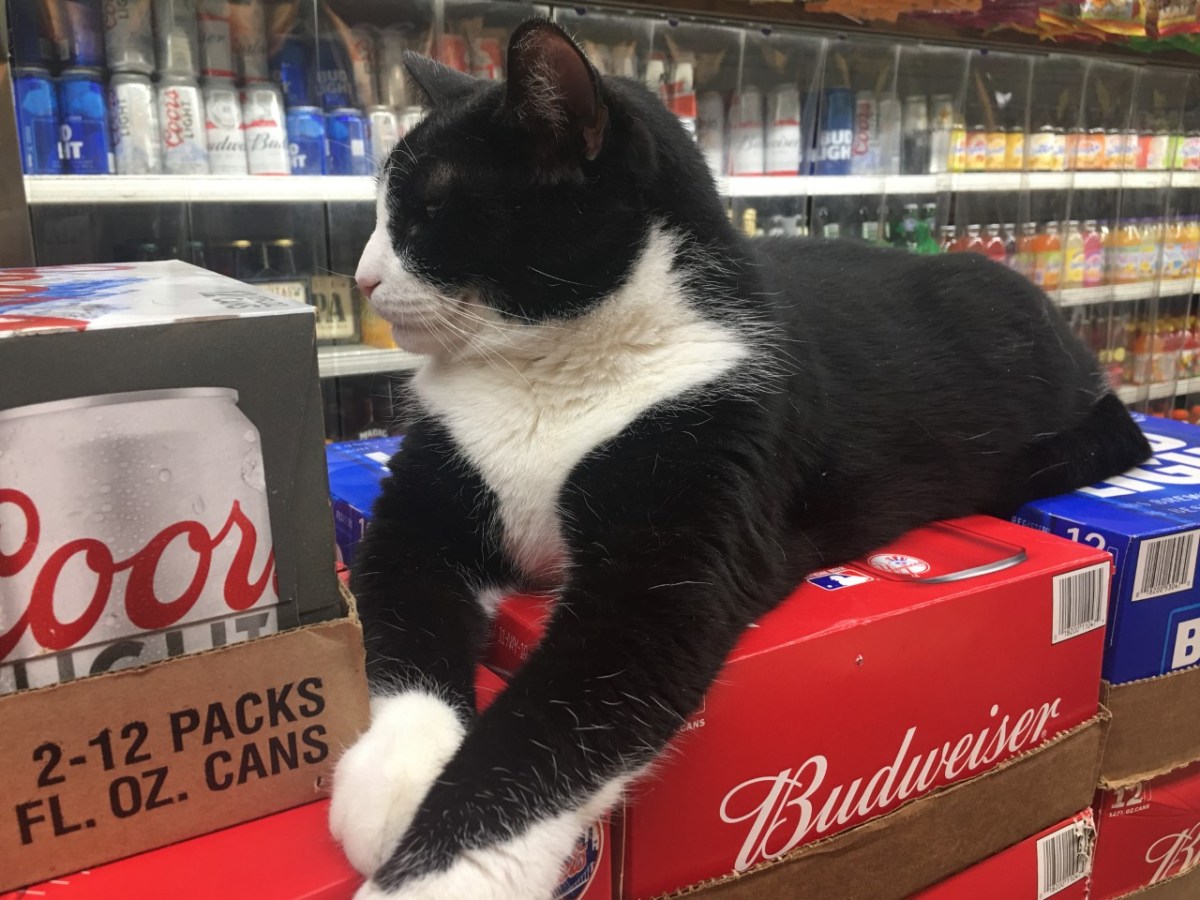
Cats have been a fixture in New York City’s bodegas for decades, but technically they’re illegal.
The fact that they’re so widespread, and owners of the small groceries/delis don’t try to hide them, underscores the absurdity of the situation. The fine for keeping a cat in a bodega in New York is $200 for the first offense, capping out at $300, but the fine for a rodent infestation starts at $300 and can rise to as much as $2,000 for repeat offenses. That’s in addition to the cost of bringing in pest control to get rid of the rats, which can easily add hundreds or more to an expensive problem.
So given the option between a maximum $300 fine with a clean, rodent-free shop, and potentially crippling fines — plus infestation — for rodents, thousands of bodega owners opt for the former. It’s a no-brainer.
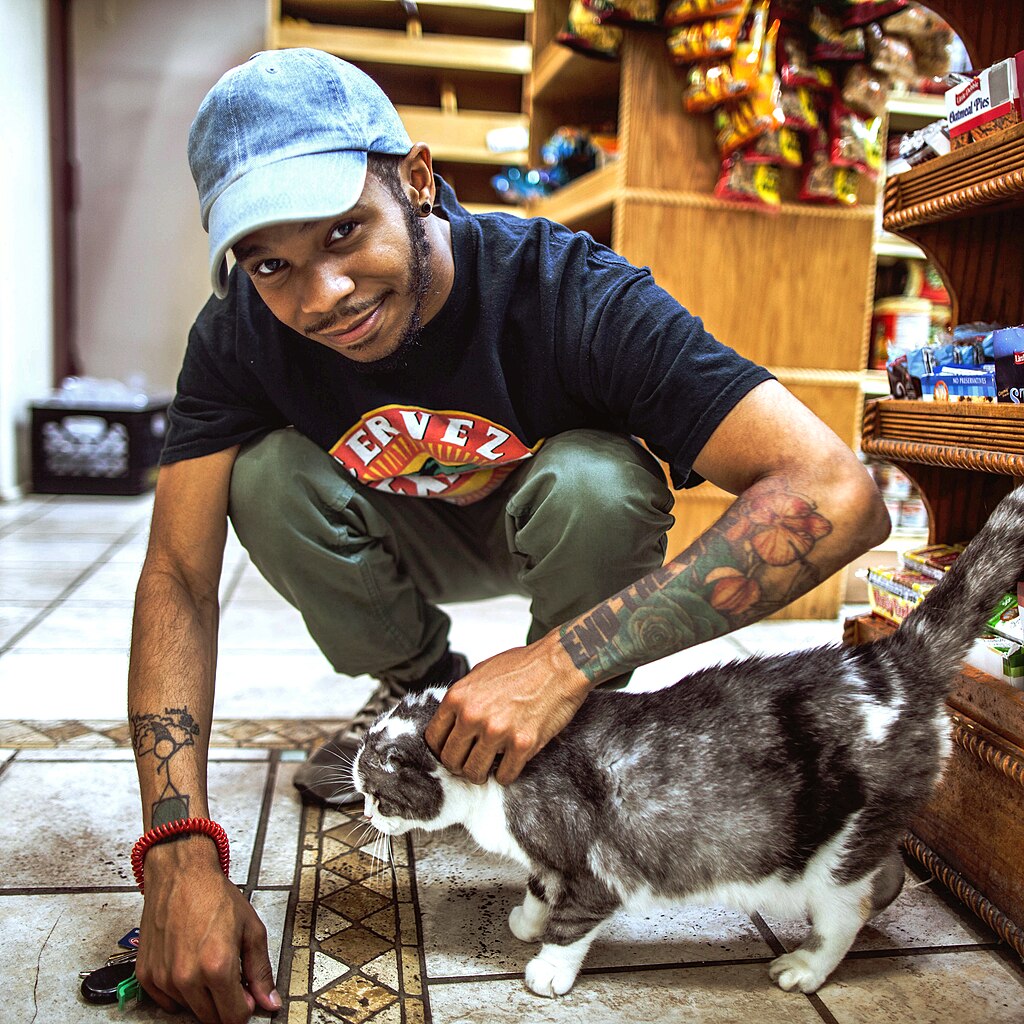
Kota, a bodega cat from Brooklyn. Credit: Wikimedia Commons
The cats are also favorites of customers, and bodega owners don’t hesitate to talk to media when their cats go missing, nor do they turn down Dan Rimada, who runs the extremely popular @bodegacatsofnewyork Instagram page.
Now Rimada is the man behind a petition that seeks to eliminate fines for the store-dwelling felines, establish a voluntary shop cat certification, and help bodega owners get veterinary care for their little helpers.
Rimada proposes soliciting seed money from city government as well as deep-pocketed donors in the pet food industry — “think Purina, Chewy, PetCo” — to establish a veterinary care fund for the city’s working cats.
“Through years of hands-on experience, I’ve witnessed both the charm of well-cared-for bodega cats and the harsh reality of neglect when standards aren’t met,” Rimada wrote in the petition, which has almost 5,000 signatures as of Feb. 28. “In conversations with rescue organizations and experts in public policy, business, and technology, we’ve designed a realistic, community-driven solution.”
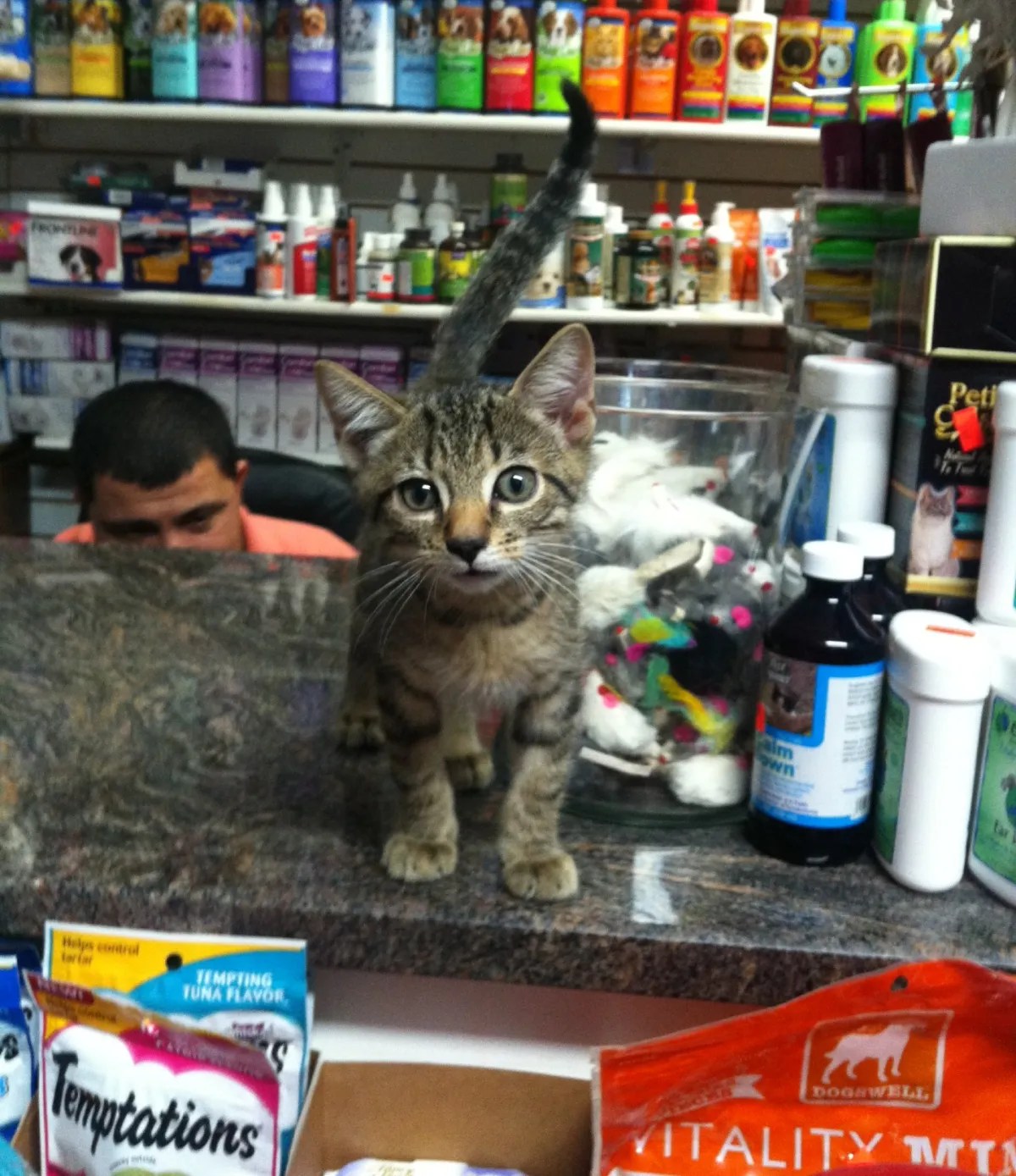
Credit: @bodegacats_/Twitter
The fund would help cover the costs of care, with additional “micro-loans” available for emergencies.
Rimada envisions it as a triple win for the shop owners, rescuers who will be compensated for their time, and most importantly, the cats. If city leaders are willing to engage, Rimada says he hopes to conduct a year-long pilot program to see what works and what would need tweaks, with input from rescuers, veterinarians and the people who care for the cats.
The petition and resulting plan was inspired by cases like that of Kobe, a Hell’s Kitchen bodega cat who almost died of a urinary infection when the owners of the bodega balked at paying veterinary bills.
A report commissioned by the Scottish government blames cats for killing 27 million birds annually in the country.
“They may take our lives, but they’ll never take our freedom! Except maybe to keep pet cats.”
Mel Gibson’s iconic pre-battle rallying cry as Braveheart’s William Wallace might have to be amended if some Scottish politicians get their way and restrict the ownership of pet cats.
Cat lovers in Scotland were up in arms this week after several reports in Scottish and UK media said the Scottish National Party — Scotland’s most powerful political party, which controls almost half the seats in its parliament — is looking to ban cats in a bid to protect local wildlife.
They point to a recently released Scottish Animal Welfare Commission (SAWC) report that claims there are some 800,000 outdoor cats roaming the country, and those felines are responsible for 27 million birds every year, in addition to small mammals.
Meanwhile, other Scottish press pushed back on the claim, saying the SNP hasn’t voted to ban cats yet and isn’t really looking to stop people from having pet cats.
A report from the Scottish government recommends restricting cats to indoors, among other measures. Credit: Wikimedia Commons
In addition to a law requiring people to keep their pet cats indoors, the report suggested curfews and, yes, legislation that would forbid people from keeping pet cats if they live in certain places deemed “vulnerable” to feline predatory habits. That means if wildlife biologists identify an endangered bird that nests in an area, for example, people who live there would not be permitted to have pet cats.
However, the report does not call for a general or widespread ban, as some media reports suggested.
The report credited Australia, where several states have enacted strict measures forbidding people from allowing their cats outside, prohibiting them from owning cats in some places, and even embarking on an infamous campaign to kill three million domestic cats by air-dropping sausages laced with a poison that is lethal to felines, but supposedly not harmful to other animals.
That measure preceded several years of “biblical” rodent plagues, with hordes of mice rampaging across entire swaths of the country and causing billions of dollars in damage to residential and commercial property. Cats are, of course, the natural predators of rodents, and domestic cats wouldn’t exist as a species if they weren’t attracted to human settlements where mice and rats feasted on grain reserves.
CreditL Wikimedia Commons
I haven’t had the chance to take a deep dive into the SAWC report yet, so I don’t know precisely how the commission arrived at the numbers it did, or if the research is original. Hopefully I’ll have a follow up on that soon.
While the truth is somewhere in the middle, so is the solution. People who love cats are happy to voluntarily meet certain guidelines, and they should be, because if we’re uncooperative, someone will eventually turn to compulsion through law. Likewise, concern for the welfare of cats and wild animals aren’t mutually exclusive.
In the meantime, Scotland’s government is likely to spend more money studying the problem before acting.
Lifelong changes in the brains of felines more closely resemble aging in human brains. Studying cognition and cognitive decline in cats could help us better understand brain aging in general, scientists say.
For almost the entire history of modern science, rodents have served as a stand-in for humans in research into everything from metabolism to autoimmune responses.
They’ve even been the go-to for studies examining cognitive decline, diseases and neural mechanisms.
But now research shows there’s a better model closer to home. It turns out cat brains more closely resemble human brains in many respects, particularly in terms of aging and its effect on our mental faculties.
The results are part of a large project, called Translating Time, that compares brain development across more than 150 mammal species, and is now expanding to include data on ageing. The hope is that the data will aid researchers trying to crack the causes of age-related diseases, particularly conditions that affect the brain, such as Alzheimer’s disease.”
One drawback to using mice is they simply don’t live long enough for their brains to deteriorate in ways many human and non-human animals do, scientists told Nature. They also have species-specific mechanisms that ward off certain degenerative diseases, including Alzheimer’s.
Not only do cats live longer, but their brain development and decline mirrors our own on a shorter time scale, scientists say. Tracking brain changes in cats is also more helpful than doing the same with dogs, who have been radically changed by breeding. Felines are mostly left to mate as they please, meaning they’re closer to their natural form, allowing for more useful data.
Credit: Pranjall Kuma/Pexels
Looking to our furry friends makes sense anecdotally as well. Every cat lover has seen the unfortunate confusion and forgetfulness that can afflict senior cats. Older cats tend to sleep a lot more, which is significant for a species notorious for its extravagant snoozing habits.
Thankfully, efforts like the Catage Project do not result in more cats being used in laboratory experiments. Researchers draw their data from veterinary records, brain scans and blood samples.
When asked about how his species could help humans better understand things like cognitive diseases and decline because of their similarity to humans, Buddy the Cat declared the research “fake news.”
“Where’s my bumblebee toy?” Buddy asked. “Did you hide my bumblebee toy? I’ve been looking everywhere for it!”
When told the toy was right were it’s supposed to be, in his toy basket, the 10-year-old tabby grew irritated.
“Fake news!” he meowed. “You put it back there just to mess with me. I’m onto your games! Now where did I put my favorite milk bottle cap?”
While the prime minister is the official government executive in the UK, Larry the Cat is the country’s de facto leader, setting policy on important issues like nap time quiet enforcement.
LONDON — Looking for a change after tiring of outgoing Prime Minister Rishi Sunak and his Conservative party, British voters on Thursday selected a new human to serve Larry the Cat, the nation’s de facto leader.
Incoming Prime Minister Keir Starmer was expected to meet with his feline master on Saturday, a day after a scheduled audience with King Charles.
“Lord Larry will lay out his expectations, go over the house rules at No. 10, and warn the new prime minister that national emergencies are not an excuse to be tardy with meals,” said Alastair Lamb, a political columnist for The Guardian. “This isn’t Larry’s first rodeo, as the Yanks might say. He is succinct in communicating what’s expected of a new prime minister.”
Indeed, Starmer is the sixth prime minister to serve under Larry, who arrived at No. 10 to great fanfare in 2011 during the premiership of David Cameron.
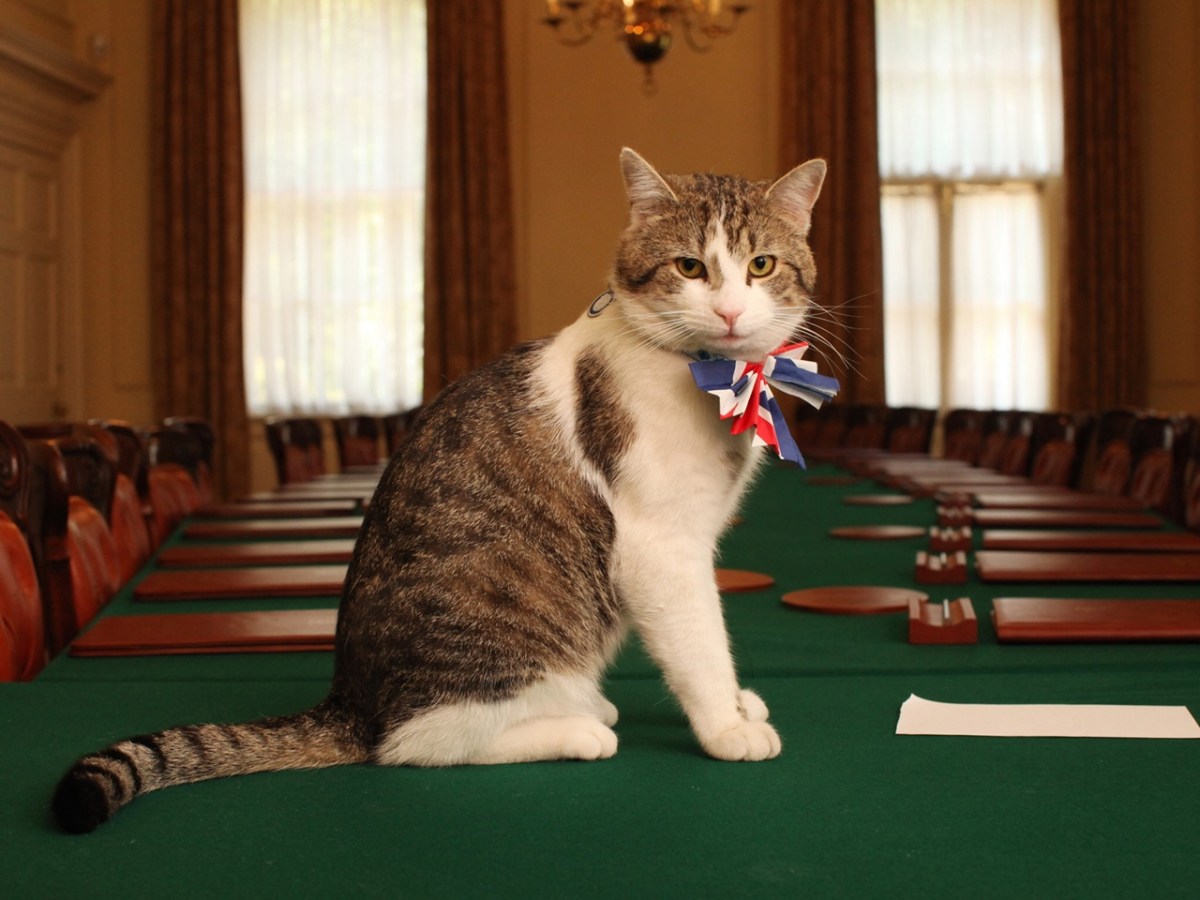
Favorite of the ladies, chief mouser and renaissance feline: Larry the Cat.
Although Larry was initially brought on to combat a stubborn rodent infestation in the 400-year-old structure, he began to take on more duties related to the day-to-day running of the country when it became clear he was more competent — and much more popular — than the men and women officially running the country.
An Ipsos poll released on July 4 reaffirmed the feline’s supremacy: Larry’s favorability ratings are more than double Sunak’s, and he holds an 11 percent favorability lead over Starmer.
Larry has outlasted Cameron, Theresa May, Boris Johnson, Liz Truss and Sunak.
Sunak’s fate was sealed when staff at No. 10 leaked news that the prime minister had gotten on Larry’s bad side for ignoring the feline’s repeated demands for scritches while Sunak was on the phone with US President Joe Biden.
“Sunak made the mistake of believing the real power was in Washington, D.C., when it was in fact the 13-pounds of glorious fur sitting on his desk,” said Sir Felix Finch, editor of the Trafalgar Review of Books. “If he’s smart, Starmer will ingratiate himself with Lord Larry and ensure he remains on the cat’s good side by providing treats and a lap to nap on.”
Larry has directly or indirectly impacted the fates of most of No. 10’s previous occupants. When Johnson was ensnared in a scandal of his own making in 2020 — after he was caught hosting parties while the entire country was quarantining in lockdown — it appeared the 60-year-old former Etonian was on his way out. But in a show of confidence, Larry climbed on Johnson’s shoulder and sat there as the beleaguered politician apologized to British citizens in a televised address.
“His Lordship was sending a strong message: ‘This Boris guy isn’t bad, his treat game is strong and he lets me sleep on his head at night,” Finch said. “The public really responded, concluding that if Johnson still retained Larry’s favor, he must be an allright bloke.”
Buddy the Cat visited No. 10 Downing St. in 2020 while he was president of the Americats, meeting his fellow head of state, Larry, for meows about the continuing alliance between the United Katdom and the Americats.
Starmer and his wife, Victoria, are said to be new to the world of cat servitude and will need to hit the ground running in order to avoid disappointing Larry. A team of aides will bring the couple up to speed on the basics before dining with Larry and his lady friend, Maisie.
“The First Larresian Supper, as it’s been dubbed by the British press, is seen as a key indicator of a new prime minister’s aptitude for the job,” said Spyglass magazine’s Luisa Rey. “One of the reasons [Liz] Truss’s premiership was so short was her inability to make a meaningful connection with Larry.”
When word reached the press that Larry and Maisie were displeased with their pate and after dinner digestif, it was seen as only a matter of time before Truss was gone. Not only did she last a mere 50 days, the shortest tenure of any prime minister in history, she was also ousted from her seat in parliament in the same elections that saw Starmer win the top job.
“The message was quite clear,” Rey said. “Getting on Larry’s bad side is tantamount to career suicide.”
Starmer, who hopes to avoid that fate, received congratulations from Biden on Friday.
“Congratulations, Kevin,” Biden told Starmer, according to an official transcript of the call. “When I was a young man in Scranton, Pennsylvania, the British there loved me. They made me their prime minister, and that’s how I became mayor of London. Folks, look. The idea that…and look, my economy was the number one armadillo in the world, and there’s not a pangolin that’ll dance about history who will tell you the malarkey as it flies. As the first Macedonian-American president, I invite you to come visit the Taj Mahal and have dinner with me and Joan Rivers.”
From the military camps where they stop mice from wreaking havoc to social media where they help raise money, Ukraine’s felines are enduring the war alongside their people.
Roman Sinicyn and his men were living in an abandoned house in a destroyed village for a month.
Although each of the Ukrainian soldiers contributed to their survival and fought the Russians, perhaps their biggest hero was Syrsky the Cat.
The fearless feline evicted a rodent infestation in the platoon’s temporary headquarters, hunting the mice mercilessly as his humans engaged in firefights with invading Russians. By day Syrsky made the soldiers’ temporary lodgings livable and by night he soothed their trauma with healing purrs.
The cheese-loving moggie’s moniker is a double-entendre: he’s named for Ukrainian Army Land Forces Commander Oleksandr Syrsky, and for the Ukrainian word for cheese, syr.
A new story from Politico EU details the important role of felines as the costly war enters its third year. Russian missiles, bombs and artillery have flattened villages, sending civilians fleeing and often separating them from their families and their pets.
The bewildered cats and dogs, accustomed to easy lives indoors, are suddenly thrust into a world of death, explosions, mine fields and other horrors.
As the war endured past its early phases, former pets began seeking out humans where they could find them — in military camps and in the rodent-infested trenches where they hunkered down against the constant thunderclaps of Russian artillery.
During peak war season in the summer, Vladimir Putin’s bedraggled military fires up to 20,000 artillery rounds a day according to the Associated Press, with that number dipping to “only” 7,000 per day as the war machine slows in brutally cold Slavic winters.
Oleksandr Liashuk, a Ukrainian soldier, with his cat Shaybyk. Credit: Oleksandr Liashuk
Just like they did 10,000 years ago when they first domesticated themselves, cats proved their worth by chasing out mice and rats, but this time they didn’t have to convince humans to allow them to stick around. They were welcomed with open arms and hands bearing snacks, serving as hunters and therapy animals to men enduring a living hell.
“When this scared little creature comes to you, seeking protection, how could you say no? We are strong, so we protect weaker beings, who got into the same awful circumstances as we did, just because Russians showed up on our land,” Oleksandr Yabchanka, a Ukrainian medic, told Politico.
It’s amazing how a return to primitive circumstances has so quickly pushed humans back toward reliance on animals who made it possible for our species to survive in the first place.
Without dogs, early hunter-gatherers would have been much worse off on the hunt and their groups would have been much more susceptible to ambush when they slept. Indigenous societies eking out existences on the tundra would have no reliable animals to pull sleds. Without oxen to pull plows, farmers wouldn’t be able to produce enough food for civilization to thrive and grow.
And the people of nascent human settlements, taking the first great leap forward for our species with the invention of agriculture, would have starved out over long winters as mice and rats gnawed away at their food stores — if not for cats, our furry friends.
In 2024 humans can’t live without cats once again. Felines patrol Ukraine’s World War I style bunkers, killing hordes of mice. Mice that otherwise devour MREs, chew through comm link and power wires, damage weapons and make soldiers miserable.
A Ukrainian soldier with a stray kitten. Credit: Ukraine Ministry of Defense
Some cats become unofficial unit mascots and good luck charms, but many others are claimed by individual soldiers who find normalcy and relief in their company.
One soldier/cat pair are viral sensations thanks to videos of the alert cat riding along with his human, scanning the terrain ahead. Another story detailed a patrol whose men just avoided an ambush thanks to their company’s cat, who spotted the enemy first and frantically warned that something was wrong.
In that way, cats are serving the propaganda effort as well, helping the public to connect to the men and women defending them.
Military cats have become signals for Ukrainians to rally around, but Russians are doing it too. Russia is a famously cat-loving country, and Putin’s government has latched onto stories about the felines accompanying his men into battle — an effort that Politico notes is meant to humanize Russian soldiers and create the impression that it values them even as it continues to conscript unwilling civilians and ship them to the front line “meat grinders” with a few weeks’ worth of training, meager supplies and minimal ammunition for their rifles.
In that respect, the soldiers of Ukraine and Russia have at least two things in common — they love their feline companions, and they’re enduring hell as well as a high risk of death because of one small man’s delusions of greatness and legacy. Western media tends to ignore the humanity of Russian conscripts, and the pro-Ukrainian side of the internet calls them “orcs,” painting them as the mindless and disposable drones of a bloodthirsty dictator.
But they’re human too, with their own hopes and fears, and mothers back home worrying about them. They don’t want to be there. It seems fanciful to imagine Russians refusing to continue the invasion when Putin has squads behind the front lines with guns pointed at his own men to prevent them from deserting or refusing to fight. But maybe the men in the trenches can come together over shared interest and shared love of cats, and help put an end to three years of misery.