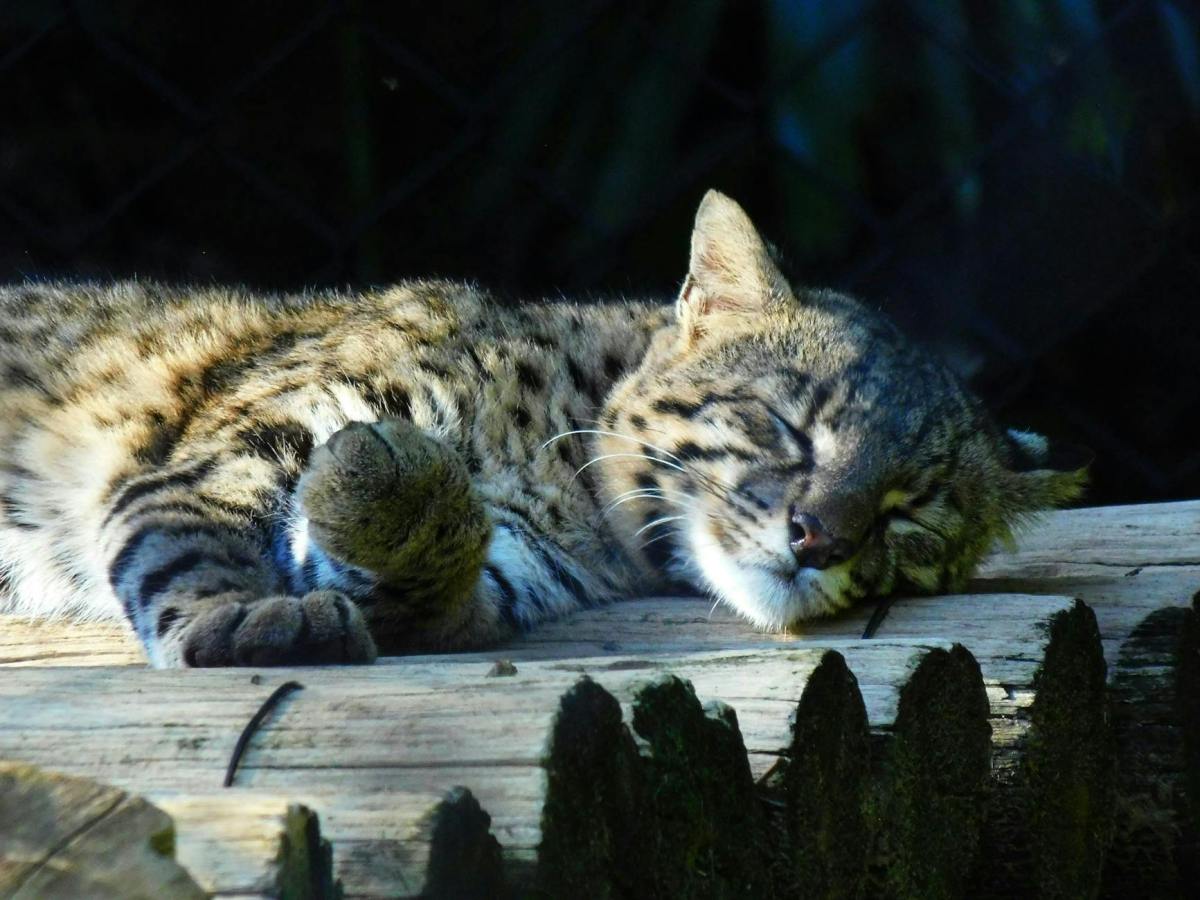
Cats spend most of their time sleeping, which leaves them in a vulnerable position.
Aubrey Plaza is delightfully weird.
Anyone who’s seen her on a late night talk show or in an impromptu interview knows what I’m talking about. Instead of the practiced, carefully crafted anecdotes celebrities tell to make themselves seem more interesting, or the hard focus on promoting a particular project, Plaza seems to revel in awkward pauses, bizarre responses and stories that most people would never tell about themselves.
She does it all with a deadpan expression so you can never quite tell if she’s joking. That’s part of the fun.
I hadn’t seen her in much until Emily the Criminal, about a woman whose frustration at trying to make ends meet with dead-end jobs leads her down a highly illegal path, revealing a talent for deception she never knew she had.
Plaza in Emily the Criminal.
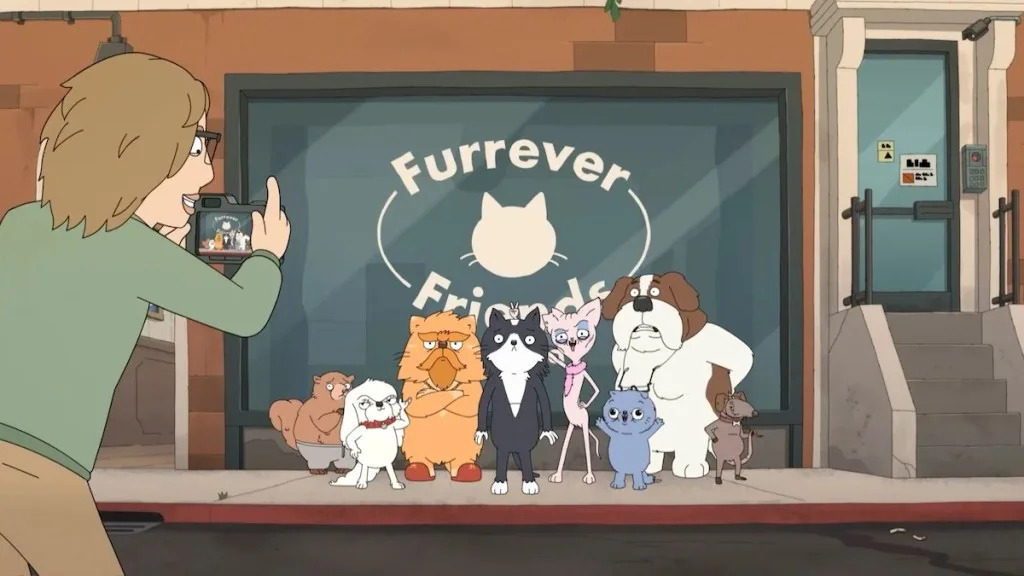
Now she’s starring in Kevin, an animated show about an eponymous tuxedo cat who decides that when his humans break up, he’s going to break up with them too. Instead of going with one of them, Kevin decides to move “into a local pet rescue in Astoria, Queens, where a band of misfit animals helps him discover what he truly wants out of life,” according to the series’ logline.
Plaza co-created the series with Joe Wengert, and Jason Schwartzmann, who we loved in Bored To Death, will voice Kevin. The show will premiere on April 20 on Prime Video.
A still from Kevin.
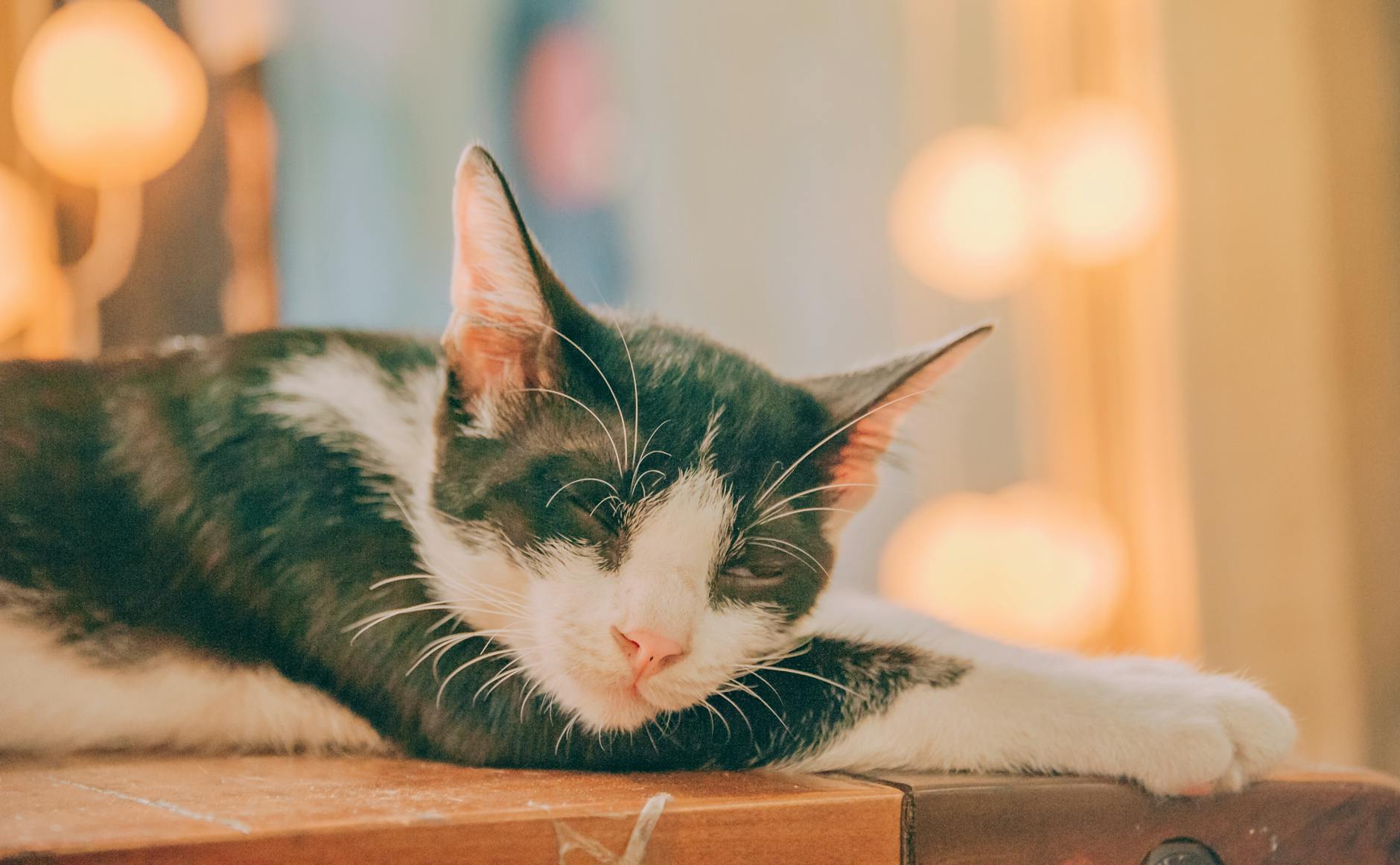
Cats prefer sleeping on their left side, but why?
Two out of three cats prefer sleeping on their left side, which immediately raises two questions: why do they prefer sleeping that way, and how do we know such a seemingly obscure piece of information?
In 2025, a team of scientists from Italy and Germany analyzed more than 400 random online videos of our furry overlords in their rest state, and the numbers were consistent. Cats definitely have a preferred side to sleep on, and it’s the left.
As for why, in a research paper published in Current Biology last summer, the scientists say there are several reasons, but the primary one is that the right side of the brain processes shapes and visual sensory input.
Since the right hemisphere of the brain controls the left side of the body in mammals, due to the way nerve fibers cross at the base of the brain, a cat opening its eyes and seeing the world from the left side is able to more quickly assess information and react.
Credit: Min An/Pexels
That’s a pretty big deal for cats, as a story in Science Focus notes. As both predator and prey, felines have to respond quickly not only to potential threats, but also potential lunch.
That is especially true for a species that spends the majority of its time sleeping deeply or napping, meaning they’re physically vulnerable to attack most of the time. That explains why our cats are able to spring to alertness immediately from a nap, and why their most restful sleep comes when they’re absolutely sure they’re safe.
Anecdotally, that makes sense. Bud clearly feels safest when he sleeps on me or burrows between my knees, and it’s subsequently harder to rouse him from slumber compared to, say, when he catches some Zs on the couch by himself or retreats to another favorite napping spot.
Perhaps unsurprisingly, he also bucks the trend and likes to sleep on his right side. We are, after all, talking about a cat who still hasn’t figured out that wand toy games simulate hunting, and that they should end with a “kill bite” rather than Bud’s favored method, which is bouncing happily on his back paws while bobbling the toy in his front paws.
He may have the instincts of his wild ancestors, but all he knows is the comfort and warmth of human homes.
Free-ranging cats do have a negative impact on wildlife, but we’re not going to solve the problem by demonizing them and culling them by the millions.
The Literary Hub story starts off with a provocative question: what if cats ruled the world?
This is a question I find amusing to ponder, so instantly my mind was filled with images of cats scandalizing foreign heads of state by insouciantly swiping gifts off tables, angering diplomats by yawning and nodding off during summits, and financing the construction of massive and unnecessary coastal walls, on the off chance the ocean decides to move inland and get them wet.
Then the writer cited the repeatedly-debunked “study” that credulous media of all stripes still reference without bothering to read the text — that infamous 2013 Nature Communications paper, published by birders who author books with titles like “Cat Wars: The Consequences Of A Cuddly Killer.”
Some journalists don’t know any better, some are overworked, and some are frankly too lazy to read the study with a critical eye, but I think one of the more likely reasons people continue to cite the paper is because it’s easier to blame felinekind for wildlife extirpation than it is to admit we’re the primary culprits. After all, according to the WWF’s most recent annual review, we’ve killed off 73 percent of Earth’s wildlife since 1970, and we certainly didn’t need house cats to help us push elephants, rhinos, every species of higher non-human primate, and innumerable other species to the brink of extinction.
We did that. We did it with our relentless development, consuming and fracturing wild habitats. We did it with careless industrialization, by dumping chemicals and garbage into our rivers and lakes until more than half of them were rendered too polluted to swim in or drink from. We did it by bulldozing old growth forest and jungle, by exploiting species for fur, folk medicine, ivory, sport hunting and in the illegal wildlife trade.
Cheetahs are critically endangered, and they’re being driven to extinction even faster by poachers, who sell them to wealthy buyers in oil-rich gulf states where they’re trendy pets. Credit: Riccardo Parretti/Pexels
More than 47,000 species — that we know of — are headed toward extinction. It’s so much easier to blame it on anyone or anything else than admit we need to make major changes to our lifestyles and policies.
But don’t take my word for it. Here’s what Alley Cat Allies has to say about the 2013 meta-analysis and its derivative papers:
“The Smithsonian-funded study published in Nature Communications is not rigorous science. It is a literature review that surveys a variety of unrelated, older studies and concocts a highly speculative conclusion that suits the researchers’ seemingly desperate anti-cat agenda. This speculative research is highly dangerous. It is being used by opponents of outdoor cats and Trap-Neuter-Return (including the authors) to further an agenda to kill more cats and roll back decades of progress on TNR. And it is being spread unchecked by the media.“
Here’s what a group of ethicists and anthropologists wrote about the claims against cats in the journal Conservation Biology, lamenting the lack of nuance and danger in arguing that cats must be stopped “by any means necessary.” The drive to blame felines, they argue, has “fueled an unwarranted moral panic over cats”:
“Contrary to Loss and Marra’s claims that the scientific consensus is consistent with their views that cats are a global threat to biodiversity, the actual scientific consensus is that cats can, in certain contexts, have suppressive population-level effects on some other species (Twardek et al. 2017). This is something that is true of all predators, native or not (Wallach et al. 2010). Thus, cats should not be profiled as a general threat a priori and without reference to important factors of ecological context, situational factors, clear definition of harms, and evidence thereof.”
“There are there are serious reasons to suspect the reliability of the new, extreme cat-killer statistics,” wrote Barbara J. King, retired chairwoman of the department of anthropology at The College of William and Mary.
Feline predatory impact varies by local conditions. Free-ranging cats in cities and suburbs kill rodents, but have minimal impact on other animals, data shows. Credit: Patricia Luquet/Pexels
Like we’ve often noted here on PITB, the authors of the Nature Communications study can’t even say how many free-ranging felines exist in the US. They say it’s between 20 and 120 million. That’s a 100 million difference in the potential cat population! How can they tell us how many birds and mammals are killed by cats if they can’t even tell us how many cats there are? No amount of massaging the numbers can provide an accurate picture if the initial data is shaky or nonexistent.
Furthermore, the nature of a meta-analysis means the authors depend on earlier studies for estimates on predatory impact, but the 2013 Nature Communications paper does not include any data —not a single study — on feline predatory impact. In other words, they have no idea how many animals free-ranging cats actually kill.
In authentic studies that actually do measure predatory impact, the data varies widely in geographic and demographic context. Data derived from the D.C. Cat Count, for example, shows that cats living more than 800 feet from forested areas rarely kill wildlife, and are much more likely to kill rodents.
Those who cite the bunk study and its derivatives are “demonizing cats with shaky statistics,” King wrote, adding she was alarmed by “an unsettling degree of uncertainty in the study’s key numbers.”
Free-roaming populations are reduced when cat colonies are managed, and the animals are fed and fixed. Credit: Mia X/Pexels
Ultimately, we agree with Wayne Pacelle, former president of the Humane Society of the United States.
The meta-analysis authors “have thrown out a provocative number for cat predation totals, and their piece has been published in a highly credible publication, but they admit the study has many deficiencies. We don’t quarrel with the conclusion that the impact is big, but the numbers are informed guesswork.”
Cats do have a negative impact on wildlife, it varies according to local circumstances, and those of us who love cats have a responsibility to keep our pets indoors and help manage free-ranging populations.
But cooler heads must prevail, approaches to managing cats must be evidence-based, and the effort requires people of all kinds working together — which becomes much more difficult when agenda-driven pseudoacademics whip people into a frenzy by portraying felines as bloodthirsty, invasive monsters who need to be wiped out “by any means necessary.”
Solving the problem of free-ranging cats requires us to own up to our own role in species extinction and to take measured, evidence-based steps to protect vulnerable wildlife. Otherwise, we’re inflicting a whole lot of suffering on sentient creatures and accomplishing absolutely nothing.
A new paper claims cats are healthier when fed human diets, but the “study” is activism masquerading as science.
We have a science problem in this country.
Tens of millions of adults are scientifically illiterate and cannot articulate a simple definition of the scientific method.
That includes the usual suspects, the people who don’t understand the difference between anecdotes and hard data and say things like “Evolution’s just a theory” or “I don’t believe in science” as if it’s an ideology or religion. It also includes people who like to declare they’re “into science” as if it’s a band or a genre of cinema, and often post articles from sites like “I F—-ing Love Science,” which routinely mistakes natural phenomena like stars, interstellar space and the animal life for “science.”
To quote Sam Kriss’ wonderful essay on the subject: “‘Science’ comes to metonymically refer to the natural world, the object of science; it’s like describing a crime as ‘the police,’ or the ocean as ‘drinking.'”
Science is a formalized method for studying the natural world. That’s it. No more, no less. It isn’t natural phenomena itself, it isn’t something that requires faith. It’s meant to be challenged, with each piece of knowledge hard-won as the scientific community collectively chips away at the vast edifice of things we don’t understand.
The lack of scientific literacy is an indictment of the American education system, but the science and journalism communities are also big contributors. A flawed academic publishing system encourages researchers to make grandiose claims in abstracts and press releases to increase the chances their work will get positive coverage in the press. Few journalists are more scientifically literate than the general population, so they report dubious claims credulously and present individual studies as the final word on subjects instead of tentative first steps in contributing to the corpus of human knowledge.
We see this all the time with reporting on the environmental impact of felines, but it’s certainly not limited to that subject. How many times have you seen your local news anchors or newspapers tout studies saying coffee is healthy, only to report the next week that a new study says coffee isn’t healthy after all?
“Those scientists can’t make up their minds,” they’ll say with a forced chuckle before handing the broadcast over to the weatherman, oblivious to their own failure to provide context.
The effort to rebrand cats as vegans
A new “study,” given prominent play today by major news outlets like Newsweek and aggregators like Drudge, is a classic example of misleading claims given the veneer of scientific authority. The paper claims vegan cats are “healthier” than their meat-eating counterparts. The study — which is actually a survey — says no such thing, and its authors are surely aware that the way it’s been packaged for media consumption will cause confusion, but they’ve gone ahead with it anyway.
The research involved asking 1,369 cat owners to fill out surveys about their cats, the cats’ diets, and their veterinary health histories.
Of those surveyed, there were 123 reported “vegan cats” in their households (about nine percent of the total), and while the abstract and media pitches claim the surveys show vegan cats are healthier, the differences are statistically insignificant. The sample size is too small to draw any conclusions from, and the fact that the details are self-reported means the “data” is worthless: People who put their cats on vegan diets despite knowing felines are obligate carnivores have a vested interest in defending their decision. They’re not impartial, and their survey answers aren’t either. (The paper acknowledges that 91 percent of the respondents are female, and 65 percent are vegans, vegetarians or pescatarians themselves. Those are admirable choices for a human diet, but not for a cat.)
Relying on self-reported “data” also means the research team doesn’t actually know the true veterinary histories of the cats in question, nor does it know anything about the nutrient content of the vegan “cat food” given to the 123 cats who have been deprived of meat. It also cannot account for possibilities like the so-called vegan cats slipping out at night to hunt rodents.
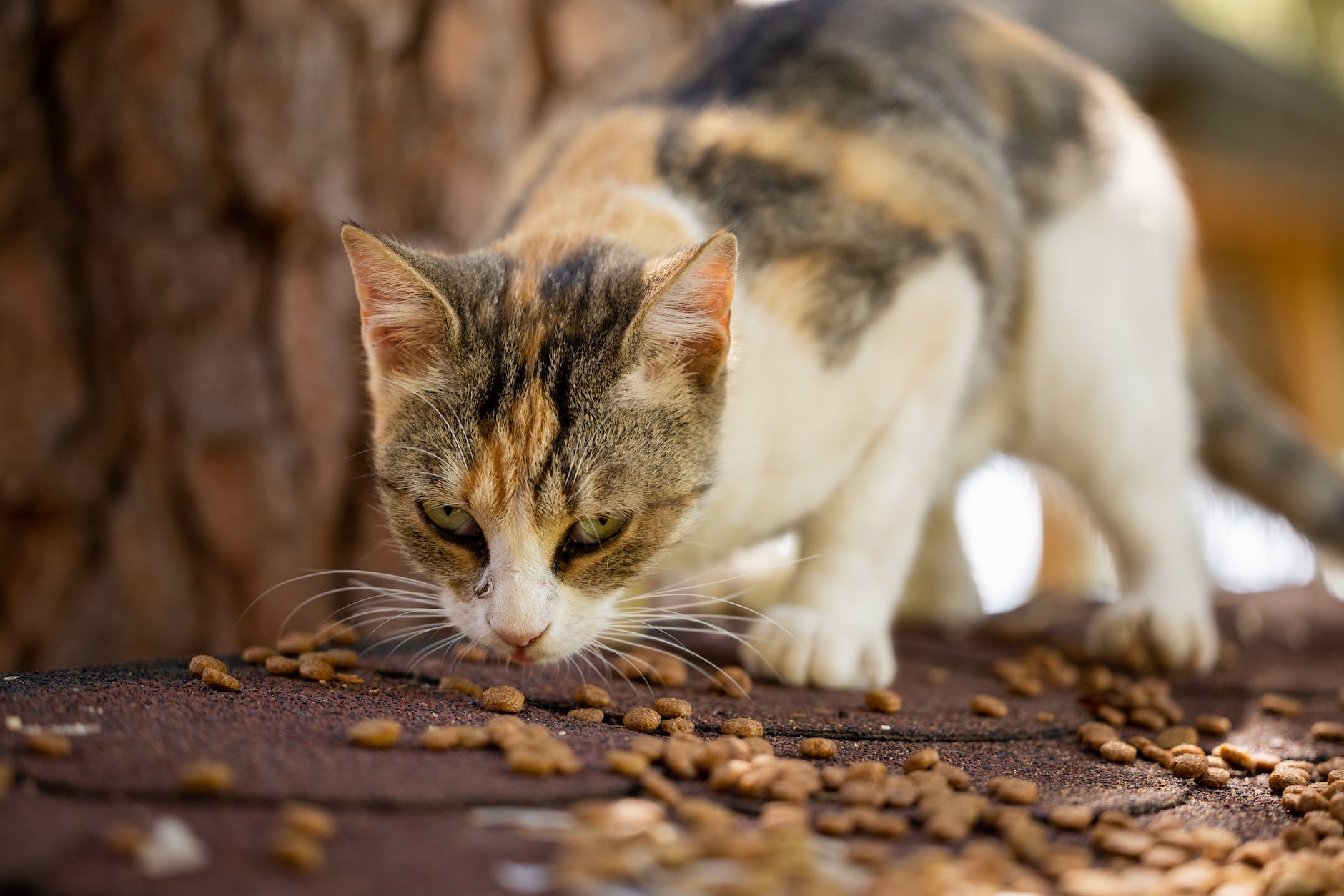
Credit: Engin Akyurt/Pexels
That’s especially important because of “vegan cat food’s” dubious history. Evolution, the brand that popularized the concept, is owned and operated by a man named Eric Weisman, who has been prosecuted and repeatedly sanctioned for misrepresenting himself as a physician, veterinarian and scientist — and continues to misrepresent himself.
Weisman, a chiropractor by trade, racked up a long list of violations in his chosen field before his chiropractor license was pulled, then was charged and convicted criminally for, among other things, practicing veterinary medicine and regular medicine without a license. Weisman’s list of offenses include “treating” cancer patients, “treating” and misdiagnosing animals, and posing as a physician for years, including in advertisements and literature related to his pet food and fake veterinary practices.
Weisman is still calling himself a physician in violation of his plea agreement, and he’s still selling “vegan cat food.” Would anyone in their right mind weigh the claims of that man against the tens of thousands of veterinarians and pet nutritionists who are horrified at the idea of restricting cats to vegan diets?
(In case you’re tempted to think chiropractors are legitimate to begin with, you should know that chiropractor was founded by a lifelong quack who claimed its methods were taught to him by the ghost of a physician, which allegedly appeared to him during a seance. Chiropractor’s founder dodged accountability for years by claiming his practice was a “religion.” The fact that it’s now a $15 billion industry despite its origins, and decades of research that has found no benefit to the practice, illustrates how eager people are to believe just about anything.)
The consequences of bad science
Not only will the “study” and press coverage of it mislead people into believing its claims, it’s another black mark on the scientific community. Trust is hard-won, easily lost, and for better or worse the misdeeds of a few scientists reflects on the entire field.
Others will simply believe it, especially when major news outlets like Newsweek report the results without question, without acknowledging that it’s a lazy effort masquerading as science by a research team that already knew what result it wanted before handing out the surveys. (The “study” was funded by ProVeg, an NGO that promotes plant-based consumption and is involved in the development of plant-based foods.)
Lastly and most tragically, cats will suffer for it. Cats who are denied meat suffer slow and agonizing deaths, with health problems accumulating due to the lack of certain proteins until they go blind, become chronically malnourished and eventually suffer organ failure.
And for what?
Because some people believe human morals apply to cats?
Because, despite all common sense, they think they can change a species that has been dependent on meat for so long in their evolutionary history that their bodies literally cannot synthesize certain proteins and cannot extract nutrients from most plant material?
How would we like it if we were dependent on giants to feed us, and those giants decided we could and should live on a diet of marshmallows? We’d suffer horribly and we’d die, but at least we’d know why.
Cats don’t have that luxury. They depend on us to do right by them, and when we adopt them it’s our basic responsibility to keep them healthy and well-fed. Let’s not fail our little friends by pretending human ethics is applicable to a species that can’t understand it, or consent to participating in it.
An Australian team decided to look for DNA evidence in a novel place: cat fur. Their findings could give law enforcement a powerful new tool to identify crime suspects.
When you think of a crime scene, you probably picture uniformed officers manning the perimeter, crime scene tape cordoning off the room where the deed was done, detectives trying to reconstruct what happened, and techs collecting evidence.
Those techs might swab surfaces for traces of a suspect. Drinking cups and water bottles might be dusted for fingerprints, stray hair might be bagged and sent back to the laboratory for analysis. Discarded cigarette butts, door handles, buzzers — they can all yield evidence, to say nothing of cell phones, USB sticks and smart appliances.
But what about the pets? If a suspect was especially careful not to leave prints or touch anything at the crime scene, could the fur of a cat harbor DNA?
A team comprised of scientists from Australia’s College of Science and Engineering at Flinders and the Victoria Police Forensic Services Department wanted to know if cat fur could indeed hold critical evidence at crime scenes, so they conducted a study involving 20 pet cats from different homes, and what they found could provide an important tool for law enforcement. Their findings were published in the journal Forensic Science International.
If detectives are trying to piece together the identities of robbers who, say, broke into a home, brutalized the people there at gunpoint and stole their valuables, they can’t interview the victims’ pet cats about what they saw, but it turns out they can swab the kitties’ fur and have an excellent chance of retrieving useful DNA.
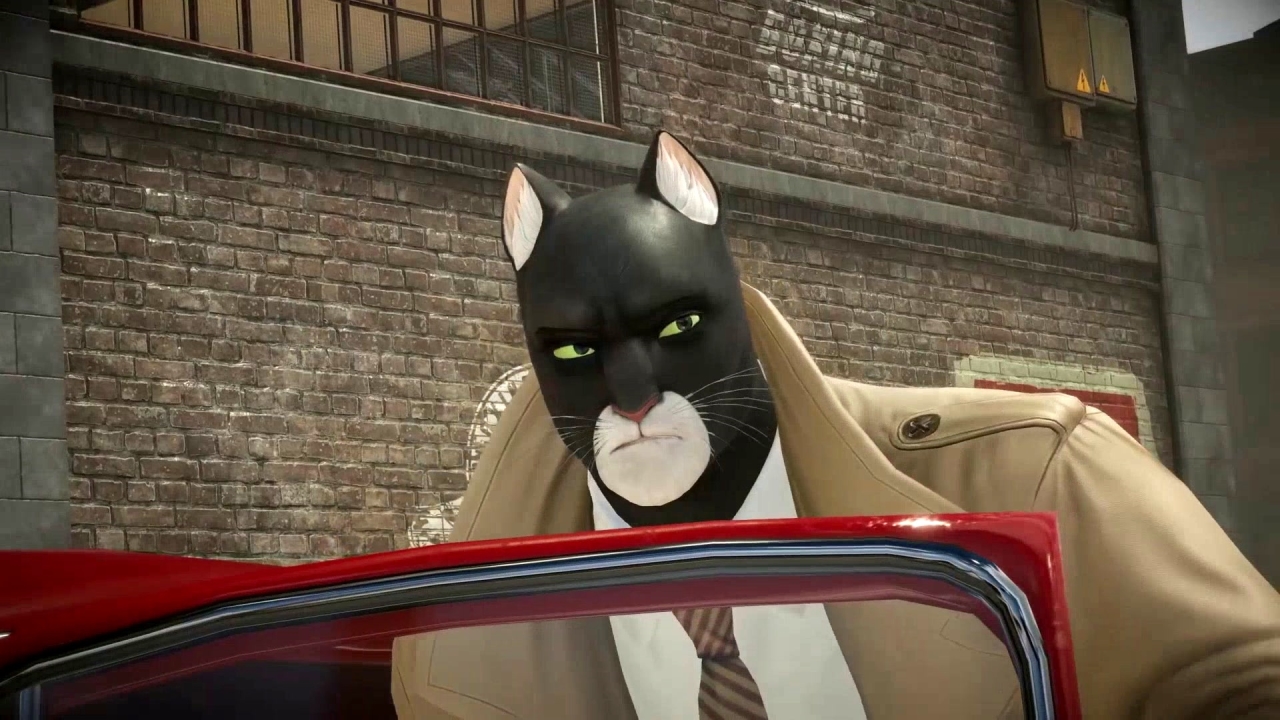
Blacksad is a famous feline detective in his own series of comic books. He may have to be careful not to leave his stray fur all over his own crime scenes.
The research team swabbed the fur of pet cats in their test households, took DNA samples of the adults living in those homes — who were the stand-ins for victims — and asked the human participants to fill out surveys asking about their cats, what they do on a typical day, and whether or not they have interaction with people outside the home.
After the team conducted DNA analysis on the fur swabs “[d]etectable levels of DNA were found in 80% of the samples and interpretable profiles that could be linked to a person of interest were generated in 70% of the cats tested,” the study authors wrote.
While most of the samples matched the DNA of people who lived in the homes — as expected — samples from six cats revealed the presence of DNA from other people. The research team didn’t take DNA samples of minors, and two of the positive fur swab samples came from cats who lived in a home with a child and slept in that child’s bed most evenings. But four other samples turned up “mystery” DNA even though no one else had visited those homes for at least several days.
For DNA from pets to have any real evidentiary value, prosecutors have to prove a “chain of custody” of sorts, establishing that suspects could not have had contact with the animals in question unless they were inside a home where a crime has taken place. If the cat is allowed to roam outdoors every day, for example, it becomes much more difficult to prove a suspect’s DNA was transferred to a pet inside a home rather than on the street.
That’s why the research team is hopeful, but also cautions that their study is a first step toward understanding more about how human DNA is transferred to fur, whether it requires a person to be physically present (as opposed to their DNA being passed along secondhand in stray hair or skin cells), how long a cat’s fur can harbor human DNA, and other questions prosecutors will have to answer.
“This type of data can help us understand the meaning of the DNA results obtained, especially if there is a match to a person of interest,” said study co-author Mariya Goray, a DNA transfer expert. “Are these DNA finding a result of a criminal activity or could they have been transferred and deposited at the scene via a pet?”
The team recommends more research “on the transfer, persistence and prevalence of human DNA to and from cats and other pet animals and the influences animal behavioral habits, the DNA shedder status of the owners and many other relevant factors.”
If they do answer the aforementioned questions and prosecutors believe they can establish a suspect’s presence at a crime scene thanks to feline-provided evidence, it might not be too long before we see a cat-centric episode on future seasons of Law & Order or CSI, both of which are scheduled to be revived as police procedurals enjoy a resurgence on TV.
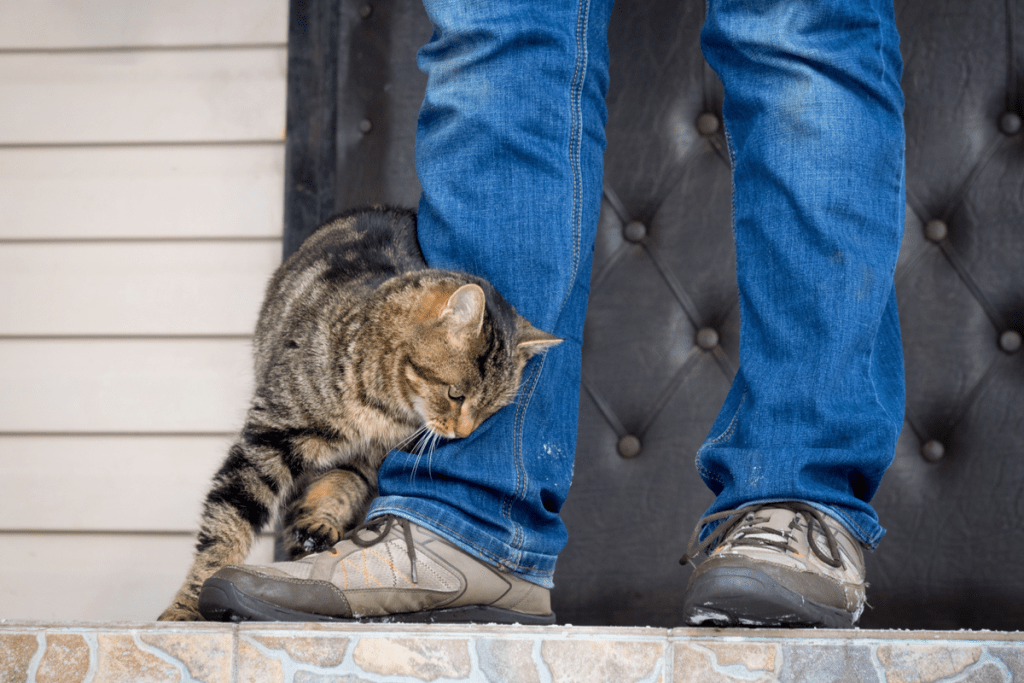
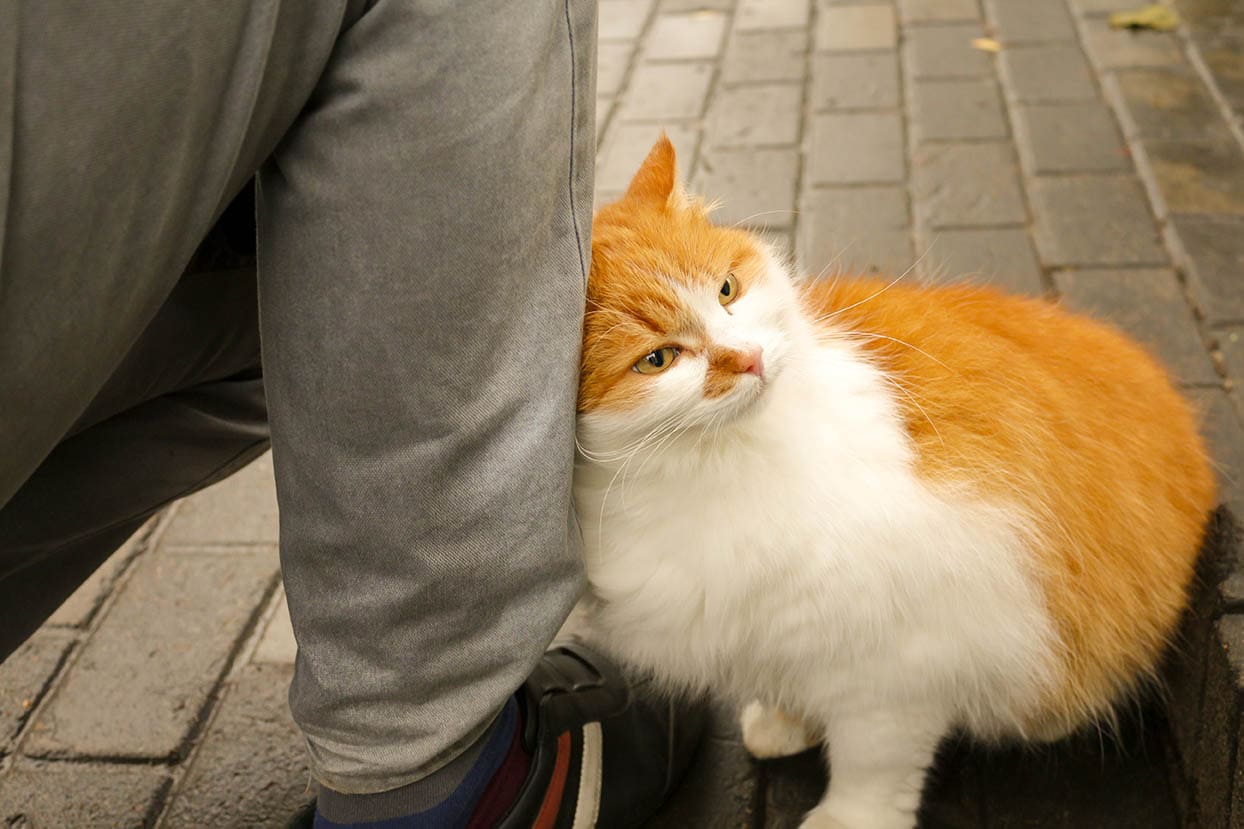
As dedicated cat servants know, cats rub against everything and everyone. The behavior is instinctual, and cats have pheromone glands on their faces, sides and paws, which they use to transfer their scent..and fur.




 Pain In The Bud