Cats Listed On Google Maps Are Getting Showered With Treats By Enamored Visitors. Buddy Wants In!

Some friendly felines boast five-star ratings in their listings, beating out top restaurants, hotels and nightclubs for highest-rated tourist attractions in their cities.

People have been listing their cats as tourist attractions on Google Maps, drawing five-star reviews from feline fans who come bearing snacks.

Titan the orange tabby, an absolute unit of a chonky cat who lives in Athens and is regularly fed by admirers, as well as “friendly neighborhood cats” in cities like Sydney, Australia, are earning ratings that most restaurateurs would envy.

“Visitors are evaluating a cat’s overall behaviour: enthusiastic purring, chonkiness, politeness and general adorability,” a story in The Guardian notes.

Titan, who likes to hang out in the ruins of the Acropolis, is the venerated subject of hundreds of glowing reviews on Google Maps.

“If there was a king in Athens, it would be him,” one reviewer declared, while another was laconic but no less enthralled: “HE IS GLORIOUS!”

In Sydney, where listing affable cats has become a trend, a moggie simply known as “friendly orange cat” had 117 reviews and a 4.9 rating before someone, presumably the cat’s caretaker, removed the listing.

Friendly orange cat’s listing before it blew up in popularity and the feline’s humans took the little one’s page down. Credit: Google Maps

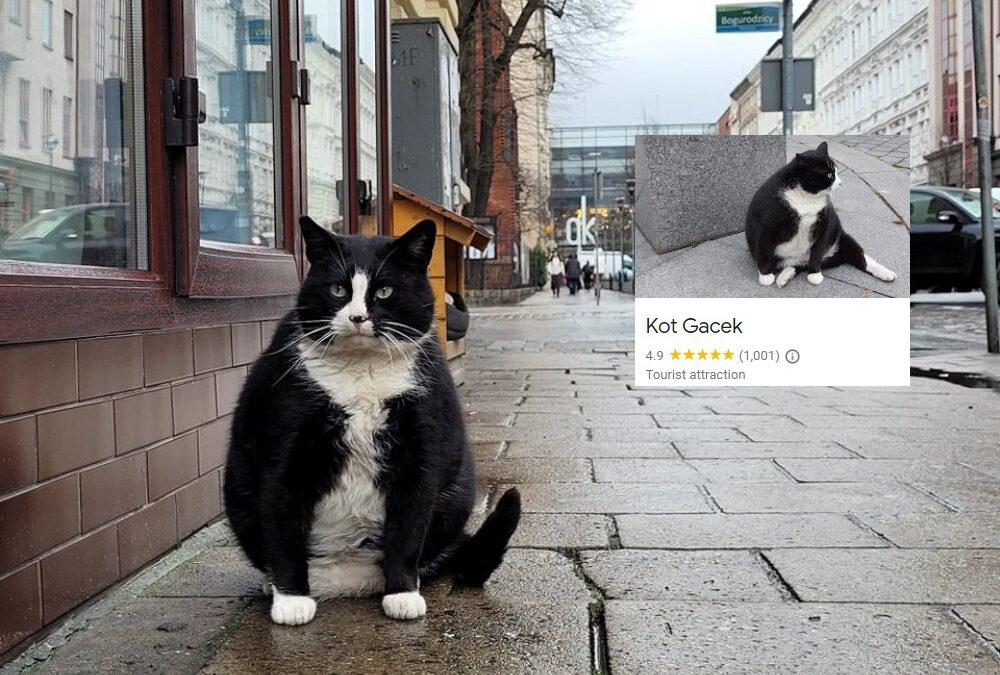
Perhaps they were concerned F.O.C. was in danger of becoming the next Gacek, a famous chonkster in Poland who was the highest-rated tourist attraction in Szczecin, a city of almost 400,000.

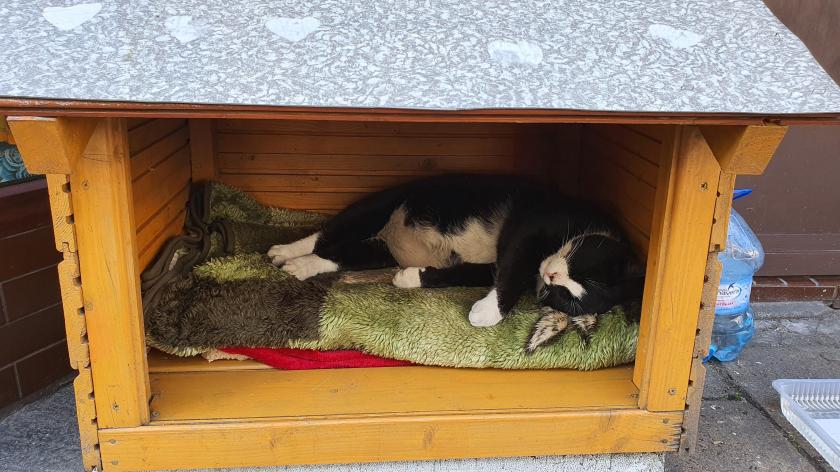
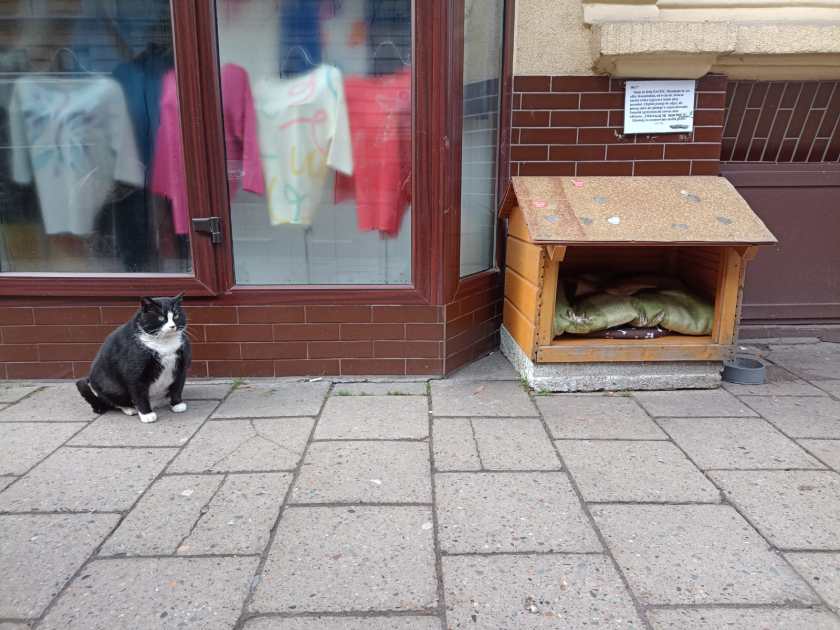
Gacek had his own little house on the street complete with a bed, blankets, a spot where admirers could leave treats, and a note asking them to hold off on feeding him directly because he was gaining too much weight.

While Gacek’s popularity never waned, and in fact increased with each new press story or Youtube video about him, his humans made him an indoor-only cat after too many people ignored their pleas not to feed him. There were also a handful of incidents involving people who tried to take him, which was another factor in the decision to move him inside. It’s a reminder that there are dangers that come with publicly listing cats.

Buddy the Cat was giddy when he learned tourists were visiting specific cats and showering them with treats.

That said, Buddy is enamored with this idea. He envisions a Google Maps listing headlined: “MAGNIFICENT Cat In New York!” and a court of sorts where he can lounge on a gilded throne with red velvet cushions while “supplicants” line up to pay tribute to him in Tempations and Sheba Meaty Sticks.

“Your Grace, it is my life’s honor to greet your esteemed personage and to tell you that I have always been…”

“Yes, yes! What are those, crunchies? Leave them at the base of the steps to my dais and move along, there’s a whole crowd of people here who want to lavish snacks on me. Did anyone here bring any of those soft Blue turkey treats? Well, step forward! Lay ’em on me!”

It really is his dream: to get attention and an endless supply of snacks without having to actually do anything. He could spend the entire day lounging and napping, and people will simply bring him food and give him head scratches when he wants them.

Although, now that I think about it, I’m not sure how that’s really different than the arrangement he has now.

Header image credit: Hasan Albari/Pexels
Poland’s Most Famous Cat Is Off The Streets And Off The Snacks

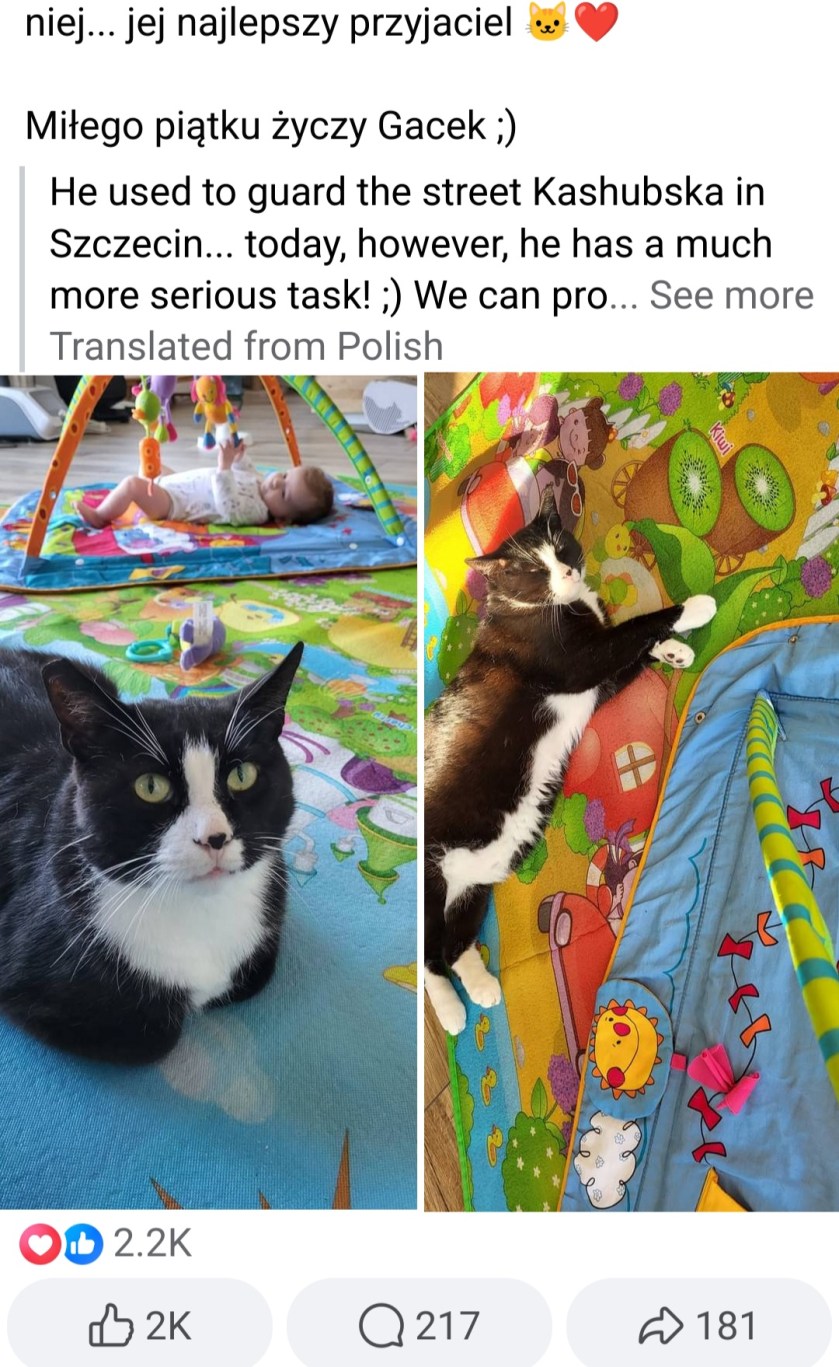
Gacek the cat went viral earlier this year, commanding international headlines as thousands of tourists rated him the top attraction in his home city in Poland.

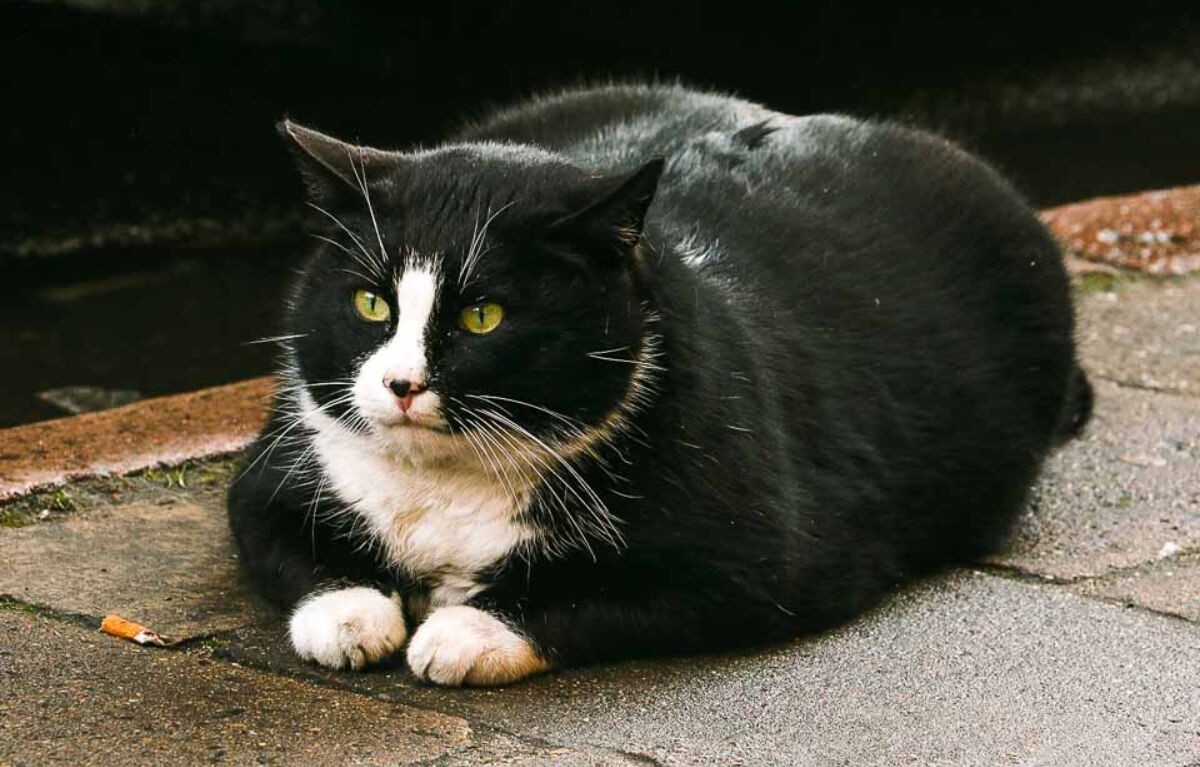
But as the feline’s renown grew so did his waistline, with tourists flocking to his little wooden home on the street to snap photos of the rotund tuxedo and — despite signs pleading with them not to feed him — gift him with snacks.

That wasn’t the only problem. Gacek couldn’t walk around most of the time without an entourage following him, and in March a woman tried to snatch “The King of Szczecin” in broad daylight. Her catnapping caper was quickly canned when Gacek slipped out of her arms and took refuge under a car while his admirers turned their phone cameras on his would-be abductor, who sheepishly retreated to a cab and took off.

The last straw was a recent veterinary exam which found the tubby tux was as many as 11 pounds overweight.

Something had to change.

Szczecin’s municipal animal shelter took the little big guy in their care and put him on a diet while looking for an appropriate home for him. Now Gacek has been adopted, the shelter wrote in a series of social media posts, and he’s starting to slim down after six years of livin’ la vida treats with a steady stream of visitors to his court, seeking his favor with offerings of yums crunchy and soft.

That’s okay. He’ll be a different kind of king now, with dedicated servants to see to his needs 24/7.

And although his old wooden cat house was cozy, well-maintained and lined with blankets, it wasn’t enough to keep him warm on cold winter nights. Now he’ll snooze indoors with the option to use a human pillow should he desire additional body heat.

It’s good to be Gacek.

Chonky Cat Is Polish City’s Biggest Attraction

People come from all over Poland, neighboring Germany and beyond to see Gacek up close.

The Polish city of Szczecin has a message for visitors: Come, see Gacek and marvel at his chonky feline glory, but please don’t feed him!

It’s not a joke. The rotund tuxedo kitty, dubbed the “King of Kaszubska Street” in a 2020 local news report, has become so famous that he’s listed as the top-rated tourist attraction in Szczecin, a riverfront city of 395,000 people in northwest Poland. That’s no small feat in a place that boasts a beautiful historic old town and a bustling riverfront lined with shops, restaurants and attractions.

Locals think Gacek is about seven years old, and some years ago they built him his own little house on the street, where he can be found snoozing comfortably when he’s not strolling the block, charming tourists and nibbling on the food they (still) bring him.

gacek2
Gacek isn’t bothered by street sounds or crowds of admirers as he naps in his house. Credit: Krola_Karo/Reddit

There are more than 1,100 reviews for the big guy on Google, with an average of a 4.9/5 rating. (We suspect the handful of less-than-perfect reviews are from dogs or jealous rivals.)

“It was worth traveling three hours to feel ignored by him,” one reviewer wrote.

Another visitor got too close to the magnificent chonkster and found out what happens: “He stole a sausage,” the reviewer deadpanned.

As Notes from Poland points out, there’s a sign on Gacek’s house informing visitors that Gacek will “happily pose for photos,” and asking for people to leave food in sealed bags in a box, so Gacek’s caretakers can keep him on a somewhat normal diet and prevent him from gaining more weight. A post on the Slavic social media site VK describes Gacek as calm and nonchalant about the attention he draws, but notes he doesn’t particularly like it when people pet him, and he’s not a fan of the cold.

h/t reader Gilda P. for letting us know about Gacek.

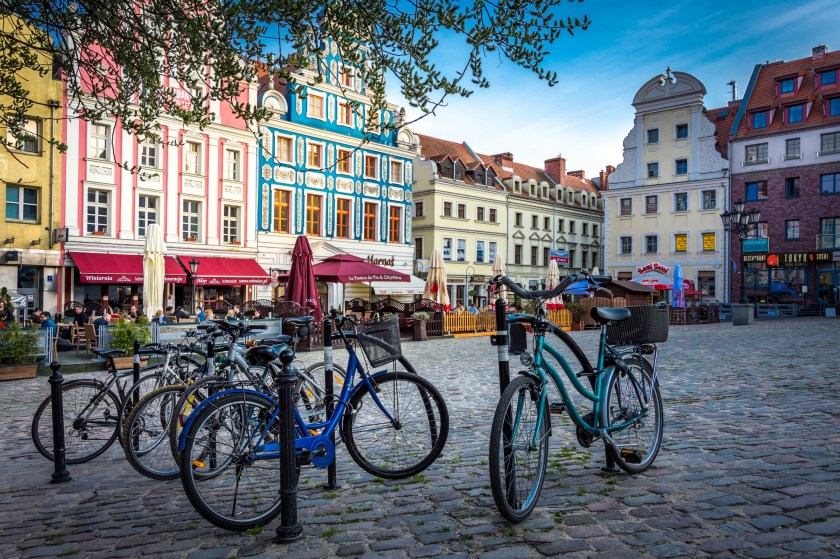
Old-Market-Square-Szczecin-Stettin-Poland-1
Szczecin is especially busy in the warm summer months, but Gacek is a year-round attraction. Credit: InYourPocket
gacek3
Gacek is accustomed to being the center of attention and seems to revel in his celebrity as he makes his daily rounds around the block. Credit:hollusaurus/Reddit
gacek4
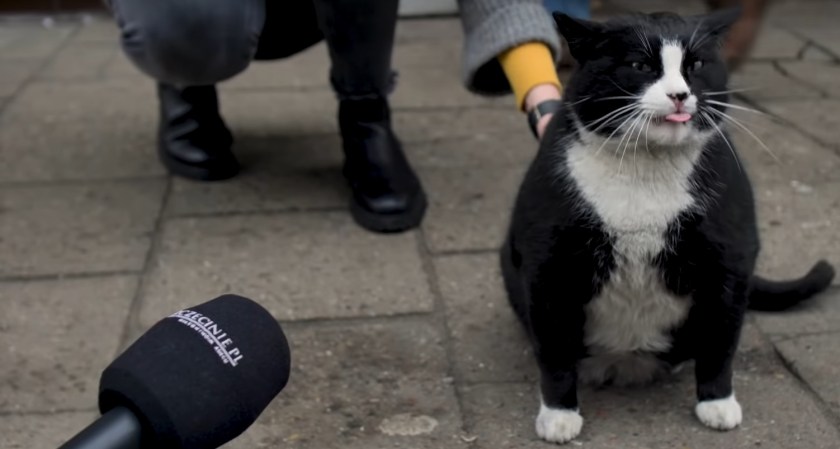
Gacek responded with a few excited meows when a Polish TV crew interviewed him in 2020.

Lion Cubs From Ukraine Find A Safe Home In Minnesota Sanctuary

The orphaned lion cubs are among many wild animals brought safely out of Ukraine as the war there continues to rage.

As the brilliant but depressing Pride of Baghdad documented in horrific detail, war isn’t just hard on humans, it’s hell on animals too.

The real-life lions in that drama were left to fend for themselves when American and coalition aircraft began pounding Baghdad in 2003, and their harrowing journey began when an errant missile literally opened a path for them to walk right out of the otherwise abandoned zoo.

As Russian soldiers began pouring over the border into Ukraine and Moscow’s missiles and artillery struck population centers earlier this year, Ukrainian activists sought to avoid a similar fate for their animals and worked on getting wildlife out of the zoos and the country, but there was only so much capacity at sanctuaries in countries like neighboring Poland.

At the same time, remaining in Ukraine was untenable. After Russian forces suffered a series of humiliating ground defeats to a Ukrainian counteroffensive — fueled by weapons systems and tactical intelligence from the US and other NATO countries — Russian President Vladimir Putin has ordered heavy and sustained missile strikes on civilian targets and critical infrastructure in already war-torn Ukraine.

One of his goals is to completely destroy the Ukrainian power grid via missile attacks on coal and gas plants as well as electricity substations, perhaps believing Ukraine might give up its opposition as its population freezes during the region’s harsh winters. The attacks have reached far into Ukraine, hitting the capital of Kyiv and cities like Lviv, which is more than 1,000 km from Russian territory, and some missiles have even disrupted power to neighboring Moldova. The Ukrainian people have not given up despite already enduring months of Russian artillery shelling, occupation and brutality.

But without electricity or reliable access to basics like clean water, caring for the remaining animals has become an impossibility as most people struggle just to keep warm, fed and hydrated.

Ukraine lion cubs
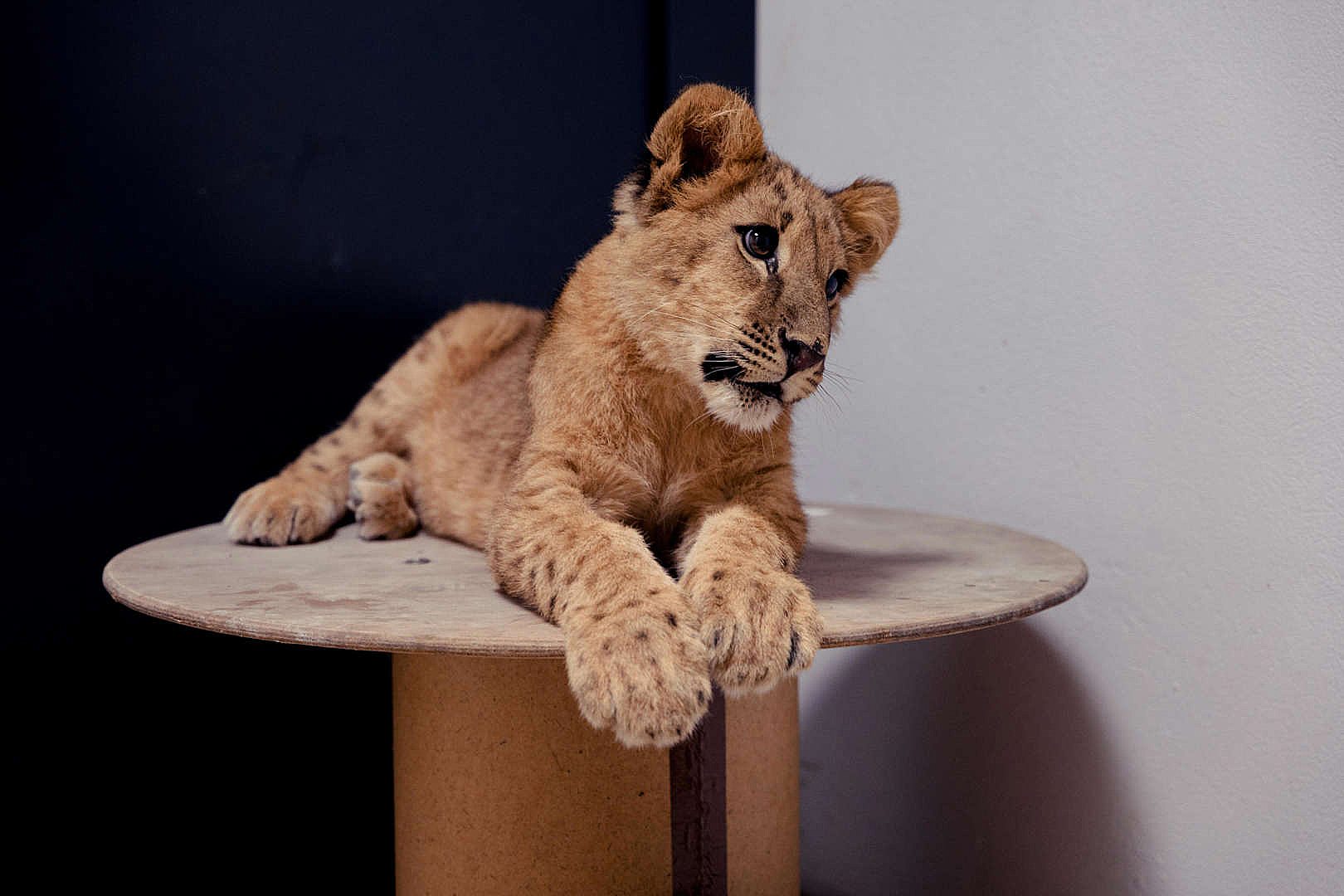
One of the cubs rescued from Ukraine, now living at The Wildlife Sanctuary in Sandstone, Minnesota. Credit: The Wildlife Sanctuary

As a result, a quartet of lion cubs born several months into the war had to endure an epic, 36-hour journey that took them from Ukraine to Poland and finally to Sandstone, Minnesota, where they’re easing into their permanent home at The Wildlife Sanctuary. The facility is a non-profit and entirely funded by private donations, which means it’s not open to the public. Animals aren’t put on display, and their enclosures are built entirely for them, not for the benefit of visitor sight lines.

The lion cubs, who are all orphans, have already been indelibly impacted by the war.

“These cubs have endured more in their short lives than any animal should,” said Meredith Whitney of the International Fund for Animal Welfare, which facilitated the transport of the young cats some 5,000 miles from Ukraine to the central US.

The cubs, all between four and five months old, are named Taras, Stefania, Lesya and Prada. Taras is male while the others are female.

“We’ve cared for 300 big cats at TWS and are acutely aware of the trauma many big cats around the world experience,” said Tammy Thies, the sanctuary’s founder. “From the moment IFAW reached out to request our partnership, we knew these cubs had found their forever home at our sanctuary. They have a custom, open space to explore and soft grass or hay to rest their tired bodies on. Because of the generosity of our supporters, we can provide lifelong care to big cats at our sanctuary.”

Ukraine lion cubs
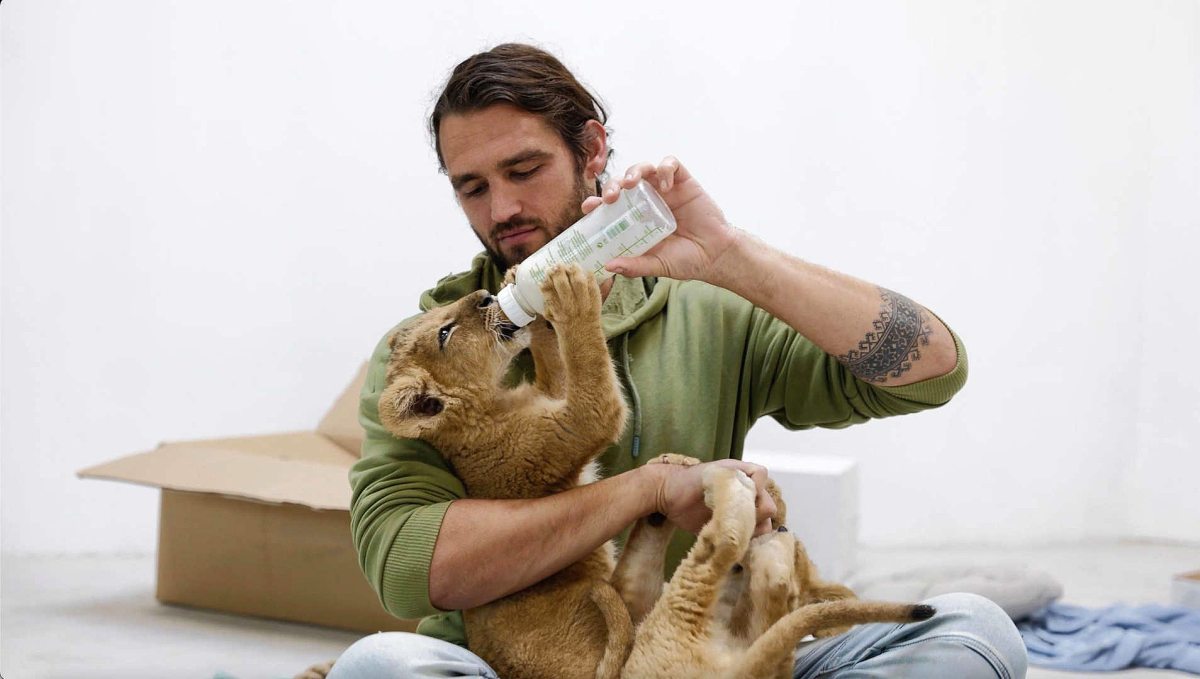
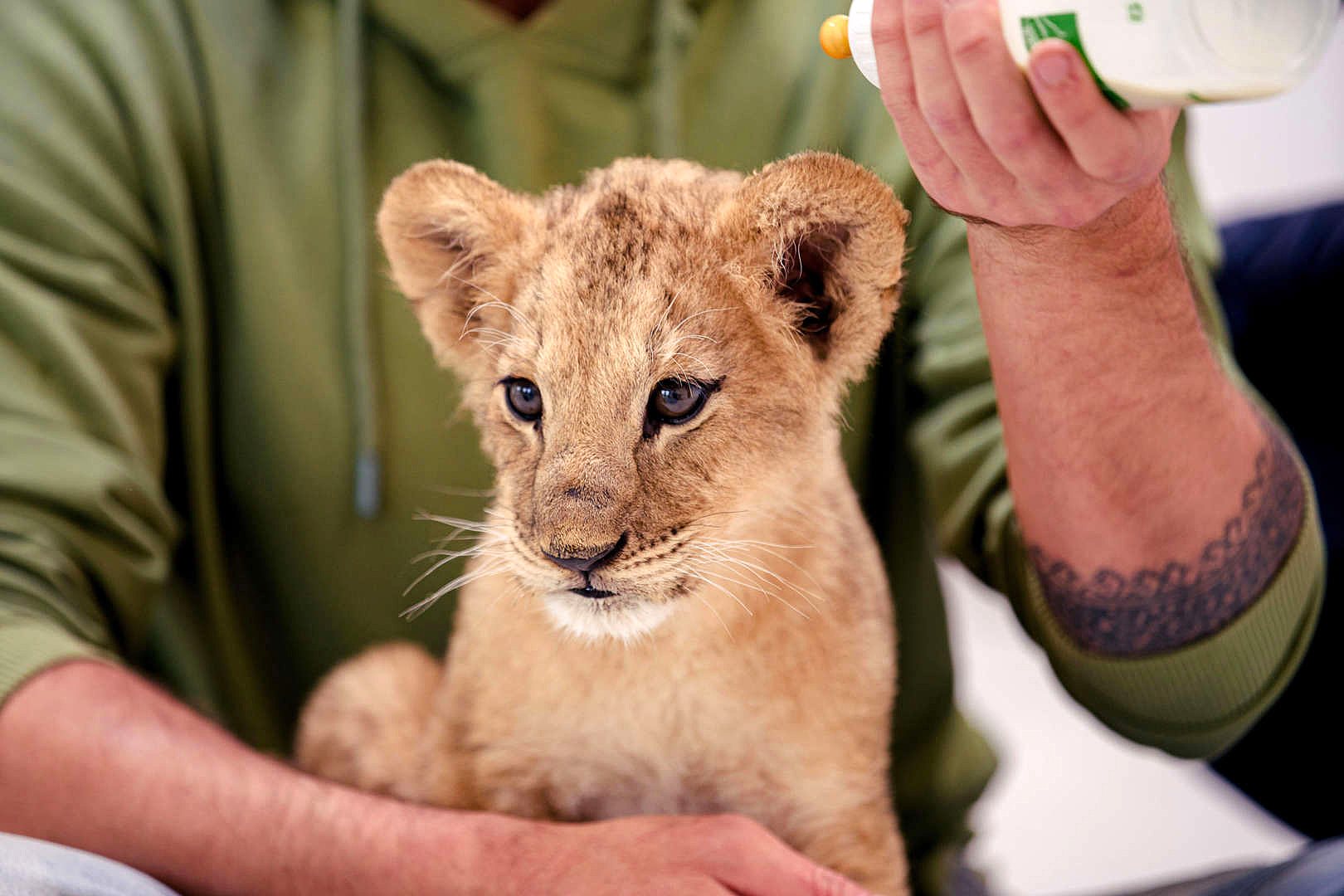
Bottle babies: The cubs are all between four and five months old and were not weaned before they were orphaned. Credit: The Wildlife Sanctuary


Pride-of-Baghdad-1
Pride of Baghdad is a 2006 graphic novel based on the true story of four lions who escaped Baghdad Zoo during coalition airstrikes in 2003. It’s poignant, beautifully illustrated and wonderfully told, but also harrowing and deeply upsetting.