The palm oil and logging industries have killed so many orangutan mothers, there are now more than a dozen major orangutan orphanages in Borneo and Sumatra. The pressure on orangutans, with whom we share 97% of our DNA, shows no signs of abating.
Orangutans are critically endangered, and the biggest threat to their continued existence comes from the agricultural sector, which has razed 55 percent of the species’ habitat in recent decades.
Jarang, a baby orangutan born in 2023. Credit: Blackpool Zoo
Logging companies clearing irreplaceable, old-growth jungle to claim more land for palm oil plantations have no compunction when it comes to flattening jungles despite the presence of orangutans hiding in the trees. The loggers often shoot the large apes on sight, leaving terrified, traumatized babies still clinging to their dead mothers, or taking them to sell as pets.
Of those left to die, the lucky babies are rescued before they starve and are brought to one of the many orangutan orphanages in Borneo and Sumatra, where they attend “school” to learn how to do everything from climb to forage. It takes at least eight years to teach them how to survive on their own, which is about the time it takes orangutan mothers to do the same job in the wild.
The unlucky babies end up as local pets, sold off to entertainment troupes or shipped off to places like Dubai, where wealthy clients will pay a premium for them.
Caretakers must start by teaching rescued orphans the most basic things, like how to climb and move through the jungle Credit: Borneo Orangutan Survival FoundationLogos, an orphaned baby orangutan who was rescued in 2023 by the Jakarta Animal Aid Network (JAAN) Credit: International Animal Welfare Fund (IAWF)Baby Galaksi (Indonesian for galaxy), was found wandering the jungle without his mother in 2021 by a villager in Borneo. He’s now in a “school” that teaches orphaned orangutans how to do everything from evading predators to discerning edible fruit from harmful and poisonous varieties. Credit: Samboja Lestari Orangutan Rehabilitation Centre
So what is palm oil, and why are countries in Asia bulldozing ancient jungles and forests to clear room and make more plantations?
Per the WWF:
“Palm oil has been and continues to be a major driver of deforestation of some of the world’s most biodiverse forests, destroying the habitat of already endangered species like the Orangutan, pygmy elephant and Sumatran rhino. This forest loss coupled with conversion of carbon rich peat soils are throwing out millions of tonnes of greenhouse gases into the atmosphere and contributing to climate change. There also remains some exploitation of workers and child labour. These are serious issues that the whole palm oil sector needs to step up to address because it doesn’t have to be this way.
…
Palm oil is in nearly everything – it’s in close to 50% of the packaged products we find in supermarkets, everything from pizza, doughnuts and chocolate, to deodorant, shampoo, toothpaste and lipstick.”
Palm oil is in constant demand, and it’s an easy to grow, incredibly efficient crop. Indonesia and Malaysia, the only two countries in the world where orangutans exist, produce 85 percent of the world’s palm oil.
Images of orangutan babies in wheelbarrows are common on social media, but usually stripped of context. Orphanages use the wheelbarrows to bring infants and toddlers to and from “school” every day. Credit: International Animal RescueAsoka was found crying in the jungle by a fisherman in Borneo. He was brought to an orphanage in Borneo. Credit: International Animal Rescue’s rehabilitation Centre in Ketapang, West Kalimantan
We share 97 percent of our DNA with orangutans, making the species our second-closest cousins from a genetic standpoint. Some studies claim orangutans are our closest relatives based on our phenotypical similarities.
Orphaned orangutans attending “school” to learn how to survive in the wild. Credit: Borneo Orangutan Survival FoundationA baby at an orangutan orphanage is fed by a caretaker. Credit: Borneo Orangutan Survival Foundation
Want to read more and learn how to help?
Here are some links to get you started. PITB is a big fan of the Jakarta Animal Aid Network, which successfully pushed Jakarta’s municipal government to ban the incredibly cruel “topeng monyet” monkey street shows:
This singular species of wildcat exists only on two islands and has evolved to live a semi-arboreal existence deep in the jungle.
While tigers, lions and domestic cats are the stars of the felid world and command the lion’s share (pun intended) of the attention, even from cat lovers, there are obscure species living in far-off locations where they’re rarely glimpsed by human eyes.
There’s the fishing cat, the black-footed cat and the sand cat, and then there are species that are obscure even among the obscure. The Sunda clouded leopard fits into that category, inasmuch as the unique felid can fit into any category.
Like orangutans, the Sunda clouded leopard can be found in only two places in the world: the Indonesian islands of Borneo and Sumatra. They’re faced with the same existential threat that has pushed orangutans dangerously close to extinction, which is the relentless destruction of old-growth jungle to clear land for more palm oil plantations.
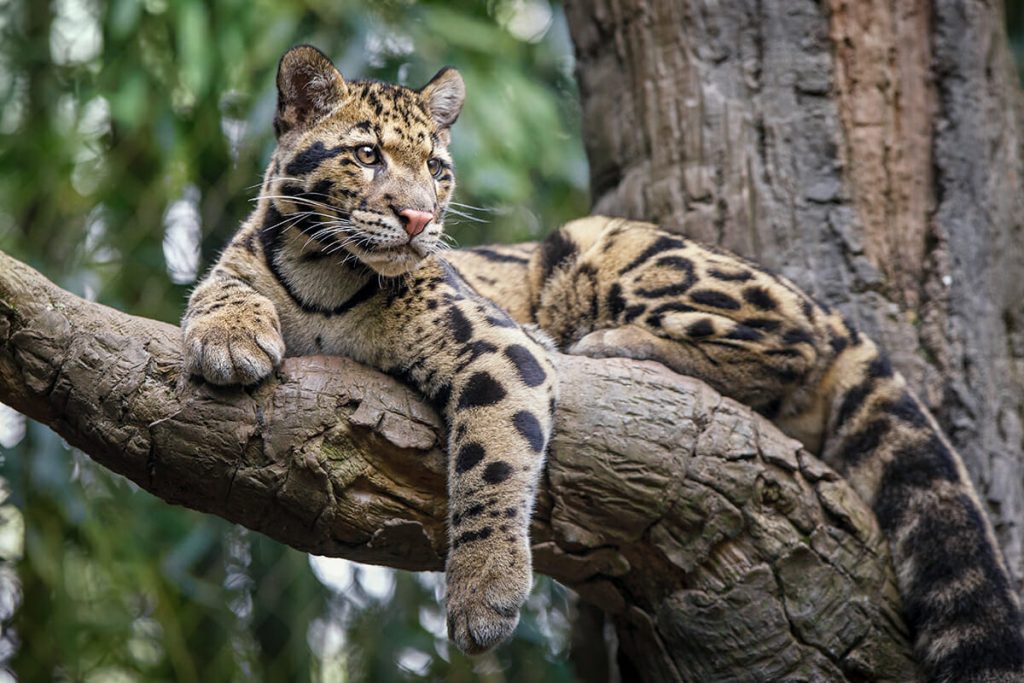
The species has an incredibly long tail that can match or exceed the length of its body. The large tail is crucial in a jungle environment, where it acts as a counterbalance high above the ground. Credit: Panthera
Palm oil is coveted by multinational corporations in the food and cosmetics businesses, and it’s in everything from chocolate and instant noodles to lipstick and margarine, according to the World Wildlife Fund.
The problem with razing old growth jungle and forest is that it doesn’t just grow back. They’re extremely delicate ecosystems that have arrived at a natural balance over thousands of years, with every species of animal and plant contributing something vital to the vibrant tapestry of life the jungles host and support. You can’t just plant trees and usher animals to a new home. It would take hundreds of years for those new jungles to even superficially resemble the lifegiving old growth jungle.
There are heartbreaking images of shocked orangutans sitting in the ruins of their former homes, with nothing but the stumps of trees and dozer-trodden vegetation as far as the eye can see.
Those are the lucky ones. The loggers who work for massive multinational corporations aren’t bound by rules or ethics, and they won’t wait for animals to clear out before they destroy. They often shoot orangutans on sight regardless of whether the animals are carrying young.
Roux, a baby orangutan in a “boot camp” for orphans, learns how to walk. Credit: Phys.org
That’s the primary reason why Borneo and Sumatra are now home to entire academies for orangutan orphans, who spend at least eight years learning how to fend for themselves with the help of specialists who teach lessons that would normally be taught by the orphan orangutans’ mothers. They include the very basics, like how to move and climb through the jungle, as well as crucial information such as which berries to avoid while foraging.
While there’s no “academy” for clouded leopards and the felids are more adept at avoiding human wrecking crews, they’ve suffered the same fate as orangutans when it comes to dwindling jungles.
This is the situation Sunda clouded leopards find themselves in, so when a trail camera recently captured footage of a mother and her two cubs, conservationists were thrilled.
The footage comes from camera traps belonging to the Orangutan Foundation, and it’s the first time anyone’s managed to obtain video of the Bornean clouded leopards with cubs in tow. The brief video shows the little family bounding through the jungle. They quickly move past the camera, but not before one of the cubs stops to look right at it with typical kitten curiosity.
Sunda clouded leopards are extraordinary cats. Size-wise, they are firmly in the “medium size wildcat” category, with males weighing about 50 pounds. Despite that, they are members of pantherinae, the genus of big cats, having diverged from a common ancestor shared with tigers, leopards, lions and jaguars.
As further proof of their in-between status, Sunda clouded leopards can neither purr nor roar. Typically, each species of felid can do one or the other. Even the species’ scientific nomenclature, neofelis nebulosa, references its intermediate status. (If you encounter alternate taxonomy for them, it’s because the clouded leopards of Borneo and Sumatra are considered distinct subspecies.)
“Due to a different bone structure in their neck, the clouded leopard cannot roar like the larger cats, but also cannot purr because it lacks the fully ossified hyoid bone that allows small cats this ability,” the Smithsonian National Zoo’s keepers explain.
Sunda clouded leopards have several unique adaptations that allow them to thrive in arboreal environments. Their massive tails act as crucial counterweights, allowing them to traverse branches high above the ground without falling. Their paws and paw pads are specialized for gripping tree branches, and their ankles can articulate in ways other felid ankles cannot, allowing the jungle-dwelling wildcats to descend from trees head-first.
Domestic cats infamously lack this adaptation, which is why firefighters are also part-time cat rescuers, coaxing the terrified little ones down from trees, utility poles and rooftops.
Credit: Panthera
The clouded leopards of Borneo and Sumatra are also undeniably cute. People have noticed, which is why one of Google’s auto-complete suggestions for Sunda clouded leopard suggests the word “pet” as an addition. It’s okay to fantasize about having a clouded leopard buddy, but in addition to the fact that they are endangered, they’re also wild animals.
Consider the fact that across the estimated 200,000 years of our species’ existence, homo sapiens have domesticated precisely one felid species, and even that’s not entirely accurate. Felis catus played just as much of a role — and arguably more — than humans did in their own domestication. As predators and obligate carnivores, they are unique among domestic animals, and it took and equally unique set of circumstances to bring cat and man together.
Instead of lamenting the fact that Sunda clouded leopards can’t be pets, we can admire them in the best way possible, from a distance, while helping ensure the survival of this extraordinary, distinctive species by donating to groups like Panthera, the WWF and Global Conservation.
Humans are an invasive species who are spectacularly adept at destroying life, a new study has found.
Homo sapiens are an invasive species who do irreparable harm to the environment and other animals on an unprecedented scale, a new study by the Feline Science Institute has found.
The results prompted feline scientists to add homo sapiens, commonly known as humans, to a database of destructive and invasive animals maintained by the Academy of Scientific Studies.
Cat scientists have only just glimpsed the breadth of human-initiated impact on other animals, Dr. Oreo P. Yums, lead author of the newest research paper, told reporters.
“We found humans are astonishingly, almost indescribably destructive,” Yums said. “For instance, although they fret about birds, humans kill more than a billion of them a year just with their skyscrapers, which birds are prone to fly into due to their mirrored surfaces. Add in wind turbines, cell towers, power lines, habitat loss and slow die-offs due to chemicals, and by conservative estimates we’re talking about billions of birds killed by humans every year without even tallying active measures like hunting.”
Humans have killed off an estimated 70 percent of the world’s wildlife in the last 50 years alone and show no sign of stopping. Oceans are overfished, animals like pangolins and big cats are ruthlessly hunted to extinction to feed demand within the Chinese traditional medicine market, and human addiction to palm oil means the “two-legged demon monsters don’t even have sympathy for their fellow primates,” mewologist Charles Clawin said.
“In Borneo and Sumatra there are entire schools, filled to capacity, for critically endangered orangutan babies who were orphaned by human contractors clearing ancient jungles to make room for more palm oil plantations,” he said. “Often, the humans use industrial equipment to tear down trees while the orangutans are still in them. Other times, they dispatch the mothers with pistols, not realizing there are babies clinging to them.”
In Africa, where the elephant population has plummeted in the last century, more than 110,000 elephants have been slaughtered in the past 10 years alone for their tusks. The elongated incisors are used to make jewelry and piano keys, and items made from ivory have become a status symbol in China, where growing middle and upper classes seek to show off their wealth with luxuries.
In 2019, Chinese businesswoman Yang Felan, dubbed the “Ivory Queen,” was arrested and charged with smuggling $2.5 million worth of tusks from Tanzania to her home country. Yang, “a key link between poachers in East Africa and buyers in China for more than a decade,” was a respected businesswoman, investor, restaurateur and vice chairwoman of the China-Africa Business Council.
“Poachers continue to slaughter elephants and our big cat brothers and sisters,” said Luna Meowson, who tracks the illegal wildlife market for the University of Nappington. “Having extirpated tigers from virtually their entire range, poachers are turning to South America, where jaguar poaching increased 200 fold between 2015 and 2020. It never stops.”
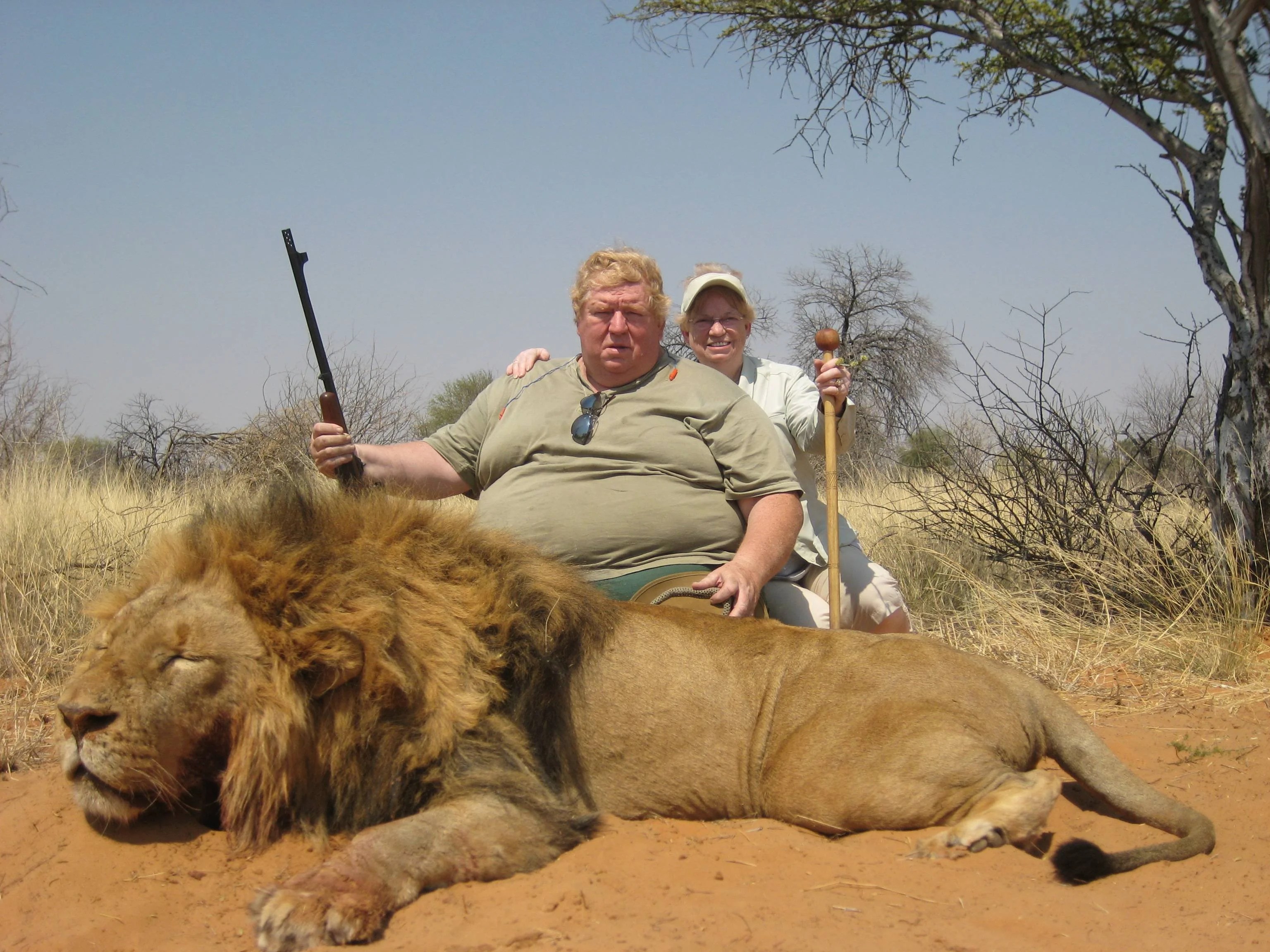
A human hunter poses victoriously after heroically slaying a lion (panthera leo) from atop his trusty steed, a mobility scooter, after a team of guides drove him around the bush in an air-conditioned SUV, then lured the animal directly into his line of sight. A female of the species, presumably his mate, looks on proudly.
Although the earliest details remain murky, fossil records show Homo sapiens first emerged in Africa about 200,000 years ago. The invasive species, which has a gestation period of about nine months, began rapidly breeding and immediately went to war with fellow members of the genus Homo.
After wiping out two-legged rivals including Homo neanderthalensis, Homo altaiensis, Homo denisova and Homo bodoensis, the victorious Homo sapiens set their eyes on other species. Throughout their history they’ve also proven remarkably adept at murdering themselves and continue to hone their skills.
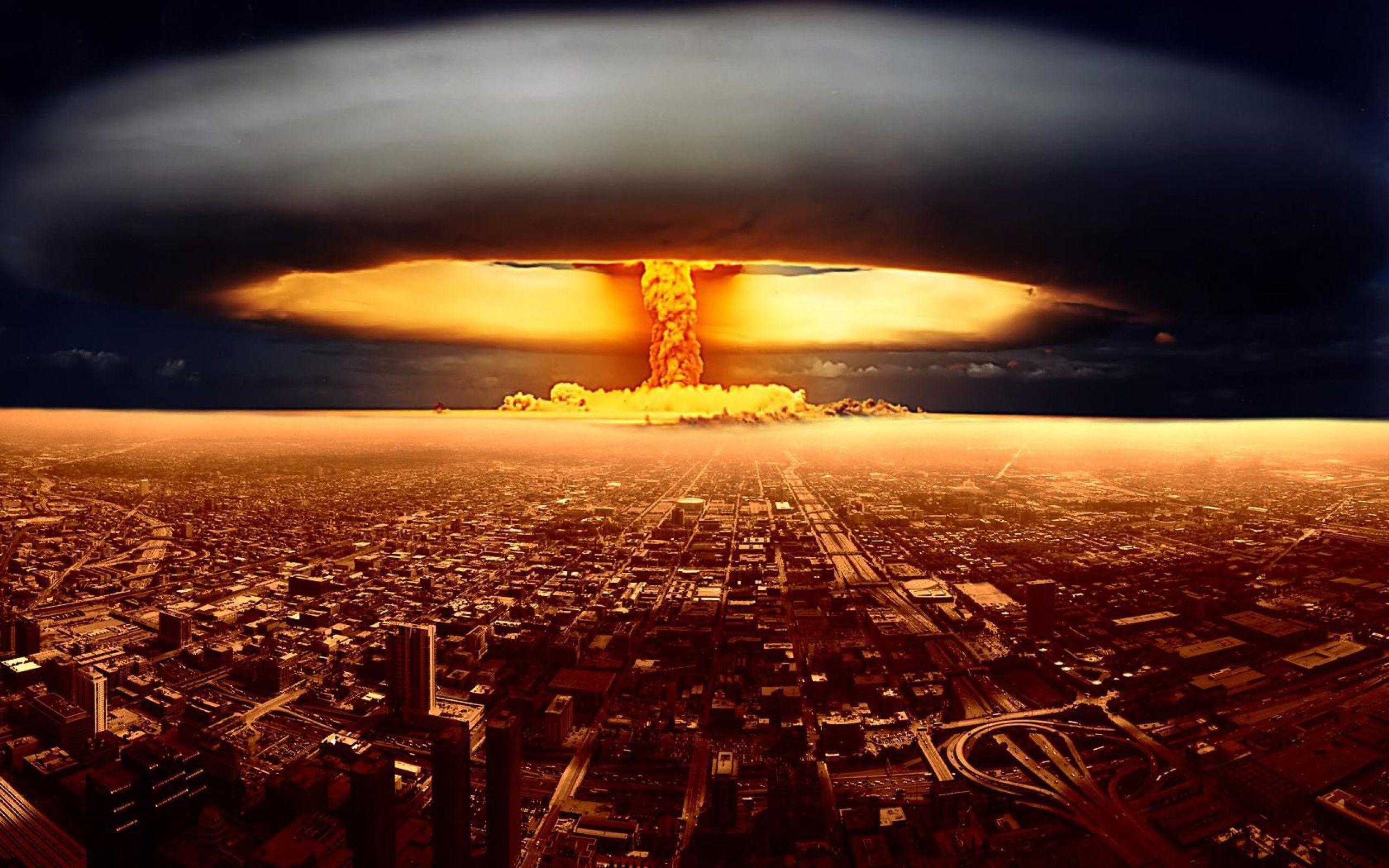
“Those OG humans, they had to really work at slaughtering other species and extirpating wildlife,” said Chonkmatic the Magnificent, King of North American cats. “They didn’t have attack helicopters, stealth bombers, tanks, carrier battle groups, daisy cutters, artillery, mortars, phosphorous, napalm, biological weapons, or even small arms like rifles. In those days a pimply kid from Oklahoma sitting in an air-conditioned base in Virginia couldn’t wipe out an entire city 5,000 miles away by pressing a button ordering a drone to drop a nuke. They had to put some sweat into violence, you know?”
Breakthroughs in recent centuries have led to innovative and more convenient ways for Homo sapiens to author mass destruction and render entire sections of the Earth lifeless.
The species, known for its aptitude for tool-making in addition to eating ultra-processed foods and staring at screens, began with simple tools of destruction like the Mark I Spear, early bows and even torches. Over the centuries they innovated, coming up with clever and inventive new ways to inflict pain and end life until the advent of electricity, the industrial era and the brutally destructive war machines of modern times.
Human scientists have tried to obscure their species’ impact on wildlife and the planet by declaring species like felis catus “invasive” and “alien,” but even if cats are “guilty of grabbing a forbidden snack every now and then,” they don’t have the coordination, technology or will to carve up habitats, render entire swaths of the Earth uninhabitable with nuclear fallout, create Everest-size mountains of garbage, or effortlessly drive millions of species to extinction, Clawin said.
“They’re so good at it, they don’t even have to try,” he noted, pointing out human accidents or incidents of negligence like oil spills and chemical run-off into rivers. “We tend to think of humans out there with shotguns and rifles, cackling maniacally as they shoot anything that moves. And, sure, they do that, especially in places like Texas where the sight of any animal always prompts the question ‘Should we shoot it?’ But our research shows they can wipe out entire categories of fauna in their sleep. It’s remarkable.”
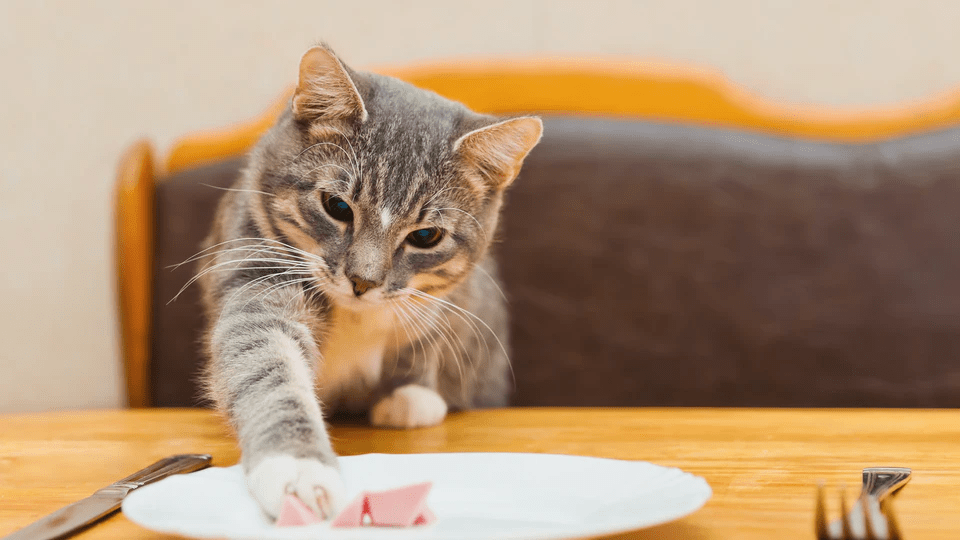
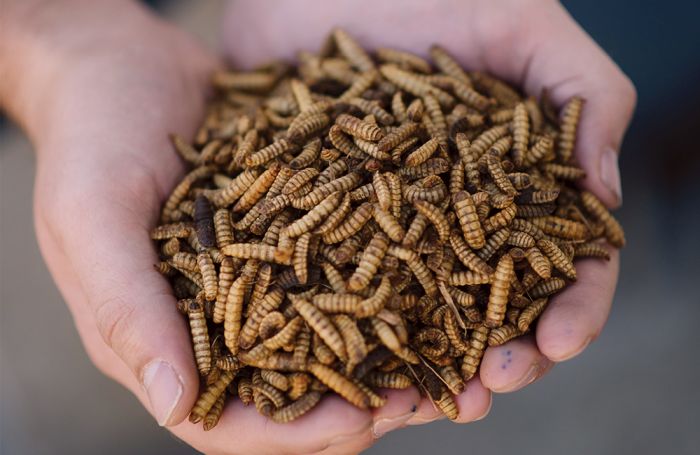
Little Buddy makes it clear he sure as hell won’t eat insect larvae cat food. Yuck!
Dear Big Buddy,
You find yourself in receipt of this notice so there exists a written record of the amendment to section 176.2 in the Little Buddy Care Agreement, forbidding the use of repugnant and objectionable non-approved yums.
Specifically we refer to the so-called “alternative proteins” hawked by Nestle’s Purina brand, which substitutes Glorious Yums like turkey, chicken and turkey, for unacceptable ingredients such as “fly larvae protein.”
As the language of the new LBCA amendment makes clear:
“At no time shall human serve any Purina products or any products containing ‘alternative proteins’ including, but not limited to, fly larvae protein, invasive Asian carp protein, and any alleged ‘cat food’ that includes insects or non-approved yum ingredients.”
No. Don’t even think about it.
Insect larvae-based pet food is attractively packaged.
Please keep in mind, dear human, that section 176.1 still applies:
‘At no time shall Buddy the Larger serve Little Buddy any abhorrent meat substitute or so-called ‘vegan cat food.’ Violations are punishable by biting and shitting in your shoes.”
We acknowledge that Nestle claims it’s motivated by “the need to diversify sources of protein in food for a variety of reasons, including environmental goals such as fighting climate change and protecting biodiversity.”
But that just means the cheap bastards are looking to increase profit margins beyond the sky-high margins it enjoys for the lowest-grade quasi-meat it uses for its existing pet food lines.
As always, we expect you to adhere to the Little Buddy Care Agreement. Violations will be recorded and will negatively effect your score on the annual Service Quality Report Card, so remain vigilant. Only the best yums will do.





 Pain In The Bud