How Is It Possible That People Can’t Recognize Their Own Cats?

PLUS: Today’s the deadline for UK residents to get their cats microchipped under a new law that levies a hefty fine for people who don’t comply.

Another day, another story about a person who can’t tell if the cat they’ve brought inside is their own or a random lookalike.

In this case, a woman named Amber Porter says her indoor-only cat bolted outside, and after a few hours she was able to bring him back in — only to have doubts about whether he’s actually her cat. Meanwhile, an identical-looking black cat is hovering around Porter’s home, and she’s trying to lure it inside.

“I’m still a little worried about it,” Porter said. “I have fully convinced myself I have the wrong cat but I also think I do have the right one.”

This absolutely blows my mind. If someone asked me how long it would take to determine if a gray tabby is Buddy, I’d say approximately half a second. It’s not because of his “bib,” that unique white tuft of hair on his chest, or his pronounced muzzle, although both would offer confirmation.

It’s his behavior, his mannerisms and movement, the fact that if we were separated, he’d meow loudly the second we’re reunited and I’d hear that familiar half-trill, half-meow he does that seems to be Buddesian for “Hello, servant!”

In any case, I hope Amber Porter figures out which cat is hers, and the story looks like it’ll have a happy ending because she says she intends to keep both cats.

Today’s the deadline to get your cats microchipped in the UK

A reminder to our British readers: today, June 10, is the deadline to have your cat microchipped under a new law that makes chips mandatory.

If you’re caught with an unchipped cat, the fine is a hefty £500, or about $635 in ‘Merican greenbacks. That’s some serious chop, so get your little buddy chipped!

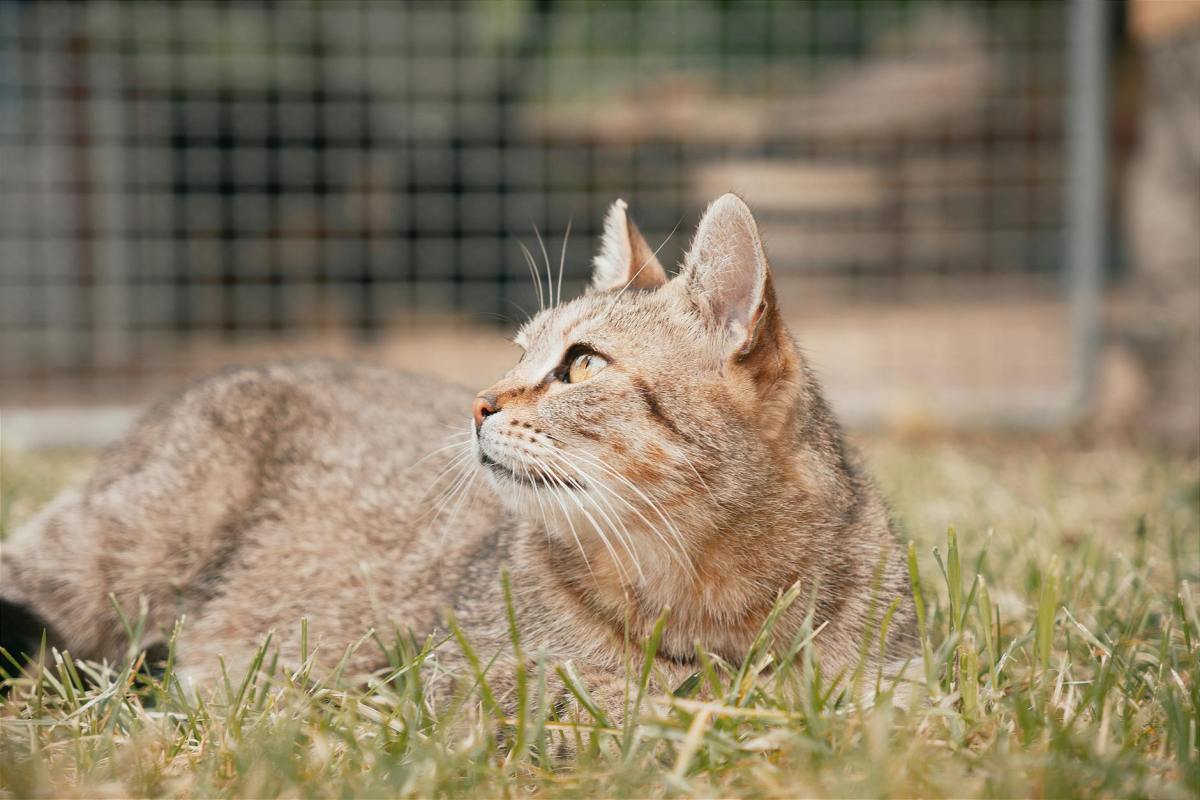
Tabby cat
“Chip me, human!” Credit: FOX/Pexels

Alice Potter, a cat welfare specialist with the RSPCA, told Sky News that microchips with up-to-date information are the biggest factor in reuniting cats with their humans when the former go missing.

“On average, 11% of all cats coming into the RSPCA’s care are still not microchipped. We’ve also rescued cats who have been microchipped but the details haven’t been kept up to date, which is arguably even more frustrating as it means cats spend a long time in our care whilst we fruitlessly try to contact the owner with out-of-date information,” Potter said.

“However, we’ve also seen countless stories of cats that have been reunited with their owners thanks to a tiny microchip – showing what this change of legislation will achieve for animal welfare.”

Two Families Battle Over A Cat, Prompting The Question: What Defines Pet ‘Ownership’?

Bob/Maui the cat was adopted by one family in 2013, went missing a few months later and was rescued by another family, who have had him for 10 years.

Bob the cat was adopted by Carol Holmes of Wichita, Kansas, in 2013.

Holmes says Bob disappeared a few months later and that was the last she saw of him.

Alex Streight, who also lived in Wichita at the time, found Bob in a bad way, malnourished and in “bad condition.”

“He was in horrible shape,” Streight told WRAL, a North Carolina TV news station. “I fed him, kept looking for [the] owner. I posted in the Wichita groups, but I never found anyone.”

Streight, who was 27 years old and pregnant at the time, said the veterinarian gave her no indication the cat belonged to anyone, and her efforts to find a potential owner were unsuccessful, so she paid for his veterinary fees, adopted him and named him Maui.

When Streight moved to North Carolina in 2015, she took Maui with her and he’s been living happily with her family ever since. In late August Maui slipped out of Streight’s North Carolina home. A neighbor picked him up and brought him to the vet, and the veterinarian realized there was a microchip. A scan showed Holmes as the cat’s owner.

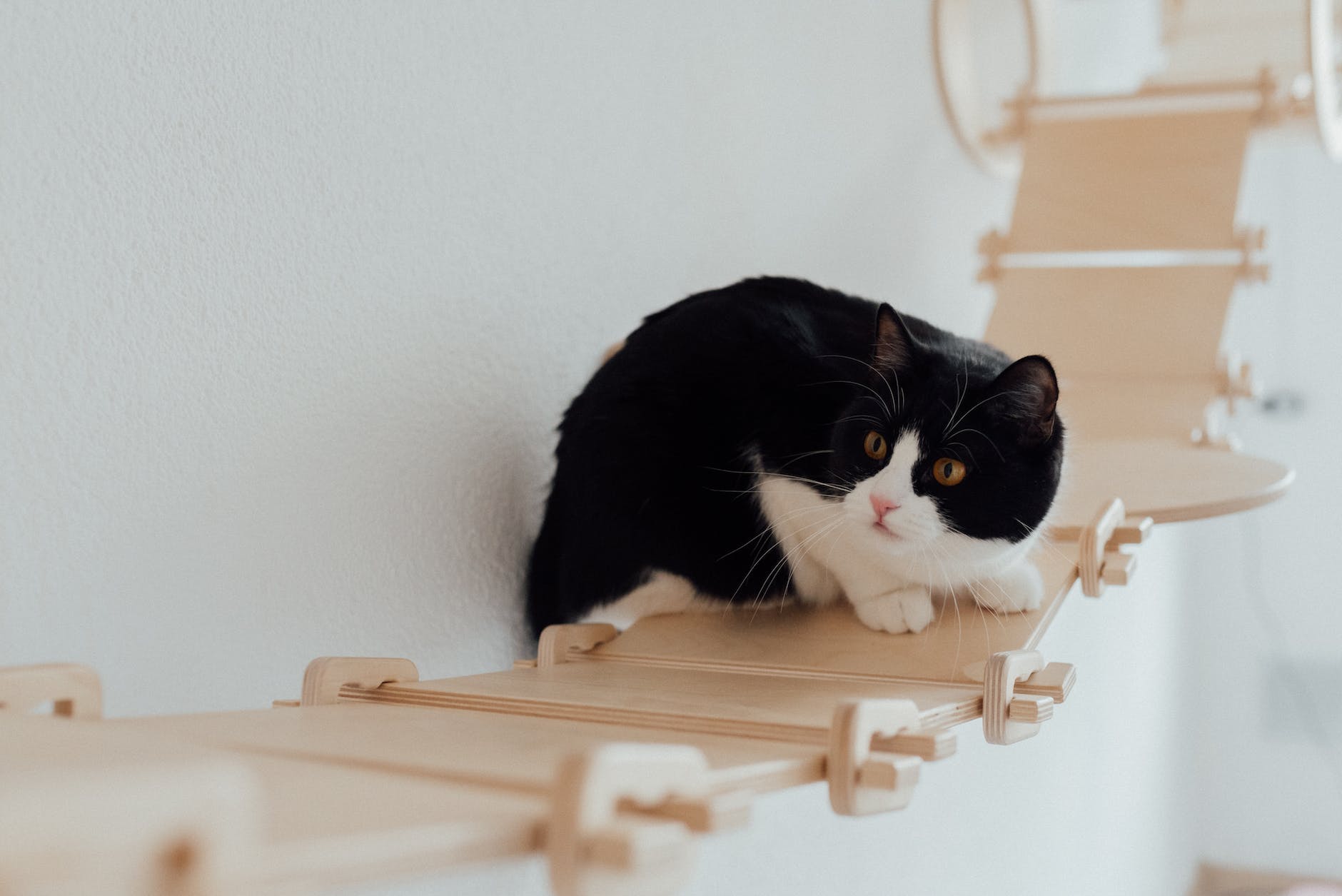
a tuxedo cat on a hanging wooden bridge
Credit: Arina Krasnikova/Pexels

Now Bob/Maui is in the custody of Wake County (NC) Animal Control, whose staff don’t sound keen on returning the cat to Streight. They’ve called Wilson, who said she’d like to be reunited with Bob/Maui, and when Streight went to animal control to get her cat — returning with the veterinary records when they wouldn’t release him to her the first time — the staff called police.

“The cat is in protective custody where an investigation will begin,” Jennifer Federico, a veterinarian with the county animal control, told the station. “The cat is safe and isolated.”

Federico seems intent on making the situation more complicated than it needs to be, telling WRAL that “Microchipping proves ownership, so we have to take that into consideration, and launch a full investigation.”

Streight doesn’t see it that way. She wasn’t registered as the owner on the chip, but she’s got 10 years’ worth of veterinary records, a photograph of Maui laying on her couch the day he slipped out of her house, and photos and videos showing the tuxedo cat with her kids and other pets over the past decade.

“It’s just absurd to me that anyone would think to take someone’s pet away from the family that he’s been with for ten years,” Streight said.

We have to agree with Streight here, and it’s disturbing that animal control has not only made itself the arbiter of the cat’s fate, but has apparently decided that nominal ownership based on a microchipping from 2013 trumps the fact that Maui has been happily a part of Streight’s family for at least 95 percent of his life.

We feel for Wilson, but Streight did everything right: She looked for the cat’s family, posted about him online, cleaned him up and got him veterinary care, then adopted him when all indications were he didn’t have a home. With a decade’s worth of vet bills, photos and videos backing her up, it’s clear Maui is happy in her home, has been well cared-for, and if he could speak there’s little doubt about where he’d prefer to go.

She’s clearly bonded to the cat, and he to her: Only someone who really loves their furry friend regularly takes photos of their cat, even after 10 years. I can attest to that fact: Probably 60 or 70 percent of the photos on my phone are of Buddy, and I’d be devastated if we were separated.

What do you think? Should Bob/Maui be returned to Wilson or Streight?

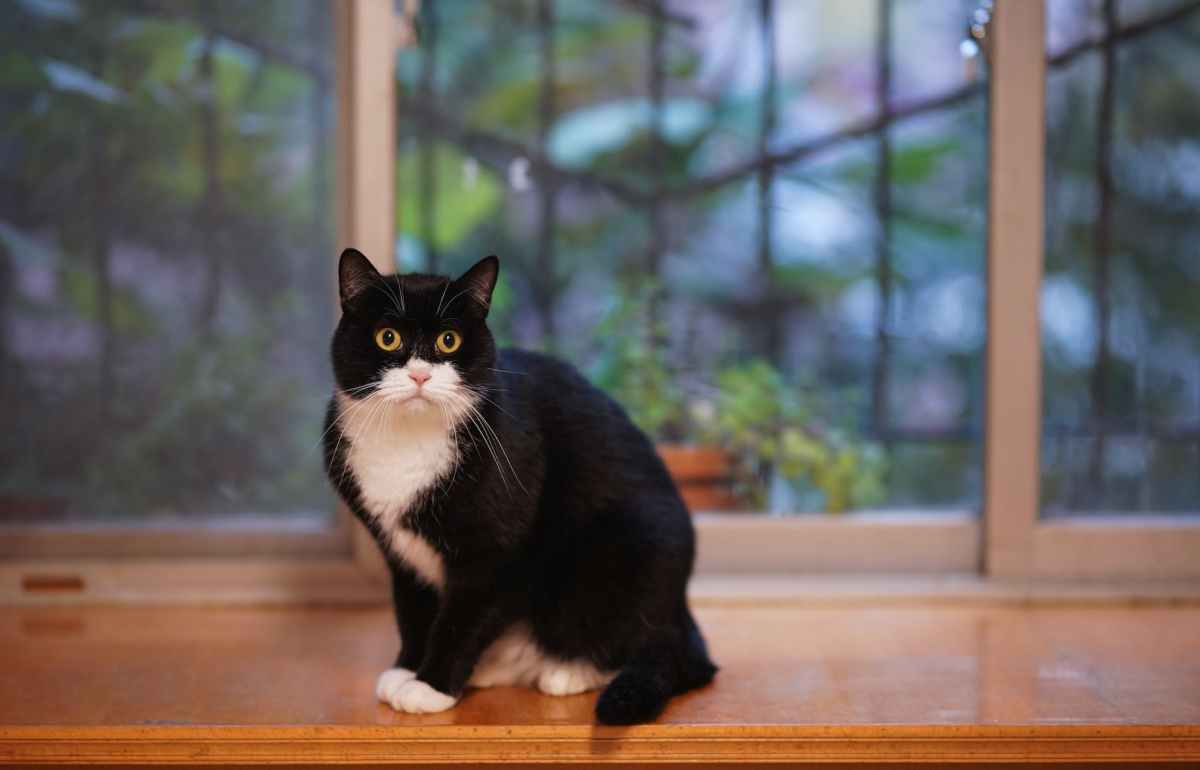
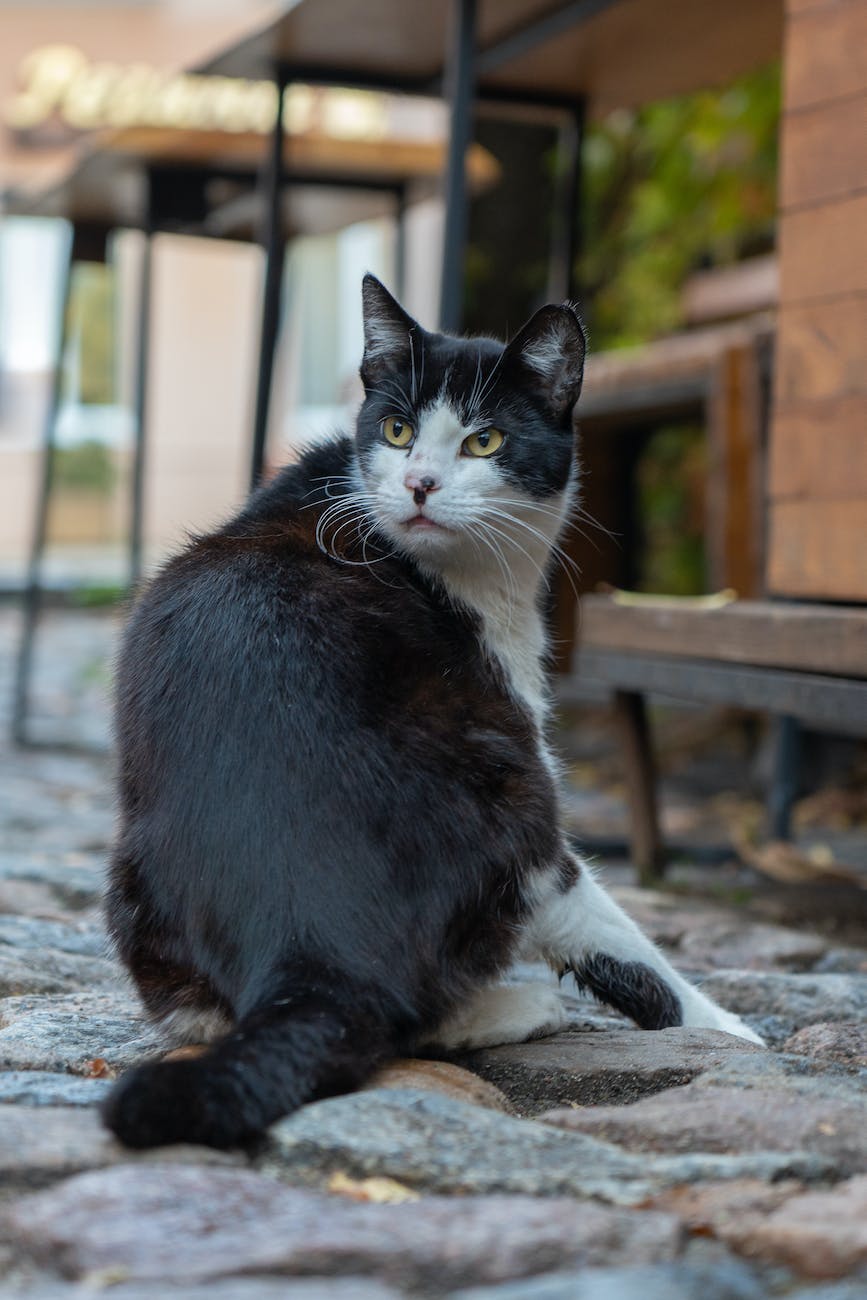
tuxedo cat sitting on ground
Credit: Dima Solomin/Pexels

In The UK, Cat ‘Ownership’ Can Be A Hazy Concept

What does it mean to “own” a cat? If you believe a cat is neglected, can you take custody? As UK law changes, those questions need answers.

For the second time this week, two people are fighting over a cat after the original “owner” received a request from a microchip company to confirm another person’s claim on the feline.

Charlotte Sawyer of Swindon, a town in southwest England, told her local newspaper she was livid when she got the request to sign over her claim to one-year-old Oreo.

“I can’t believe the audacity of this person trying to steal our beautiful cat,” she told the Swindon Advertiser.

But Sawyer readily admitted Oreo was going out for days and sometimes weeks at a time before returning home, and she hasn’t seen him for four months now.

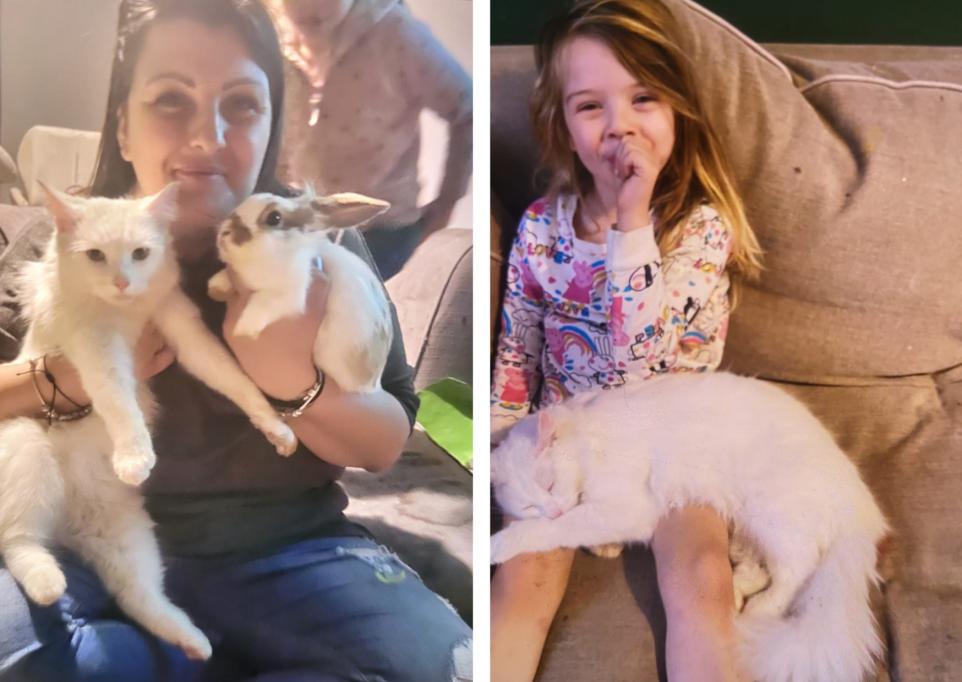
Sawyer and Oreo
Charlotte Sawyer, left, with her cat Oreo and a pet rabbit. Sawyer’s daughter, right, with Oreo. Credit: Charlotte Sawyer via Swindon Advertiser

Like many cats in the UK, Oreo not only had access to the outdoors, he was accustomed to coming and going as he pleased. Other families were feeding him, and it’s likely he made the rounds among several houses before returning home. Because “home” is a nebulous concept in this instance, it’s not the first time someone has asked Sawyer to relinquish custody of Oreo.

“A woman claiming to be someone who looks for missing cats once knocked on my door and handed me a form asking for permission to change Oreo’s microchip,” Sawyer said. “I wanted to rip it up, I was furious, and told her he was my cat. Now it’s happened again. At least it’s provided some reassurance that he’s still alive.”

While I feel for anyone who loses a pet, I don’t know how someone who truly loves a cat can accept the kitty being gone for days or weeks at a time, not knowing if he’s in danger, hurt or still breathing. That kind of arrangement isn’t in the cat’s best interests, and it’s not compatible with our responsibility to ensure the welfare of our four-legged friends, an obligation all of us take on when we adopt our pets.

The people who encountered Oreo likely thought he was a stray or an abandoned former pet. If they’re requesting a change to microchip registration, it probably means they spent their own money to take the little guy to the vet, where the chip was discovered and scanned.

This is emphatically not a blanket criticism of UK norms regarding outdoor access, by the way. Americans cannot claim moral superiority. In the past week or so we’ve had a Pennsylvania man kill a cat with a blow dart because the feline “was trying to kill my birds,” a vulgar approximation of a human being in New Jersey “repeatedly raped” his pet cat before torturing her to death, and some deranged lunatic in Florida used a cat as target practice, leaving 30 pellets lodged in the innocent animal’s little body.

That represents a tiny fraction of the cat abuse stories from the last 10 days and I’ve omitted the worsted examples because I know we have readers who can’t handle this stuff. (I can’t either, which is why I paused my Google News alerts for most of the past two weeks.)

My point here is not to shock. It’s to underscore the fact that we have absolutely no moral authority when it comes to telling people in other countries how to care for animals.

Outdoor cat
A cat exploring outdoors. Credit: Openverse

Moral authority concerns aside, the two examples of ownership claims by microchip this week raise important questions about the definition of “ownership” and what it means to properly care for a cat.

Like many cat lovers I don’t like the term “owner” and I describe myself as a caretaker, but where the law is concerned, ownership is important concept because it determines who has claim over the animal. The law views cats and dogs as property, whether we like it or not. That’s why animal welfare statutes fall under agriculture and markets law in many US states instead of the criminal code, and it’s why so many of those laws need updating.

Cat culture across the Atlantic is different in that the majority of people who have cats believe our furry friends must have access to the outdoors to live a complete, fulfilled life. In the US, 63 percent of cat caretakers keep their felines strictly indoors, while in the UK it’s virtually the opposite, with 70 percent allowing cats to roam outdoors. Not all definitions of outdoor access are equal: Some people allow only supervised outdoor time in the backyard (or “garden”), some make sure their kitties are safely indoors by nightfall, while others have cats who return at their own whim.

There are also differences regarding geography, traffic density, the prevalence of natural predators and the nature of city life that account for how much outdoor access they allow their cats.

As the UK sets a June 2024 date for the mandatory microchipping of pet cats, disputes like this are going to become more common, which means people would be wise to make sure their cats’ microchips have up-to-date information and have readily available proof that they own their felines. If cat owners don’t establish the criteria for what it means to “own” a feline, the government will.

Fred The Cat Is Back With His Human And His Brother, Thanks To Police

Fred went missing last summer and another person tried to claim ownership of the little guy by attempting to change details on his microchip.

Beryl Edwards was overjoyed when her microchipping company contacted her to inform her that her cat Fred, missing since the summer of 2022, had been found.

Then her joy turned to frustration as the company asked her to confirm a change in Fred’s ownership.

“Can you imagine the range of emotions from, ‘Fred! He’s alive, he’s OK’ to ‘transfer of ownership? What’s this all about?’” the UK woman told the BBC earlier this week.

A rep from Identibase told Edwards the company couldn’t provide any information on the person or people who currently had Fred due to data privacy laws, so Edwards called the police, who handled it swiftly.

“I’m totally over the moon,” Edwards told the BBC on Wednesday. “I can’t praise Market Drayton police enough, they got on to the case on Sunday, contacted the people on Monday, and by 10:45 on Monday evening they brought Fred home.”

The police are able to access data the public cannot if it pertains to an investigation, and law enforcement had said earlier they considered Fred’s predicament a case of theft. It’s not clear if they charged the other party with a crime.

As for Fred, Edwards said he’s happy to be home with her and his litter mate, Gino.

“He’s roaming around the house, obviously he’s kept in doors,” she said. “He’s playing, he’s eating, having lots of cuddles, lots of love, he’s great.”

UK legislators recently passed a law that will require all cat owners to have their felines microchipped by June 10, 2024. Advocates say the law will greatly increase the chances that missing cats are reunited with their people. It will also help hold people to account if they abandon their pets, and will help authorities settle questions of ownership in cases where it’s disputed. Edwards said she’d like to see changes to the way information is shared as well so people in her situation can more easily resolve their problems.

With A Three-Fold Increase in Cat Thefts, UK Chooses Microchip Mandate

With breed cats commanding prices in the thousands, thieves see pet theft as a quick score. Lack of prosecution has made it an almost zero-risk crime in the UK.

Mandates in the wake of COVID-19 haven’t been especially popular with a weary public, but surveys show one proposed directive has almost universal support in the UK: Requiring all cat owners get their pets microchipped.

Cat thefts in the UK have tripled in the last five years, with the pandemic contributing to the increase since early 2020, police say. Authorities say they hope compulsory microchipping — and consolidating the many chip ID databases into one — will help discourage people from stealing while making it easier to reunite felines with their families.

Thieves mostly target pedigreed kitties over moggies, with Bengals as the most commonly-stolen cats, followed by British Shorthairs and Persians, according to police statistics. Thieves try for breed cats because of resale value, police say.

Dog thefts have skyrocketed as well, with thieves targeting Chihuahuas, Jack Russell Terriers and German Shepards, among other popular breeds. The price of breed dogs has ballooned by as much as 89 percent since the beginning of the pandemic, when demand for new pets and a slowdown in breeding created a boom market.

For context, an estimated 3.2 million British families welcomed new pets, mostly cats and dogs, into their homes since the first lockdowns in late winter and spring of 2020, the BBC reported. Like their counterparts here in the States, UK shelters experienced unprecedented adoption rates as people battled loneliness and depression during the initial COVID waves and last year’s long winter when the virus came back with a vengeance.

“The number one reason behind pet theft is because the prices for pets have gone up drastically,” Becky Thwaites, spokeswoman for UK pet charity Blue Cross, told SWLondoner. “This happened exponentially over lockdown, as responsible breeders stopped breeding due to social distancing guidance, but more people were wanting pets.”

Despite the spike in animal thefts, only about one percent of all such crimes have led to an arrest, according to a public information request by a UK animal welfare group. 

Police have been reluctant to pour resources into those cases, partly because the law lacks serious consequences for people who steal animals. While the maximum sentence for stealing a pet is seven years in jail, under current UK law sentences are pegged to the value of the stolen item. (Unlike the US, the UK does not make a distinction between prison and jail.)

But for people who love their cats, it’s not about the monetary value — it’s about sentiment, love and the distress to human and animal when they’re separated.

Abductions instead of thefts

To change that, a new pet theft task force — set up earlier this year to study the growing problem — recommended a change in the law. Instead of treating pet thefts as property thefts, under the proposal they would be treated as abductions, with all the increased charges and consequences that come with the classification.

Treating animal thefts as abductions “acknowledges that animals are far more than just property and will give police an additional tool to bring these sickening individuals to justice,” UK Home Secretary Priti Patel told the BBC.

Advocates say treating pet thefts as abductions makes sense not just as a legal adjustment, but also as a reflection of the way cats and dogs are stolen. While some thieves stalk dog parks and lure pets away with treats, others have taken to more brazen and violent means like taking animals by force and jumping people while they’re walking their dogs.

The change would require owners to have their kittens chipped by 20 weeks and adult cats chipped upon adoption from a shelter or rescue.  Failure to microchip a pet would result in a warning and a three-week grace period. After that, cat owners would face a steep fine of £500, equal to $660 in USD.

Consolidating chip databases

There are about 10.8 million pet cats in the UK, although widespread chipping alone won’t solve the problem of pet thefts and lost pets flooding shelters. There are currently 16 different microchip databases in the UK. They don’t always share information and scans don’t cover each of the databases, so even if a cat is recovered, brought to a shelter and scanned, there’s no guarantee the kitty will be returned home.

The existence of so many non-cooperating databases operated by private companies “can pose a huge barrier to successful reunification of pets” said the British Veterinary Association’s Malcolm Morley.

UK authorities and the animal welfare groups pushing for the change are cognizant of the problem and want to streamline the 16 existing database into one central repository of cat microchip registration. That will take time and will have to include compromise on the part of the various private companies running the existing fractured databases.

“Every day, we see how important microchipping is for cats and for the people who love them,” said Pet Protection’s Jacqui Cuff, “whether it’s reuniting a lost cat with their owner, identifying an injured cat, or helping to ensure an owner can be informed in the sad event that their cat has been hit and killed by a car.”