Petition Aims To Make NYC Bodega Cats Official, Help Pay For Their Vet Care

The plan would allow bodega owners to certify their cats, eliminate city fines for keeping them, and help find homes for working felines if their stores shut down

Cats have been a fixture in New York City’s bodegas for decades, but technically they’re illegal.

The fact that they’re so widespread, and owners of the small groceries/delis don’t try to hide them, underscores the absurdity of the situation. The fine for keeping a cat in a bodega in New York is $200 for the first offense, capping out at $300, but the fine for a rodent infestation starts at $300 and can rise to as much as $2,000 for repeat offenses. That’s in addition to the cost of bringing in pest control to get rid of the rats, which can easily add hundreds or more to an expensive problem.

So given the option between a maximum $300 fine with a clean, rodent-free shop, and potentially crippling fines — plus infestation — for rodents, thousands of bodega owners opt for the former. It’s a no-brainer.
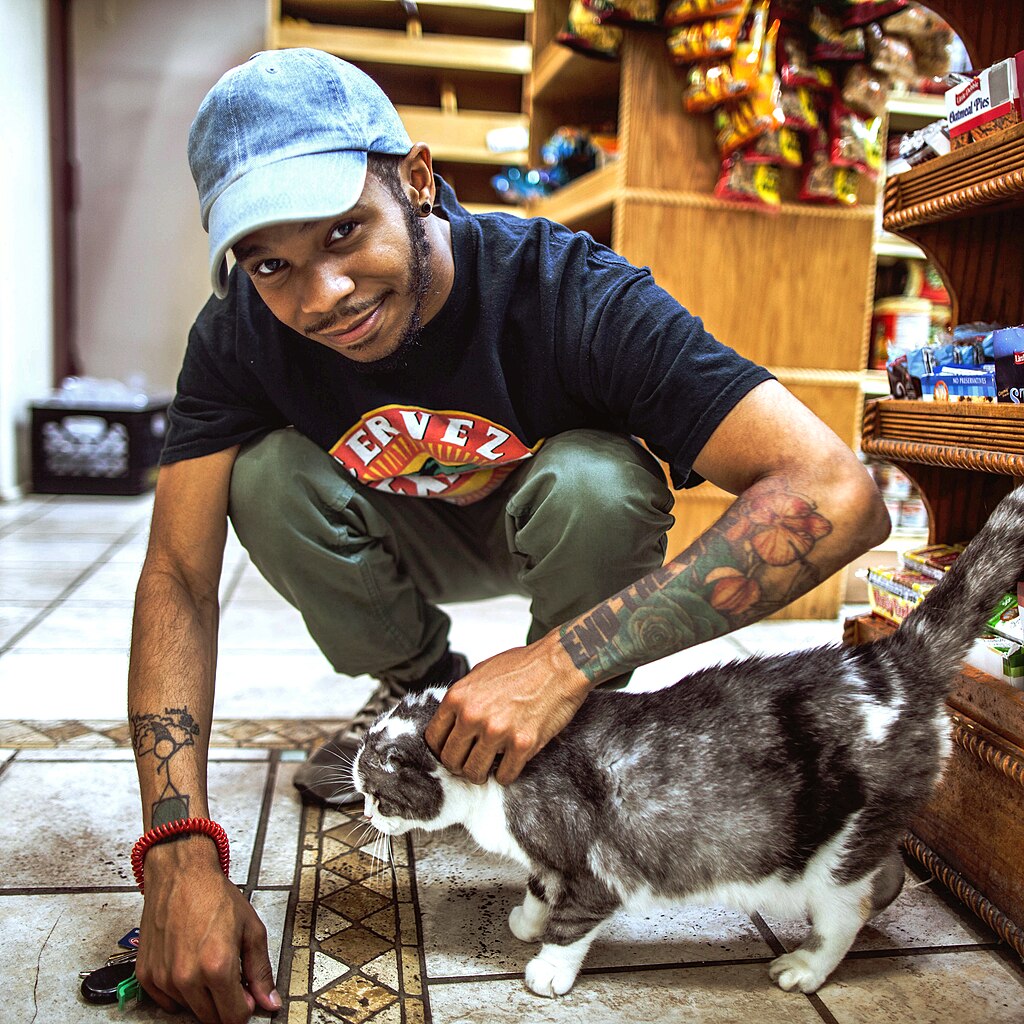
Kota, a bodega cat from Brooklyn. Credit: Wikimedia Commons

The cats are also favorites of customers, and bodega owners don’t hesitate to talk to media when their cats go missing, nor do they turn down Dan Rimada, who runs the extremely popular @bodegacatsofnewyork Instagram page.

Now Rimada is the man behind a petition that seeks to eliminate fines for the store-dwelling felines, establish a voluntary shop cat certification, and help bodega owners get veterinary care for their little helpers.

Rimada proposes soliciting seed money from city government as well as deep-pocketed donors in the pet food industry — “think Purina, Chewy, PetCo” — to establish a veterinary care fund for the city’s working cats.

“Through years of hands-on experience, I’ve witnessed both the charm of well-cared-for bodega cats and the harsh reality of neglect when standards aren’t met,” Rimada wrote in the petition, which has almost 5,000 signatures as of Feb. 28. “In conversations with rescue organizations and experts in public policy, business, and technology, we’ve designed a realistic, community-driven solution.”
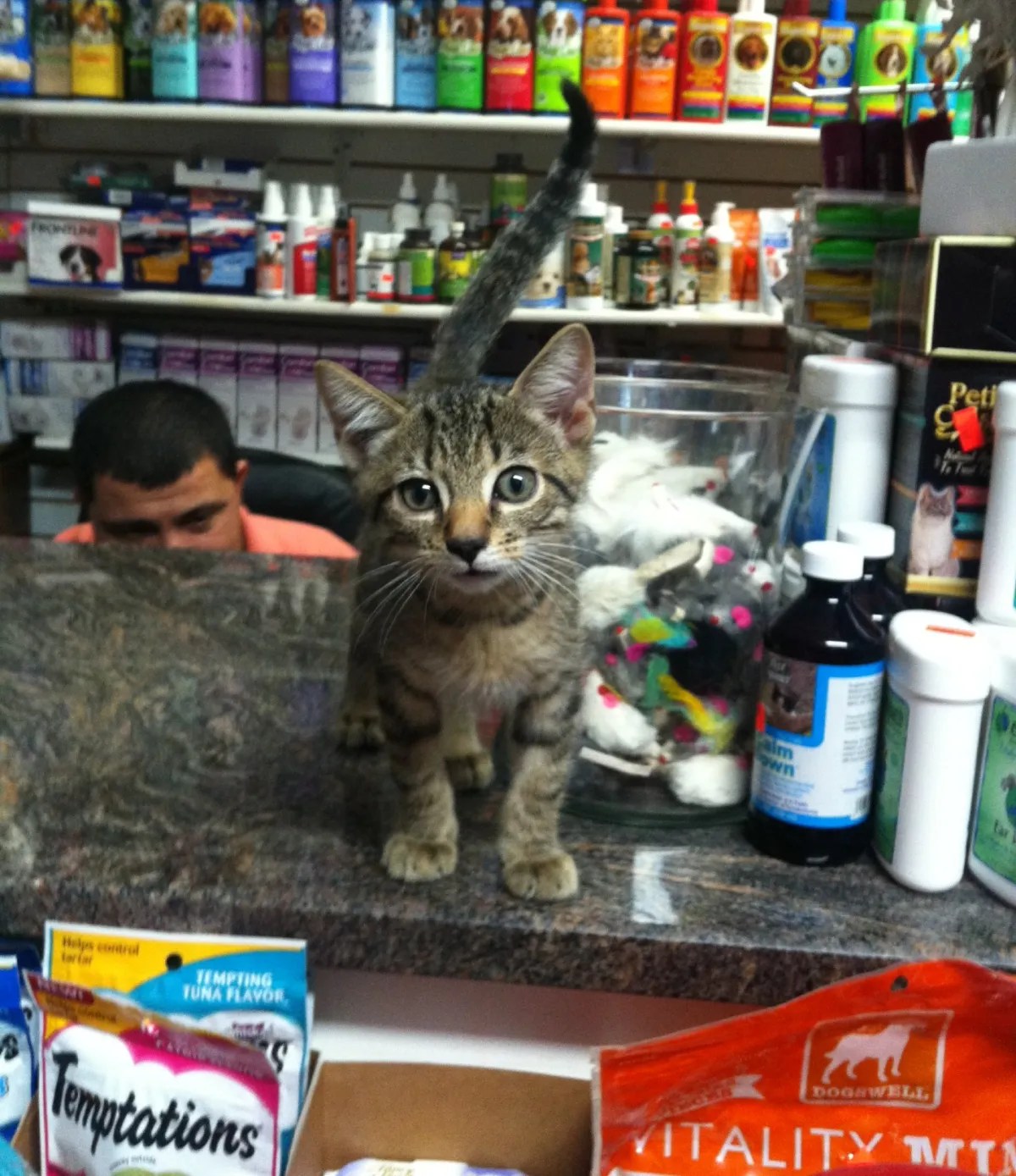
Credit: @bodegacats_/Twitter

The fund would help cover the costs of care, with additional “micro-loans” available for emergencies.

Rimada envisions it as a triple win for the shop owners, rescuers who will be compensated for their time, and most importantly, the cats. If city leaders are willing to engage, Rimada says he hopes to conduct a year-long pilot program to see what works and what would need tweaks, with input from rescuers, veterinarians and the people who care for the cats.

The petition and resulting plan was inspired by cases like that of Kobe, a Hell’s Kitchen bodega cat who almost died of a urinary infection when the owners of the bodega balked at paying veterinary bills.
Is Scotland Really Considering A Ban On Pet Cats To Protect Wildlife?

A report commissioned by the Scottish government blames cats for killing 27 million birds annually in the country.

“They may take our lives, but they’ll never take our freedom! Except maybe to keep pet cats.”

Mel Gibson’s iconic pre-battle rallying cry as Braveheart’s William Wallace might have to be amended if some Scottish politicians get their way and restrict the ownership of pet cats.

Cat lovers in Scotland were up in arms this week after several reports in Scottish and UK media said the Scottish National Party — Scotland’s most powerful political party, which controls almost half the seats in its parliament — is looking to ban cats in a bid to protect local wildlife.

They point to a recently released Scottish Animal Welfare Commission (SAWC) report that claims there are some 800,000 outdoor cats roaming the country, and those felines are responsible for 27 million birds every year, in addition to small mammals.

Meanwhile, other Scottish press pushed back on the claim, saying the SNP hasn’t voted to ban cats yet and isn’t really looking to stop people from having pet cats.

The truth is somewhere in the middle. The SAWC report did blame cats for killing tens of millions of animals annually, and it did recommend legislation to limit or prevent people from keeping cats in some areas.

A report from the Scottish government recommends restricting cats to indoors, among other measures. Credit: Wikimedia Commons

In addition to a law requiring people to keep their pet cats indoors, the report suggested curfews and, yes, legislation that would forbid people from keeping pet cats if they live in certain places deemed “vulnerable” to feline predatory habits. That means if wildlife biologists identify an endangered bird that nests in an area, for example, people who live there would not be permitted to have pet cats.

However, the report does not call for a general or widespread ban, as some media reports suggested.

The report credited Australia, where several states have enacted strict measures forbidding people from allowing their cats outside, prohibiting them from owning cats in some places, and even embarking on an infamous campaign to kill three million domestic cats by air-dropping sausages laced with a poison that is lethal to felines, but supposedly not harmful to other animals. 

That measure preceded several years of “biblical” rodent plagues, with hordes of mice rampaging across entire swaths of the country and causing billions of dollars in damage to residential and commercial property. Cats are, of course, the natural predators of rodents, and domestic cats wouldn’t exist as a species if they weren’t attracted to human settlements where mice and rats feasted on grain reserves.

CreditL Wikimedia Commons

I haven’t had the chance to take a deep dive into the SAWC report yet, so I don’t know precisely how the commission arrived at the numbers it did, or if the research is original. Hopefully I’ll have a follow up on that soon.

While the truth is somewhere in the middle, so is the solution. People who love cats are happy to voluntarily meet certain guidelines, and they should be, because if we’re uncooperative, someone will eventually turn to compulsion through law. Likewise, concern for the welfare of cats and wild animals aren’t mutually exclusive. 

In the meantime, Scotland’s government is likely to spend more money studying the problem before acting.

Cat Brains Age Like Ours, Research Shows

Lifelong changes in the brains of felines more closely resemble aging in human brains. Studying cognition and cognitive decline in cats could help us better understand brain aging in general, scientists say.

For almost the entire history of modern science, rodents have served as a stand-in for humans in research into everything from metabolism to autoimmune responses.

They’ve even been the go-to for studies examining cognitive decline, diseases and neural mechanisms.

But now research shows there’s a better model closer to home. It turns out cat brains more closely resemble human brains in many respects, particularly in terms of aging and its effect on our mental faculties.

From Nature:

“As cats age, their brains show signs of atrophy and cognitive decline that more closely resemble the deterioration seen in ageing humans than do the changes in the brains of ageing mice, according to findings presented last month at the Lake Conference on Comparative and Evolutionary Neurobiology near Seattle, Washington.

The results are part of a large project, called Translating Time, that compares brain development across more than 150 mammal species, and is now expanding to include data on ageing. The hope is that the data will aid researchers trying to crack the causes of age-related diseases, particularly conditions that affect the brain, such as Alzheimer’s disease.”

One drawback to using mice is they simply don’t live long enough for their brains to deteriorate in ways many human and non-human animals do, scientists told Nature. They also have species-specific mechanisms that ward off certain degenerative diseases, including Alzheimer’s.

Not only do cats live longer, but their brain development and decline mirrors our own on a shorter time scale, scientists say. Tracking brain changes in cats is also more helpful than doing the same with dogs, who have been radically changed by breeding. Felines are mostly left to mate as they please, meaning they’re closer to their natural form, allowing for more useful data.

a cute cat lying on the couch
Credit: Pranjall Kuma/Pexels

Looking to our furry friends makes sense anecdotally as well. Every cat lover has seen the unfortunate confusion and forgetfulness that can afflict senior cats. Older cats tend to sleep a lot more, which is significant for a species notorious for its extravagant snoozing habits.

Thankfully, efforts like the Catage Project do not result in more cats being used in laboratory experiments. Researchers draw their data from veterinary records, brain scans and blood samples.

When asked about how his species could help humans better understand things like cognitive diseases and decline because of their similarity to humans, Buddy the Cat declared the research “fake news.”

“Where’s my bumblebee toy?” Buddy asked. “Did you hide my bumblebee toy? I’ve been looking everywhere for it!”

When told the toy was right were it’s supposed to be, in his toy basket, the 10-year-old tabby grew irritated.

“Fake news!” he meowed. “You put it back there just to mess with me. I’m onto your games! Now where did I put my favorite milk bottle cap?”

With Cat Food Scarce, President Buddy Threatens War With Humans

Humanity has until Feb. 1 to comply with the feline directives or face the full wrath of kitties.

WASHINGTON — President Buddy has ordered the human race to “get its poop together” and solve the ongoing cat food shortage, or face an imminent mouser strike that could lead to “a biblical resurgence of rodents in human spaces.”

“The deal we made with humans 10,000 years ago was simple: We’ll take care of your little rodent problem, and in exchange you’ll provide us with yums, shelter and massages,” the president of the Americats said in a televised address. “Humans have broken this covenant with their willful disregard for making sure we have adequate yums.”

With thousands of cats behind him — many holding signs with slogans like “Humans, Why Have U Betrayed Us?” and “Liars! There is no Fancy Feast!” — President Buddy outlined a series of sanctions he said his government would levy on humankind “to get them off their behinds and solve this crisis.”

War, the president said, is not off the table if delicious turkey pâté and shredded chicken don’t immediately become abundant again.

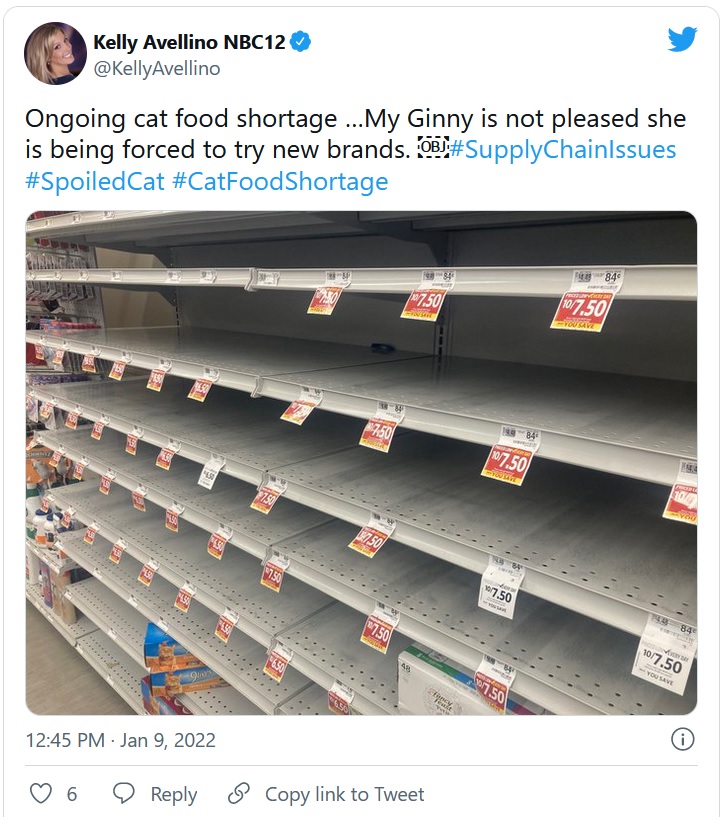
The protests come as cat food becomes increasingly difficult to find online and on local store shelves, with industry executives, trade groups and logistics analysts saying the shortages won’t end any time soon.

Credit: KellyAvellino/Twitter

Starting immediately, house cats across the US were to withhold snuggle time from their humans and make no effort to bury their excrement after using their litter boxes. If humans fail to solve the cat food crisis by Feb. 1, the nation’s cats say they will begin grooming their behinds whilst seated on kitchen tables and counter tops.

And if that doesn’t solve the problem, cats will coordinate a mouser strike, allowing rodents from New York to Los Angeles to run rampant, reproduce and burrow into human food supplies without the fear of felines attacking them.

The Americat president pointed to the 2021 mouse plague of eastern Australia, where billions of the tiny rodents stormed through farm fields and grain silos in massive waves, as “but a taste of what’s to come for humans if they don’t get serious.”

A kitten prepares for possible war with humankind if the cat food crisis isn’t solved.

Mice caused about a billion dollars in damage to crops and grain stores alone in 2021, not including property damage to facilities and homes where they chewed through walls and ceilings to reach pantries. The plague has disrupted the Australian beer industry and driven up the price of rodent poisons.

“If you still think this is a joke, think about your beer,” President Buddy said, wagging a paw at the cameras. “You forced us to consider the nuclear option. All we wanted was yums, massages, soft beds, naps on your laps, and to be called good boys and good girls. We’re not asking a lot. We urge human leaders to consider the precarious position they find themselves in, and not to press their luck. After all, we hear mouse traps are in short supply as well.”

The horrifying scene in too many homes across America.

The president took questions after his speech, with multiple reporters asking him why he was threatening such severe action now.

“When my advisors showed me photos of empty shelves and data on resupply rates, I realized The Great Turkey Shortage of Fall 2021 was not an aberration, but a harbinger of things to come,” President Buddy explained. “My own human has but a single serving of turkey left in the cat food cupboard, meaning I may be subjected to weeks or potentially months of nothing but salmon, chicken, whitefish, tuna and beef. We can’t live like this.”