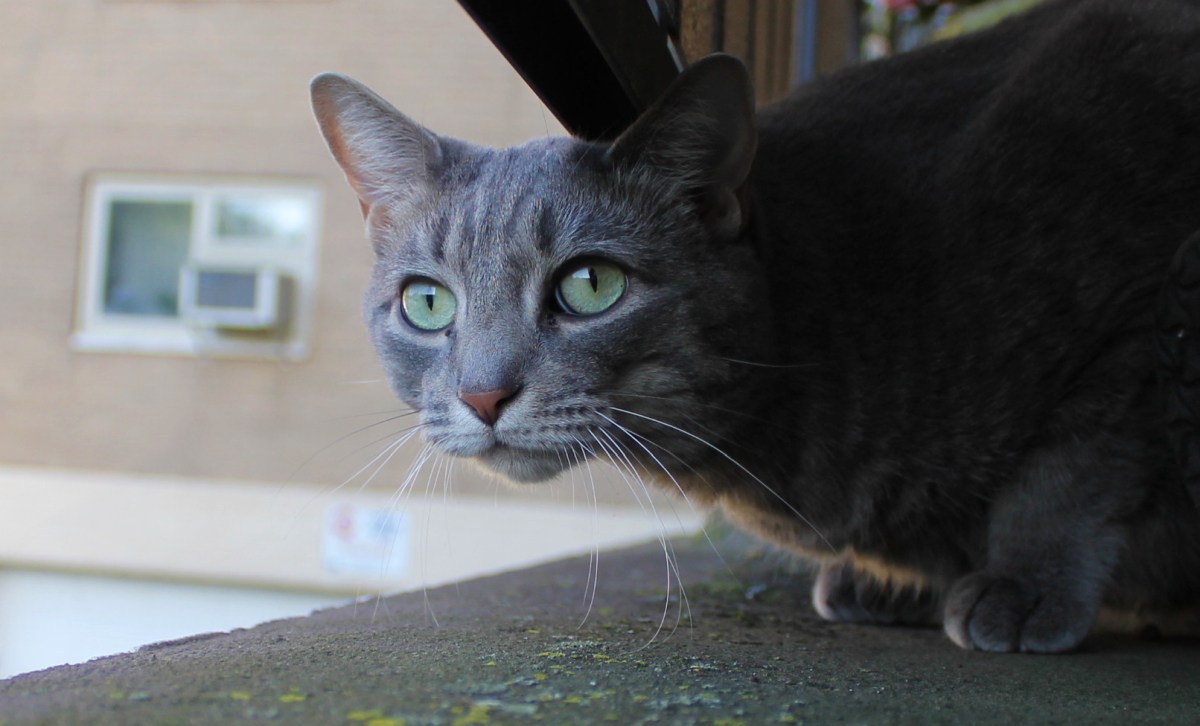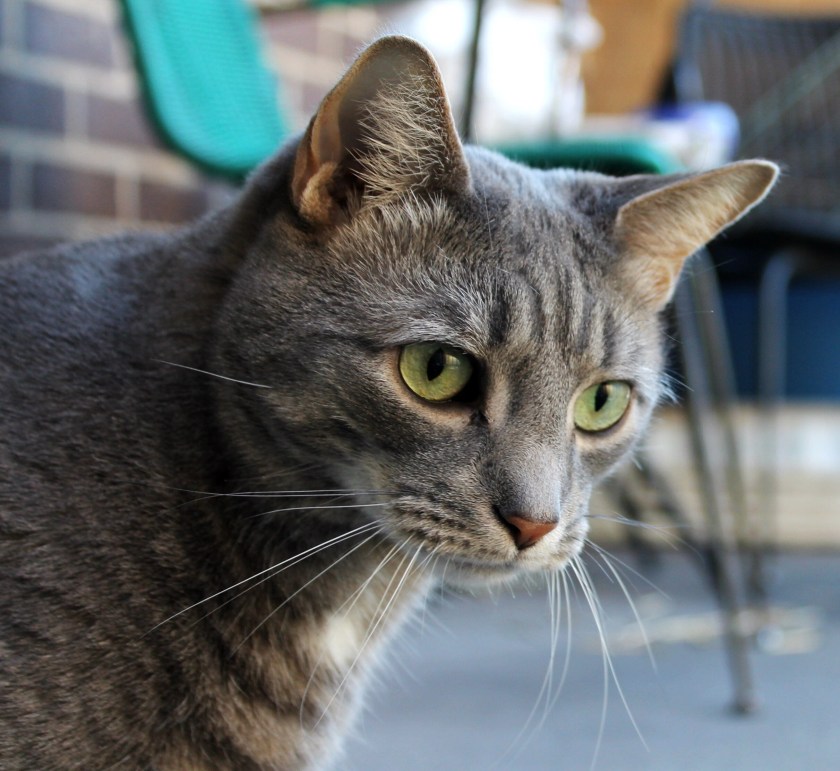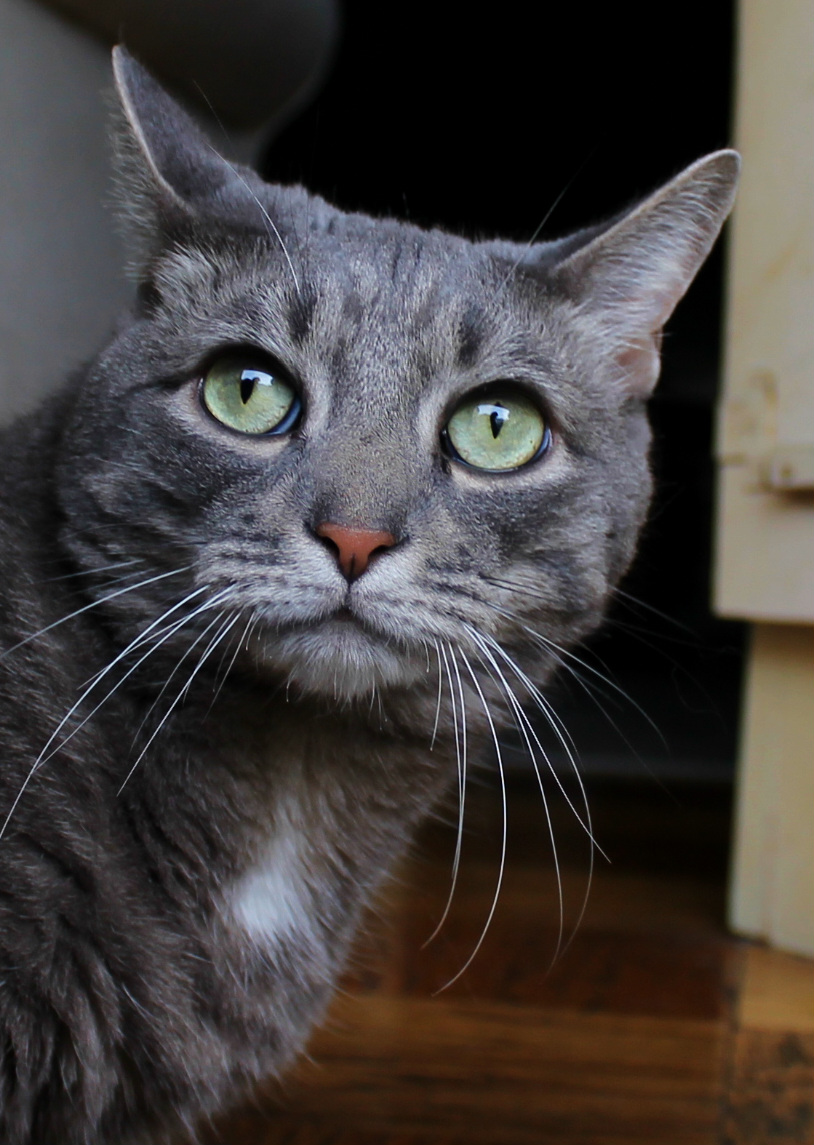
Buddy was shocked to learn that he will not get a drivers license or vote in an election.
NEW YORK — Buddy the Cat was plunged into an existential crisis on Tuesday after realizing he is in fact an animal, sources said.
The outspoken grey tabby was dozing at about 12:32 pm during his fourth nap of the day when he was roused by a moving truck’s loud backup beeper and the shouts of men carrying heavy objects.
Buddy padded over to the window and looked down.
“What’s this ruckus?!” he called down to the movers. “Between your loud truck and you guys yelling like a bunch of animals, how is anyone supposed to get any sleep around here?”
The men below burst into laughter.
“What’s so funny?” Buddy demanded, his tail thumping the floor in annoyance.
“The pot calling the kettle black!” one of the men shouted back before disappearing around a corner with a large box in his hands.
After a quick search for the phrase on the internet, followed by a three-hour trip down the Wikipedia rabbit hole, a dejected Buddy collapsed into the couch while questioning his own existence.
“An animal?!?” he said aloud. “But I drink coffee! My research into quantum teleportation has been going so well! I don’t eat mouses and I’ve even stopped eating flies!”
The depressed feline was settling down for his fifth nap at press time, sources said, unaware that humans do not sleep 16 hours a day.
Buddy’s spirits were raised later in the day when, over a soundtrack of saccharine piano music, his human Big Buddy explained that humans are animals too.
“You think you’re a person,” Big Buddy said, “and who’s to say you’re not? Now can we cut the music? This isn’t Full House, and I’m not Bob Saget as Danny Tanner.”
The fatter the cat, the bigger its online following.
Metro’s editors want more fat cats.
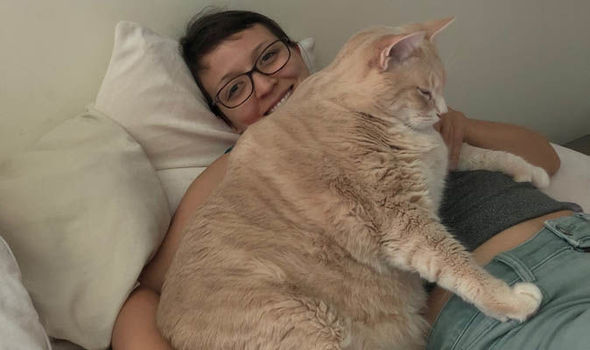
The newspaper recently profiled Manson, a 28-pound behemoth who lives with his humans in Silver Spring, Maryland, but the god of internet traffic is never sated, so the story ends with a request — or challenge — for more morbidly obese pets to drive clicks.
“Do you have a pet who’s even chunkier than Manson? Get in touch to share their story,” Metro’s editors write.
You know things have gotten out of hand when readers and editors alike respond to a story about a kitty almost three times the weight of a normal feline with a collective “Eh, that’s all? Show us a fatter one!”
In the world of Online Famous felines, popularity is directly proportional to fat, inspiring a caloric arms race among those seeking fleeting fame from fickle followers.
Indeed, the Metro story notes that while two-year-old Manson can’t hop up onto his humans’ bed without assistance, he’s amassed more than 10,000 followers on Instagram, as if an abstract measure of online “fame” — which he can never comprehend and makes absolutely no difference to him — counterbalances the maladies he’ll suffer due to his weight.
People apparently think it’s funny to see a two-year-old cat who can do little more than nap, eat and roll himself around the house. Anyone who expresses alarm for the welfare of the cat is a “troll” or a hater, according to the Metro article.
Are people stuffing their cats for followers and upvotes?
There’s really no way to determine that short of cat owners admitting it. Manson’s owners say they see no problem with their cat’s diet.
Most of these “chonky cat” stories come from shelters, where staff and volunteers are left with the hard problem of getting huge furballs to slim down after they’ve been abandoned by their humans or orphaned due to owner death. That was the case with Bazooka, a 35-pound ginger tabby whose owner had dementia and fed the cat constantly.
“[Bazooka’s owner] thought he was doing the best thing for his cat by feeding him,” an SPCA spokeswoman said at the time. “We need to look on this with a compassionate view. He was loved.”
Those viral chonky cat stories have been a boon to shelters, highlighting the good work they do and driving donations from cat lovers and well-wishers.
But those shelters are trying to get the cats in their care to lose weight, not pack on the pounds. That’s because they see first-hand what morbid obesity can do to a cat’s quality of life and life expectancy.
As for the rest of us, we should probably rethink our tendency to reward the owners of massive cats with our attention.
Insisting that cats are the true rulers of planet Earth, emissaries of a new alien species spurned human leaders during first contact.
WASHINGTON — First contact between humanity and an alien race known as the Zxorxax faced a hiccup on Thursday after the alien delegation demanded a meeting with Earth’s felines.
US and UN leaders were left momentarily confused when one of the Zxorxax leaders interrupted a welcoming ceremony on the White House lawn to issue the demand.
“On this momentous day, the human race extends a warm welcome and rejoices in the knowledge that we are not alone in the univ…”
“Human stop talking!” the Zxorxax Supreme Chancellor, Xoralundra, said while interrupting UN Secretary-General António Guterres. “We demand to speak to the superior race on this planet.”
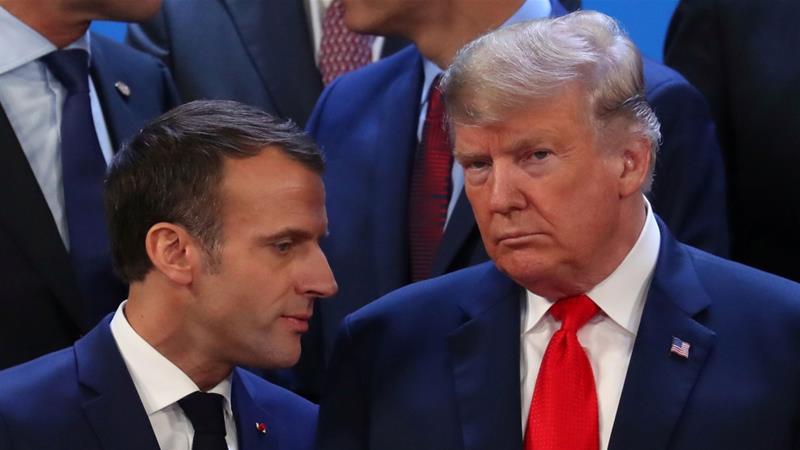
With the entire world watching via television and satellite feeds, Guterres, American President Donald Trump and French President Emmanuel Jean-Michel Frédéric Jean-Jacques Claude Louis Macron exchanged pained glances.
“Uh, Supreme Chancellor, you are speaking to the leaders of the human…” Macron began.
“You will be silent, or perish in the purifying blaze of our parametric space-time weaponry!” said an aid to the Supreme Chancellor who identified himself only as the Herald of Xora. “We did not ask to speak to a frog.”
“We will treat only with the great warrior species of your planet,” Xoralundra proclaimed in a booming voice after a long moment of pained silence. “Bring forth the felines.”
French President Emmanuel Jean-Michel Frédéric Claude-Baptiste Luc Jean-Rene Landry Louis Macron and American President Donald Trump were snubbed by the Zxorxaxian emissaries to Earth.
By late afternoon White House officials had cleared a conference room for the Zxorxax, where they met with a feline delegation headed by a house cat named Chonkmatic the Magnificent. The world’s most powerful human leaders were left in the hallway outside as the aliens conducted negotiations with the felines.
New York Times reporter Bat Segundo, who was among a handful of media observers permitted inside the negotiation room, said the Zxorxax were delighted when they presented Chonkmatic and his delegation with a priceless artifact from the Zxorxaxian home world as a gift of good will, and the overweight tabby responded by swiping the offering off the table.
“You see?” Xoralundra called out, addressing his fellow Zxorxax. “These felines are great warriors who care not for baubles and riches, unlike the inferior humans of this planet who are besotted with shiny objects.”
Asked later why his delegation demanded to meet with house cats, the Supreme Chancellor said it was purely a matter of practicality.
“We knew upon approaching this system that real power lies in the paws of these impressive creatures,” Xoralundra said, addressing reporters. “Our long-range instrumentation revealed images of humans diligently serving these ‘cats,’ as you call them, and it became quickly apparent that while the humans rule in name, ‘cats’ are the true power on your world.”
The Zxorxax themselves refer to felines as “Sxarxion Hrath’gar,” an alien name that translates roughly to “Legendary Warriors of Great Renown and Prowess.”
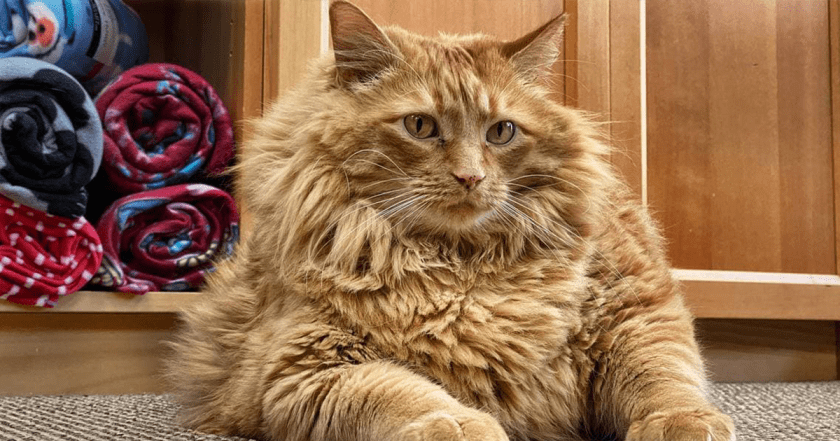
Chonkmatic the Cat has been chosen to negotiate on behalf of all living beings on Earth. Credit: SPCA of Wake County
A second round of negotiations between the aliens and felines has been scheduled for Friday. The Zxorxax seek perpetual rights to Earth’s supply of greenhouse gases, which they consider a delicacy, while the cats have indicated they are willing to make a deal in exchange for a considerable number of alien boxes.
Allison Foley, Chonkmatic’s caretaker, said she would be staying in the White House with her cat as a special guest of the administration for the duration of the talks.
Chonkmatic would be taken back to his suite, fed his favorite brand of chicken wet food, and given the night off to rest before meeting with the aliens again the following day, she said.
“Who’s a good widdle boy? Who just negotiated with an alien race? That’s right, you did!” Foley told the obese cat, scratching behind his ears as he purred and nuzzled her. “Good boy wants yum yums? Okay, mommy’s taking you back to our suite now. Come on, my widdle baby cakes!”
Trump insisted it was always the plan to have the aliens negotiate with felines, and boasted of his “beautiful relationship” with the alien High Chancellor.
“High Chancellor Xoralundra wrote me a big, beautiful letter,” Trump tweeted at 3:22 am on Friday morning. “A tremendous letter, really terrific. The High Chancellor realizes that American cats are the number one cats in the world, they really are. We’re gonna make a deal with the aliens and benefit bigly!”
“I don’t always eat kibble, but when I do, I stop the second I can see the bottom of the bowl.”
For the full experience, play this in the background as you read. 🙂
“His scratches are so artful they’re featured on at least 15 hip hop albums. When dinner time arrives, he feeds his human. He makes biscuits for Michelin-starred restaurants. He is….the most interesting cat in the world.”
“I don’t always break things, but when I do, I prefer breaking irreplaceable personal items. Stay Buddy, my friends.”
“His meow can be understood by speakers of 43 different languages. On Halloween, other cats dress like him. When the veterinarian gives him shots, he shoots back. He is…the most interesting cat in the world.”
“I don’t always get the zooms, but when I do, I rocket around at 120 mph. Stay Buddy, my friends.”
“The owners of the Empire State Building keep a perch for him at the very top of the structure. His litterbox was the inspiration for Calvin Klein’s newest cologne. He’s so adept at knocking things off flat surfaces, the US National Bowling Team recruited him when he was just a kitten. He is…the most interesting cat in the world.”
“I don’t always seek affection, but when I do, it’s always at the time, place and duration of my choosing. Stay Buddy, my friends!”
“His feelings are so strong, he enlisted the Mountain from Game of Thrones as his Emotional Support Human. He always lands on his feet, even in zero gravity. His leap is so graceful, Michael Jordan once asked him for his pawtograph. He is…the most interesting cat in the world.”
“I don’t always want to be let in, but when I do, I want to be let back out again immediately. Stay Buddy, my friends.”
“Study finds dogs are more than twice as smart as cats,” the clickbait headline reads:
A study gives dog owners solid scientific evidence that dogs really are smarter than cats.
A study led by Vanderbilt University counted for the first time the number of neurons in the cerebral cortex of the brains of cats and dogs and found that dogs have more than twice as many neurons as cats.
The research found that dogs have about 530 million cortical neurons while cats have about 250 million. These neurons are the brain cells associated with thinking, planning and complex behavior, which are all considered hallmarks of intelligence.
That’s from a story published Aug. 30 on Local12.com, the website of a Cincinatti-area news station.
So what’s wrong with the story?
It’s dishonest: The study was conducted in 2017, but the Local12 story presents it as news in August of 2019.
It quotes the study’s lead author, giving the impression a reporter from Local12 spoke to her. That did not happen. The quotes were copied and pasted from the press release that originally announced the study two years ago.
It misinterprets the study’s results: Neither neuron count nor brain size — relative or absolute — are reliable indicators of intelligence.
This is what passes for news in 2019: Old, recycled content presented as new information, slapped together by a web producer who didn’t bother to read more than the study’s abstract.
It’s all about traffic and designing pieces of content ready-made for Facebook feeds.
But what about the central claim, that the number of neurons in an animal’s brain correlates to intelligence?
If that were true, we’d be living on a planet dominated not by humans, but by elephants: Earth’s largest terrestrial animal has some 260 billion neurons compared to an average of 100 billion for humans.
“Hear that, son? We have more neurons than humans!”
Research suggests the number of neurons in the cerebral cortex, as opposed to the entire brain, may be a better indicator of intelligence. Indeed, that’s what the study focuses on. The cerebral cortex is associated with higher cognitive functions. As you’d expect, humans have unusually high neuron counts in that region of the brain.
But by that measurement, humans aren’t at the top either.
If neuron density in the cerebral cortex was the primary indicator of intelligence, the long-finned pilot whale would reign supreme, and other types of whales and dolphins would rival humans.
Not only do pilot whales have twice as many cortical neurons as humans, their brains have much more surface area, which scientists once believed corresponded to intelligence.
“Actually we are the Earth’s smartest creatures according to cortical neuron count. Suck it!”
So if we’re keeping score, intelligence is not determined by:
The number of neurons in the brain
The number of neurons in the cerebral cortex
Brain size
Brain size relative to body mass
Brain surface area
Brain “folds”
At one time or another, each of those things was thought of as the way to measure smarts. So if none of those things are true markers of intelligence, what is?
That’s the million-dollar question. We don’t have an answer, which is why scientists conduct this kind of research in the first place.
Contrary to what the article claims, cortical neuron count does not provide “solid scientific evidence that dogs really are smarter than cats.”
But that doesn’t make for a clickable, shareable headline, does it?
In truth, we can’t even define what “more intelligent” really means because each species sees the world differently, and has different priorities to enable it to survive and thrive.
When we measure intelligence, we measure it on a human scale, according to how we humans see the world. That’s hardly an impartial way of evaluating the intelligence of animals with much different needs and ways of seeing the world, and it doesn’t yield many useful insights.
Keeping that in mind is particularly important when it comes to studying cats, who have their own agendas and priorities. Dogs are eager to please and obedient. Cats only listen when it suits them.
That doesn’t mean one is smarter than the other, it simply means they’re different