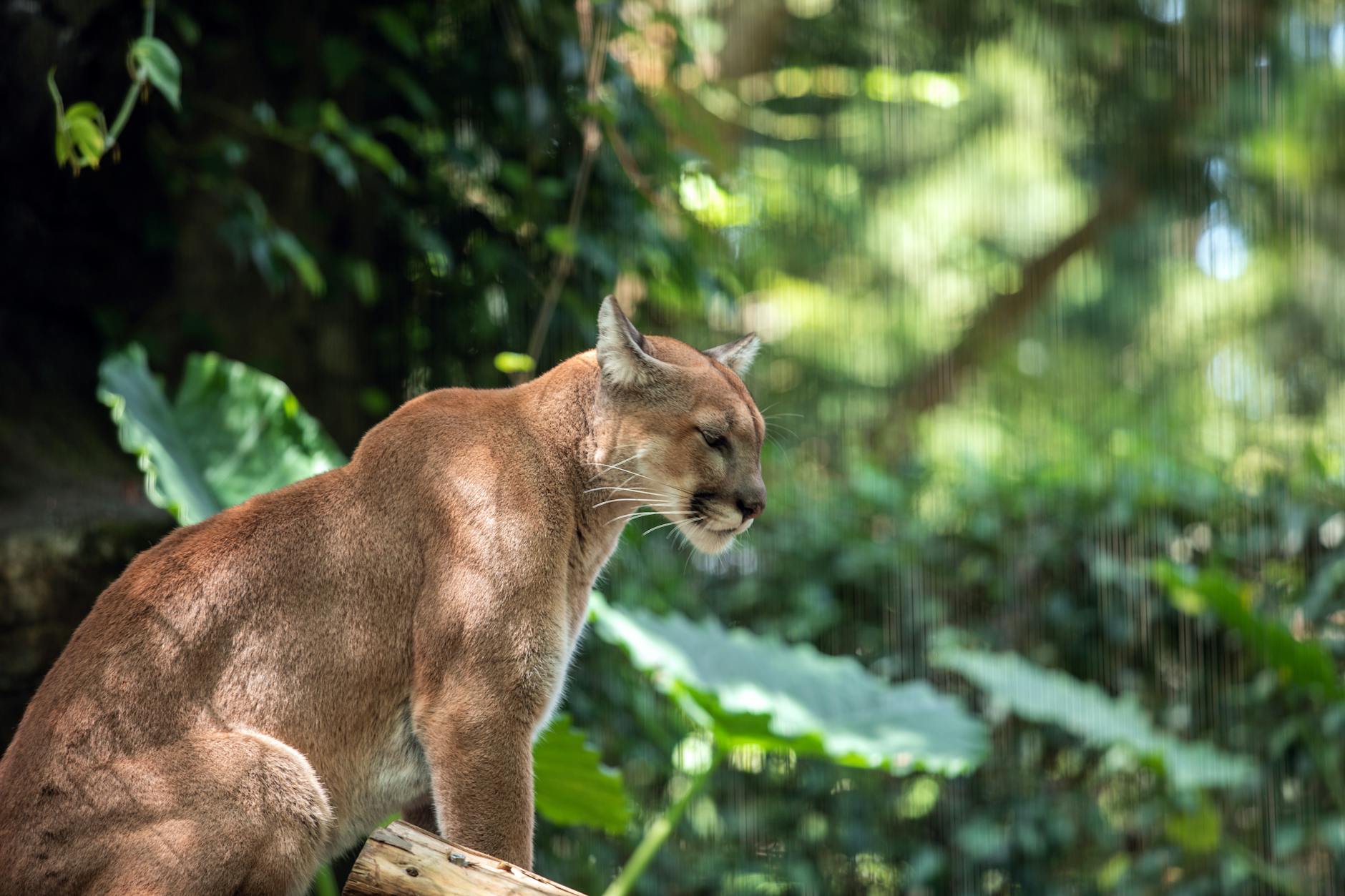
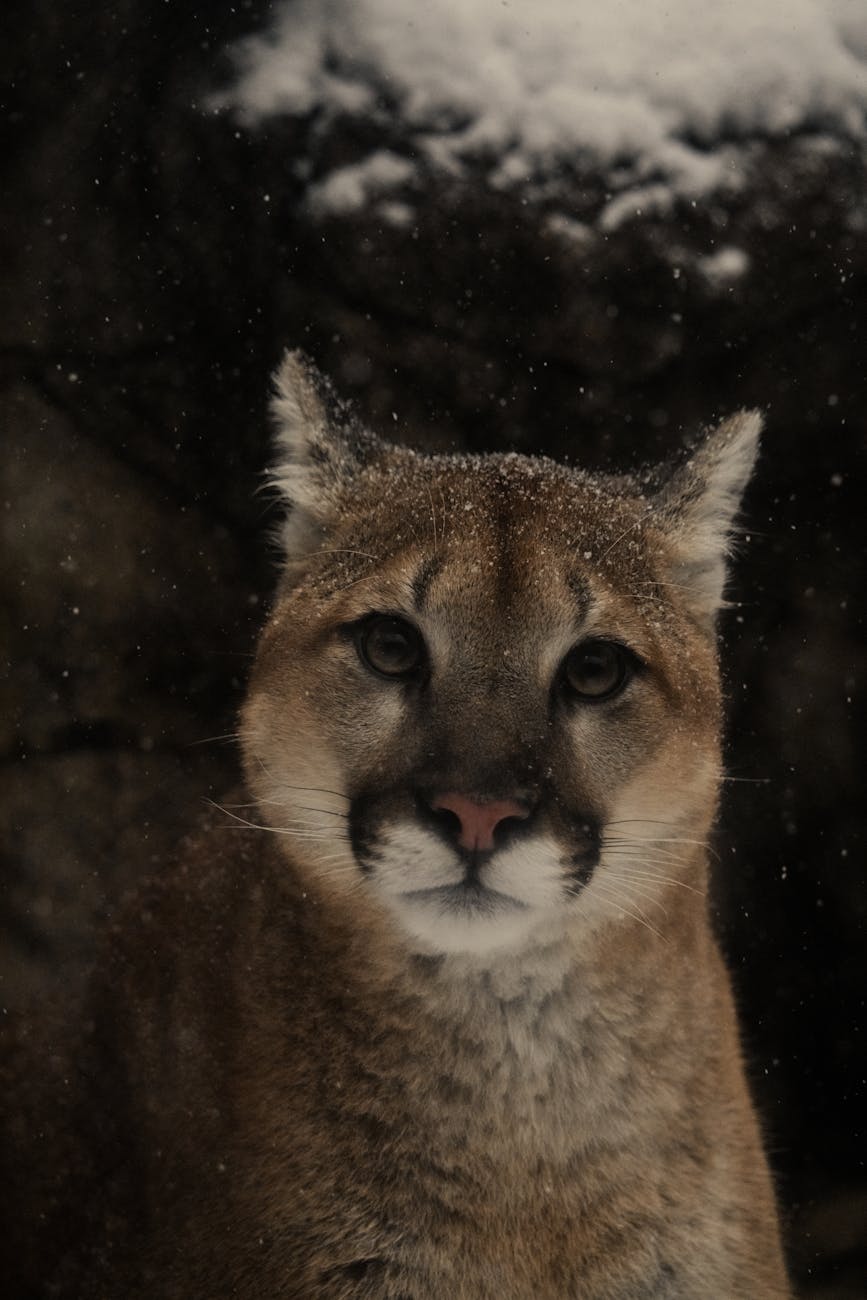
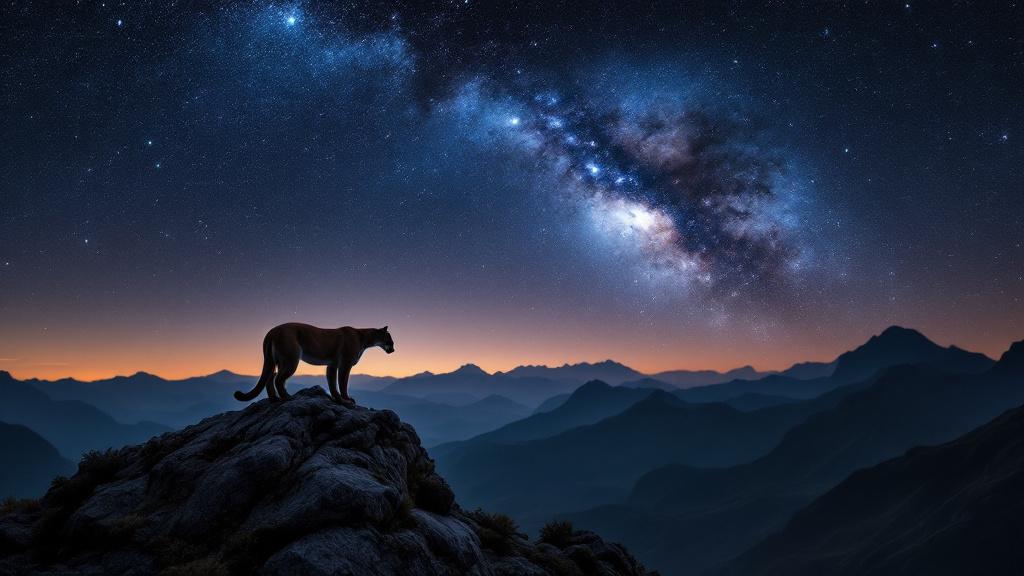
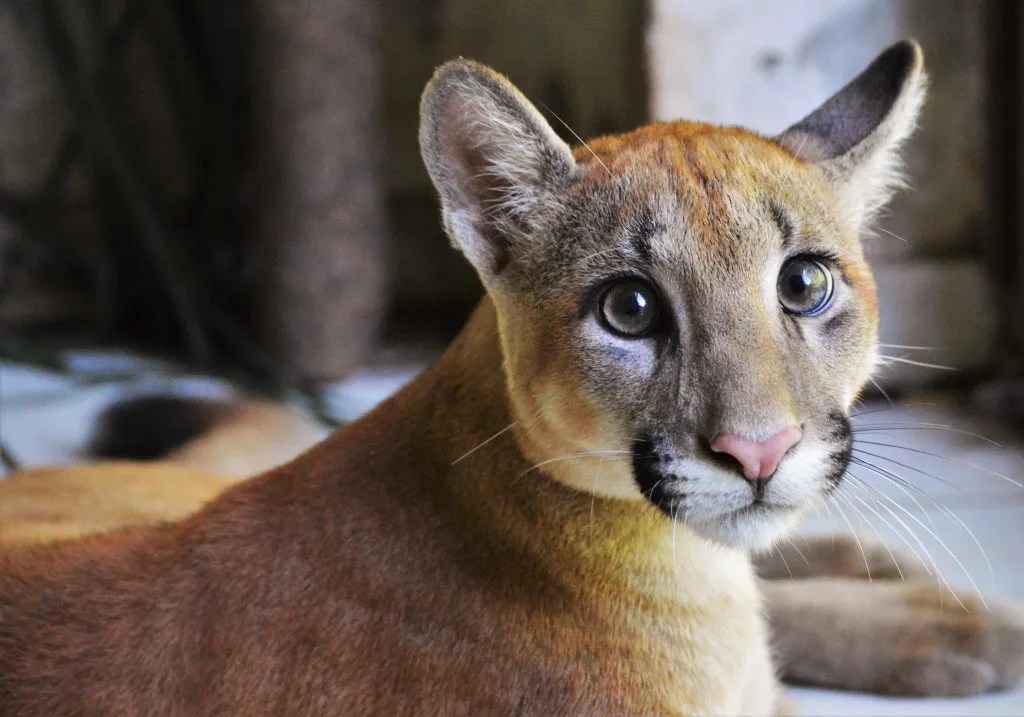
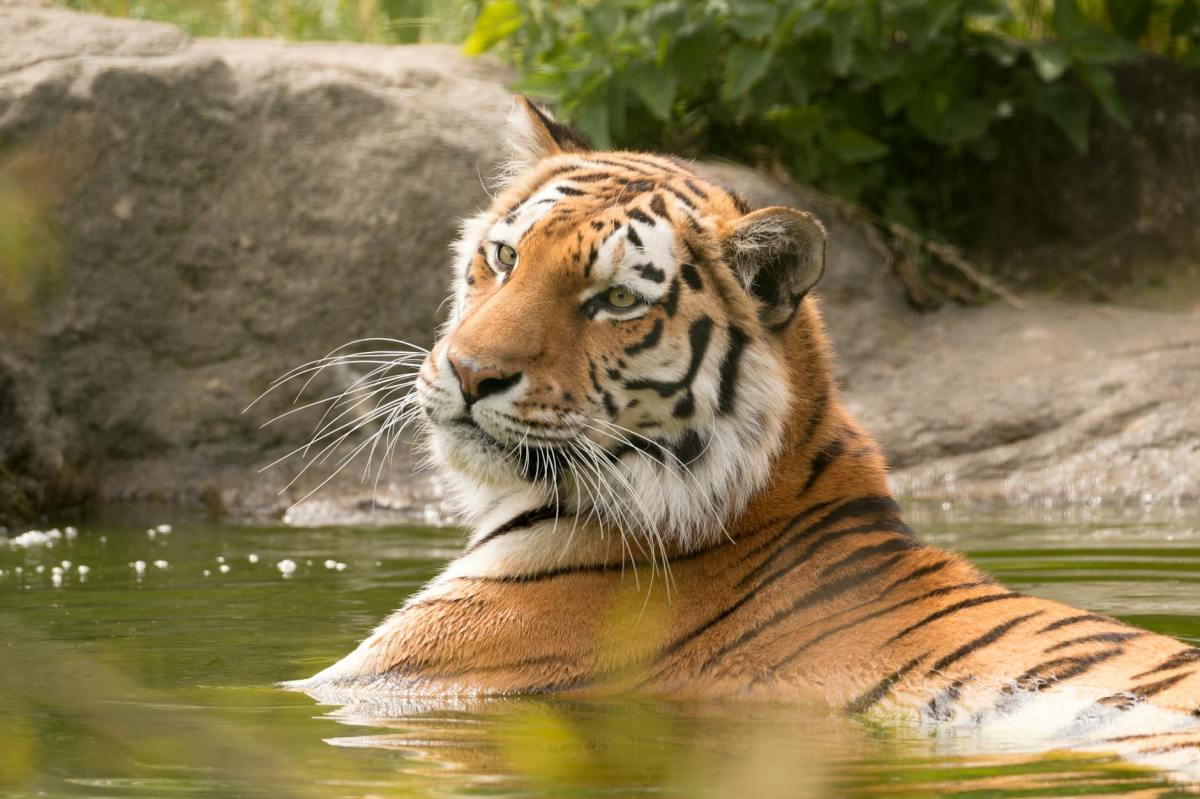
Cats were built by mother nature to stalk by starlight.
From the African savannas to the Andean mountains, the jungles of the Amazon to the Hollywood hills, and everywhere in suburban America, cats of all types and sizes prowl the night. With eyes that are up to eight times more sensitive in the dark, incredibly sensitive hearing, and whiskers that can pick up the slightest change in air density, felids were built by mother nature to stalk by starlight.
Some cat species are crepuscular, some are nocturnal, but as ambush predators, they’re all at their best when hunting under the cover of darkness.
Image credits, top to bottom: Per Karlson/PVKFoto, Reddit r/natureisf***inglit, Cockscomb Basin Wildlife Preserve, Wikimedia Commons, Steve Winter/National Geographic, National Park Service, Colorado Parks and Wildlife
The puma, also known as the mountain lion, cougar, screamer, panther, catamount, suçuarana, pangui, American lion and dozens of other names, looks like a big cat but is genetically closer to our domestic Feline friends.
Credit: Merazonia Animal Refuge of EcuadorCredit: Wikimedia CommonsCredit: Elizabeth LucasCredit: Wikimedia CommonsCredit: Wikimedia CommonsCredit: Wikimedia Commons
Click images for full high resolution versions. Baby puma image credit Elizabeth Lucas. Prints available here.
“If you feed your pet contaminated raw meat or milk, they will likely die. I’m not exaggerating, just giving it to you straight,” one infectious disease specialist warned.
In more disconcerting news from the bird flu front, a new study warns of exceptionally high mortality rates for cats who are infected with the virus.
That applies to all species of cats, from the true big cats in the panthera genus — tigers, lions, jaguars and leopards — to felines, a broad group that includes domestic cats, lynx, cheetahs, pumas, ocelots, servals, jaguarundis and others.
“We don’t know if the cats are more susceptible than anybody else,” the American Veterinary Medical Association’s Michael Bailey told USA Today. “It’s just the fact they’re exposed to higher viral burdens because of where they go.”
Whether cats are more susceptible is up for debate, but one SPCA chapter said felids of all species are “uniquely vulnerable” to avian influenza because there are so many ways it can be transmitted to them by doing nothing more than what they typically do.
The @SeattleTimes reported on the first 2 cases of Avian bird flu that’s killed 2 wild #cougars in Washington, as discovered by Panthera #Puma Program and Washington Department of Fish & Wildlife. Learn more from Puma Program Director Dr. Mark Elbroch: https://t.co/feOcHnPpWTpic.twitter.com/v2nrM1jDOC
Cats can be infected by catching and eating birds and mice, drinking raw milk, eating raw meat (including commercial raw pet food), and exposure to infected animals, including cows.
In Washington state, two wild pumas died after contracting the virus from prey, a development Panthera puma director Mark Elbroch called “troubling.”
“It certainly raises eyebrows and makes one wonder: is it indicative of a bigger pattern out of sight?” Elbroch asked, noting pumas are at the top of the food chain in the Pacific northwest.
To date, as many as 900 cattle herds across the US have tested positive for bird flu, according to the US Department of Agriculture, while two thirds of California’s dairy farms — 660 out of 984 — had confirmed cases as of Dec. 26.
Bird flu was the confirmed cause of death in a house cat from Washington who died after eating Northwest Naturals commercial raw food, which has since been recalled. Three house cats in Texas succumbed to the virus, which they possibly contracted from hunting mice. The bird flu was also responsible for the deaths of two domestic cats in California who drank raw milk, and 20 of 37 wild cats — including a tiger, several pumas, bobcats and a Geoffroy’s cat (pictured at left) — at the Wild Felid Advocacy Center, a sanctuary in Washington.
Contrary to popular belief, cats are typically lactose intolerant. Credit: DHG Photography/Pexels
Veterinarians are warning people to keep their cats indoors and to avoid raw meat diets, which have become more popular in recent years. Cats should not be given cow’s milk anyway, since most are lactose intolerant. As a general rule, kittens should consume milk from their mothers or kitten-specific formula, but should not be given milk from any other source.
“If you feed your pet contaminated raw meat or milk, they will likely die. I’m not exaggerating, just giving it to you straight,” tweeted Dr. Kristen Coleman, an assistant professor at the University of Maryland’s School of Public Health.
While the west coast accounts for the majority of confirmed bird flu infections, the virus continues to spread. A map from the Centers for Disease Control shows where infections have been verified as of late December:
Credit: Centers for Disease Control
Unfortunately, the bird flu outbreak comes on the heels of a heavily politicized pandemic and a major loss in trust in American institutions like the CDC after efforts to obscure the origins of SARS-CoV2, the virus that causes COVID-19.
It’s not clear if the fallout will make Americans less likely to heed warnings about bird flu and other potential viruses, but animal welfare groups and virologists say people can keep their cats safe with a handful of common-sense steps.
The American feline has also been linked to the appearance of crop circles in several US states.
GLOUCESTERSHIRE, United Kingdom — The alleged phenomena of big cats stalking the forests and outskirts of villages in the UK turned out to be a hoax this week after authorities caught an American feline planting “evidence” near the A40.
The perpetrator, who goes by the names Buddy the Cat, Kinich Bajo, The Buddinese Tiger and several other monikers, was spotted at the edge of the Forest of Dean using a ladder to create claw marks at roughly tiger height, Detective Inspector Alistair Clarke said.
When he realized he’d been made, the gray tabby cat yelled “Oh shit!” then bolted down the ladder and into the forest, Clarke told reporters.
Police called in a K9 unit, which was able to track a trail of crumbs and discarded turkey bones to a clearing where authorities discovered non-toxic black paint, a fog machine and a copy of Arnold Schwarzenegger’s 1977 docudrama Pumping Iron.
“It’s our belief that the suspect painted himself black, played prerecorded clips of various big cat roars, then posed menacingly amid the fog for the benefit of locals, mostly drunks stumbling out of local pubs,” Clarke said. “Choosing inveterate drunks as his primary witnesses ensured the resulting smartphone camera footage would be grainy, shaky and inconclusive, adding to the legend and mystique of phantom big cats in the countryside.”
Buddy in costume in late 2022, after parading himself in front of a group of heavily intoxicated people leaving a pub. Credit: PITB
Asked by a reporter whether Buddy’s dedication to weightlifting contributed to locals misidentifying him as a big cat, Clarke shook his head.
“We don’t think so, no,” he said. “Despite his apparent obsession with bulking up and the 63 bottles of protein powder we recovered, the suspect remains a tiny little stinker, which is why he carefully revealed himself only to the thoroughly inebriated.”
Buddy the Cat remained in a local lock-up awaiting extradition back to the US. His human told reporters the feline hadn’t said much about his predicament.
“He’s complained loudly about the food and said the British should be thanking him for increasing tourism to southern England, but other than that he’s kept a lid on his thoughts,” Big Buddy said.
Buddy is seen here patrolling the UK countryside after painting himself black, prompting several calls to the police. Credit: PITB
In the meantime, the South Carolina state police forensics division and detectives from several US police departments have been in contact with UK authorities after similarities emerged between the fake big cat sightings and a series of bizarre crop circles in the US.
“We also found turkey bones and crumbs scattered around the crop circles, but at the time our working theory was that we were dealing with aliens who had a taste for turkey,” said one law enforcement official, who spoke on condition of anonymity. “Now we believe our cases may be connected to the UK hoax.”
“Lads, that’s a panther, innit? A panther, wow!” Credit: PITB
Nicholas was orphaned and severely injured as a cub as he and his mother tried to cross a busy highway. He’s settling into his new home, where he will have his own habitat, den and even his own pond.
Nicholas the mountain lion has a beautiful home waiting for him with his own pond, a rock den, a grassy area where he can run around and several other little hideaways where he can enjoy some privacy and naps.
But first the three-year-old puma will have to clear quarantine and become more comfortable with his new surroundings and new caretakers.
“He’s doing really well but he’s still very scared, he’s a very timid cat, so we’re just taking it really slow, day by day and the keepers are taking some quiet time with him,” said Bobbi Brink, the founder of San Diego County-based Lions, Tigers and Bears, Nicholas’ new home.
Nicholas stretches his legs in quarantine as he awaits the move to his own habitat. Credit: Lions, Tigers and Bears
The golden-coated feline with an expressive face has had a tough journey to the 93-acre sanctuary that will be his permanent home.
In 2020 when he was just a cub, Nicholas was following his mother across a busy highway when both were struck by a car. Nicholas was badly injured and his mom was killed in the collision, an unfortunately common fate for members of their species as their longtime habitats are increasingly fragmented by new developments and highways.
Because they require about two years with their mothers to learn how to survive on their own, it’s almost impossible to release orphaned pumas back into the wild. Unlike, say, the orphaned orangutans of Borneo and Sumatra, who can usually be taught to successfully fend for themselves because humans can show them how to physically manipulate their surroundings, there’s no way to teach orphaned pumas how to select prey, stalk, pounce and deliver kill bites.
A sanctuary in northern California provided a home for Nicholas for about three years, but recently went bankrupt, so the staff at Lions, Tigers and Bears secured him, prepared a habitat for him and took on the Herculean task of transporting him to San Diego County.
Nicholas’ case is even more complicated because he has lasting neurological damage from the car crash that killed his mother, including a pronounced head tilt that worsens when he’s scared.
Brink told PITB it’s normal for cats like mountain lions to be spooked by the commotion and uncertainty of a move, as well as leaving everything they know behind. Nicholas is simply obeying his wild instincts, which urge him to be guarded. But he’s got a loving team of caretakers who will work with him, as well as veterinary specialists who are well versed in caring for animals with neurological damage.
“Sometimes it can take (animals like Nicholas) a month, sometimes it can take three months to build up that trust,” Brink said. “His biggest need is he’s very afraid, so we’re gonna have to work around his fear so we don’t scare him more.”
Despite their impressive size, pumas are more closely related to domestic cats than the big cats of the panthera genus. Like their house cat cousins, pumas enjoy tearing up paper and playing with toys. Credit: Lions, Tigers and Bears
While Nicholas will have his own habitat and can keep to himself as much as he likes, recent observations of his secretive species have shown that pumas have “secret social lives,” and Nicholas will have the opportunity to meet and interact with other mountain lions if he’s comfortable with it.
Pumas — which are known by the scientific name puma concolor and are also called mountain lions, cougars, panthers, catamounts, screamers, painters, gato monte and many other names — are among the most adaptable felids in the world and range from the southernmost edge of South America to just over the Canadian border. They’re able to thrive in mountains, tropical regions, deserts, forests, human-adjacent rural areas and even in urban population centers, as the famed “Hollywood Mountain Lion” P-22 did for more than a decade in Los Angeles.
Their ability to adapt has served them well in a changing world, but they’re not immune to the pressures of human expansion.
In California their habitats have been carved up by the state’s busy and deadly highways, leaving the cats in genetically isolated pockets. Pumas who strike out in search of their own ranges are extremely vulnerable to vehicle traffic. P-22 famously crossed several of the world’s busiest highways to reach his eventual home in LA’s Griffith Park, but others like Nicholas and his mom aren’t so lucky.
Solutions like the $90 million Wallis Annenberg Wildlife Crossing, currently under construction in Los Angeles County, can connect fragmented ranges and give pumas, coyotes, foxes, deer, rabbits and other animals safe passage. But experts point out that they are just one component in a long-term solution that must include more careful zoning, fences to funnel animals toward safe crossings, and options like tunnels that run under highways, since not all animals will use overpasses.
As planners and wildlife experts figure out new ways to ensure the survival of wildlife in an increasingly crowded, human-dominated world, sanctuaries like Lions, Tigers and Bears play a crucial role by caring for the innocent animals who are injured, displaced and rescued from bad circumstances.
To learn more about Lions, Tigers and Bears or support their ongoing efforts to provide safe, stimulating and comfortable homes for wild animals, visit the non-profit’s site. To receive updates on Nicholas and the other animals at the sanctuary, follow Lions, Tigers and Bears on Instagram and Facebook. Readers who live in the California area can book guided educational tours or visit during one of the sanctuary’s special events. Thanks to Bobbi Brink and Olivia Stafford for allowing PITB to tell Nicholas’ story. All images and videos of Nicholas courtesy of Lions, Tigers and Bears.