Scarlett The Cat Walked Through Flames Five Times To Save Her Kittens

When the abandoned garage she was sheltering in caught fire on a cold day in 1996, Scarlett the cat was determined to get all five of her babies to safety.

The night of March 30, 1996, was unseasonably cold, and as temperatures dipped below freezing, a young cat and her litter of five found shelter in an abandoned garage in Brooklyn.

Unfortunately for them a few humans had the same idea, huddling for warmth in the garage as they smoked crack.

Prodigy’s “Firestarter” was at the top of the charts at the time, an apt soundtrack for what would happen next — the crack-addled humans started a fire that spread quickly and took the young feline mother by surprise.

That momma, who would later be named Scarlett, scooped up one of her kittens and brought it to safety before immediately heading for the flames again.
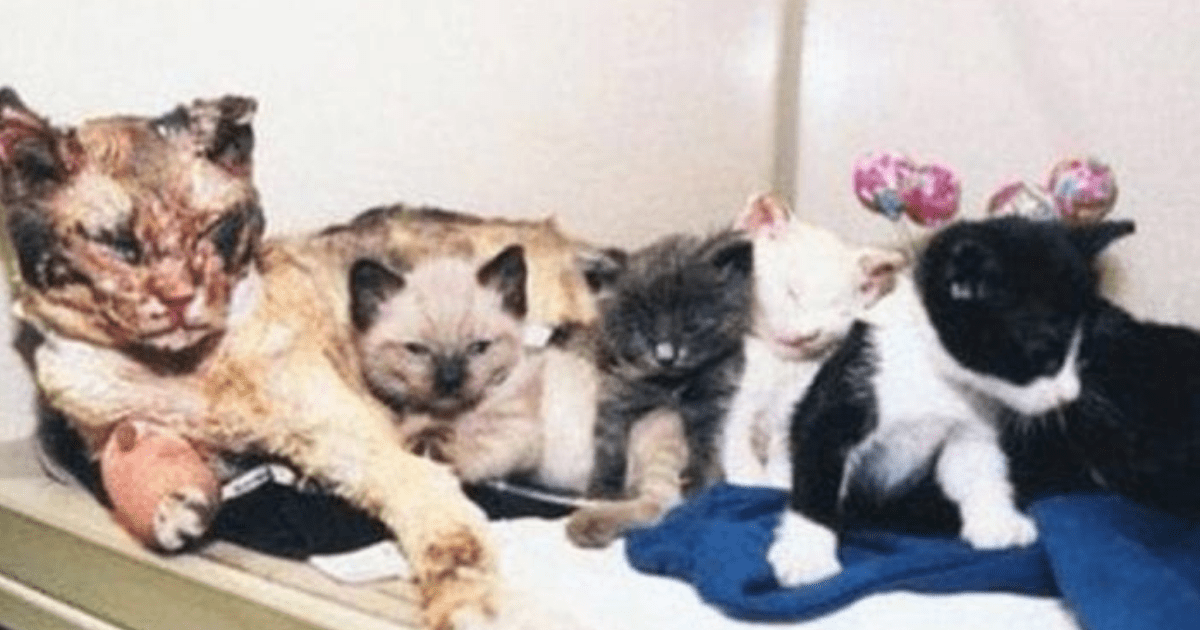
Scarlett and her babies
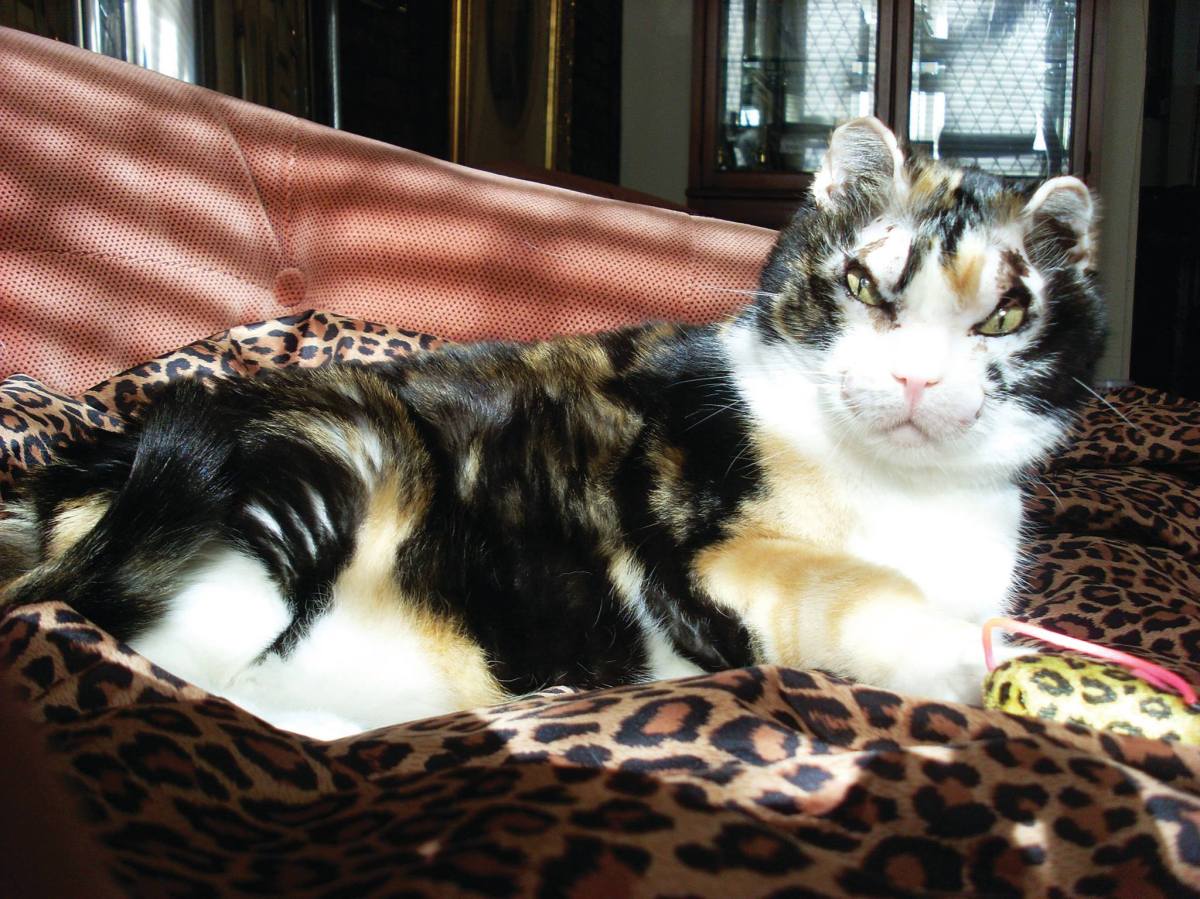
Scarlett, badly burned and bandaged, with her kittens at the North Shore Animal League. Credit: North Shore Animal League

FDNY firefighter David Giannelli was among the first responders at the engulfed garage and realized the small calico was rescuing her babies, running back into the flames to carry them out one by one.

When Scarlett had retrieved the last kitten, Giannelli watched her as she nuzzled all five of them to count them because she could no longer see — her eyes were sealed with burns and blisters.

Satisfied that her kittens were out of harm’s way, Scarlett collapsed.

She paid a heavy toll for her actions. Her whiskers and the fur on her face was singed off, her ears were disfigured and she nearly died from smoke inhalation.

Giannelli brought the unconscious cat and her babies to New York’s North Shore Animal League, where veterinarians saved her life and put her on a path to recovery while also housing her with her beloved kittens.

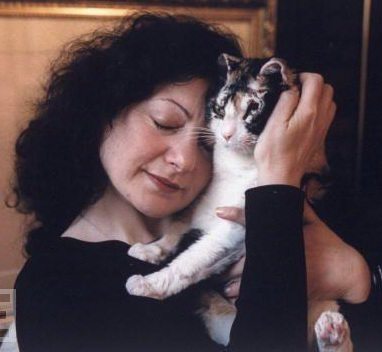
Four of Scarlett’s kittens survived and were adopted out in pairs. Scarlett herself was adopted by New Yorker Karen Wellen, who was chosen out of thousands of applicants who wrote to the shelter. Wellen, who had suffered a medical emergency of her own, was specifically looking to adopt a special needs cat.

Scarlett’s kittens went to nearby families, who kept in touch with Wellen and scheduled reunions between her and the kittens she risked her life for.

“This cat is definitely the queen of the house,” Wellen told a TV news crew during a segment about Scarlett in the late 90s. “Whatever she wants is hers.”

Scarlett was a house cat for the rest of her life, living comfortably until she passed away on Oct. 11, 2008, at 13 years old.
Wellen and Scarlett
Wellen with Scarlett.

Little Scarlett’s story is not only an example of extraordinary bravery, it’s testament to how much mother cats love their kittens and should give us pause before we separate mothers from their babies too early. The absolute minimum is eight weeks, but many shelters will only allow kittens to go home with adopters at 12 weeks old or older, which they say gives them enough time with their mothers and siblings to learn crucial social skills, like sharing, not playing too rough, and proper self-grooming.

In recent years, many shelters and rescues have enacted policies of requiring that kittens are adopted in pairs. Even when they’ve got loving homes with humans who dote on them and provide them with plenty of attention, having another kitten around to grow with and learn from has a huge positive effect on a young cat’s development.

Buddy’s my first cat, as regular readers of PITB know, and if I could do it all over again, I’d have adopted one of his litter mates too. And who knows? Maybe in the future we’ll learn that keeping feline families together is optimal. Scarlett is testament to the fact that mother cats will sacrifice their own lives to save their babies. If that’s not love, what is?

A Politician Destroys Her Career By Failing To Read The Room On Animals

Kristi Noem thought she was burnishing her image as America’s tough cowgirl politician by telling the story of how she shot her hunting dog. Instead, she united the country in disgust.

Before a commercial publishing house sends a book off to print — especially a political memoir expected to create buzz and move copies in high volume — dozens of sets of eyes have looked over the manuscript.

The author — in this case the author and ghostwriter — her PR team, consultants, editors, fact-checkers, attorneys and test readers all have eyes on the text as they prepare it for the printers.

Thanks to Politico’s reporting, we now know several of those people — including the ghostwriter, the imprint’s editors and her own advisors — actively discouraged South Dakota Gov. Kristi Noem from including an ugly anecdote about shooting a “problem” dog in her book, but Noem was insistent on using it. She thought the story would burnish her brand and appeal to rural voters, signaling that she’s a salt of the earth type who doesn’t balk at making hard decisions.

That was an epic miscalculation, and as the fallout continues with backlash from Americans across the political spectrum, it shows the days of thoughtless disregard for animals are over in the US, at least as far as public life goes.

Kristi_Noem_(50365679196)
South Dakota Gov. Kristi Noem. Credit: Wikimedia Commons

As most people know by now, Noem wrote about how she shot a 14-month-old dog named Cricket on her family farm for “ruining a hunt” and going after a neighbor’s chickens. Cricket, Noem wrote, was “worthless as a hunting dog” because she got overly excited and went into sensory overload during a pheasant hunt that Noem wanted to be memorable for a group of guests.

“I hated that dog,” she says in the book, via her ghostwriter, before describing how she dragged the excited puppy out of her truck and into a gravel pit, then ended the Cricket’s 14-month-old life with a gunshot to the face.

In a series of disastrous interviews over the past week, Noem has tried to reframe the story as an example of the hateful “fake news” media digging for dirt on her, but not only did the South Dakota governor enthusiastically include the dog-killing story in her new book, she was so confident it would win her points that she used the story as a teaser in social media posts and other marketing for No Going Back. (It’s her second book and follows 2022’s Not My First Rodeo: Lessons from the Heartland. Noem really wants people to think she’s the embodiment of a Yellowstone character, a CrossFitting avatar of the real America.)

Noem thought she’d be hailed as the farm girl hero she wants to be, an image she’s cultivated during a political career that’s taken her from the state house to South Dakota’s lone congressional seat and, in 2019, the governor’s mansion.

noembook
Noem’s book, No Going Back.

I’ve spent my entire life in urban and suburban environs and I’ve essentially taken a Jainist attitude toward animal life. I’ve never hunted an animal and never will, so I’ll defer to longtime South Dakota scribe and hunter Kevin Woster, who thoughtfully writes about the experience of raising hunting dogs and the challenges it involves.

Woster believes Noem put a puppy in situations that would challenge even an experienced hunting dog, says the dog’s “shortcomings” were the fault of her owners, and thinks the dog could have had a long and happy life with a little patience and love. (It’s also worth pointing out that by killing chickens, the dog was doing precisely what Noem trained her to do. It’s not the dog’s fault Noem didn’t differentiate between the types of birds she wanted Cricket to attack.)

Other rural scribes have echoed those sentiments and pointed out that even on farms, being forced to kill an animal is a solemn and personal thing. Even if Noem had justification, it’s one thing to handle a regrettable situation and another thing entirely to choose to celebrate it in a memoir, even using it as a marketing teaser.

Politics is performative, and Noem isn’t alone in that respect. Here in New York our disgraced former governor, Andrew Cuomo, speaks in a heavy New York accent that borders on parody. During the pandemic, he once interrupted Dr. Anthony Fauci to muse about how Fauci was the “Al Pacino of COVID” and Cuomo himself was the Robert DeNiro of the killer virus, then derailed an explainer on safety measures to wax poetic on the Italian bakeries of the Bronx’s Arthur Avenue and “the old neighborhood,” as if Cuomo grew up playing stickball on the street in Brooklyn instead of ping-ponging between New York, D.C. and Albany when his dad was a three-term governor.

George W. Bush, the scion of a generational political family and son of a former president, grew up in Connecticut. But he wanted the American public to see him as a cowboy, so he affected a Texas accent, peppered his speech with folksy-sounding nonsense and famously landed a fighter jet on an aircraft carrier to declare an end to the Iraq War on May 1, 2003, 18 years before the last US combat units left the country.

Politicians put on these costumes because voters respond to them. But the backlash against Noem — who’s now banned from 20 percent of the land in her own state and also in hot water for allegedly inventing anecdotes about North Korean dictator Kim Jong Un, French President Emmanuel Macron and former UN Ambassador Nikki Haley — proves that, like a prince choosing to don a Nazi uniform for Halloween, a politician’s choice of costume says a lot about her judgment and values. In this case even the people of America’s heartland, the voters Noem was condescending to with her book, were horrified by the ambitious governor’s callous disregard for animal life.

The fallout has apparently destroyed any chance that Noem could be chosen as a vice presidential candidate on the Republican ticket, and term limits mean the sun is setting on Noem’s time as a “public servant.” Good riddance.

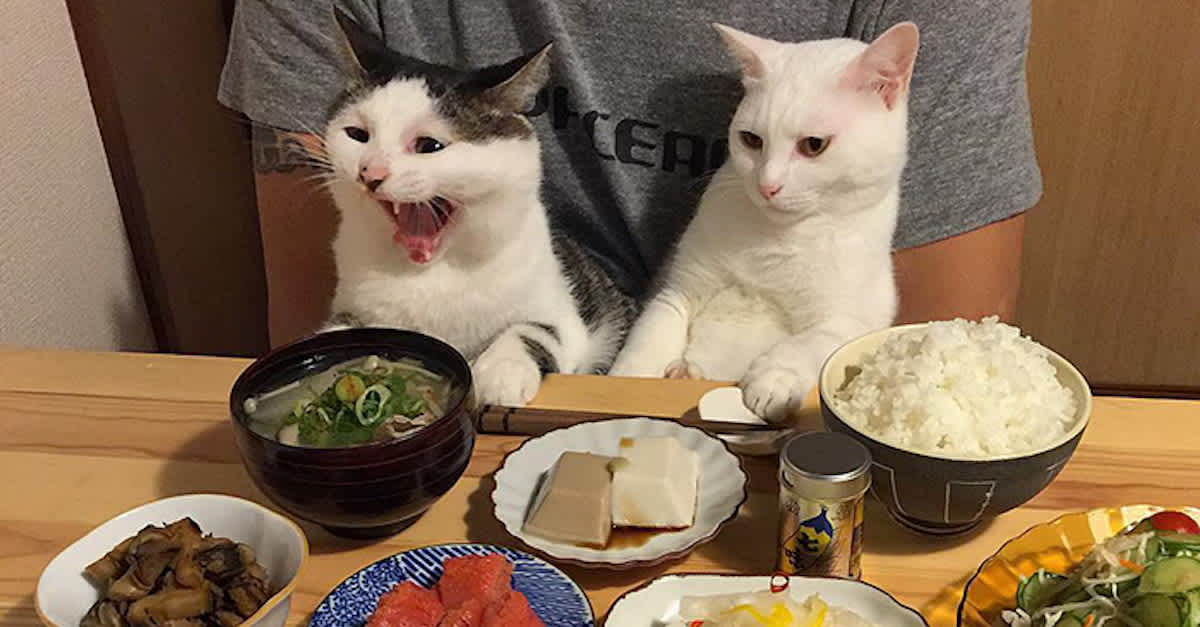
NY Cat Eats At The Table With His Humans, Plus: More Kittens And Climate Change!

A cat eating at the table with his humans? Let’s hope Bud doesn’t get any ideas!

File this under “Information that must be hidden from Buddy at all cost, lest he get ideas.”

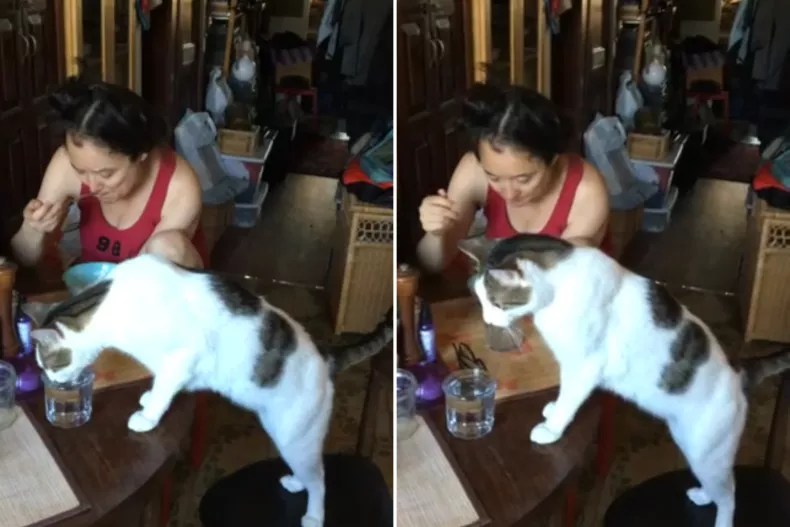
Franklin, a cat who lives in Brooklyn, has gone from fending for himself on the streets of New York to a very comfortable indoor existence with two humans who are happy to let him sit at the table with them for meals. Bowls? Pfffft. Franklin drinks from his own glass:

Franklin the cat
Credit: Andrea and Alice via Newsweek

As the dutiful servant to a cat who most definitely believes he’s a human — or should have all the privileges and none of the responsibilities of one — this makes me uneasy. If Bud were to somehow find out about this, all hell would break loose and before I know it he’ll be demanding custom cutlery and a silk pillow on which to rest his behind and elevate him to the level of the table.

As a vegetarian I don’t necessarily have to worry about Bud eating my food, but he sure does love sticking his face in it and giving it an exploratory lick or three.

“Is that…? Dude, let me in there, I just wanna stick my face in your mashed potatoes and confirm I don’t like them,” I imagine him saying. “Yep. Still don’t like them. Oh stop being so dramatic, you can pick the fur out!”

A reasonable take on the kitten/climate change claims

The Grist has a new story about the alleged connection between an “increase” in kittens and climate change, and while it unfortunately links to one of the bunk studies that uses meta-analysis to make wild claims about feline impact on the environment, it does include the most measured and reasonable take so far on the claims:

“Others, like Peter J. Wolf, a senior strategist at the Best Friends Animal Society, think the increase comes down to visibility rather than anything biological. As the weather warms, Wolf said people may be getting out more and noticing kittens earlier in the year than before. Then they bring them into shelters, resulting in rescue groups feeling like kitten season is starting earlier.”

As we noted on Sunday, the claim that there are more kittens, or that kitten season is longer, is entirely dependent on anecdotal evidence. Unfortunately no one has any data for baseline population numbers when it comes to cats in the US, let alone historical data that allows us to say there are more kittens born in recent years.

The best we’ve got is the excellent but single-city DC Cat Count, and to establish a convincing link between climate change and kittens we’d not only need hard data, but we’d also need to eliminate dozens of other potential factors like ever-increasing light pollution, urban heat islands and wave effects from 2020, when society went into lockdown and animals were mostly left to their own devices.

Once again, there’s only one measurement that really matters in the end, and that’s the number of cats euthanized annually because there aren’t homes for them. Spaying/neutering and education efforts have driven that number down dramatically over the past 20 years, and ultimately that’s the best solution we have.

TSA Baggage Scan Reveals Kitty Stowaway In Luggage

Smells loves boxes just as much as any other cat, but his affinity for tight spaces almost landed him in Florida, a long way from his home in Brooklyn.

It was a tuft of orange hair poking out from the zipper of a carry-on suitcase that first alerted a TSA agent that something weird was going on.

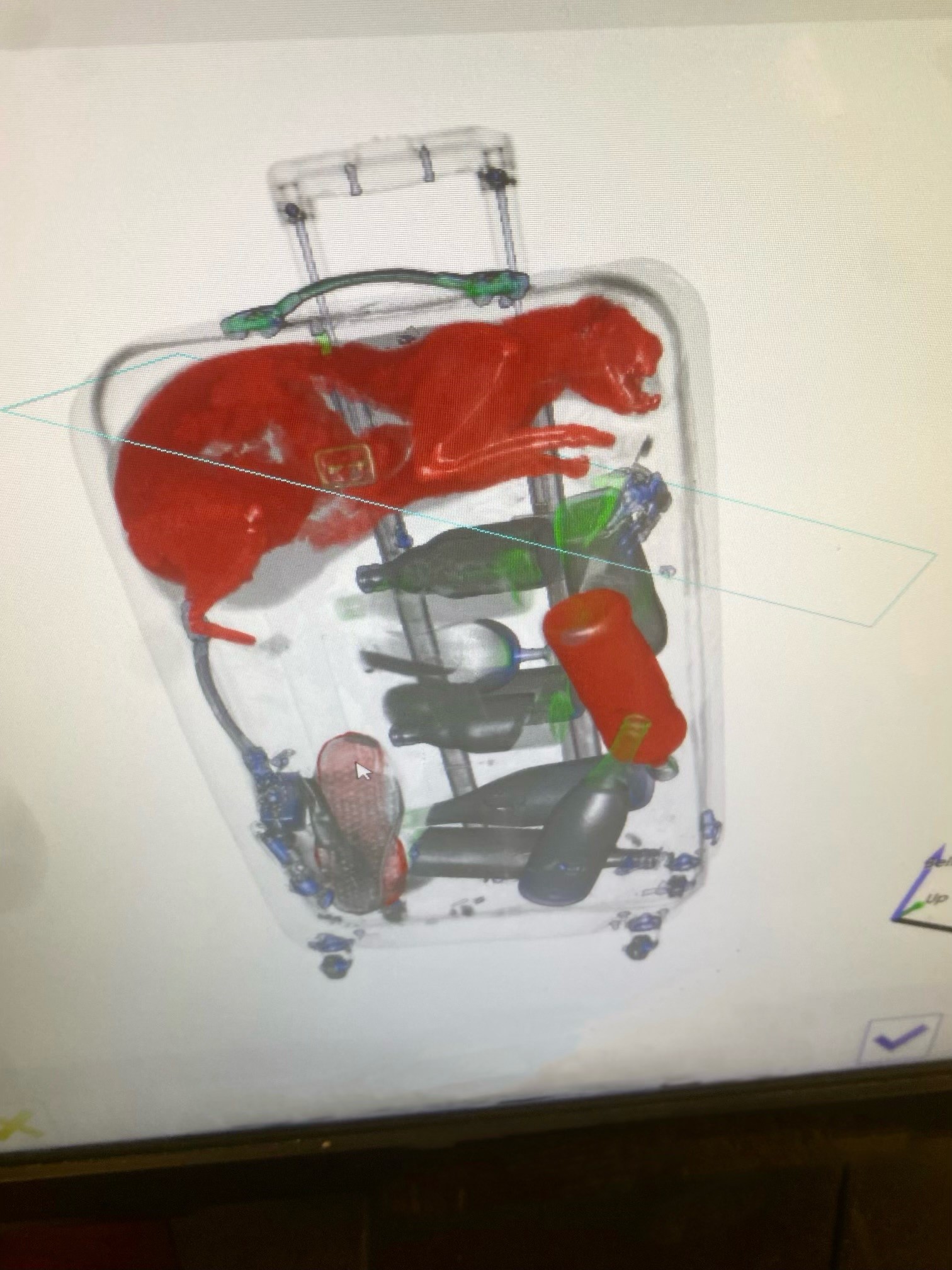
The agent, who was processing a traveler departing from New York’s JFK airport on Tuesday morning, then consulted an x-ray scan, confirming the suitcase contained some unusual cargo — a ginger tabby cat tucked in among toiletries, snug and napping comfortably in the enclosed space.

X-Ray TSA scan
An x-ray scan revealed Smells tucked snugly into the suitcase. Credit: TSA

tsasmellycat
The incriminatory tuft of orange hair that gave away Smells’ hiding spot. Credit: TSA

As for the traveler, the cat didn’t belong to him, nor was he aware kitty had climbed inside. It turned out he had been a house guest of friends living in Brooklyn, and the cat named Smells had slipped into the luggage before he left for home, for what is a suitcase if not just another box?

The TSA confirmed the story with the cat’s owner before letting the traveler board his Florida-bound flight.

“An officer called and asked if I wanted to press charges” said Alix, Smells’ 37-year-old human. “He wanted to know if there was any reason [the passenger] was trying to steal my cat and go to Florida.”

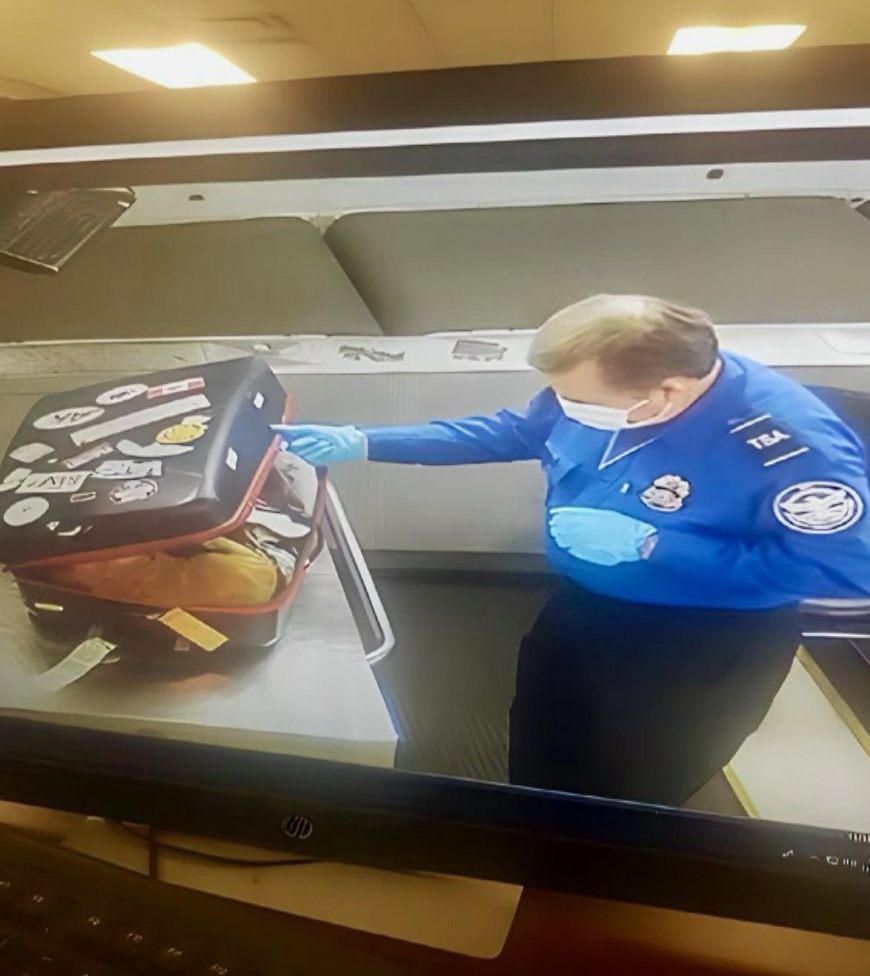
Smells the Cat
A TSA security agent opens the suitcase to reveal its unauthorized would-be stowaway. Credit: TSA

After Alix assured the TSA agent that Smells “really likes to check out boxes” and definitely would have climbed in on his own, she hired a driver to retrieve the kitty, who was unperturbed by the adventure.

“I was worried he’d be freaked out but he wasn’t even meowing on the way back,” Alix told the New York Post. “I went to give him some extra treats and he acted like nothing had happened.”

As for the TSA — which often deals with more serious finds like guns and drugs secreted into passengers’ luggage — the saga of Smells was a welcome change that gave them a good story and some laughs.

“On the bright side,” TSA spokesman Lisa Farbstein wrote on Twitter, “the cat’s out of the bag and safely back home.”

Smells the Cat
Smells the cat. Credit: His humans

“I was worried he’d be freaked out but he wasn’t even meowing on the way back,” she said. “I went to give him some extra treats and he acted like nothing had happened.”

Bodega Cat’s Back To Business After Abduction

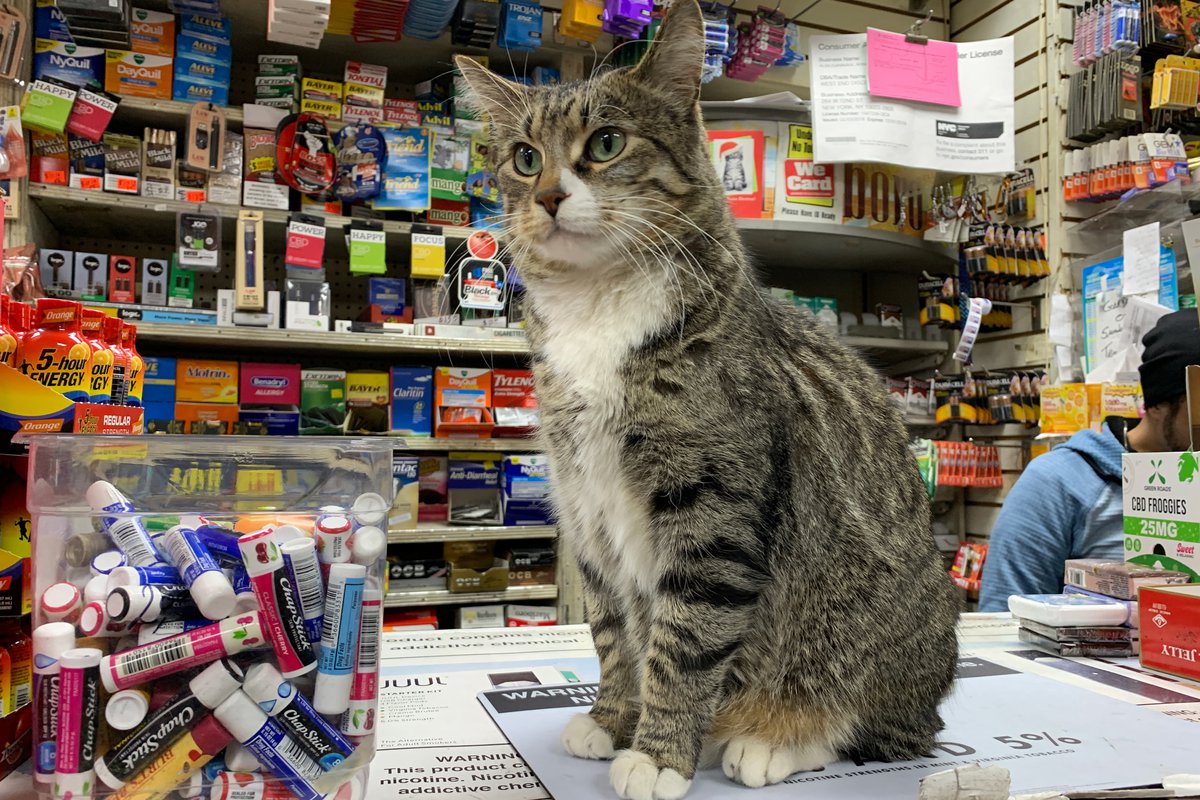
Boka is one of about 10,000 cats who prowl New York’s delicatessens, keeping them free of rodents.

A beloved bodega cat is back where he belongs a week after a thief snatched him from the store.

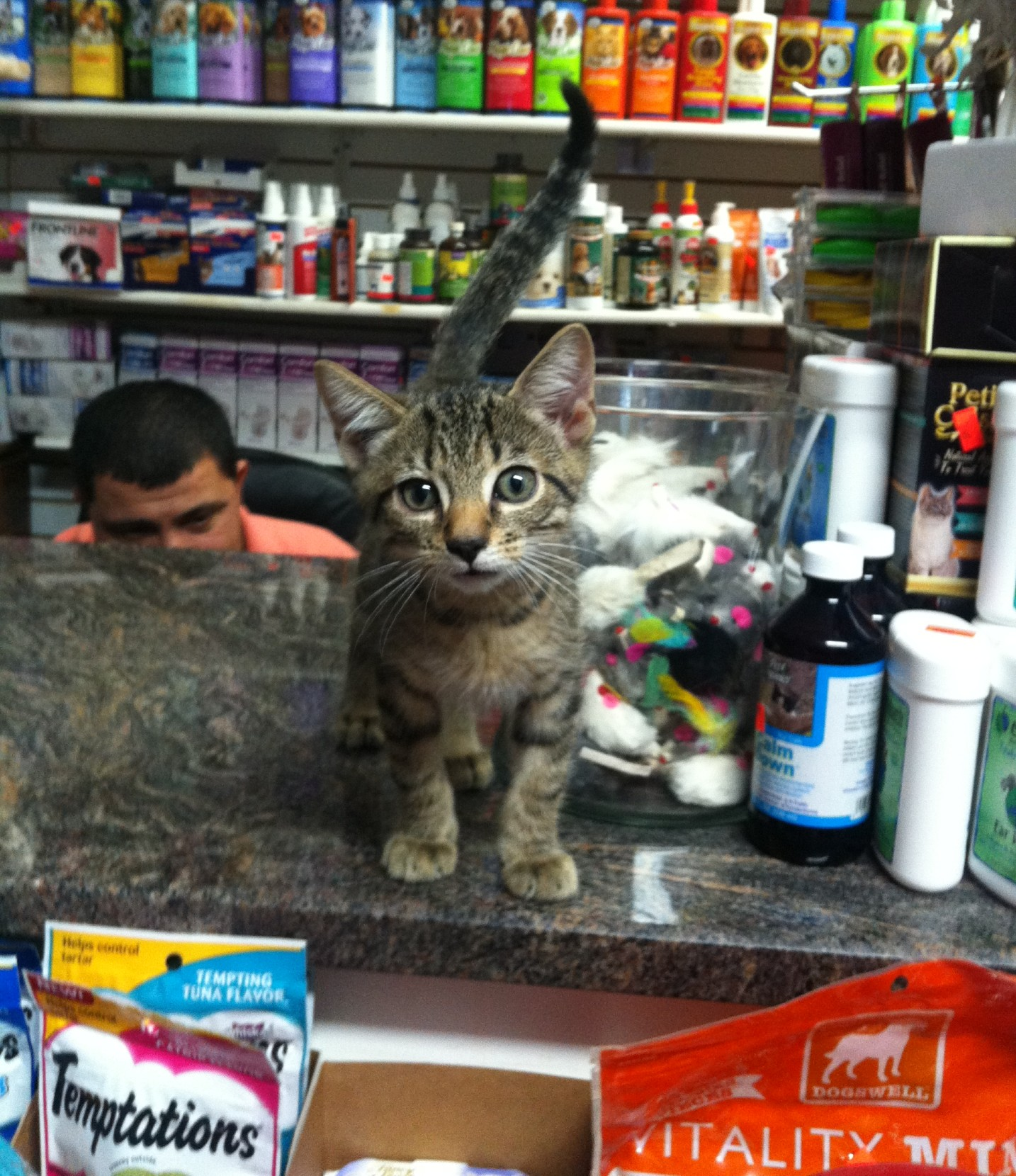
The cat, Boka, is actually a kitten. Majeed Albahri, owner of Green Olives Deli in Brooklyn, adopted the little guy in January and in seven months the all-gray feline has become a familiar face in the neighborhood, where people are used to seeing him sitting on Albahri’s shoulder as he works the register, or napping on the nearest convenient pile of newspapers.

Boka “brings life to the store,” Albahri said, noting people stop by just to give Boka a head scratch.

But on July 29 a guy “skulking around” outside the store took a liking to the neighborhood mascot and swooped him up. Albahri didn’t know what happened until he checked the store’s surveillance feeds and saw the thief in action.

Boka’s abduction mobilized an entire neighborhood, generated headlines in the New York papers, segments on local TV news and posts on neighborhood blogs. The thief must have felt the heat, because he contacted the deli through an intermediary and returned Boka to Albahri safe and sound.

On Aug. 5, exactly a week since Park Slope’s favorite feline was filched, Albahri posted online to share the good news.

“Best news I’ve heard all week,” one neighbor wrote, while another one posted: “Yes Boka! We missed you!”

Others urged Albahri to invest in some AirTags, the Apple-made locators that were designed for keys, phones and other easy-to-lose items, but have been repurposed by some as pet trackers.

For those unfamiliar with city life, particularly in New York, bodegas (Spanish for wine cellar or warehouse) are corner stores that stock grocery staples, snacks, and usually some sort of combination deli/salad bar. They also sell everything you’d find in a convenience store, from newspapers, magazines and gum to cigarettes and cigars.

Because there are very few grocery stores in New York, and because suburban-style grocery shopping isn’t an option for millions of people who don’t own cars, bodegas are essential in neighborhoods that would otherwise be “food deserts.” (Some sociologists consider such neighborhoods food deserts anyway, especially if the local stores don’t offer fresh produce, dairy and meat. Most bodegas do.)

Bodega cat
“Bodega cat trainee reporting for duty, sir!”

Bodega cats occupy a legally precarious but widely loved position in the fabric of New York. They’re pets, but they also have primal jobs that call back to the original reason humans and felines began their partnership thousands of years ago: rodent control.

Technically they’re illegal according to the city’s Department of Health, but the New York Times estimates there are more than 10,000 bodega cats across all five boroughs. In a city that produces viral videos of rats dragging full slices of pizza down subway stairs, and rodents run rampant at night, bodega owners are faced with two choices: Accept the rodents and pay a fine, or get a cat and pay a fine, but have their stores free of rodents.

With the fines for rodent infestations and cats both around $300, bodega proprietors say the choice is easy, and cats have become ubiquitous. New Yorkers have created petitions to get the Department of Health to relax the rules on bodega cats, with no luck so far.