What’s Good About Having A Pet? Everything!

Animals are a real source of joy in this world, and few things are better than cozying up on a couch with a book and a purring cat in your lap.

Daily writing prompt
What is good about having a pet?

For more than two weeks after adopting him, I still didn’t have a name for my cat.

I imagined something badass, something funny, something better than all those boring pet names. But the playful, energetic, bold little kitten in front of me was no Brasidas (my favorite Spartan), Mo (my favorite pitcher) or Timothy Cavendish. (My favorite character from David Mitchell’s Cloud Atlas.)

So I kept calling him buddy while I waited for something to come to me, and then it became obvious: He is Buddy.

Original? Nah. But it describes him perfectly, and to me that’s the best part about adopting him, my first-ever pet.

We’re pals. Amigos. Chums. Accomplices. Buddies.

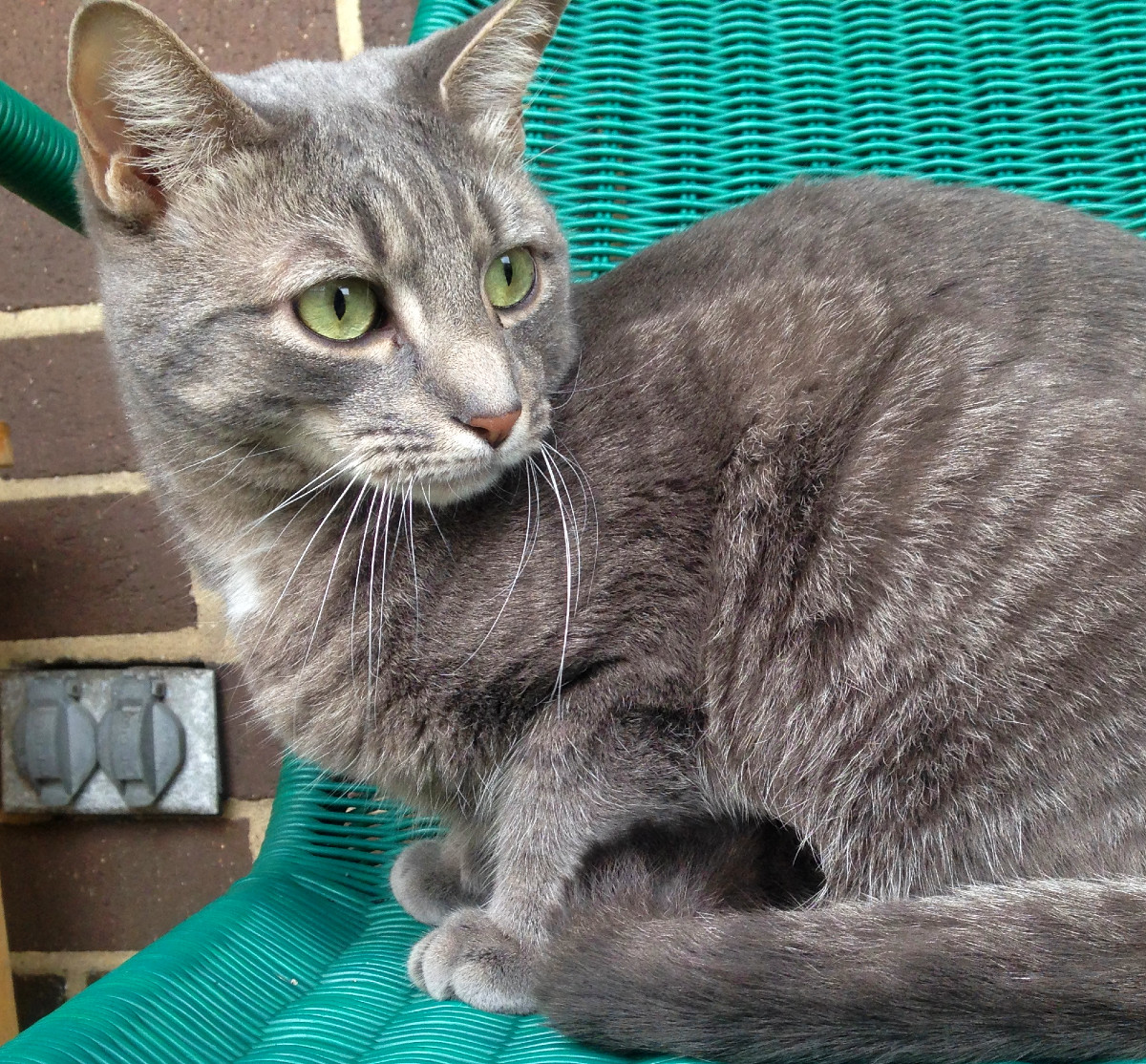
Buddy as he exists in his mind!

I don’t consider myself his “dad” even though I have parental, protective feelings for him. He’s my buddy who wants to be involved in everything I do, whether it’s helping me greet trick-or-treaters at the door like he did last night, batting a paw at my guitar strings to add his special touch to my recording takes, or just hanging out while I’m reading.

I knew it intuitively, but the best advice I ever got was to always remember your little friend, be it a cat or dog, has his or her own feelings.

There’s a lot of confusion around the word sentience and people often confuse it with the concept of sapience, but there is no doubt about it: mammals like cats and dogs, avian species like corvids (ravens, jays, crows and magpies), and even cephalopods like octopus are sentient.

They think. They feel. They experience emotions like joy, sadness, excitement, anxiety, love, loneliness and more, just as intensely as we do. They may not be able to articulate those feelings in words, but they’re real.

More than half a century’s worth of science has confirmed that fact at every step, and we continue to learn more about animal cognition with every advance in technology that allows us to peer deeper into their minds.

Awww, he tolerates me!

When you treat your pet with respect and keep their feelings in mind, you’ll have a friend for life.

A loyal friend whose love comes without condition.

A friend who won’t lie to you…except maybe when it comes to food. After all, Bud could win an Oscar for his role as a starving cat, even though a single glance at him confirms he’s never missed a meal.

If you’re where I was years ago and considering bringing a pet into your life, ask yourself if you’re ready for a commitment that could last two decades, if you’re ready and motivated to give an animal not just a forever home, but the best life the little one can live.

Remember that kittens and puppies grow up fast, and think about whether you’d rather have a whirlwind of energy who will wreck your sleeping habits for months, or an adult furball who is much more chill. Remember that you will have to do things you don’t like, whether it’s scooping a litter box or bagging poop on a walk. There will be expenses, scares, the occasional puked-on rug.

But the joy you’ll get, and the friendship you’ll have, will make it all worth it.

And if you’re sure, find yourself a buddy at your local shelter. Your life will be better for it.

P.S. If you’re a fool like me, you can also have fun imagining your cat or dog in absurd scenarios based on their personalities.

More Than 400 People Applied To Adopt Foul-Mouthed Parrot

Requirements for adopting Pepper included a sense of humor and experience caring for birds. He’s now found a home with patient caretakers and another mercurial parrot to hang out with.

It’s too bad cats can’t swear.

While kittens don’t often have problems finding homes due to their overwhelming cuteness and antics, it usually takes a sad story to drum up considerable interest when an adult feline is up for adoption.

As the SPCA of Niagara learned, talkative parrots, especially birds who can swear up a storm, have their pick of homes.

In June, a potty-mouthed parrot named Pepper was surrendered to the shelter, and when the SPCA put the call out — specifying they’d prefer someone with experience caring for birds and a sense of humor — the applications kept rolling in, totaling more than 400.

“His famous line is ‘Do you want me to kick your ass?'” a shelter employee said in an interview last month shortly after announcing Pepper was up for adoption.

Shelter staff asked applicants to include photos of their bird enclosures in addition to the usual pre-adoption questions, eventually narrowing the Pepper Sweepstakes down to 10 potential homes.

This past week, Pepper was finally taken to his new abode in Olean, a small city in western New York. The couple who adopted him are not only experienced with birds, they know all about avian vulgarity. They have a parrot named Shelby who apparently “makes Pepper look like a saint.”

As for Pepper, it looks like he’s getting his bearings before heaping abuse on his new caretakers.

“He hasn’t cursed at them yet, but we know it’s coming,” shelter staff wrote in an update.

In recent decades, research has shown birds can be exceptionally intelligent. Crows, for example, use tools, can differentiate between human faces, and remember which humans have wronged them or treated them well.

While many people assumed parrots merely imitate human language, long term behavioral studies show the birds are able to use words in context and invent novel combinations of words. As with other animals, syntax remains elusive.

The most famous example was Alex the African Gray, who was the subject of research by animal cognition expert Dr. Irene Pepperberg. Alex, who died in 2007 at the age of 31, was able to count and could perform simple calculations. He was talkative, conversant and often told his caretakers how he was feeling, what he wanted, and what he thought of the tests they’d give him. (Like a child, Alex would try to get out of exercises he was bored with by asking for water, saying he was tired and wanted a nap, or just flubbing his answers.)

We are not above crude humor here at PITB, and in the past we’ve written about Ruby, our favorite talking parrot. Ruby lives in the UK with her owner, Nick Chapman, and the pair were among the very earliest Youtube stars thanks to videos of Ruby’s shockingly vulgar, extremely British tirades and Chapman’s infectious laugh.

Warning for those who are offended by bad language or are viewing at work: Ruby is known for liberal use of c-bombs-, t-bombs, f-bombs and just about every other linguistic bomb you can think of, in addition to British slang like “bollocks.” If that’s a problem for you, skip this video.

Eric the Legend, a parrot who lives in Australia, is also a favorite on Youtube for his habit of declaring himself “a fookin’ legend!

We’re glad Pepper has found a home where his idiosyncratic nature will be cherished, and we hope the future will bring videos of Pepper and Shelby going back and forth. Parrots are social animals, after all, and what fun are insults if you’ve got no one to trade them with?

Top image of Pepper courtesy of Niagara SPCA.

Foundation Offers $10m For ‘Cracking The Code’ Of Animal Language

Think you can decipher the rhythmic clicks and whistles of dolphins or the grunts and alarm calls of monkeys? A foundation is offering big prizes for progress in communicating with animals.

Looking to prompt renewed efforts at decoding animal communication, a non-profit founded by an investor and a university are offering prizes — including a hefty $10 million — to teams that can figure out what animals are “saying.”

The Coller Dolittle Challenge for Interspecies Two-Way Communication is a collaboration between the Jeremy Coller Foundation and Tel Aviv University. (Yes, it’s named after that Dr. Dolittle.)

Entrants aren’t asked to come up with a Star Trek-like “universal translator” for animals. Rather, the people behind the Coller Dolittle Challenge want to see methods that allow for two-way communication between humans and individual species.

“We are open to any organism and any modality from acoustic communication in whales to chemical communication in worms,” said Yossi Yovel, a professor at Tel Aviv University and co-chairman of the challenge.

The grand prize is a $10 million grant or $500,000 in cash, chosen by the winner, while the Foundation will offer $100,000 prizes each year for the best entries that make significant progress toward communicating with animals. The yearly prizes will be assessed “for significant contributions to decipher, interface or mimic non-human organism communication.”

While it may seem far-fetched — and there are those who believe humans will never be able to fully understand animal communication in proper context — there have been efforts to communicate with and decode the communications of bats, dolphins, whales and some primate species. Scientists have also pushed the boundaries on understanding group communication, such as the coordination involved in avian murmurations.

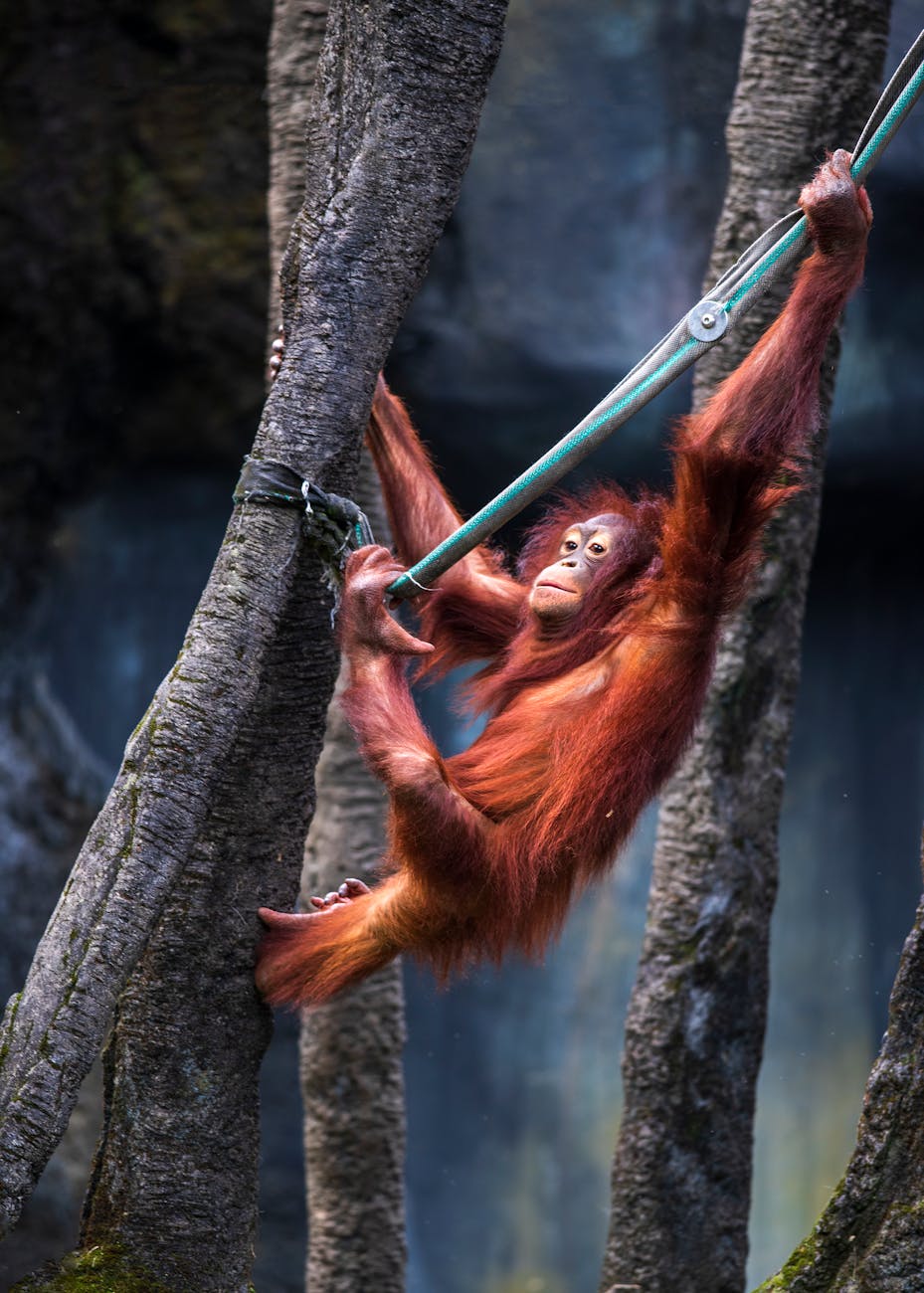
orangutan on tree
Orangutans have demonstrated the ability to understand abstract concepts, like using money, rudimentary sign language, and have even deceived humans. One orangutan in the 1960s repeatedly escaped his zoo enclosure by hiding a small strip of metal in his mouth and using it to pick a lock. Credit: Klub Boks/Pexels

The organizers believe artificial intelligence will be the tool that ultimately helps crack the communication barrier, but entrants aren’t required to use AI. The technology is incredibly useful for tasks involving pattern recognition and sorting large amounts of data, both of which are important in this kind of work when researchers are tasked with analyzing thousands of audio samples or hundreds of hours of footage.

Alas, we don’t think the foundation will be interested in the Buddinese language, which boasts 327 different ways of demanding food and features a timekeeping and calendar system based on meals and naps. A short trill followed by a series of staccato meows, for example, means “I expect prompt service at salmon o’clock,” while a truncated meow ending with a scoff is used to indicate displeasure when a human napping substrate tosses too much during sleep.

Still, maybe we’ll dress it up to make it look properly academic and give the challenge a try. Those prizes could buy a lot of Roombas!

This Parrot Loves Earth, Wind And Fire

The last few decades have revealed birds like crows and parrots possess astonishing intelligence. “Bird brain” might not be much of an insult after all.

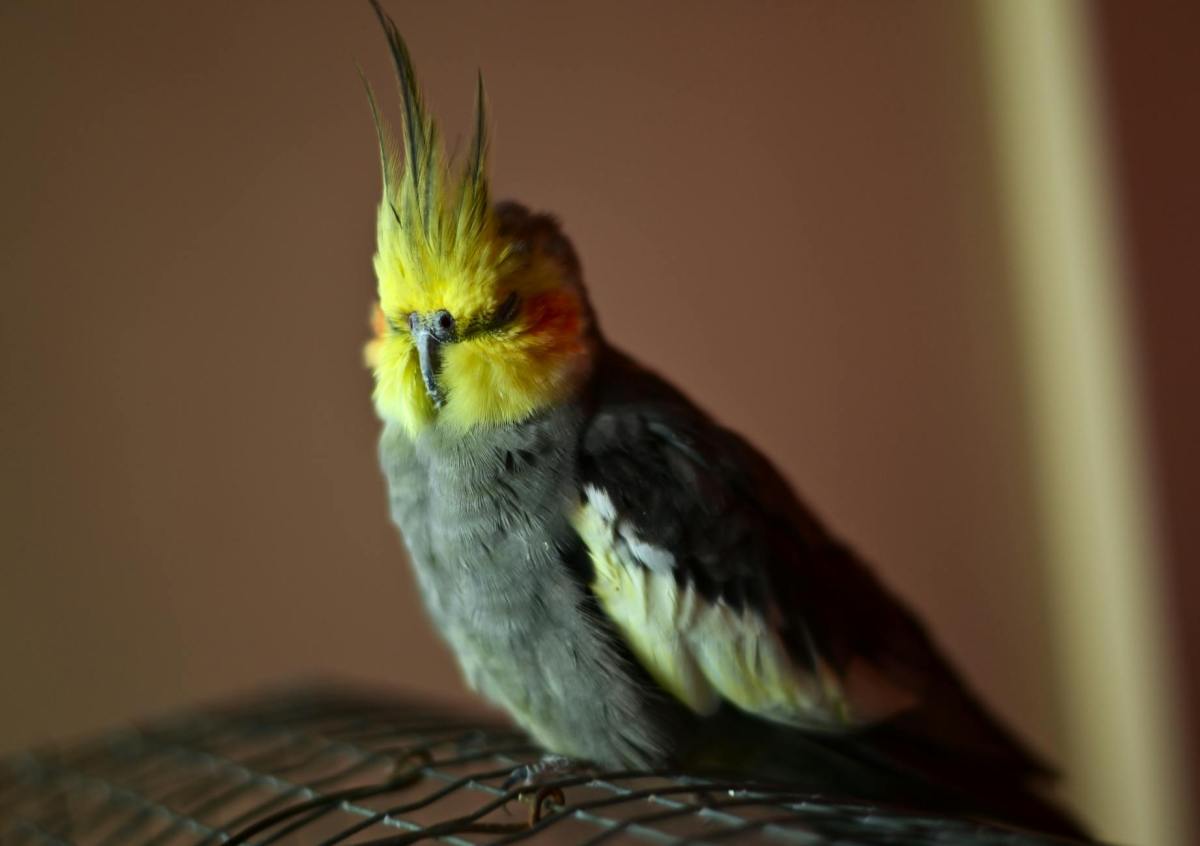
Meet Kiki the cockatiel, a bird who loves Earth, Wind and Fire so much that he sings the band’s classic hit, September, regularly — whether he’s just chilling by himself, singing along to the recording or driving his human crazy by whistling the catchy hook at ungodly hours.

“Kiki, it’s seven in the morning!” she tells him in one clip, raising an admonishing finger. “Silence!”

Kiki regards her for moment as if her request is absurd, then launches right back into September.

Hey, hey, hey
Ba-dee-ya, say, do you remember?
Ba-dee-ya, dancin’ in September
Ba-dee-ya, never was a cloudy day

In another video Kiki’s human sets her phone to record and leaves the room, and Kiki busts out his favorite song again. He’s got great taste in music!

I’ve always thought parrots are a fascinating example of animal cognition and further proof that we share our planet with billions of other minds who think and feel.

Humans and birds last shared a common ancestor more than 300 million years ago. That means between them there’s been more than 600 million years of divergent evolution resulting in radically different physiology, abilities and minds.

Yet parrots can speak while non-human primates (apes and monkeys) cannot!

For decades scientists thought apes and monkeys, by virtue of their relative similarity to humans, possessed an inmate affinity for language and that the physical limits of their vocal apparatus is what keeps them from speaking.

But a 2016 study by a team from Princeton University found monkeys do possess the vocal “hardware” to speak, meaning their mouths and throats are capable of making the sounds necessary for human language. It’s the lack of associated brain circuitry that prevents them from talking.

If the ability to speak and the ability to dance/appreciate music and rhythm is uniquely human among the primate order, and birds arrived at it at a different point in their evolutionary history, that means language and appreciation for music/rhythm developed separately along two divergent evolutionary lines!

That’s incredible and has intriguing implications for the cognitive abilities of animals.

A common argument is that birds with the ability to form human speech are simply mimicking sounds and don’t understand what they’re saying. That’s a natural assumption given what we think we know about non-human capacity for understanding language, but research suggests it’s wrong.

Take a look at this video of the famous late African grey parrot, Alex:

When Dr. Irene Pepperberg asks Alex how many blue blocks are present on a tray with a random assortment of blocks, balls and triangular toys in different colors, Alex can’t give a rote answer. First he has to understand that a question is a request for information and not part of the strange human ritual called small talk. He can’t simply count or guess at the number of blocks either.

Instead, Alex has to perform two calculations. He must tally the blue objects and count the number of them that are blocks, or he’s got to count the number of blocks and figure out how many of them are blue.

If he was simply repeating information in context — like saying “Hello!” when a person walks into a room — Alex wouldn’t be able to correctly answer the questions, and Pepperberg’s research funding would have dried up. Instead, Alex became a focal point of research that persisted for decades.

There’s no indication Alex could master syntax, which has proven elusive for even the smartest animals. But the African grey, who died in 2007 at 31 years old, was curious, asking questions that were unique and unexpected of an animal. He once asked his caretakers to describe his physical appearance, and the night before he died, he told Pepperberg: “You be good. I love you. See you tomorrow.”

We’ve talked about parrots before on PITB, including Snowball the dancing cockatiel who not only appreciates music and has a great sense of rhythm, but also has an entire repertoire of unique dance moves. Then there’s my personal favorite, Ruby the African grey, who has demonstrated mastery of absolutely vile, uniquely British insults.

Sure, there may not be much research value in hearing Ruby hurl verbal abuse at her very loving human, Nick Chapman, but few things have made me laugh as hard as that extraordinarily foul-mouthed bird. She has to be seen and heard to be believed. (But if you’ve got kids in the room, stick with the wholesome Snowball. He’s got serious moves.)

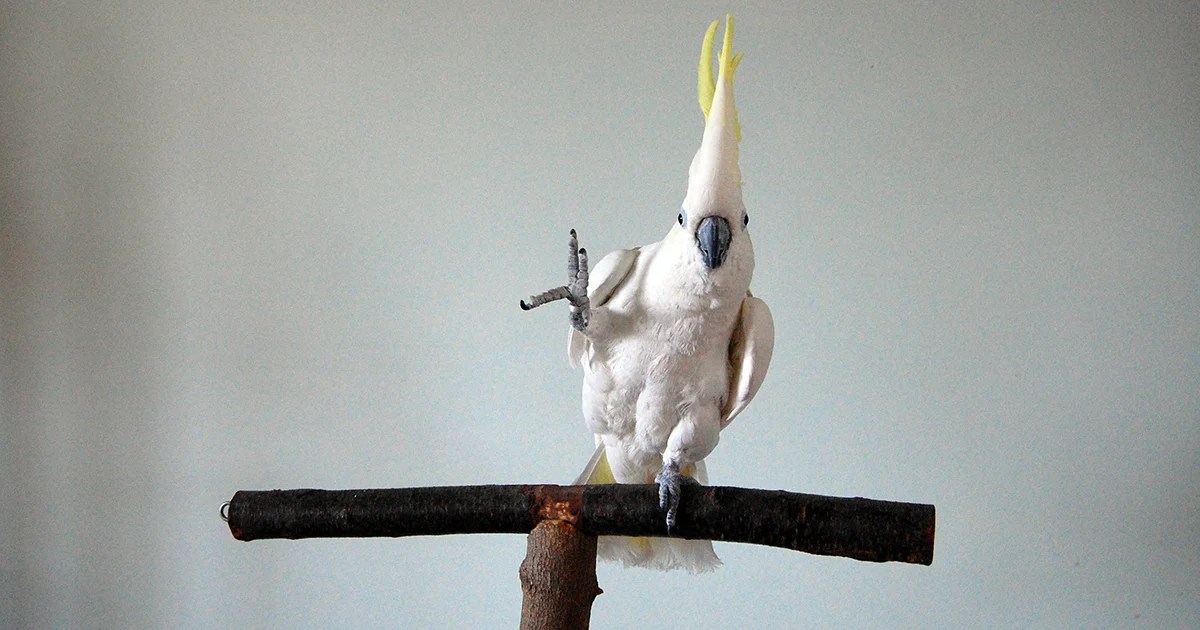
Snowball the dancing parrot
Scientists credit Snowball with choreographing his own dance routines, with dozens of individual dance moves and combinations, and moves that change depending on the song he’s rocking out to.

Now if you’ll excuse me, I’m off to teach a certain feline a few Earth, Wind and Fire songs in the hope that he’ll give up on the screeching meows and use his natural falsetto for a more gentle wake-up experience.

Hey, hey, hey
Ba-dee-ya, hey there my Big Buddy
Ba-dee-ya, Little Buddy’s hungry!
Ba-dee-ya, get your lazy ass up and feeeeeed me!

Bud close up

Reason #488 To Keep Your Cats Indoors: They Hunt Whether They’re Hungry Or Not

Cats who have regular outdoor access and hunt wildlife still get 96 percent of their nutrition from pet food, a new study found, suggesting their predatory behavior is driven by instinct, not hunger.

A new study from the UK debunks the claim that cats need access to the outdoors to supplement their diets with wild kills.

Cats who spend a significant amount of time outdoors and regularly kill local wildlife still get 96 percent of their nutrition from meals provided by their humans, according to research by a team at the University of Exeter.

The scientists connected with cat owners through ads on social media, TV and in print publications, specifically seeking out “cat owners living throughout southwest England whose cats regularly captured wild animals and brought them back to the house,” the study’s authors said.

They gave the owners a questionnaire to collect some basic information on the kitties — age, sex, breed, whether they had unrestricted access to the outdoors, and how much time they spend outside — then split the 90 participating cats into six groups.

Cat hunting
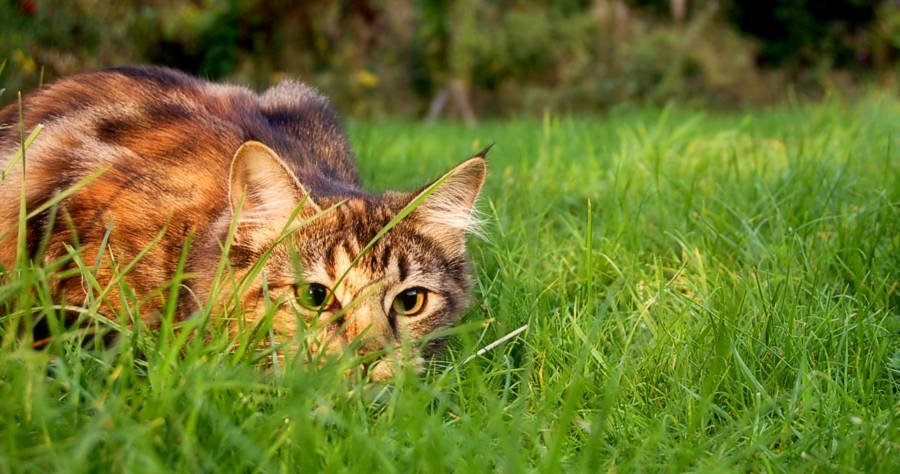
A domestic tabby cat stalking in the grass. Credit: Wikimedia Commons

To set a baseline, the scientists trimmed small sections of whisker from each of the cats, then trimmed a second sample at the end of the study.

By comparing stable isotope ratios in the whisker samples, they were able to determine what the cats were eating. Despite regular access to the outdoors and successful hunts, pet food accounted for the vast majority of their diets.

As a result, the researchers concluded, outdoor cats hunt because they’re driven by predatory instinct, not hunger.

“When food from owners is available, our study shows that cats rely almost entirely on this for nutrition,” said Martina Cecchetti, the study’s lead author.

“Some owners may worry about restricting hunting because cats need nutrition from wild prey, but in fact, it seems even prolific hunters don’t actually eat much of the prey they catch,” Cecchetti said. “As predators, some cats may hunt instinctively even if they are not hungry – so-called ‘surplus killing’ – to capture and store prey to eat later.”

A second component of the study was designed to find the best mitigation strategy to change the behavior of outdoor cats.

Each group was given a different strategy: In one group, cats were outfitted with bells on their collars, while another group wore reflective break-away collars and cats from a third group were fitted with BirdBeSafe collars. The other groups were told to make habit changes inside the home. For example, one set of cats was fed a higher-protein diet without grain filler, another group was fed with puzzle feeders, and the last group was given extra interactive play time.

While high-protein diets and play time helped cut down on hunting, the BirdBeSafe collars had the biggest impact on hunting success. The collars come in bright colors designed to stand out to avian eyes, taking away stealth and the element of surprise from cats.

The study was sponsored by Songbird Survival, a British non-profit that funds bird conservation research and looks for ways to mitigate the dwindling numbers of many avian species.

Susan Morgan, Songbird Survival’s executive director, said her group hopes cat owners will do their part to help: “Pet owners can help us reverse the shocking decline in songbirds via three simple, ‘win-win’ steps: fit collars with a Birdsbesafe cover; feed cats a premium meaty diet; play with cats for five to ten minutes a day to ‘scratch that itch’ to hunt.”

Of course there’s an obvious solution the study didn’t include: Keeping cats indoors. While keeping cats indoors is common in the US, cat ownership culture in the UK is different — another subject for another post.

Read the full text of the study here. Header image credit Pexels. Body images credit BeSafeCollar.

Previously:

1024px-Florida_panther_kittens
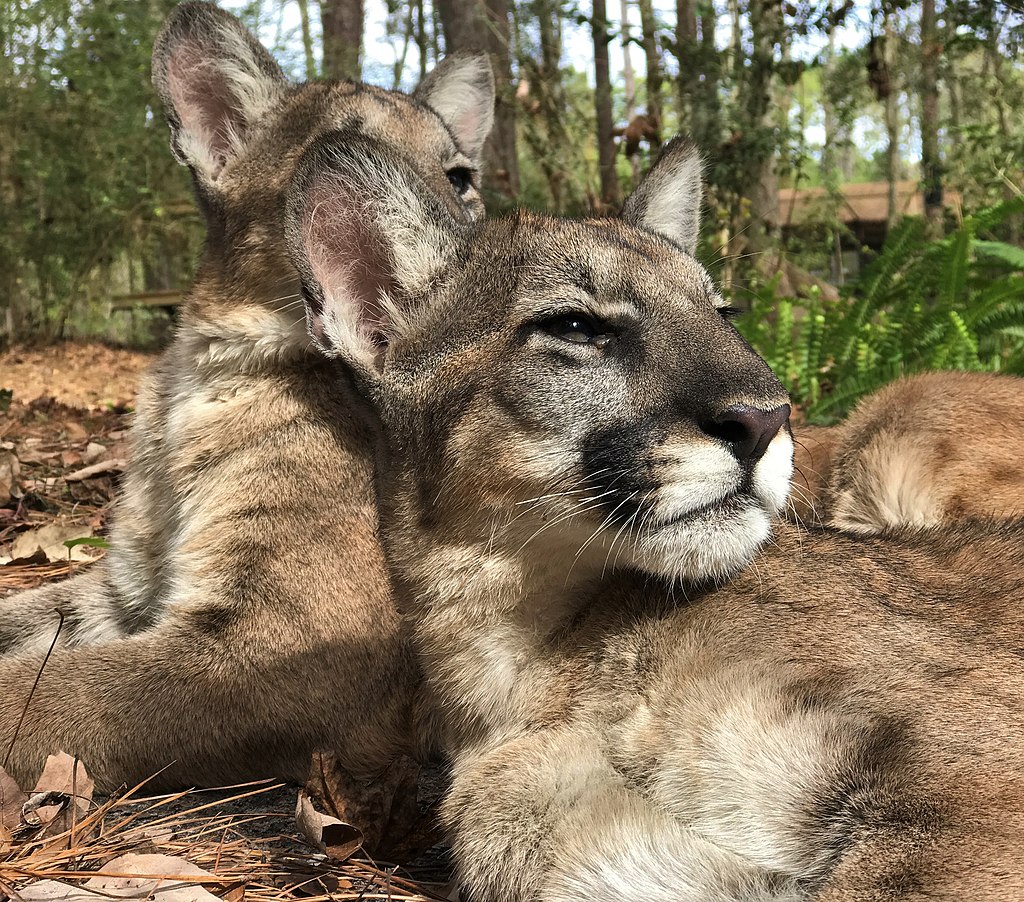
A pair of young mountain lions in Florida. Credit: Wikimedia Commons/WOConservation