Maryland Joins New York In Banning Barbaric Declawing Procedures

Two down, 48 to go.

Two U.S. states have now banned declawing as ‘Merica inches closer to joining the rest of the civilized world in prohibiting the brutal practice.

With a stroke of Gov. Larry Hogan’s pen, Maryland became only the second state to ban declawing, joining New York, which outlawed the practice in 2019. Like New York’s version, the new Maryland law prohibits declawing unless it’s deemed medically necessary.

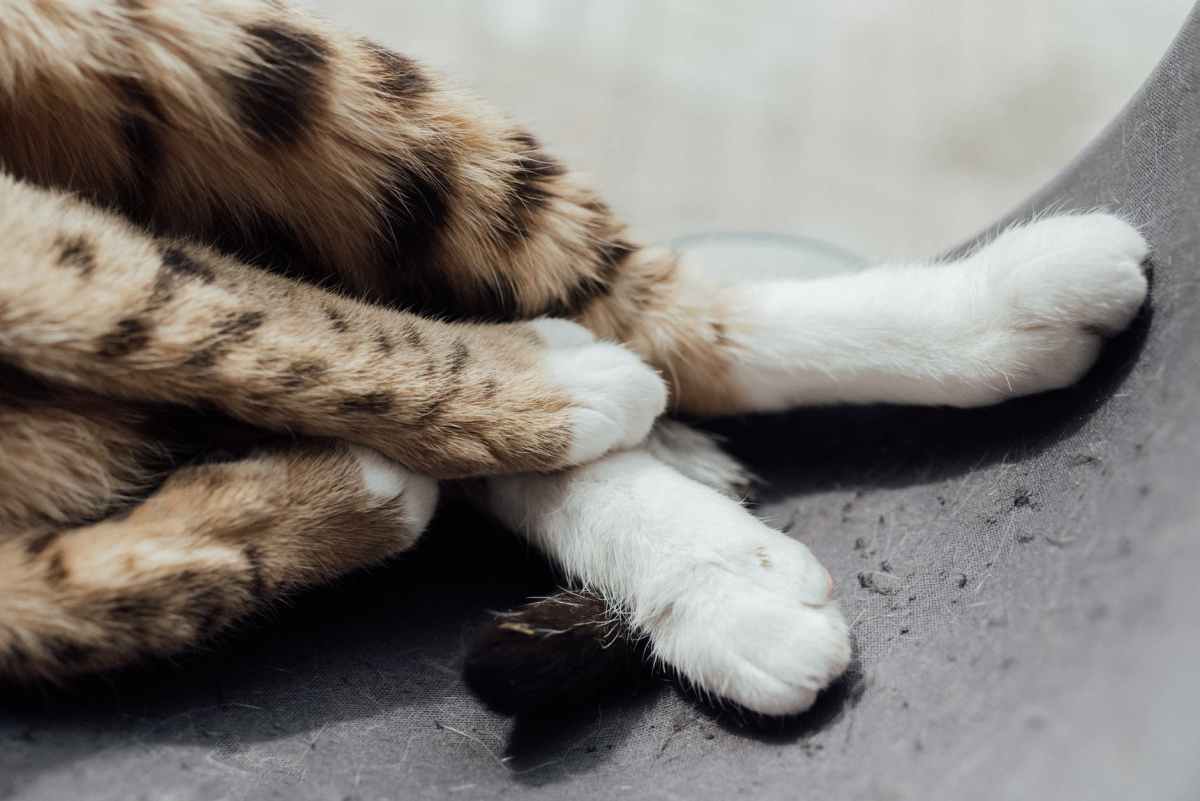
As most cat lovers know, declawing isn’t the manicure-like operation it sounds like. It’s the totally unnecessary, horrific amputation of a cat’s toes up to the first knuckle.

Declawing inflicts a lifetime of pain on cats, changes feline gait and posture, leads to early arthritis and causes a long list of secondary problems. For example, declawed cats are much more likely to bite because they have no other form of defense when they feel threatened, and they’re also much more likely to stop using litter boxes because it hurts to walk on the sand-like and granule texture of the litter with half-amputated toes.

The fact that so much misery is inflicted on innocent animals to protect furniture is indefensible.

The law goes into effect on Oct. 1, and veterinarians who perform the procedure after that time face fines of $1,000 and disciplinary action by the state veterinary board. We’d have preferred immediate implementation and stiffer penalties to prevent a last-minute rush on declawing appointments and discourage anyone considering breaking the law, but a win is a win, and all the major animal advocacy groups are celebrating, as they should.

Now we’ve only got 48 states to go.

buddy_stretching
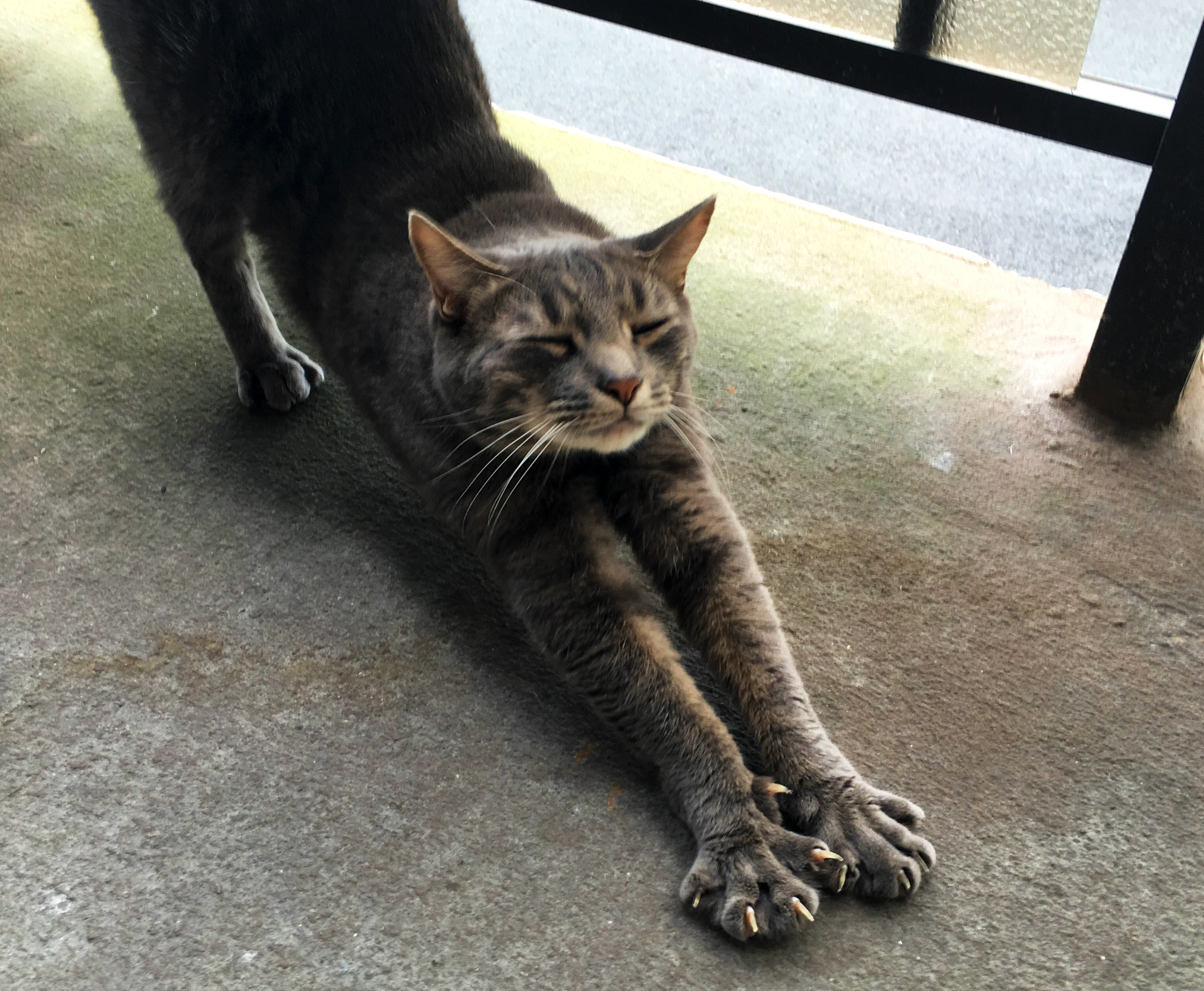
Buddy and his Claws of Cosmic Doom.

These Men Need To Go To Prison For Siccing Their Dogs On A Cat Named Buddy

A cat named Buddy has life-threatening injuries after two men set their dogs on him.

I took a pass on this story when I first saw it because there’s only so much senseless violence toward cats people can tolerate, and I don’t want people to feel like they’re going to be stressed out when they visit PITB.

Our primary goal here, after all, is to celebrate cats and have a laugh.

But this story is too infuriating to keep quiet about, and when I realized the victimized cat’s name is Buddy, I couldn’t ignore it.

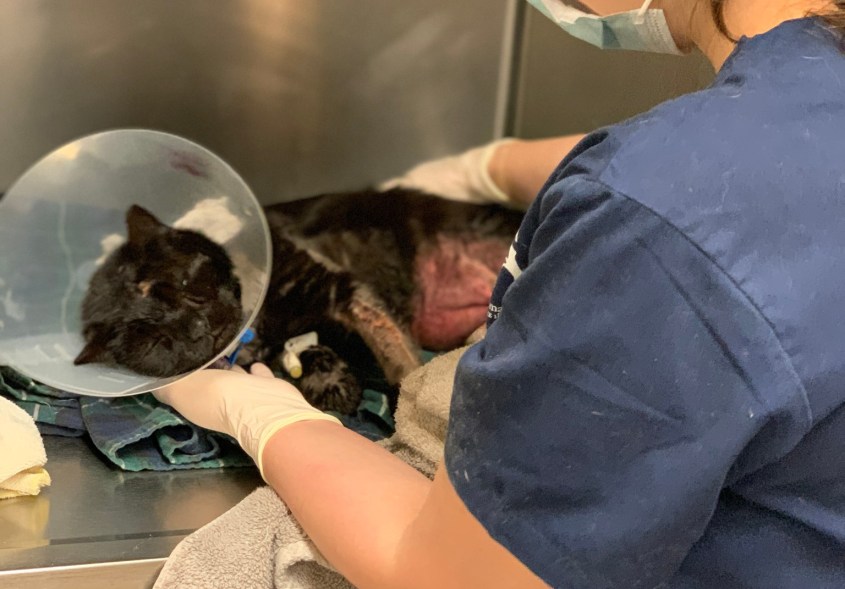
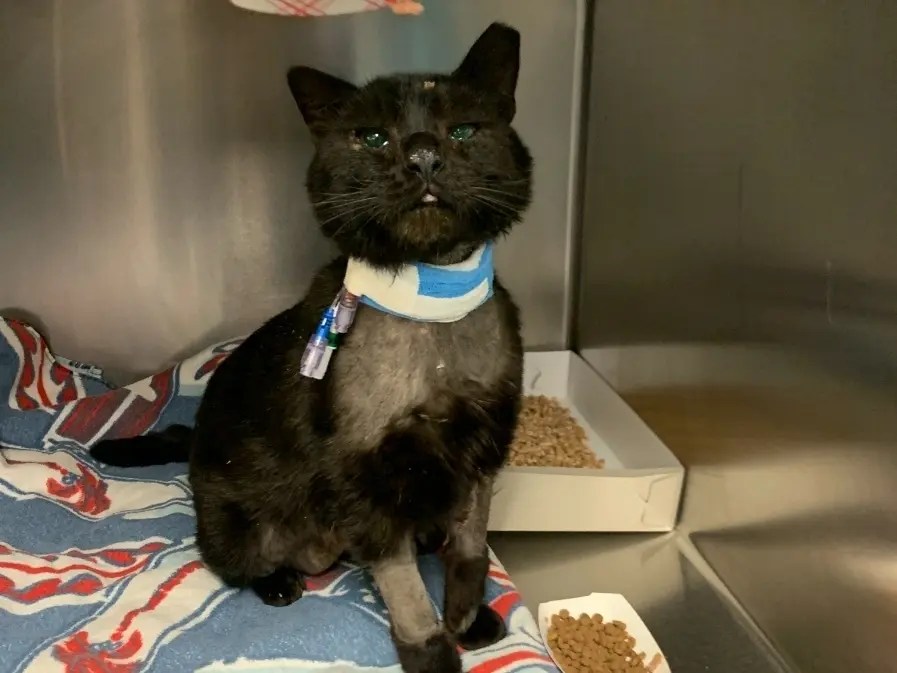
Buddy, a black cat, was on his front porch in Philadelphia on Tuesday when two men passed by, let their dogs loose and ordered them to attack poor little guy.

The men cheered their dogs on with “Get him!” and “Good boy!”, and Buddy probably would have died there if his human didn’t hear the commotion and run outside to intervene.

The two suspects collected their dogs and ran off, while Buddy’s human rushed the injured kitty to the Pennsylvania SPCA, where he underwent surgery for life-threatening injuries.

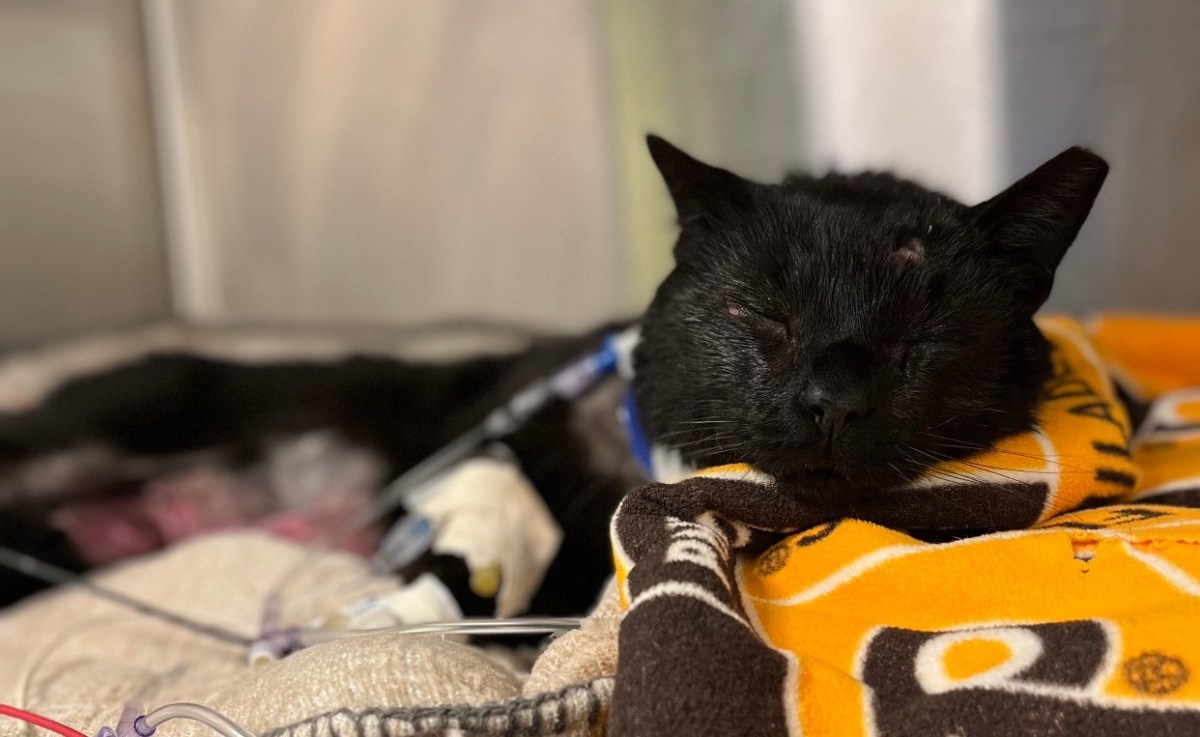
“Buddy is still hanging in there,” the SPCA announced on Thursday. “He remains in critical condition, but we are cautiously optimistic.”

Buddy, who suffered bite wounds and other injuries over his entire body, was a stray who was cared for — but not fully adopted — by a Philadelphia family. The family told the SPCA that Buddy “didn’t want to live inside,” so after getting him neutered they let him stay on their porch and fed him daily.

“He has lots of puncture wounds,” the SPCA’s Gillian Kocker told KYW-TV, the local CBS affiliate. “They’re worried about infections, but mostly what they’re doing right now is making sure that he’s comfortable and has the medication he needs, especially pain meds.”

While Buddy is recovering and is under 24-7 monitoring, donors from around the world have chipped in, giving more than $30,000. Any money left over after veterinary costs will be used for “Buddy’s buddies,” the SPCA said, meaning other cats in their care.

If and when Buddy recovers, the SPCA said, he will be placed with another family. Meanwhile, the suspects could face felony charges for animal fighting and cruelty to animals if they’re caught, Kocher said. Let’s hope they are.

Anyone who recognizes the suspects should call the SPCA at 866-601-7722.

Someone Has To Rescue This Poor Cat

A real estate agent discovers a terrified, depressed cat left behind in a trashed rental home after the tenant vacated the place.

A real estate agent in Texas was filming video for his TikTok channel, sarcastically providing a voice-over in which he promises a “look at the beauty of rental houses when the tenants move out.”

As the agent, who goes by the name Felix Jaimes on TikTok, showed broken blinds, inexplicably removed wood floor panels, a cracked mirror, dirty bathroom and garbage left everywhere. Then he heard noise coming from another room.

“Honestly I got scared, I thought someone was in there because the house was pretty much empty,” Jaimes explained later in the comments.

But he didn’t find a burglar — just a terrified, depressed-looking cat huddling in the corner of a closet.

“He was obviously scared,” Jaimes wrote. “My heart broke” for him.

“Immediately I thought they left their cat behind. What kind of people do that,” Jaimes asked. “I thought they had just abandoned the place since they destroyed it.”

After calling and sending text messages to the tenant, she called Jaimes back and said she wasn’t finished moving out.

“When I came back, the cat was gone,” Jaimes said.

The video was posted on Dec. 7. It’s not clear from Jaimes’ profile exactly where he is — or where the home is located — in Texas, but perhaps some sharp-eyed Texan will be able to tell from the exterior shots at the beginning of the video.

Regardless, the video is distressing. It seems to me that organizations like county-level SPCAs — which employ animal welfare officers with law enforcement jurisdiction when it comes to animal abuse and welfare investigations — are made to handle cases like this, not just the “saving 50 cats from a hoarding situation” stories we hear all the time.

At the very least, the SPCA’s law enforcement division should locate the owner, interview her, check on the cat and have him brought in for a veterinary exam. If they don’t like what they see, they should confiscate the cat and take extra care to place him with people who know how to treat cats and will give him the love he deserves.

Maybe everything really is on the up-and-up and just looks bad, but someone who really knows cats — and loves them — would never leave their kitty in an empty apartment, cowering in a closet and believing he’s been abandoned. That’s why it should be investigated. Better safe than sorry.

With A Three-Fold Increase in Cat Thefts, UK Chooses Microchip Mandate

With breed cats commanding prices in the thousands, thieves see pet theft as a quick score. Lack of prosecution has made it an almost zero-risk crime in the UK.

Mandates in the wake of COVID-19 haven’t been especially popular with a weary public, but surveys show one proposed directive has almost universal support in the UK: Requiring all cat owners get their pets microchipped.

Cat thefts in the UK have tripled in the last five years, with the pandemic contributing to the increase since early 2020, police say. Authorities say they hope compulsory microchipping — and consolidating the many chip ID databases into one — will help discourage people from stealing while making it easier to reunite felines with their families.

Thieves mostly target pedigreed kitties over moggies, with Bengals as the most commonly-stolen cats, followed by British Shorthairs and Persians, according to police statistics. Thieves try for breed cats because of resale value, police say.

Dog thefts have skyrocketed as well, with thieves targeting Chihuahuas, Jack Russell Terriers and German Shepards, among other popular breeds. The price of breed dogs has ballooned by as much as 89 percent since the beginning of the pandemic, when demand for new pets and a slowdown in breeding created a boom market.

For context, an estimated 3.2 million British families welcomed new pets, mostly cats and dogs, into their homes since the first lockdowns in late winter and spring of 2020, the BBC reported. Like their counterparts here in the States, UK shelters experienced unprecedented adoption rates as people battled loneliness and depression during the initial COVID waves and last year’s long winter when the virus came back with a vengeance.

“The number one reason behind pet theft is because the prices for pets have gone up drastically,” Becky Thwaites, spokeswoman for UK pet charity Blue Cross, told SWLondoner. “This happened exponentially over lockdown, as responsible breeders stopped breeding due to social distancing guidance, but more people were wanting pets.”

Despite the spike in animal thefts, only about one percent of all such crimes have led to an arrest, according to a public information request by a UK animal welfare group. 

Police have been reluctant to pour resources into those cases, partly because the law lacks serious consequences for people who steal animals. While the maximum sentence for stealing a pet is seven years in jail, under current UK law sentences are pegged to the value of the stolen item. (Unlike the US, the UK does not make a distinction between prison and jail.)

But for people who love their cats, it’s not about the monetary value — it’s about sentiment, love and the distress to human and animal when they’re separated.

Abductions instead of thefts

To change that, a new pet theft task force — set up earlier this year to study the growing problem — recommended a change in the law. Instead of treating pet thefts as property thefts, under the proposal they would be treated as abductions, with all the increased charges and consequences that come with the classification.

Treating animal thefts as abductions “acknowledges that animals are far more than just property and will give police an additional tool to bring these sickening individuals to justice,” UK Home Secretary Priti Patel told the BBC.

Advocates say treating pet thefts as abductions makes sense not just as a legal adjustment, but also as a reflection of the way cats and dogs are stolen. While some thieves stalk dog parks and lure pets away with treats, others have taken to more brazen and violent means like taking animals by force and jumping people while they’re walking their dogs.

The change would require owners to have their kittens chipped by 20 weeks and adult cats chipped upon adoption from a shelter or rescue.  Failure to microchip a pet would result in a warning and a three-week grace period. After that, cat owners would face a steep fine of £500, equal to $660 in USD.

Consolidating chip databases

There are about 10.8 million pet cats in the UK, although widespread chipping alone won’t solve the problem of pet thefts and lost pets flooding shelters. There are currently 16 different microchip databases in the UK. They don’t always share information and scans don’t cover each of the databases, so even if a cat is recovered, brought to a shelter and scanned, there’s no guarantee the kitty will be returned home.

The existence of so many non-cooperating databases operated by private companies “can pose a huge barrier to successful reunification of pets” said the British Veterinary Association’s Malcolm Morley.

UK authorities and the animal welfare groups pushing for the change are cognizant of the problem and want to streamline the 16 existing database into one central repository of cat microchip registration. That will take time and will have to include compromise on the part of the various private companies running the existing fractured databases.

“Every day, we see how important microchipping is for cats and for the people who love them,” said Pet Protection’s Jacqui Cuff, “whether it’s reuniting a lost cat with their owner, identifying an injured cat, or helping to ensure an owner can be informed in the sad event that their cat has been hit and killed by a car.”

TikTokers Are Intentionally Traumatizing Their Cats With Christmas Trees

The newest trend on TikTok is terrorizing cats with Christmas trees so they’ll leave the trees alone during the holidays. Not cool.

Proving once again that social media has little or no redeeming value, TikTokers have latched onto a trend that has them using Christmas trees to terrify their cats.

The trend was started by a user who shared a “hack” she’d invented: Chase your chat around your home while wielding your new Christmas tree like a weapon, she said, and the cat won’t mess with the tree or its ornaments the rest of the holiday season.

“If you chase your cat around with the Christmas tree, it’ll be too scared to f**k with it,” said the “hack” originator, @alexisjj_.

User “@becs.richards” racked up more than 25 million views with a video that shows her holding her Christmas tree and thrusting it like a lance toward her confused and scared cat. She wore a big smile as she did so, and set the video to upbeat Christmas music.

Terrorizing your cat is a bad idea, author Anita Kelsey told Newsweek.

“A cat will not have any idea why you are causing them stress or fear and, more than likely, frightening a cat with a Christmas tree can lead to the cat being fearful of the room the tree is in, fearful of the tree, urinating around the home or on the tree and urinating on anything around the tree—like presents,” said Kelsey, author of Let’s Talk About Cats. “It also can cause a breakdown of trust between the cat and the person trying to frighten them.”

Daniel Cummings of the UK’s Cat Protection nonprofit said the method may seem successful, but it “doesn’t take into account how cats learn” and could cause long term problems.

“No cat owner would want to intentionally stress out their cat,” he said, “and part of cat ownership is accepting their natural behaviors.”

Unfortunately this newest trend isn’t surprising, especially coming from a user base of people who happily hand over their user data to the Chinese government, which controls TikTok and makes use of its data just as it does with any other ostensibly “private” company operating in China. There have been more than enough investigative stories illustrating how the Chinese government weaponizes data for any reasonable person to avoid platforms like TikTok.

I’m fortunate that Buddy is a good boy and mostly doesn’t mess with Christmas trees. He’s swiped a handful of ornaments off branches in the past, but so what? He’s a living being with feelings, and ornaments are just things.

Besides, as Cummings notes, curiosity and playfulness are part of the deal when we adopt cats. If people aren’t up for that, they shouldn’t adopt.

Top photo credit Jessica Lynn Lewis/Pexels.